









A hematocrit test measures the percentage of your blood that is made up of red blood cells, and it is one of the most common values reported on routine bloodwork. If you have just received a lab report with the abbreviation “Hct” next to a percentage, this article explains what that number means, how to compare it with your reference range, and what a high or low result may suggest. In this article you’ll learn how hematocrit is measured, what typical ranges look like by sex and age, the most common causes of an abnormal result, and when it is worth calling your doctor.
What is a hematocrit test?
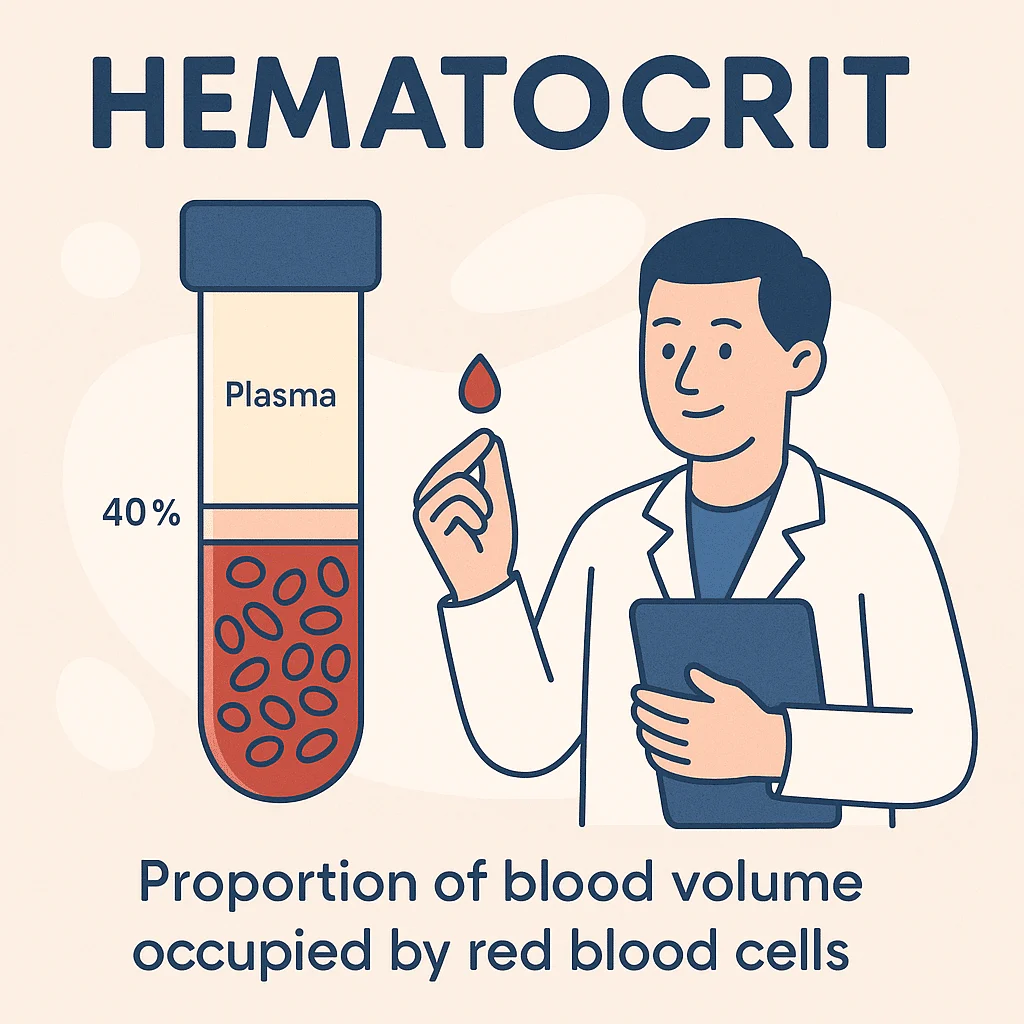
Hematocrit is the share of your total blood volume that consists of red blood cells, also called erythrocytes. Picture a sample of blood spun in a centrifuge: the cells separate from the liquid, and the red blood cells settle into a dense layer at the bottom of the tube. Hematocrit is simply that layer expressed as a percentage of the whole sample. The remaining volume is mostly plasma, the pale yellow fluid that carries proteins, nutrients, and blood cells around your body.
Red blood cells are produced continuously in your bone marrow and carry hemoglobin, an iron-rich protein that binds oxygen in the lungs and releases it to your tissues. Because hematocrit tracks the volume of these oxygen-carrying cells, it gives your doctor a quick read on your blood’s capacity to deliver oxygen. A hematocrit test is almost always ordered as part of a complete blood count panel that also reports your white cells and platelets, rather than as a stand-alone test.
Normal hematocrit ranges by sex and age
Reference ranges vary slightly between laboratories, but the typical adult range is about 41% to 50% for men and 36% to 44% for women. The difference between sexes is largely driven by testosterone, which stimulates red blood cell production, and by regular blood loss through menstruation, which tends to lower hematocrit in women. Children and infants have their own separate ranges, and newborns typically run higher than adults because of the transition from fetal to newborn circulation.
These figures are general guides rather than fixed cutoffs. Always compare your result with the reference range printed on your own report, since it reflects the specific method and population used by the laboratory that processed your sample.
| Group | Typical hematocrit range |
|---|---|
| Adult men | 41% to 50% |
| Adult women | 36% to 44% |
| Pregnant women | Often slightly lower, due to increased blood plasma volume |
| Infants | 32% to 42% |
| Newborns | 45% to 61% |
How to read your hematocrit test results
Your hematocrit test result usually appears in the “hemogram” or “CBC” section of a lab report, listed as “Hct” followed by a percentage. Beside it, you will typically see the laboratory’s reference range in brackets or a separate column. Many reports flag out-of-range values with a letter, an asterisk, or an arrow, such as “H” for high or “L” for low, so you can spot them at a glance. Our broader guide on how to read blood test results across any panel walks through this layout in more detail if you want the wider context.
It helps to know that the reference ranges printed on lab reports are statistical, not strict pass-or-fail lines. Most laboratories set their range to cover the central 95% of a healthy population, which means roughly one in twenty healthy people will have a value that sits just outside the boundary without anything being wrong. What matters more than a single flagged result is the size of the deviation, whether other markers point the same way, and how you feel.
Hematocrit versus hemoglobin versus red blood cell count
People often see three closely related numbers on the same report and wonder how they differ. Hematocrit is a percentage that describes how much of your blood volume is red cells. Hemoglobin measures the amount of the oxygen-carrying protein inside those cells, reported in grams per deciliter. The red blood cell count is simply the number of cells in a given volume of blood. All three usually move together, and as a rough rule of thumb your hematocrit percentage is close to three times your hemoglobin value in g/dL. When they diverge, that pattern itself becomes a clue: for example, a hematocrit that looks disproportionately low compared with a normal hemoglobin can prompt your doctor to double-check how the sample was measured. A dedicated look at hemoglobin and what its values mean can help you connect the two markers.
What causes a low hematocrit
A hematocrit test result below the normal range usually points toward anemia, a condition in which you have too few healthy red blood cells or too little hemoglobin to carry adequate oxygen. Our fuller guide to anemia symptoms, causes, and the tests used to diagnose it covers this topic in depth if a low result has prompted further questions.
Iron deficiency anemia
Iron deficiency is the most common cause of a low hematocrit worldwide. Without enough iron, your bone marrow cannot make sufficient hemoglobin, so it produces fewer and smaller red blood cells. Typical symptoms include persistent tiredness, pale skin, cold hands and feet, and dizziness on standing. Heavy menstrual periods, slow gastrointestinal bleeding, pregnancy, and a diet low in iron are frequent underlying causes. Your doctor will often follow up a low hematocrit with a ferritin test that checks how much iron you have in storage, a broader iron studies panel that looks at several iron markers together, or a serum iron test that shows how much iron is circulating right now.
Vitamin B12 or folate deficiency
Both vitamins are needed for red blood cells to mature properly. A shortfall leads to fewer, larger red cells, which lowers hematocrit even though iron stores may be normal. This pattern is more common in older adults, strict vegans, and people with absorption problems affecting the stomach or small intestine.
Blood loss and hemolysis
Significant bleeding, whether sudden from an injury or surgery, or slow and hidden in the digestive tract, removes red blood cells faster than the body can replace them. A separate mechanism, hemolytic anemia, occurs when red cells are destroyed prematurely, often due to an autoimmune reaction or an inherited abnormality in the cells themselves. Hemolysis can also cause jaundice and dark urine alongside a low hematocrit.
What causes a high hematocrit
An elevated hematocrit test result means red blood cells make up a larger-than-usual share of your blood, which can range from a harmless, temporary shift to a sign of an underlying blood disorder.
Dehydration
When you lose body fluid without losing red blood cells, the remaining blood becomes more concentrated, which raises the hematocrit percentage even though your actual number of red cells has not changed. This is the most common cause of a mildly high hematocrit and typically resolves once you rehydrate.
Polycythemia vera
This is a rarer bone marrow disorder in which the body produces red blood cells independent of the usual regulatory signals. The excess cells thicken the blood, raising the risk of clots. Associated symptoms can include itching after a warm shower, facial redness, and headaches. A blood test for the JAK2 gene mutation, along with a bone marrow evaluation, helps confirm the diagnosis. Doctors also look at whether inflammation could explain the picture, sometimes using an erythrocyte sedimentation rate test that flags general inflammatory activity alongside the CBC.
Secondary polycythemia and lifestyle factors
Chronic low oxygen levels, such as those from advanced lung disease, sleep apnea, or long-term smoking, prompt the body to make more red blood cells to compensate, a response known as secondary polycythemia. Living at high altitude produces a similar, expected adaptation. Testosterone therapy can also raise hematocrit as a known side effect, which is why levels are monitored during treatment.
High versus low hematocrit: causes at a glance
Because the two directions point toward very different underlying issues, it helps to compare them side by side.
| Low hematocrit (below range) | High hematocrit (above range) |
|---|---|
| Iron, B12, or folate deficiency | Dehydration |
| Acute or chronic blood loss | Chronic lung disease or sleep apnea |
| Hemolytic anemia | Living at high altitude |
| Bone marrow disorders or chemotherapy | Polycythemia vera |
| Pregnancy (fluid dilution) | Smoking or testosterone therapy |
When to see a doctor about your hematocrit
Most mildly abnormal hematocrit results are not emergencies and are simply monitored or repeated after a period of time. Still, some patterns warrant a prompt conversation with your doctor rather than watchful waiting.
Consider reaching out sooner if you notice any of the following alongside an abnormal hematocrit:
- A result your doctor has already flagged as needing discussion, especially one that is markedly high or low rather than just outside the line.
- Ongoing fatigue, breathlessness, or unusually pale skin, which often accompany anemia.
- Chest pain, fainting, or a racing heartbeat, which can signal a more urgent problem and deserve same-day attention.
- Itching after a hot shower, facial redness, or recurring headaches, which can point toward polycythemia vera.
- Black or bloody stools, heavy menstrual bleeding, or any other sign of ongoing blood loss.
By contrast, a single value that sits just outside the range, with no symptoms and no worrying trend, is often simply rechecked at a later date. Your doctor will weigh the result alongside your history, symptoms, and other blood markers before deciding on next steps.
What affects your hematocrit result besides disease
Several everyday factors can shift your hematocrit test result without indicating illness, which is worth knowing before you worry about a borderline number.
Hematocrit can vary somewhat across the day, generally running a little higher in the morning after a night without fluids and settling as you rehydrate. Recent intense exercise, dehydration, and even the altitude where you live or recently traveled can all move the result. During pregnancy, hematocrit commonly reads lower than usual because blood plasma volume increases faster than red blood cell production, a normal dilution effect rather than true anemia. Prenatal blood tests account for this shift when interpreting your results. Certain medications also play a role: diuretics can concentrate the blood and raise hematocrit, while chemotherapy or drugs that suppress bone marrow activity can lower it.
How the hematocrit test is done
A healthcare professional draws a small blood sample from a vein in your arm, usually at the inside of the elbow, and sends it to a laboratory. Most labs use an automated hematology analyzer that calculates hematocrit directly from the red blood cell count and their average size, though the traditional method of spinning the sample in a centrifuge is still used in some settings. There is no need to fast or make special preparations before a hematocrit test, and results are typically available within a day. Because hematocrit is almost always reported alongside hemoglobin, white blood cells, and platelets as part of a complete blood count, your provider will interpret it together with those related values rather than in isolation.
Latest scientific advances
Recent research has continued to refine how useful hematocrit is as a stand-alone signal, particularly for hydration and pregnancy screening, and the takeaway is a note of caution rather than a change in everyday practice.
A 2024 study in combat sports athletes tested several hydration markers, including hematocrit, after a supervised sauna protocol designed to cause mild to moderate fluid loss. Researchers found that changes in body mass explained only about one-fifth of the variation in hematocrit change, and while hematocrit was one of the more reliable markers tested, none of the blood-based measures reliably classified hydration status on their own. What this means for you: a single hematocrit reading is a reasonable rough indicator of hydration in context, but it should not be treated as a precise, stand-alone hydration test, a caveat that is still being refined rather than settled.
A related 2023 study of over 200 burn patients examined whether tracking hematocrit changes could reliably guide how much intravenous fluid to give during the first day of treatment. The researchers found only a weak relationship between the fluid volume given and the resulting change in hematocrit, concluding that hematocrit alone may not be a dependable way to detect overtreatment with fluids in this setting. What this means for you: in clinical situations involving rapid fluid shifts, doctors increasingly look at hematocrit as one piece of a broader picture rather than a single decisive number, and this finding is preliminary and specific to burn care rather than routine outpatient testing.
A 2026 study from Ethiopia compared hemoglobin-based and hematocrit-based methods of diagnosing anemia in pregnant women attending prenatal care. The two methods agreed closely overall, but hematocrit-based testing flagged more women as anemic than hemoglobin-based testing did, a gap that was statistically meaningful. What this means for you: hematocrit and hemoglobin usually tell a consistent story, but they are not perfectly interchangeable, especially near a diagnostic cutoff, which is one reason your doctor may look at both values together rather than relying on either one alone. This finding comes from a single regional study and would need to be confirmed in other populations before changing broader screening guidance.
Glossary
| Term | Definition |
|---|---|
| Hematocrit (Hct) | The percentage of your total blood volume made up of red blood cells. |
| Hemoglobin (Hb) | The iron-rich protein inside red blood cells that carries oxygen around the body. |
| Anemia | A condition marked by too few healthy red blood cells or too little hemoglobin to carry enough oxygen. |
| Polycythemia | A condition in which the blood contains an unusually high concentration of red blood cells. |
| Polycythemia vera | A bone marrow disorder that causes the body to overproduce red blood cells, often linked to a JAK2 gene mutation. |
| Complete blood count (CBC) | A common blood test that counts and describes red blood cells, white blood cells, and platelets, including hematocrit. |
| Reference range | The span of values considered typical for a healthy population, set individually by each laboratory. |
| Erythropoietin (EPO) | A hormone, made mainly by the kidneys, that signals the bone marrow to produce more red blood cells. |
FAQ: Frequently asked questions
Can hematocrit vary during the day?
Yes, hematocrit can shift slightly across a single day, mainly because of changes in your hydration. Levels tend to run a little higher in the morning, after several hours without fluids overnight, and can settle as you drink water and eat during the day. For the most consistent comparison between tests, it helps to have blood drawn around the same time of day whenever possible. A small day-to-day change is normal and rarely meaningful on its own.
What does a low hematocrit but normal hemoglobin mean?
This combination is uncommon but not necessarily worrying. Because hematocrit and hemoglobin are measured slightly differently, and hematocrit is sensitive to blood plasma volume, small mismatches can appear, particularly around the edges of the reference range or shortly after fluid shifts such as recent hydration. Lab or technical variation can also play a small role. If the gap is minor and you feel well, your doctor may simply recheck the values together on a repeat test rather than pursue an extensive workup right away.
Does a high hematocrit always mean a higher cardiovascular risk?
Not necessarily. The risk depends heavily on the underlying cause. A temporary rise from dehydration is not typically dangerous once you rehydrate, and it usually returns to your normal baseline quickly. In contrast, a hematocrit that stays persistently high, as seen in polycythemia vera, thickens the blood over time and can raise the risk of blood clots. Your doctor looks at the overall clinical picture, including how high the value is, how long it has been elevated, and any accompanying symptoms, before drawing conclusions about risk.
How does altitude affect hematocrit levels?
Living or spending extended time at high altitude naturally raises hematocrit. With less oxygen available in the air, your body increases production of erythropoietin, a hormone that signals the bone marrow to make more red blood cells. This adaptation compensates for the reduced oxygen and is expected rather than a sign of disease. If you have recently traveled to or moved from a high-altitude location, it is worth mentioning this to your doctor when discussing your results.
Is hematocrit used to detect blood doping in sports?
Hematocrit has historically been used as an indirect screening marker in some sports, since an artificially elevated level can raise suspicion of blood doping. However, it is an imperfect tool because hematocrit varies naturally between individuals and can be influenced by training, altitude, and hydration. Modern anti-doping programs rely on more sophisticated approaches, such as tracking several blood parameters over time for each athlete, rather than a single hematocrit threshold.
Can diet affect hematocrit levels?
Diet mainly affects hematocrit indirectly, through its effect on iron, vitamin B12, and folate, all of which are needed to build healthy red blood cells. A diet consistently low in these nutrients can gradually lower hematocrit, which is why iron-rich foods paired with a source of vitamin C, or adequate B12 for those on plant-based diets, are commonly recommended when a low hematocrit is linked to nutrition. Diet alone rarely raises hematocrit meaningfully; a persistently high result usually points toward a different cause.
Further reading
- Complete blood count: how to read your results
- Hemoglobin: understanding this key blood marker
- Iron studies panel: ferritin, TIBC, and transferrin saturation explained
- Anemia: symptoms, causes, and how it’s diagnosed
- Understanding a high total iron-binding capacity
Sources
- Hematocrit Test — MedlinePlus, National Library of Medicine (NIH) — https://medlineplus.gov/lab-tests/hematocrit-test/
- Hematocrit Test: What It Is, Levels, and High & Low Range — Cleveland Clinic — https://my.clevelandclinic.org/health/diagnostics/17683-hematocrit
- Hematocrit test — Mayo Clinic — https://www.mayoclinic.org/tests-procedures/hematocrit/about/pac-20384728
- Doherty CS, et al. Blood, Sweat, and Tears: Implications for Hydration Testing in Combat Sports — Investigating Body Mass Loss and Biomarker Changes. Scandinavian Journal of Medicine & Science in Sports, 2024 — https://consensus.app/papers/details/d8ea08601d705b36af7464a818e06038/?utm_source=claude_code
- Le Tacon S, et al. Evolution of hematocrit in burn patients as a marker of early fluid management during acute phase. Burns: Journal of the International Society for Burn Injuries, 2023 — https://consensus.app/papers/details/ba97761dbe6e5372bb49c2e2973320e1/?utm_source=claude_code
- Regea Gelassa F, et al. Evaluating hemoglobin versus hematocrit measurements in the diagnosis of anemia among pregnant women in Woliso town, Ethiopia: a mixed-methods study. Scientific Reports, 2026 — https://doi.org/10.1038/s41598-026-48230-x
Hematocrit is just one piece of a larger picture your doctor uses to understand your blood health, often alongside hemoglobin, red blood cell indices, and iron markers such as ferritin. Tools like AI DiagMe help you make sense of these values together, in plain language, so you can see how a hematocrit result fits with the rest of your complete blood count. It helps you understand your results, but it does not diagnose you and does not replace your doctor.
Understand your lab results with AI DiagMe
Get your results interpreted in minutes