

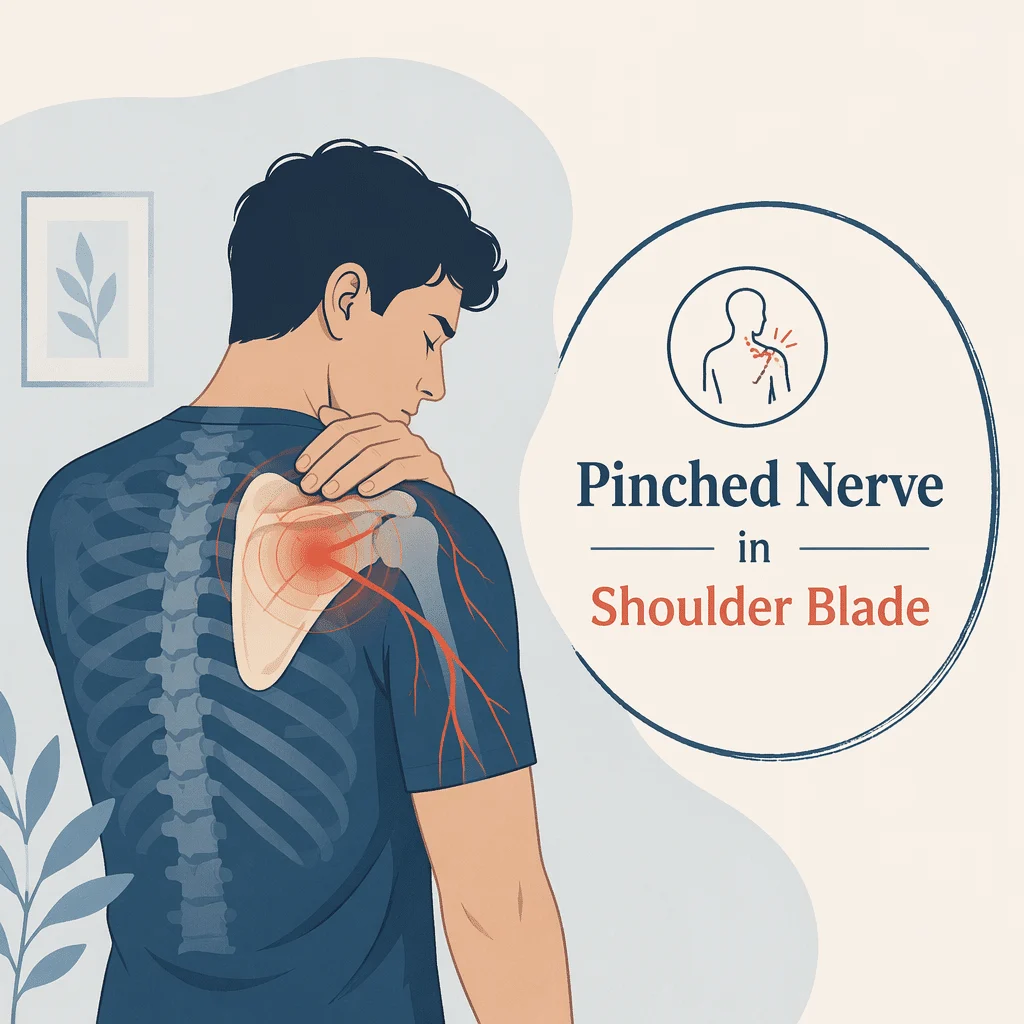
Un nerv ciupit în zona omoplatului este una dintre cele mai înșelătoare dureri din corp. O simți adânc sub sau lângă omoplat, așa că acolo apeși și freci. Totuși, în multe cazuri, nervul care este de fapt comprimat se află la câțiva centimetri distanță, în gât. Acest singur fapt schimbă modul în care este investigată problema și explică de ce luni de tratament îndreptat spre omoplat nu duc adesea la niciun rezultat.
În acest articol vei afla de ce rădăcinile nervoase cervicale trimit durerea spre omoplat, cum să recunoști acest tipar, ce alți nervi din jurul scapulei pot fi implicați și cum arată de obicei evaluarea și tratamentul. Începe cu secțiunea de urgență de mai jos: unele dureri resimțite la nivelul omoplatului sau între omoplați pot proveni de la inimă, aortă sau măduva spinării, și acestea necesită o reacție complet diferită.
Când durerea în omoplat este o urgență
Zona omoplatului este unul dintre locurile în care organismul proiectează durerea provenită de la organe care nu au nicio legătură cu mușchii sau nervii. De aceea această secțiune apare prima.
Sună la 112 imediat dacă durerea la nivelul omoplaților, între ei sau sub ei este însoțită de oricare dintre următoarele:
- Presiune, strângere sau apăsare în piept, mai ales dacă durerea se extinde spre maxilar, gât sau oricare dintre brațe
- Dificultăți de respirație, transpirație abundentă bruscă, greață sau amețeală
- Durere bruscă, severă, sfâșietoare sau ca o ruptură între omoplați, la intensitate maximă din prima secundă
- Leșin, bătăi rapide sau neregulate ale inimii sau senzația că ceva este grav în neregulă
Nu conduce singur și nu aștepta să vezi dacă trece.
Tiparul cardiac care este ignorat
Durerea dintre omoplați sau de sub aceștia, în special pe partea stângă, sau care iradiază spre maxilar ori spre un braț, poate fi un semn de infarct miocardic. Institutul Național pentru Inimă, Plămâni și Sânge (National Heart, Lung, and Blood Institute) include durerea sau disconfortul în spate, umeri, gât, maxilar sau brațe printre simptomele recunoscute, alături de dificultăți de respirație, transpirație, greață și amețeală bruscă.
Aspectul esențial este că durerea clasică, apăsătoare, în centrul pieptului nu este întotdeauna prezentă. Femeile, persoanele cu diabet și adulții în vârstă prezintă mai frecvent simptome atipice, iar unele infarcte produc aproape niciun simptom. Tocmai de aceea durerea interscapulară este pusă pe seama unui nod muscular, și de aceea recomandarea de față este să suni la 112, nu să mergi la medic. Analizele de sânge, cum ar fi troponina și BNP necesită prezentare la urgențe, nu tratament acasă.
Disecția de aortă și alte organe care iradiază durerea în sus
Disecția de aortă este o ruptură în peretele arterei principale a corpului. Semnul său caracteristic este o durere bruscă, severă, sfâșietoare sau tăietoare între omoplați, de obicei la intensitate maximă imediat, fără să crească treptat în câteva minute. Aceasta necesită apel la 112.
Alte organe trimit durerea în aceeași zonă. Problemele vezicii biliare produc clasic durere în partea dreaptă superioară a abdomenului, care iradiază spre vârful omoplatului drept după o masă grasă. Un embolie pulmonară poate cauza durere în partea superioară a spatelui sau în umăr, însoțită de dificultăți de respirație sau durere ascuțită la inspirație. Inflamația pancreatică iradiază direct spre mijlocul spatelui. Iar o tumoră Pancoast la vârful plămânului poate provoca durere în umăr și omoplat, cu simptome la nivelul brațului și căderea pleoapei pe aceeași parte: o durere persistentă la un singur omoplat la un fumător sau fost fumător merită o examinare atentă a pulmonar.
De ce problema se află de obicei în gât
Mușchii din partea superioară a spatelui sunt inervați de nervi care pornesc din coloana cervicală, la fel ca pielea de pe umăr, braț și mână. Când una dintre aceste rădăcini nervoase este comprimată la locul unde iese din gât, creierul interpretează frecvent semnalul ca venind din zona omoplatului.
Aceasta nu este o observație marginală. Fișa MedlinePlus despre spondiloza cervicală — uzura legată de vârstă care îngustează ieșirile nervilor — menționează durerea deasupra omoplatului și pe fața internă a omoplatului printre simptomele frecvente, cu iradiere spre brațul superior, antebraț sau degete.
Cum C5, C6 și C7 trimit durerea spre omoplat
Rădăcinile cel mai frecvent implicate sunt C5, C6 și C7. Împreună, ele iradiază durerea spre marginea medială a omoplatului și spre regiunea interscapulară — fâșia de mușchi dintre coloana vertebrală și marginea internă a scapulei. Aceleași rădăcini transmit sensibilitatea spre zone specifice ale brațului și mâinii, motiv pentru care o rădăcină comprimată produce o durere profundă, surdă sau arsură în jurul omoplatului, însoțită de amorțeală sau furnicături care coboară pe braț până în anumite degete.
De obicei, compresia are două cauze principale. La adulții tineri, este mai des vorba despre o hernie de disc cervical, în care nucleul moale al unui disc cervical iese și apasă pe rădăcina nervoasă. Începând cu vârsta mijlocie, cauza mai frecventă este îngustarea foraminală, în care osteofitele și subțierea discului micșorează tunelul osos prin care trece nervul. Tabloul combinat poartă numele de radiculopatie cervicală.
Cum se simte cu adevărat radiculopatia cervicală și ce o diferențiază
Durerea musculară obișnuită la nivelul omoplatului este o durere difuză, pe care o poți acoperi cu toată palma și care se modifică în funcție de postură. Radiculopatia cervicală are o amprentă diferită, iar trei caracteristici merită reținute.
Prima este ce anume agravează simptomele. Acestea se intensifică adesea când îți extinzi gâtul, dai capul pe spate sau îl întorci spre partea dureroasă. Strănutul, tusea sau râsul pot trimite o descărcare bruscă pe braț, iar simptomele sunt frecvent mai intense noaptea.
A doua este semnul de ameliorare prin abducția umărului, care este cu adevărat caracteristic. Multe persoane cu o rădăcină cervicală comprimată constată că simptomele de la nivelul brațului se ameliorează atunci când ridică brațul afectat și își sprijină mâna pe creștetul capului. Este un indiciu puternic că problema se află la nivelul rădăcinii nervoase, deoarece ridicarea brațului reduce tensiunea asupra acesteia. Dacă te-ai surprins făcând asta, menționează-o la consultație.
A treia este tiparul simptomelor de la nivelul brațului. Durerea de origine nervoasă urmează o bandă sau o fâșie pe lungimea brațului, nu o zonă vagă, iar amorțeala apare într-un petec bine delimitat de piele. Slăbiciunea musculară, atunci când apare, este specifică: dificultate la ridicarea brațului lateral, la întinderea cotului sau la strângerea pumnului — fiecare indicând o rădăcină diferită. Oboseala generală a brațului nu are acest tipar.
Corelarea a ceea ce simți cu ce ar putea însemna
| Ce observi | Ce sugerează de obicei | Ce să faci |
|---|---|---|
| Durere surdă profundă la marginea interioară a omoplatului, cu furnicături care coboară spre braț sau spre anumite degete | O rădăcină nervoasă comprimată la nivelul gâtului, cunoscută sub numele de radiculopatie cervicală | Programează o consultație medicală și descrie simptomele de la nivelul brațului, nu doar durerea din omoplat |
| Durerea se ameliorează când îți sprijini mâna pe creștetul capului | Semnul de ameliorare prin abducție al umărului, strâns asociat cu compresia rădăcinii nervoase cervicale | Menționează-l în mod specific; este un indiciu util pentru persoana care te examinează |
| Durere bruscă, sfâșietoare sau rupătoare între omoplați, la intensitate maximă imediat | Posibilă disecție de aortă | Sună la 112 |
| Durere interscapulară însoțită de senzație de apăsare în piept, dificultăți de respirație, transpirații sau greață | Posibil infarct miocardic, inclusiv la persoanele fără durere clasică în piept | Sună la 112 |
| Mâini neîndemânatice, scăparea obiectelor, dificultăți cu nasturii sau scrisul de mână, mers nesigur | Posibilă mielopatie cervicală, adică presiune pe măduva spinării în sine | Evaluare medicală urgentă, nu începerea fizioterapiei |
| Durere surdă de-a lungul marginii interioare a omoplatului fără simptome la nivelul brațului, mai intensă după sesiuni lungi la birou sau la volan | O compresie locală a unui nerv, suprasolicitare musculară sau o problemă la nivelul unei coaste sau al unei articulații facetare | Consultație medicală neurgentă dacă durerea persistă mai mult de câteva săptămâni |
Ceilalți nervi care pot fi implicați
Nu orice caz provine din gât. Trei nervi mai mici trec prin zona omoplatului și pot fi iritați independent, fiecare reprezentând o formă de compresie nervoasă periferică cu un tablou clinic recognoscibil.
Nervul scapular dorsal
Acest nerv inervează mușchii care trag omoplatul spre coloana vertebrală. Când este prins — de obicei acolo unde trece printr-un mușchi al gâtului — produce o durere profundă, surdă și persistentă de-a lungul marginii mediale a omoplatului, adesea descrisă ca un ac de gheață în spatele omoplatului. Simptomele la nivelul brațului lipsesc de obicei sau sunt minore, ceea ce îl diferențiază de o problemă a rădăcinii nervoase.
Nervul toracic lung și scapula alată
Nervul toracic lung inervează mușchiul dințat anterior, cel care menține omoplatul lipit de cutia toracică. Traseul său lung și expus face ca acesta să poată fi lezat printr-o lovitură în lateral la nivelul toracelui, prin transportul de greutăți pe umăr, prin muncă repetitivă deasupra capului sau în urma unei boli virale.
Când nu mai funcționează, marginea internă a omoplatului se ridică de pe coaste. Aceasta este scapula alată, vizibilă când cineva împinge un perete cu brațele întinse: omoplatul iese în afară ca o mică aripă. De obicei, oamenii observă durere la umăr, dificultăți în ridicarea brațului deasupra capului și oboseală, nu atât deformarea în sine.
Nervul suprascapular
Acest nerv trece printr-o crestătură la marginea superioară a omoplatului și poate fi comprimat acolo, uneori de un chist, provocând o durere profundă, slab localizată, la partea posterioară și superioară a umărului, uneori însoțită de slăbiciune la rotația externă a brațului.
Cauze musculare, posturale și articulare
Problemele musculare și articulare rămân cea mai frecventă explicație pentru durerea localizată la nivelul omoplatului, fără implicarea brațului. Punctele trigger miofasciale din mușchii dintre coloana vertebrală și scapulă produc zone sensibile care iradiază durerea pe o distanță scurtă, adesea într-un punct pe care oamenii îl descriu ca fiind sub omoplat. Suprasolicitarea posturală are un efect similar: orele petrecute la birou sau la volan mențin capul ușor aplecat înainte și omoplații rotunjiți, încărcând mușchii care ancorează scapula. Durerea se acumulează pe parcursul zilei și se ameliorează peste noapte.
Articulațiile contează și ele. Micile articulații fatetare din zona inferioară a gâtului și din partea superioară a spatelui iradiază durerea în regiunea interscapulară, în tipare care se suprapun aproape exact cu cele ale rădăcinilor nervoase. O articulație costală iritată poate produce o durere ascuțită, înțepătoare, în apropierea omoplatului, care se agravează la o respirație profundă; ghidul nostru despre crampe la nivelul coastelor acoperă acest aspect. Și umărul în sine iradiază durerea spre spate: afecțiunile coifului rotatorilor, umărul înghețat și osteoartrita pot produce durere simțită în spatele sau sub omoplat, cu rigiditate la mișcarea brațului.
Mielopatia cervicală: semnele de alarmă care schimbă totul
Aceasta este afecțiunea pe care clinicienii se tem cel mai mult să o rateze. Mielopatia cervicală înseamnă că măduva spinării în sine, nu o singură rădăcină nervoasă care o părăsește, este comprimată la nivelul gâtului. Este de obicei degenerativă și progresivă, iar leziunile care se acumulează în timp ce trece nerecunoscută nu se remit în mod fiabil.
Semnele de avertizare sunt discrete și ușor de confundat cu îmbătrânirea:
- Mâini stângace. Scapi căni, îți cad monede, ai dificultăți cu nasturii sau cu fermoarul
- Scrisul de mână a devenit mai dezordonat în ultimele luni
- Mers nesigur, o bază de susținere mai largă sau senzația că trebuie să-ți urmărești picioarele
- Simptome la ambele brațe, nu doar la unul
- Amorțeală, slăbiciune sau rigiditate care se extind la nivelul picioarelor
- Probleme noi cu controlul vezicii urinare, care reprezintă un semn tardiv și urgent
Oricare dintre acestea, însoțit de durere la nivelul gâtului sau al omoplaților, necesită o evaluare medicală promptă, nu o serie de ședințe de kinetoterapie sau tratament manual. Dacă ai observat și o schimbare în senzație la nivelul spatelui sau amorțeală la nivelul picioarelor, semnalează această combinație.
Ce presupun de obicei evaluarea și tratamentul
Majoritatea persoanelor cu radiculopatie cervicală se ameliorează în câteva săptămâni sau luni fără intervenție chirurgicală. Aceasta este premisa de la care pornește orice altceva.
Evaluarea începe cu istoricul medical și un examen fizic. Medicul testează forța în anumite grupe musculare, verifică reflexele, cartografiază sensibilitatea alterată și folosește teste poziționale care încarcă sau descarcă rădăcina nervoasă. Acest examen îi arată care rădăcină este afectată și dacă măduva spinării este implicată.
Imagistica nu este necesară imediat în absența semnalelor de alarmă. Când simptomele persistă, se agravează sau sunt însoțite de slăbiciune sau semne de mielopatie, RMN-ul este de obicei pasul următor. Studiile de conducere nervoasă și electromiografia pot ajuta la confirmarea nervului afectat.
Tratamentul conservator este principala abordare: modificarea activității, revizuirea postului de lucru și a poziției la volan, și kinetoterapie supravegheată. Medicii prescriptori folosesc o gamă de opțiuni medicamentoase pentru durerea neuropată, alese în funcție de fiecare pacient; acest articol nu ghidează acea alegere. Dacă durerea rămâne limitantă, injecțiile cu steroizi ghidate imagistic reprezintă o opțiune. Intervenția chirurgicală pentru decompresia nervului este luată în considerare în caz de slăbiciune progresivă, simptome care nu se ameliorează și, mai urgent, în caz de mielopatie.
De ce exercițiile trebuie recomandate de un clinician care ți-a examinat gâtul
Vei găsi online foarte multe rutine de stretching pentru omoplat, iar acest articol nu adaugă în mod deliberat una nouă. Mișcarea potrivită depinde în totalitate de diagnostic: o mișcare care ajută o durere posturală poate agrava o rădăcină nervoasă inflamată, iar orice program de mișcare este nepotrivit până când mielopatia nu a fost exclusă. Automaniularea sau trosnirea propriului gât este o problemă separată, deoarece poate agrava o afecțiune nediagnosticată și pentru că manipularea cervicală implică un risc mic, dar real, de lezare a arterei vertebrale. Un clinician care ți-a examinat gâtul îți poate spune ce este sigur. Un videoclip nu poate face asta.
Când să mergi la medic
Solicită un răspuns de urgență pentru orice din caseta de mai sus. Altfel, programează o consultație dacă se aplică oricare dintre cele de mai jos.
- Durere în omoplat însoțită de durere, amorțeală sau furnicături care se extind spre braț sau mână
- Slăbiciune la o anumită mișcare, cum ar fi ridicarea brațului, întinderea cotului sau prinderea obiectelor
- Oricare dintre semnele de mielopatie enumerate mai sus, care necesită o programare urgentă
- Durere care nu s-a ameliorat după câteva săptămâni sau care se agravează treptat
- Durere nocturnă care te trezește regulat, scădere inexplicabilă în greutate, febră sau antecedente de cancer
- Simptome apărute după o căzătură, un accident rutier sau o lovitură directă
Vino pregătit. Notează de unde pornește durerea și unde iradiază, ce poziții ale gâtului o modifică, dacă a-ți pune mâna pe cap ajută și dacă ai observat vreo schimbare la nivelul mâinilor sau al mersului.
Cele mai recente progrese științifice în diagnosticarea durerii nervoase la nivelul omoplatului
Cercetările indexate în PubMed în ultimii trei ani au clarificat două aspecte: cât timp compresia măduvei spinării la nivel cervical rămâne nerecunoscută și cât de limitate sunt dovezile privind tratamentul conservator.
O analiză sistematică și meta-analiză publicată în Brain and Spine în 2025 a adunat date din 78 de studii din 18 țări despre mielopatia cervicală degenerativă. Ce s-a constatat: majoritatea pacienților aveau simptome de mai bine de un an înainte de diagnostic, iar întârzierea cea mai mare era între prima consultație la un medic și momentul diagnosticului, nu între apariția simptomelor și momentul în care au cerut ajutor. Ce înseamnă asta pentru tine: blocajul este la nivelul recunoașterii. Dacă stângăcia sau modificările de echilibru însoțesc durerea de gât sau de omoplați, menționează-le cu voce tare la consultație.
Un studiu prospectiv publicat în Scientific Reports în 2025 a comparat persoane cu mielopatie cervicală degenerativă cu voluntari sănătoși de aceeași vârstă. Ce s-a descoperit: simptomele care au diferențiat cel mai bine cele două grupuri au fost durerea de gât, amorțeala brațului sau a mâinii, stângăcia mâinii, dezechilibrul la mers și slăbiciunea brațului, în timp ce testele senzoriale detaliate și măsurarea forței de prindere au avut rezultate slabe. Ce înseamnă asta pentru tine: valoarea diagnostică stă în istoricul medical și în teste simple de reflexe, forță și mers, așa că descrie schimbările din viața de zi cu zi, nu doar durerea.
Două analize de tratament ajung la aceeași concluzie. O analiză sistematică publicată în The Clinical Journal of Pain în 2023 a evaluat 59 de studii randomizate privind tratamentul conservator al radiculopatiei cervicale și a constatat că nivelul de certitudine al dovezilor este scăzut sau foarte scăzut pentru fiecare intervenție, niciuna nefiind clar superioară. O analiză sistematică din 2024, publicată în Journal of Evaluation in Clinical Practice, a comparat fizioterapia personalizată cu intervenția chirurgicală și a constatat că durerea de braț și gradul de dizabilitate sunt în general similare, în timp ce chirurgia a dat rezultate mai bune în ceea ce privește durerea cervicală, pierderea sensibilității și recuperarea percepută — tot pe baza unor dovezi de certitudine scăzută. Ce înseamnă asta pentru tine: nimeni nu deține o rețetă universală dovedită, chirurgia nu este automat mai bună pentru durerea de braț, iar alegerea tratamentului este o discuție, nu un protocol.
În final, o revizuire sistematică și meta-analiză din 2024, publicată în Indian Heart Journal, a examinat diferențele de sex în sindromul coronarian acut. Ce s-a descoperit: femeile s-au prezentat mai frecvent cu forma de infarct fără supradenivelare de segment ST – tipul cel mai puțin dramatic pe o electrocardiogramă inițială –, au primit mai rar angiografie sau stent și au avut o supraviețuire mai scăzută. Ce înseamnă asta pentru tine: dacă ești femeie și ai durere în partea superioară a spatelui sau între omoplați, însoțită de simptome toracice, dificultăți de respirație, transpirații sau greață, tratează situația ca pe una cardiacă până când un specialist spune altceva.
Întrebări frecvente
Cum știu dacă e inima sau un nerv ciupit?
Sincer, nu poți determina asta cu certitudine, și nici un medic nu poate fără investigații. Durerea nervoasă se modifică mai des în funcție de poziția gâtului și apare cu furnicături pe un traiect de-a lungul brațului, în timp ce durerea cardiacă vine mai des cu presiune în piept, lipsă de aer, transpirații sau greață și nu se schimbă când te miști. Dar aceste tipare se suprapun, iar infarctul la femei, la persoanele cu diabet și la vârstnici apare frecvent fără durerea clasică în piept. Regula practică e simplă: dacă există orice componentă toracică, dificultăți de respirație, transpirații sau leșin, sună la 112 și lasă echipa de urgență să excludă o cauză cardiacă.
Cât durează vindecarea unui nerv ciupit la nivelul omoplatului?
Majoritatea cazurilor de radiculopatie cervicală se remit în câteva săptămâni până la câteva luni fără intervenție chirurgicală, iar ameliorarea este de obicei treptată, nu bruscă. Durerea din braț tinde să cedeze înaintea amorțelii, iar amorțeala poate persista după ce durerea a dispărut. Recuperarea este mai lentă când nervul a fost comprimat o perioadă îndelungată și și mai lentă dacă există slăbiciune musculară semnificativă. Durerea care rămâne neschimbată după câteva săptămâni sau care se agravează este un motiv să revii la medic, nu un motiv să mai aștepți.
Ar trebui să fac stretching?
Nu pe baza unui videoclip sau a unui articol, inclusiv acesta. Mișcarea potrivită depinde de structura iritată, iar un exercițiu de stretching care ajută o durere musculară posturală poate inflama o rădăcină nervoasă comprimată. Programele de mișcare sunt, de asemenea, nepotrivite până când compresia măduvei spinării a fost exclusă. Cere unui clinician care ți-a examinat efectiv gâtul un program adaptat constatărilor tale. Automobilizarea sau „trosnirea" propriului gât trebuie evitate cu totul, atât pentru că pot agrava o problemă nediagnosticată, cât și pentru că manipularea gâtului implică un risc mic, dar real, la nivelul arterei vertebrale.
De ce doare mai tare noaptea?
Mai multe motive se cumulează. Culcatul elimină distragerile zilei, astfel că semnalul devine mai perceptibil. Pozițiile de somn pot menține gâtul în extensie sau rotație ore întregi, exact poziția care îngustează spațiul prin care trece o rădăcină nervoasă. Durerea nervoasă inflamatorie tinde, de asemenea, să aibă un ritm nocturn indiferent de poziție. Durerea nocturnă în sine este frecventă și nu este îngrijorătoare, dar durerea nocturnă care te trezește constant, mai ales însoțită de scădere în greutate, febră sau antecedente de cancer, trebuie raportată prompt.
Durerea în omoplatul stâng este mai îngrijorătoare decât cea din dreapta?
Ușor, dar numai din cauza a ceea ce se află pe acea parte. Durerea interscapulară stângă se suprapune cu zona de iradiere a inimii, astfel că orice simptome asociate la nivelul pieptului, respirației sau transpirației trebuie tratate ca simptome cardiace până la proba contrarie. Durerea la vârful omoplatului drept are propriul semnal de alarmă, deoarece problemele vezicii biliare iradiază acolo, mai ales după mese grase și însoțite de durere în abdomenul superior drept. În cazul cauzelor nervoase, partea nu contează deloc: o rădăcină C6 comprimată se comportă la fel indiferent de care parte se află.
Am nevoie de RMN pentru durerea nervoasă la omoplat?
De obicei, nu imediat. În absența semnalelor de alarmă, imagistica timpurie rareori schimbă cursul tratamentului, iar scanările cervicale la adulți evidențiază frecvent uzură care nu are nicio legătură cu simptomele actuale. RMN-ul devine cu adevărat util atunci când simptomele persistă în ciuda tratamentului conservator, când apare slăbiciune musculară, când tabloul clinic sugerează afectarea măduvei spinării sau când se ia în considerare intervenția chirurgicală. Examinarea clinică a medicului tău, nu scanarea, este cea care determină dacă și când este necesară imagistica.
Glosar
| Termen | Definiție |
|---|---|
| Scapula | Denumirea anatomică pentru omoplat – osul plat, triunghiular, situat pe spatele cutiei toracice. |
| Rădăcină nervoasă | Primul segment al unui nerv, de la ieșirea din măduva spinării până la trecerea prin orificiul osos din coloana vertebrală. |
| Radiculopatie cervicală | Iritarea sau compresia unei rădăcini nervoase la nivelul gâtului, care provoacă durere, amorțeală, furnicături sau slăbiciune de-a lungul teritoriului acelui nerv. |
| Mielopatie cervicală | Compresia măduvei spinării în sine, la nivelul gâtului. Este progresivă și provoacă stângăcie, probleme de echilibru și simptome la mai mult de un membru. |
| Durere iradiată | Durere resimțită într-un loc, deși sursa reală se află în altă parte, deoarece ambele zone împart aceleași căi nervoase. |
| Îngustarea foraminală | Îngustarea tunelului osos prin care trece o rădăcină nervoasă, cauzată de obicei de uzura legată de vârstă, osteofite sau subțierea discului intervertebral. |
| Regiunea interscapulară | Zona spatelui superior situată între cei doi omoplați, de o parte și de alta a coloanei vertebrale. |
| Nervul scapular dorsal | Un nerv mic care inervează mușchii ce trag omoplatul spre coloana vertebrală. Compresia lui provoacă o durere profundă de-a lungul marginii interioare a omoplatului. |
| Nervul toracic lung | Nervul care inervează mușchiul dințat anterior, responsabil de menținerea omoplatului lipit de cutia toracică. |
| Scapula alată | Ridicarea vizibilă a marginii interne a omoplatului de pe cutia toracică, cel mai evidentă atunci când împingi cu mâinile într-un perete. |
| Semnul ameliorării durerii prin abducția umărului | Ameliorarea simptomelor la nivelul brațului atunci când mâna este sprijinită pe cap – un indiciu că o rădăcină nervoasă cervicală este comprimată. |
Surse
- MedlinePlus, U.S. National Library of Medicine. Cervical spondylosis. https://medlineplus.gov/ency/article/000436.htm
- Institutul Național pentru Inimă, Plămâni și Sânge. Simptomele infarctului miocardic. https://www.nhlbi.nih.gov/health/heart-attack/symptoms
- National Heart, Lung, and Blood Institute. Aortic Aneurysm. https://www.nhlbi.nih.gov/health/aortic-aneurysm
- Institutul Național pentru Tulburări Neurologice și Accident Vascular Cerebral. Neuropatia Periferică. https://www.ninds.nih.gov/health-information/disorders/peripheral-neuropathy
- Malone A, Sofiany M, Dawood G, et al. Duration of symptoms before diagnosis in degenerative cervical myelopathy: A systematic review and meta-analysis. Brain and Spine, 2025. Indexed in PubMed. https://doi.org/10.1016/j.bas.2025.104252
- Soufi K, Ortuno O, Castillo JA, et al. Assessing the diagnostic accuracy of symptoms and signs of degenerative cervical myelopathy: A prospective study. Scientific Reports, 2025. Indexed in PubMed. https://doi.org/10.1038/s41598-025-20928-4
- Plener J, Csiernik B, To D, et al. Conservative Management of Cervical Radiculopathy: A Systematic Review. The Clinical Journal of Pain, 2023. Indexed in PubMed. https://doi.org/10.1097/AJP.0000000000001092
- Klein Heerenbrink S, Coenen P, Coppieters MW, et al. Cost-effectiveness of personalised multimodal physiotherapy compared to surgery in patients with cervical radiculopathy: A systematic review. Journal of Evaluation in Clinical Practice, 2024. Indexed in PubMed. https://doi.org/10.1111/jep.14036
- Dutta D, Mahajan K, Verma L, Gupta G, Sharma M. Gender differences in the management and outcomes of acute coronary syndrome in Indians: A systematic review and meta-analysis. Indian Heart Journal, 2024. Indexed in PubMed. https://doi.org/10.1016/j.ihj.2024.10.002
Lectură suplimentară
- Sindromul de compresie nervoasă: simptome și tratamente
- Furnicături în spate: simptome și cauze
- Crampe la coaste: cauze, simptome și tratamente
- Durere sub sânul stâng: cauze, simptome și tratamente
- Nevralgie: cauze, simptome, diagnostic și tratamente
Înțelege-ți rezultatele analizelor cu AI DiagMe
Compresia nervoasă este diagnosticată prin examen clinic și, atunci când este necesar, prin imagistică. Nicio analiză de sânge nu poate confirma sau exclude un nerv ciupit, iar AI DiagMe nu pune acest diagnostic.
Ce pot face analizele de sânge este să ajute medicul să excludă alte explicații. În funcție de tabloul clinic, acestea pot include troponina pentru o cauză cardiacă, CRP pentru inflamație, CPK pentru afectare musculară, glucoza pentru diabet sau vitamina B12 atunci când simptomele nervoase sunt răspândite. AI DiagMe te ajută să înțelegi rezultate ca acestea în termeni simpli, înainte de următoarea ta consultație.
Nu este destinat urgențelor. Dacă simptomele tale corespund celor din caseta de urgență de mai sus, sună la 112.
Obține interpretarea rezultatelor în câteva minute