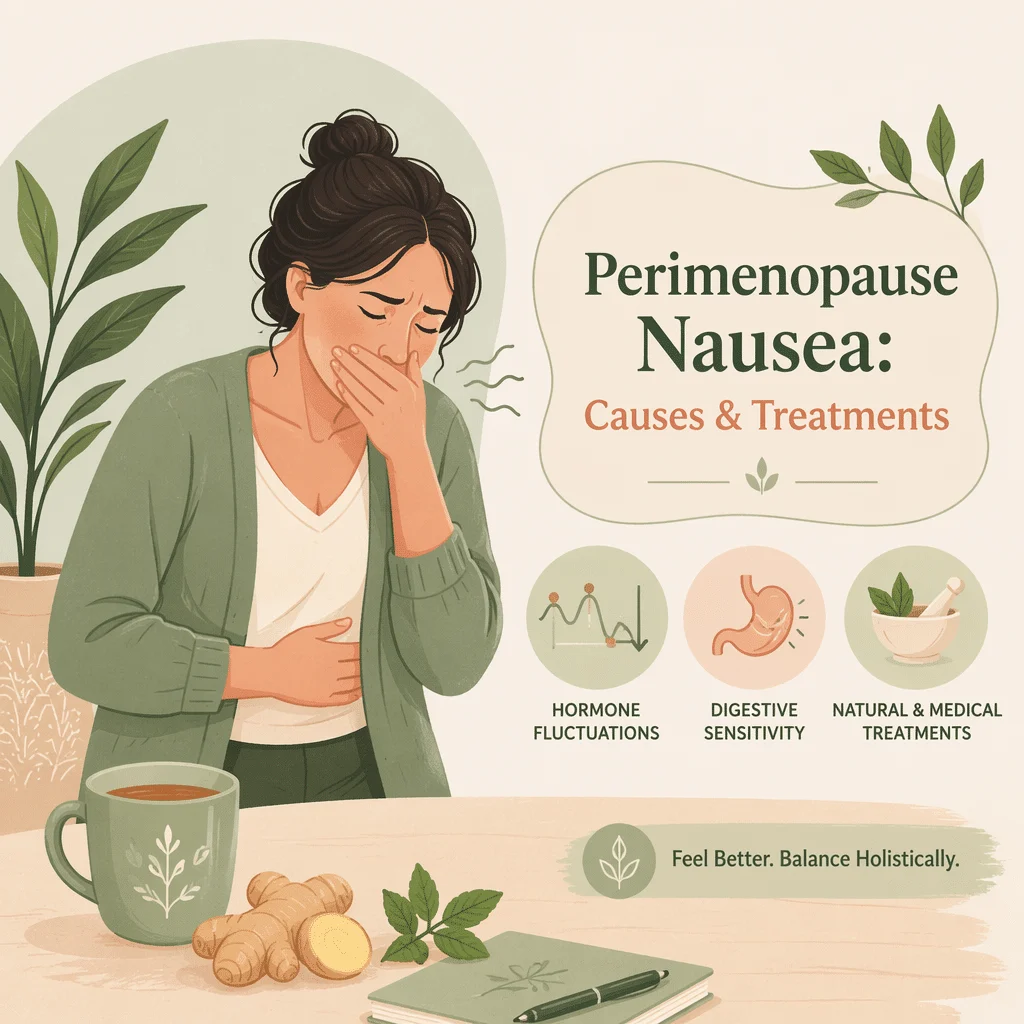
Greața în perimenopauză este acea senzație de rău, de stomac răscolit, uneori asemănătoare cu răul de mișcare, care poate apărea în anii dinaintea opririi definitive a menstruației, adesea de la mijlocul deceniului al cincilea. Rareori vine singură. De obicei însoțește cicluri neregulate, somn întrerupt, bufeuri și dureri de cap — tocmai de aceea este adesea ignorată, pusă pe seama stresului sau a ceva ce ai mâncat. În acest articol vei afla de ce această etapă a vieții provoacă senzații de greață, ce se întâmplă de fapt cu hormonii tăi, care factori de zi cu zi o agravează, ce verifică medicul, de ce analizele hormonale din sânge sunt mult mai puțin utile decât se crede și care sunt semnele de alarmă ce impun o consultație urgentă.
Ce este greața în perimenopauză și unde se încadrează în tranziție
Perimenopauza este perioada de tranziție care precede menopauza. Menopauza în sine este un moment precis: douăsprezece luni consecutive fără menstruație. Tot ce precede acel moment reprezintă perimenopauza. Conform National Institute on Aging, majoritatea femeilor încep tranziția spre menopauză între 45 și 55 de ani, iar Mayo Clinic precizează că aceasta debutează frecvent în jurul vârstei de patruzeci de ani, deși poate apărea mai devreme sau mai târziu.
Greața este un simptom, nu un diagnostic. Poate fi o undă scurtă de rău la trezire, o senzație de greață persistentă care durează cea mai mare parte a zilei sau un episod brusc legat de o durere de cap ori de un bufeu. Unele persoane nu o experimentează niciodată. Biblioteca noastră prezintă și întreaga evoluție a simptomelor și etapelor menopauzei.
Fluctuațiile hormonale, nu doar nivelul scăzut al hormonilor
Aceasta este partea pe care majoritatea explicațiilor o înțeleg greșit. Estrogenii nu scad lin și constant în perimenopauză. Oscilează. Cleveland Clinic descrie hormonii perimenopauzali ca urcând și coborând haotic, nu declinând în linie dreaptă, iar această instabilitate — nu un nivel scăzut într-o anumită zi — este cea care se corelează cel mai strâns cu simptomele. Un ciclu în care estrogenii cresc brusc și apoi scad abrupt poate fi resimțit mult mai rău decât unul în care rămân moderat scăzuți.
Asta explică un tipar pe care mulți îl găsesc confuz: simptomele apar în grup, dispar timp de șase săptămâni, apoi revin fără avertisment. Explică și de ce o singură analiză de sânge spune atât de puțin — un aspect detaliat mai jos.
Dacă greața ta urmează un tipar ciclic clar
Nu orice val de greață la patruzeci de ani aparține perimenopauze. Dacă al tău apare în mod regulat în jurul mijlocului ciclului, aproximativ două săptămâni înainte de menstruație, un ghid separat acoperă cauzele greței de ovulație la mijlocul ciclului. Dacă apare în zilele de dinaintea menstruației, însoțită de alte modificări premenstruale, un alt articol explică modificările hormonale din spatele urinării frecvente înainte de menstruație. Greața perimenopauzală se distinge prin pierderea acestei predictibilități.
De ce apare greața în perimenopauză
Mecanismele nu sunt pe deplin elucidate. Sunt recunoscute mai multe căi plauzibile, iar de obicei mai mult de una acționează simultan.
Fluctuațiile hormonale și tractul digestiv
Atât estrogenul, cât și progesteronul acționează asupra intestinului, influențând viteza cu care se golește stomacul și intensitatea cu care intestinul transmite semnale creierului. Atunci când nivelurile hormonale variază rapid, în loc să rămână stabile, această semnalizare pare să devină mai dezordonată. Rezultatul se poate manifesta ca greață, senzație de sațietate după câteva îmbucături, balonare sau un stomac care rămâne greu ore întregi. Acesta este un mecanism plauzibil, nu unul dovedit.
Migrena declanșată de scăderea estrogenului
Greața este o caracteristică esențială a migrenei, nu un simptom opțional, iar o scădere bruscă a estrogenului este un factor declanșator al migrenei recunoscut de mult timp. În perimenopauză, aceste scăderi devin mai frecvente și mai puțin previzibile, astfel că atacurile se înmulțesc și devin mai greu de anticipat. Dacă greața ta apare însoțită de durere de cap, sensibilitate la lumină sau la sunete ori tulburări vizuale, migrena merită luată în considerare în sine. Biblioteca noastră acoperă cauzele, simptomele și tratamentele migrenei.
Bufeurile, anxietatea și reflexul de greață
Un val de căldură este o creștere bruscă a răspunsului de reglare termică al organismului, însoțită de palpitații, transpirație și înroșirea feței. Unele persoane simt o undă distinctă de greață la apogeul acestuia, care dispare odată ce valul trece. Anxietatea și panica ajung la stomac prin căi nervoase comune și pot produce aceeași senzație fără niciun val de căldură, cele două alimentându-se reciproc în această perioadă de tranziție. Discutăm, de asemenea, simptomele și cauzele anxietății.
Somnul care se tot întrerupe
Transpirațiile nocturne, trezitul devreme și somnul mai ușor sunt frecvente în perimenopauză, iar oboseala prelungită scade pragul la care corpul resimte greața. Greața cea mai intensă la trezire sau care se accentuează seara are adesea o componentă legată de somn. Un alt ghid abordează cauzele greței care apare noaptea.
Factori declanșatori obișnuiți care se suprapun cu tabloul hormonal
Factorii declanșatori obișnuiți nu dispar în perimenopauză. Ei se adaugă peste aceasta, iar câțiva devin mai problematici la vârsta mijlocie:
- Alcoolul. Toleranța scade adesea în acest deceniu; o cantitate care era bine tolerată la 35 de ani poate provoca greață a doua zi dimineață la 47 de ani.
- Mesele sărite sau întârziate. Pauzele lungi fără mâncare declanșează în mod constant atât greața, cât și durerile de cap legate de hormoni.
- Cafeina pe stomacul gol sau o creștere bruscă a consumului pentru a compensa somnul de proastă calitate.
- Refluxul, care devine mai frecvent odată cu vârsta. Acidul care urcă în esofag provoacă greață, gust acid, tuse nocturnă și arsuri în spatele sternului. O pagină dedicată descrie simptomele și tratamentele tusei cauzate de refluxul acid.
- Mesele copioase luate târziu sau culcatul la mai puțin de două-trei ore după masă.
- Medicamente. Mai multe prescripții frecvente menționează greața ca efect secundar, inclusiv unele folosite pentru bufeuri și stări de spirit. Verifică prospectul înainte de a presupune că hormonii sunt responsabili.
Ce verifică un medic și de ce testele hormonale pot induce în eroare
Niciun test de sânge nu returnează un rezultat care să indice „perimenopauză". Diagnosticul se bazează pe vârsta ta, tiparul ciclului menstrual și simptomele tale. Acest lucru surprinde persoanele care se așteaptă la un număr definitiv și este cel mai important lucru de înțeles înainte de a solicita un panel hormonal.
De ce un singur rezultat FSH sau estradiol dovedește foarte puțin
Hormonul foliculostimulant (FSH) tinde să crească pe măsură ce funcția ovariană scade, iar estradiolul scade în general pe parcursul tranziției. Ambele afirmații sunt adevărate ca medie și pe parcursul mai multor ani. Niciunul nu este fiabil într-o singură zi. Ambii hormoni variază de la săptămână la săptămână, iar un rezultat FSH normal nu exclude perimenopauza, după cum nici unul crescut nu o confirmă.
Cleveland Clinic afirmă clar că testarea hormonală nu este necesară pentru diagnosticarea perimenopauzei, că nivelurile fluctuează atât de mult încât testele nu sunt fiabile și că rezultatele FSH în această fază pot fi înșelătoare. MedlinePlus notează, de asemenea, că nivelurile de FSH se modifică pe parcursul lunii și că testarea de rutină a FSH nu este, în general, necesară după vârsta de 45 de ani. Testarea are un rol mai clar atunci când menstruația se oprește neobișnuit de devreme sau când simptomele nu au o explicație evidentă. Echipa noastră explică testul de sânge FSH și cum să îi citești rezultatul, și descriem, de asemenea, testul de sânge pentru estradiol și ce înseamnă valorile sale.
Testele cu adevărat utile în acest caz
Când greața este principala acuză, testele urmăresc de obicei excluderea afecțiunilor care imită perimenopauza sau care necesită un tratament propriu. Boala tiroidiană în special este frecventă la femeile de vârstă mijlocie și produce oboseală, modificări ale ciclului și tulburări digestive care arată aproape identic cu tranziția. Acest ghid listează valorile normale ale hormonilor tiroidieni folosite de majoritatea laboratoarelor.
Un test de sarcină vine primul, deoarece perimenopauza nu înseamnă infertilitate. Ovulația continuă să aibă loc, imprevizibil, până când menstruația s-a oprit timp de un an întreg. Echipa noastră analizează acuratețea și momentul potrivit pentru testele de sarcină la domiciliu. Dacă sângerările au fost abundente sau neregulate, merită verificate și rezervele de fier, deoarece deficiența de fier provoacă prin ea însăși oboseală, dureri de cap și greață. Explicăm cauzele, simptomele și tratamentul feritinei scăzute.
| Analiză | Ce măsoară | De ce poate fi recomandat când apare greața la mijlocul vieții |
|---|---|---|
| TSH (hormonul de stimulare tiroidiană) | Cât de intens stimulează hipofiza glanda tiroidă | Boala tiroidiană este frecventă la femeile de vârstă mijlocie și imită îndeaproape perimenopauza, de aceea este exclusă prima |
| Test de sarcină (hCG) | Hormonul produs în primele etape ale sarcinii | Ovulația continuă neregulat, deci sarcina rămâne posibilă și este exclusă din timp |
| Feritina și analizele pentru fier | Fierul stocat și cel circulant | Sângerările abundente sau imprevizibile sunt frecvente în această perioadă, iar deficiența de fier provoacă oboseală, dureri de cap și greață |
| Enzimele hepatice (ALT, AST) | Semne de iritare sau lezare a celulelor hepatice | Greața persistentă însoțită de pierderea poftei de mâncare sau îngălbenirea pielii indică o cauză hepatică, nu una hormonală |
| Funcția renală (creatinină, RFGe) | Cât de eficient filtrează rinichii deșeurile | Funcția renală redusă provoacă greață și oboseală persistente pe care hormonii nu le pot explica |
| Glicemia à jeun sau HbA1c | Glicemia și controlul pe termen lung | Atât glicemia crescută, cât și cea scăzută provoacă greață, iar riscul metabolic crește odată cu vârsta mijlocie |
| FSH și estradiol | Hormonii reproductivi hipofizari și ovarieni | Uneori solicitați, dar valorile individuale nu sunt fiabile deoarece variază de la săptămână la săptămână |
Semne de alarmă: greața care necesită atenție imediată
Greața perimenopauzală este, în cele mai multe cazuri, ușoară, apare și dispare de la sine și se ameliorează fără tratament. Totuși, unele forme de greață la vârsta mijlocie nu au nicio legătură cu hormonii, iar tocmai la această vârstă distincția contează cel mai mult. Infarctul miocardic la femei se manifestă adesea fără durerea clasică, apăsătoare în piept, iar greața poate fi primul simptom. Nu te convinge singură să nu ceri ajutor pe motiv că ești „probabil doar în perimenopauză".
Solicită îngrijire urgentă sau de urgență dacă greața apare împreună cu oricare dintre următoarele:
- Disconfort în piept, maxilar, braț, gât sau spate superior, dificultăți de respirație, amețeală sau transpirații reci. Sună la serviciile de urgență în loc să aștepți.
- Vărsături care nu îți permit să păstrezi lichidele, sau care continuă mai mult de 24 de ore.
- O durere de cap nouă, severă sau cea mai puternică pe care ai avut-o vreodată, sau o durere de cap însoțită de slăbiciune, confuzie, vorbire neclară sau pierderea vederii.
- Sânge în vomă sau vomă cu aspect de zaț de cafea.
- Durere abdominală severă sau persistentă.
- Îngălbenirea pielii sau a albului ochilor, urină închisă la culoare sau scaune decolorate.
- Scădere în greutate inexplicabilă.
- Orice sângerare vaginală care apare după douăsprezece luni consecutive fără menstruație.
- Febră însoțită de redoare a cefei sau o erupție cutanată care nu dispare la presiune.
Programează o consultație de rutină dacă greața persistă mai mult de câteva săptămâni, îți perturbă alimentația sau activitatea, ori este însoțită de sângerări suficient de abundente încât să îți îmbibe protecția în fiecare oră.
Ce ajută cu adevărat zi de zi
Obiceiuri alimentare și de hidratare
Mesele mici și regulate sunt mai bine tolerate decât trei mese copioase, iar a sta mai mult de patru-cinci ore fără să mănânci este un factor declanșator frecvent și ușor de evitat. Ține la îndemână ceva simplu și uscat pentru dimineață și bea lichide în înghițituri mici și regulate, nu în cantități mari dintr-o dată. Reduce consumul de alcool și observă dacă situația se schimbă în două-trei săptămâni. Dacă refluxul face parte din tabloul clinic, evită să te întinzi timp de două-trei ore după masă.
Somn, stres și sistemul nervos
Tratarea somnului fragmentat nu este o abatere de la problema greței; este parte din gestionarea ei. O cameră răcoroasă, o oră de trezire constantă și limitarea alcoolului seara ajută. Terapia cognitiv-comportamentală este recomandată pentru problemele de somn, anxietate și bufeuri în perioada de tranziție la menopauză și reprezintă o opțiune legitimă pe care o poți discuta cu un medic, nu un ultim resort.
Un jurnal al simptomelor este mai util decât un singur test hormonal
Deoarece nivelurile hormonale variază atât de mult, două luni de notițe bine ținute îi spun unui medic mai mult decât o singură recoltare de sânge. Notează data, ziua din ciclu dacă o mai poți urmări, ce ai mâncat, alcoolul consumat, orele de somn, orice durere de cap sau bufeuri, și un scor al greței de la unu la zece. Tiparele apar rapid, iar acel jurnal este cel mai solid argument pe care îl poți aduce dacă simptomele tale au fost minimizate.
Opțiunile cu prescripție medicală sunt o discuție, nu o alegere personală
Terapia hormonală de menopauză este prescrisă pentru anumite simptome perimenopauzale, iar dacă ți se potrivește depinde de istoricul tău medical, inclusiv de migrena cu aură, sănătatea cardiovasculară și a sânilor, precum și de modul în care ar fi administrată medicația. Este o discuție pe care trebuie să o ai cu un medic care îți cunoaște istoricul, nu ceva de ales dintr-o listă de simptome. Există și medicamente fără hormoni, prescrise pentru bufeuri, iar greața apare printre efectele lor secundare frecvente — ceea ce contează atunci când greața este principala ta problemă. Cure scurte de medicamente antiemetice sunt uneori prescrise odată ce este identificată o cauză.
Suplimente și produse pe bază de plante
Recenziile produselor pe bază de plante și ale suplimentelor complementare pentru simptomele menopauzei constată în mod constant că dovezile privind eficacitatea și siguranța lor rămân slabe. Asta nu înseamnă că nu au niciun efect, dar niciun produs din această categorie nu a demonstrat că merită să fie numit tratament pentru greață. Aceste produse pot interacționa și cu medicamentele eliberate pe bază de rețetă, așa că spune-i medicului și farmacistului tău exact ce iei.
Cele mai recente progrese științifice
Cercetările privind această etapă s-au extins rapid, deși greața a primit mai puțină atenție decât bufeurile sau schimbările de dispoziție. Iată ce adaugă studiile recente, pe înțelesul tuturor.
Greața în menopauză este insuficient studiată, nu infirmată
O analiză de tip scoping din 2025 — un tip de studiu care cartografiază cât de multă cercetare există pe o temă, fără a o răspunde direct — a adunat 122 de studii despre simptomele digestive în perimenopauza naturală și postmenopauză. Constipația fusese examinată în zeci dintre ele; vărsăturile apăreau în doar câteva. Ce înseamnă asta pentru tine: dacă ți s-a spus că nu există „nicio dovadă" că perimenopauza provoacă greață, afirmația mai corectă este că acest simptom abia a fost studiat. Aceasta este o lipsă de date, nu o dovadă că experiența ta este imaginară.
Instabilitatea estrogenului, nu nivelul scăzut al acestuia, provoacă migrena la mijlocul vieții
Două recenzii recente despre migrenă în perioada de tranziție spre menopauză, publicate în 2025 și 2026, ajung la aceeași concluzie: variabilitatea estrogenului în perimenopauză, și nu pur și simplu un nivel mai scăzut al acestuia, este cea care face atacurile mai frecvente și mai greu de anticipat. Ambele notează că migrena cu aură — adică simptomele vizuale sau senzoriale care apar înainte de durerea de cap — tinde să persiste după menopauză și implică un risc vascular propriu. Ce înseamnă asta pentru tine: senzația de greață care apare odată cu durerea de cap sau cu tulburările vizuale poate fi migrenă, care se poate trata în mod specific. Spune-i medicului tău dacă ai aură, deoarece asta influențează ce opțiuni de tratament sunt potrivite.
Somnul și starea de spirit fac parte din aceeași discuție
O analiză din 2025 publicată într-o revistă de top din SUA de obstetrică și ginecologie a identificat tulburările de somn, schimbările de dispoziție și problemele cognitive drept caracteristici centrale ale acestei tranziții, nu aspecte secundare. Ce înseamnă asta pentru tine: a ridica subiectul insomniei sau al stării depresive la aceeași consultație cu cel al greței nu înseamnă a schimba subiectul. Somnul prost îți scade toleranța față de senzația de greață, iar îmbunătățirea unuia o îmbunătățește adesea și pe cealaltă.
Există opțiuni non-hormonale reale, dar cele fără prescripție medicală nu sunt cele dovedite
O analiză din 2023 privind tratamentele non-estrogenice și complementare a concluzionat că mai multe medicamente prescrise non-hormonale sunt eficiente pentru bufeuri, că terapia cognitiv-comportamentală este recomandată pentru anxietate, probleme de somn și simptome vasomotorii, și că dovezile pentru remediile pe bază de plante rămân slabe. Aceeași analiză menționează greața printre efectele secundare frecvente ale acelor medicamente prescrise. Ce înseamnă asta pentru tine: există mai mult de o cale în afara terapiei hormonale, dar un medicament care ajută la bufeuri îți poate deranja stomacul la început — un compromis care merită menționat la consultație.
Toate patru sunt analize ale studiilor existente, nu studii noi realizate pe femei al căror simptom principal este greața, astfel că indică o direcție, nu o certitudine.
Glosar de termeni cheie
| Termen | Definiție |
|---|---|
| Perimenopauza | Perioada de tranziție care precede menopauza, când nivelurile hormonilor ovarieni fluctuează și ciclurile devin neregulate. De obicei începe în jurul vârstei de patruzeci de ani și se încheie la douăsprezece luni după ultima menstruație. |
| Menopauza | Un moment unic în timp, definit ca douăsprezece luni consecutive fără menstruație. |
| Estradiol (E2) | Principala formă de estrogen din anii reproductivi, produsă în cea mai mare parte de ovare. Nivelurile variază considerabil pe parcursul perimenopauze. |
| FSH (hormonul foliculostimulant) | Un hormon hipofizar care stimulează ovarele să maturizeze ovulele. Tinde să crească pe măsură ce funcția ovariană scade, dar variază de la săptămână la săptămână în timpul tranziției. |
| TSH (hormonul de stimulare tiroidiană) | Un hormon hipofizar măsurat pentru a evalua funcția tiroidiană. Este testat frecvent atunci când simptomele din perioada de mijloc a vieții ar putea fi legate de tiroidă. |
| Feritină | O proteină care reflectă rezervele de fier ale organismului. Valorile scăzute sugerează deficiență de fier, care apare adesea după menstruații abundente. |
| Simptome vasomotorii | Termenul medical pentru bufeuri și transpirații nocturne. |
| Aură | Simptome vizuale sau senzoriale de avertizare care preced unele atacuri de migrenă, cum ar fi lumini pâlpâitoare, linii în zigzag sau un punct orb. |
| Terapia hormonală de menopauză | Estrogen eliberat pe bază de rețetă, adesea combinat cu un progestogen, utilizat pentru tratarea anumitor simptome ale menopauzei. Potrivirea depinde de istoricul medical individual. |
| Antiemetic | Un medicament prescris pentru a reduce greața și vărsăturile. |
Întrebări frecvente
Perimenopauza provoacă greață?
Greața este raportată de multe persoane în timpul tranziției la menopauză, iar principalele explicații sunt fluctuațiile hormonale care acționează asupra tractului digestiv, migrena declanșată de scăderea estrogenului, bufeurile, anxietatea și somnul perturbat. Nu se numără printre simptomele clasice din manuale în același mod ca bufeurile și menstruațiile neregulate, parțial pentru că a fost studiată mult mai puțin. Asta nu o face mai puțin reală, dar înseamnă că un medic va căuta în mod rezonabil alte explicații înainte de a pune totul pe seama hormonilor.
Cât durează greața din perimenopauză?
Nu există o durată fixă și nicio sursă serioasă nu îți va da una. Episoadele individuale pot dura de la câteva minute până la câteva ore. Tendința spre stări de greață urmează în general tranziția în sine, pe care Institutul Național pentru Îmbătrânire o descrie ca durând un număr variabil de ani și diferind semnificativ de la o persoană la alta. Multe persoane constată că simptomele se ameliorează odată ce ciclurile se opresc complet și nivelurile hormonale se stabilizează la un nivel scăzut constant. Greața care persistă continuu timp de săptămâni sau care se agravează progresiv ar trebui evaluată, nu ignorată.
Ar putea fi vorba de sarcină, nu de perimenopauză?
S-ar putea. Perimenopauza nu înseamnă infertilitate, iar ovulația continuă, imprevizibil, până când ai trecut douăsprezece luni fără menstruație. Ciclurile neregulate fac dintr-o menstruație întârziată un semnal slab în sine, așa că un test de sarcină este un prim pas logic dacă există orice posibilitate. Ambele situații pot produce greață, sensibilitate la nivelul sânilor și oboseală, deci simptomele singure nu pot face diferența.
De ce este greața mai intensă dimineața?
Starea de greață matinală în această perioadă reflectă de obicei pauza lungă de peste noapte fără mâncare, scăderea glicemiei, refluxul acumulat în timp ce ai stat întinsă, o migrenă apărută în timpul somnului sau pur și simplu o noapte proastă. Mâncatul a ceva ușor imediat după trezire, ridicarea capului patului și menținerea unui program de trezire constant ajută adesea. Greața matinală singură nu indică o sarcină, dar dacă sarcina este posibilă, fă un test în loc să presupui.
De ce mă simt rău după ce mănânc?
Senzația de greață sau de plenitudine neplăcută la scurt timp după masă poate reflecta golirea mai lentă a stomacului, refluxul sau dimensiunea porțiilor. Mesele copioase, cele bogate în grăsimi, alcoolul și mâncatul târziu cresc probabilitatea acestor simptome. Mesele mai mici și mai frecvente sunt primul lucru de încercat. Dacă apare după aproape fiecare masă, este însoțită de scădere în greutate sau dificultăți la înghițit, ori durează de săptămâni, cere o evaluare în loc să îți ajustezi dieta la nesfârșit.
Poate un test de sânge confirma perimenopauza?
Nu în mod fiabil. Cleveland Clinic precizează că testele hormonale nu sunt necesare pentru a diagnostica perimenopauza, deoarece nivelurile fluctuează prea mult pentru ca rezultatele să fie de încredere, iar MedlinePlus menționează că testarea de rutină a FSH nu este în general necesară după vârsta de 45 de ani. Testele sunt mai utile pentru excluderea altor afecțiuni, cum ar fi bolile tiroidiene, sarcina sau deficiența de fier, ori atunci când menstruația se oprește neobișnuit de devreme. Vârsta, istoricul ciclului menstrual și simptomele tale rămân cele mai relevante indicii.
Surse
- Cleveland Clinic — Perimenopauza: vârstă, stadii, semne, simptome și tratament — https://my.clevelandclinic.org/health/diseases/21608-perimenopause
- National Institute on Aging, National Institutes of Health — What Is Menopause? — https://www.nia.nih.gov/health/menopause/what-menopause
- Mayo Clinic — Perimenopauza: simptome și cauze — https://www.mayoclinic.org/diseases-conditions/perimenopause/symptoms-causes/syc-20354666
- MedlinePlus, US National Library of Medicine — Testul pentru nivelul hormonului foliculostimulant (FSH) — https://medlineplus.gov/lab-tests/follicle-stimulating-hormone-fsh-levels-test/
- Shaw N, Abbott R, Pettinger C — Volumul și caracteristicile cercetărilor privind simptomele gastrointestinale în perimenopauza și postmenopauza “naturală”: o analiză de tip scoping — Women’s Health (London), 2025 — https://doi.org/10.1177/17455057251387470
- Korn TF, Bernstein C — Migrena în tranziția menopauzală și după aceasta: o analiză narativă — Headache, 2026 — https://doi.org/10.1111/head.70071
- Waliszewska-Prosol M, Grandi G, Ornello R, et al. — Menopauza, perimenopauza și migrena: înțelegerea intersecțiilor și implicațiile pentru tratament — Neurology and Therapy, 2025 — https://doi.org/10.1007/s40120-025-00720-2
- Williams M, Maki PM — A review of cognitive, sleep, and mood changes in the menopausal transition: beyond vasomotor symptoms — Obstetrics and Gynecology, 2025 — https://doi.org/10.1097/AOG.0000000000005914
- Al Wattar BH, Talaulikar V — Terapii non-estrogenice și complementare pentru menopauză — Best Practice and Research: Clinical Endocrinology and Metabolism, 2023 — https://doi.org/10.1016/j.beem.2023.101819
Lectură suplimentară
- Transpirații nocturne înainte de menstruație: cauze și tratamente
- Panoul de analize pentru fier: feritina, fierul seric și saturația transferinei
- Panoul pentru funcția renală și cum să citești analizele de sânge pentru rinichi
- Niveluri de glucoză: cauze, simptome și tratamente
- Nivelurile ALT: semnificație, cauze și valori normale
Înțelege-ți rezultatele analizelor cu AI DiagMe
Când greața apare la patruzeci de ani, întrebarea utilă este rareori “sunt hormonii mei scăzuți”, ci “ce altceva ar putea fi”. Tocmai aici un buletin de analize își dovedește utilitatea: un test tiroidian, un test de sarcină, un panou pentru fier și o verificare de bază a valorilor hepatice, renale și a glicemiei pot clarifica majoritatea alternativelor dintr-o singură recoltare. AI DiagMe îți explică acele rezultate pe înțelesul tău, astfel încât să intri la consultație știind ce valori sunt în afara intervalului normal și ce întrebări merită adresate. Te ajută să îți înțelegi analizele; nu te diagnostichează și nu îl înlocuiește pe medicul tău.
Obține interpretarea rezultatelor în câteva minute