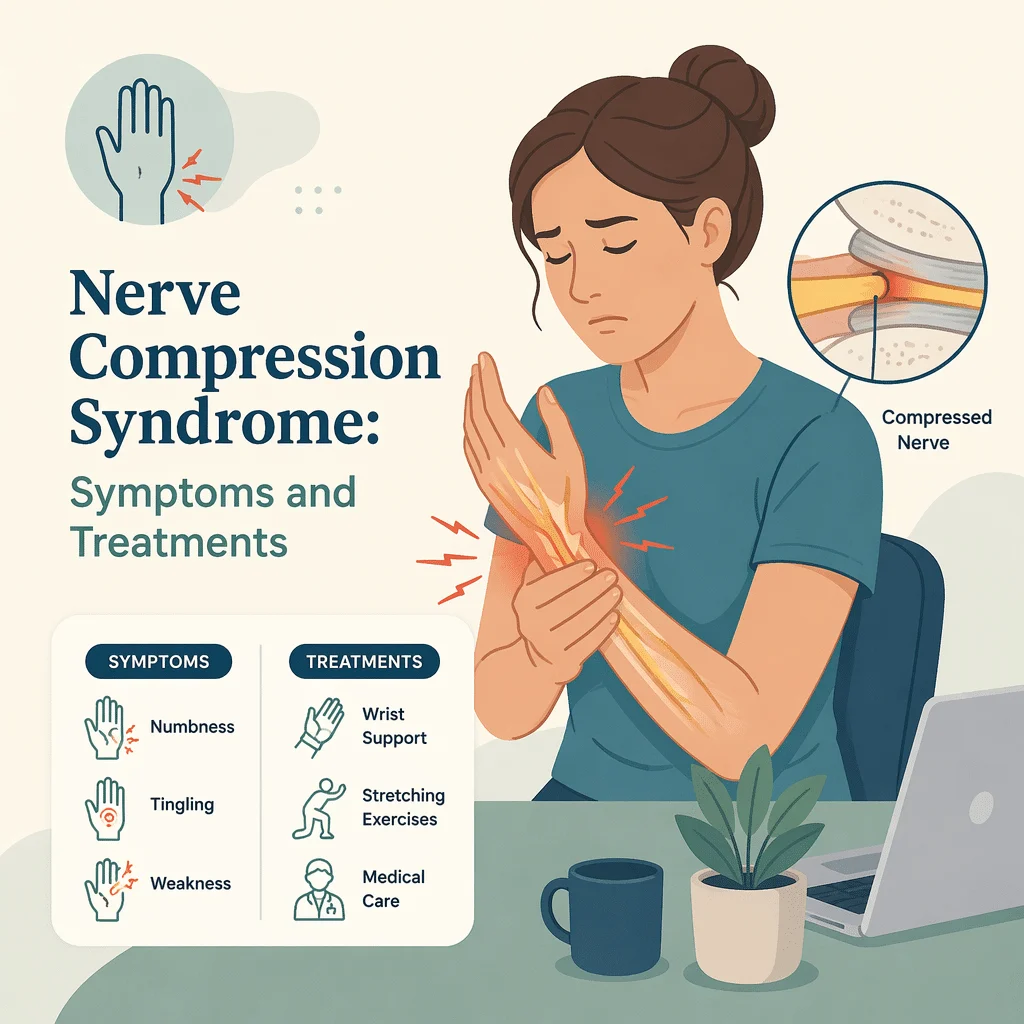
Sindromul de compresie nervoasă apare atunci când țesuturile din jur apasă pe un nerv și perturbă semnalele pe care acesta le transmite, provocând amorțeală, furnicături, durere arsură sau slăbiciune în zona deservită de acel nerv. Presiunea poate veni de la o teacă tendinoasă inflamată, un disc herniat, țesut cicatricial, retenție de lichide sau un canal pur și simplu mai îngust decât în mod normal. Majoritatea cazurilor se rezolvă cu tratament conservator, fără intervenție chirurgicală, iar știind ce tip ai schimbă ce trebuie să faci în continuare. În acest articol vei afla cum apare problema, unde se manifestă și cum se simte fiecare localizare, ce teste o confirmă, ce analize de sânge pot depista o cauză tratabilă și ce tratamente sunt susținute de dovezi.
Ce este sindromul de compresie nervoasă
Un nerv periferic funcționează ca un mănunchi de fire izolate. Fibrele transmit senzațiile către creier și comenzile către mușchi, iar o teacă de grăsime numită mielină menține fiecare semnal rapid și clar. Sindromul de compresie nervoasă apare atunci când ceva strânge acel mănunchi: teaca se deformează, semnalul încetinește în acel punct, iar creierul primește o versiune distorsionată a ceea ce a raportat nervul.
De ce presiunea produce senzații atât de ciudate
Fibrele senzitive sunt mai subțiri și mai fragile decât fibrele motorii, de aceea ele „se plâng" primele. Asta explică secvența pe care o descriu cei mai mulți: furnicături, apoi amorțeală parțială, apoi o durere arsură, și abia mai târziu pierderea forței. Presiunea susținută blochează și micile vase care hrănesc nervul, de aceea simptomele se agravează noaptea. Modificările timpurii sunt reversibile; după câteva luni, fibrele degenerează și recuperarea se îngreunează — cel mai puternic argument pentru a evalua sindromul de compresie nervoasă devreme, în loc să aștepți să treacă de la sine.
Cât de frecvente sunt aceste sindroame
Nervii comprimați se numără printre cele mai frecvente motive pentru care oamenii se prezintă la medic din cauza amorțelii. O meta-analiză din 2024, care a inclus peste cinci milioane de persoane, a arătat că sindromul de tunel carpian este surprinzător de răspândit, deși cifrele variau enorm în funcție de criteriile de diagnostic — simptome sau teste formale. Concluzia sinceră: afectează o parte semnificativă a adulților, mult mai des femeile decât bărbații, iar numărul real depinde de unde trasezi linia diagnostică.
Unde sunt prinși nervii și cum se simte fiecare localizare
Nervii sunt vulnerabili oriunde trec printr-un tunel strâmt de os, ligament sau mușchi, sau se află aproape de suprafață, fără suficientă protecție. Deoarece fiecare nerv deservește un teritoriu bine definit de piele și un set de mușchi, tiparul simptomelor tale dezvăluie de obicei localizarea cu mult înainte de orice test.
| Locul compresiei | Nervul implicat | Simptome caracteristice | Factori declanșatori frecvenți |
|---|---|---|---|
| Încheietura mâinii (tunelul carpian) | Nervul median | Amorțeală la degetul mare, arătător și mijlociu, mai accentuată noaptea; slăbiciunea prizei de pensă | Mișcări repetitive de prindere, unelte vibrante, sarcină, tulburări tiroidiene sau ale glicemiei |
| Cotul intern (tunelul cubital) | Nervul ulnar | Furnicături la degetul inelar și cel mic, durere la cotul intern, prindere stângace | Sprijinirea pe cot, perioade lungi cu cotul îndoit, dormit cu brațul îndoit |
| Gât (radiculopatie cervicală) | Rădăcina nervoasă cervicală | Durere fulgerătoare din gât spre umăr și braț, amorțeală în pete, slăbiciune musculară | Hernie de disc, osteofite artrozice, traumatism cervical |
| Zona lombară inferioară (radiculopatie lombară, sciatică) | Rădăcina nervoasă lombară sau sacrală | Durere de la fesă spre spatele piciorului, amorțeală în gambă sau picior | Hernie de disc, îngustarea canalului spinal, ridicarea greutăților |
| Șoldul extern și coapsa | Nervul femural cutanat lateral | Arsură și amorțeală pe fața externă a coapsei, fără slăbiciune musculară | Curele și centurile strânse, creșterea în greutate, sarcina, centurile de scule |
| Glezna internă (tunelul tarsian) | Nervul tibial | Arsură la talpă, amorțeală la călcâi și boltă plantară, mai intensă după stat în picioare | Picioare plate, umflarea gleznei, entorsă veche, retenție de lichide |
| Genunchiul extern | Nervul peronier comun | Picior căzut, amorțeală pe dosul piciorului și pe fața externă a gambei | Obiceiul de a încrucișa picioarele, ghemuitul prelungit, ghipsuri strânse, scădere rapidă în greutate |
Braț și mână
Încheietura mâinii și cotul intern reprezintă cele mai frecvente localizări la nivelul membrului superior. Un autotest util este să verifici ce degete sunt afectate: dacă simptomele apar pe partea degetului mare, este vorba de nervul median la nivelul încheieturii; dacă apar pe partea degetului mic, de nervul ulnar la cot. Durerea din jurul omoplatului poate proveni dintr-o rădăcină nervoasă iritată la nivelul gâtului, nu din articulație în sine — despre aceasta discutăm la cauzele și tratamentele nervului ciupit în omoplat.
Coloana vertebrală, șoldul și piciorul
În zona inferioară a corpului, compresia începe cel mai adesea la nivelul coloanei. Când o rădăcină nervoasă lombară este comprimată, durerea coboară pe picior într-o bandă îngustă — explicăm în detaliu simptomele, cauzele și semnele de alarmă ale sciaticii. Mai jos, un nerv poate fi prins la nivelul genunchiului sau al gleznei, și descriem simptomele, cauzele și tratamentele nervului ciupit la genunchi.
Amorțeala unui singur deget de la picior reflectă de obicei o ramură terminală mică, nu o problemă spinală — analizăm acest subiect la cauzele, simptomele și tratamentele amorțelii degetului mare de la picior. Furnicăturile care se răspândesc pe spate fără a urma o bandă specifică reprezintă o situație diferită, și prezentăm cauzele, tiparul și semnele de alarmă ale furnicăturilor în spate.
Ce cauzează sindromul de compresie nervoasă și cine este expus riscului
Rareori există o singură cauză. La majoritatea persoanelor cu sindrom de compresie nervoasă, există un factor mecanic declanșator care acționează pe un fond ce a făcut deja nervul mai vulnerabil. Distincția dintre cele două este importantă: componenta mecanică răspunde la atele și modificări de tehnică, iar fondul de bază — la tratarea afecțiunii care îl generează.
Cauze mecanice și anatomice
- Prinderea sau ciupirea repetată cu forță, mai ales cu vibrații de la unelte electrice
- Posturi incomode menținute timp îndelungat, cum ar fi ore cu cotul îndoit sau cu încheietura mâinii dată pe spate
- Presiune directă de la o margine dură, încrucișarea picioarelor sau un ghips ori o centură strânsă
- O hernie de disc sau osteofite care îngustează spațiul prin care iese o rădăcină nervoasă
- Umflătură după o fractură, entorsă sau intervenție chirurgicală, și țesutul cicatricial care urmează
- Un tunel îngust din naștere, motiv pentru care în unele familii sunt afectați mai mulți membri
Afecțiuni medicale care lasă nervii vulnerabili
Mai multe afecțiuni pot acumula lichid într-un spațiu îngust sau pot face fibrele nervoase mai sensibile la presiune. Diabetul este cel mai clar exemplu: glicemia crescută afectează nervii mici și circulația lor, astfel că o compresie pe care un nerv sănătos ar ignora-o devine simptomatică. Dacă îți monitorizezi valorile, îți explicăm graficul de conversie A1C care transformă valoarea ta A1C în glucoză medie, și explicăm nivelurile glicemiei à jeun și ce înseamnă ele.
O tiroidă hipoactivă provoacă umflături care îngustează tuneluri precum tunelul carpian, și acoperim simptomele, cauzele și tratamentul hipotiroidismului. Boala articulară inflamatorie îngroașă țesutul care căptușește tendoanele, și detaliem simptomele, diagnosticul și tratamentul artritei reumatoide. Sarcina adaugă retenție de lichide și de obicei se rezolvă după naștere. Un deficit de vitamina B12 nu comprimă nimic, dar afectează nervii în mod independent și poate imita sau agrava o compresie nervoasă reală.
Munca, greutatea și obiceiurile zilnice
O analiză sistematică din 2024 privind compresia nervilor spinali a identificat un set consistent de factori contribuitori: deceniile de mijloc ale vieții adulte, fumatul, greutatea corporală în exces, factorii de risc cardiovascular și munca ce implică aplecări repetate înainte sau manipulare manuală. Câțiva dintre aceștia sunt modificabili — și asta e partea încurajatoare. La nivelul încheieturii mâinii, durata contează mai mult decât intensitatea: două ore de prindere continuă solicită nervul mai mult decât același total distribuit pe parcursul unei zile.
Cum pun medicii diagnosticul de sindrom de compresie nervoasă
Diagnosticul se construiește în etape. Istoricul medical îi spune medicului care nerv este afectat, examinarea testează această ipoteză, iar abia apoi testele electrice sau imagistice confirmă severitatea. Agențiile federale de sănătate mențin o prezentare generală a sindromului de tunel carpian, pe înțelesul tuturor.
Examinarea și testele provocative
Medicul tău va identifica zonele cu sensibilitate redusă, va testa anumiți mușchi mici și va verifica reflexele. Apoi va folosi manevre provocatoare, care solicită nervul suspect pentru a vedea dacă simptomele reapar. Percuția peste nerv reprezintă semnul Tinel; menținerea încheieturilor în flexie este testul Phalen. O meta-analiză din 2023, care a inclus treizeci și unu de studii, a constatat că niciunul nu este fiabil singur: un rezultat pozitiv este informativ, dar unul negativ ratează multe cazuri reale. Niciun test clinic izolat nu ar trebui să te liniștească dacă simptomele persistă.
Studiile de conducere nervoasă, EMG și ecografia
Un studiu de conducere nervoasă transmite un mic impuls electric de-a lungul nervului și măsoară cât de rapid și de puternic ajunge acesta; o încetinire locală indică exact locul compresiei și îi evaluează severitatea. Electromiografia, efectuată de obicei în aceeași ședință, analizează activitatea musculară cu un ac fin și arată dacă mușchii au început să fie afectați. Ecografia este alternativa mai nouă: nedureroasă, rapidă și capabilă să evidențieze nervul umflat chiar înainte de zona de compresie, precum și cauzele structurale, cum ar fi un chist.
Analize de sânge care caută o cauză tratabilă
Analizele de sânge nu diagnostichează un nerv prins, dar explică adesea de ce a cedat. Când simptomele afectează ambele părți, sunt severe față de efortul depus sau se ameliorează lent, medicii verifică funcția tiroidiană, glicemia, vitamina B12 și markerii inflamatori. Îți explicăm analizele TSH și cum să îți citești rezultatele tiroidiene, îți explicăm analizele pentru vitamina B12 și cum să îți citești rezultatele, și explicăm analizele CRP și cum să îți citești rezultatele inflamației. Corectarea uneia dintre aceste probleme nu va elibera compresia, dar elimină un factor care diminuează eficacitatea oricărui alt tratament.
Tratamentele pentru sindromul de compresie nervoasă
Tratamentul progresează în trepte, iar majoritatea oamenilor nu ajung niciodată la ultima etapă. Factorii decisivi sunt durata simptomelor, dacă forța musculară sau masa musculară se pierd și cât de mult sunt afectate somnul și activitatea profesională.
Tratamentul conservator vine primul
Odihna față de activitatea care agravează simptomele, o atelă care menține articulația în poziție neutră pe timp de noapte și modificarea modului în care lucrezi la birou sau la bancul de lucru reprezintă baza tratamentului de primă linie. Exercițiile de alunecare nervoasă, care ajută nervul să se miște liber în interiorul tecii sale, prezintă un risc scăzut. O meta-analiză de rețea din 2025, care a inclus patruzeci și nouă de studii, a clasat terapia manuală practică pe primul loc pentru ameliorarea durerii. Antiinflamatoarele ajută la reducerea durerii, dar nu și a presiunii.
Injecțiile cu corticosteroizi și alte tipuri de injecții
O injecție cu corticosteroizi în apropierea tunelului reduce inflamația și poate oferi luni de ameliorare — valoroasă atunci când cauza este temporară, ca în sarcină. Este utilă și din punct de vedere diagnostic: un răspuns bun susține diagnosticul. Ameliorarea dispare adesea, iar injecțiile repetate sunt evitate deoarece slăbesc țesuturile din jur.
Când are sens intervenția chirurgicală
Intervenția chirurgicală eliberează structura care comprimă nervul, cel mai frecvent prin secționarea ligamentului care formează acoperișul tunelului carpian. Este rezervată simptomelor care persistă în ciuda lunilor de tratament conservator sau persoanelor care prezintă atrofie musculară ori amorțeală permanentă, situații în care așteptarea riscă pierderi definitive. Recuperarea durează câteva săptămâni pentru activitățile ușoare și câteva luni pentru activitățile care solicită priza puternică. Amorțeala nocturnă se ameliorează adesea în câteva zile; sensibilitatea vârfurilor degetelor revine mai lent.
Când să mergi la medic pentru sindromul de compresie nervoasă
Majoritatea nervilor comprimați reprezintă mai degrabă un inconvenient decât o urgență, dar câteva situații nu ar trebui gestionate acasă.
Solicită îngrijire medicală în aceeași zi sau de urgență dacă ai:
- Slăbiciune bruscă care te împiedică să ridici piciorul, să apuci sau să ții obiecte
- Amorțeală în zona inghinală, a feselor sau a coapselor interioare, ori pierderea bruscă a controlului vezicii sau intestinului, însoțită de dureri de spate
- Simptome apărute brusc după o cădere, un accident rutier sau o lovitură directă
- Amorțeală care se extinde rapid pe ambele părți ale corpului
- Febră, scădere inexplicabilă în greutate sau dureri nocturne, alături de simptome la spate și picioare
Programează o consultație de rutină dacă ai:
- Furnicături sau amorțeală care te trezesc din somn în majoritatea nopților, de mai mult de două sau trei săptămâni
- Simptome la ambele mâini sau ambele picioare, ceea ce crește probabilitatea unei cauze medicale
- Subțierea vizibilă a mușchiului de la baza degetului mare
- Amorțeală care a devenit permanentă, nu intermitentă
- Nicio ameliorare după o lună de purtare a atelei și de modificare a activităților
Prevenirea recurenței sindromului de compresie nervoasă
Odată iritat, un nerv rămâne sensibil mult timp, astfel că prevenția înseamnă eliminarea presiunii prelungite. Menține articulațiile aproape de poziția neutră: încheietura mâinii să nu fie îndoită nici înainte, nici înapoi, iar cotul să nu rămână îndoit mai mult de un unghi drept ore în șir. Fă pauze în activitățile repetitive și verifică pe ce se sprijină corpul tău — cotierele, marginile biroului și încrucișarea picioarelor sunt cauze frecvente.
Menținerea sub control a afecțiunilor medicale de fond este la fel de importantă. Un nivel stabil al glicemiei, o tiroidă tratată, inflamația controlată și un aport adecvat de vitamina B12 oferă nervului o marjă mai mare înainte ca presiunea să devină simptomatică. Fumatul merită menționat separat: apare în mod repetat ca factor de risc pentru compresia nervilor spinali și îngustează vasele care alimentează nervii. Scăderea treptată în greutate reduce încărcarea coloanei vertebrale și umflarea țesuturilor.
Cele mai recente progrese științifice
Cercetările din ultimii trei ani au schimbat câteva aspecte practice legate de diagnosticarea și tratarea unui nerv comprimat. Iată ce spun cele mai recente dovezi.
Ecografia a ajuns din urmă testele electrice, iar un test normal nu dovedește mare lucru
O analiză sistematică din 2025 a comparat ecografia cu studiile de conducere nervoasă pe baza a optsprezece studii anterioare și nu a găsit nicio diferență semnificativă în capacitatea fiecăreia de a identifica sindromul de tunel carpian. O analiză din 2023 a manevrelor provocatoare a indicat același lucru: semnul Tinel ratează aproximativ jumătate din cazurile reale. Ce înseamnă asta pentru tine: o ecografie ca primă investigație este o alegere modernă și justificată, nu o scurtătură; iar dacă un medic îți bate ușor la încheietură, nu obține niciun răspuns și te trimite acasă în timp ce simptomele continuă să te trezească noaptea, este rezonabil să ceri o evaluare suplimentară.
O atelă ca primă măsură nu exclude intervenția chirurgicală, iar injecția rămâne o opțiune nesoluționată
O analiză Cochrane din 2024, tipul care reunește toate studiile pe o temă și evaluează cât de fiabile sunt rezultatele, a constatat că intervenția chirurgicală a produs o îmbunătățire generală clară mai frecvent decât tratamentul non-chirurgical, însă diferența în ceea ce privește simptomele zilnice și funcția mâinii a fost suficient de mică încât mulți nu ar observa-o. Aproape jumătate dintre cei care au început cu o atelă au ales ulterior operația, în timp ce aproape nimeni dintre cei operați nu a avut nevoie de o a doua intervenție.
O altă analiză Cochrane din 2024 a comparat injecția cu corticosteroizi cu intervenția chirurgicală și a constatat că dovezile sunt prea incerte pentru a declara un câștigător. Ce înseamnă asta pentru tine: o atelă în primă instanță nu pierde nimic, iar o injecție oferită înainte de operație reflectă o incertitudine reală, nu o reticență de a te îndruma spre specialist.
Terapia manuală a dat rezultate mai bune decât se așteptau, iar hidrodisecția este o metodă de urmărit
O meta-analiză de rețea din 2025, o metodă care clasifică tratamentele între ele chiar și atunci când nu au fost testate direct unele față de altele, a reunit patruzeci și nouă de studii și a plasat terapia manuală realizată de un kinetoterapeut specializat pe primul loc pentru ameliorarea durerii, înaintea dispozitivelor laser și cu unde de șoc; perioada de urmărire a fost scurtă, deci nu se știe cât durează beneficiul. O analiză din 2025 a nouă studii mici a examinat hidrodisecția — injectarea unei cantități mici de lichid de-a lungul nervului sub ghidaj ecografic pentru a-l elibera din țesutul care îl comprimă — și a constatat că soluția simplă de dextroză este cea mai eficientă pentru ameliorarea rapidă. Ce înseamnă asta pentru tine: tratamentul manual realizat de un specialist merită să fie discutat, iar hidrodisecția este o opțiune despre care merită să întrebi.
În cazul sciaticii, intervenția chirurgicală aduce viteză de recuperare, nu un rezultat final mai bun
O analiză din 2023 publicată într-o revistă medicală de prestigiu a reunit douăzeci și patru de studii privind sciatica cauzată de o hernie de disc. Intervenția chirurgicală a ameliorat durerea în picior considerabil mai rapid în primele săptămâni și luni, însă la douăsprezece luni diferența dintre grupul operat și cel neoperat dispăruse în mare parte, iar autorii au evaluat certitudinea datelor ca fiind scăzută. Ce înseamnă asta pentru tine: dacă durerea este suportabilă și nu ai slăbiciune musculară, așteptarea este o opțiune reală.
Glosar
| Termen | Definiție |
|---|---|
| Tunelul carpian | Un canal îngust pe fața palmară a încheieturii mâinii, delimitat de oasele carpiene și un ligament gros. Nervul median și nouă tendoane împart acest spațiu, astfel că orice inflamație crește rapid presiunea. |
| Nervul median | Nervul care transmite sensibilitatea degetului mare, arătătorului și degetului mijlociu și controlează mușchii de la baza degetului mare. Este nervul prins în sindromul de tunel carpian. |
| Nervul ulnar | Nervul care trece pe la spatele cotului interior, în șanțul pe care oamenii îl numesc „osul hazului". Deservește inelarul și degetul mic, precum și majoritatea mușchilor mici care reglează prinderea. |
| Radiculopatie | Compresia sau iritarea unei rădăcini nervoase la locul unde iese din coloana vertebrală. Simptomele urmează banda de piele pe care o deservește acea rădăcină, de aceea durerea iradiază de-a lungul unui braț sau picior. |
| Neuropatie de încarcerare | Denumirea medicală pentru un nerv comprimat la un punct anatomic îngust specific. Sindromul de compresie nervoasă este termenul uzual pentru același lucru. |
| Studiu de conducere nervoasă | Un test care trimite un impuls electric mic de-a lungul unui nerv și măsoară cât de rapid și de puternic ajunge semnalul. O încetinire într-un anumit punct indică o compresie la acel nivel. |
| Electromiografie | Adesea prescurtat EMG, acest test înregistrează activitatea electrică a mușchiului folosind un ac fin. Arată dacă un nerv comprimat a început să afecteze mușchii pe care îi inervează. |
| Test provocator | O manevră rapidă efectuată în cabinet, care solicită deliberat un nerv pentru a vedea dacă reproduce simptomele tale. Testul Phalen și semnul Tinel sunt cele mai cunoscute. |
| Hidrodisecție | O injecție cu lichid ghidată ecografic în jurul unui nerv, cu scopul de a-l separa de țesutul care îl comprimă. Este o opțiune mai nouă, aflată încă în studiu. |
| Picior căzut | Slăbiciunea mușchilor care ridică partea din față a piciorului, astfel încât degetele se agață de sol la mers. Este un semn de avertizare al unei compresii nervoase semnificative. |
Întrebări frecvente
Este periculoasă compresia nervoasă?
În majoritatea cazurilor, nu. Un nerv comprimat intermitent provoacă simptome neplăcute, dar fără consecințe durabile, iar marea majoritate a persoanelor se recuperează cu tratament conservator. Riscul apare atunci când problema este ignorată mult timp. Presiunea prelungită deteriorează fibrele nervoase în sine, iar odată ce mușchiul s-a subțiat sau amorțeala a devenit permanentă, recuperarea este mai lentă și poate fi incompletă chiar și după o intervenție chirurgicală reușită. Există, de asemenea, un grup restrâns de situații urgente — în special pierderea controlului vezicii urinare sau al intestinului asociată cu dureri de spate, ori slăbiciune bruscă după un traumatism — care necesită evaluare în aceeași zi.
Ce diagnostichează un test de conducere nervoasă?
Măsoară cât de rapid și de puternic circulă un semnal electric de-a lungul unui nerv, oferind clinicianului trei informații: dacă nervul este cu adevărat comprimat, exact unde pe traseul său se află problema și cât de gravă este leziunea. De asemenea, ajută la diferențierea unui singur nerv prins față de o tulburare nervoasă generalizată care afectează mai mulți nervi simultan, cum ar fi neuropatia care poate însoți diabetul sau deficiența de vitamina B12. Această distincție este importantă, deoarece tratamentele sunt complet diferite.
Cât de precise sunt testele de conducere nervoasă?
Sunt bune, dar nu perfecte. Cercetările comparative recente plasează sensibilitatea lor în același interval ca ecografia, ceea ce înseamnă că ambele ratează o parte din cazurile reale. Precizia variază și în funcție de vârstă: testul se comportă diferit la pacienții tineri față de cei vârstnici, parțial deoarece valorile de referință normale se modifică de-a lungul vieții. Prin urmare, clinicienii tratează rezultatul ca pe o piesă dintr-un puzzle, nu ca pe un verdict, și îl coroborează cu simptomele și constatările examinării tale.
Are efecte secundare un test de conducere nervoasă?
Efectele secundare grave sunt foarte rare. Partea de conducere nervoasă se simte ca o serie de scurte șocuri electrice statice, incomode, dar nu dureroase pentru majoritatea oamenilor, și nu lasă nimic în urmă. Dacă se efectuează și electromiografie, un ac fin este introdus în câțiva mușchi, ceea ce poate lăsa o ușoară durere sau o mică vânătaie timp de o zi sau două. Spune-i persoanei care efectuează testul dacă iei anticoagulante sau dacă ai un stimulator cardiac sau alt dispozitiv implantat, deoarece aceasta va adapta tehnica.
Poate fi efectuat un test de conducere nervoasă la nivelul picioarelor și al labei piciorului?
Da. Tehnica este identică cu cea folosită pentru brațe, cu electrozi plasați de-a lungul căilor nervului sciatic, tibial sau peronier. Testarea picioarelor este solicitată frecvent când există picior căzut, amorțeală la talpă sau călcâi, sau durere la picior care ar putea proveni fie dintr-o rădăcină nervoasă spinală comprimată, fie dintr-un nerv prins mai jos, la nivelul genunchiului sau gleznei. Testarea ambelor picioare ajută la diferențierea unui singur nerv prins de o neuropatie generalizată.
Cât timp îi ia unui nerv comprimat să se recupereze?
Depinde de cât timp a fost comprimat și de cât de mare a fost leziunea. Simptomele prezente de câteva săptămâni se ameliorează adesea în decurs de o lună sau două, odată ce presiunea este înlăturată. Când compresia a durat mai multe luni, teaca izolatoare trebuie să se refacă, iar îmbunătățirea se produce de obicei în trei până la șase luni. Dacă fibrele nervoase în sine au fost afectate, regenerarea are loc lent, în jur de un milimetru pe zi, astfel că sensibilitatea la vârful degetelor de la mâini sau de la picioare poate dura un an sau mai mult să revină, iar o parte din pierdere poate fi permanentă.
Surse
- National Institute of Arthritis and Musculoskeletal and Skin Diseases — Sindromul de tunel carpian: simptome și cauze — NIAMS, National Institutes of Health. niams.nih.gov
- MedlinePlus Medical Encyclopedia — Sindromul de tunel carpian — U.S. National Library of Medicine. medlineplus.gov
- Mayo Clinic — Nerv ciupit: simptome și cauze — Mayo Foundation for Medical Education and Research. mayoclinic.org
- Lusa V, Karjalainen TV, Paakkonen M, et al. — Tratament chirurgical versus non-chirurgical pentru sindromul de tunel carpian — Cochrane Database of Systematic Reviews, 2024. PubMed și DOI
- Ashworth NL, Bland JD, Chapman KM, et al. — Local corticosteroid injection versus surgery for carpal tunnel syndrome — Cochrane Database of Systematic Reviews, 2024. PubMed și DOI
- Chen Y, Han B, Zhang X, et al. — Conservative treatments of carpal tunnel syndrome: a systematic review and network meta-analysis — Archives of Physical Medicine and Rehabilitation, 2025. PubMed și DOI
- Dabbagh A, MacDermid JC, Yong J, et al. — Diagnostic test accuracy of provocative maneuvers for the diagnosis of carpal tunnel syndrome: a systematic review and meta-analysis — Physical Therapy, 2023. PubMed și DOI
- Gay ME, Lima JG, Vieites V, et al. — Compararea modalităților de diagnostic pentru sindromul de tunel carpian: o revizuire sistematică — Cureus, 2025. PubMed și DOI
- Lee K, Park JM, Yoon SY, et al. — Hidrodisecția nervoasă ghidată ecografic pentru managementul sindromului de tunel carpian: o revizuire sistematică și meta-analiză în rețea — Yonsei Medical Journal, 2025. PubMed și DOI
- Gebrye T, Jeans E, Yeowell G, et al. — Prevalența globală și regională a sindromului de tunel carpian: o meta-analiză bazată pe o revizuire sistematică — Musculoskeletal Care, 2024. PubMed și DOI
- Liu C, Ferreira GE, Abdel Shaheed C, et al. — Tratament chirurgical versus non-chirurgical pentru sciatică: revizuire sistematică și meta-analiză a studiilor randomizate controlate — BMJ, 2023. PubMed și DOI
- Hincapie CA, Kroismayr D, Hofstetter L, et al. — Incidența și factorii de risc pentru hernia de disc lombară cu radiculopatie la adulți: o revizuire sistematică — European Spine Journal, 2024. PubMed și DOI
Lectură suplimentară
- Vitamina B12 scăzută: simptome, cauze, tratamente
- Amorțeală în călcâi: cauze nervoase, semne de alarmă, analize
- Diabet: simptome, cauze, diagnostic și tratament
- Analiza VSH: ce înseamnă rezultatele tale
- TSH crescut: ce simptome apar și ce analize să faci în continuare
Înțelege-ți rezultatele analizelor cu AI DiagMe
Sindromul de compresie nervoasă este adesea vârful vizibil al unei probleme mai largi: glicemia crescută, hipotiroidismul, deficitul de vitamina B12 sau inflamația cronică fragilizează nervii și le încetinesc vindecarea. Analize precum HbA1c și glicemia à jeun, TSH, vitamina B12 și markerii inflamatori precum CRP pun cifre pe acest fond. AI DiagMe îți explică aceste cifre pe înțelesul tău, astfel încât să ajungi la consultație știind exact ce să întrebi. Te ajută să-ți înțelegi rezultatele; nu pune diagnostice și nu înlocuiește medicul tău.
Obține interpretarea rezultatelor în câteva minute