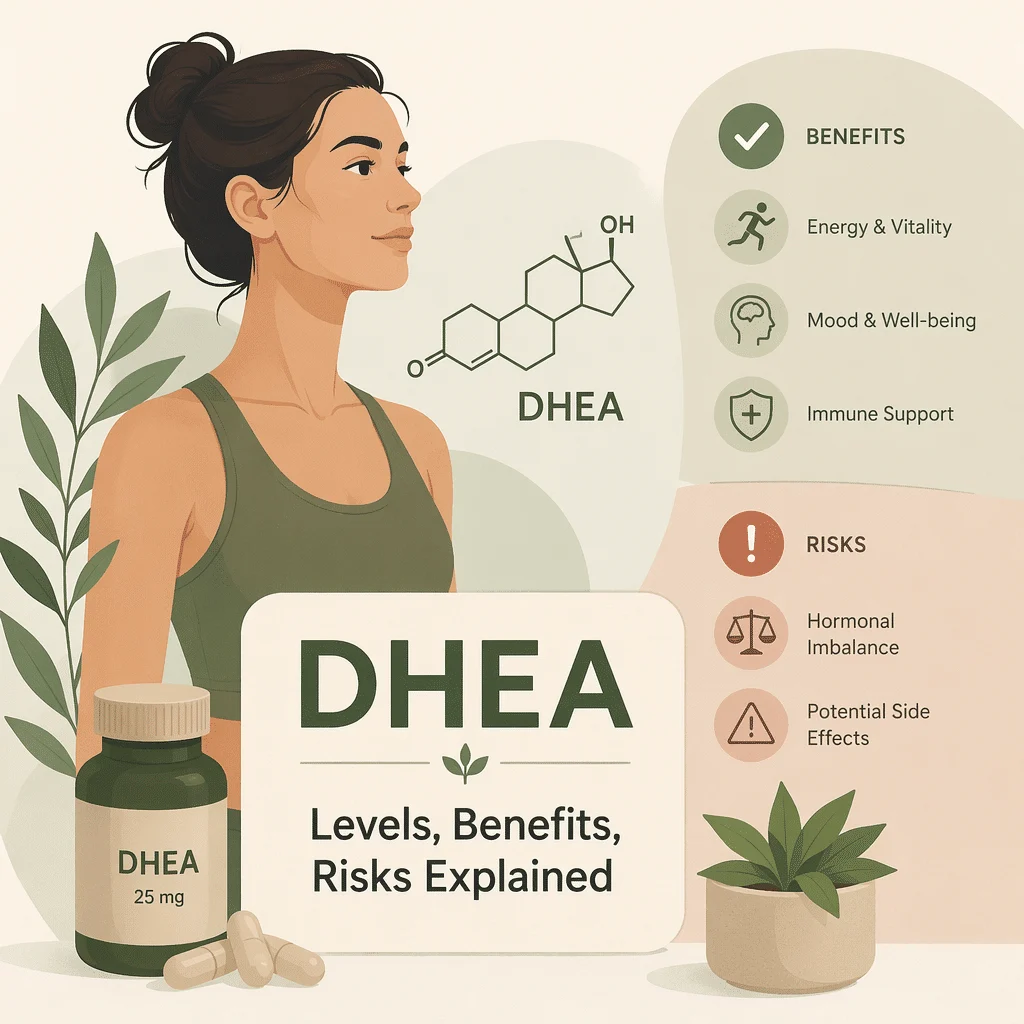
Nivelurile de DHEA se măsoară pentru a vedea cum funcționează glandele suprarenale, nu pentru a evalua energia sau vârsta ta. DHEA (dehidroepiandrosteron) este un hormon steroid produs în principal de stratul exterior al glandelor suprarenale, iar laboratoarele măsoară aproape întotdeauna forma sa mai stabilă, DHEA-S. În acest articol vei afla de unde provin acești hormoni, de ce DHEA-S este forma analizată într-un test de sânge, cum se modifică rezultatele de-a lungul vieții și ce poate indica un rezultat ridicat sau scăzut. Vei găsi, de asemenea, o privire echilibrată asupra suplimentelor cu DHEA disponibile fără prescripție și un ghid clar despre când un rezultat merită o consultație medicală. Scopul este să ofere context, nu autodiagnosticare, deoarece o singură valoare hormonală rareori înseamnă ceva de una singură.
Ce sunt de fapt DHEA și DHEA-S
DHEA este unul dintre cei mai abundenți hormoni steroizi din corpul uman. Este cel mai bine descris ca un precursor: o materie primă pe care organismul o transformă în alți hormoni, mai degrabă decât un hormon cu un rol dedicat propriu. MedlinePlus menționează că DHEA-S joacă un rol important în producerea testosteronului, hormonul sexual masculin, și a estrogenului, hormonul sexual feminin, motiv pentru care se află aproape de începutul unui lanț de producție, nu la capătul acestuia.
Acest statut de precursor explică modul în care medicii îl interpretează. Un rezultat DHEA-S este rareori informativ prin el însuși. Devine util atunci când este corelat cu ceilalți hormoni, cu vârsta și sexul persoanei, și cu ceea ce aceasta resimte efectiv.
Unde sunt produși acești hormoni
Cea mai mare parte a DHEA provine din cortexul suprarenal, stratul exterior al celor două mici glande suprarenale situate deasupra rinichilor. Cantități mai mici provin din ovare și testicule. Deoarece contribuția suprarenală domină covârșitor, DHEA-S se comportă în practică ca un marker suprarenal: reflectă producția de androgeni suprarenali mult mai mult decât reflectă activitatea ovarelor sau testiculelor. Aceasta este valoarea sa principală într-un bilanț, și de aceea apare de obicei ca parte a unui panel mai larg. Echipa noastră explică, de asemenea, ce măsoară un panel suprarenal.
De ce laboratoarele măsoară DHEA-S în loc de DHEA
DHEA în sine este dificil de măsurat. Concentrația sa crește și scade pe parcursul zilei în ritmul suprarenal, astfel încât un singur eșantion ar reflecta în mare parte ora la care a fost recoltat. DHEA-S este forma sulfatată a aceleiași molecule, cu o grupă sulfat atașată. Această formă circulă în cantități mult mai mari, rămâne în sânge mult mai mult timp și nu fluctuează de la oră la oră. Un singur eșantion de DHEA-S oferă astfel o imagine stabilă a producției de androgeni suprarenali, ceea ce este exact ceea ce are nevoie un medic. Cortizolul este cazul opus, unde momentul recoltării schimbă totul; biblioteca noastră acoperă noțiunile de bază ale unui test de cortizol din sânge.
Cum se modifică nivelurile de DHEA de-a lungul vieții
Modelul legat de vârstă este caracteristica cea mai constantă a acestui marker și este motivul pentru care nu există o singură valoare universală. Nivelurile sunt foarte scăzute în copilărie, cresc brusc pe măsură ce glandele suprarenale se maturizează, ating cel mai înalt punct în tinerețe, apoi scad treptat pentru tot restul vieții. MedlinePlus plasează vârful în jurul pubertății. Mayo Clinic descrie nivelurile naturale de DHEA ca atingând un maxim la vârsta adultă tânără, după care scad lent odată cu înaintarea în vârstă. Oricum ar fi, direcția după tinerețe este descendentă, iar această scădere este o caracteristică normală a îmbătrânirii, nu o tulburare care trebuie corectată.
Două consecințe practice decurg din aceasta. În primul rând, un rezultat care ar fi considerat normal la douăzeci și cinci de ani poate fi semnalat la șaizeci și cinci, și invers este la fel de adevărat. În al doilea rând, laboratoarele raportează DHEA-S în raport cu intervale specifice vârstei și sexului, iar aceste intervale diferă și de la un laborator la altul, deoarece se folosesc metode de analiză diferite. Un număr copiat dintr-un buletin de analize nu poate fi judecat în raport cu tabelul altui laborator și nici în raport cu o valoare găsită online. MedlinePlus precizează explicit că un medic interpretează rezultatul cântărind împreună simptomele tale, vârsta, sexul, istoricul medical și celelalte analize de sânge.
Ce poate indica un rezultat crescut al DHEA-S
Un nivel crescut de DHEA-S indică faptul că glandele suprarenale produc mai mulți androgeni decât era de așteptat pentru acea vârstă și sex. Este începutul unei investigații, nu o concluzie. MedlinePlus menționează printre posibilele explicații hiperplazia congenitală a suprarenalelor, tumorile suprarenale care pot fi benigne sau maligne, sindromul ovarelor polichistice și, mai rar, tumorile ovariene.
Excesul de androgeni și SOPC
La femei, un nivel crescut de DHEA-S este descoperit adesea în cadrul unei evaluări pentru semne de exces de androgeni: menstruații neregulate sau absente, acnee care persistă după adolescență, subțierea părului la nivelul creștetului sau creșterea nedorită a părului pe față și pe corp. MedlinePlus menționează, de asemenea, îngroșarea vocii și o musculatură pronunțată printre caracteristicile care determină efectuarea testului. Sindromul ovarelor polichistice este cea mai frecventă afecțiune din spatele acestui tablou clinic, deși hormonul cel mai strâns asociat cu acesta este testosteronul, nu DHEA-S. Un nivel crescut de DHEA-S în condițiile în care markerii ovarieni par normali sugerează că glandele suprarenale, și nu ovarele, sunt principala sursă. Echipa noastră detaliază diagnosticul sindromului ovarelor polichistice, iar un ghid complementar explică cauzele testosteronului crescut la femei.
Tumorile suprarenale și hiperplazia congenitală a suprarenalelor
Un nivel semnificativ crescut de DHEA-S, mai ales atunci când simptomele au apărut în decurs de luni, nu de ani, determină o examinare directă a glandelor suprarenale. Imagistica și teste hormonale suplimentare sunt utilizate pentru a verifica prezența unei tumori. Aceasta este o descoperire neobișnuită, iar explicațiile obișnuite sunt mult mai probabile, dar tocmai de aceea un rezultat foarte ridicat este luat în serios și nu doar urmărit.
Hiperplazia congenitală a suprarenalelor este un mecanism complet diferit. Este o diferență enzimatică moștenită care împinge producția suprarenală spre androgeni. Deoarece blocajul enzimatic se situează la un pas specific, este investigat printr-o măsurătoare țintită a hormonului precursor alături de DHEA-S, nu cu DHEA-S singur. La sugari se poate manifesta prin organe genitale ambigue, motiv pentru care MedlinePlus notează că fetițele pot necesita acest test.
Ce poate indica un rezultat scăzut al DHEA-S
Un nivel scăzut de DHEA-S sugerează fie că glandele suprarenale produc mai puțin decât era de așteptat, fie că semnalul care le instruiește să producă s-a slăbit. MedlinePlus indică boala Addison, o formă de insuficiență suprarenală primară, și hipopituitarismul, în care glanda pituitară nu reușește să trimită un semnal adecvat.
Insuficiența suprarenală și hipofiza
Glandele suprarenale nu acționează singure. Hipofiza eliberează ACTH, care instruiește cortexul suprarenal să producă cortizol și androgeni suprarenali. Când glandele suprarenale sunt afectate, ACTH crește, în timp ce cortizolul și DHEA-S scad. Când problema se află la nivelul hipofizei, ACTH este scăzut sau inadecvat normal, iar producția suprarenală scade odată cu el. Modelul celor trei valori împreună, nu una singură dintre ele, este cel care face diferența dintre cele două situații. De aceea, DHEA-S este rareori solicitat izolat. Biblioteca noastră descrie rolul ACTH în controlul suprarenal, iar un alt ghid acoperă cauzele cortizolului scăzut dimineața.
Tratamentul pe termen lung cu corticosteroizi
Administrarea pe termen lung a medicamentelor glucocorticoide, fie pentru astm, o boală inflamatorie sau după un transplant, suprimă semnalul hipofizar, iar producția suprarenală scade odată cu acesta. Această cale spre insuficiența suprarenală este mult mai frecventă decât formele autoimune și ereditare rare. Un DHEA-S scăzut la o persoană aflată sub tratament cronic cu steroizi este adesea explicat de tratamentul în sine, nu de o boală separată. Nu opri și nu modifica niciodată doza de steroizi pe cont propriu: oprirea bruscă poate fi periculoasă, iar orice schimbare trebuie decisă de medicul prescriptor.
Cum se solicită și se interpretează testul DHEA-S
DHEA-S se măsoară dintr-o probă obișnuită de sânge recoltată dintr-o venă a brațului. Deoarece forma sulfatată este stabilă pe parcursul zilei, majoritatea laboratoarelor nu impun o anumită oră sau post alimentar, deși trebuie să respecți instrucțiunile specifice ale laboratorului tău.
Ceea ce contează mult mai mult decât valoarea în sine este contextul în care apare. Tabelul de mai jos arată cum interpretează clinicienii un rezultat DHEA-S în cadrul unui tablou mai larg. Nu conține în mod deliberat niciun număr, deoarece pragurile relevante depind de laborator, de metoda de analiză, de vârsta și de sexul tău.
| Tablou observat | De obicei interpretat alături de | Ce poate sugera combinația |
|---|---|---|
| DHEA-S crescut, testosteron normal | Testosteron total și liber, SHBG | Sursă suprarenală, nu ovariană, a androgenilor |
| DHEA-S crescut, testosteron de asemenea crescut | Testosteron, LH, FSH, rezultate ecografice | Exces de androgeni evaluat în ansamblu, de exemplu în sindromul ovarelor polichistice (SOP) |
| DHEA-S semnificativ crescut, simptome apărute rapid | Imagistică, cortizol, hormoni precursori | Indică o evaluare directă a glandelor suprarenale |
| DHEA-S scăzut, cortizol matinal scăzut, ACTH crescut | Cortizol dimineața devreme, ACTH | Sugerează insuficiență suprarenală primară |
| DHEA-S scăzut, cortizol matinal scăzut, ACTH scăzut sau normal | Cortizol dimineața devreme, ACTH, evaluare hipofizară | Sugerează o cauză hipofizară |
| DHEA-S scăzut, tratament cronic cu steroizi | Istoricul medicației, cortizol dimineața devreme | Adesea explicat de tratamentul în sine |
Ce poate influența un rezultat
Mai mulți factori obișnuiți pot influența valoarea DHEA-S, ceea ce reprezintă un motiv în plus pentru care o singură valoare izolată nu este o bază solidă pentru îngrijorare:
- Suplimentele cu DHEA luate în zilele sau săptămânile dinaintea recoltării
- Medicamentele glucocorticoide, care reduc producția suprarenală
- Alte tratamente hormonale, inclusiv contracepția hormonală
- Sarcina și perioada postpartum
- Boli acute grave
- Metoda de analiză folosită de laborator, motiv pentru care două laboratoare pot raporta diferit același eșantion
Spune-i celui care îți solicită analizele despre orice medicament și supliment pe care îl iei, inclusiv cele cumpărate fără prescripție medicală. Deoarece DHEA-S este de obicei o singură linie dintr-o solicitare mai amplă, este util să înțelegi și markerii alăturați. Biblioteca noastră acoperă semnificația rezultatelor globulinei de legare a hormonilor sexuali (SHBG), descriem hormonii incluși într-un panel hormonal feminin, și explicăm de asemenea noțiunile de bază despre testosteron ca marker sangvin.
Suplimentele cu DHEA: o analiză bazată pe dovezi
DHEA se vinde fără prescripție medicală în Statele Unite și este intens promovat. Cel mai important lucru de înțeles este că este un hormon, nu o vitamină. Înghițirea lui adaugă la aceeași cale androgenică pe care corpul o reglează deja, iar organismul nu face diferența între un hormon dintr-o capsulă și un hormon produs de cortexul suprarenal.
Mayo Clinic analizează dovezile condiție cu condiție și ajunge la un verdict general nefavorabil. În privința afirmațiilor anti-îmbătrânire, precizează că cercetările nu le-au dovedit a fi adevărate. Avertizează că DHEA ar putea crește riscul de cancere hormon-sensibile, precum cancerul de prostată și cel mamar, și enumeră printre efectele secundare pielea grasă, acneea și creșterea nedorită a părului de tip masculin la femei. Semnalează, de asemenea, interacțiuni: luat împreună cu estrogen, poate provoca simptome de exces de estrogen, iar luat împreună cu testosteron, poate favoriza apariția caracteristicilor tipic masculine la femei.
Oficiul pentru Suplimente Alimentare al Institutelor Naționale de Sănătate ajunge la o concluzie similară în privința afirmațiilor legate de performanța sportivă, raportând că nu există dovezi privind creșterea forței, a capacității aerobe, a masei musculare slabe sau a nivelurilor de testosteron la bărbați, și menționând că siguranța DHEA nu a fost studiată suficient. Pe parcursul mai multor luni, acesta crește totuși testosteronul la femei, cu acnee și creșterea părului facial ca efecte vizibile. Mayo Clinic mai precizează că Asociația Națională Colegială de Atletism interzice utilizarea DHEA în rândul sportivilor, astfel că un supliment luat fără grijă poate pune capăt unui sezon competițional.
Mai există o consecință care contează direct aici: administrarea de DHEA înainte de un test de sânge denaturează chiar rezultatul pe care încerci să-l înțelegi. O valoare DHEA-S crescută din cauza suplimentelor îi spune clinicianului despre capsulă, nu despre glandele suprarenale, și poate orienta investigațiile pe un drum greșit. Dacă iei DHEA și ți s-a solicitat un test hormonal, menționează acest lucru înainte de recoltarea probei.
Când să mergi la medic
Un rezultat DHEA-S în afara intervalului raportat este un motiv de discuție cu medicul, nu de alarmă. Unele situații necesită atenție medicală promptă, nu doar supraveghere:
- Semne de exces de androgeni care sunt noi și evoluează rapid, cum ar fi creșterea accelerată a părului nedorit, îngroșarea vocii sau căderea părului la nivelul creștetului
- Menstruații care au devenit neregulate sau s-au oprit fără o explicație evidentă
- Oboseală persistentă inexplicabilă însoțită de greață, lipsă de apetit, scădere involuntară în greutate sau amețeli la ridicarea în picioare
- Un rezultat net anormal de orice tip, în special unul care depășește cu mult intervalul raportat
- Semne de pubertate precoce sau atipică la un copil, ori organe genitale ambigue la un nou-născut
- Orice simptome apărute în timp ce iei, reduci treptat sau ai oprit recent un tratament îndelungat cu medicamente steroide
Solicită îngrijire urgentă în caz de slăbiciune severă însoțită de vărsături, dureri abdominale, confuzie sau colaps la o persoană despre care se știe că are insuficiență suprarenală sau urmează un tratament îndelungat cu steroizi. Această combinație poate indica o criză suprarenală, care reprezintă o urgență medicală.
Cele mai recente progrese științifice
Cercetările din ultimii trei ani au clarificat modul în care DHEA-S este utilizat ca marker diagnostic și au temperat, totodată, așteptările legate de DHEA ca tratament.
O analiză din 2025 publicată în JAMA a descris modul în care se diagnostichează insuficiența suprarenală la adulți și a plasat DHEA-S alături de cortizolul matinal timpuriu și ACTH ca una dintre cele trei măsurători de rutină. Ce înseamnă asta pentru tine: dacă un medic îți solicită DHEA-S împreună cu un cortizol matinal, aceasta este abordarea standard, nu una neobișnuită. Aceeași analiză subliniază că insuficiența suprarenală cauzată de tratamentul îndelungat cu glucocorticoizi este frecventă, în timp ce formele ereditare și autoimune sunt rare.
Un studiu din 2025 realizat la Mayo Clinic a examinat mai mult de o mie de adulți care au efectuat un test de stimulare, o procedură în care se injectează un hormon sintetic de stimulare și se măsoară cortizolul înainte și după. DHEA-S măsurat singur a separat persoanele cu insuficiență suprarenală de cele fără această afecțiune aproximativ la fel de bine ca un cortizol matinal bazal. Mai util, atunci când cortizolul matinal se încadra în zona ambiguă de mijloc, un DHEA-S care nu era scăzut făcea insuficiența suprarenală foarte puțin probabilă. Ce înseamnă asta pentru tine: combinarea acestor două analize de sânge poate scuti unele persoane de procedura mai lungă de stimulare. Acesta este un singur studiu de mari dimensiuni realizat într-un singur centru, nu o schimbare de ghiduri, deci este o direcție promițătoare care trebuie încă confirmată. Același studiu a constatat că medicamentele glucocorticoide recente au redus eficiența DHEA-S, ceea ce este încă un motiv pentru a declara toate medicamentele.
Un ghid practic din 2025 privind carcinomul adrenocortical, un cancer rar al cortexului suprarenal, a fost publicat în The Lancet Diabetes and Endocrinology de echipe de specialiști din Germania și Italia. Acesta subliniază cât de rar este această tumoră și cât de mult depinde evaluarea ei de un bilanț hormonal complet combinat cu imagistică, și nu de o singură valoare din sânge. Ce înseamnă asta pentru tine: un DHEA-S crescut nu reprezintă dovada unei tumori suprarenale. Explicațiile obișnuite sunt mult mai frecvente, iar bilanțul mai amplu există tocmai pentru a le diferenția.
În ceea ce privește suplimentele, o analiză sistematică din 2023 a adunat studiile privind utilizarea DHEA ca tratament în bolile reumatice. Dintre cele douăzeci și unu de studii, cel mai clar semnal a fost în lupusul eritematos sistemic, unde DHEA a arătat un efect de la ușor la moderat asupra activității bolii, alături de un efect pozitiv asupra densității osoase. În sindromul Sjögren, artrita reumatoidă și fibromialgie, rezultatele nu au fost convingătoare. Ce înseamnă asta pentru tine: chiar și acolo unde DHEA a fost studiat cel mai serios, el reprezintă un tratament prescris pentru un diagnostic specific, sub supravegherea unui specialist, nu un supliment de uz general. Autorii analizei au consemnat efecte androgenice ușoare, cum ar fi acneea și creșterea nedorită a părului, drept cele mai frecvente reclamații.
O recenzie sistematică din 2023 a analizat administrarea de DHEA femeilor cu rezervă ovariană scăzută înainte de fertilizarea in vitro, acoperind șapte studii și puțin peste patru sute de femei. Singurul studiu randomizat controlat dintre acestea — cel mai fiabil tip de design, deoarece participantele sunt repartizate aleatoriu în grupul de tratament sau în cel de comparație — nu a găsit nicio diferență între grupul tratat și cel netratat, în timp ce studiile cu design mai slab au raportat beneficii. Rezultatele sarcinilor nu au diferit. Ce înseamnă asta pentru tine: aceasta este o întrebare de specialitate în domeniul fertilității, care se rezolvă împreună cu o echipă specializată, iar dovezile nu sunt suficient de solide pentru a justifica administrarea de DHEA din proprie inițiativă.
Glosar
| Termen | Definiție |
|---|---|
| DHEA (dehidroepiandrosteron) | Un hormon steroid produs în principal de glandele suprarenale. Organismul îl transformă în alți hormoni sexuali. |
| DHEA-S (sulfat de dehidroepiandrosteron) | Forma sulfatată, cu durată mai lungă de acțiune, a DHEA. Aceasta este versiunea măsurată în analizele de sânge, deoarece rămâne stabilă pe parcursul întregii zile. |
| Cortexul suprarenal | Stratul exterior al fiecărei glande suprarenale. Produce cortizol, aldosteron și androgeni suprarenali, inclusiv DHEA. |
| Androgen | O familie de hormoni, care include testosteronul și DHEA, ce determină caracteristicile fizice tipic masculine. Toată lumea îi produce în cantități diferite. |
| Precursor | O substanță pe care organismul o transformă în altceva. DHEA este un precursor deoarece reprezintă materia primă pentru alți hormoni. |
| ACTH (hormonul adrenocorticotrop) | Un hormon eliberat de glanda pituitară care instruiește cortexul suprarenal să producă cortizol și androgeni suprarenali. |
| Insuficiență suprarenală | O afecțiune în care glandele suprarenale nu produc suficient cortizol. Poate fi cauzată de glandele în sine, de glanda pituitară sau de un tratament îndelungat cu steroizi. |
| Hiperplazia adrenală congenitală | O diferență ereditară la nivelul unei enzime suprarenale care orientează producția de hormoni spre androgeni. Este prezentă din naștere. |
| Test de laborator (analiză) | Metoda de laborator specifică folosită pentru măsurarea unei substanțe. Metode diferite pot da valori ușor diferite pentru aceeași probă. |
| Interval de referință | Intervalul de valori observat într-o populație de referință, tipărit lângă valoarea ta. Pentru DHEA-S, acesta depinde de vârstă, sex și laboratorul care efectuează analiza. |
Întrebări frecvente
Ce cauzează niveluri ridicate de DHEA la femei?
Un nivel crescut de DHEA-S la o femeie apare cel mai adesea în cadrul evaluării unui exces de androgeni, unde sindromul ovarelor polichistice este cea mai frecventă explicație. MedlinePlus menționează, de asemenea, hiperplazia congenitală a suprarenalelor, tumorile suprarenale — care pot fi benigne sau maligne — și, mai rar, tumorile ovariene. Deoarece DHEA-S provine în covârșitoare măsură din glandele suprarenale, o valoare crescută combinată cu markeri ovarieni normali indică o sursă suprarenală. Rezultatul nu se interpretează niciodată singur: un medic îl coroborează cu testosteronul, istoricul menstrual, ritmul în care au apărut simptomele și, când este necesar, cu investigații imagistice. Valorile ușor crescute sunt frecvente și au adesea o explicație fără semnificație clinică deosebită.
Există un nivel normal al DHEA în funcție de vârstă?
Nu există o valoare normală unică valabilă pentru toată lumea. DHEA-S este foarte scăzut în copilărie, atinge un vârf în tinerețe și scade treptat pe parcursul vieții adulte, astfel că laboratoarele îl raportează în raport cu intervale stabilite pentru o anumită grupă de vârstă și sex. Aceste intervale diferă și de la un laborator la altul, deoarece se folosesc metode de analiză diferite. De aceea, compararea valorii tale cu un tabel găsit online nu este fiabilă, și de aceea nu publicăm unul aici. Citește rezultatul tău în raport cu intervalul tipărit pe propriul buletin de analize și lasă clinicianul care l-a solicitat să interpreteze restul.
Ce înseamnă un rezultat scăzut al DHEA-S?
În sine, nu spune prea multe, deoarece nivelurile scad în mod natural odată cu vârsta. Într-un context clinic, poate indica o producție redusă a glandelor suprarenale. MedlinePlus menționează boala Addison și hipopituitarismul ca posibilități, iar medicamentele glucocorticoide pe termen lung sunt o cauză frecventă a unui nivel scăzut. Diferențierea între acestea depinde de modelul obținut din cortizolul matinal, ACTH și DHEA-S împreună, nu din DHEA-S singur. Un rezultat scăzut însoțit de oboseală persistentă, greață, pierderea poftei de mâncare sau amețeli la ridicarea în picioare justifică o consultație medicală, nu un supliment.
Trebuie să fiu pe stomacul gol înainte de testul DHEA-S?
De obicei, nu. Deoarece forma sulfatată rămâne stabilă pe parcursul zilei, majoritatea laboratoarelor nu impun post sau o oră anume pentru recoltare — acesta este unul dintre avantajele practice ale măsurării DHEA-S față de DHEA. Cu toate acestea, instrucțiunile variază de la un laborator la altul, iar DHEA-S este adesea recoltat împreună cu alți hormoni, cum ar fi cortizolul de dimineață devreme, care au cerințe de timp specifice. Urmează instrucțiunile atașate propriului formular de solicitare și întreabă direct laboratorul dacă ceva nu este clar.
Pot suplimentele cu DHEA să îmi modifice rezultatele testului?
Da, și semnificativ. DHEA este un hormon, nu o vitamină, astfel că administrarea lui adaugă direct la ceea ce măsoară testul. O valoare DHEA-S la o persoană care ia suplimente reflectă capsula la fel de mult ca și glandele suprarenale, ceea ce poate face rezultatul imposibil de interpretat și poate orienta investigațiile în direcția greșită. Declară orice produs cu DHEA înainte de recoltarea probei și nu începe sau opri niciodată un supliment pentru a influența un rezultat. Clinicianul tău îți va oferi sfaturi despre ce trebuie să faci.
Sunt nivelurile de DHEA diferite la bărbați față de femei?
Da. Bărbații prezintă în general valori DHEA-S mai ridicate decât femeile, motiv pentru care laboratoarele publică intervale de referință separate pentru fiecare sex, precum și pentru fiecare grupă de vârstă. Consecințele unui rezultat anormal diferă, de asemenea: la femei, o valoare crescută este investigată adesea din cauza semnelor vizibile de exces de androgeni, în timp ce la bărbați aceste semne lipsesc, iar rezultatul este examinat mai frecvent în cadrul unei evaluări mai ample a suprarenalelor sau a hipofizei. În ambele cazuri, valoarea este interpretată în contextul întregului profil hormonal.
Surse
- MedlinePlus, National Library of Medicine — DHEA Sulfate Test — https://medlineplus.gov/lab-tests/dhea-sulfate-test/
- Mayo Clinic — DHEA — https://www.mayoclinic.org/drugs-supplements-dhea/art-20364199
- National Institutes of Health, Office of Dietary Supplements — Dietary Supplements for Exercise and Athletic Performance: Health Professional Fact Sheet — https://ods.od.nih.gov/factsheets/ExerciseAndAthleticPerformance-HealthProfessional/
- Vaidya A, Findling J, Bancos I — Adrenal Insufficiency in Adults: A Review — JAMA, 2025 — https://doi.org/10.1001/jama.2025.5485
- Han AJ, Suresh M, Gruber LM, et al. — Performance of Dehydroepiandrosterone Sulfate and Baseline Cortisol in Assessing Adrenal Insufficiency — The Journal of Clinical Endocrinology and Metabolism, 2025 — https://doi.org/10.1210/clinem/dgae855
- Fassnacht M, Puglisi S, Kimpel O, Terzolo M — Adrenocortical carcinoma: a practical guide for clinicians — The Lancet Diabetes and Endocrinology, 2025 — https://doi.org/10.1016/S2213-8587(24)00378-4
- Skare TL, Hauz E, de Carvalho JF — Dehydroepiandrosterone (DHEA) Supplementation in Rheumatic Diseases: A Systematic Review — Mediterranean Journal of Rheumatology, 2023 — https://doi.org/10.31138/mjr.20230825.dd
- Yuan WS, Abu MA, Ahmad MF, Elias MH, Abdul Karim AK — Effects of Dehydroepiandrosterone (DHEA) Supplementation on Ovarian Cumulus Cells following IVF/ICSI Treatment: A Systematic Review — Life (Basel), 2023 — https://doi.org/10.3390/life13061237
Lectură suplimentară
- Niveluri ridicate de cortizol: simptome și cauze
- Cortizol urinar: înțelegerea rezultatelor testului
- Panelul hormonal masculin: ce măsoară
- Testosteron scăzut la femei: cauze, simptome și tratamente
- Estradiol: cum să înțelegi acest marker hormonal
Înțelege-ți rezultatele analizelor cu AI DiagMe
O valoare DHEA-S devine semnificativă doar alături de celelalte rezultate din jur, iar majoritatea oamenilor primesc un buletin de analize fără contextul necesar pentru a înțelege acel tipar. AI DiagMe transformă un buletin de analize în limbaj clar, explicând ce reflectă markeri precum DHEA-S, cortizolul matinal, ACTH și testosteronul și de ce sunt analizați împreună. Te ajută să ajungi la consultație înțelegând propriile rezultate și știind ce întrebări să pui. Nu pune diagnostice și nu înlocuiește medicul tău.
Obține interpretarea rezultatelor în câteva minute