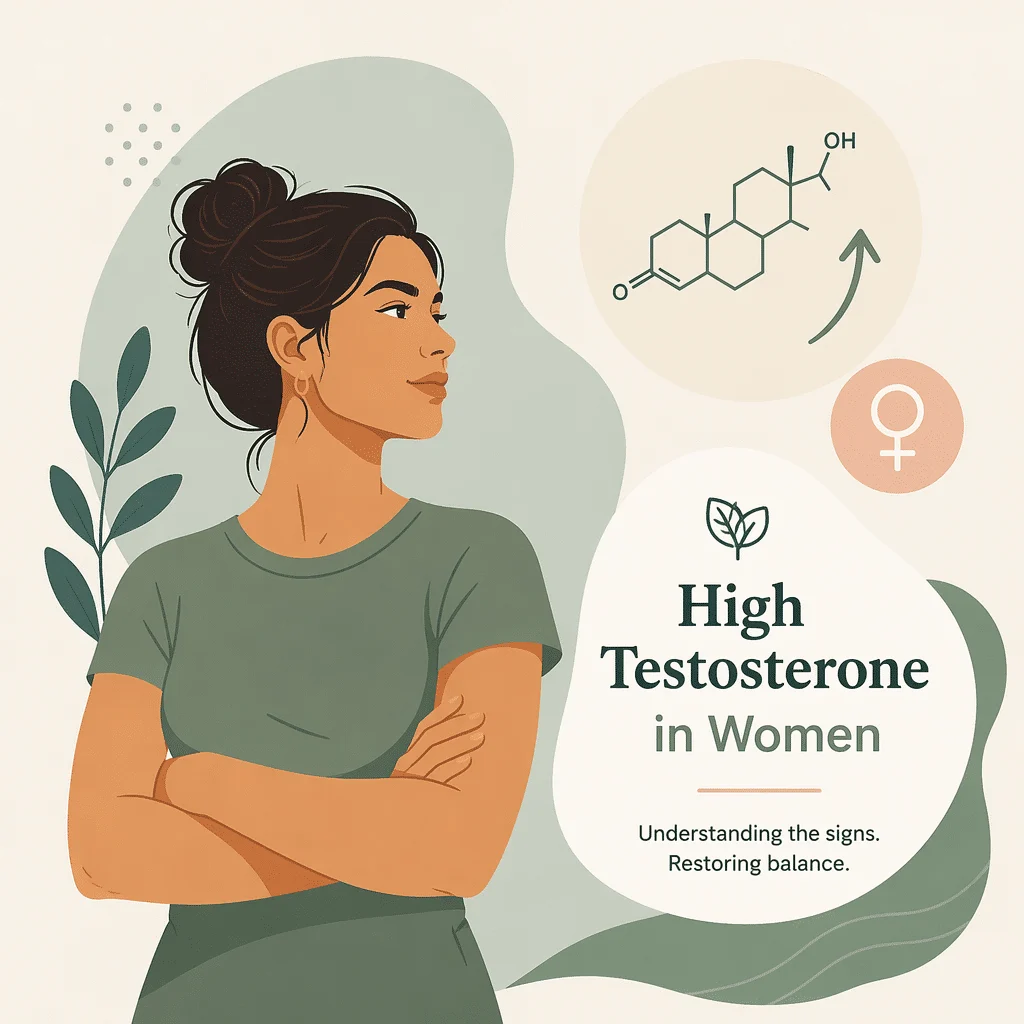
Testosteronul ridicat la femei, cunoscut medical drept hiperandrogenism, este unul dintre cele mai frecvente motive pentru care un profil hormonal iese în afara valorilor de referință. O singură afecțiune explică marea majoritate a cazurilor: sindromul ovarelor polichistice (PCOS). Semnele care duc de obicei la efectuarea analizelor — creșterea excesivă a părului, acneea persistentă, subțierea părului de pe scalp sau menstruațiile neregulate — sunt semnale clinice ale unui dezechilibru hormonal. Merită investigate, nu ascunse de rușine, și nu sunt simple probleme estetice.
În acest articol vei afla ce face de fapt testosteronul în corpul feminin, de ce această analiză de sânge este deosebit de dificil de efectuat cu acuratețe, cum se diagnostichează PCOS și de ce este un diagnostic de excludere, ce alte afecțiuni și medicamente cresc nivelul androgenilor și care este acel tipar de modificare care înseamnă că trebuie să fii evaluată rapid, nu în mod obișnuit.
Ce face testosteronul la femei și ce măsoară testul
Testosteronul este adesea numit hormon masculin, dar orice femeie îl produce. Aproximativ jumătate provine din ovare și jumătate din glandele suprarenale, cu o contribuție suplimentară din țesutul adipos și cutanat, prin precursori mai slabi precum androstenediona și DHEA-S. Nivelurile la femei sunt de aproximativ douăzeci de ori mai mici decât la bărbați și variază pe parcursul ciclului și al zilei, atingând de obicei un vârf dimineața.
În cantități normale, androgenii susțin rezistența osoasă, menținerea masei musculare, libidoul și dezvoltarea sănătoasă a foliculilor ovarieni. Testosteronul este, de asemenea, o treaptă chimică spre estrogen, motiv pentru care cele două sunt atât de strâns legate. O prezentare generală se găsește în ghidul nostru despre testosteronul ca marker sanguin, iar problema inversă la bărbați este abordată în articolul nostru despre testosteronului scăzut la bărbați.
Majoritatea laboratoarelor raportează testosteronul total, adică tot ceea ce circulă în sânge. Doar o mică fracțiune este biologic activă; restul este legat strâns de o proteină transportoare numită globulina de legare a hormonilor sexuali (SHBG) sau slab de albumină. Această distincție creează multă confuzie atunci când rezultatele sunt interpretate.
De ce măsurarea testosteronului la femei este mai complicată decât pare
Metodele de analiză au dificultăți la concentrații scăzute
Majoritatea analizoarelor hormonale de rutină folosesc un imunotest, o metodă bazată pe anticorpi care recunosc hormonul. Imunotesteele funcționează bine la concentrațiile întâlnite la bărbați, dar își pierd precizia la concentrațiile mult mai scăzute găsite la femei. Steroizii cu structură similară pot fi detectați ca și cum ar fi testosteron, ceea ce tinde să împingă rezultatele în sus. Metoda de referință este cromatografia lichidă cu spectrometrie de masă în tandem, notată LC-MS/MS, care identifică molecula direct, în loc să o deducă. Dacă rezultatul tău este la limită sau surprinzător, este o întrebare rezonabilă să întrebi ce metodă a folosit laboratorul.
SHBG modifică valoarea totală fără a schimba hormonul activ
Deoarece cea mai mare parte a testosteronului circulă legat de SHBG, orice modificare a SHBG influențează rezultatul total. Contraceptivele care conțin estrogen și hipertiroidismul cresc SHBG și, implicit, testosteronul total. Rezistența la insulină, hipotiroidismul și greutatea corporală mai mare scad SHBG și, astfel, scad valoarea totală chiar și atunci când fracția activă este neschimbată sau mai mare. O femeie poate, prin urmare, să aibă simptome de exces de androgeni cu un testosteron total care pare liniștitor de normal, motiv pentru care SHBG este adesea măsurat alături de acesta.
Indicele de androgeni liberi este un calcul, nu o măsurătoare
Indicele de androgeni liberi (FAI) se obține prin calcul aritmetic din testosteronul total și SHBG. La fel și testosteronul liber calculat. Niciunul nu este măsurat direct. Sunt utili, iar ghidurile internaționale le susțin utilizarea, dar moștenesc fiecare inexactitate a celor două valori din care derivă. Măsurarea directă a testosteronului liber necesită tehnici specializate, precum dializa de echilibru, pe care puține laboratoare de rutină o oferă.
Sindromul ovarelor polichistice: cea mai frecventă explicație de departe
SOP afectează aproximativ una din zece femei de vârstă reproductivă și reprezintă marea majoritate a rezultatelor crescute de androgeni la femeile care încă menstruează. Este o afecțiune endocrină sistemică ce implică ovarele, semnalizarea insulinei și controlul cerebral al ciclului reproductiv, nu doar o problemă de aspect ovarian.
Criteriile Rotterdam explicate pe înțelesul tuturor
Diagnosticul la adulți se bazează pe criteriile Rotterdam, preluate în ghidul internațional bazat pe dovezi din 2023. O femeie îndeplinește criteriile dacă prezintă cel puțin două dintre următoarele trei caracteristici:
- Ovulație neregulată sau absentă, care se manifestă prin menstruații rare, imprevizibile sau absente cu totul
- Hiperandrogenism, fie clinic (hirsutism, acnee persistentă, subțierea părului de pe scalp), fie biochimic (un nivel de androgeni cu adevărat crescut la un test de laborator fiabil)
- Morfologie ovariană polichistică, adică un număr mare de foliculi mici sau un volum ovarian mărit la ecografie
Două din trei criterii sunt suficiente, motiv pentru care SOP arată atât de diferit de la o femeie la alta. Una poate avea cicluri neregulate și testosteron crescut cu ovare cu aspect complet normal; alta poate prezenta simptome de androgeni și aspect ovarian tipic cu cicluri relativ previzibile. La adolescente, criteriile sunt deliberat mai stricte, iar ecografia și hormonul anti-Müllerian nu sunt folosite pentru diagnostic, deoarece ovarele tinere normale au adesea un aspect polichistic.
De ce SOP este un diagnostic de excludere
Acesta este aspectul cel mai des trecut cu vederea. SOP se diagnostichează doar după ce au fost excluse afecțiunile care îl imită: funcția tiroidiană, prolactina și 17-OH progesteronul ar trebui verificate, iar sindromul Cushing și tumorile secretoare de androgeni luate în considerare acolo unde tabloul clinic o impune. Dacă ți s-a spus că ai SOP înainte de aceste verificări, este un lucru pe care ai tot dreptul să îl pui sub semnul întrebării.
Greutatea și PCOS sunt legate în ambele direcții: rezistența la insulină poate stimula producția de androgeni, iar excesul de androgeni poate, la rândul său, afecta modul în care organismul gestionează insulina și stochează grăsimea. Multe femei cu PCOS nu sunt deloc supraponderale. A descrie această asociere este corect; a trata greutatea corporală drept cauză sau ca vina cuiva nu este.
Alte cauze hormonale pe care un medic le va lua în considerare
Hiperplazie adrenală congenitală non-clasică
Aceasta este o formă mai ușoară, cu debut mai târziu, a unei probleme enzimatice moștenite, cel mai adesea deficiența de 21-hidroxilază. Poate arăta aproape identic cu PCOS și nu este deloc rară la femeile investigate pentru exces de androgeni. Se depistează printr-un Analiză de sânge pentru 17-OH progesteron, ideal în prima parte a ciclului.
sindromul Cushing
Aceasta reprezintă expunerea prelungită la un exces de cortizol, fie produs de organism, fie provenit din medicamente cu steroizi. Poate crește androgenii suprarenali și aduce de obicei și alte semne, cum ar fi vânătăi apărute ușor, slăbiciune musculară, creșterea tensiunii arteriale și modificări ale pielii. Un analiză de sânge pentru cortizol este punctul de intrare obișnuit, deși confirmarea diagnosticului necesită mai mult de o singură măsurătoare.
Prolactină crescută
Un nivel crescut de prolactină perturbă ovulația și poate fi însoțit de un ușor exces de androgeni adrenali. Deoarece provoacă și menstruații neregulate, poate fi ușor confundat cu PCOS. Ghidul nostru despre niveluri ridicate de prolactină acoperă cauzele și testele.
Boală tiroidiană
Atât hipotiroidismul, cât și hipertiroidismul modifică SHBG și perturbă ciclul menstrual, distorsionând rezultatele androgenilor în oricare direcție. Un Testul TSH este o parte standard a investigațiilor.
Rezistență la insulină
Insulina circulantă crescută stimulează producția ovariană de androgeni și suprimă SHBG, crescând fracția activă. Medicii evaluează adesea acest lucru cu un testul de insulină din sânge, glicemie à jeun sau HbA1c, parțial pentru a ghida tratamentul și parțial deoarece PCOS implică un risc metabolic pe termen lung care merită monitorizat.
Exces de androgeni adrenali
Atunci când DHEA-S este crescut în mod disproporționat, atenția se mută de la ovar la glanda suprarenală. Prezentarea noastră generală despre nivelurile de DHEA explică ce reprezintă acest hormon precursor.
Medicamente și androgeni externi
Nu tot excesul de androgeni provine din interiorul corpului. Steroizii anabolizanți, prescrisi sau nu, cresc direct nivelul de testosteron și pot provoca modificări care nu se reversează complet. Danazolul, folosit pentru endometrioză, este el însuși androgenic. Unele medicamente antiepileptice, în special valproatul, sunt asociate cu un tipar hormonal similar sindromului ovarelor polichistice (SOP). Gelurile și cremele cu testosteron, inclusiv cele prescrise unui partener, se pot transfera prin contact cutanat. Anumite suplimente neregulate vândute pentru energie, masă musculară sau libido s-a constatat că conțin androgeni nedeclarați.
Merită menționat din proprie inițiativă. O listă completă a tot ceea ce iei, inclusiv orice cumpărat online sau fără prescripție medicală, poate scurta considerabil investigația.
Când o schimbare rapidă indică prezența unei tumori
Tumorile secretoare de androgeni ale ovarului sau glandei suprarenale sunt rare, dar tocmai din această cauză investigațiile trebuie uneori să avanseze rapid. Elementul distinctiv nu îl reprezintă simptomele în sine, ci viteza și severitatea cu care apar.
PCOS și hiperplazia congenitală adrenală non-clasică produc de obicei un tablou gradual care se dezvoltă de-a lungul anilor, adesea din adolescență. O tumoră produce de regulă virilizare în decurs de săptămâni până la luni: o voce care se îngroașă și rămâne îngroșată, mărire vizibilă a clitorisului, căderea rapidă a părului la tâmple și creștet, și creșterea părului care progresează vizibil de la o lună la alta. Un nivel de testosteron marcat crescut alături de această viteză de schimbare este combinația care impune o evaluare urgentă.
Solicită o evaluare medicală promptă dacă ai oricare dintre următoarele:
- Virilizare care se dezvoltă rapid, în săptămâni până la luni, nu în ani
- O voce care se îngroașă
- Mărirea clitorisului
- Un nivel de testosteron raportat ca semnificativ crescut, în special mult peste intervalul de referință feminin
- O masă abdominală sau pelviană, ori o umflătură abdominală nouă
- Orice simptom nou, sever sau care se agravează rapid
Aceste constatări nu înseamnă că există o tumoră, dar necesită o evaluare mai curând decât la o programare de rutină.
| Tipar | La ce indică de obicei | Pasul următor obișnuit |
|---|---|---|
| Hirsutism gradual cu menstruații neregulate, prezent de ani de zile, adesea din adolescență | Sindromul ovarelor polichistice, odată excluse alte cauze | Retestarea androgenilor cu SHBG, plus tiroidă, prolactină și 17-OH progesteron; ecografie pelvină la adulți |
| Virilizare rapidă în săptămâni până la luni, cu testosteron marcat crescut | Posibilă tumoră secretantă de androgeni a ovarului sau a glandei suprarenale | Trimitere urgentă la specialist cu imagistică țintită a pelvisului și a glandelor suprarenale |
| Testosteron crescut împreună cu 17-OH progesteron crescut | Hiperplazie adrenală congenitală non-clasică | Testare de stimulare suprarenală de confirmare, uneori testare genetică |
| Testosteron crescut împreună cu prolactină crescută | O cauză hipofizară care necesită o evaluare proprie | Repetă prolactina în condiții standard, apoi evaluare hipofizară |
| Androgeni crescuți cu tensiune arterială în creștere, vânătăi ușoare și subțierea pielii | Posibil sindrom Cushing | Testarea cortizolului, urmată de teste endocrine de confirmare |
Cum decurge de obicei investigația
Investigațiile urmează o ordine recognoscibilă. Încep cu istoricul și examinarea: când au apărut modificările, cât de repede au progresat, ce s-a întâmplat cu ciclurile tale, istoricul familial și fiecare medicament și supliment pe care îl iei. Viteza de debut este cea mai informativă întrebare.
Analizele de sânge urmează de obicei, recoltate dimineața și, acolo unde ciclurile permit, în faza foliculară timpurie. Un panel tipic include testosteronul total cu SHBG pentru a putea calcula testosteronul liber, DHEA-S pentru a evalua contribuția suprarenală, 17-OH progesteron, prolactina și TSH. Hormonul luteinizant (LH) și hormonul foliculostimulant (FSH) pot fi adăugate; un raport modificat între ele este frecvent în SOP, dar nu este diagnostic în sine. Un rezultat cu adevărat anormal al androgenilor este de obicei repetat înainte de a trage concluzii.
Imagistica urmează dacă este necesară. O ecografie pelviană evaluează morfologia ovariană la adulți, iar imagistica în secțiune transversală a abdomenului și pelvisului este indicată atunci când tabloul clinic sau nivelul în sine ridică suspiciunea unei tumori. Screeningul metabolic cu măsurarea glucozei și a lipidelor este standard odată ce SOP este confirmat, deoarece această afecțiune implică un risc cardiometabolic pe termen lung.
Tratamentul este discutat abia după ce cauza este înțeleasă și depinde atât de aceasta, cât și de ceea ce contează pentru tine. Categoriile generale pe care un medic le poate aborda includ: contracepție hormonală combinată, medicamente antiandrogene, medicamente care îmbunătățesc sensibilitatea la insulină, tratament de inducere a ovulației atunci când sarcina este obiectivul, și intervenție chirurgicală pentru o tumoră confirmată. Care dintre acestea este potrivit, dacă vreunul, este o discuție pe care trebuie să o ai cu medicul tău.
Când să mergi la medic
Programează-te la medic dacă ai hirsutism persistent, acnee care continuă la vârsta adultă sau nu răspunde la tratamentele obișnuite, subțierea vizibilă a părului de pe scalp, menstruații neregulate sau absente ori dificultăți în a rămâne însărcinată după un an de încercări (șase luni dacă ai peste 35 de ani). Acestea sunt semne clinice recunoscute care merită investigate.
În ceea ce privește fertilitatea, există motive reale de optimism. Sindromul ovarelor polichistice (SOP) este una dintre cele mai frecvente cauze ale dificultăților de concepție, dar și una dintre cele mai tratabile. Multe femei cu SOP rămân însărcinate spontan, iar altele reușesc cu ajutorul tratamentului de inducere a ovulației. Nimeni nu poate garanta un rezultat individual, dar un diagnostic nu înseamnă că subiectul copiilor este închis — și cu cât începi discuția mai devreme, cu atât ai mai multe opțiuni.
Dacă simptomele îți afectează starea de spirit sau încrederea în tine, spune-i medicului. Anxietatea și depresia sunt mai frecvente în SOP decât în populația generală și reprezintă o parte legitimă a îngrijirii tale.
Cele mai recente progrese științifice în evaluarea testosteronului crescut la femei
Care test de androgeni oferă cele mai bune rezultate
O analiză sistematică și meta-analiză diagnostică a optsprezece studii, realizată pentru a fundamenta ghidul internațional SOP din 2023, a comparat testosteronul total, testosteronul liber calculat, indicele de androgeni liberi, androstenediona și DHEA-S în identificarea excesului biochimic de androgeni. Testosteronul total și cel liber au avut cele mai bune rezultate, în timp ce androstenediona și DHEA-S s-au dovedit considerabil mai puțin specifice. În toate cazurile, spectrometria de masă a depășit ca performanță imunoanalizele directe. Ce înseamnă asta pentru tine: testosteronul total și cel liber sunt testele de primă linie potrivite, iar metoda de laborator folosită influențează cât de mult contează rezultatul tău.
Cât de des imunoanalizele supraestimează un rezultat crescut
Un studiu retrospectiv realizat într-un spital a retestat femei al căror testosteron fusese semnalat ca ridicat prin imunoanaliză chemiluminescentă, folosind LC-MS/MS ca metodă de referință. O mare parte dintre rezultatele semnalate nu au fost confirmate, iar multe dintre aceste femei efectuaseră deja teste repetate, paneluri hormonale și investigații imagistice care s-au dovedit inutile. Ce înseamnă asta pentru tine: un singur nivel de testosteron ușor crescut pe un analizor de rutină nu reprezintă un diagnostic, iar confirmarea printr-o metodă mai precisă este un pas rezonabil înainte de investigații suplimentare.
Diferențierea cauzelor benigne de cele grave după menopauză
O serie observațională de douăzeci de ani privind femeile la menopauză trimise pentru exces de androgeni a constatat că majoritatea aveau explicații benigne, cel mai frecvent hipertecoza ovariană, în timp ce o mică minoritate prezentau tumori la limita malignității sau maligne. Virilizarea și nivelurile ridicate de testosteron și estradiol au diferențiat bine între grupuri, iar autorii au propus un algoritm în care semnele de alarmă declanșează investigații imagistice urgente. Ce înseamnă asta pentru tine: excesul de androgeni după menopauză este neobișnuit și necesită o evaluare atentă, dar majoritatea cazurilor se dovedesc a fi benigne.
Diagnosticarea PCOS la adolescente
Recomandările specifice adolescentelor din ghidul internațional din 2023 limitează diagnosticul la cele care prezintă atât cicluri neregulate (definite în funcție de timpul scurs de la prima menstruație), cât și exces de androgeni clinic sau biochimic, după excluderea altor afecțiuni care imită PCOS. Ecografia și hormonul anti-Müllerian nu trebuie utilizate pentru diagnostic în această grupă de vârstă, iar fetele cu un singur criteriu sunt etichetate drept „la risc" și monitorizate. Ghidul le cere, de asemenea, medicilor să discute despre sănătatea legată de greutate fără stigmatizare. Ce înseamnă asta pentru tine: un diagnostic stabilit în anii adolescenței pe baza unei ecografii singure poate necesita revizuire.
Simplificarea procesului de diagnostic la adulți
Un studiu retrospectiv multicentric a construit modele predictive pe baza variabilelor ecografice, hormonale și clinice la femei cu și fără PCOS. AMH singur a prezis diagnosticul în mod rezonabil, iar combinarea lui cu volumul ovarian, un scor de hirsutism și durata celui mai lung ciclu recent a funcționat aproape la fel de bine ca utilizarea tuturor variabilelor disponibile. Ce înseamnă asta pentru tine: AMH se conturează ca un instrument util complementar la adulți, deși nu înlocuiește criteriile consacrate și nu este utilizat în scop diagnostic la adolescente.
Glosar de termeni cheie
| Termen | Definiție |
|---|---|
| Androgen | O familie de hormoni care include testosteronul, androstendiona și DHEA-S. Toate femeile îi produc în cantități mici. |
| Hiperandrogenism | Termenul medical pentru niveluri de androgeni sau efecte androgenice mai ridicate decât cele așteptate la o femeie. |
| SHBG | Globulina care leagă hormonii sexuali (SHBG), proteina transportoare care leagă cea mai mare parte a testosteronului circulant și îl menține inactiv. |
| Indicele de androgeni liberi | Un număr calculat din testosteronul total și SHBG pentru a estima fracția activă. Este derivat, nu măsurat direct. |
| LC-MS/MS | Cromatografia lichidă cu spectrometrie de masă în tandem, metoda de referință în laborator pentru măsurarea precisă a hormonilor steroizi la concentrații scăzute. |
| Hirsutism | Creșterea unui păr aspru și închis la culoare într-un model mai tipic bărbaților, cum ar fi față, piept sau abdomen. Un semn clinic, evaluat cu un scor standardizat. |
| Virilizare | Un set mai pronunțat de modificări, incluzând îngroșarea vocii, mărirea clitorisului și căderea părului în model masculin. Apariția rapidă necesită o evaluare promptă. |
| Criteriile Rotterdam | Cadrul de diagnostic pentru PCOS la adulți, care necesită două din trei criterii după excluderea altor cauze. |
| Hiperplazie adrenală congenitală non-clasică | O deficiență enzimatică moștenită mai ușoară a glandei suprarenale care crește nivelul androgenilor și poate semăna îndeaproape cu PCOS. |
| Hormonul anti-Müllerian (AMH) | Un hormon produs de foliculii ovarieni mici. Reflectă numărul de foliculi și este utilizat din ce în ce mai mult ca instrument complementar în evaluarea PCOS la adulți. |
Întrebări frecvente
Ce nivel de testosteron este considerat ridicat la femei?
Nu există o valoare-limită universală unică. Laboratoarele raportează intervale de referință diferite în funcție de metoda utilizată, unitățile de măsură și populația din care a fost derivat intervalul, iar rezultatele variază și în funcție de vârstă, faza ciclului și ora din zi. Ca orientare generală, MedlinePlus indică un interval tipic de testosteron total la femeia adultă de aproximativ 15 până la 70 ng/dL. Ceea ce contează clinic este mărimea creșterii, dacă aceasta este confirmată la retestare și dacă se corelează cu simptomele. Interpretează întotdeauna propriul rezultat în raport cu intervalul de referință tipărit pe buletinul tău de analize, împreună cu medicul tău.
Testosteronul crescut înseamnă întotdeauna PCOS?
Nu. PCOS este de departe cea mai frecventă explicație, dar este un diagnostic de excludere, ceea ce înseamnă că poate fi stabilit corect doar după ce au fost eliminate alte cauze. Hiperplazia congenitală adrenală non-clasică, prolactina crescută, bolile tiroidiene, sindromul Cushing, anumite medicamente și, rar, tumorile secretoare de androgeni trebuie luate în considerare mai întâi. Un artefact de laborator este, de asemenea, o posibilitate reală, deoarece imunoanaliza tinde să supraestimeze testosteronul la concentrațiile specifice femeilor.
Pot rămâne însărcinată dacă am testosteronul crescut?
De foarte multe ori, da. PCOS este una dintre cele mai frecvente cauze ale dificultăților de concepție și, totodată, una dintre cele mai tratabile, deoarece problema de bază este de obicei ovulația neregulată, nu incapacitatea de a concepe. Multe femei rămân însărcinate fără nicio intervenție; altele reușesc cu ajutorul tratamentului de inducere a ovulației sau al reproducerii asistate. Nu se pot garanta rezultate pentru nicio persoană în parte, dar un diagnostic este un punct de plecare pentru tratament, nu o sentință. Discută despre planurile de fertilitate cât mai devreme, astfel încât investigațiile și eventualul tratament să poată fi adaptate în funcție de acestea.
Testosteronul crescut poate cauza creștere în greutate sau oboseală?
Relația este mai complexă decât o simplă relație cauză-efect. Excesul de androgeni și rezistența la insulină se influențează reciproc în ambele direcții, iar rezistența la insulină afectează modul în care organismul stochează grăsimile și utilizează energia. Multe femei cu PCOS raportează oboseală, iar somnul perturbat, starea de spirit scăzută și problemele tiroidiene pot contribui și ele. Deoarece mai multe dintre acestea se suprapun, merită investigate individual, în loc să fie atribuite exclusiv testosteronului.
Suplimentele precum inozitolul sau berberina scad testosteronul?
Acestea sunt intens promovate, iar dovezile care le susțin sunt considerabil mai slabe decât sugerează marketingul. Inozitolul a fost studiat în PCOS cu rezultate mixte și, în general, de certitudine scăzută; ghidurile internaționale îl consideră experimental, nu un tratament consacrat, iar berberina are o bază de dovezi și mai subțire. Suplimentele sunt, de asemenea, slab reglementate, iar unele produse vândute pentru energie sau masă musculară au fost găsite cu androgeni nedeclarați, ceea ce ar acționa împotriva ta. Discută cu medicul tău orice iei sau intenționezi să iei înainte de a începe.
Poate testosteronul să crească pentru prima dată după menopauză?
Poate. După menopauză, producția ovariană de estrogen scade brusc, în timp ce producția de androgeni scade mai lent, astfel că echilibrul se modifică. Apariția unor simptome noi de androgeni în exces la o femeie postmenopauză este suficient de neobișnuită pentru a merita o evaluare corespunzătoare. Majoritatea cazurilor au explicații benigne, dar aceasta este grupa de vârstă la care pragul pentru o investigare atentă este cel mai scăzut, mai ales dacă modificările evoluează rapid.
Înțelege-ți rezultatele analizelor cu AI DiagMe
Un panel hormonal are rareori sens privit izolat. Testosteronul, SHBG, LH și 17-OH progesteronul spun o poveste coerentă doar atunci când sunt interpretate împreună și raportate la valorile de referință corecte. AI DiagMe transformă acele cifre în limbaj simplu și te ajută să ajungi la consultație cu întrebări mai bune. Te ajută să îți înțelegi rezultatele; nu pune diagnostice și nu îl înlocuiește pe medicul tău.
Obține interpretarea rezultatelor în câteva minute
Surse
- Institutul Național Eunice Kennedy Shriver pentru Sănătatea Copilului și Dezvoltare Umană (NICHD) — Sindromul ovarelor polichistice (SOP)
- Biroul pentru Sănătatea Femeilor, Departamentul de Sănătate și Servicii Umane al SUA — Sindromul ovarelor polichistice
- MedlinePlus, Biblioteca Națională de Medicină a SUA — Testosteron (analiză de sânge)
- Bizuneh AD, Joham AE, Teede H, Mousa A, Earnest A, Hawley JM, Smith L, Azziz R, Arlt W, Tay CT. Evaluating the diagnostic accuracy of androgen measurement in polycystic ovary syndrome: a systematic review and diagnostic meta-analysis to inform evidence-based guidelines. Human Reproduction Update, 2025
- Wu M, Luo Y, Ji L. False positives in female testosterone testing and the diagnostic value of mass spectrometry. Journal of Peking University (Health Sciences), 2026
- Luque-Ramírez M, Nattero-Chávez L, Rodríguez-Rubio Corona C, Ortiz-Flores AE, García-Cano AM, Rosillo Coronado M, Pérez Mies B, Ruz Caracuel I, Escobar-Morreale HF. Postmenopausal onset of androgen excess: a diagnostic and therapeutic algorithm based on extensive clinical experience. Journal of Endocrinological Investigation, 2024
- Peña AS, Witchel SF, Boivin J, Burgert TS, Ee C, Hoeger KM, Lujan ME, Mousa A, Oberfield S, Tay CT, Teede H. International evidence-based recommendations for polycystic ovary syndrome in adolescents. BMC Medicine, 2025
- Evans AT, Rehani E, Smith B, Hong MD, Lewin Z, Hiroshige K, Spandorfer SD, Hajirasouliha I, Lujan ME, Hoeger KM. Diagnosis of Polycystic Ovary Syndrome With Predictive Modeling of Select Clinical Features. O&G Open, 2026
Lectură suplimentară
- Testosteron: înțelege acest marker esențial din analizele de sânge
- Analiza de sânge pentru 17-OH progesteron: ghid complet
- Niveluri ridicate de prolactină: cauze, simptome și analize
- Hormonul luteinizant (LH): rol, analiză și rezultate
- Testosteron scăzut la femei: cauze, simptome și tratamente