Un rezultat care arată prolactina crescută este una dintre cele mai frecvent interpretate greșit valori dintr-un panel hormonal. Prolactina este hormonul hipofizar responsabil de producerea laptelui matern, dar nivelul ei crește și în somn, la stres, după efort fizic și în urma unei liste lungi de medicamente obișnuite. Uneori valoarea nu este cu adevărat ridicată, ci doar măsurată astfel. De aceea, o valoare ușor crescută la o singură recoltare este foarte adesea pur și simplu repetată în condiții mai calme, înainte de a se lua orice altă măsură.
În acest articol vei afla ce face prolactina de fapt, de ce recoltarea de sânge în sine poate crește valoarea, cum depistează laboratoarele macroprolactina (o formă inofensivă care „păcălește" testele standard), ce este capcana opusă numită efectul hook și cum funcționează, ce medicamente sunt implicate și de ce nu trebuie să le oprești niciodată pe cont propriu, și care simptome necesită cu adevărat atenție promptă.
Ce face prolactina și când este în mod normal ridicată
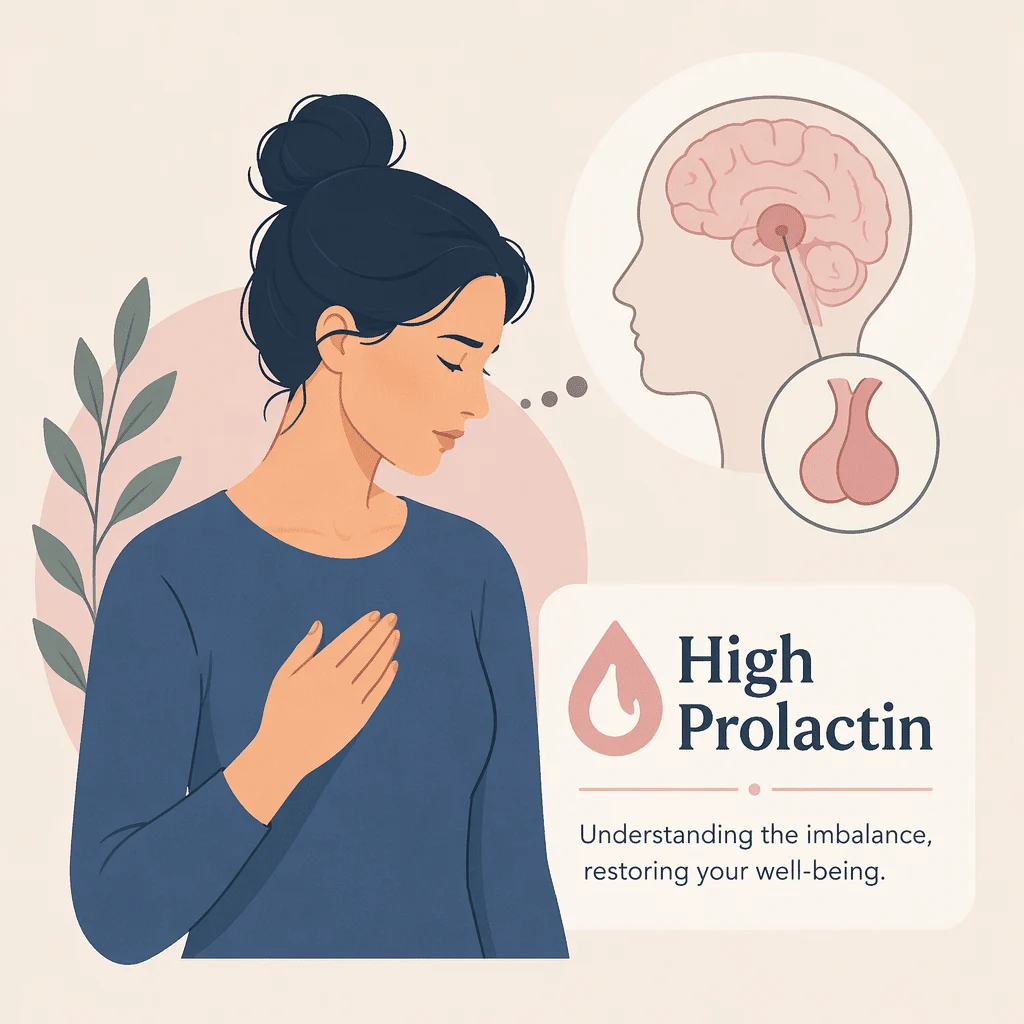
Prolactina este produsă de celulele din glanda hipofiză, o glandă de mărimea unui bob de mazăre situată chiar sub baza creierului. Rolul său cel mai cunoscut este pregătirea țesutului mamar și stimularea producției de lapte după naștere.
Spre deosebire de majoritatea hormonilor hipofizari, prolactina este ținută sub control mai degrabă decât activată. Creierul eliberează dopamină, care frânează în mod continuu secreția de prolactină. Orice factor care reduce această frână dopaminergică sau care afectează tija ce transportă dopamina la hipofiză permite prolactinei să crească.
Prolactina este ridicată din motive complet normale în timpul sarcinii și alăptării. De asemenea, atinge un vârf în timpul somnului, astfel că o probă recoltată la scurt timp după trezire poate părea mai mare decât una recoltată la mijlocul dimineții. Nivelurile cresc după masă, după exerciții fizice intense, după stimularea mamelonului sau a sânului și după un examen al sânului.
Semne care determină de obicei efectuarea unui test de prolactină
La femei, cauzele frecvente sunt menstruațiile neregulate sau absente, scurgerea de lichid lăptos din mamelon în afara alăptării (galactoree), dificultăți în a rămâne însărcinată, libidou scăzut și uscăciune vaginală. Prolactina este verificată frecvent împreună cu hormonul luteinizant (LH) și hormonul foliculostimulant (FSH), deoarece prolactina crescută le suprimă pe amândouă.
La bărbați, tabloul este mai discret și adesea trecut cu vederea mai mult timp: libidou scăzut, dificultăți de erecție, reducerea pilozității corporale, mărirea țesutului mamar (ginecomastie) și infertilitate. Deoarece prolactina scade testosteronul, rezultatul apare frecvent alături de o valoare pentru testosteronului scăzut la bărbați. La femeile evaluate pentru dezechilibru hormonal, poate apărea alături de o investigație pentru testosteronul crescut la femei.
Durerile de cap și pierderea vederii periferice reprezintă o categorie complet diferită de simptome și sunt tratate în secțiunea semnelor de alarmă de mai jos.
De ce recoltarea de sânge în sine îți poate crește prolactina
Prolactina este un hormon al stresului la fel de mult cum este un hormon reproductiv. Stresul fizic sau emoțional o crește în câteva minute, inclusiv stresul provocat de ac. Cineva care este anxios în legătură cu analizele de sânge, care a venit în grabă la programare sau care a necesitat mai multe încercări pentru a găsi o venă poate obține o valoare ușor crescută cu o glandă pituitară complet normală.
Aceasta nu este o excepție rară. Este una dintre cele două explicații principale pentru un rezultat ușor crescut și tocmai de aceea medicii nu acționează aproape niciodată pe baza unui singur rezultat la limită.
Cel mai bun moment pentru recoltarea prolactinei este atunci când ești treaz, odihnit și calm, ideal la câteva ore după trezire, nu imediat după ce te-ai sculat, fără efort fizic intens înainte și fără examinarea sânilor cu puțin timp înainte. Unele laboratoare preferă o probă recoltată dimineața pe stomacul gol. Dacă primul rezultat depășește doar ușor intervalul de referință, pasul următor obișnuit este repetarea analizei în aceste condiții.
Deoarece răspunsul la stres implică același mecanism general, mulți se întreabă dacă analiză de sânge pentru cortizol și prolactina lor transmit același mesaj. Pot evolua împreună, dar sunt măsurate și interpretate separat.
Macroprolactina: cea mai frecventă alarmă falsă
Acesta este cel mai important lucru de știut despre un rezultat crescut al prolactinei, iar majoritatea site-urilor de sănătate pentru publicul larg nu îl menționează.
Prolactina circulă în mai multe forme. Cea mai mare parte este prolactina monomerică, molecula mică, biologic activă, care îndeplinește funcțiile hormonului. O parte poate fi legată de un anticorp, formând un complex mare numit macroprolactină. Acest complex este prea mare pentru a părăsi corespunzător fluxul sanguin, astfel că se acumulează. Important de reținut: este biologic inactiv — nu afectează menstruația, fertilitatea, libidoul sau țesutul mamar.
Problema este că analizoarele de laborator de rutină nu pot face diferența între cele două forme. Ele măsoară prolactina totală, astfel că macroprolactina este contabilizată ca și cum ar fi forma reală. Rezultatul iese crescut, persoana nu are simptome sau are simptome fără legătură, și începe o investigație care nu era necesară.
Laboratoarele o detectează prin precipitare cu polietilenglicol, prescurtată de obicei PEG. Reactivul PEG aglomerează complexele mari de macroprolactină din probă, iar prolactina monomerică rămasă este măsurată din nou. Dacă cea mai mare parte a semnalului inițial dispare, macroprolactina a fost explicația. Cromatografia de filtrare pe gel este tehnica de referință, dar PEG este metoda practică de screening utilizată zilnic.
Macroprolactina reprezintă o proporție semnificativă din rezultatele crescute de prolactină. Fără acest screening, oamenii au fost investigați imagistic, urmăriți ani de zile și tratați pentru un artefact de laborator. Dacă rezultatul tău este crescut și simptomele nu se potrivesc, este absolut rezonabil să întrebi dacă macroprolactina a fost exclusă.
Efectul hook: capcana opusă
Efectul hook este imaginea în oglindă a macroprolactinemiei și contează mult mai mult atunci când apare.
Testele moderne pentru prolactină folosesc doi anticorpi care „sandwich-uiesc" hormonul între ei. Când prolactina este extrem de crescută — cum se poate întâmpla în cazul unei tumori mari secretoare de prolactină — există atât de mult hormon încât saturează separat ambii anticorpi, iar sandwich-ul nu se mai formează. Testul raportează astfel o valoare fals scăzută sau chiar în intervalul normal, tocmai la persoana cu cel mai ridicat nivel de prolactină.
Indiciul este o neconcordanță. Dacă imagistica arată o masă pituitară mare, dar prolactina revine doar ușor crescută sau normală, această combinație ar trebui să determine laboratorul să repete analiza după diluarea probei. Diluarea aduce concentrația înapoi în intervalul pe care testul îl poate gestiona, iar valoarea reală, foarte ridicată, devine vizibilă.
Nu vei întâlni acest lucru în cazul unui rezultat la limită. Este o măsură de siguranță specifică, aplicată atunci când o leziune mare este deja vizibilă, și există pentru ca o tumoră tratabilă să nu fie clasificată greșit.
Medicamentele care cresc prolactina și regula privind întreruperea lor
Medicamentele reprezintă cea mai frecventă cauză a prolactinei cu adevărat crescute în practica de zi cu zi și sunt în mod constant subestimate atât de pacienți, cât și uneori de medici din afara endocrinologiei.
Orice substanță care blochează dopamina va crește prolactina. Lista include antipsihoticele, în special risperidona, paliperidona și amisulprida; medicamentele antiemetice și prokinetice metoclopramida și domperidona; unele antidepresive; analgezicele opioide; medicamentul antihipertensiv verapamil; preparatele care conțin estrogen; și anumite medicamente pentru reducerea acidității gastrice.
Acesta este aspectul cel mai important de pe această pagină. Dacă iei un antipsihotic și prolactina ta este crescută, nu îl opri, nu îi reduce doza și nu sări peste prize pe cont propriu. Oprirea bruscă a unui antipsihotic poate declanșa o recădere a unei boli psihice grave, iar prejudiciul cauzat de acea recădere este mult mai mare decât cel cauzat de o valoare crescută a prolactinei.
Prolactina crescută din cauza unui medicament este o discuție cu medicul prescriptor, nu o schimbare pe care să o faci singur. Medicii au opțiuni reale: pot confirma rezultatul, pot verifica dacă momentul apariției corespunde cu medicamentul respectiv, pot cântări ajustarea dozei, pot lua în considerare trecerea la un alt medicament cu efect mai mic asupra prolactinei, pot adăuga un tratament care să compenseze efectul sau pot decide că tratamentul actual merită continuat cu monitorizare. Acest echilibru este o decizie clinică luată împreună cu tine și depinde de cât de bine este controlată afecțiunea de bază.
Același principiu se aplică fiecărui medicament de pe listă. Prezintă rezultatul și lista completă a medicamentelor tale — inclusiv tot ce ai cumpărat fără rețetă — medicului care ți le-a prescris.
Hipotiroidismul și alte cauze reversibile
Tiroida hipoactivă este o cauză cu adevărat reversibilă a prolactinei crescute și este ușor de trecut cu vederea, deoarece nu produce niciun semn distinctiv legat de prolactină.
Când tiroida funcționează insuficient, creierul crește secreția de hormon eliberator de tirotropină pentru a o stimula. Același semnal stimulează și eliberarea prolactinei, astfel că prolactina crește ca efect secundar al problemei tiroidiene, nu ca o problemă hipofizară în sine. Tratarea afecțiunii tiroidiene normalizează de obicei prolactina.
De aceea TSH este verificat practic în orice evaluare a prolactinei, adesea împreună cu T4 liber. Dacă acele rezultate indică spre hipotiroidism, tiroida este tratată mai întâi, iar prolactina este reverificată ulterior, în loc să fie investigată separat.
Boala renală avansată este o altă cauză reversibilă în principiu, deoarece prolactina este eliminată de rinichi, iar clearance-ul scade pe măsură ce funcția renală se deteriorează. O creatinină rezultatul și rata de filtrare estimată fac de obicei acest lucru evident. Boala hepatică cronică poate contribui în același mod.
O leziune a peretelui toracic, o intervenție chirurgicală, arsuri sau zona zoster care afectează toracele pot crește prolactina prin aceleași căi nervoase care funcționează în timpul alăptării. Sarcina, desigur, o crește fiziologic, motiv pentru care un test de sarcină face parte din evaluarea standard la orice persoană care ar putea fi însărcinată. Uneori apare întrebarea inversă, iar o valoare de prolactină scăzută necesită o explicație proprie.
Prolactinomul și alte cauze hipofizare, în proporție
Un prolactinom este o formațiune benignă, necanceroasă, alcătuită din celule producătoare de prolactină la nivelul hipofizei. Este cel mai frecvent tip de tumoră hipofizară și, în același timp, una dintre cele mai tratabile afecțiuni din endocrinologie.
Majoritatea sunt microprolactinoame, cu diametrul sub 10 milimetri. Acestea nu comprimă nimic; pur și simplu produc prea multă prolactină, iar simptomele apar din cauza acestui efect hormonal, nu din cauza masei în sine. Macroprolactinoamele au 10 milimetri sau mai mult și pot apăsa pe structurile vecine, cel mai important pe chiasma optică — de aceea vederea este evaluată atunci când se descoperă o leziune mare.
Există un al doilea tipar hipofizar, ușor de confundat. O masă care nu produce ea însăși prolactină poate totuși să o crească, prin comprimarea tijei hipofizare și întreruperea aportului de dopamină care în mod normal menține prolactina suprimată. Acest efect de tijă produce de obicei o creștere modestă. O prolactină foarte mare asociată cu o leziune mică sugerează un prolactinom; o prolactină moderat crescută asociată cu o leziune mare sugerează compresia tijei sau efectul de cârlig descris anterior.
În ceea ce privește tratamentul, un aspect liniștitor este că prolactinoamele sunt de obicei gestionate cu medicamente, nu prin intervenție chirurgicală. Institutul Național al Cancerului menționează terapia medicamentoasă ca primă opțiune pentru tumorile hipofizare producătoare de prolactină, operația fiind rezervată tumorilor care nu răspund la tratament sau persoanelor care nu pot urma această terapie. Clasa de medicamente utilizată este cea a agoniștilor dopaminergici, care restabilesc frâna pe care hipofiza o pierduse; medicamentele specifice și dozele sunt stabilite de un specialist și depășesc scopul acestui articol. Unele persoane pot, în cele din urmă, să întrerupă tratamentul sub supraveghere medicală.
Cum decurge de obicei investigația
Etapele sunt deliberat ordonate, astfel încât explicațiile frecvente și ieftine să fie excluse înainte de a se urmări cele rare și costisitoare.
De obicei, pașii sunt: confirmarea rezultatului printr-o probă repetată recoltată în condiții de repaus; revizuirea tuturor medicamentelor pe care le iei; screening pentru macroprolactină dacă valorile rămân crescute; verificarea TSH-ului și, acolo unde este relevant, a funcției renale; efectuarea unui test de sarcină dacă este cazul; și efectuarea unui RMN hipofizar doar atunci când rămâne o creștere reală, inexplicabilă. Testul câmpului vizual se adaugă atunci când imagistica evidențiază o leziune de dimensiuni mari.
Tabelul de mai jos arată cum sunt interpretate de obicei diferitele tipare de rezultate. Este un ghid al logicii, nu un substitut pentru evaluarea medicului tău.
| Tipul rezultatului | La ce indică de obicei | Pasul următor tipic |
|---|---|---|
| Ușor crescut pe un singur eșantion recoltat în condiții de stres sau grabă | Stres la recoltarea venoasă, somn recent, efort fizic sau masă servită anterior | Repetă testul în repaus, înainte de a lua orice altă decizie |
| Persistent crescut, test de macroprolactină pozitiv | Macroprolactina, o formă biologic inactivă | Raportează valoarea monomericului; de obicei nu este necesară imagistică sau tratament |
| Crescut la o persoană care ia un antipsihotic sau un medicament antiemetic | Hiperprolactinemia indusă de medicamente | Discută cu medicul prescriptor; nu modifica și nu opri niciodată medicamentul din proprie inițiativă |
| Crescut alături de un TSH ridicat | Hipotiroidismul care determină creșterea prolactinei | Tratează mai întâi tiroida, apoi reverifică prolactina |
| Valoare semnificativ crescută, însoțită de cefalee sau tulburări vizuale | Posibilă masă hipofizară care afectează structurile din jur | Evaluare clinică promptă, imagistică hipofizară și testarea câmpului vizual |
| Crescut doar moderat, dar masă hipofizară mare la imagistică | Compresie de tijă hipofizară sau efect hook care maschează o valoare foarte ridicată | Solicită laboratorului să repete analiza pe o probă diluată |
Semne de alarmă care necesită atenție medicală urgentă
Solicită evaluare medicală fără întârziere dacă ai un rezultat crescut al prolactinei însoțit de oricare dintre următoarele:
- Pierdere nouă sau agravată a vederii laterale (periferice), vedere încețoșată sau vedere dublă
- O cefalee nouă și persistentă sau o cefalee care diferă clar de tiparul tău obișnuit
- O cefalee bruscă și intensă, însoțită de tulburări vizuale, căderea pleoapei sau vărsături, care poate indica o hemoragie la nivelul hipofizei (apoplexie hipofizară) și reprezintă o urgență medicală
- Scurgere mamelonară apărută împreună cu orice simptom vizual
- Orice simptom neurologic nou la o persoană care are deja o leziune hipofizară cunoscută
Aceste semne sunt neobișnuite. Sunt menționate deoarece schimbă urgența situației, nu pentru că ar reprezenta explicația probabilă pentru majoritatea rezultatelor crescute.
Cele mai recente progrese științifice în testarea prolactinei
Cercetările publicate după 2023 au confirmat cât de des un nivel crescut de prolactină se dovedește a fi altceva decât o problemă hormonală și au clarificat regulile practice privind ce trebuie verificat.
Un studiu transversal amplu realizat în Spania a analizat motivele pentru care prolactina era crescută la femeile evaluate pentru sindromul ovarelor polichistice și în grupuri de comparație. Dintre cele cu o valoare ușor crescută, majoritatea au fost explicate fie prin stresul recoltării de sânge, cu normalizarea valorii după un repaus corespunzător, fie prin macroprolactinemie identificată prin precipitare cu polietilenglicol. Ce înseamnă asta pentru tine: în cazul creșterilor ușoare, odihna înainte de repetarea probei și screeningul pentru macroprolactină rezolvă majoritatea cazurilor fără a fi nevoie de imagistică.
O recenzie clinică dintr-o revistă de medicină reproductivă a explicat că macroprolactinemia, un exces al formei mari de prolactină legată de anticorpi, este o descoperire recunoscută și frecventă la persoanele cu prolactină crescută, și a argumentat că oricine cu un nivel persistent ridicat ar trebui testat pentru aceasta. Autorii au subliniat riscul de imagistică pituitară inutilă și tratament medicamentos inutil atunci când testul este omis. Ce înseamnă asta pentru tine: testul pentru macroprolactină este un pas ieftin care poate preveni o investigație imagistică de care nu ai nevoie.
O declarație de poziție comună a societăților braziliene de endocrinologie și ginecologie a prezentat o abordare structurată pentru diagnosticarea hiperprolactinemiei la femei, separând explicit cauzele fiziologice, cele legate de medicamente și cele patologice, și semnalând atât macroprolactina, cât și efectul de cârlig ca erori de laborator care pot întârzia sau distorsiona un diagnostic. Ce înseamnă asta pentru tine: organismele naționale de specialitate tratează acum aceste două artefacte ca puncte de verificare de rutină, nu ca simple curiozități.
O recenzie de specialitate privind tratamentul prolactinomului, publicată într-o revistă de top de endocrinologie, a descris terapia cu agoniști dopaminergici ca tratament de elecție, capabil să controleze afecțiunea, să restabilească fertilitatea la ambele sexe și să permită întreruperea tratamentului la o proporție semnificativă de pacienți, cu chirurgia sau radioterapia rezervate cazurilor rezistente. Ce înseamnă asta pentru tine: un diagnostic de prolactinom duce de obicei la comprimate și monitorizare, nu la o operație.
În cele din urmă, un ghid coreean elaborat special pentru hiperprolactinemia indusă de antipsihotice a formulat recomandări graduale privind când să se măsoare prolactina și cum să se gestioneze un nivel crescut la persoanele care iau aceste medicamente. Recomandările se concentrează pe decizii luate de medicul prescriptor, cum ar fi revizuirea medicamentului și luarea în considerare a alternativelor, monitorizate în timp. Ce înseamnă asta pentru tine: există o cale clinică recunoscută pentru această situație, iar aceasta aparține medicului tău prescriptor.
Rezultatele studiilor sunt rezumate aici în termeni simpli; referințele complete, cu linkuri, sunt listate în secțiunea Surse de mai jos.
Glosar de termeni cheie
| Termen | Definiție |
|---|---|
| Prolactina | Un hormon produs de glanda pituitară, cunoscut în principal pentru rolul său în stimularea producției de lapte matern. |
| Hiperprolactinemie | Termenul medical pentru un nivel al prolactinei care depășește intervalul de referință al laboratorului. |
| Prolactina monomerică | Forma mică, biologic activă a prolactinei, care produce simptome. |
| Macroprolactina | Prolactina legată de un anticorp, formând un complex mare și inactiv pe care testele standard îl contorizează totuși. |
| Precipitare cu PEG | Un pas de laborator care utilizează polietilenglicol pentru a elimina macroprolactina înainte de a remăsura proba. |
| Efectul hook | O valoare fals scăzută care poate apărea atunci când prolactina este extrem de mare și saturează testul. |
| Prolactinom | O formațiune benignă a glandei pituitare care produce prolactină; de obicei tratată cu medicamente. |
| Efectul tijei hipofizare | O creștere modestă a prolactinei cauzată de o masă care apasă pe tijă și blochează dopamina. |
| Galactoreea | Scurgere mamelonară de aspect lăptos, fără legătură cu sarcina sau alăptarea. |
| Agonist dopaminergic | O clasă de medicamente care imită dopamina și reduce producția de prolactină. |
Întrebări frecvente
Un nivel ridicat de prolactină înseamnă că am o tumoare?
De obicei, nu. Majoritatea rezultatelor cu prolactină crescută sunt explicate de altceva decât o tumoare: stresul recoltării sângelui, somnul recent sau efortul fizic, sarcina, un medicament pe care îl iei, hipotiroidismul sau macroprolactina, care este un artefact de laborator și nu o boală. Prolactinomul este o posibilitate reală care se confirmă sau se infirmă prin imagistică, dar nu este prima suspiciune, iar atunci când este descoperit, este benign și răspunde de obicei bine la tratamentul medicamentos. Tocmai de aceea există un protocol de investigare în etape — pentru ca oamenii să nu fie supuși unor investigații sau îngrijorări inutile.
Poate stresul să crească nivelul de prolactină?
Da, și asta include chiar stresul recoltării sângelui. Prolactina crește în câteva minute de la un stres fizic sau emoțional, astfel că o puncție venoasă dificilă, o sosire în grabă sau simpla anxietate față de ac pot ridica valoarea la o persoană cu hipofiza perfect normală. Somnul, efortul fizic, o masă copioasă și stimularea mamelonară au același efect. De aceea, un prim rezultat ușor crescut se repetă de obicei când ești odihnit și calm, înainte de orice alt pas, și de aceea o singură valoare la limită nu este tratată ca un diagnostic.
Medicamentele mele ar putea cauza nivelul ridicat de prolactină?
Foarte posibil. Medicamentele se numără printre cele mai frecvente cauze ale prolactinei cu adevărat crescute, în special antipsihoticele precum risperidona și paliperidona, medicamentele antiemetice metoclopramid și domperidonă, unele antidepresive, opioidele, verapamilul și preparatele care conțin estrogen. Important: nu opri, nu reduce și nu sări peste un medicament din cauza unui rezultat al prolactinei. Oprirea unui antipsihotic pe cont propriu poate declanșa o recădere a unei boli psihice grave. Prezintă rezultatul și lista completă a tot ceea ce iei medicului prescriptor, care poate evalua alternativele și poate decide dacă și ce anume trebuie schimbat.
Ce cauzează nivelul crescut de prolactină la o femeie care nu este însărcinată?
Explicațiile frecvente sunt, aproximativ în ordine: stresul provocat de recoltarea probei în sine, medicamentele, macroprolactina, hipotiroidismul și, ulterior, un prolactinom sau o altă leziune hipofizară. Alăptarea și stimularea recentă a sânilor contează de asemenea. Simptomele ajută la diferențierea acestora. Absența sau neregularitatea menstruației însoțită de secreție lactată la nivelul mamelonului indică o creștere reală, biologic activă, în timp ce o valoare ridicată la o persoană fără niciun simptom ridică posibilitatea macroprolactinei. Testul de sarcină face parte din evaluarea standard, indiferent de ce te aștepți.
Cu ce sunt asociate nivelurile crescute de prolactină la bărbați?
La bărbați, prolactina crescută suprimă testosteronul, astfel că simptomele sunt adesea libidou scăzut, dificultăți de erecție, energie redusă, păr corporal și facial mai puțin abundent, mărirea țesutului mamar și fertilitate redusă. Deoarece acestea se dezvoltă treptat și pot fi ușor atribuite vârstei sau stresului, bărbații sunt diagnosticați mai târziu și au mai multe șanse decât femeile să prezinte o leziune hipofizară mai mare în momentul descoperirii. Acesta este unul dintre motivele pentru care durerile de cap sau orice modificare a vederii periferice trebuie raportate prompt, fără a fi ignorate.
Poate fi tratat nivelul ridicat de prolactină?
În cele mai multe cazuri, da, iar tratamentul vizează adesea cauza, nu valoarea în sine. Dacă un medicament este responsabil, medicul prescriptor poate ajusta schema de tratament. Dacă o tiroidă hipoactivă este cauza, tratarea tiroidei aduce de obicei prolactina la valori normale. Dacă macroprolactina este explicația, nu este nevoie de niciun tratament. În cazul unui prolactinom, medicamentele agoniste dopaminergice reprezintă de obicei prima linie de tratament și reduc adesea și dimensiunea tumorii, pe lângă scăderea hormonului; intervenția chirurgicală este rezervată cazurilor care nu răspund la tratament.
Surse
- MedlinePlus, Biblioteca Națională de Medicină a SUA. Testul de sânge pentru prolactină. https://medlineplus.gov/ency/article/003718.htm
- Institutul Național al Cancerului. Tratamentul tumorilor hipofizare. https://www.cancer.gov/types/pituitary/treatment
- Korbonits M. Pharmacological Causes of Hyperprolactinemia. Endotext, NCBI Bookshelf, 2024. https://www.ncbi.nlm.nih.gov/books/NBK599196/
- Luque-Ramirez M, Quintero-Tobar A, Martinez-Garcia MA, de Lope Quinones S, Insenser M, Nattero-Chavez L, Escobar-Morreale HF. Mild hyperprolactinemia in women with polycystic ovary syndrome. Insights from a large cross-sectional study. Journal of Clinical and Translational Endocrinology, 2025. https://doi.org/10.1016/j.jcte.2025.100412
- Koniares K, Benadiva C, Engmann L, Nulsen J, Grow D. Macroprolactinemia: a mini-review and update on clinical practice. F&S Reports, 2023. https://doi.org/10.1016/j.xfre.2023.05.005
- Glezer A, Mendes Garmes H, Kasuki L, Martins M, Conde Lamparelli Elias P, Dos Santos Nunes Nogueira V, Rosa-e-Silva ACJS, Maciel GAR, Benetti-Pinto CL, Prestes Nacul A. Diagnosis of hyperprolactinemia in women: A Position Statement from the Brazilian Federation of Gynecology and Obstetrics Associations (Febrasgo) and the Brazilian Society of Endocrinology and Metabolism (SBEM). Archives of Endocrinology and Metabolism, 2024. https://doi.org/10.20945/2359-4292-2023-0502
- Auriemma RS, Pirchio R, Pivonello C, Garifalos F, Colao A, Pivonello R. Approach to the Patient With Prolactinoma. The Journal of Clinical Endocrinology and Metabolism, 2023. https://doi.org/10.1210/clinem/dgad174
- Kim HR, Kim SM, Kang WS, Jeon HJ, Jang SH, Jon DI, Hong J, Jeong JH. Development of a Guideline for Antipsychotic-induced Hyperprolactinemia in Korea Using the ADAPTE Process. Clinical Psychopharmacology and Neuroscience, 2023. https://doi.org/10.9758/cpn.22.979
Lectură suplimentară
- Analize de fertilitate: ce hormoni se măsoară și de ce
- Valori normale ale tiroidei: înțelegerea intervalelor de referință
- Cortizol scăzut dimineața: cauze, simptome și tratamente
- IGF-1: un alt marker sanguin legat de hipofiză, explicat pe înțelesul tău
- Disfuncție erectilă: cauze care merită investigate
Înțelege-ți rezultatele analizelor cu AI DiagMe
Un rezultat al prolactinei rareori se interpretează singur. De obicei, este citit alături de TSH, LH și FSH, iar modelul format de aceste valori împreună este cel care îi dă sens. AI DiagMe îți transformă buletinul de analize în limbaj simplu, ca să poți vedea cum se leagă valorile între ele și să ajungi la consultație cu întrebări mai bune. Te ajută să îți înțelegi rezultatele; nu pune diagnostice și nu înlocuiește medicul tău.
Obține interpretarea rezultatelor în câteva minute