SF3B1 myelodysplasia is a form of myelodysplastic syndrome (MDS) in which a change in a gene called SF3B1 disrupts the way the bone marrow makes red blood cells. It is one of the most common and most recognisable subtypes of MDS, and it usually behaves as a lower-risk, slower-moving disease. Its main problem is long-lasting anemia, which can leave people tired and dependent on blood transfusions. In this article you will learn what SF3B1 myelodysplasia is, why the mutation matters, how it is diagnosed, and how modern treatments — including luspatercept and the newly approved imetelstat — are changing the outlook for patients.
What is SF3B1 myelodysplasia?
Myelodysplastic syndromes are a group of bone marrow disorders, classed as blood cancers, in which the stem cells that should mature into healthy blood cells fail to do so. The marrow produces cells that are faulty or too few, so blood counts fall. When this happens, the body often cannot make enough red blood cells, which causes ongoing anemia.
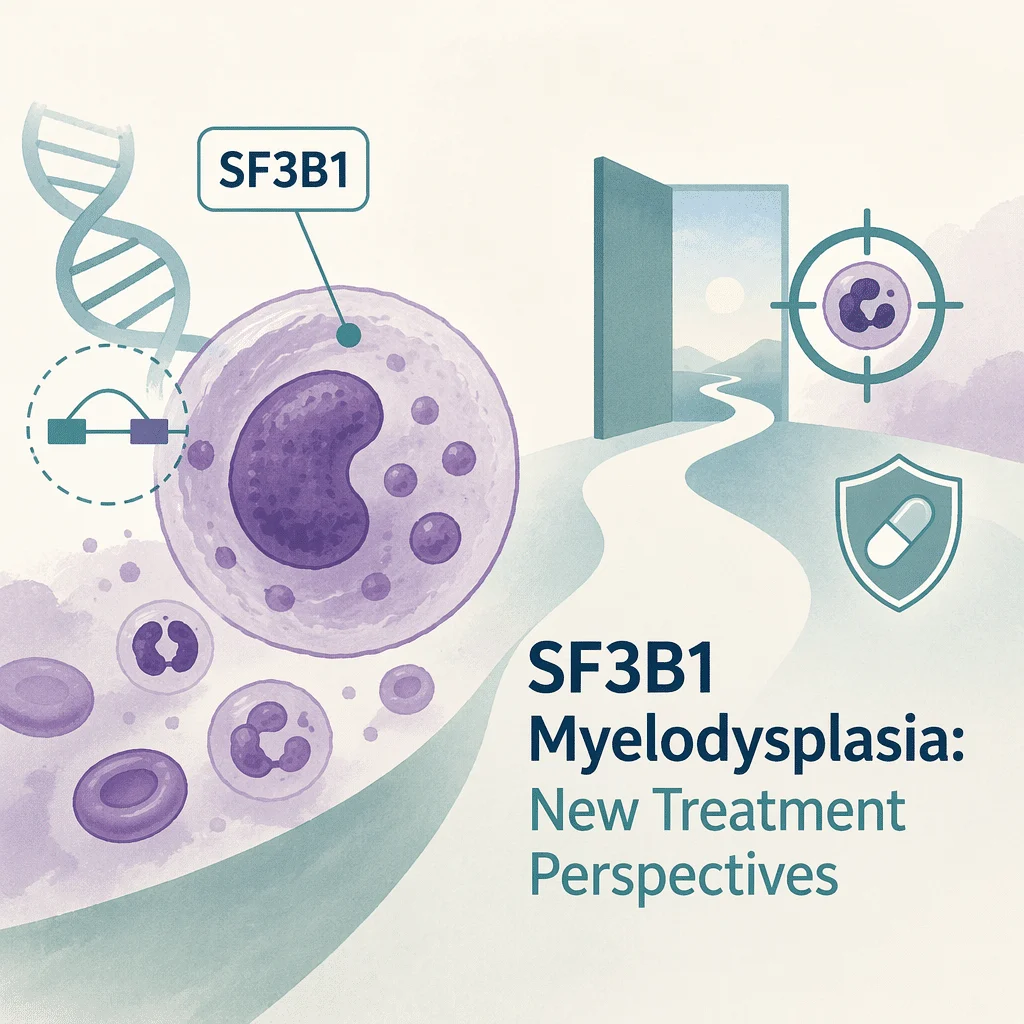
In SF3B1 myelodysplasia, the trigger is a change in the SF3B1 gene. This gene is part of the spliceosome, the cell’s editing machinery that prepares genetic instructions before proteins are made. When SF3B1 is altered, that editing goes wrong, iron piles up inside developing red cells, and the marrow makes immature cells called ring sideroblasts. The end result is “ineffective erythropoiesis” — the marrow works hard but releases too few healthy red cells into the bloodstream.
Why the SF3B1 mutation matters
The SF3B1 mutation is not just a laboratory detail. In the 2022 international classifications of MDS, an SF3B1 change became a defining feature of its own distinct subtype, sometimes written as “MDS with low blasts and SF3B1 mutation.” Grouping the disease by its genetics, rather than by appearance alone, helps doctors predict how it will behave and choose the right treatment.
The good news is that SF3B1-mutated MDS generally sits at the lower-risk, more favourable end of the spectrum. It is far less likely than other forms to progress quickly to acute myeloid leukaemia, and many people live with it for years. The central challenge is managing the chronic anemia and the consequences of repeated transfusions, rather than fighting an aggressive cancer.
Symptoms and how it is diagnosed
Because the core problem is anemia, the most common symptoms are tiredness, paleness, breathlessness and a faster heartbeat. Many people feel well for a long time and are only picked up when a routine blood test shows a low red cell count. As red cell production falls further, fatigue tends to become more noticeable.
Diagnosis starts with blood tests. Doctors order a complete blood count to measure the different blood cells and to confirm anemia, and they often measure lactate dehydrogenase and other markers to understand how the marrow is working. Confirming MDS, however, requires a bone marrow biopsy, where a small sample of marrow is examined under the microscope. In SF3B1 myelodysplasia, that sample typically shows ring sideroblasts, and genetic testing then identifies the SF3B1 mutation itself, which secures the diagnosis and clarifies the subtype.
Treatment options
There is no single cure for lower-risk MDS short of a stem cell transplant, which is reserved mainly for higher-risk disease. Instead, treatment for SF3B1 myelodysplasia aims to correct the anemia, reduce the need for transfusions, and protect quality of life. Several options are now available, and the choice depends on factors such as your erythropoietin (EPO) level and whether earlier treatments have stopped working.
| Treatment | How it helps | Typical role |
|---|---|---|
| Erythropoiesis-stimulating agents (ESAs) | Prompt the marrow to make more red cells | Often tried first when the EPO level is not too high |
| Luspatercept | Helps late-stage red cells finish maturing | A preferred option for SF3B1 or ring-sideroblast anemia in many cases |
| Imetelstat (Rytelo) | Targets the abnormal marrow cells | An option after ESAs stop working (FDA-approved 2024) |
| Red blood cell transfusions | Replace missing red cells directly | Supportive care for symptomatic anemia |
| Iron chelation | Removes excess iron left by transfusions | Used when iron overload develops |
| Stem cell transplant | Replaces the blood-forming cells | Considered mainly for higher-risk disease |
Managing transfusions and iron overload
For many people with SF3B1 myelodysplasia, regular red blood cell transfusions are an important part of care. They quickly relieve the symptoms of anemia, but they carry a hidden cost: each unit of blood adds iron, and the body has no natural way to get rid of the excess. Over months and years, that iron can build up in the heart, liver and other organs.
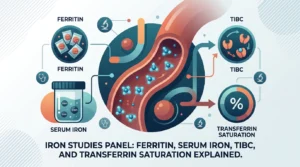
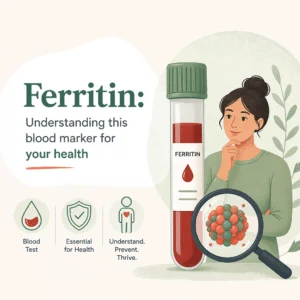
To stay ahead of this, doctors monitor ferritin and may order a complete iron studies panel to estimate how much iron is stored in the body. When levels climb, people who receive frequent transfusions can develop iron overload, and an iron-removing medicine (chelation therapy) may be added. This is one reason that treatments which reduce the need for transfusions are so valuable: fewer transfusions mean less iron to manage.
When to see a doctor
Talk to a healthcare professional if you have persistent tiredness, paleness or breathlessness, or if a blood test has shown a low red cell count that does not recover. If you already have an MDS diagnosis, report new or worsening fatigue, unusual bruising, bleeding or repeated infections promptly, because these can signal a change in your blood counts that your team will want to check.
Latest scientific advances
Research in the last few years has reshaped how SF3B1 myelodysplasia is understood and treated. Three developments stand out, and each is encouraging for patients.
First, the disease is now defined by its genetics. The 2022 international classifications made the SF3B1 mutation a defining feature of a distinct, generally lower-risk MDS subtype, and updated risk tools fold molecular results into the prognosis (Garcia-Manero, Am J Hematol, 2023; Hasserjian et al., Blood, 2023). What this means for you: your mutation places you in a group that usually has a slower course, and it points your team toward the treatments most likely to help.
Second, a medicine that targets the anemia directly has become a leading option. Luspatercept — a treatment that helps late-stage red blood cells finish maturing — is now a preferred first choice for transfusion-dependent lower-risk MDS with an SF3B1 mutation or ring sideroblasts when the EPO level is not too high, based on a large head-to-head trial (Battaglia et al., Curr Treat Options Oncol, 2024). What this means for you: a real chance to need fewer transfusions, and sometimes none for a while.
Third, a brand-new class of drug has arrived. In June 2024 the FDA approved imetelstat (Rytelo), a telomerase inhibitor, for lower-risk MDS with transfusion-dependent anemia in people who no longer respond to ESAs. In its main trial, about 4 in 10 patients went at least 8 weeks without needing a transfusion, compared with far fewer on placebo (U.S. FDA, 2024). What this means for you: another way to reduce transfusions — and therefore the iron overload they cause — when earlier options run out. These approaches are still being studied in larger groups, and not every option suits every patient, so the right plan is always individual.
Glossary
| Term | Definition |
|---|---|
| SF3B1 | A gene of the spliceosome; when altered, it disrupts red blood cell production in MDS. |
| Myelodysplastic syndrome (MDS) | A group of bone marrow cancers in which blood cells fail to mature normally. |
| Ring sideroblasts | Immature red cells with a ring of iron deposits, seen in the bone marrow. |
| Ineffective erythropoiesis | When the marrow makes red cells but too few healthy ones reach the blood. |
| Spliceosome | The cell machinery that edits genetic instructions before proteins are built. |
| Erythropoiesis-stimulating agent (ESA) | A medicine that prompts the body to make more red blood cells. |
| Luspatercept | A treatment that helps late-stage red cells mature, reducing transfusion needs. |
| Imetelstat | A telomerase-inhibiting drug (Rytelo) for transfusion-dependent lower-risk MDS. |
| Transfusion dependence | Needing regular blood transfusions to keep red cell levels adequate. |
| Iron overload | A build-up of excess iron, often from repeated transfusions. |
Frequently asked questions
What does an SF3B1 mutation mean in MDS?
It means the disease falls into a specific, genetically defined subtype of myelodysplastic syndrome. SF3B1-mutated MDS is usually lower-risk, tends to progress slowly, and is closely linked with ring sideroblasts in the bone marrow. Knowing the mutation helps doctors predict the likely course and select treatments aimed at the anemia.
Is SF3B1 myelodysplasia a cancer?
Myelodysplastic syndromes are classed as cancers of the bone marrow. However, the SF3B1-mutated form is generally one of the least aggressive types, and it is much less likely than higher-risk MDS to progress to acute leukaemia. Many people live with it for years, with treatment focused on managing anemia.
What are ring sideroblasts?
Ring sideroblasts are developing red blood cells in which iron has accumulated in a ring around the cell’s centre. They are a hallmark of SF3B1-mutated MDS and are seen when a bone marrow sample is examined and specially stained for iron. Their presence supports the diagnosis of this subtype.
How long can you live with SF3B1 myelodysplasia?
Outlook varies from person to person, but lower-risk, SF3B1-mutated MDS generally has a favourable prognosis, and many people live for years with good quality of life. Life expectancy depends on overall risk score, age, other health conditions and how well the anemia is controlled. Your hematologist can explain what to expect in your situation.
Can the anemia be treated without transfusions?
Often, yes. Erythropoiesis-stimulating agents, luspatercept and, more recently, imetelstat can all raise red cell levels and reduce or remove the need for transfusions in many patients. The best choice depends on your EPO level and whether earlier treatments have stopped working. Transfusions remain available as supportive care when needed.
Why do doctors monitor iron levels?
Because repeated transfusions add iron that the body cannot easily remove, doctors track markers such as ferritin to watch for iron overload. If iron builds up, it can affect the heart and liver over time, so an iron-removing (chelation) treatment may be added. Reducing transfusion needs is another way to limit this build-up.
Sources
- National Cancer Institute (NIH): Myelodysplastic Syndromes Treatment (PDQ)
- Cleveland Clinic: Myelodysplastic Syndrome
- U.S. FDA: Imetelstat approval for lower-risk MDS (2024)
- Garcia-Manero G. Myelodysplastic syndromes: 2023 update. Am J Hematol, 2023
- Hasserjian RP, et al. Diagnosis and classification of myelodysplastic syndromes. Blood, 2023
- Battaglia MR, et al. Treatment of Anemia in Lower-Risk MDS. Curr Treat Options Oncol, 2024
Further reading
- A full blood panel
- Abnormal blood test results
- Normal blood test ranges
- The leukemia blood test
- Multiple myeloma
Understand your lab results with AI DiagMe
Get your results interpreted in minutes
If a blood test has shown anemia or a low red cell count, it helps to understand what each value means before you see your specialist. AI DiagMe reads your laboratory results — a complete blood count, ferritin, iron studies or lactate dehydrogenase — and turns them into a clear, plain-language report. It is designed to help you understand your results and prepare questions for your care team; it does not diagnose disease and does not replace your doctor.