






































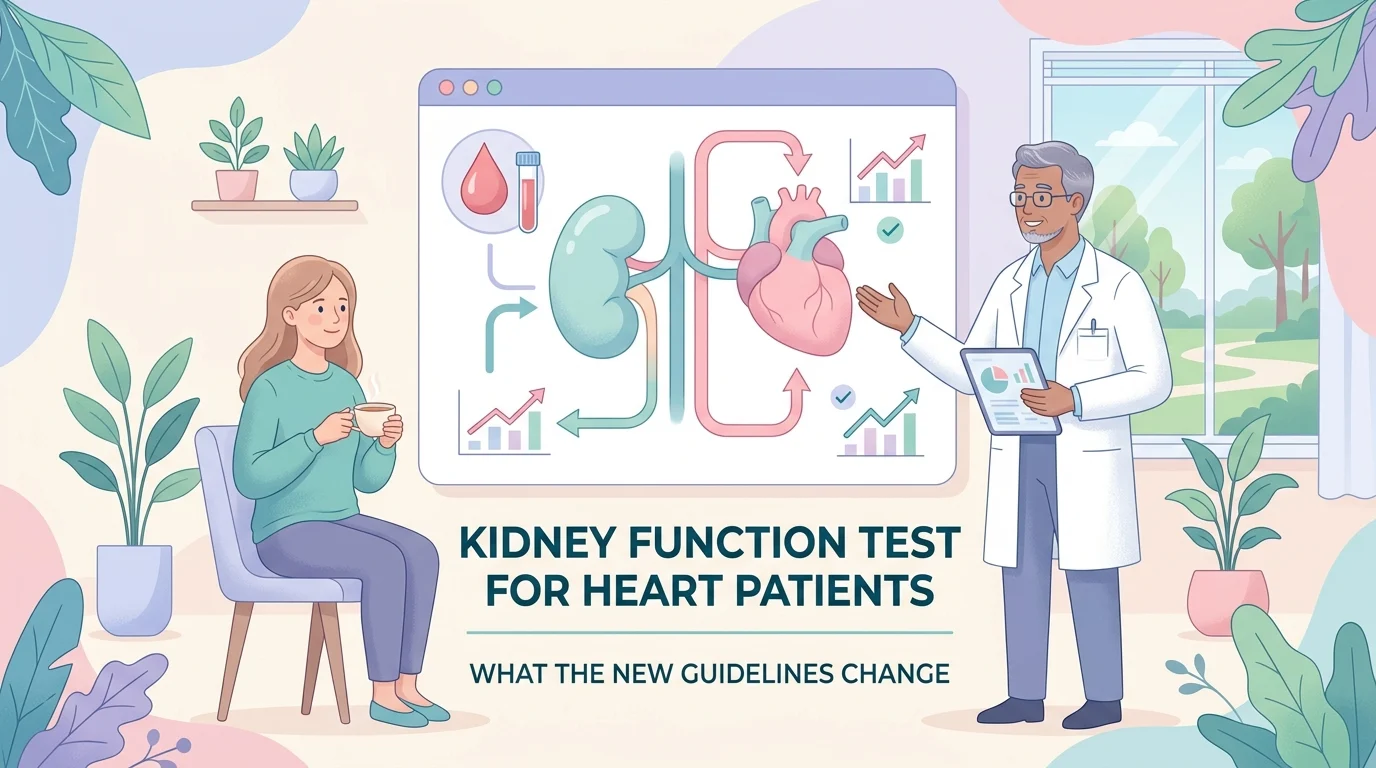
Tes fungsi ginjal tidak lagi hanya diperuntukkan bagi penderita diabetes atau mereka yang menunjukkan gejala ginjal yang jelas. Pada 5 September 2026, panduan bersama terbaru dari European Society of Cardiology dan European Renal Association mendapat perhatian luas karena satu pesan tegas: setiap orang yang didiagnosis dengan penyakit kardiovaskular harus segera menjalani skrining penyakit ginjal kronis, menggunakan satu sampel darah dan satu sampel urine. Rekomendasi ini diterbitkan dalam European Heart Journal dan dipresentasikan di ESC Congress 2026 di Munich. Dalam artikel ini, Anda akan mempelajari apa yang sebenarnya ditunjukkan oleh kedua pengukuran tersebut, mengapa bagian urine paling sering diabaikan, dan bagaimana cara memahami angka-angka pada laporan laboratorium Anda sendiri.
Apa yang diubah oleh panduan kardiologi baru
Penyakit jantung dan penyakit ginjal kronis saling memperburuk satu sama lain. Ginjal yang rusak mempercepat penyakit arteri; jantung yang lemah mengalirkan lebih sedikit darah ke ginjal. European Society of Cardiology memperkirakan sekitar 100 juta orang di Eropa hidup dengan penyakit ginjal kronis, dan masing-masing dari mereka memiliki risiko lebih tinggi terkena serangan jantung, stroke, dan gagal jantung akibatnya.
Selama ini, pemeriksaan ginjal rutin sebagian besar ditujukan bagi penderita diabetes atau tekanan darah tinggi. Panduan 2026 memperluas cakupan tersebut. Gagasan utamanya dirangkum dalam akronim STAMP on CKD: Screen (Skrining), Triage (Triase), Address kidney risk (Tangani risiko ginjal), Modify cardiovascular management (Modifikasi manajemen kardiovaskular), Plan health services (Rencanakan layanan kesehatan). Skrining menjadi langkah pertama, dan sengaja dibuat sesederhana mungkin — gugus tugas meminta para kardiolog untuk memesan tes fungsi ginjal dan pemeriksaan albumin urine pada saat penyakit kardiovaskular didiagnosis, bukan bertahun-tahun kemudian.
Dua bagian dari tes fungsi ginjal
Apa yang disebut klinisi sebagai tes fungsi ginjal sebenarnya terdiri dari sepasang pengukuran, dan keduanya menjawab pertanyaan yang berbeda. Satu memperkirakan seberapa banyak darah yang disaring ginjal Anda setiap menit. Yang lain mencari adanya kebocoran.
| Pengukuran | Contoh | Apa yang ditunjukkannya | Ambang batas perhatian umum |
|---|---|---|---|
| Laju filtrasi glomerulus perkiraan (eGFR), dihitung dari kreatinin darah | Darah | Seberapa banyak limbah yang dibersihkan ginjal Anda per menit — kapasitas penyaringan yang tersisa | Di bawah 60 mL/menit/1,73 m2, berlangsung selama minimal tiga bulan |
| Rasio albumin terhadap kreatinin urine (UACR) | Urine | Apakah albumin, protein darah yang dijaga oleh ginjal sehat agar tidak bocor, sudah merembes ke dalam urine | Di atas 30 mg albumin per gram kreatinin |
Tidak satu pun angka tersebut berarti banyak jika berdiri sendiri. Seseorang bisa memiliki laju filtrasi yang sepenuhnya normal bersamaan dengan kebocoran albumin yang jelas — dan itulah pola yang justru ingin ditangkap oleh panduan terbaru ini. Kebalikannya pun bisa terjadi, terutama pada orang lanjut usia dan mereka yang mengalami penurunan massa otot, suatu kondisi yang kami bahas dalam artikel kami tentang penurunan massa otot, eGFR, dan tes cystatin C. Itulah mengapa rekomendasi ini meminta kedua pengukuran dilakukan pada hari yang sama.
Mengapa tes urine sering kali dilewatkan
Kreatinin darah hampir selalu diperiksa secara otomatis. Nilainya sudah tercakup dalam sebagian besar panel kimia rutin, sehingga estimasi laju filtrasi biasanya sudah tercetak meskipun tidak ada yang memintanya secara khusus. Rasio albumin-kreatinin urine harus dipesan secara sengaja, dan seringkali hal itu tidak dilakukan. Menutup kesenjangan itulah yang dimaksud oleh para ketua gugus tugas ketika mereka menyatakan bahwa panduan ini bertujuan meningkatkan penggunaan tes fungsi ginjal dan tes albumin urine pada pasien dengan penyakit kardiovaskular.
Bagi pasien, beban praktisnya sangat kecil: hanya satu sampel urine, biasanya urine pertama di pagi hari, tanpa perlu puasa atau persiapan khusus. Ekskresi albumin memang dapat dipengaruhi oleh olahraga, demam, infeksi saluran kemih, menstruasi, dan dehidrasi, sehingga hasil yang pertama kali tinggi biasanya diulang beberapa minggu kemudian sebelum ada kesimpulan yang diambil. Siapa pun yang tidak yakin bagaimana menangani satu nilai abnormal dapat membaca panduan langkah demi langkah kami tentang hasil tes darah yang tidak normal.
Membaca angka Anda sendiri tanpa panik
Laporan laboratorium jarang menjelaskan kedua skala tersebut secara berdampingan. Beberapa patokan praktis berikut dapat membantu:
- eGFR di atas 90 dengan rasio albumin-kreatinin urine di bawah 30 mg/g adalah kombinasi yang menenangkan.
- eGFR antara 60 dan 89 umum terjadi seiring bertambahnya usia dan bukan, dengan sendirinya, sebuah diagnosis.
- Rasio antara 30 dan 300 mg/g adalah apa yang dulu disebut mikroalbuminuria. Ini adalah sinyal awal yang ingin ditemukan oleh panduan ini.
- Rasio di atas 300 mg/g menunjukkan kebocoran yang lebih berat dan memerlukan pemeriksaan medis segera.
- Penyakit ginjal kronis hanya didiagnosis ketika kelainan berlangsung selama minimal tiga bulan, itulah mengapa pengulangan tes lebih penting daripada satu angka tunggal.
Interval referensi juga berbeda-beda antara satu laboratorium dengan laboratorium lain, serta antara satuan pelaporan yang digunakan, jadi bandingkan nilai Anda dengan rentang yang tercetak pada laporan Anda sendiri, bukan dengan angka yang ditemukan secara online. Kami menyediakan tabel referensi bahasa sederhana mengenai rentang normal hasil tes darah untuk penanda yang paling sering muncul.
Kemajuan ilmiah terkini
Panduan ini tidak muncul begitu saja. Tiga rangkaian penelitian terkini menjelaskan mengapa albumin dalam urine bergeser dari sekadar detail nefrologi menjadi prioritas kardiologi.
Sebuah tinjauan mutakhir tahun 2025 dalam jurnal Circulation menggambarkan rasio albumin-kreatinin urine sebagai penanda pemersatu yang mencakup kondisi jantung, ginjal, dan metabolik — satu angka yang menandai masalah pada beberapa sistem sekaligus, kemungkinan karena kebocoran albumin mencerminkan kerusakan luas pada lapisan pembuluh darah kecil. Artinya bagi Anda: tes urine yang dipesan untuk memeriksa ginjal Anda juga dapat memberikan informasi tentang pembuluh darah Anda. Para penulis dengan hati-hati menambahkan bahwa masih belum jelas seberapa luas dan seberapa sering orang perlu menjalani skrining, sehingga ini merupakan arah perkembangan, bukan protokol yang sudah mapan.
Sebuah tinjauan tahun 2023 dalam Journal of the American College of Cardiology berfokus khusus pada gagal jantung dan menemukan bahwa jumlah albumin dalam urine dapat memprediksi siapa yang akan mengalami gagal jantung sekaligus bagaimana perkembangannya — secara independen dari laju filtrasi. Dengan kata lain, tes urine memberikan informasi yang tidak terkandung dalam tes darah. Artinya bagi Anda: hasil kreatinin yang normal tidak membuat sampel urine menjadi tidak diperlukan.
Sebuah analisis tahun 2026 yang diterbitkan dalam Journal of the American Heart Association melangkah lebih jauh, menggunakan kohort MESA yang berjalan lama — sekelompok ribuan orang dewasa yang dipantau selama bertahun-tahun. Bahkan ketika skor kalsium koroner sudah diketahui, penambahan albuminuria meningkatkan prediksi gagal jantung dan angka kematian keseluruhan, serta meningkatkan prediksi secara menyeluruh pada penderita diabetes. Artinya bagi Anda: tes ini tetap bernilai bahkan jika dipadukan dengan pencitraan canggih sekalipun.
Terakhir, skrining hanya bermanfaat jika ada tindakan yang bisa dilakukan setelahnya. Sebuah meta-analisis tahun 2026 yang diterbitkan di JAMA menggabungkan sepuluh uji coba acak dengan lebih dari 70.000 peserta dan menemukan bahwa kelas obat yang disebut penghambat SGLT2 memperlambat perkembangan penyakit ginjal di setiap tingkat laju filtrasi dan setiap tingkat kebocoran albumin — termasuk pada orang yang hampir tidak memiliki albumin dalam urinnya. Artinya bagi Anda: menemukan masalah lebih awal kini membuka pintu pengobatan yang tidak ada satu dekade lalu. Ini adalah hasil uji coba gabungan pada orang yang sudah diketahui berisiko, bukan janji untuk setiap individu.
Kapan harus berkonsultasi dengan dokter Anda?
- Anda baru saja didiagnosis dengan kondisi jantung atau pembuluh darah dan belum ada pemeriksaan albumin urin yang diminta.
- Hasil pemeriksaan Anda menunjukkan rasio albumin-kreatinin urin di atas 30 mg/g, apa pun laju filtrasi Anda.
- eGFR Anda turun cukup signifikan dibandingkan hasil sebelumnya, bukan sekadar sedikit di bawah normal.
- Anda menderita diabetes atau tekanan darah tinggi yang sudah lama dan belum pernah menjalani pemeriksaan ginjal dalam setahun terakhir. Ulasan kami tentang tes darah yang berkaitan dengan risiko tekanan darah Anda menjelaskan mengapa keduanya saling berhubungan.
- Anda mengalami urin berbusa terus-menerus, pergelangan kaki bengkak, atau kelelahan yang tidak dapat dijelaskan bersamaan dengan hasil pemeriksaan yang tidak normal.
Tidak satu pun dari situasi ini merupakan kedaruratan medis. Ini adalah alasan untuk membuat janji dengan dokter, bukan untuk khawatir berlebihan, dan satu hasil abnormal bukanlah sebuah diagnosis.
Glosarium
| Ketentuan | Definisi |
|---|---|
| Albumin | Protein yang paling banyak terdapat dalam darah. Ginjal yang sehat menjaga hampir semua albumin agar tidak masuk ke dalam urin. |
| Albuminuria | Albumin yang terdapat dalam urin melebihi jumlah yang sangat kecil, biasanya merupakan tanda awal kerusakan ginjal. |
| Kreatinin | Produk sisa dari aktivitas otot yang normal. Ginjal membuangnya, sehingga kadarnya dalam darah mencerminkan kapasitas penyaringan ginjal. |
| eGFR | Laju filtrasi glomerulus yang diperkirakan. Suatu perhitungan, terutama berdasarkan kreatinin darah, tentang seberapa banyak cairan yang disaring ginjal Anda per menit. |
| UACR | Rasio albumin-kreatinin urin. Membandingkan albumin dengan kreatinin dalam sampel yang sama untuk mengoreksi tingkat pengenceran urin. |
| Penyakit ginjal kronis | Kelainan struktur atau fungsi ginjal yang berlangsung setidaknya tiga bulan dan memengaruhi kesehatan. |
| Kardiorenal | Menggambarkan hubungan dua arah di mana masalah jantung memperburuk masalah ginjal dan sebaliknya. |
| Studi kohort | Desain penelitian di mana sekelompok orang yang telah ditentukan dipantau dari waktu ke waktu untuk melihat siapa yang mengalami suatu hasil tertentu. |
Pertanyaan yang sering diajukan
Apakah saya perlu berpuasa sebelum tes fungsi ginjal?
Tidak untuk pengukuran ginjal itu sendiri. Kreatinin darah dan albumin urin keduanya dapat diukur tanpa puasa. Anda mungkin tetap diminta berpuasa jika janji yang sama mencakup pemeriksaan kolesterol atau glukosa, jadi periksa instruksi pada formulir permintaan Anda. Kami menjelaskan aturan praktisnya dalam panduan kami tentang puasa sebelum tes darah.
Apa tes fungsi ginjal yang paling akurat?
Untuk skrining rutin, kombinasi laju filtrasi yang diperkirakan dan rasio albumin-terhadap-kreatinin urin adalah standar yang digunakan, dan tidak ada satu tes pun yang dapat menggantikannya. Ketika kreatinin darah kemungkinan memberikan hasil yang menyesatkan — misalnya setelah kehilangan massa otot yang signifikan — laboratorium dapat menambahkan penanda yang disebut cystatin C untuk memperhalus perkiraan tersebut.
Bisakah saya memeriksa fungsi ginjal saya di rumah?
Strip urin rumahan dapat mengindikasikan adanya protein, tetapi hasilnya jauh kurang akurat dibandingkan rasio albumin-terhadap-kreatinin dari laboratorium, dan tidak memberikan informasi apa pun tentang laju filtrasi. Sampel darah tetap diperlukan untuk itu. Hasil pemeriksaan di rumah sebaiknya dijadikan sebagai dorongan untuk melakukan tes laboratorium yang tepat, bukan sebagai penggantinya.
Apakah satu hasil yang tidak normal berarti saya menderita penyakit ginjal?
Tidak. Penyakit ginjal kronis memerlukan kelainan yang menetap selama setidaknya tiga bulan. Ekskresi albumin khususnya dapat berfluktuasi akibat demam, olahraga berat, dehidrasi, dan infeksi saluran kemih, itulah mengapa nilai yang meningkat biasanya dikonfirmasi pada sampel kedua.
Mengapa tes ini membandingkan albumin dengan kreatinin?
Karena konsentrasi urin bervariasi sepanjang hari. Mengukur albumin saja akan membuat sampel yang encer tampak meyakinkan dan sampel yang pekat tampak mengkhawatirkan. Membagi dengan kreatinin, yang diekskresi pada laju yang cukup stabil, menghilangkan efek tersebut.
Seberapa sering tes ini perlu diulang?
Hal itu bergantung pada nilai awal Anda dan faktor risiko lainnya, dan merupakan keputusan yang harus dibuat oleh dokter Anda sendiri. Pemeriksaan tahunan adalah dasar yang umum bagi orang dengan diabetes, tekanan darah tinggi, atau penyakit kardiovaskular yang sudah ada, dengan tindak lanjut yang lebih ketat ketika hasil sudah menunjukkan kelainan.
Sumber
- Centers for Disease Control and Prevention — Pemeriksaan untuk Penyakit Ginjal Kronis — cdc.gov
- National Institute of Diabetes and Digestive and Kidney Diseases (NIH) — Tes dan Diagnosis Penyakit Ginjal Kronis — niddk.nih.gov
- MedlinePlus (National Library of Medicine) — Rasio Mikroalbumin Kreatinin — medlineplus.gov
- European Society of Cardiology — Pedoman ESC Baru merekomendasikan semua pasien dengan penyakit jantung diperiksa untuk penyakit ginjal, 28 Agustus 2026 — escardio.org
- Damman K, Herrington WG et al. — 2026 ESC Guidelines for the management of cardiovascular disease and chronic kidney disease, in collaboration with the European Renal Association — European Heart Journal, 2026 — doi.org/10.1093/eurheartj/ehag098
- Claudel SE, Verma A — Albuminuria in Cardiovascular, Kidney, and Metabolic Disorders: A State-of-the-Art Review — Circulation, 2025 — doi.org/10.1161/CIRCULATIONAHA.124.071079
- Neuen BL, Fletcher RA et al. — SGLT2 Inhibitors and Kidney Outcomes by Glomerular Filtration Rate and Albuminuria: A Meta-Analysis — JAMA, 2026 — doi.org/10.1001/jama.2025.20834
- Khan MS et al. — Albuminuria dan Gagal Jantung: Tinjauan Mutakhir JACC — Journal of the American College of Cardiology, 2023
- Barzilay JI et al. — Dampak Penanda Penyakit Ginjal terhadap Prediksi Risiko Penyakit Kardiovaskular Ketika Skor Kalsium Koroner Sudah Diketahui — Journal of the American Heart Association, 2026
Bacaan lebih lanjut
- Panel darah lengkap: apa saja yang diperiksa dan mengapa
- Berpuasa sebelum tes darah: aturan dan waktu yang tepat
- Skrining lipoprotein(a) dan panduan tahun 2026
- A1c pradiabetes dan risiko jantung di bawah 6,5%
- Bikarbonat yang meningkat pada tes darah CO2
Pahami hasil lab Anda dengan AI DiagMe.
Laporan fungsi ginjal bisa sulit dipahami ketika dua angka menunjukkan arah yang berbeda dan tidak ada penjelasan untuk keduanya. AI DiagMe membaca hasil laboratorium Anda — darah, urine, dan feses — lalu mengubah penanda seperti kreatinin, laju filtrasi yang diperkirakan, dan albumin urine menjadi bahasa yang mudah dipahami, lengkap dengan rentang referensi yang digunakan oleh laboratorium Anda sendiri. Ini membantu Anda memahami hasil pemeriksaan dan mempersiapkan pertanyaan untuk dokter. AI DiagMe tidak membuat diagnosis dan tidak menggantikan dokter Anda.
Dapatkan interpretasi hasil Anda dalam hitungan menit.