
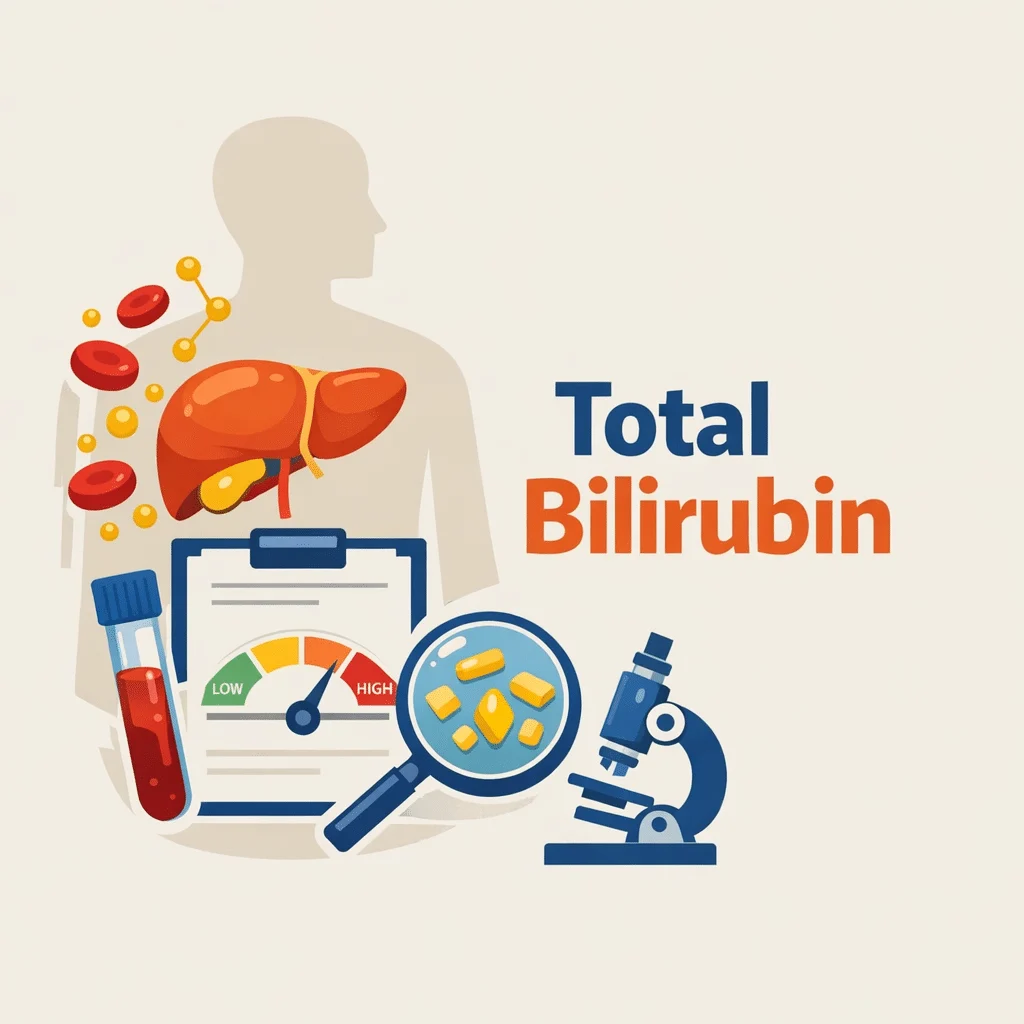
Nivelurile de bilirubină totală îți arată cât de bine elimină organismul tău un produs de deșeu natural provenit din globulele roșii îmbătrânite. Când această valoare iese din intervalul de referință al unui buletin de analize, ridică adesea mai multe întrebări decât răspunsuri, mai ales în mijlocul unor termeni medicali și cifre de referință nefamiliare. Acest ghid explică ce este bilirubina totală, de ce medicii recomandă acest test, ce poate însemna un rezultat crescut sau scăzut și când un rezultat merită o atenție mai atentă. Este scris pentru a te ajuta să urmărești discuția cu medicul tău, nu pentru a o înlocui.
Ce este bilirubina totală și cum o produce organismul
Bilirubina este un pigment galben-portocaliu creat atunci când organismul descompune globulele roșii îmbătrânite. Bilirubina totală combină bilirubina indirectă (neconjugată) și bilirubina directă (conjugată), descriind întregul parcurs al acestui pigment de la producere până la eliminare. Compararea celor două fracții una lângă alta, așa cum este explicat în ghidul testului de bilirubină directă, clarifică adesea care parte a procesului necesită atenție.
De la descompunerea globulelor roșii la bilă
Globulele roșii trăiesc aproximativ 120 de zile. Când splina le elimină din circulație, hemoglobina pe care o conțineau se descompune în mai mulți produși secundari, dintre care unul se transformă în bilirubină indirectă. Această formă nu se dizolvă în apă, astfel că circulă prin sânge legată de o proteină transportoare numită albumină, până ajunge la ficat.
În interiorul ficatului, o enzimă numită UGT1A1 atașează o moleculă de zahăr la bilirubina indirectă printr-un proces numit conjugare. Acest pas o transformă în bilirubină directă, o formă solubilă în apă pe care ficatul o poate elimina în bilă. Bila trece apoi în intestin, unde bilirubina dă scaunului culoarea sa maro caracteristică, iar o mică parte se transformă în urobilinogen, care este ulterior filtrat de rinichi și colorează urina în galben.
De ce contează acest mecanism pentru interpretarea rezultatelor
Deoarece bilirubina totală reflectă trei sisteme interconectate — distrugerea globulelor roșii, procesarea hepatică și drenajul biliar — un rezultat anormal poate indica direcții diferite. O creștere determinată în principal de bilirubina indirectă indică de obicei o problemă de distrugere a globulelor roșii sau o tulburare de conjugare, în timp ce o creștere determinată în principal de bilirubina directă indică mai frecvent ficatul sau căile biliare.
De ce recomandă medicii testul bilirubinei totale
Medicii solicită de obicei bilirubina totală ca parte a unui panou hepatic — un grup de analize care include și AST, ALT, fosfataza alcalină și GGT. Analizarea acestor markeri împreună ajută la diferențierea unei probleme hepatice de alte cauze, deoarece bilirubina singură nu poate identifica întotdeauna sursa unei anomalii.
Motivele frecvente pentru care se recomandă acest test includ investigarea icterului, evaluarea oboselii inexplicabile sau a durerii abdominale, monitorizarea unei boli hepatice cunoscute, depistarea anemiei hemolitice și urmărirea unui rezultat anormal descoperit întâmplător. Nou-născuții sunt, de asemenea, testați de rutină, deoarece ficatul lor este încă în dezvoltare și nu poate procesa bilirubina la fel de eficient ca ficatul unui adult.
Valori normale ale bilirubinei totale
Majoritatea laboratoarelor consideră că un nivel al bilirubinei totale cuprins între 0,2 și 1,2 mg/dL (aproximativ 3 până la 20 micromoli pe litru) se încadrează în intervalul normal pentru adulți. Fiecare laborator își stabilește propriul interval de referință în funcție de populația testată și de metoda utilizată, astfel că o ușoară variație între rapoarte este de așteptat și nu este de obicei semnificativă în sine.
Tabelul de mai jos rezumă intervalele de referință tipice pentru adulți și ce reprezintă ele în general, deși intervalul tipărit al propriului tău laborator ar trebui să aibă întotdeauna prioritate.
| Fracțiunea de bilirubină | Interval tipic pentru adulți | Ce reflectă în principal |
|---|---|---|
| Bilirubina totală | 0,2–1,2 mg/dL (3–20 µmol/L) | Bilirubina directă și indirectă combinate |
| Directă (conjugată) | 0–0,3 mg/dL (0–5 µmol/L) | Procesarea hepatică și drenajul biliar |
| Indirectă (neconjugată) | 0,2–0,9 mg/dL (3–17 µmol/L) | Distrugerea globulelor roșii și capacitatea de conjugare |
Sexul și vârsta pot influența ușor aceste valori: bărbații adulți au adesea valori puțin mai ridicate decât femeile. Valorile se modifică temporar și în caz de post alimentar, deshidratare sau efort fizic intens — merită să menționezi acest lucru medicului tău dacă un singur rezultat pare neobișnuit.
Cauzele bilirubinei totale crescute
O creștere a bilirubinei totale poate apărea din cauza unor probleme la orice etapă a traseului său: producție excesivă din descompunerea globulelor roșii, conjugare hepatică redusă sau excreție deficitară în bilă. Identificarea fracției crescute restrânge considerabil lista cauzelor posibile.
Cauze legate de bilirubina indirectă
O creștere predominantă a bilirubinei indirecte reflectă de obicei fie o distrugere accelerată a globulelor roșii pe care ficatul nu o poate procesa la timp, fie o capacitate redusă de conjugare a bilirubinei. Sindromul Gilbert este cel mai frecvent exemplu: o variantă genetică a enzimei UGT1A1 care încetinește ușor conjugarea. Afectează o parte semnificativă a populației, nu produce leziuni hepatice și determină de obicei doar creșteri ușoare și intermitente în perioadele de stres, boală sau post alimentar.
Anemiile hemolitice, în care globulele roșii se distrug prematur, eliberează mai multă hemoglobină decât de obicei, depășind capacitatea de procesare a ficatului și provocând oboseală, paloare sau dificultăți de respirație alături de creșterea bilirubinei. Deficiențele enzimatice ereditare mai rare, cum ar fi sindromul Crigler-Najjar, pot de asemenea crește bilirubina indirectă, dar sunt identificate de regulă în perioada de sugar.
Cauze legate de bilirubina directă
Atunci când bilirubina directă este cea care crește, ficatul conjugă de obicei bilirubina normal, dar întâmpină dificultăți în a o excreta în bilă. Calculii biliari sau tumorile care obstruează căile biliare sunt cauze clasice, adesea însoțite de dureri abdominale, scaune decolorate și urină închisă la culoare. Hepatita — virală, alcoolică, medicamentoasă sau autoimună — poate de asemenea afecta excreția prin inflamarea țesutului hepatic.
Cicatrizarea cronică a ficatului, cunoscută sub numele de ciroză, tinde să crească atât bilirubina directă, cât și pe cea indirectă, odată ce funcția hepatică este semnificativ compromisă. Afecțiunile ereditare rare, cum ar fi sindroamele Dubin-Johnson și Rotor, afectează transportul bilirubinei, dar sunt în general benigne și nu evoluează spre boli hepatice grave.
Diferențierea unei probleme hepatice de una hematologică
Deoarece același nivel al bilirubinei totale poate apărea din mecanisme foarte diferite, medicii folosesc un cadru decizional simplu pentru a restrânge cauza înainte de a solicita investigații suplimentare.
| Aspect observat | Direcție probabilă | Pasul următor obișnuit |
|---|---|---|
| Bilirubina indirectă crescută, AST/ALT normale | Distrugere de globule roșii sau sindrom Gilbert | LDH, haptoglobină și numărul de reticulocite |
| Bilirubina directă crescută, ALP/GGT crescute | Obstrucție a căilor biliare sau colestază | Ecografie abdominală |
| Ambele fracțiuni crescute, AST/ALT crescute | Hepatită sau leziune a celulelor hepatice | Panou pentru hepatită virală, investigații hepatice suplimentare |
| Creștere ușoară, fără simptome, descoperire izolată | Adesea benign (sindrom Gilbert, post, înfometare) | Repetarea analizelor peste câteva luni |
Interpretarea bilirubinei alături de AST, ALT, fosfataza alcalină, și GGT ca parte a unui panel de funcție hepatică le oferă medicilor o imagine mult mai clară decât orice valoare izolată. Când bilirubina indirectă este principala preocupare, markeri precum LDH și haptoglobina ajută la confirmarea sau excluderea unei distrugeri active a globulelor roșii.
Sindromul Gilbert: un diagnostic frecvent și liniștitor
Sindromul Gilbert merită o atenție deosebită, deoarece explică o mare parte din creșterile ușoare ale bilirubinei fără altă cauză aparentă. Apare din cauza unei variante genetice frecvente care reduce ușor activitatea enzimei UGT1A1, astfel că ficatul conjugă bilirubina puțin mai lent decât în mod normal. Valorile cresc de obicei doar în perioadele de stres fiziologic, cum ar fi postul, deshidratarea, boala sau efortul fizic intens, și revin la normal între episoade.
Important de reținut, sindromul Gilbert nu afectează ficatul, nu evoluează spre boală hepatică și nu necesită tratament. Odată ce medicul confirmă că acesta este motivul creșterii bilirubinei totale — de obicei prin excluderea altor anomalii ale panelului hepatic și confirmarea unui tipar constant, ușor și izolat — nu mai este necesară, de regulă, nicio monitorizare suplimentară în afara controalelor de rutină.
Bilirubina la nou-născuți față de adulți
Bilirubina se comportă diferit în primele zile de viață. Nou-născuții o produc mai rapid decât adulții raportat la dimensiunea lor, iar ficatul lor nu o poate conjuga complet încă — de aceea icterul ușor apare la mulți bebeluși sănătoși, născuți la termen sau prematur, în prima săptămână de viață. Echipele de pediatrie monitorizează acest lucru cu atenție, deoarece, spre deosebire de adulți, bilirubina neconjugată foarte crescută poate afecta uneori creierul în dezvoltare al nou-născutului dacă nu este tratată. Icterul neonatal se rezolvă de cele mai multe ori de la sine sau cu o scurtă ședință de fototerapie. La adulți, în schimb, bilirubina în sine este rareori periculoasă; ceea ce contează este cauza care stă la baza ei.
Alte descoperiri inofensive la nou-născuți îi îngrijorează la fel de mult pe părinți: vezi ce sunt perlele Epstein și când dispar.
Când contează bilirubina totală scăzută
Un nivel de bilirubină totală sub intervalul de referință este rareori o problemă clinică și, de obicei, nu necesită investigații suplimentare. Poate apărea în urma administrării anumitor medicamente, inclusiv unele antibiotice și anticonvulsivante, sau în urma unui aport ridicat de vitamina C, care poate scădea artificial valorile măsurate. Cercetările în curs privind proprietățile antioxidante ale bilirubinei au stârnit interes față de posibila corelație dintre nivelurile neobișnuit de scăzute și riscul cardiovascular, însă aceasta rămâne un domeniu de studiu activ, nu o preocupare confirmată pentru majoritatea oamenilor.
Când să mergi la medic pentru un rezultat al bilirubinei
Majoritatea rezultatelor ușor anormale ale bilirubinei totale nu reprezintă o urgență, dar ritmul potrivit al controalelor ulterioare depinde de cât de mult se abate valoarea de la intervalul de referință și de prezența sau absența simptomelor.
- Un rezultat de până la aproximativ de două ori limita superioară, fără simptome și cu AST/ALT normale, poate fi reevaluat în trei până la șase luni.
- Un rezultat de două până la cinci ori limita superioară justifică, în general, repetarea analizei în două până la patru săptămâni, mai devreme dacă apar simptome.
- Un rezultat de peste cinci ori limita superioară, sau unul însoțit de icter vizibil, dureri abdominale, scaune decolorate sau urină închisă la culoare, necesită evaluare medicală promptă, de preferință în câteva zile.
- Orice anomalie a bilirubinei asociată cu febră, confuzie sau dureri abdominale intense impune consultarea medicului în aceeași zi.
Acestea sunt orientări generale pentru a te ajuta să evaluezi urgența situației, nu un substitut pentru aprecierea medicului tău pe baza întregului tablou clinic.
Progrese științifice recente
Cercetările privind bilirubina au depășit cu mult viziunea acesteia ca simplă substanță de deșeu metabolic, iar două studii recente ajută la contextualizarea rezultatelor de zi cu zi.
Un studiu amplu din 2023, realizat pe peste 138.000 de adulți din UK Biobank, a analizat modul în care nivelurile de bilirubină totală ar trebui interpretate diferit la bărbați și la femei. Concluzia: utilizarea unui singur prag universal pentru diagnosticarea sindromului Gilbert ratează probabil multe cazuri la femei, deoarece bilirubina este în mod natural mai scăzută la femei decât la bărbați. Ce înseamnă asta pentru tine: dacă ești femeie cu un nivel ușor crescut de bilirubină pe care medicul tău îl atribuie sindromului Gilbert, această evaluare se poate baza pe intervale de referință mai nuanțate, specifice sexului, față de cele folosite în ghidurile mai vechi — iar afecțiunea rămâne benignă în orice caz. Studiul a mai constatat că nu există nicio diferență semnificativă în supraviețuirea pe termen lung între persoanele cu sindrom Gilbert și cele fără, confirmând că este mai degrabă o chestiune de etichetare, nu un risc pentru sănătate.
O analiză separată din 2022, care a combinat datele din 12 studii și peste 368.000 de participanți, a examinat relația dintre nivelurile de bilirubină și riscul de boli cardiovasculare în timp. Cercetătorii au identificat un tipar în formă de U: riscul era cel mai scăzut la persoanele cu bilirubina în intervalul normal-superior și ușor mai ridicat la ambele extreme, foarte scăzut și foarte ridicat. Ce înseamnă asta pentru tine: un rezultat al bilirubinei care se încadrează confortabil în intervalul normal, chiar spre limita superioară, nu este un motiv de îngrijorare și poate reflecta activitatea antioxidantă naturală a bilirubinei. Aceasta este o asociere identificată în date populaționale, nu o dovadă că ridicarea intenționată a bilirubinei ar modifica riscul individual, deci nu ar trebui să schimbe modul în care interpretezi un singur rezultat de analiză.
Glosar
| Termen | Semnificație |
|---|---|
| Bilirubină | Un pigment galben-portocaliu produs atunci când organismul descompune globulele roșii îmbătrânite. |
| Bilirubina directă (conjugată) | Forma solubilă în apă a bilirubinei, procesată de ficat și pregătită pentru eliminare prin bilă. |
| Bilirubina indirectă (neconjugată) | Forma inițială, insolubilă în apă, a bilirubinei, care se transportă la ficat legată de albumină. |
| Hiperbilirubinemie | Termenul medical pentru un nivel total de bilirubină mai mare decât normalul. |
| Icter | Îngălbenirea pielii și a ochilor care apare atunci când bilirubina se acumulează în organism. |
| Sindromul Gilbert | O afecțiune genetică frecventă și benignă care încetinește ușor conjugarea bilirubinei în ficat. |
| Anemia hemolitică | O afecțiune în care globulele roșii sunt distruse mai rapid decât le poate înlocui organismul. |
| Colestaza | Reducerea sau blocarea fluxului de bilă din ficat, care duce adesea la creșterea bilirubinei directe. |
| UGT1A1 | Enzima hepatică responsabilă de conjugarea bilirubinei pentru a putea fi eliminată din organism. |
Întrebări frecvente
Stresul sau postul pot schimba cu adevărat nivelul total de bilirubină?
Da, mai ales dacă ai sindromul Gilbert. Postul, deshidratarea, efortul fizic intens și bolile acute pot provoca o creștere temporară a bilirubinei indirecte la persoanele a căror capacitate de conjugare este deja ușor redusă. Nivelul revine de obicei la intervalul obișnuit odată ce factorul declanșator dispare, motiv pentru care medicii recomandă adesea repetarea analizei în loc să reacționeze la o singură valoare.
Un nivel ridicat de bilirubină totală înseamnă întotdeauna boală hepatică?
Nu. Un rezultat crescut poate proveni din cauza ficatului, dar poate reflecta la fel de bine o distrugere mai rapidă a globulelor roșii, o variantă enzimatică inofensivă precum sindromul Gilbert sau un factor de stres fiziologic temporar. Identificarea fracției crescute (directă sau indirectă), alături de celelalte rezultate ale profilului hepatic, oferă un răspuns mult mai clar decât valoarea bilirubinei totale privită singură.
Cum diferă bilirubina totală de bilirubina directă și indirectă din analizele mele?
Bilirubina totală este pur și simplu suma bilirubinei directe și a celei indirecte. Bilirubina directă se măsoară direct în laborator, iar bilirubina indirectă se calculează scăzând bilirubina directă din total. Analizarea celor trei valori împreună, nu doar a bilirubinei totale, este cea care permite o interpretare mai precisă a rezultatului.
Pot medicamentele să influențeze rezultatul analizei de bilirubină totală?
Da. Anumite medicamente, printre care rifampicina, pot crește bilirubina, în timp ce altele, cum ar fi unele anticonvulsivante, o pot scădea. Suplimentele cu vitamina C în doze mari pot, de asemenea, să scadă artificial valoarea măsurată. Dacă îi prezinți medicului tău lista completă de medicamente și suplimente, acesta poate interpreta corect nivelul bilirubinei tale.
Se face analiza bilirubinei la fel la nou-născuți ca la adulți?
Analiza de sânge în sine este similară, însă la nou-născuți se folosește adesea mai întâi un senzor cutanat neinvaziv, înainte de a fi necesară o recoltare de sânge. Valorile de referință diferă semnificativ între nou-născuți și adulți, deoarece ficatul unui nou-născut procesează bilirubina mult mai lent — astfel, un nivel considerat normal în primele zile de viață ar fi îngrijorător la un adult.
Ar trebui să mă îngrijorez dacă bilirubina mea totală depășește ușor intervalul de referință?
Un nivel ușor crescut de bilirubină totală, mai ales în absența simptomelor și cu valorile AST și ALT normale, este frecvent și de cele mai multe ori benign — adesea explicat prin sindromul Gilbert sau un factor fiziologic temporar. Medicul tău poate recomanda pur și simplu repetarea analizei după câteva luni. Un rezultat persistent sau în creștere progresivă, ori însoțit de simptome, necesită investigații suplimentare.
Surse
- MedlinePlus (National Library of Medicine) — Bilirubin Blood Test, 2026 — link
- Mayo Clinic — Bilirubin blood test, 2026 — link
- Cleveland Clinic — Bilirubin Test: Understanding High vs. Low Levels and Causes, 2023 — link
- Poynard T, Deckmyn O, Peta V, et al. — Clinical and genetic definition of serum bilirubin levels for the diagnosis of Gilbert syndrome and hypobilirubinemia — Hepatology Communications, 2023 — link
- Zuo L, Huang J, Zhang H, et al. — Dose-Response Association Between Bilirubin and Cardiovascular Disease: A Systematic Review and Meta-analysis — Angiology, 2022 — link
Lectură suplimentară
- Testul bilirubinei directe: înțelegerea rezultatelor
- Analizele hepatice: ghid complet
- Hemoleucograma completă: ce măsoară
- Hemoglobina: înțelege acest marker cheie din sânge
- Anemia: simptome, cauze și analize
Înțelege-ți rezultatele analizelor cu AI DiagMe
Bilirubina totală este doar o piesă dintr-un tablou mult mai amplu, care include AST, ALT, GGT și hemoleucograma completă. Urmărind cum evoluează acești markeri împreună, înțelegi adesea mult mai mult decât dintr-o singură valoare privită izolat. AI DiagMe te ajută să înțelegi aceste conexiuni în limbaj simplu, astfel încât să ajungi la următoarea consultație cu întrebări mai clare — deși este conceput să sprijine înțelegerea, nu să diagnosticheze sau să înlocuiască sfatul medicului tău.
Obține interpretarea rezultatelor în câteva minute