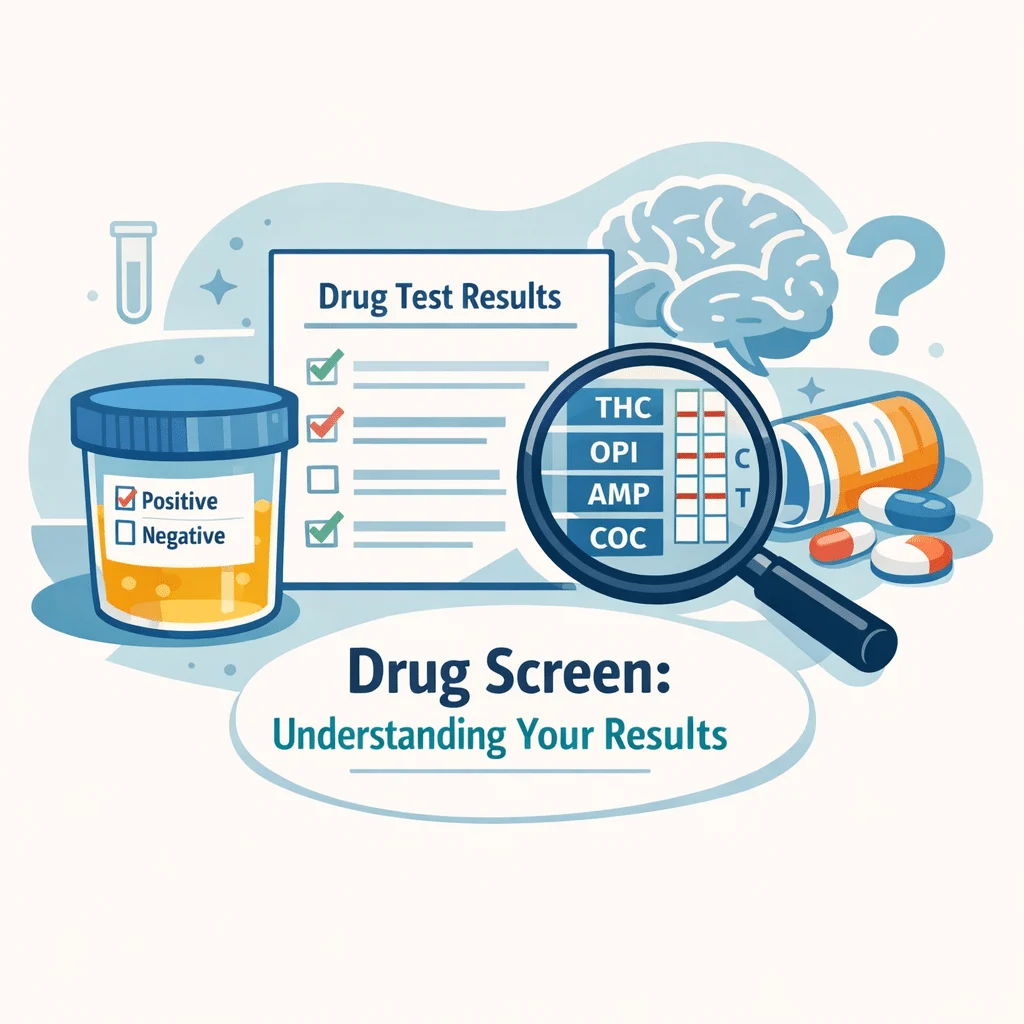
Un test de droguri din urină este un test de laborator de primă etapă, nu un verdict. Răspunde la o singură întrebare precisă: a conținut această probă o substanță sau produsul ei de degradare peste o anumită concentrație? Nu spune cât s-a consumat, când, sau dacă persoana era afectată în momentul recoltării. Această diferență dintre ceea ce măsoară testul și ceea ce oamenii presupun că dovedește este sursa majorității neliniștilor. În acest articol vei afla cum diferă etapa de screening a unui test de droguri din urină de confirmare, ce înseamnă cu adevărat un rezultat prezumtiv pozitiv, de ce variază pragurile de detecție și fereastra de detectabilitate, ce medicamente și produse pot declanșa testul, și ce înseamnă pentru tine un raport diluat sau invalid.
Ce măsoară un test de droguri din urină și cum funcționează
Un test de droguri din urină caută droguri și, mai frecvent, compușii în care organismul le transformă. Aceste produse de degradare, numite metaboliți, persistă în urină mai mult decât substanța originală. De aceea expunerea la cocaină este semnalată prin benzoilecgonină, iar canabisul prin un metabolit carboxi-THC, nu prin THC activ.
Etapa de screening: un imunotest
Aproape orice test de droguri din urină începe cu un imunotest. Anticorpii proiectați să se lege de o clasă de droguri produc un semnal atunci când se fixează. Metoda este rapidă, ieftină și ușor de automatizat, motiv pentru care laboratoarele o folosesc prima. Compromisul este specificitatea: un anticorp creat împotriva amfetaminei poate reacționa și cu molecule care seamănă doar cu amfetamina. Aceasta este originea majorității rezultatelor fals pozitive: o limitare documentată, nu o eroare de laborator.
Etapa de confirmare: spectrometria de masă
Un test de droguri din urină cu rezultat reactiv trebuie confirmat printr-o a doua metodă, fundamental diferită. Cromatografia gazoasă cuplată cu spectrometria de masă (GC-MS) și cromatografia lichidă cuplată cu spectrometria de masă în tandem (LC-MS-MS) separă compușii dintr-o probă și identifică fiecare în parte după amprenta sa moleculară. Confirmarea identifică substanța exactă, nu doar clasa, astfel putând distinge codeina de morfină sau un izomer de canabinoid de altul.
De ce răspunsul este da sau nu, nu o cantitate
Un test de droguri din urină raportează față de un prag numit valoare limită: peste aceasta, rezultatul este pozitiv sau non-negativ; sub aceasta, negativ. Concentrația urinei variază în funcție de cât bei, astfel că orice valoare reflectă hidratarea la fel de mult ca doza. Rezultatul indică depășirea unui prag, nu o măsurare a cantității consumate.
Ce înseamnă fiecare status al rezultatului la un test de droguri din urină
Limbajul rezultatelor este cel care îi derutează pe cititori, deoarece laboratoarele folosesc termeni diferiți pentru același tip de constatare. Tabelul de mai jos explică statusurile pe care le poți întâlni cel mai frecvent pe un test de droguri în urină.
| Statusul rezultatului | Ce a observat laboratorul | Ce NU înseamnă | Pasul următor obișnuit |
|---|---|---|---|
| Negativ | Niciun semnal peste pragul de detecție pentru nicio substanță din panel | Nu este dovada că nu s-a consumat nimic; substanțele din afara panelului sau sub pragul de detecție nu sunt vizibile | Raportat ca negativ; nu se efectuează confirmare |
| Pozitiv prezumtiv sau non-negativ | Anticorpul a reacționat peste pragul de detecție pentru o clasă de substanțe | Nu este o constatare confirmată, nu este o substanță identificată, nu constituie prin sine o dovadă | Confirmare reflexă prin GC-MS sau LC-MS-MS pe aceeași probă |
| Pozitiv confirmat | Spectrometria de masă a identificat un compus specific peste pragul de confirmare | Nu indică doza, data consumului, starea de incapacitate sau prezența unei tulburări legate de consumul de substanțe | Revizuire cu medicul care a solicitat testul sau cu un Ofițer Medical de Revizuire, care verifică existența unei rețete |
| Diluată | Creatinina și densitatea specifică au scăzut sub intervalul așteptat pentru urina umană | Nu este o acuzație; consumul ridicat de lichide și anumite afecțiuni medicale pot produce același tablou | Raportat ca negativ diluat sau se solicită o nouă recoltare |
| Adulterată sau substituită | Valori incompatibile cu urina umană: un pH extrem, un agent oxidant adăugat sau absența markerilor biologici | Nu este un rezultat pozitiv pentru droguri; este o observație despre probă, nu despre o substanță | Gestionat conform regulilor programului care a solicitat testul, de obicei printr-o nouă recoltare sub supraveghere directă |
| Invalidă sau inadecvată | Interferență, un rezultat inexplicabil sau o probă care nu a putut fi testată | Nu este nici pozitiv, nici negativ; laboratorul refuză să raporteze un rezultat, fără a formula o concluzie | Rerecoltare, adesea cu solicitarea unei explicații din partea donatorului |
Prezumtiv înseamnă prezumtiv
Dacă raportul tău indică pozitiv prezumtiv, doar screening sau non-negativ, laboratorul nu a identificat încă nimic. Multe rapoarte folosesc acum în mod deliberat termenul non-negativ, pentru a împiedica cititorii să trateze o reacție de screening ca pe un rezultat definitiv. Până la efectuarea confirmării, acel rezultat al testului de droguri în urină este doar un semnal de alertă.
Praguri de detecție și ferestre de detecție la un test de droguri în urină
Două cifre determină dacă un test de urină pentru droguri iese pozitiv: pragul stabilit de laborator și cât timp rămâne detectabilă substanța. Niciunul dintre acestea nu este fix de la un laborator la altul, astfel că același eșantion poate fi pozitiv la un laborator și negativ la altul.
Ce face de fapt o valoare limită
Valoarea limită este un compromis deliberat. Dacă este setată jos, testul detectează mai multe expuneri reale, dar și mai multe interferențe. Dacă este setată sus, este mai greu să fie declanșată din greșeală, dar poate rata expuneri reale la nivel scăzut. Valorile limită pentru confirmare sunt de obicei mai mici, deoarece spectrometria de masă este mai specifică.
Ferestrele de detecție sunt intervale, nu garanții
Ferestrele de detecție ale unui test de urină pentru droguri descriu aproximativ cât timp rămâne o substanță sau metabolitul ei peste un prag tipic. Acestea variază în funcție de doză, frecvența consumului, compoziția corporală, funcția renală și pragul aplicat. Tratează cifrele de mai jos ca intervale frecvent citate, niciodată ca un calendar personal.
| Clasa substanței | Interval de detecție în urină frecvent citat | Ce o lărgește sau o îngustează |
|---|---|---|
| Amfetamine și metamfetamină | Aproximativ 1 până la 3 zile | pH-ul urinar și doza; consumul repetat intens o prelungește |
| Cocaină (ca benzoilecgonină) | Aproximativ 2 până la 4 zile | Consumul intens poate prelungi detecția la o săptămână sau mai mult |
| Cannabis (ca carboxi-THC) | Aproximativ 1 până la 3 zile după o singură utilizare; până la câteva săptămâni cu utilizare zilnică | THC se stochează în grăsime, deci frecvența consumului și compoziția corporală contează cel mai mult aici |
| Opiacee precum codeina și morfina | Aproximativ 1 până la 3 zile | Unele opioide nu sunt detectate de un test pentru opiacee |
| Fentanil | De obicei 1 până la 3 zile, mai mult după un consum prelungit | Fentanilul este liposolubil și poate fi eliberat din țesuturi timp de săptămâni |
| Benzodiazepine | Aproximativ 1 până la 3 zile pentru substanțele cu acțiune scurtă; săptămâni pentru cele cu acțiune prelungită | Timpul de înjumătățire al medicamentului specific și dacă testul detectează metaboliții glucuronidici |
| Metadonă | Aproximativ 3 până la 7 zile | Necesită un test dedicat; nu este acoperit de un test generic pentru opiacee |
Alcoolul nu face parte din acest tabel: este evaluat prin markeri specifici proprii, descriși într-un ghid separat despre alcool și detectarea EtG în urină. Consumul intens și prelungit de alcool este urmărit indirect și printr-o enzimă din sânge descrisă în ghidul nostru despre enzima GGT și ce o crește.
De ce un test de droguri din urină poate semnala substanța greșită
Reactivitatea încrucișată este termenul tehnic pentru legarea unui anticorp de o substanță pe care nu a fost conceput să o detecteze. Este suficient de frecventă încât laboratoarele publică liste de interferențe, și de aceea există testele de confirmare.
Medicamente eliberate pe rețetă și fără rețetă
S-a raportat că multe medicamente obișnuite pot declanșa un rezultat prezumtiv pozitiv la un test de urină pentru droguri. Decongestionantele care conțin pseudoefedrină, mai multe antidepresive, anumite antibiotice din clasa chinolonelor, unele antiinflamatoare, dextrometorfanul din preparatele pentru tuse și medicamente mai vechi pentru arsuri la stomac, cum ar fi ranitidina, apar toate în literatura despre interferențe. Care dintre acestea contează depinde de testul folosit de laboratorul tău.
Dacă iei un medicament prescris, nu trebuie niciodată să îl oprești sau să îl modifici. Spune-i colectorului, Ofițerului Medical de Revizuire sau medicului care a solicitat testul ce iei și aduce detaliile rețetei. Dezvăluirea acestor informații rezolvă astfel de rezultate.
Alimente și produse derivate din cânepă
Semințele de mac conțin cantități mici de morfină și pot ridica un test pentru opiacee, motiv pentru care pragurile federale pentru opiacee au fost majorate. Produsele din cânepă și CBD reprezintă problema mai nouă: multe conțin THC măsurabil, deși sunt vândute ca lipsite de THC, iar unele sunt folosite pentru a produce delta-8-THC, o rudă apropiată a delta-9-THC din cannabis.
Testul toxicologic din urină nu face parte dintr-o analiză de urină de rutină
Oamenii presupun adesea că testarea pentru droguri este inclusă în analiza standard de urină. Nu este. Acel panou analizează chimia și celulele, iar noi îl acoperim într-un ghid despre cum să citești un raport de sumar de urină de rutină și o prezentare generală a rezultatele chimice ale unui panou standard de urină. Testul toxicologic din urină trebuie solicitat în mod specific și detectează doar substanțele incluse în panelul său.
Validitatea probei: rezultate diluate, adulterate și invalide
Înainte de a interpreta rezultatele pentru droguri, laboratorul verifică dacă proba arată ca urină umană proaspătă. Testarea validității probei în cadrul unui test toxicologic din urină generează cea mai mare parte a termenilor non-drog care apar pe un raport.
Temperatura, aspectul și lanțul de custodie
Locurile de recoltare măsoară temperatura recipientului în aproximativ patru minute, deoarece urina părăsește corpul caldă. Culoarea și claritatea sunt și ele notate. Proba călătorește apoi sub un lanț de custodie: un traseu semnat și neîntrerupt care înregistrează cine a deținut-o în fiecare moment. Dacă acel traseu se întrerupe, rezultatul este inutilizabil indiferent ce arată chimia — de aceea este util să știi cum hidratarea și dieta schimbă culoarea urinei de la o zi la alta.
Creatinina și densitatea urinară ca verificări ale concentrației
Creatinina este produsă de mușchi într-un ritm constant, deci este un indicator fiabil al cât de concentrată este o probă; densitatea urinară măsoară același lucru prin greutate specifică. Când ambele scad sub intervalul așteptat, proba este raportată ca diluată: o afirmație despre conținutul de apă, nimic mai mult. Explicăm rolul mai larg al creatinina urinară ca referință de concentrație și ce înseamnă o valoare crescută sau scăzută pentru densitatea urinară specifică într-un raport de laborator.
Ce semnalează de fapt rezultatele diluat, adulteriat și invalid
Un rezultat diluat la testul toxicologic din urină nu este un rezultat pozitiv și nu reprezintă o recunoaștere a niciunui fapt. Consumul mare de lichide, activitatea în aer liber pe căldură, diureticele și afecțiunile care cresc diureza pot produce acest rezultat, iar programele solicită de obicei o nouă probă.
Adulterată și substituită sunt constatări diferite: compoziția chimică nu este compatibilă cu urina umană proaspătă, fie din cauza unui pH extrem, a unui agent oxidant adăugat sau a absenței markerilor biologici. Laboratoarele verifică și pH-ul în acest context, iar factorii obișnuiți îl pot modifica, așa cum descriem în articolul despre factorilor care modifică pH-ul urinei. În programele reglementate, aceste constatări urmează regulile proprii ale programului, nu regulile pentru rezultatele de droguri, deci adresează-te părții care a solicitat testul sau unui specialist calificat pentru a afla ce ți se aplică.
Majoritatea recoltărilor sunt neobservate, într-o toaletă pregătită special. Recoltarea direct observată, în care un observator de același sex urmărește actul micțiunii, este rezervată unor circumstanțe bine definite, cum ar fi un rezultat anterior invalid sau substituit.
Panouri, Ofițerul Medical de Revizuire și limitele unui test de droguri din urină
Paneluri de 5, 10 și mai multe substanțe
Panourile sunt meniuri, iar un test de droguri din urină detectează doar ce include meniul său. Un panou clasic de 5 substanțe acoperă canabisul, cocaina, amfetaminele, opiaceele și fenciclidina. Un panou de 10 substanțe adaugă de obicei benzodiazepine, barbiturice, metadonă, propoxifen și metacualonă. Panourile extinse adaugă fentanil, buprenorfină, tramadol sau canabinoizi sintetici. Multe substanțe aflate în circulație nu se regăsesc pe meniurile standard, deci un rezultat negativ nu înseamnă niciodată că nu a fost prezentă nicio substanță.
Ce face un Ofițer Medical de Revizuire
În testarea reglementată la locul de muncă, un rezultat pozitiv confirmat nu ajunge direct la angajator. Merge mai întâi la un Ofițer Medical de Revizuire, un medic licențiat instruit în interpretarea toxicologică. Ofițerul Medical contactează donorul în mod privat, întreabă dacă există o explicație medicală legitimă și poate raporta rezultatul ca negativ dacă explicația este valabilă. Aceasta este calea prevăzută atunci când un medicament prescris explică un rezultat.
Un rezultat pozitiv nu dovedește afectarea capacităților
Un test toxicologic din urină detectează o substanță sau metabolitul acesteia într-o fereastră de timp care poate dura zile sau săptămâni. Nu poate stabili că persoana era afectată în momentul recoltării. Canabisul ilustrează cel mai clar această diferență: carboxy-THC poate persista săptămâni întregi după ce orice efect psihoactiv a dispărut. Un rezultat pozitiv documentează expunerea în cadrul unei ferestre de timp, nu afectarea capacităților, dependența sau vreo abatere.
Ce arată cercetările recente despre acuratețea testelor de droguri din urină
Iată ce au descoperit studiile privind acuratețea testelor de droguri din urină din ultimii trei ani și ce schimbă fiecare pentru tine.
Rezultatele fals pozitive acoperă aproape fiecare clasă de droguri
O recenzie din 2026 publicată în Journal of Analytical Toxicology a adunat 61 de rapoarte publicate despre substanțe care au declanșat un test de screening prin imunotest între 2013 și 2024, acoperind testele pentru opioide, amfetamine, benzodiazepine, canabinoide și cocaină. Autorii au concluzionat că, în ciuda anticorpilor mai performanți, rezultatele screening-ului rămân prezumtive și necesită confirmare. Ce înseamnă asta pentru tine: o reacție la screening este un eveniment așteptat, iar întrebarea dacă s-a efectuat confirmarea este perfect justificată. O recenzie din 2025 publicată în Clinics in Laboratory Medicine a ajuns la aceeași concluzie.
Un antidepresiv poate declanșa un test de screening pentru amfetamine
Cercetătorii au testat medicamente față de un imunotest pentru amfetamine utilizat pe scară largă în 2024 și au demonstrat că m-clorofenilpiperazina, principalul produs de degradare al antidepresivului trazodonă, și medicamentul pentru starea de veghe solriamfetol au produs ambele rezultate pozitive pentru amfetamine. Ce înseamnă asta pentru tine: dacă oricare dintre acestea ar putea explica un rezultat prezumtiv pozitiv, există dovezi publicate pe care le poți prezenta Ofițerului Medical de Revizuire. Acesta este un motiv să declari o rețetă, niciodată un motiv să o întrerupi.
Produsele din cânepă Delta-8 reacționează cu testele pentru cannabis
Un studiu din 2023 realizat în cadrul programului național de certificare a testărilor la locul de muncă a constatat că metabolitul delta-8-THC a reacționat încrucișat cu kiturile de imunotest pentru canabinoide de la trei producători, aproximativ la fel de puternic ca metabolitul delta-9. Când laboratoarele certificate au analizat aceleași probe prin spectrometrie de masă, niciunul nu a raportat un fals pozitiv pentru delta-9. Ce înseamnă asta pentru tine: un produs din cânepă cumpărat legal poate explica o reacție la testul pentru canabinoide, iar confirmarea lămurește situația. O recenzie din 2024 a adăugat că nivelurile de THC nu reflectă gradul de afectare a capacităților.
Probele diluate sunt neobișnuite, nu dovezi de falsificare
O analiză din 2026 pe peste 24.000 de probe de urină a constatat că aproximativ una din 200 de probe a fost clasificată ca diluată, iar autorii au precizat explicit că acest lucru nu demonstrează manipularea probei. Ce înseamnă asta pentru tine: un rezultat diluat este neobișnuit și nu implică nicio intenție. O recenzie din 2025 privind testarea validității probelor explică de ce laboratoarele combină temperatura, aspectul, pH-ul, greutatea specifică și creatinina, în loc să se bazeze pe un singur parametru.
Benzile de testare rapidă nu sunt de încredere prin ele însele
O evaluare din 2025 a benzilor de testare pentru xilazină de la șapte producători a constatat că lidocaina, ketamina, difenhidramina și cetirizina au produs rezultate fals pozitive, cu performanțe diferite între produse. Ce înseamnă asta pentru tine: benzile rapide au același statut prezumtiv ca orice alt imunotest și necesită confirmare de laborator.
Când să vorbești cu un medic
Contactează prompt medicul care a solicitat testul sau Ofițerul Medical de Revizuire dacă un test de droguri din urină returnează un rezultat prezumtiv pozitiv pe care nu îl poți explica și întreabă dacă s-a efectuat o confirmare prin spectrometrie de masă și ce a arătat. Aduce o listă scrisă cu fiecare medicament prescris, medicament fără prescripție, supliment și produs din cânepă sau CBD pe care îl folosești.
Solicită sfat mai devreme dacă un rezultat contrazice ceea ce știi că este adevărat sau dacă trebuie să explici un rezultat diluat sau invalid. Dacă un raport apare însoțit de simptome precum confuzie, dificultăți de respirație, dureri în piept sau o suspiciune de supradozaj, aceasta este o urgență. Pentru întrebări legate de angajare, custodie sau programe judiciare, adresează-te părții care a solicitat testul și unui specialist calificat. Atunci când un medic investighează altceva decât expunerea la droguri, se aplică alte teste de urină, cum ar fi examinarea celulelor eliminate în urină sau măsurarea cortizolului urinar pe 24 de ore.
Întrebări frecvente
Ce înseamnă non-negativ la un test de droguri din urină?
Non-negativ înseamnă că imunotestul inițial a reacționat peste pragul de detecție, dar nu a fost identificată încă nicio substanță. Laboratoarele preferă din ce în ce mai mult această formulare față de pozitiv prezumtiv, deoarece descurajează cititorii să trateze o reacție de screening ca pe un rezultat definitiv. Proba este apoi trimisă pentru confirmare prin spectrometrie de masă, care fie identifică un compus specific peste pragul de confirmare, fie nu. Până când cel de-al doilea test este finalizat, non-negativ trebuie înțeles ca un semnal care necesită verificare, nu ca o concluzie despre tine.
Poate un test de droguri din urină să arate cât de mult a consumat cineva?
Nu. Un rezultat din urină reflectă concentrația din acel eșantion specific, iar concentrația urinei depinde în mare măsură de hidratare, de funcția renală și de cât timp a trecut de la ultima urinare. Două persoane care au consumat o cantitate identică pot produce valori foarte diferite, iar aceeași persoană poate produce valori diferite la câteva ore distanță. Chiar și confirmarea prin spectrometrie de masă, care este cantitativă, nu permite calcularea inversă a dozei sau a momentului consumului într-un mod fiabil. Testarea stabilește prezența peste un prag, nu cantitatea.
Cât timp detectează un test de urină substanțele?
Depinde de substanță, de doză, de frecvența consumului, de compoziția corporală, de funcția renală și de pragul de detecție aplicat de laborator. Intervalele tipice sunt de aproximativ una până la trei zile pentru stimulante și opiacee cu acțiune scurtă, două până la patru zile pentru metaboliții cocainei și până la câteva săptămâni pentru cannabis la persoanele care consumă zilnic. Benzodiazepinele cu acțiune prelungită și fentanilul după un consum susținut pot rămâne detectabile cu mult peste câteva zile. Acestea sunt intervale orientative la nivel de populație și nu pot fi aplicate cu certitudine unui individ anume.
Un rezultat negativ înseamnă că nu s-au consumat droguri?
Nu neapărat. Un rezultat negativ înseamnă că nicio substanță din panoul testat nu a depășit pragul de detecție în acel eșantion. Substanțele care nu se aflau în panou sunt invizibile, indiferent de cantitatea prezentă. Consumul care a avut loc în afara ferestrei de detecție sau expunerea prea mică pentru a atinge pragul produc, de asemenea, un rezultat negativ. Multe compuși sintetici mai noi nu sunt incluși deloc în panourile standard. Un rezultat negativ este cu adevărat liniștitor în limitele panoului respectiv, dar nu reprezintă o garanție că nu s-a consumat nimic.
Ce se întâmplă dacă proba mea revine diluată?
Un rezultat diluat înseamnă că atât creatinina, cât și greutatea specifică au scăzut sub intervalul așteptat pentru urina umană, indicând o probă apoasă. Nu este un rezultat pozitiv și nu implică nicio intenție. Consumul de lichide în cantități mari, condițiile de lucru cu temperaturi ridicate, medicamentele diuretice și mai multe afecțiuni medicale pot produce acest rezultat. Majoritatea programelor solicită pur și simplu o nouă recoltare, uneori cu recomandări privind aportul de lichide înainte. Dacă primești un astfel de rezultat, întreabă partea care a solicitat testul care este procedura lor, în loc să presupui că există o consecință.
Trebuie să îmi opresc medicamentele înainte de un test de droguri?
Nu. Nu opri, nu începe și nu modifica niciodată un medicament prescris din cauza unui test. Pasul corect este să declari: spune-i colectorului, Ofițerului Medical de Revizuire sau medicului care a solicitat testul exact ce iei și prezintă documentația prescripției. Procesul MRO există tocmai pentru a identifica explicațiile medicale legitime și poate raporta un rezultat confirmat ca negativ atunci când o prescripție valabilă îl justifică. Oprirea unui medicament îți pune sănătatea în pericol și nu îmbunătățește acuratețea testului.
Glosar de termeni cheie
| Termen | Definiție |
|---|---|
| Imunotest | Un test rapid care folosește anticorpi pentru a detecta o clasă de substanțe. Este etapa de screening și are caracter prezumtiv, nu definitiv. |
| Metabolit | Un compus pe care organismul îl produce atunci când descompune o substanță. Multe teste de urină detectează metabolitul, nu substanța originală. |
| Prag de detecție | Concentrația la sau peste care un eșantion este raportat pozitiv. Sub aceasta, eșantionul este raportat negativ chiar dacă există o urmă. |
| Reactivitate încrucișată | Un anticorp care se leagă de un compus pentru care nu a fost conceput, deoarece moleculele se aseamănă între ele. Este principala cauză a rezultatelor fals pozitive. |
| GC-MS și LC-MS-MS | Cromatografia gaz-masă și cromatografia lichidă cu spectrometrie de masă în tandem: metode de confirmare care identifică o substanță specifică după amprenta sa moleculară. |
| Fereastră de detecție | Perioada aproximativă în care o substanță sau metabolitul său rămâne detectabil peste pragul de tăiere. Variază considerabil de la o persoană la alta. |
| Testarea validității probei | Verificări care confirmă că o probă este urină umană proaspătă, folosind temperatura, aspectul vizual, pH-ul, densitatea specifică și creatinina. |
| Lanț de custodie | Înregistrarea documentată și neîntreruptă a tuturor persoanelor care au manipulat o probă, de la recoltare până la obținerea rezultatului. Orice întrerupere a acesteia invalidează raportul. |
| Ofițer Medical de Revizuire (MRO) | Un medic autorizat, specializat în toxicologie, care analizează rezultatele pozitive confirmate, ia legătura cu persoana testată și verifică dacă există o explicație medicală legitimă. |
| Panel | Lista definită a claselor de substanțe pe care le caută un anumit test, cum ar fi un panou de 5 sau 10 substanțe. Orice substanță din afara panoului nu este detectată. |
Surse
- MedlinePlus, Biblioteca Națională de Medicină — Drug Testing: MedlinePlus Medical Test, 2025. MedlinePlus
- National Institute on Drug Abuse (NIDA), National Institutes of Health — What do drug tests really tell us?, 2024. NIDA
- Substance Abuse and Mental Health Services Administration (SAMHSA) — Frequently Asked Questions About Federal Workplace Drug Testing, 2025. SAMHSA
- U.S. Food and Drug Administration — Drugs of Abuse Tests, 2024. FDA
- Saitman A, Fitzgerald RL, Lund K, Suhandynata RT, Menlyadiev M — False positive urine drug screens — Journal of Analytical Toxicology, 2026. PubMed · DOI
- Altawallbeh G — Considerații practice pentru implementarea imunoanalizelorîn testarea urinară a drogurilor în laboratoarele clinice — Clinics in Laboratory Medicine, 2025. PubMed · DOI
- Rackow AR, Knezevic CE — Solriamfetol and m-chlorophenylpiperazine cause false positive amphetamine results on urine drug screening — Journal of Analytical Toxicology, 2024. PubMed · DOI
- Mullen LD, Hart ED, Vikingsson S, Winecker RE, Hayes E, Flegel R — Δ8-THC-COOH cross-reactivity with cannabinoid immunoassay kits and interference in chromatographic testing methods — Journal of Analytical Toxicology, 2023. PubMed · DOI
- DeGregorio MW, Kao CJ, Wurz GT — Complexity of Translating Analytics to Recent Cannabis Use and Impairment — Journal of AOAC International, 2024. PubMed · DOI
- Fyffe-Freil RC, Omosule CL — Specimen Validity Testing in the Toxicology Laboratory — Clinics in Laboratory Medicine, 2025. PubMed · DOI
- Bozdayi MA, Çakırca G, Bozdayi İG — Application-related patterns of diluted urine specimens in routine urine drug testing — Clinica Chimica Acta, 2026. PubMed · DOI
- Scott L, Davis K, Park JN, Majeed S — Evaluating the Sensitivity, Selectivity, and Cross-Reactivity of Lateral Flow Immunoassay Xylazine Test Strips — The Journal of Applied Laboratory Medicine, 2025. PubMed · DOI
Lectură suplimentară
- Cilindrii urinari găsiți în probă și ce indică aceștia
- Celulele epiteliale raportate la analiza urinei
- Bacteriile din urină și când indică o infecție
- Drojdie într-o probă de urină: contaminare sau infecție
- Sodiul și potasiul măsurate în urină
Înțelege-ți rezultatele analizelor cu AI DiagMe
Un test de droguri din urină este unul dintre multele rapoarte care ajung pline de praguri de referință și abrevieri fără nicio explicație. AI DiagMe îți citește rezultatele de laborator și le traduce în limbaj simplu — fie că este vorba de un panou de creatinină urinară și greutate specifică, o analiză de urină de rutină, un panou renal sau unul hepatic. Te ajută să înțelegi ce s-a măsurat și ce descriu valorile, astfel încât să poți pune întrebări mai bune. Nu pune diagnostice și nu înlocuiește medicul tău sau un Ofițer de Revizuire Medicală.
Obține interpretarea rezultatelor în câteva minute