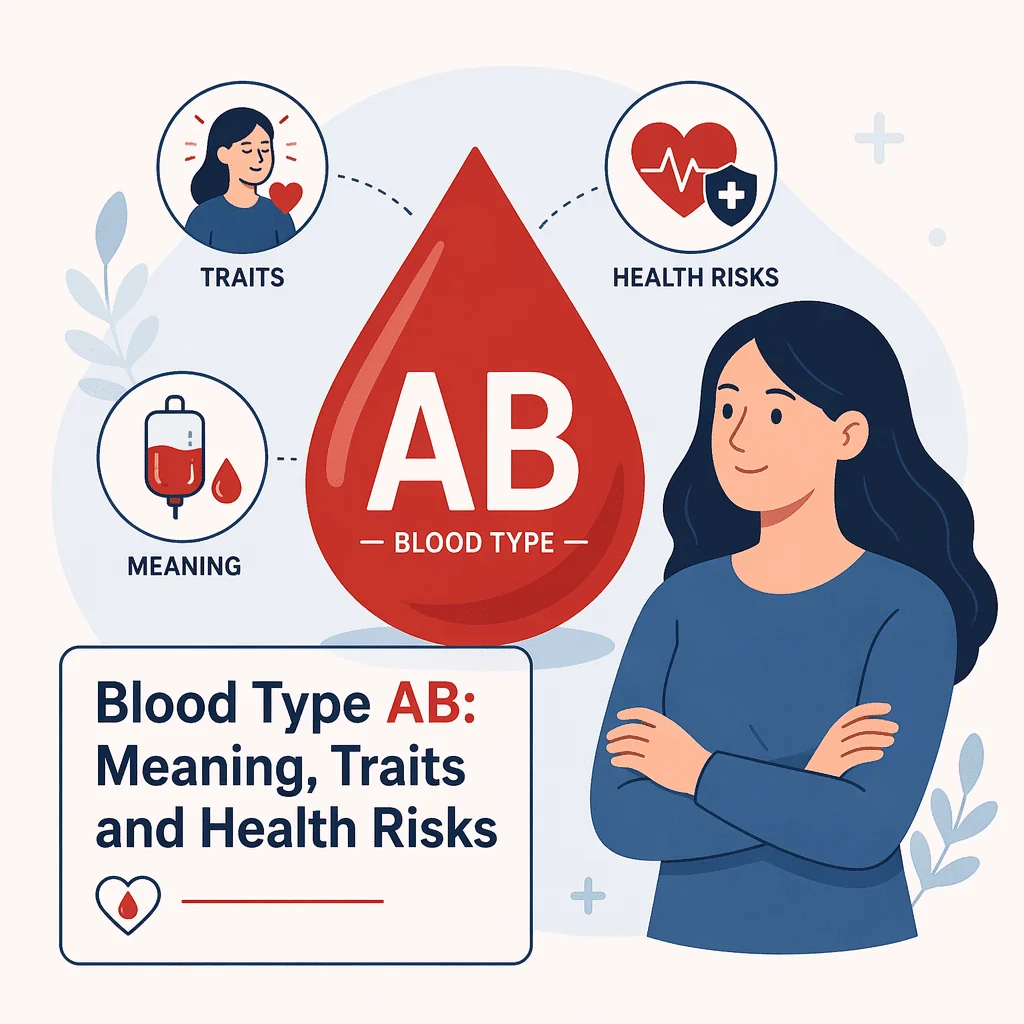
Grupa sanguină AB este cea mai rară dintre cele patru grupe principale ABO și are câteva caracteristici care o diferențiază. Dacă ai această grupă sanguină, globulele tale roșii prezintă atât markerii A, cât și markerii B, iar plasma ta nu conține de obicei anticorpii care atacă celulele A sau B. Această combinație influențează modul în care donezi și primești sânge, ce urmăresc medicii în timpul sarcinii și câteva asocieri cu starea de sănătate pe termen lung care merită înțelese. Acest ghid explică, pe înțelesul tuturor, ce înseamnă grupa sanguină AB, cum se moștenește, cât de frecventă este și ce implică pentru transfuzii, sarcină și sănătatea pe termen lung. Vei găsi, de asemenea, un tabel rapid de compatibilitate, răspunsuri la întrebările frecvente și îndrumări clare despre când contează cu adevărat grupa ta sanguină în îngrijirea medicală.
Factorul Rh schimbă imaginea: află ce face din AB pozitiv receptorul universal.
Ce înseamnă grupa sanguină AB?
Grupa sanguină AB aparține sistemului ABO, principala metodă prin care laboratoarele clasifică sângele uman. Persoanele cu această grupă au doi markeri de suprafață, numiți antigene, pe globulele lor roșii: antigenul A și antigenul B. Gândește-te la antigene ca la niște etichete de identificare pe care sistemul imunitar le citește pentru a distinge „propriu" de „străin".
Deoarece celulele AB afișează deja ambele etichete, plasma (partea lichidă a sângelui) majorității persoanelor cu grupa AB nu produce anticorpi anti-A sau anti-B. Anticorpii sunt proteine imunitare care se atașează de etichetele străine și pot distruge celulele care le poartă. Fără anti-A sau anti-B în circulație, plasma AB tolerează o gamă largă de celule donatoare.
Eticheta ta completă include și factorul Rh, un marker separat notat ca pozitiv sau negativ. Astfel, un rezultat complet se citește ca AB pozitiv (AB+) sau AB negativ (AB−). Pentru a înțelege cum se încadrează AB alături de celelalte grupe, este util să consulți cele patru grupe sanguine ABO explicate ca un tot unitar.
Informații esențiale despre grupa sanguină AB:
- Prezintă atât antigenul A, cât și antigenul B pe globulele roșii.
- Plasma nu conține de obicei anticorpi anti-A sau anti-B.
- Se împarte în AB pozitiv (AB+) și AB negativ (AB−) în funcție de factorul Rh.
- Cea mai rară dintre cele patru grupe ABO principale, întâlnită la aproximativ patru procente din populația lumii.
- Plasma AB poate fi donată oricărei grupe ABO, ceea ce face din AB un donator universal de plasmă.
Cum creează sistemele ABO și Rh grupa sanguină AB
Două sisteme independente determină eticheta grupei tale sanguine AB. Primul este sistemul ABO, bazat pe trei versiuni ale genei, sau alele: A, B și O. Alelele A și B sunt codominante, ceea ce înseamnă că niciuna nu o maschează pe cealaltă. Când moștenești o alelă A de la un părinte și o alelă B de la celălalt, ambele sunt exprimate, iar rezultatul este grupa sanguină AB.
Al doilea sistem este Rh, centrat pe o proteină numită antigenul D. Dacă globulele tale roșii poartă antigenul D, ești Rh pozitiv; dacă nu îl au, ești Rh negativ. Sistemul Rh urmează propriul tipar genetic și este testat separat față de ABO.
Clinicienii combină ambele rezultate pentru a transfuza sângele în siguranță și pentru a semnala anumite riscuri în sarcină. Un laborator îți confirmă grupa sanguină amestecând o mică probă de sânge cu reactivi de testare și urmărind aglutinarea — reacția de aglomerare care arată ce antigene sunt prezente.
AB pozitiv față de AB negativ
Diferența dintre AB pozitiv și AB negativ se reduce la un singur antigen Rh D. AB pozitiv înseamnă că celulele tale îl poartă; AB negativ înseamnă că nu îl au. AB pozitiv este mult mai frecvent dintre cele două.
AB negativ este una dintre cele mai rare combinații din tabelul standard ABO și Rh, întâlnită la mult sub un procent din populație în multe țări. Distincția contează cel mai mult pentru transfuzii și sarcină, unde statusul Rh ghidează ce sânge de la donator este sigur și dacă este nevoie de tratament preventiv.
Cum se moștenește grupa sanguină AB?
Grupa sanguină AB se moștenește prin alelele ABO pe care le poartă părinții tăi. Fiecare părinte transmite câte o alelă fiecărui copil. Dacă un părinte transmite alela A și celălalt transmite alela B, copilul moștenește grupa AB. Acesta este modul obișnuit în care apare grupa AB și explică de ce AB poate apărea într-o familie în care părinții au grupele A și, respectiv, B.
Istoricul familial poate sugera rezultate probabile, dar numai determinarea în laborator oferă un răspuns definitiv. Testele genetice pot explica și rezultatele neobișnuite, cum ar fi subgrupele slabe, în care un antigen este prezent, dar doar slab exprimat. Trăsătura Rh se moștenește pe o cale separată, astfel că statutul pozitiv sau negativ al unui copil nu decurge automat din rezultatul ABO.
Ești curios cum diferă grupele parentale? Poți compara profilurile grupa sanguină A, grupa sanguină B, și grupa sanguină O pentru a vedea cum se comportă fiecare combinație.
Cum se determină grupa sanguină?
Aflarea grupei tale sanguine AB necesită un test de laborator rapid și de rutină. Un tehnician amestecă o mică probă de sânge cu reactivi care conțin anticorpi anti-A, anti-B și anti-D cunoscuți, apoi urmărește aglutinarea — aglomerarea vizibilă care dezvăluie ce antigene poartă celulele tale. Aglutinarea cu reactivii anti-A și anti-B, de exemplu, indică grupa AB.
Determinarea grupei sanguine se face adesea împreună cu alte analize de rutină. Face parte din testele preoperatorii și din analizele prenatale de trimestrul I și poate fi inclusă pe același buletin de analize cu o hemoleucogramă completă, care măsoară globulele roșii, globulele albe și trombocitele. Determinarea grupei sanguine nu face însă parte dintr-un control medical de rutină, astfel că mulți oameni află prima dată grupa lor când donează sânge, se pregătesc pentru o intervenție chirurgicală sau rămân însărcinate.
Rezultatele sunt raportate simplu, ca una dintre cele opt etichete, de la A+ la O−. Dacă nu ești sigur de grupa ta, un medic sau un centru de donare de sânge o poate confirma.
Cât de frecventă este grupa sanguină AB?
Grupa sanguină AB este rară în toată lumea. La nivel global, apare la aproximativ patru procente din populație în medie, ceea ce o face cea mai rară dintre cele patru grupe ABO. AB pozitiv reprezintă cea mai mare parte din această cifră, în timp ce AB negativ este și mai rar, adesea sub un procent.
Frecvențele variază în funcție de regiune și de origine etnică. Unele populații din Asia de Est și Asia de Sud prezintă rate AB mai ridicate decât multe populații de origine europeană sau africană. Serviciile naționale de transfuzie urmăresc aceste tipare locale pentru a menține stocuri echilibrate și a anticipa cererea de unități compatibile.
Pentru majoritatea situațiilor de zi cu zi, raritatea grupei sanguine AB schimbă puțin lucrurile. Devine relevantă în principal atunci când sângele trebuie să fie compatibilizat, când se planifică o sarcină sau când se donează, deoarece plasma AB este deosebit de valoroasă.
Grupa sanguină AB și transfuziile: receptor universal și donator de plasmă
Siguranța transfuziei se bazează pe compatibilizarea ABO și Rh, astfel încât anticorpii primitorului să nu atace celulele donatorului. Grupa sanguină AB ocupă un loc special în acest context, dar regulile diferă pentru hematii și pentru plasmă, așa că este util să le separăm.
Pentru globulele roșii, o persoană cu grupa AB pozitiv poate primi celule de la orice grupă ABO, cu condiția ca Rh-ul să fie compatibil. De aceea, AB pozitiv este adesea numit receptorul universal de globule roșii. O persoană cu AB negativ poate primi, de asemenea, de la orice grupă ABO, dar numai de la donatori Rh negativ.
În cazul plasmei, situația se inversează. Deoarece plasma AB nu conține anticorpi anti-A și anti-B, ea poate fi administrată pacienților din orice grupă ABO. Astfel, persoanele cu grupa AB sunt donatori universali de plasmă, iar plasma AB este frecvent solicitată în centrele de transfuzie.
Tabelul de mai jos rezumă de la cine poate primi globule roșii o persoană cu grupa AB și cui le poate dona.
| Globule roșii | AB pozitiv (AB+) | AB negativ (AB−) |
|---|---|---|
| Poate primi de la | A, B, AB, O — Rh+ sau Rh− | A, B, AB, O — numai Rh− |
| Poate dona la | Doar AB+ | AB+ și AB− |
O observație practică importantă: în situații de urgență reală, înainte ca determinarea grupei să fie finalizată, spitalele apelează adesea la globule roșii O negativ, care prezintă cel mai mic risc de reacție imediată. Determinarea completă a grupei și testul de compatibilitate încrucișată — un test direct care amestecă probele donatorului și ale primitorului — sunt efectuate totuși cât mai curând posibil.
Grupa sanguină AB și sarcina
În timpul sarcinii, riscul legat de anticorpi pe care medicii îl urmăresc cel mai atent provine din sistemul Rh, nu din ABO. Dacă o mamă Rh negativ poartă un făt Rh pozitiv, sistemul ei imunitar poate forma anticorpi anti-D. Acești anticorpi nu cauzează de obicei probleme în prima sarcină, dar pot afecta un viitor bebeluș Rh pozitiv.
Aici, grupa AB oferă un avantaj natural din perspectiva ABO. Deoarece mamele cu grupa AB nu au în mod natural anticorpi anti-A și anti-B, boala hemolitică a nou-născutului legată de ABO — o afecțiune în care anticorpii materni distrug globulele roșii fetale — apare rar în cazul unei mame cu grupa AB.
Îngrijirea prenatală standard include în continuare determinarea grupei sanguine și un screening de anticorpi la începutul sarcinii. Dacă mama este Rh negativ, medicii pot administra imunoglobulină anti-D (o injecție preventivă, uneori prescurtată RhIg) la momentele potrivite, pentru a preveni formarea anticorpilor anti-D. Poți vedea cum se încadrează determinarea grupei în calendarul mai larg al analize de sânge din timpul sarcinii.
Grupa sanguină AB și sănătatea ta: ce spun studiile
Cercetătorii au căutat legături între grupele ABO și riscul anumitor afecțiuni, iar rezultatele sunt mixte și modeste. Unele studii de amploare raportează un risc ușor mai ridicat de probleme cardiovasculare, inclusiv tromboze, la persoanele cu grupe sanguine non-O — categorie din care face parte și grupa AB. Câteva analize descriu, de asemenea, mici diferențe în riscul anumitor tipuri de cancer în funcție de grupa ABO, în timp ce grupa O pare să ofere o protecție modestă împotriva unor infecții și a ulcerului gastric.
Este important să interpretezi corect aceste tipare. Ele descriu medii calculate pe populații mari, nu destinul unei singure persoane. Grupa de sânge nu este un diagnostic, iar amploarea oricărui risc suplimentar este mică în comparație cu factorii asupra cărora poți acționa.
Obiceiurile zilnice și factorii de risc tradiționali rămân principalii determinanți ai sănătății pe termen lung. Controlul tensiunii arteriale, renunțarea la fumat, menținerea unui stil de viață activ și monitorizarea colesterol ridicat contează mult mai mult decât grupa ta ABO. Dacă medicul tău evaluează riscul cardiovascular, analize precum profilul lipidic sau un panel de markeri cardiaci oferă informații mult mai utile decât grupa de sânge singură.
Când contează cel mai mult grupa de sânge AB
În viața de zi cu zi, grupa de sânge AB rămâne discretă în fundal. Devine relevantă într-un număr restrâns de situații specifice, iar cunoașterea lor te ajută să iei măsuri simple și utile.
Grupa ta de sânge contează cel mai mult când:
- Ai putea avea nevoie de o transfuzie sau ești programat pentru o intervenție chirurgicală, când echipa medicală îți va determina și verifica compatibilitatea sângelui în prealabil.
- Ești însărcinată sau plănuiești o sarcină, când statusul Rh determină dacă este necesar un tratament preventiv.
- Ai nevoie de un organ sau donezi unul, deoarece compatibilitatea ABO face parte din criteriile de potrivire.
- Te confrunți cu o urgență medicală, unde o grupă de sânge documentată accelerează acordarea unui tratament sigur.
Câteva obiceiuri practice fac aceste momente mai ușoare. Păstrează o evidență clară a grupei tale ABO și Rh într-un document medical, pe un card de donator sau în aplicația de sănătate de pe telefon. Dacă donezi sânge, întreabă serviciile locale dacă au nevoie de plasmă sau globule roșii AB, deoarece plasma AB este adesea insuficientă față de cerere. Urmează îngrijirile preventive de rutină ca oricine altcineva și menționează grupa ta sanguină medicului înainte de orice transfuzie planificată, intervenție chirurgicală sau sarcină.
Dacă ai un buletin de analize recent și vrei să înțelegi grupa ta de sânge alături de celelalte rezultate, ghidul nostru despre cum să citești rezultatele analizelor de sânge explică pas cu pas structura raportului. Spune-i medicului tău imediat dacă ți s-a comunicat că screeningul de anticorpi este pozitiv sau dacă ai avut în trecut o reacție la transfuzie, deoarece ambele pot influența planul tău de îngrijire.
Glosar
| Termen | Definiție |
|---|---|
| Sistemul de grupe sanguine ABO | Principalul sistem care clasifică sângele în grupele A, B, AB și O pe baza antigenelor A și B. |
| Aglutinare | Aglutinarea globulelor roșii care apare atunci când anticorpii se leagă de antigenele corespunzătoare; utilizată în determinarea grupei de sânge. |
| Anticorp | O proteină imunitară din plasmă care recunoaște un antigen specific și poate declanșa distrugerea celulei care îl poartă. |
| Antigen | Un marker de pe suprafața globulelor roșii pe care sistemul imunitar îl folosește pentru a distinge celulele proprii de cele străine. |
| Testul de compatibilitate (crossmatch) | Un test de laborator direct care amestecă sângele donatorului cu cel al primitorului pentru a confirma compatibilitatea înainte de transfuzie. |
| Boala hemolitică a nou-născutului (HDN) | O afecțiune în care anticorpii mamei traversează placenta și distrug globulele roșii ale bebelușului. |
| Reacție hemolitică la transfuzie | O reacție periculoasă în care sângele transfuzat incompatibil este distrus de sistemul imunitar al primitorului. |
| Factorul Rh (antigenul D) | O proteină de pe globulele roșii care face sângele Rh pozitiv când este prezentă și Rh negativ când este absentă. |
| Imunoglobulină anti-Rh (RhIg) | O injecție preventivă administrată mamelor Rh negative pentru a le împiedica să formeze anticorpi anti-D. |
| Donator universal de plasmă | O persoană a cărei plasmă nu conține anticorpi anti-A și anti-B, astfel încât poate fi administrată oricărei grupe ABO; persoanele cu grupa AB. |
Întrebări frecvente
Este grupa de sânge AB cea mai rară?
Dintre cele patru grupe principale ABO, grupa AB este cea mai rară, apărând la aproximativ patru procente din populația lumii. Dacă adăugăm și factorul Rh, AB negativ este cea mai puțin frecventă dintre cele opt grupe standard, întâlnită adesea la sub un procent din multe populații. Totuși, „cea mai rară" depinde de modul în care numărăm și de originea locală a populației. Există și grupe mult mai rare în afara sistemelor ABO și Rh, definite de tipare antigenice neobișnuite, dar acestea sunt excepționale. Pentru îngrijirea de zi cu zi, ceea ce contează este să știi că ești AB pozitiv sau AB negativ.
Pot doi părinți fără grupa AB să aibă un copil cu grupa AB?
Da. Cel mai frecvent mod prin care un copil moștenește grupa de sânge AB este atunci când un părinte transmite alela A, iar celălalt transmite alela B. Astfel, un părinte cu grupa A și unul cu grupa B pot avea un copil cu grupa AB, chiar dacă niciunul dintre ei nu este AB. Moștenirea depinde și de alelele ascunse pe care le poartă fiecare părinte, motiv pentru care rezultatele nu sunt întotdeauna evidente din grupele vizibile ale părinților. Există excepții genetice rare, dar calea A plus B acoperă marea majoritate a cazurilor. Numai testarea de laborator confirmă grupa reală de sânge a unui copil.
Grupa de sânge AB înseamnă că trebuie să urmez o dietă specială?
Nu. Ideea populară că fiecare grupă de sânge necesită o dietă specifică nu este susținută de dovezi solide. Studiile care au testat dietele bazate pe grupa de sânge au arătat că orice beneficii proveneau din modelul alimentar sănătos în sine, nu din potrivirea alimentelor cu grupa AB sau cu oricare altă grupă. Nu trebuie să mănânci diferit din cauza grupei tale ABO. O dietă echilibrată, activitate fizică regulată și îngrijirea preventivă recomandată de medicul tău vor face mult mai mult pentru sănătatea ta decât adaptarea meselor la o grupă de sânge.
Există o legătură între grupa de sânge AB și un risc mai mare de infecții sau COVID-19?
Câteva studii de amploare au analizat dacă grupele ABO influențează riscul de infecție, inclusiv în cazul COVID-19, iar rezultatele sunt mixte și modeste. Unele rapoarte au sugerat că grupele non-O, inclusiv grupa AB, ar putea avea un profil de risc ușor diferit, în timp ce grupa O a apărut ca ușor protectoare în unele analize. Diferențele sunt mici, dovezile nu sunt consistente și nu schimbă modul în care o persoană ar trebui să se protejeze. Măsurile standard — vaccinarea acolo unde este recomandată, igiena și respectarea recomandărilor de sănătate publică — contează mult mai mult decât grupa ta de sânge. Discută orice îngrijorare specifică cu medicul tău.
Cum aflu dacă am grupa de sânge AB pozitiv sau AB negativ?
Un simplu test de determinare a grupei sanguine lămurește totul. Laboratorul amestecă o mică probă din sângele tău cu reactivi pentru a vedea ce antigene poartă globulele roșii și dacă antigenul Rh D este prezent, apoi îți comunică un rezultat simplu, de tipul AB+ sau AB−. Îți vei afla adesea grupa când donezi sânge, te pregătești pentru o intervenție chirurgicală sau faci analizele de rutină din primul trimestru de sarcină. Dacă nu ai fost niciodată testat și vrei să știi, întreabă medicul tău sau un centru local de donare de sânge. Nu te baza pe amintiri sau pe ce spune familia, deoarece doar testul este definitiv.
Ar trebui să fiu îngrijorat că am grupa de sânge AB înainte de o intervenție chirurgicală?
Grupa de sânge AB nu este, prin ea însăși, un motiv de îngrijorare în privința unei intervenții chirurgicale. Înainte de orice procedură planificată care ar putea necesita sânge, echipa medicală îți determină grupa și efectuează o probă de compatibilitate pentru a confirma o potrivire sigură. Dacă ești AB pozitiv, poți primi globule roșii de la orice grupă ABO când Rh-ul este compatibil, ceea ce îți lărgește adesea opțiunile. Cel mai util lucru pe care îl poți face este să te asiguri că grupa ta de sânge este înregistrată în dosarul medical și să menționezi echipei medicale orice reacție anterioară la transfuzie. Ei se ocupă de detaliile de compatibilitate în locul tău.
Surse
- Cleveland Clinic — Grupele sanguine
- Mayo Clinic — Tipul universal de donator de sânge
- MedlinePlus (NIH) — Incompatibilitatea ABO
Lectură suplimentară
- Cele patru grupe sanguine ABO explicate
- Înțelegerea sistemului Rh
- Grupa sanguină A: trăsături și ghid de sănătate
- Grupa sanguină B: semnificație și ghid de sănătate
- Grupa sanguină O: semnificație, riscuri și beneficii
Înțelege-ți rezultatele analizelor cu AI DiagMe
Cunoașterea grupei tale de sânge AB reprezintă o singură piesă dintr-un tablou mult mai amplu. AI DiagMe poate citi restul analizelor tale și le poate explica pe înțelesul tău — de la determinarea grupei sanguine și testul de anticorpi până la hemoleucogramă completă sau profilul lipidic pentru evaluarea riscului cardiovascular. Transformă rândurile de cifre și abrevieri în informații clare și utile și îți sugerează întrebări pe care să le adresezi medicului tău. AI DiagMe te ajută să înțelegi rezultatele; nu pune diagnostice și nu înlocuiește medicul. Încarcă-ți analizele pentru a vedea ce înseamnă rezultatele tale.
➡️ Obține interpretarea rezultatelor în câteva minute