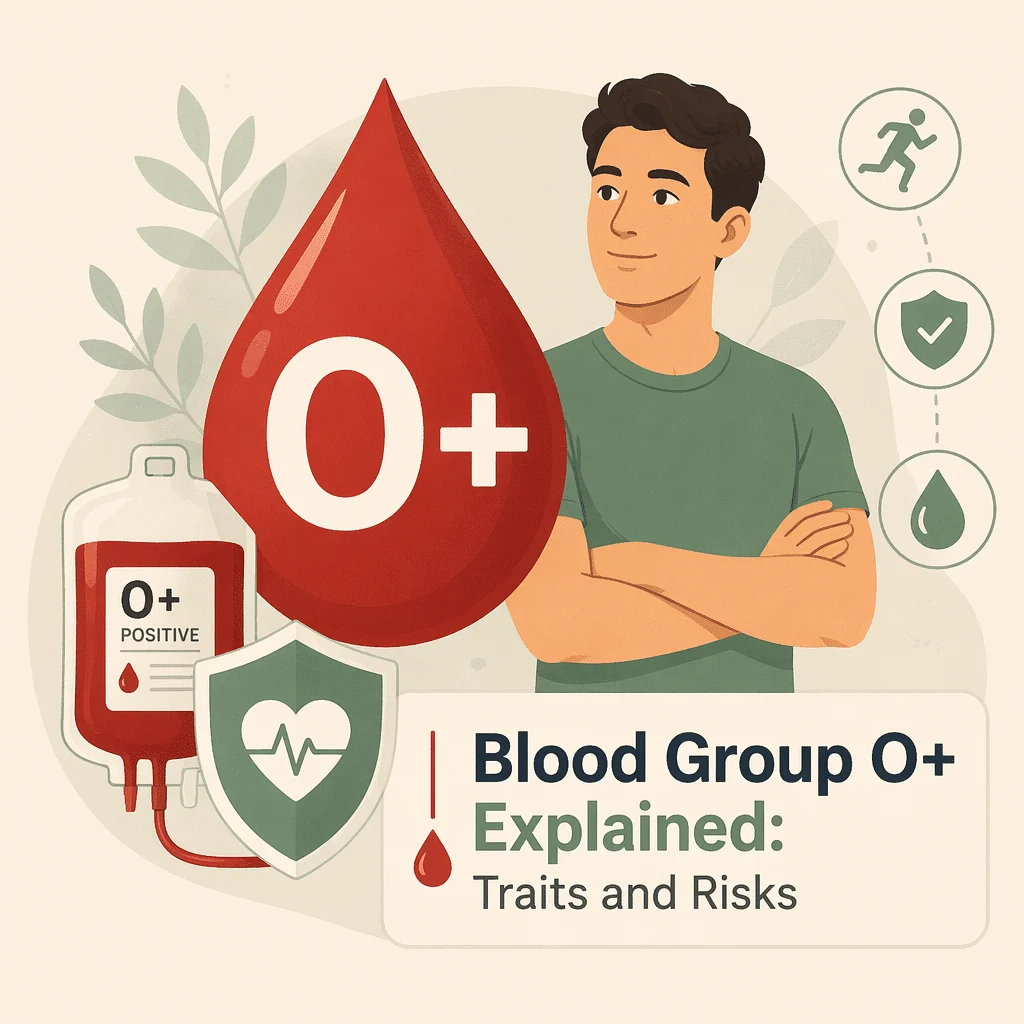
Grupa sanguină 0 pozitiv este cea mai frecventă grupă de sânge din Statele Unite, iar dacă raportul tău de laborator indică 0 Rh pozitiv, o împarți cu mai mulți oameni decât orice altă grupă. Această etichetă înseamnă că globulele tale roșii nu au antigenii A sau B, dar au proteina Rh(D). Această combinație determină cui poți dona sânge, de la cine poți primi și cum este gestionată grupa ta sanguină în sarcină. Acest ghid se concentrează pe ce este specific grupei 0 pozitiv: de ce este atât de frecventă, de ce băncile de sânge se bazează atât de mult pe ea și de ce faptul că ești Rh pozitiv este vestea liniștitoare în povestea sarcinii. Pentru noțiunile de bază despre ce înseamnă grupa 0 în general, consultă ghidul nostru despre grupa sanguină O, iar pentru varianta Rh-negativ, consultă ghidul nostru despre sângele 0 negativ.
Ce face grupa sanguină 0 pozitiv diferită?
O pozitiv combină două sisteme sanguine separate. Din sistemul ABO, litera „O" înseamnă că globulele tale roșii nu prezintă nici antigenul A, nici antigenul B. Din Sistemul Rh, “pozitiv” înseamnă că celulele tale conțin proteina Rh(D), cel mai important marker Rh. Astfel, celulele de tip O pozitiv nu prezintă markerii A și B, dar sunt Rh pozitive.
Statutul Rh pozitiv este elementul esențial care diferențiază grupa O pozitiv de O negativ. Nu schimbă mare lucru în viața de zi cu zi, dar influențează două aspecte practice: cine poate primi în siguranță globulele tale roșii și cum este tratată grupa ta sanguină în timpul sarcinii. Ambele depind de o singură proteină, Rh(D), pe care celulele O pozitiv o au, iar cele O negativ nu.
Pentru mecanismele de bază ale antigenelor, anticorpilor și modul în care grupa O se situează față de A, B și AB, ghidul nostru despre grupa sanguină O acoperă noțiunile fundamentale. Acest articol le presupune cunoscute și se concentrează pe ce este specific pentru grupa O pozitiv — începând cu cât de frecventă este.
De ce O pozitiv este cea mai frecventă grupă sanguină
O pozitiv este cea mai frecventă grupă sanguină din Statele Unite, întâlnită la aproximativ 37% dintre oameni, conform Stanford Blood Center. Grupa O în ansamblu — O pozitiv plus O negativ — reprezintă aproape jumătate din populație, motiv pentru care grupa O se află în centrul aproape oricărui stoc de sânge.
Prevalența variază în funcție de origine etnică și regiune. Grupele sanguine O sunt deosebit de frecvente în America, în timp ce alte grupe ABO apar mai des în anumite zone din Asia și în alte regiuni. Serviciile de transfuzie urmăresc aceste tipare pentru a planifica colectările și a menține un mix adecvat de grupe în stoc. Poți vedea cum se compară toate grupele în prezentarea noastră generală despre grupele sanguine explicate.
Frecvența ridicată are consecințe reale. Deoarece mulți pacienți au grupa O pozitiv și deoarece globulele roșii de tip O pozitiv pot fi utilizate pentru o mare parte din celelalte grupe, spitalele transfuzează mai mult sânge de tip O pozitiv decât aproape orice alt tip. Tocmai această popularitate este motivul pentru care băncile de sânge au nevoie de un flux constant de donatori O pozitiv, chiar dacă această grupă este frecventă.
Pe cine poate ajuta sângele O pozitiv — și ce poate primi
Pentru transfuziile de globule roșii, grupa O pozitiv are o arie largă de donare și o gamă flexibilă de primire, deși limitată la grupa O.
| Dacă ești O pozitiv | Compatibilitatea globulelor roșii |
|---|---|
| Donarea către alții | Toate tipurile Rh-pozitive — O+, A+, B+ și AB+ |
| Primirea de la alții | O+ și O− (grupa O, oricare Rh) |
Ca donator, globulele tale roșii pot fi transfuzate oricărui primitor Rh-pozitiv, adică majorității oamenilor, deoarece cea mai mare parte a populației este Rh pozitivă. Această utilitate largă, combinată cu frecvența ridicată a grupei, face ca O pozitiv să fie una dintre cele mai transfuzate grupe sanguine, ideală pentru donarea de sânge integral sau de dublă concentrație de globule roșii.
Există o distincție importantă față de O negativ. O pozitiv nu este donator universal: deoarece celulele tale conțin proteina Rh(D), ele nu ar trebui administrate pacienților Rh negativi într-o transfuzie planificată. Adevăratul donator universal de globule roșii este O negativ, care nu prezintă markerul Rh(D). Ca primitor, ai o marjă de siguranță utilă: poți primi sânge de grupă O indiferent de Rh, ceea ce înseamnă că atât unitățile O+ cât și O− sunt compatibile pentru tine.
O pozitiv și sarcina: de ce statutul Rh pozitiv este liniștitor
Dacă ești O pozitiv și ești însărcinată, aspectul Rh al sarcinii este de obicei cel mai simplu. Problema Rh bine-cunoscută îi afectează doar pe părinții Rh-negativi: apare atunci când o persoană Rh-negativă poartă un bebeluș Rh-pozitiv și sistemul ei imunitar produce anticorpi anti-D. Deoarece ești Rh pozitiv, organismul tău tratează deja proteina Rh(D) ca pe ceva propriu, astfel că acest tip de sensibilizare nu ți se aplică și nu vei avea nevoie de imunoglobulină anti-D (Rh) din acest motiv.
Chiar și așa, grupa ta sanguină este verificată de rutină la începutul sarcinii. Analizele standard de analizele de sânge prenatale de rutină includ determinarea grupei ABO și Rh, precum și un test de anticorpi, parțial pentru a confirma statusul tău Rh și parțial pentru a detecta anticorpi mai puțin frecvenți care pot conta uneori.
Există un aspect specific grupei O de reținut. Dacă ești de grupă O și bebelușul tău este de grupă A sau B, anticorpii tăi naturali anti-A sau anti-B pot provoca uneori o formă ușoară de icter neonatal numită boala hemolitică ABO a nou-născutului. De obicei este ușoară și ușor de gestionat, iar ghidul nostru despre grupa sanguină O o explică mai detaliat. Dacă ai fi fost Rh negativ, situația ar fi diferită — acesta este subiectul ghidului nostru despre grupa sanguină O negativ.
Donarea de sânge O pozitiv: frecventă, dar mereu necesară
Grupa O pozitiv este mereu la mare căutare tocmai pentru că este extrem de utilă. Este ideală pentru donarea de sânge integral și globule roșii și, deoarece poate fi transfuzată oricărui pacient Rh pozitiv, spitalele o consumă rapid. Centrele de transfuzie menționează frecvent grupa O ca o nevoie critică, chiar dacă este cea mai frecventă grupă — o abundență care este contrabalansată de o cerere la fel de mare.
Majoritatea adulților sănătoși din Statele Unite pot dona sânge integral aproximativ o dată la opt săptămâni (circa 56 de zile), iar donarea dublă de globule roșii se face la intervale mai mari. Eligibilitatea începe de obicei la vârsta de 16 sau 17 ani, în funcție de stat, alături de cerințe privind greutatea și starea de sănătate. Înainte de donare, centrul îți verifică starea de sănătate, călătoriile recente și medicamentele, așa că este util să menționezi orice schimbări.
Câteva obiceiuri simple fac experiența mai ușoară: bea suficientă apă înainte, mănâncă o masă normală și odihnește-te puțin după donare, cu o gustare. Donarea nu îți schimbă grupa sanguină și nu îți afectează sănătatea pe termen lung. Pentru un donator O pozitiv, donarea regulată este una dintre cele mai eficiente modalități de a susține rezerva zilnică de sânge a unui spital.
Îți afectează sănătatea faptul că ești O pozitiv?
A fi Rh pozitiv, în sine, nu aduce niciun avantaj sau dezavantaj particular pentru sănătatea de zi cu zi. Nu este ceva ce trebuie să gestionezi în afara situațiilor de transfuzie, sarcină și donare.
Grupa O pozitiv împărtășește micile particularități asociate grupei O în general. Persoanele cu grupa O tind să aibă niveluri ușor mai scăzute ale unor proteine de coagulare, ceea ce este legat de un risc marginal mai mic pentru anumite cheaguri de sânge și o ușoară tendință de sângerare în situații rare. Aceste efecte sunt minore și rareori influențează tratamentul medical; medicii evaluează coagularea cu un panel de coagulare și istoricul tău general, nu grupa sanguină. Ghidul nostru despre grupa sanguină O acoperă aceste asocieri mai în detaliu. Mesajul practic pentru O pozitiv este că grupa ta sanguină contează în anumite situații clinice specifice, nu în modul în care ar trebui să mănânci, să faci mișcare sau să trăiești de zi cu zi.
Cum să îți notezi și să îți păstrezi grupa O pozitiv
Grupa ta de sânge este confirmată printr-un test de laborator rapid pe o mică probă de sânge. Tehnicienii amestecă globulele tale roșii cu reactivi anti-A, anti-B și anti-D și urmăresc apariția aglutinării; celulele care reacționează doar cu reactivul anti-D, și nu cu anti-A sau anti-B, sunt raportate ca O Rh pozitiv. Când un rezultat este neclar, laboratoarele pot confirma grupa prin testare moleculară. Poți vedea ce presupune această vizită în prezentarea noastră despre procesul analizei de sânge, iar ghidul nostru despre cum să citirea rezultatelor analizelor de sânge explică modul în care este structurat raportul.
Merită să îți notezi undeva grupa de sânge — în portalul de pacient sau pe un card — deoarece este utilă pentru donare, planificarea sarcinii și intervenții medicale. Chiar și așa, spitalele retestează întotdeauna pacientul înainte de o transfuzie, fără a se baza pe un document, card sau tatuaj, deoarece consecințele unei erori sunt grave.
Când contează cel mai mult grupa O pozitiv — și când să mergi la medic
În viața de zi cu zi, grupa ta sanguină are un efect redus asupra sănătății tale. Pentru O pozitiv, aceasta devine relevantă în câteva situații specifice:
- Înainte și în timpul unei intervenții chirurgicale, când ar putea fi necesară o transfuzie — grupa ta este confirmată ca parte din analize de sânge înainte de operație
- În timpul sarcinii, pentru screeningul de rutină ABO și Rh
- În urgențe și traumatisme majore, când este nevoie de o transfuzie rapidă și sigură
- Pentru transplanturile de organe, măduvă osoasă sau celule stem, unde compatibilitatea este verificată
- Când donezi sânge, deoarece grupa O pozitiv este una dintre cele mai solicitate
Ia în considerare să vorbești cu un medic dacă un rezultat de laborator te nedumerește, dacă tu sau cineva din familia ta aveți un istoric de sângerări sau coagulări neobișnuite, sau dacă planifici o sarcină și vrei să înțelegi cum se încadrează grupa ta de sânge. Ca întotdeauna, grupa ta de sânge are cel mai mare sens atunci când un medic o interpretează împreună cu simptomele, istoricul și celelalte rezultate ale tale — nu de sine stătătoare.
Glosar
| Termen | Definiție |
|---|---|
| Boala hemolitică ABO a nou-născutului | O afecțiune de obicei ușoară în care anticorpii anti-A sau anti-B ai unui părinte cu grupa O afectează un bebeluș cu grupa A sau B. |
| sistemul ABO | Modul în care sângele este clasificat în A, B, AB sau O, în funcție de antigenele de pe globulele roșii. |
| Testul de screening al anticorpilor | Un test de sânge care verifică dacă o persoană a dezvoltat anticorpi împotriva antigenelor de pe globulele roșii. |
| Antigen | Un marker de pe suprafața unei celule pe care sistemul imunitar îl poate recunoaște ca aparținând sau nu organismului. |
| Testul de compatibilitate (crossmatch) | Un test de laborator care amestecă sângele unui donator cu cel al unui primitor pentru a confirma compatibilitatea înainte de transfuzie. |
| Rh pozitiv | Descrie sângele care conține proteina Rh(D); majoritatea oamenilor sunt Rh pozitiv, ca în cazul grupei O pozitiv. |
| Antigenul Rh(D) | Principala proteină Rh de pe globulele roșii; prezența ei este cea care face ca o grupă să fie „pozitivă". |
| Donator universal | O persoană ale cărei globule roșii (O negativ, nu O pozitiv) pot fi donate aproape oricărui primitor în caz de urgență. |
Întrebări frecvente
Grupa O pozitiv este cea mai rară sau cea mai frecventă grupă de sânge?
O pozitiv este cel mai frecvent grup sanguin din Statele Unite — întâlnit la aproximativ 37% dintre oameni — nu unul rar. Dacă adăugăm și O negativ, grupul O în ansamblu reprezintă aproape jumătate din populație. Deci, dacă ești O pozitiv, grupul tău este cel pe care spitalele îl întâlnesc și îl folosesc cel mai des, ceea ce explică parțial de ce donările de sânge O pozitiv sunt mereu necesare.
Este O pozitiv un donator universal?
Nu, și aceasta este o confuzie frecventă. Donatorul universal de globule roșii este O negativ, deoarece nu are markerii A, B și Rh(D) și poate fi administrat aproape oricui în caz de urgență. O pozitiv conține proteina Rh(D), deci poate fi administrat pacienților Rh-pozitivi din orice grupă ABO, dar nu și pacienților Rh-negativi în cadrul unei transfuzii planificate. O pozitiv este extrem de util, dar nu este donatorul universal.
Pot persoanele cu grupa O pozitiv să primească sânge O negativ?
Da. Dacă ești O pozitiv, poți primi globule roșii de tip O indiferent de Rh — atât O pozitiv, cât și O negativ sunt compatibile pentru tine. În practică, O negativ este de obicei rezervat pacienților care pot primi doar O negativ, deci ți se va administra de regulă O pozitiv atunci când este disponibil. În orice caz, spitalele confirmă compatibilitatea printr-un test de compatibilitate încrucișată înainte de o transfuzie planificată.
Dacă am grupa O pozitiv, am nevoie de injecție cu anti-D în timpul sarcinii?
Nu. Imunoglobulina anti-D (Rh) se administrează părinților Rh-negativi pentru a-i împiedica să formeze anticorpi împotriva unui bebeluș Rh-pozitiv. Deoarece O pozitiv înseamnă că ești Rh pozitiv, această problemă nu te privește și nu vei avea nevoie de anti-D din motive legate de Rh. Grupul tău sanguin este totuși verificat la începutul sarcinii, iar echipa medicală testează de rutină prezența altor anticorpi.
Va fi bebelușul meu O pozitiv dacă eu sunt?
Nu neapărat. Copilul tău moștenește câte o genă ABO și câte o genă Rh de la fiecare părinte, deci grupa lui sanguină depinde de ambii părinți, nu doar de tine. Doi părinți O pozitiv vor avea cel mai probabil un copil O pozitiv sau O negativ, dar un părinte O asociat cu un partener A, B sau AB poate avea un copil cu mai multe grupe posibile. Dacă ești curioasă în legătură cu o combinație specifică, un medic sau un consilier genetic îți poate explica.
De ce este mereu nevoie de sânge O pozitiv dacă este atât de frecvent?
Pentru că cererea depinde de cât de larg poate fi utilizată o grupă, nu doar de câți oameni o au. Sângele O pozitiv poate fi transfuzat oricărui pacient Rh pozitiv, care reprezintă marea majoritate, și este folosit intens în chirurgie, traumatologie, oncologie și obstetrică. Combinat cu faptul că este și cea mai frecventă grupă în rândul pacienților, această utilizare largă înseamnă că spitalele consumă rapid stocurile de O pozitiv și se bazează pe donatori regulați pentru a le reînnoi.
Surse
- Stanford Blood Center: Grupe sanguine
- Crucea Roșie Americană: Grupele de sânge explicate
- MedlinePlus (National Institutes of Health): Blood typing
Lectură suplimentară
- Grupa sanguină O: semnificație, riscuri și beneficii
- Grupa sanguină 0 negativ: Donatorul Universal, Sarcina și Riscurile
- Înțelegerea sistemului Rh: cauze și riscuri
- Grupe sanguine explicate: tipuri, riscuri și testare
- Analizele de sânge în sarcină: ce se verifică
Înțelege-ți rezultatele analizelor cu AI DiagMe
A vedea „O Rh pozitiv" pe un buletin de analize este simplu; să înțelegi tot ce îl însoțește — de la gruparea ABO și Rh până la hemoleucogramă sau teste de coagulare — este mai dificil. AI DiagMe este un instrument care îți explică ce înseamnă rezultatele analizelor tale într-un limbaj clar, de zi cu zi, astfel încât să poți pune întrebări mai bune și să te prezinți pregătit la consultații. Este conceput să susțină dialogul cu echipa ta medicală, nu să diagnosticheze sau să înlocuiască medicul tău.
➡️ Obține interpretarea rezultatelor în câteva minute