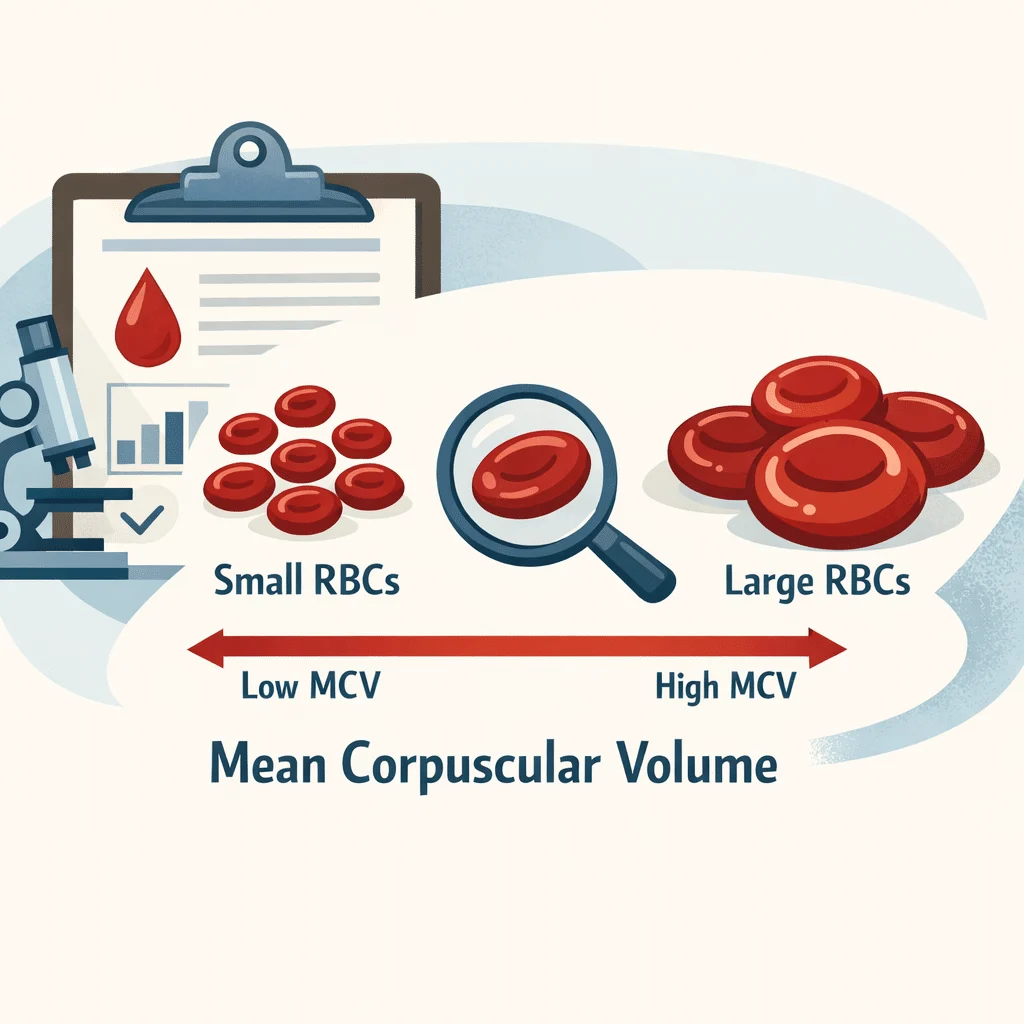
Un test de sânge MCV măsoară dimensiunea medie a globulelor roșii și este una dintre cele mai frecvente valori raportate într-o hemogramă completă. Dacă raportul tău arată un rezultat MCV marcat ca ridicat sau scăzut, acesta reprezintă un indiciu util, nu un diagnostic în sine. În acest articol vei afla ce măsoară testul de sânge MCV, de ce contează dimensiunea globulelor roșii, cum să îți interpretezi valoarea față de intervalul normal și ce pot indica rezultatele ridicate sau scăzute, cu linkuri către ghiduri mai detaliate dacă valoarea ta se află în afara intervalului tipic.
Ce măsoară analiza MCV?
MCV vine de la volumul corpuscular mediu (mean corpuscular volume), adică volumul mediu al unui singur globul roșu, exprimat în femtolitri (fL), o unitate de volum extrem de mică. Globulele roșii, numite și eritrocite, sunt produse în măduva osoasă și transportă oxigenul din plămâni către toate țesuturile corpului tău, apoi aduc dioxidul de carbon înapoi pentru a fi eliminat prin expirație.
Dimensiunea acestor celule influențează cât de eficient își îndeplinesc această funcție. Analiza MCV îi spune medicului tău dacă globulele tale roșii au o dimensiune normală, sunt mai mici decât de obicei (un aspect numit microcitoza) sau mai mari decât de obicei (macrocitoza). Deoarece dimensiunea celulelor reflectă adesea ce se întâmplă în interiorul lor, MCV oferă un indiciu timpuriu despre statusul nutrițional, funcția măduvei osoase și anumite afecțiuni ereditare.
De ce contează analiza MCV
Analiza MCV nu se solicită de sine stătătoare. Este unul dintre mai mulți indici eritrocitari raportați automat în cadrul hemoleucogramei complete, alături de hemoglobina corpusculară medie (MCH) și concentrația medie a hemoglobinei corpusculare (MCHC). Împreună, aceste valori îl ajută pe medicul tău să identifice cauza anemiei sau a altor probleme ale globulelor roșii, adesea înainte să apară simptome.
O fereastră către starea nutrițională
MCV reflectă adesea rezervele corpului tău de fier, vitamina B12 și folat (vitamina B9). Un MCV scăzut semnalează frecvent o deficiență de fier, deoarece fierul insuficient limitează producția de hemoglobină și micșorează globulele roșii. Un MCV crescut, în schimb, indică de obicei un deficit de vitamina B12 sau folat, ambele necesare pentru sinteza normală a ADN-ului în timpul formării globulelor roșii.
Un indiciu pentru afecțiuni dincolo de alimentație
Un MCV anormal poate reflecta și afecțiuni ereditare, precum talasemia, boli hepatice cronice, hipotiroidism, anumite medicamente sau, mai rar, tulburări ale măduvei osoase. Deoarece lista cauzelor posibile este largă, medicii interpretează MCV împreună cu simptomele tale, cu celelalte valori din hemogramă și, uneori, cu un frotiu de sânge examinat la microscop.
Cum ghidează rezultatele pașii următori
Un rezultat al testului de sânge MCV în afara intervalului normal determină adesea ce analize va solicita medicul tău în continuare. Un MCV scăzut conduce de obicei la investigarea fierului, în timp ce un MCV ridicat duce de regulă la testarea vitaminei B12 și a folaților și, uneori, la teste ale funcției hepatice sau tiroidiene. MCV poate ajuta, de asemenea, la monitorizarea eficienței unui tratament, cum ar fi suplimentarea cu fier sau B12, de-a lungul timpului.
Intervalul normal al MCV și cum să îți citești rezultatul
Pe un buletin de analize, MCV apare de obicei în secțiunea de hematologie sau hemoleucogramă completă. Pentru majoritatea adulților, intervalul de referință standard al testului MCV din sânge este de aproximativ 80 până la 100 fL. Valorile sub aproximativ 80 fL sunt clasificate în general ca scăzute (microcitare), iar cele de peste aproximativ 100 fL ca ridicate (macrocitare).
Intervalele de referință nu sunt universal valabile. Fiecare laborator își stabilește propriul interval în funcție de echipamentele utilizate și de populația pe care o deservește, astfel că pot apărea mici variații între laboratoare. Compară întotdeauna rezultatul tău cu intervalul tipărit pe buletinul tău de analize, nu cu o valoare găsită online. Urmărește simboluri precum o săgeată în sus (valoare crescută) sau o săgeată în jos (valoare scăzută), ori un asterisc care marchează o valoare atipică; unele laboratoare folosesc mai multe asteriscuri pentru a arăta cât de departe se află un rezultat față de intervalul normal.
MCV ridicat vs. MCV scăzut: o comparație rapidă
Tabelul de mai jos rezumă cum diferă, de obicei, cele două situații. Este un punct de plecare pentru înțelegerea buletinului tău de analize, nu un substitut pentru interpretarea medicului tău.
| Caracteristică | MCV scăzut (microcitoză) | MCV ridicat (macrocitoza) |
|---|---|---|
| Prag tipic | Sub aproximativ 80 fL | Peste aproximativ 100 fL |
| Cea mai frecventă cauză | Deficit de fier | Deficit de vitamina B12 sau acid folic |
| Alte cauze posibile | Talasemie, inflamație cronică, anemie sideroblastică, expunere la plumb | Consum cronic de alcool, boli hepatice, hipotiroidism, anumite medicamente, sindrom mielodisplazic |
| Teste de urmărire recomandate | Studii ale metabolismului fierului, feritină, număr de reticulocite | Niveluri de vitamina B12 și folat, teste hepatice și tiroidiene |
Pentru o analiză mai aprofundată a fiecărei direcții, inclusiv simptome, opțiuni de tratament și ce să aștepți de la urmărirea medicală, consultă ghidurile noastre dedicate pentru cauze, simptome și tratamente ale MCV scăzut și înțelegerea valorilor MCV crescut și cauzele acestora.
Poate MCV să fie normal și totuși să semnaleze o problemă?
Da. Este posibil să ai anemie cu un MCV complet normal, numită uneori anemie normocitară. Acest tipar poate apărea în caz de pierdere bruscă de sânge, insuficiență renală sau o combinație de deficiențe care se anulează reciproc, cum ar fi deficiența concomitentă de fier și vitamina B12. Acesta este unul dintre motivele pentru care MCV este întotdeauna interpretat împreună cu hemoglobina, hematocritul și numărul de globule roșii, nu izolat. Ghidul nostru despre citirea hemoleucogramei complete explică cum se corelează toate aceste valori.
Când să mergi la medic pentru rezultatul MCV
Majoritatea rezultatelor MCV ușor anormale nu reprezintă urgențe și necesită doar teste suplimentare sau o nouă recoltare de sânge. Totuși, unele situații merită atenție mai promptă.
Recoltarea în sine se schimbă: vezi ce schimbă pentru pacienți o recoltare robotizată de sânge autorizată de FDA.
Ia în considerare contactarea unui medic mai devreme dacă observi:
Oboseală persistentă, slăbiciune sau dificultăți de respirație la efort, care pot însoți anemia indiferent de dimensiunea celulelor. Piele palidă, unghii fragile sau pofte neobișnuite pentru substanțe non-alimentare, cum ar fi gheața, care pot sugera o deficiență de fier. Amorțeală, furnicături, probleme de echilibru sau modificări ale memoriei, care pot apărea în deficiența de vitamina B12 ce afectează sistemul nervos. Un MCV semnificativ anormal, mai ales alături de hemoglobină scăzută, sau orice rezultat pe care medicul tău l-a semnalat în mod specific pentru urmărire. Dureri în piept, leșin sau palpitații, care necesită evaluare urgentă, fără a mai aștepta o programare planificată.
Un singur rezultat al testului de sânge MCV ușor în afara intervalului normal, fără simptome, este adesea pur și simplu reverificat la o dată ulterioară, în loc să fie tratat imediat.
Cum investighează medicii un test de sânge MCV anormal
Când MCV-ul tău iese din intervalul de referință, medicul analizează de obicei tabloul de ansamblu înainte de a solicita analize suplimentare. Va verifica dacă hemoglobina și hematocritul sunt și ele scăzute, deoarece MCV-ul combinat cu aceste valori ajută la clasificarea tipului de anemie prezent. Numărul de reticulocite, care măsoară câte globule roșii noi produce măduva osoasă, poate arăta dacă organismul tău răspunde corespunzător la o deficiență.
Pentru un MCV scăzut, investigarea fierului — inclusiv feritina, fierul seric și capacitatea totală de legare a fierului — reprezintă de obicei pasul următor; ghidul nostru ghid panel analize fier explică cum se corelează acești markeri. Pentru un MCV ridicat, nivelurile de vitamina B12 și folați sunt verificate de obicei mai întâi, alături de funcția hepatică și tiroidiană; poți afla mai multe în ghidurile noastre despre testul de sânge pentru acid folic și despre interpretarea rezultatelor crescute ale vitaminei B12. În unele cazuri, medicii examinează și un frotiu de sânge la microscop sau solicită electroforeza hemoglobinei pentru a exclude talasemia.
Factorii de dietă și stil de viață care influențează MCV
Deoarece MCV reflectă adesea nivelul nutrienților din organism, alimentația joacă un rol important în prevenție și recuperare, odată ce cauza a fost identificată. Dacă un MCV scăzut se datorează deficienței de fier, alimentele bogate în fier – precum carnea roșie, carnea de pasăre, leguminoasele și legumele cu frunze verzi închise – pot fi de ajutor, mai ales când sunt consumate alături de o sursă de vitamina C, cum ar fi citricele, care îmbunătățesc absorbția fierului. Ceaiul și cafeaua consumate în timpul meselor pot reduce absorbția fierului, așa că un obicei simplu și practic este să le bei la distanță de mesele bogate în fier.
Dacă un MCV crescut este legat de deficiența de vitamina B12 sau folat, consumul de lactate, ouă, pește și cereale fortificate pentru B12, plus legume cu frunze verzi și leguminoase pentru folat, susține recuperarea. Limitarea consumului de alcool este de asemenea importantă, deoarece consumul cronic de alcool este o cauză frecventă, adesea trecută cu vederea, a macrocitozei, independent de orice deficiență de vitamine. Acești pași alimentari susțin tratamentul, dar nu îl înlocuiesc, iar orice deficiență suspectată trebuie confirmată și monitorizată de un medic.
Cum se efectuează analizele de sânge pentru MCV
Analizarea MCV din sânge nu necesită altceva decât o recoltare standard de sânge. Un cadru medical recoltează o mică probă de sânge dintr-o venă a brațului tău, iar valoarea este calculată automat de același analizor care procesează hemoleucograma completă. Nu este nevoie de post sau de o pregătire specială, cu excepția cazului în care aceeași recoltare include și alte analize, cum ar fi glicemia à jeun sau profilul lipidic, care necesită acest lucru. Rezultatele sunt disponibile de obicei în câteva ore până la câteva zile, în funcție de laborator.
Cele mai recente progrese științifice
Cercetările recente s-au concentrat pe valorificarea mai bună a analizei MCV din sânge și a indicilor asociați ai globulelor roșii, în special prin combinarea acestora cu recunoașterea automată a tiparelor pentru a accelera diagnosticul.
Un studiu din 2025 a analizat datele hemoleucogramei complete, inclusiv MCV, pentru a construi un model computerizat care să ajute la diferențierea anemiei feriprive de anemia aplastică – o afecțiune mai rară și mai gravă a măduvei osoase – folosind valorile de sânge de rutină deja colectate în cadrul testelor standard. Ce înseamnă asta pentru tine: MCV și măsurătorile asociate ale globulelor roșii ar putea susține din ce în ce mai mult o diferențiere mai rapidă și mai consistentă între cauzele frecvente și cele rare ale anemiei, scurtând potențial drumul de la o hemoleucogramă anormală până la investigația potrivită. Această cercetare este încă preliminară și se bazează pe datele unui singur spital, deci nu a schimbat încă practica clinică de zi cu zi, dar sugerează că MCV va deveni un semnal precoce și mai util în timp.
Un studiu înrudit din 2024 a construit și testat un model computerizat folosind MCV, împreună cu hemoglobina corpusculară medie (MCH) și lărgimea distribuției eritrocitare (o măsură a variației dimensiunii globulelor roșii), pentru a diferenția anemia feriprivă de talasemia minoră – o afecțiune genetică ce poate arăta similar la o hemoleucogramă de bază. Ce înseamnă asta pentru tine: distincția dintre aceste două afecțiuni contează practic, deoarece talasemia minoră nu răspunde la suplimentele de fier, iar fierul în exces se poate acumula dăunător în timp, în timp ce deficiența reală de fier necesită înlocuirea acestuia. Modelul a funcționat bine în populația studiată, dar a fost dezvoltat și testat în spitale specifice, astfel că acuratețea sa în alte populații și laboratoare este încă în curs de confirmare. Deocamdată, aceste abordări sunt instrumente de cercetare, nu ceva ce laboratorul tău local folosește direct, dar ilustrează cum modesta analiză MCV continuă să genereze valoare diagnostică nouă, la mai bine de un secol de la prima sa descriere.
Întrebări frecvente
Este necesară postul înainte de analiza de sânge pentru MCV?
Nu. Testul de sânge MCV este calculat ca parte a hemoleucogramei complete, iar mâncatul sau băutul înainte nu modifică semnificativ dimensiunea globulelor roșii. Trebuie să ții post doar dacă aceeași recoltare de sânge include un alt test care o impune, cum ar fi glicemia à jeun sau profilul lipidic. Dacă nu ești sigur(ă), verifică instrucțiunile primite odată cu recomandarea de analize.
Poate MCV să se modifice rapid sau rămâne stabil?
MCV este o valoare destul de stabilă de la o zi la alta. Globulele roșii trăiesc aproximativ 120 de zile, astfel că dimensiunea medie a celulelor din circulație nu se schimbă dramatic peste noapte. Modificările semnificative ale MCV se dezvoltă de obicei în decurs de săptămâni sau luni, pe măsură ce noile globule roșii, influențate de nivelul actual de fier sau vitamine, le înlocuiesc treptat pe cele vechi.
Ce înseamnă dacă MCV-ul meu este normal, dar tot nu mă simt bine?
Un MCV normal nu exclude orice problemă a globulelor roșii. Unele persoane au o deficiență de fier incipientă fără anemie, o combinație de deficiențe care se compensează reciproc sau o afecțiune complet diferită, cum ar fi disfuncția tiroidiană sau o tulburare de somn. Dacă MCV-ul tău este normal, dar simptomele persistă, menționează-le medicului tău în loc să presupui că hemoleucograma a exclus orice problemă.
Cum se modifică VEM în timpul sarcinii?
Sarcina provoacă modificări fiziologice reale ale MCV. În trimestrul al doilea, MCV poate scădea ușor, deoarece volumul plasmatic crește mai repede decât masa de globule roșii, în timp ce necesarul de fier crește. Mai târziu în sarcină, un aport insuficient de folat poate duce la creșterea MCV. De aceea, suplimentarea cu fier și acid folic este recomandată în mod obișnuit pe tot parcursul sarcinii.
Poate etnia influența ce se consideră un MCV normal?
Da, într-o anumită măsură. Persoanele de origine mediteraneană, africană sau din Asia de Sud-Est pot avea valori medii ale MCV ușor mai scăzute, adesea legate de o prevalență mai mare a trăsăturii de talasemie, o afecțiune ereditară în general benignă. Medicii iau în considerare acest context pentru a evita investigații inutile atunci când un MCV ușor scăzut corespunde unui tipar familial cunoscut, și nu unei probleme noi.
Un MCV scăzut sau crescut este întotdeauna un motiv de îngrijorare?
Nu neapărat. Un MCV ușor anormal, fără simptome și fără alte valori sanguine modificate, este adesea pur și simplu monitorizat printr-un test repetat după câteva luni. Cel mai important este amploarea abaterii față de intervalul de referință, dacă și alte valori ale globulelor roșii sunt afectate și dacă ai simptome. Medicul tău este cel mai în măsură să decidă dacă rezultatul tău specific necesită investigații suplimentare.
Surse
- MCV (Mean Corpuscular Volume) — MedlinePlus, National Library of Medicine (NIH) — https://medlineplus.gov/lab-tests/mcv-mean-corpuscular-volume/
- Mean Corpuscular Volume (MCV) Blood Test — Cleveland Clinic — https://my.clevelandclinic.org/health/diagnostics/24641-mcv-blood-test
- Maner BS, Moosavi L. Mean Corpuscular Volume — StatPearls, NCBI Bookshelf (National Library of Medicine, NIH) — https://www.ncbi.nlm.nih.gov/books/NBK545275/
- Darshan BSD, Sampathila N, Bairy GM, et al. Differential diagnosis of iron deficiency anemia from aplastic anemia using machine learning and explainable Artificial Intelligence utilizing blood attributes — Scientific Reports, 2025 — https://doi.org/10.1038/s41598-024-84120-w
- Wang W, Ye R, Tang B, Qi Y. MultiThal-classifier, a machine learning-based multi-class model for thalassemia diagnosis and classification — Clinica Chimica Acta, 2024 — https://doi.org/10.1016/j.cca.2024.120025
Citirea unui singur rezultat marcat, cum ar fi MCV, rareori spune totul de unul singur. Corelarea lui cu alte rezultate conexe, precum hemoglobina, feritina sau un panel complet de fier, oferă o imagine mult mai clară a ceea ce se întâmplă și te ajută să înțelegi — nu să diagnostichezi — la ce poate face referire analizele tale. AI DiagMe te poate ajuta să vezi cum se încadrează MCV-ul tău alături de ceilalți markeri, traducând tiparul în limbaj simplu înainte de următoarea ta programare. Este conceput pentru a te ajuta să îți înțelegi rezultatele; nu pune diagnostice și nu înlocuiește medicul tău.
Înțelege-ți rezultatele analizelor cu AI DiagMe
Obține interpretarea rezultatelor în câteva minute
Lectură suplimentară
- Cauze, simptome și tratamente pentru MCV scăzut
- Ce înseamnă MCV crescut și care sunt cauzele sale
- Rezultatele hemoleucogramei complete explicate
- Panelul de fier și ce înseamnă fiecare marker
- Valori normale ale analizelor de sânge pe panel
Glosar
| Termen | Definiție |
|---|---|
| Volumul eritrocitar mediu (MCV) | Volumul mediu al unui singur globul roșu, măsurat în femtolitri (fL). |
| Microcitoză | Un aspect al globulelor roșii mai mici decât intervalul de referință obișnuit, de regulă sub aproximativ 80 fL. |
| Macrocitoză | Un aspect al globulelor roșii mai mari decât intervalul de referință obișnuit, de regulă peste aproximativ 100 fL. |
| Hemoleucogramă completă (HLG) | O analiză de sânge frecventă care măsoară globulele roșii, globulele albe, trombocitele și valorile asociate, inclusiv MCV. |
| Hemoglobină | Proteina care conține fier din interiorul globulelor roșii și care transportă oxigenul prin organism. |
| Anemie feriprivă | Cea mai frecventă cauză a MCV scăzut, determinată de cantitatea insuficientă de fier pentru producerea normală a hemoglobinei. |
| Folat (vitamina B9) | O vitamină din grupul B necesară pentru sinteza ADN-ului în timpul formării globulelor roșii; deficiența poate crește MCV-ul. |
| Talasemia | Un grup de afecțiuni ereditare care reduc producția normală de hemoglobină și pot scădea MCV-ul. |
| Numărul de reticulocite | O analiză care măsoară câte globule roșii noi și imature sunt prezente, reflectând activitatea măduvei osoase. |