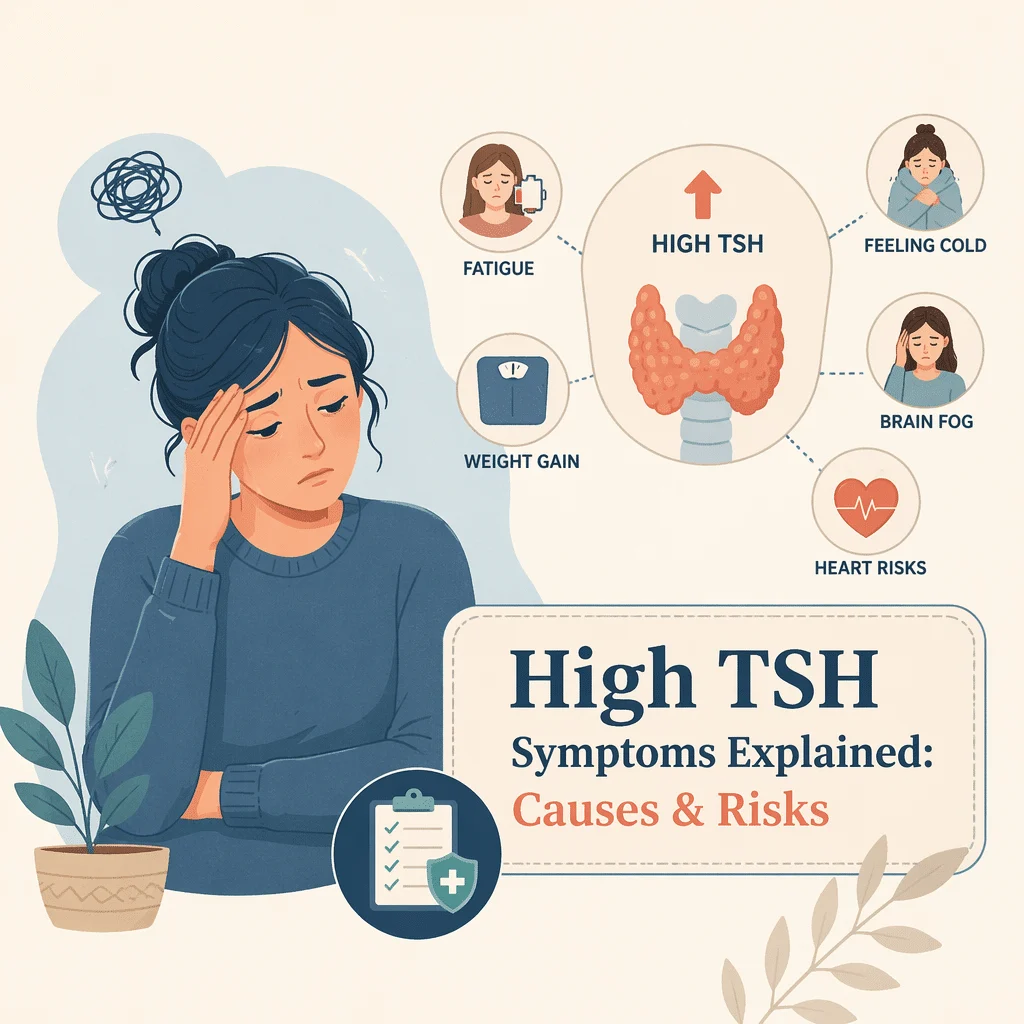
Simptomele unui TSH crescut sunt, în aproape toate cazurile, simptomele unei tiroide leneșe, nu ale hormonului în sine. TSH înseamnă hormon de stimulare tiroidiană, produs de glanda hipofiză de la baza creierului pentru a-i spune tiroidei câți hormoni să elibereze. Când valoarea depășește intervalul de referință de pe buletinul tău de analize, înseamnă de obicei că hipofiza „împinge" mai tare pentru că tiroida nu mai ține pasul. În acest articol vei afla care simptome sunt cu adevărat legate de o valoare crescută, de ce o singură determinare nu înseamnă un diagnostic, ce diferențiază hipotiroidismul subclinic de cel manifest, ce factori obișnuiți pot crește valoarea fără nicio boală tiroidiană și ce analize urmează.
De ce simptomele TSH crescut sunt, de fapt, simptome de hipotiroidism
Hipofiza și tiroida funcționează ca un termostat și un calorifer. Hipofiza măsoară cantitatea de hormoni tiroidieni din sânge și, dacă detectează prea puțini, crește TSH-ul pentru a stimula tiroida. Un TSH crescut nu provoacă el însuși simptome: este un semnal că organismul compensează o tiroidă care lucrează lent. Disconfortul pe care îl simte pacientul vine din lipsa hormonilor tiroidieni în țesuturi, nu din molecula de TSH în sine.
Această distincție explică ceva ce mulți pacienți găsesc confuz: două persoane cu același TSH se pot simți complet diferit. Cel a cărui producție hormonală abia a început să scadă poate să nu simtă nimic; altul, a cărui producție a scăzut mai mult, poate simți foarte mult la aceeași valoare.
Simptomele raportate cel mai frecvent când hormonii tiroidieni sunt scăzuți includ: oboseală persistentă pe care somnul nu o ameliorează, senzație de frig când ceilalți nu o simt, piele uscată, păr subțiat sau fragil, constipație, dureri și slăbiciune musculară, umflături în jurul ochilor sau al feței, menstruații mai abundente sau neregulate, dispoziție scăzută și o gândire înceată, cu memorie dificilă. Biblioteca noastră descrie o tiroidă hipoactivă mai detaliat.
Fiecare dintre aceste simptome este nespecific. Biblioteca noastră acoperă și simptomele și cauzele anemiei și simptomele și etapele menopauzei, ambele suprapunându-se în mare măsură cu o tiroidă hipoactivă. De aceea, simptomele singure nu pot confirma o problemă tiroidiană, și nici o valoare izolată nu poate face asta.
Subclinic sau manifest: distincția care schimbă răspunsul
Aproape toți cei care ajung pe această pagină cu un TSH marcat ca anormal se încadrează în unul dintre două grupuri, iar răspunsul practic este diferit pentru fiecare.
Hipotiroidism subclinic: TSH crescut cu T4 liber normal
Aici hipofiza și-a crescut semnalul, dar tiroida menține în continuare hormonul activ în limite normale. Mayo Clinic descrie această situație ca un TSH crescut în timp ce nivelurile hormonilor tiroidieni rămân normale, precizând că adesea nu provoacă simptome vizibile. Majoritatea persoanelor cu un TSH ușor marcat se încadrează în această categorie. Este mai degrabă un tipar de laborator decât o boală, iar dacă necesită sau nu tratament reprezintă o decizie clinică autentică, nu un răspuns automat.
Hipotiroidism manifest: TSH crescut cu T4 liber scăzut
Aici compensarea a eșuat, iar hormonul activ a scăzut sub limitele normale. Aceasta este hipotiroidie manifestă: simptomele sunt mult mai probabile, iar tratamentul este mult mai puțin controversat. Diferența dintre aceste două situații este cel mai important lucru de înțeles atunci când un rezultat este crescut, motiv pentru care T4 liber se măsoară împreună cu TSH, nu după acesta.
| Rezultat TSH | T4 liber | Ce indică de obicei acest tipar | Pasul următor tipic |
|---|---|---|---|
| Ușor peste intervalul laboratorului tău | În interval normal | Hipotiroidism subclinic, adesea cu puține simptome sau fără simptome | Repetă TSH cu T4 liber după câteva săptămâni; ia în considerare anticorpii tiroidieni |
| Clar peste limita normală | Sub interval | Hipotiroidism manifest | Teste de confirmare și o discuție despre tratament cu medicul tău |
| Crescut la un test, normal la repetare | În interval normal | O creștere tranzitorie, nu o boală tiroidiană | Fără tratament; medicul tău decide dacă să repete analiza ulterior |
| Crescut după o boală recentă, un medicament nou sau un supliment de biotină | Variabil | Un rezultat care poate să nu reflecte starea reală a tiroidei tale | Repetă analiza după ce factorul perturbator a dispărut |
| Crescut în timpul sarcinii | În interval normal sau sub normal | Evaluat în raport cu valorile specifice sarcinii, nu cu intervalul standard | Consultație urgentă cu medicul care urmărește sarcina |
De ce un singur rezultat TSH crescut trebuie întotdeauna repetat
Un TSH crescut la un singur test este un motiv pentru a repeta analiza, nu un diagnostic. TSH este o valoare instabilă: crește și scade pe parcursul zilei, se modifică în caz de boală și variază între analizoarele de laborator. Multe rezultate ușor crescute revin pur și simplu la normal la un test repetat, fără niciun tratament între timp.
De aceea, medicii confirmă tiparul înainte de a acționa — de obicei repetând TSH împreună cu T4 liber după câteva săptămâni, nu câteva zile. A trata pe baza unui singur rezultat riscă să înceapă un tratament pe viață pentru o valoare care nu ar fi rămas crescută. Echipa noastră explică valorile normale ale hormonilor tiroidieni, iar intervalul de referință tipărit pe propriul tău buletin de analize este cel care se aplică, deoarece analizoarele diferă.
Factori care cresc TSH-ul fără nicio boală tiroidiană
Înainte de a concluziona că tiroida nu funcționează corespunzător, merită să excluzi explicațiile obișnuite care fac ca valoarea să pară mai îngrijorătoare decât este în realitate.
Recuperarea după o boală non-tiroidiană
Bolile grave perturbă valorile tiroidiene, iar perturbarea nu dispare odată cu boala. În perioada de recuperare după o infecție severă, o spitalizare sau o intervenție chirurgicală, TSH-ul revine adesea peste limita normală înainte de a se stabiliza. Testarea în această fereastră poate eticheta o persoană ca hipotiroidiană, deși tiroida nu a fost niciodată problema — de aceea, testele tiroidiene sunt, în general, evitate în timpul și imediat după o boală acută, cu excepția cazului în care există un motiv specific.
Biotina din suplimentele pentru păr, piele și unghii
Acesta merită o atenție deosebită, deoarece provoacă erori de laborator reale, nu doar variații de graniță. Multe teste tiroidiene folosesc un sistem de legare biotină-streptavidină, astfel că biotina luată în doze mari ca supliment concurează cu chimia testului în sine. Oficiul pentru Suplimente Alimentare al Institutelor Naționale de Sănătate din SUA precizează că aportul foarte ridicat de biotină poate interfera cu testele de diagnostic care utilizează această tehnologie pentru a măsura hormoni precum hormonul tiroidian și descrie un studiu mic pe adulți sănătoși care au luat 10 mg pe zi timp de o săptămână, în care mai multe teste au fost afectate, inclusiv un TSH fals scăzut.
Direcția erorii depinde de modul în care este construit testul, astfel că biotina poate face TSH-ul să pară fals scăzut, distorsionând în același timp T4 liber în sens opus — mimând o tiroidă hiperactivă. O analiză din 2025 publicată în Deutsches Ärzteblatt International confirmă că interferența biotinei în testele de funcție tiroidiană rămâne o problemă reală în practica curentă. Pasul practic este simplu: spune laboratorului și medicului tău despre orice supliment care conține biotină și întreabă cât timp trebuie să îl oprești înainte de recoltare. Formulele pentru păr și unghii sunt de obicei vinovații, la doze mult mai mari decât cele furnizate de alimente.
Ora din zi și analizorul folosit de laborator
TSH urmează un ritm zilnic, atingând vârful în timpul nopții și cel mai scăzut nivel după-amiaza — astfel, o recoltare foarte devreme dimineața poate da o valoare mai mare decât una de după-amiază, la aceeași persoană, în aceeași zi. Analizoarele de la diferiți producători pot da și ele rezultate ușor diferite, ceea ce face compararea rezultatelor între laboratoare nesigură. Retestarea este cel mai bine făcută la o oră similară din zi și la același laborator.
Medicamente
Mai multe medicamente utilizate pe scară largă cresc TSH-ul: amiodarona și litiul sunt exemplele clasice, iar unele imunoterapii oncologice au același efect. Agenții de contrast cu iod și suplimentele cu iod în doze mari pot, de asemenea, perturba funcția tiroidiană. Și dacă iei deja medicamente pentru tiroidă, un TSH crescut poate însemna pur și simplu că doza este prea mică sau că fierul, calciul ori anumite medicamente pentru aciditate gastrică îi blochează absorbția.
Insuficiență suprarenală netratată
Aceasta este o situație rară, dar importantă. Când glandele suprarenale nu produc suficient cortizol, TSH-ul poate fi ușor crescut și, de obicei, revine la normal după tratarea problemei suprarenale. Începerea tratamentului cu hormoni tiroidieni înainte de a trata o insuficiență suprarenală netratată poate provoca o deteriorare acută a stării de sănătate, motiv pentru care se verifică atunci când tabloul clinic o sugerează. Echipa noastră explică panoul de hormoni suprarenali.
Vârsta și sarcina schimbă criteriile de referință
La adulții în vârstă, valorile sunt în mod natural mai ridicate
TSH-ul tinde să crească odată cu vârsta la persoanele cu tiroidă perfect sănătoasă. MedlinePlus precizează clar că nivelul poate fi mai ridicat la persoanele de peste 80 de ani, chiar dacă nu au nicio problemă tiroidiană. Deoarece majoritatea laboratoarelor aplică un singur interval de referință pentru adulți, indiferent de vârstă, un rezultat complet normal pentru o persoană de optzeci de ani poate fi marcat ca anormal. Vârsta face parte din interpretarea valorii și nu este un detaliu care poate fi ignorat.
În sarcină se folosesc praguri complet diferite
Sarcina modifică fiziologia tiroidiană încă din primele săptămâni, iar valorile țintă utilizate sunt mai mici și specifice fiecărui trimestru, nu intervalul standard pentru adulți. Miza este și mai mare, deoarece hormonul tiroidian contează pentru dezvoltarea fătului. Orice persoană însărcinată sau care încearcă să conceapă ar trebui să aibă un rezultat tiroidian anormal evaluat prompt de medicul care urmărește sarcina, nu comparat cu un interval general.
Analizele care urmează de obicei unui TSH crescut
Un TSH crescut este începutul unei evaluări, nu sfârșitul ei. Testele care urmează de obicei sunt puține și bine orientate.
- Un TSH repetat, măsurat împreună cu T4 liber, după câteva săptămâni. Acesta confirmă dacă valoarea crescută este reală și diferențiază forma subclinică de cea manifestă. Ghidul nostru acoperă testul tiroidian T4 liber.
- Anticorpii anti-tiroidperoxidază, numiți de obicei anticorpi anti-TPO. Prezența lor indică o boală tiroidiană autoimună, cea mai frecventă cauză a tiroidei subactive, și crește probabilitatea progresiei bolii. Detaliem, de asemenea, panoul de anticorpi autoimuni.
- T3 liber în cazuri selectate. Nu face parte din evaluarea standard de primă linie, iar echipa noastră explică markerul tiroidian T3 liber.
- Un profil lipidic, deoarece o tiroidă hipoactivă poate crește colesterolul, iar valorile se pot îmbunătăți odată ce funcția tiroidiană este corectată. Acoperim profilul lipidic și markerii colesterolului.
- O hemogramă completă, care ajută la diferențierea oboselii legate de tiroidă de anemie, o afecțiune care însoțește adesea o tiroidă hipoactivă. Acest articol explică un buletin de hemogramă completă.
Dacă nu ești sigur cum să citești valorile din propriul tău buletin de analize, ghidul nostru explică cum să citești rezultatele analizelor de sânge.
Când să mergi urgent la medic
Majoritatea rezultatelor cu TSH crescut nu sunt urgente; un număr mic dintre ele sunt. Solicită sfat medical fără întârziere dacă observi oricare dintre următoarele.
- Oboseală severă și în agravare, însoțită de confuzie, somnolență neobișnuită sau vorbire înceată.
- O frecvență cardiacă foarte scăzută, senzație persistentă de frig cu temperatură corporală scăzută sau umflarea vizibilă a feței, mâinilor sau picioarelor.
- O umflătură la nivelul gâtului care crește, răgușeală nouă sau dificultăți la înghițit ori la respirat.
- Orice rezultat anormal al tiroidei în timpul sarcinii sau când încerci să rămâi însărcinată.
- Durere în piept, dificultăți de respirație sau apariția unui ritm cardiac neregulat după începerea sau creșterea dozei de medicament tiroidian.
Cele mai recente progrese științifice
Cercetările din ultimii trei ani au schimbat discuția despre rezultatele ușor crescute, în principal prin întrebarea cine beneficiază cu adevărat de tratament. Iată ce sugerează acestea, pe înțelesul tuturor.
Intervalele de referință specifice vârstei reduc supradiagnosticarea. Un studiu multicentric din 2023, publicat în revista Thyroid, a recalculat intervalele de referință în funcție de vârstă și sex pe un eșantion de peste douăzeci de mii de persoane care efectuau controale de rutină. Folosind aceste intervale personalizate, aproximativ șase din zece femei etichetate cu hipotiroidism subclinic pe baza intervalului standard al producătorului s-au dovedit a fi normale pentru vârsta și sexul lor, efectul fiind concentrat la cele cu vârsta de șaizeci de ani și peste. Ce înseamnă asta pentru tine: dacă ești mai în vârstă și TSH-ul tău depășește doar ușor intervalul tipărit, este rezonabil să întrebi dacă un interval adaptat vârstei schimbă interpretarea.
O analiză din 2025 publicată în Endocrine Connections a ajuns la o concluzie similară pentru adulții în vârstă, raportând că nivelurile de TSH și limitele superioare ale intervalului de referință tind să crească odată cu vârsta și că un prag mai ridicat pentru diagnosticarea și tratarea cazurilor ușoare la persoanele în vârstă pare rezonabil.
Tratarea cazurilor ușoare la adulții în vârstă nu a demonstrat un beneficiu clar. O analiză sistematică și meta-analiză din 2024, publicată în revista Systematic Reviews, care combină rezultatele mai multor studii anterioare, a comparat persoanele peste șaizeci și cinci de ani cu hipotiroidism subclinic cărora li s-a administrat levotiroxină față de cele lăsate fără tratament și nu a găsit nicio diferență semnificativă în privința rezultatelor cardiace. Ce înseamnă asta pentru tine: pentru un adult în vârstă cu TSH ușor crescut și puține simptome, monitorizarea atentă în locul medicației imediate este o opțiune legitimă, nu o neglijență.
Concluziile legate de sarcină sunt mai nuanțate. O analiză sistematică și meta-analiză din 2024, publicată în Thyroid, a adunat date din studii randomizate privind levotiroxina pentru hipotiroidismul subclinic. Tratamentul început înainte de concepție nu a îmbunătățit fertilitatea și nici nu a redus riscul de avort spontan, iar în timpul sarcinii un beneficiu asupra nașterii premature a apărut doar atunci când TSH depășea 4,0 mU/L, nu între 2,5 și 4,0 mU/L. Ce înseamnă asta pentru tine: sarcina este exact situația în care trebuie să te ghidezi după medicul tău, nu după un prag general, deoarece valoarea ta specifică schimbă răspunsul.
Întreruperea tratamentului este în curs de studiere. Un mic studiu pilot publicat în Endocrine în 2025 a retras levotiroxina de la adulți care luau deja o doză mică pentru hipotiroidism subclinic, comparând-o cu o tabletă placebo pe parcursul a șase luni. Întreruperea s-a dovedit fezabilă și bine tolerată, fără nicio diferență clară în privința simptomelor sau a oboselii. Acesta a fost un studiu preliminar conceput pentru a demonstra că un studiu mai amplu este posibil, deci nu reprezintă încă un motiv pentru a schimba ceva. Ce înseamnă asta pentru tine: dacă ai început să iei medicamente pentru tiroidă cu ani în urmă pentru o valoare la limită, este firesc să îl întrebi pe medicul tău dacă mai este necesar, dar nu opri niciodată tratamentul pe cont propriu.
Glosar de termeni cheie
| Termen | Definiție |
|---|---|
| TSH (hormonul de stimulare tiroidiană) | Hormonul pe care hipofiza îl eliberează pentru a-i spune tiroidei câți hormoni să producă. O valoare ridicată înseamnă de obicei că hipofiza încearcă să stimuleze o tiroidă care nu funcționează la capacitate normală. |
| T4 liber (tiroxina liberă) | Principalul hormon tiroidian care circulă în forma sa liberă, utilizabilă. Arată dacă tiroida face față cerințelor organismului. |
| T3 liber (triiodotironina liberă) | Hormonul tiroidian mai activ, provenit în mare parte din conversia T4 la nivelul țesuturilor. Nu face parte din evaluarea de rutină de primă linie. |
| Hipotiroidism subclinic | TSH crescut cu T4 liber încă în intervalul de referință. Simptomele sunt adesea ușoare sau absente. |
| Hipotiroidism manifest | TSH crescut cu T4 liber sub intervalul de referință. Aceasta este hipotiroidie confirmată. |
| Anticorpi anti-TPO | Anticorpi anti-tiroid peroxidază. Prezența lor indică faptul că sistemul imunitar atacă tiroida, aceasta fiind cauza obișnuită a unei tiroide hipoactive. |
| Levotiroxină | O formă sintetică de tiroxină administrată sub formă de comprimat zilnic, pentru a înlocui hormonul pe care tiroida nu îl mai produce. |
| Interval de referință | Intervalul de valori pe care un laborator îl consideră normal pentru analizorul propriu. Intervalele diferă, deci cel de pe buletinul tău de analize este cel care se aplică. |
| Boală non-tiroidiană | Modificări ale analizelor de sânge tiroidiene cauzate de o boală fără legătură cu tiroida, nu de o afecțiune tiroidiană. TSH-ul revine adesea peste interval în perioada de recuperare. |
Întrebări frecvente
Ce nivel al TSH este considerat periculos de ridicat?
Nu există un număr unic care să facă un rezultat periculos, iar tratarea unei singure valori ca limită de pericol este înșelătoare. Ceea ce contează mult mai mult este dacă T4 liber a scăzut, cât de repede s-a produs schimbarea și cum te simți. Un TSH foarte ridicat cu un T4 liber clar scăzut la o persoană care este somnoroasă, confuză, îi este frig sau are edeme este tabloul care necesită atenție urgentă, iar această combinație este rară. Un TSH ridicat cu un T4 liber normal și fără simptome este frecvent și nu reprezintă o urgență. Adă raportul efectiv la medicul tău în loc să compari valoarea ta cu cifre găsite online, deoarece intervalele de referință diferă între laboratoare.
Poate un TSH crescut să cauzeze creștere în greutate?
O tiroidă hipoactivă poate provoca o creștere modestă în greutate, dar cantitatea este de obicei mai mică decât se așteaptă oamenii, iar o mare parte din ea reprezintă retenție de lichide, nu grăsime. O creștere semnificativă în greutate este rareori explicată doar de funcția tiroidiană. Corectarea hipotiroidiei tinde să elimine componenta de lichide și să restabilească energia, ceea ce poate ajuta indirect, însă medicamentul tiroidian nu este un tratament pentru slăbit și nu trebuie luat sau crescut în doză în acest scop. Administrarea unei doze mai mari decât are nevoie organismul tău prezintă riscuri reale pentru inimă și oase.
Un TSH crescut înseamnă întotdeauna că am nevoie de medicație?
Nu. Pentru hipotiroidismul confirmat, în care T4 liber a scăzut, tratamentul de substituție este standard. Pentru un TSH ușor crescut cu un T4 liber normal, decizia este individuală. Mayo Clinic menționează că pentru o creștere ușoară a TSH, medicamentele cu hormoni tiroidieni s-ar putea să nu fie utile, în timp ce un nivel mai ridicat, dar încă în intervalul subclinic, poate ameliora unele simptome. Vârsta ta, simptomele tale, prezența anticorpilor anti-TPO și dacă ești sau plănuiești să fii gravidă — toate acestea intră în această discuție.
Cât timp durează până când simptomele se ameliorează după începerea tratamentului?
Nivelurile din sânge se modifică în câteva săptămâni, dar modul în care te simți rămâne de obicei în urmă. Majoritatea oamenilor observă o schimbare treptată în aproximativ șase până la opt săptămâni, iar TSH-ul este de obicei reverificat în jurul acestui moment, deoarece atât timp îi trebuie pentru a reflecta o nouă doză. Beneficiul complet poate dura câteva luni, iar ajustările de doză sunt frecvente la început. Dacă nimic nu s-a îmbunătățit după ce TSH-ul tău a fost în limite normale câteva luni, acesta este un semnal să cauți din nou alte explicații pentru simptome, în loc să continui să crești doza.
Trebuie să fiu pe stomacul gol sau să schimb ora la care îmi fac analizele de sânge?
Nu este necesar să fii pe stomacul gol pentru testul TSH. Ora contează totuși puțin, deoarece TSH-ul este cel mai ridicat noaptea și cel mai scăzut după-amiaza, așa că încearcă să faci testele repetate la o oră similară din zi și la același laborator. Dacă iei deja levotiroxină, sfatul obișnuit este să îți recoltezi sângele înainte de doza din acea dimineață. Menționează orice supliment care conține biotină și întreabă dacă trebuie să îl oprești înainte.
Pot schimbările de dietă sau de stil de viață să scadă un TSH ridicat de la sine?
Dacă tiroida este cu adevărat hipoactivă, dieta nu o va restabili, iar niciun aliment sau supliment nu înlocuiește hormonul tiroidian. Stilul de viață poate ajuta la nivel secundar: iod suficient, dar nu în exces, tratarea unei deficiențe documentate precum fierul scăzut sau vitamina B12, un somn adecvat și separarea medicamentului tiroidian de suplimentele de fier și calciu pentru a asigura absorbția corectă. Fii precaut cu produsele din alge marine (kelp) și cu produsele cu doze mari de iod, care pot înrăutăți funcția tiroidiană în loc să o ajute.
Surse
- MedlinePlus, National Library of Medicine — TSH (Thyroid-stimulating hormone) Test — medlineplus.gov
- National Institute of Diabetes and Digestive and Kidney Diseases — Hypothyroidism (Underactive Thyroid) — niddk.nih.gov
- Mayo Clinic — Hypothyroidism (underactive thyroid): Diagnosis and treatment — mayoclinic.org
- U.S. Preventive Services Task Force — Thyroid Dysfunction: Screening — uspreventiveservicestaskforce.org
- National Institutes of Health, Office of Dietary Supplements — Biotin: Health Professional Fact Sheet — ods.od.nih.gov
- Yamada S, et al. — The Impact of Age- and Sex-Specific Reference Ranges for Serum Thyrotropin and Free Thyroxine on the Diagnosis of Subclinical Thyroid Dysfunction: A Multicenter Study from Japan — Thyroid, 2023 — PubMed
- Zhai X, et al. — Thyrotropin reference interval in older adults — Endocrine Connections, 2025 — PubMed
- Holley M, et al. — Cardiovascular and bone health outcomes in older people with subclinical hypothyroidism treated with levothyroxine: a systematic review and meta-analysis — Systematic Reviews, 2024 — PubMed
- Sankoda A, et al. — Effects of Levothyroxine Treatment on Fertility and Pregnancy Outcomes in Subclinical Hypothyroidism: A Systematic Review and Meta-Analysis of Randomized Controlled Trials — Thyroid, 2024 — PubMed
- Rußwurm M, et al. — Biotin Interference in Thyroid Function Tests — Deutsches Ärzteblatt International, 2025 — PubMed
- Maraka S, et al. — Discontinuation of levothyroxine therapy in patients with subclinical hypothyroidism: a pilot randomized clinical trial — Endocrine, 2025 — PubMed
Lectură suplimentară
- Analize de sânge pentru căderea părului: Ce dezvăluie titlurile despre GLP-1
- Feritina scăzută: cauze, simptome și tratament
- Depresie: Simptome, Cauze și Tratamente
- Panoul metabolic complet (CMP): cum să citești rezultatele
- Cât Durează Să Primești Rezultatele Analizelor de Sânge
Înțelege-ți rezultatele analizelor cu AI DiagMe
Un TSH crescut rareori spune totul de unul singur. Are sens interpretat alături de T4 liber, anticorpii tiroidieni, valorile colesterolului și hemoleucograma, precum și față de intervalul de referință al laboratorului tău. AI DiagMe citește aceste rezultate împreună și explică, pe înțelesul tău, ce înseamnă fiecare valoare și care dintre ele merită o discuție cu medicul tău. Te ajută să înțelegi raportul tău — nu pune diagnostice și nu înlocuiește medicul.
Obține interpretarea rezultatelor în câteva minute