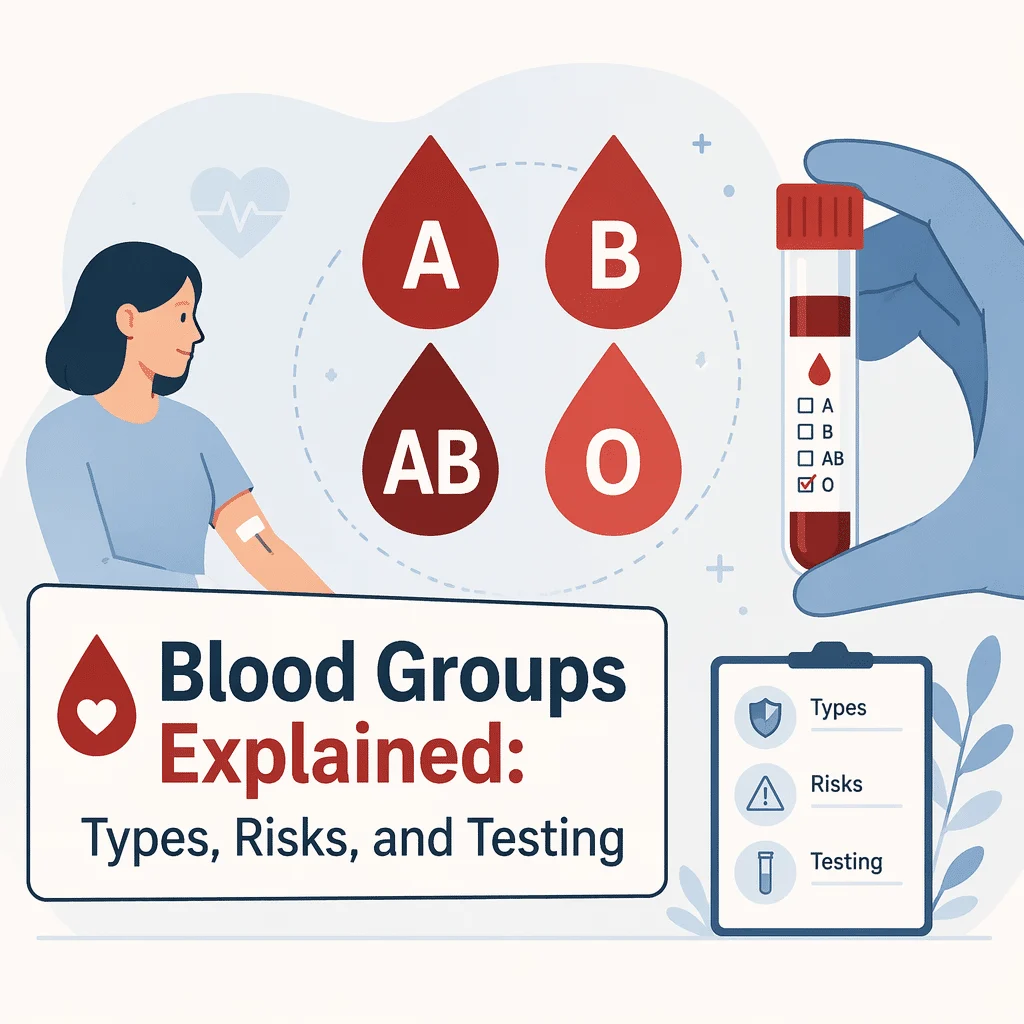
Grupele sanguine sunt etichetele care descriu ce se află pe suprafața globulelor tale roșii și ele determină ce sânge donat este sigur pentru tine și ce nu. Majoritatea oamenilor se gândesc la grupa lor sanguină doar înainte de o operație, în timpul sarcinii sau când donează sânge, deși sistemul din spatele acelor litere și semne plus-minus este mai simplu decât pare. Acest ghid explică ce sunt grupele și tipurile sanguine, trece în revistă cele opt tipuri comune ABO și Rh și arată care sunt cele mai frecvente și care sunt cele mai rare. Vei afla, de asemenea, cine poate dona cui, cum funcționează testul de determinare a grupei sanguine, cum să îți citești rezultatul, de ce contează factorul Rh în sarcină, cum se moștenește grupa sanguină și ce schimbă cercetările recente în privința așa-numitului sânge universal.
Ce sunt grupele sanguine și de ce contează
O grupă sanguină este o modalitate de clasificare a sângelui după markerii numiți antigene, care acoperă suprafața globulelor roșii. Antigenele sunt proteine sau zaharuri minuscule de pe suprafața celulei. Sistemul tău imunitar tratează propriile antigene ca pe ceva “al său” și le ignoră, dar poate ataca globulele roșii care poartă antigene pe care nu le recunoaște.
Două sisteme fac cea mai mare parte a muncii în medicina de zi cu zi: sistemul ABO și sistemul Rh. Împreună, ele creează etichetele familiare, cum ar fi A pozitiv sau O negativ. Plasma ta, partea lichidă a sângelui, poate conține și anticorpi, adică proteine create să se lege de antigenele străine.
De aceea contează grupele sanguine. Dacă primești globule roșii care poartă un antigen pe care corpul tău îl consideră străin, anticorpii tăi le pot ataca și pot declanșa o reacție gravă. Cunoașterea grupei tale ghidează și îngrijirea în timpul sarcinii și face parte din evaluarea de rutină care poate însoți un hemoleucogramă completă înainte de tratament.
ABO și Rh: cele două sisteme care contează cel mai mult
Sistemul ABO
Sistemul ABO se bazează pe două antigene, numite A și B. Dacă globulele tale roșii poartă doar A, ești grupa A; doar B, grupa B; ambele, grupa AB; niciuna, grupa O. Ceea ce face ABO deosebit este că plasma ta conține în mod natural anticorpi împotriva antigenelor pe care nu le ai. O persoană cu grupa A are anticorpi anti-B, una cu grupa B are anticorpi anti-A, una cu grupa O are ambii, iar una cu grupa AB nu are niciunul. Poți citi mai multe în ghidurile noastre despre grupa sanguină A, grupa sanguină B, grupa sanguină AB, și grupa sanguină O.
Sistemul Rh
Sistemul Rh adaugă o a doua etichetă. Cel mai important marker al său este antigenul D. Dacă globulele tale roșii îl poartă, ești Rh pozitiv; dacă nu, ești Rh negativ. Acesta este plusul sau minusul de după litera grupei ABO, deci A pozitiv înseamnă antigenul A plus antigenul Rh D. Spre deosebire de sistemul ABO, persoanele Rh negative nu au de obicei anticorpi anti-D decât dacă au fost expuse la sânge Rh pozitiv, de exemplu printr-o transfuzie sau o sarcină. Ghidul nostru despre Sistemul Rh acoperă acest subiect mai în detaliu.
Cele opt grupe sanguine comune
Combinând cele patru grupe ABO cu Rh pozitiv sau negativ obținem cele opt tipuri pe care le vezi în majoritatea rapoartelor. Tabelul de mai jos arată antigenele de pe globulele roșii și anticorpii găsiți în mod normal în plasmă.
| Grupa sanguină | Antigene pe globulele roșii | Anticorpi în plasmă |
|---|---|---|
| A pozitiv | A, Rh(D) | anti-B |
| A negativ | A | anti-B |
| B pozitiv | B, Rh(D) | anti-A |
| B negativ | B | anti-A |
| AB pozitiv | A, B, Rh(D) | niciunul |
| AB negativ | A, B | niciunul |
| O pozitiv | doar Rh(D) | anti-A, anti-B |
| O negativ | niciunul | anti-A, anti-B |
Aceste opt grupe acoperă aproape toată lumea, dar ele reprezintă doar începutul: laboratoarele recunosc mult mai multe antigene care definesc grupe mai rare, pe care le prezentăm mai jos.
Care grupe sanguine sunt cele mai frecvente și cele mai rare
Grupele sanguine nu sunt distribuite uniform, iar proporțiile diferă în funcție de țară și origine etnică. În Statele Unite, grupa O pozitiv este cea mai frecventă, iar AB negativ este cea mai rară dintre cele opt, conform Crucii Roșii Americane. Distribuția aproximativă este prezentată mai jos.
| Grupa sanguină | Ponderea aproximativă în populația SUA |
|---|---|
| O pozitiv | 37% |
| A pozitiv | 36% |
| B pozitiv | 8% |
| O negativ | 7% |
| A negativ | 6% |
| AB pozitiv | 3% |
| B negativ | 2% |
| AB negativ | 1% |
Cifrele sunt aproximative și se bazează pe datele Crucii Roșii Americane. Două aspecte ies în evidență. În primul rând, mai mult de 8 din 10 persoane sunt Rh pozitive. În al doilea rând, deși O negativ reprezintă doar aproximativ 7% din populație, este mereu solicitat deoarece poate fi administrat în siguranță în multe situații de urgență. Dincolo de aceste opt grupe, Crucea Roșie Americană menționează că există peste 300 de alți antigeni a căror prezență sau absență creează grupe sanguine cu adevărat rare.
Donatori universali și primitori universali
Deoarece globulele roșii din grupa O negativ nu poartă niciun antigen A, B sau Rh D, ele pot fi administrate aproape oricui fără a declanșa o reacție ABO sau Rh. De aceea O negativ este numit donatorul universal de globule roșii și este prima alegere în urgențe, când nu există timp pentru a confirma grupa pacientului. La celălalt capăt, grupa AB pozitiv poate primi globule roșii de la orice grupă, motiv pentru care este numită primitorul universal.
Plasma funcționează invers: deoarece plasma AB nu conține nici anti-A, nici anti-B, grupa AB este donatorul universal de plasmă. Tabelul de mai jos rezumă ce tipuri de globule roșii poate primi în siguranță fiecare grupă.
| Grupa sanguină a primitorului | Poate primi globule roșii de la |
|---|---|
| O negativ | O negativ |
| O pozitiv | O negativ, O pozitiv |
| A negativ | O negativ, A negativ |
| A pozitiv | O negativ, O pozitiv, A negativ, A pozitiv |
| B negativ | O negativ, B negativ |
| B pozitiv | O negativ, O pozitiv, B negativ, B pozitiv |
| AB negativ | O negativ, A negativ, B negativ, AB negativ |
| AB pozitiv | Toate grupele sanguine (primitor universal) |
Merită să lămurim o confuzie frecventă: O pozitiv nu este universal. Poate fi transfuzat oricărei persoane cu Rh pozitiv, însă antigenul Rh D pe care îl conține îl face nepotrivit pentru mulți pacienți cu Rh negativ. Doar O negativ este adevăratul donator universal de globule roșii.
Grupele sanguine rare și „sângele de aur"
ABO și Rh sunt sistemele cele mai cunoscute, dar departe de a fi singurele. Globulele roșii poartă și antigene din sisteme cu denumiri precum Kell, Duffy și Kidd. Acestea contează rareori la o primă transfuzie, dar devin importante dacă o persoană a dezvoltat anticorpi împotriva lor — adesea în urma unor transfuzii anterioare sau a sarcinilor.
Unele grupe sanguine sunt extrem de rare. Persoanele descrise ca Rh-null nu au niciun antigen din sistemul Rh — un profil atât de neobișnuit încât este uneori numit “sânge de aur”, cu doar câteva zeci de persoane identificate în întreaga lume. Aceste persoane pot primi, de obicei, sânge doar de la alți donatori Rh-null, motiv pentru care registrele specializate de donatori rari sunt atât de importante. Pentru cei cu o grupă neobișnuită, planificarea din timp împreună cu echipa medicală poate preveni întârzieri periculoase.
Cum se determină grupa sanguină și cum să îți citești rezultatul
Testul de determinare a grupei sanguine
Grupa sanguină se determină dintr-o mică probă de sânge, recoltată de obicei dintr-o venă a brațului. Laboratoarele folosesc două verificări care trebuie să coincidă. La tiparea directă, tehnicienii amestecă globulele tale roșii cu reactivi ce conțin anti-A, anti-B și anti-D; aglutinarea (formarea de aglomerări) indică ce antigene sunt prezente. La tiparea inversă, plasma ta este amestecată cu globule roșii A și B cunoscute, pentru a confirma ce anticorpi ai. În cazurile dificile, metodele moleculare citesc genele care codifică antigenele. Tiparea se face adesea împreună cu alte analize de rutină, iar prezentarea noastră generală despre procesul analizei de sânge explică ce se întâmplă de la recoltare până la obținerea rezultatului.
Cum să îți citești rezultatul
Un rezultat de tipare indică grupa ta ABO și statusul Rh, de exemplu “B pozitiv.” Rapoartele pot menționa și un screening de anticorpi — un test separat care caută anticorpi neașteptați în plasma ta, ce ar putea complica o transfuzie sau o sarcină. Un screening pozitiv nu înseamnă că ceva este în neregulă; el îi determină pe medici să identifice anticorpul și să aleagă sânge compatibil. Păstrarea unei copii a grupei tale sanguine este utilă, deoarece echipele medicale au nevoie de ea adesea rapid.
Grupa sanguină, sarcina și incompatibilitatea Rh
Statusul Rh este verificat devreme în sarcină dintr-un motiv important. Dacă o persoană este Rh negativ și poartă un copil care este Rh pozitiv, sângele lor se poate amesteca în timpul sarcinii sau al nașterii, determinând organismul să producă anticorpi anti-D. Așa cum explică Mayo Clinic, acești anticorpi nu reprezintă de obicei o problemă în cazul primei sarcini, dar pot traversa placenta într-o sarcină ulterioară și pot ataca globulele roșii ale unui copil Rh pozitiv, o afecțiune numită boala hemolitică a fătului și a nou-născutului.
Pentru a preveni acest lucru, persoanelor gravide Rh negativ li se oferă un test de screening pentru anticorpi și o injecție cu imunoglobulină anti-D (cunoscută adesea sub numele de marcă RhoGAM), de obicei în jurul săptămânii 28 și din nou după naștere dacă bebelușul este Rh pozitiv. Aceasta este extrem de eficientă în prevenirea formării anticorpilor. Grupa sanguină și factorul Rh fac parte din panoul standard prezentat în ghidul nostru despre analize de sânge din timpul sarcinii.
Cum se moștenește grupa sanguină
Moștenești grupa sanguină de la ambii părinți. În sistemul ABO, primești câte o copie a genei, numită alelă, de la fiecare părinte: A și B sunt codominante și ambele maschează O, astfel că o alelă A asociată cu o alelă O dă tot grupa A, în timp ce două alele O dau grupa O. Un copil al unui părinte cu grupa A și al unuia cu grupa B poate fi A, B, AB sau O, în funcție de combinație.
Antigenul Rh D urmează un tipar similar, Rh pozitiv fiind de obicei dominant față de Rh negativ. Deoarece doi părinți Rh pozitiv pot purta fiecare o alelă Rh negativ ascunsă, ei pot avea un copil Rh negativ. De aceea, grupa sanguină nu poate, prin ea însăși, să confirme sau să excludă o relație biologică.
Cele mai recente progrese științifice
Cercetările privind grupele sanguine avansează rapid. Studiile de mai jos sunt indexate în PubMed și sunt prezentate aici pentru a arăta direcția în care se îndreaptă domeniul; majoritatea sunt lucrări de laborator în stadii incipiente, care nu au intrat încă în practica curentă. Niciunul dintre ele nu schimbă modul în care sângele tău este compatibilizat astăzi.
Spre sângele universal
Cel mai ambițios demers urmărește transformarea oricărui sânge donat în sânge universal de grupă O, prin eliminarea antigenelor A și B cu ajutorul unor enzime (proteine care acționează ca niște foarfece moleculare). În 2024, o echipă de la Universitatea Lund și Universitatea Tehnică din Danemarca a raportat că enzimele provenite dintr-o bacterie intestinală pot elimina atât antigenele A, cât și pe cele B, inclusiv câteva variante mai greu accesibile, mai complet decât metodele anterioare (Jensen și colaboratorii, Nature Microbiology, 2024).
Aceeași idee este testată și pe organele de la donatori. Cercetătorii de la Universitatea Cambridge au folosit enzime pentru a converti un rinichi uman de grup A spre tipul O în timpul perfuziei mecanice (MacMillan și colaboratorii, Nature Communications, 2024), iar o echipă chineză a tratat enzimatic un rinichi de grup B și l-a transplantat la un primitor de grup O, unde a supraviețuit aproximativ 63 de ore fără respingere imediată, într-un studiu pe donatori decedați (Zeng și colaboratorii, Nature Communications, 2025). Un grup militar din Statele Unite a convertit, de asemenea, sânge integral de grup A într-un produs similar cu O în teste pe animale, destinate îngrijirii traumatismelor (Nowadly și colaboratorii, Transfusion, 2025). Aceste rezultate sunt promițătoare, dar preliminare; cercetătorii trebuie să confirme mai întâi siguranța la oameni înainte ca un astfel de sânge să poată fi utilizat în mod curent.
Un sistem de grupe sanguine nou identificat
Cunoașterea grupelor rare este în continuă creștere. În 2024, oamenii de știință de la NHS Blood and Transplant și Universitatea Bristol au demonstrat că modificările unei gene numite MAL explică tipul AnWj-negativ, mult timp misterios, definind astfel un sistem de grupe sanguine complet nou (Tilley și colaboratorii, Blood, 2024). Potrivit Societății Internaționale de Transfuzie Sanguină, sunt recunoscute în prezent 47 de sisteme de grupe sanguine și 366 de antigene (Hyland și colaboratorii, Vox Sanguinis, 2025). Descoperiri ca acestea ajută laboratoarele să identifice tipurile rare și să găsească sânge compatibil pentru pacienții cei mai greu de potrivit.
| Progres recent | Tipul de studiu | Ce ar putea schimba | Stadiul dovezilor |
|---|---|---|---|
| Enzime bacteriene intestinale care elimină antigenele A și B pentru a obține O universal | Studiu de laborator | Conversia sângelui donat la tipul O pentru transfuzii mai simple și mai sigure | Timpuriu / preclinic |
| Rinichi de la donatori tratați enzimatic, convertiți spre tipul O | Teste de laborator și primele teste pe om (donator decedat) | Transplante ABO-incompatibile mai frecvente și timpi de așteptare mai scurți | Timpuriu / experimental |
| Sânge integral de tip O obținut prin conversie enzimatică din tipul A | Studiu pe animale (porcine) | Rezervă de sânge de tip O pentru traumatisme și îngrijire în zone izolate | Preclinic |
| Gena MAL definește fenotipul AnWj-negativ (sistem nou) | Studiu genetic | Identificare mai bună a grupelor sanguine rare | Confirmat și acum oficial |
Când contează cel mai mult să îți cunoști grupa sanguină
Pentru majoritatea oamenilor, grupa sanguină nu are niciun efect asupra vieții de zi cu zi. Devine importantă în câteva situații specifice:
- Înainte de o operație sau de o posibilă transfuzie, pentru ca sângele compatibil să fie pregătit. Vezi ghidul nostru despre analize de sânge înainte de operație.
- În timpul sarcinii, mai ales dacă ești Rh negativ.
- În caz de urgență, când sângele O negativ poate fi administrat înainte ca propria ta grupă să fie determinată.
- Dacă ai un grup sanguin rar, înscrierea într-un program pentru donatori rari și purtarea unui card de alertă pot preveni întârzierile.
Să ai la tine grupa sanguină și să o comunici echipei medicale îi ajută pe toți să acționeze rapid atunci când contează.
Glosar
| Termen | Definiție |
|---|---|
| Aglutinare | Aglutinarea globulelor roșii care are loc atunci când anticorpii se atașează de antigenele corespunzătoare; este semnalul vizibil folosit în determinarea grupei sanguine. |
| Anticorp | O proteină produsă de sistemul imunitar care se leagă de un antigen specific pe care îl tratează ca pe un corp străin. |
| Testul de screening al anticorpilor | Un test de sânge care caută anticorpi neașteptați în plasmă, care ar putea afecta o transfuzie sau o sarcină. |
| Antigen | Un marker, de obicei o proteină sau un zahăr, pe suprafața unei celule; antigenele globulelor roșii îți definesc grupa sanguină. |
| Testul de compatibilitate (crossmatch) | Un test final de siguranță care amestecă sângele pacientului cu globulele roșii ale donatorului pentru a confirma compatibilitatea înainte de o transfuzie. |
| Genotipare | O metodă de laborator care citește genele responsabile de antigenele grupelor sanguine, utilă în cazul grupelor rare sau neclare. |
| Hemoliză | Distrugerea globulelor roșii, care poate apărea în cursul unei reacții la o transfuzie incompatibilă. |
| Boala hemolitică a fătului și a nou-născutului | O afecțiune în care anticorpii persoanei însărcinate traversează placenta și atacă globulele roșii ale bebelușului. |
| Factorul Rh (antigenul D) | Principalul marker al sistemului Rh; prezența sa te face Rh pozitiv, iar absența sa te face Rh negativ. |
| Imunoglobulina Rh (anti-D) | O injecție administrată persoanelor însărcinate Rh negative pentru a împiedica sistemul imunitar să producă anticorpi împotriva sângelui Rh pozitiv. |
Întrebări frecvente
Cum pot afla grupa mea sanguină?
Singura metodă sigură este un test de sânge. Un laborator amestecă o mică probă cu reactivi de tipizare și, în cele mai multe cazuri, verifică și plasma pentru a confirma rezultatul. Mulți oameni află prima dată grupa lor când donează sânge, înainte de o intervenție chirurgicală sau în timpul sarcinii, deoarece determinarea grupei face parte din aceste controale de rutină. Există kituri de testare la domiciliu, dar un rezultat consemnat într-un document medical oficial este mai de încredere. Dacă ai donat prin intermediul unui centru de transfuzie, poți solicita de obicei grupa ta sanguină și un card de donator pe care să îl ai la tine.
Cine este donatorul universal de sânge și este O pozitiv tot universal?
Donatorul universal de globule roșii este grupa O negativ, deoarece celulele sale nu poartă niciun antigen A, B sau Rh D și pot fi administrate aproape oricui în caz de urgență. O pozitiv nu este universal: se potrivește oricărui pacient Rh pozitiv, dar antigenul Rh D îl face nepotrivit pentru multe persoane Rh negative. Plasma este imaginea în oglindă, astfel că grupa AB este donatorul universal de plasmă, iar pacienții AB pozitiv sunt primitori universali, putând accepta globule roșii de la orice grupă.
Îmi poate schimba grupa sanguină pe parcursul vieții?
Pentru aproape toată lumea, grupa sanguină este stabilită la naștere și rămâne aceeași toată viața, deoarece este înscrisă în gene. Există excepții rare. Un transplant de măduvă osoasă sau de celule stem poate schimba grupa sanguină a unei persoane cu cea a donatorului, iar unele boli, cum ar fi anumite tipuri de cancer sau infecții, pot slăbi temporar intensitatea cu care un antigen apare la testare. În aceste situații neobișnuite, laboratoarele repetă pur și simplu testul pentru a confirma rezultatul curent.
Dieta bazată pe grupa sanguină chiar funcționează?
„Dieta după grupa sanguină" susține că mâncatul în funcție de grupă îmbunătățește sănătatea, însă cercetările de calitate nu au confirmat acest lucru. Studiile care au urmărit persoane care țineau aceste diete au constatat că orice beneficii proveneau din alimentația sănătoasă în sine, nu din potrivirea alimentelor cu grupa sanguină. Nu există dovezi solide că grupa sanguină influențează ce alimente ar trebui să mănânci, personalitatea ta sau riscul de a dezvolta majoritatea bolilor. O dietă echilibrată, adaptată nevoilor tale de sănătate, este un ghid mult mai fiabil.
Ar trebui să știu atât grupa ABO, cât și statusul Rh înainte de o operație?
Da. Spitalele confirmă de obicei atât grupa ABO, cât și statusul Rh înainte de o operație care ar putea necesita o transfuzie, și repetă adesea testul pe o probă proaspătă din motive de siguranță. Cunoașterea ambelor informații înseamnă că sângele compatibil poate fi pregătit în avans, economisind timp dacă este nevoie. Chiar și atunci când îți cunoști deja grupa, laboratorul efectuează propriile verificări, inclusiv un test de compatibilitate încrucișată, înainte de orice transfuzie. Aducerea informațiilor despre grupa ta sanguină la consultații poate fi de ajutor.
Ce se întâmplă dacă primesc o grupă sanguină greșită?
O incompatibilitate gravă ABO poate determina sistemul imunitar să atace celulele transfuzate, ceea ce poate provoca febră, frisoane și, în cazuri severe, afectarea rinichilor sau distrugerea rapidă a globulelor roșii. De aceea, spitalele urmează pași stricti, inclusiv determinarea grupei sanguine, screeningul anticorpilor și testul de compatibilitate încrucișată, și verifică identitatea pacientului la patul acestuia. Astfel de reacții sunt acum rare datorită acestor măsuri de siguranță. Dacă o reacție începe, transfuzia este oprită imediat și echipa tratează simptomele.
Surse
- Crucea Roșie Americană — Grupele sanguine explicate
- MedlinePlus (NIH) — Screening de anticorpi eritrocitari
- Mayo Clinic — Testul de sânge pentru factorul Rh
Cercetări recente (indexate în PubMed):
- Jensen M, et al. Nature Microbiology (2024) — enzimele unei bacterii intestinale generează sânge universal ABO
- MacMillan S, et al. Nature Communications (2024) — conversia enzimatică a rinichilor din grupa A la grupa universală O
- Zeng J, et al. Nature Communications (2025) — rinichi din grupa B convertit enzimatic în transplant ABO-incompatibil
- Nowadly CD, et al. Transfusion (2025) — sânge integral de tip O convertit enzimatic din tipul A
- Tilley LA, et al. Blood (2024) — gena MAL definește fenotipul AnWj-negativ și un nou sistem de grupe sanguine
- Hyland CA, et al. Vox Sanguinis (2025) — actualizare ISBT: 47 sisteme de grupe sanguine și 366 antigene
Lectură suplimentară
- Înțelegerea sistemului Rh: cauze și riscuri
- Grupa sanguină A: ghid de sănătate
- Grupa sanguină B explicată: caracteristici, riscuri și îngrijire
- Grupa sanguină AB explicată: semnificație și riscuri
- Grupa sanguină O explicată: semnificație și riscuri
Înțelege-ți rezultatele analizelor cu AI DiagMe
Rezultatul grupei sanguine este unul dintre cele mai clare rânduri dintr-un buletin de analize, dar majoritatea buletinelor conțin valori mult mai greu de înțeles — de la grupa sanguină și factorul Rh până la testul de anticorpi sau hemoleucograma completă. AI DiagMe îți citește rezultatele și ți le explică pe înțelesul tău, astfel încât să știi ce înseamnă fiecare cifră și să-ți pregătești mai bine întrebările pentru consultație. Este conceput să te ajute să-ți înțelegi analizele, nu să te diagnosticheze, și nu înlocuiește medicul tău. Încarcă buletinul tău pentru a primi o explicație clară a rezultatelor.
➡️ Obține interpretarea rezultatelor în câteva minute