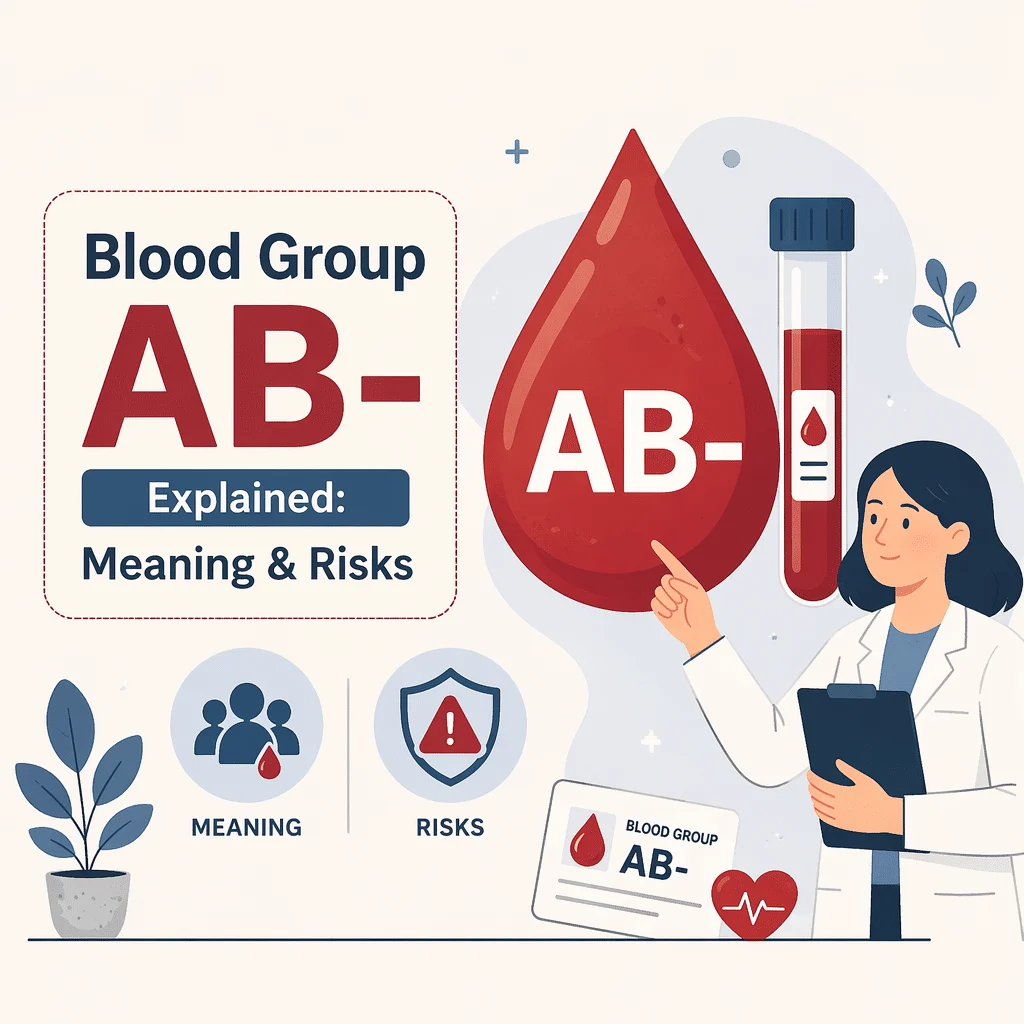
Grupa sanguină AB negativ este una dintre cele mai rare dintre cele opt grupe sanguine comune, întâlnită la mai puțin de un om din o sută în majoritatea populațiilor. Ca orice sânge AB, celulele AB negativ prezintă atât markerii A, cât și B — dar le lipsește proteina Rh D, ceea ce face ca grupa să fie „negativă". Această singură proteină absentă determină de la cine poți primi sânge în siguranță, cum sunt gestionate sarcinile tale și de ce băncile de sânge consideră donatorii AB negativ deosebit de valoroși. Acest ghid se concentrează pe ceea ce este specific grupei AB negativ: raritatea sa, regulile de transfuzie, rolul în sarcină și un plan practic de acțiune. Pentru o imagine de ansamblu despre ce înseamnă grupa AB în general, consultă ghidul nostru complet despre grupa sanguină AB.
Ce face grupa sanguină AB negativ diferită?
Grupa ta sanguină rezultă din interacțiunea a două sisteme. Sistemul ABO stabilește dacă ești A, B, AB sau O, în funcție de markeri numiți antigene de pe globulele roșii. Sistemul Rh adaugă o a doua etichetă — pozitiv sau negativ — în funcție de un marker suplimentar: antigenul Rh D. Poți citi cum aceste Sistemele de grupe sanguine ABO și Rh sisteme funcționează împreună pentru toate cele opt grupe.
În cazul grupei sanguine AB negativ, partea AB înseamnă că globulele tale roșii poartă atât antigenul A, cât și antigenul B. Partea negativ înseamnă că aceste celule nu poartă antigenul Rh D. Astfel, AB negativ se află la intersecția unei grupe ABO mai puțin frecvente cu un statut Rh mai rar.
Majoritatea oamenilor — aproximativ 85 la sută — sunt Rh pozitivi, deci a fi Rh negativ te plasează deja în minoritate. Combină asta cu rara grupă AB și AB negativ devine unul dintre cele mai puțin frecvente tipuri în general. Absența antigenului Rh D nu reprezintă în sine o problemă de sănătate, dar contează enorm în cazul transfuziilor și al sarcinii, după cum Sistemul Rh explică mai detaliat.
AB negativ pe scurt:
- Globulele roșii prezintă atât antigenele A, cât și B, dar nu prezintă antigenul Rh D.
- Una dintre cele mai rare dintre cele opt grupe sanguine comune, de obicei sub un procent.
- Poate primi globule roșii doar de la donatori Rh negativi: A−, B−, AB−, O−.
- Plasma AB poate fi donată oricărui tip ABO (donator universal de plasmă).
- Necesită îngrijire specifică Rh negativ în sarcină, inclusiv injecții cu anti-D.
Cât de rar este grupul sanguin AB negativ?
Grupa sanguină AB negativ este cu adevărat rară. În multe populații, mai puțin de o persoană din o sută o are, ceea ce o face una dintre cele mai rare dintre cele opt combinații standard ABO și Rh. Grupa AB în ansamblu este cea mai puțin frecventă grupă ABO, iar statusul Rh negativ reprezintă minoritatea, astfel că cele două rarități se cumulează.
Frecvențele variază în funcție de origine etnică și geografie. Statusul Rh negativ este mai frecvent la persoanele de origine europeană și mai rar în multe populații din Asia de Est, Asia de Sud și Africa, astfel că ponderea exactă a grupei AB negativ diferă de la o regiune la alta. Serviciile naționale de transfuzie urmăresc îndeaproape aceste tipare locale.
În viața de zi cu zi, a fi AB negativ nu schimbă de obicei nimic. Raritatea contează în momente specifice: când ai nevoie de o transfuzie și unitățile compatibile sunt limitate, când ești însărcinată sau când donezi, deoarece donațiile AB negativ ajută la completarea unui stoc redus. Băncile de sânge etichetează adesea AB negativ ca tip deficitar și pot păstra rezerve mai mici din acesta.
Cum se moștenește grupa sanguină AB negativ?
Moștenești grupa sanguină AB negativ prin două seturi separate de gene — unul pentru ABO și unul pentru Rh. Pentru partea ABO, primești câte o alelă de la fiecare părinte. Alelele A și B sunt codominante, adică ambele se exprimă când sunt prezente, astfel că moștenind A de la un părinte și B de la celălalt rezultă grupa AB.
Partea negativă provine din gena RHD, care conține instrucțiunile pentru antigenul Rh D. Statusul Rh negativ este recesiv: apare doar când un copil moștenește o copie nefuncțională a genei RHD de la ambii părinți. Prin urmare, pentru a fi AB negativ, ai nevoie în general de părinți care împreună furnizează o alelă A și una B și care transmit amândoi trăsătura Rh negativ.
De aceea, grupa AB negativ poate apărea în familii în care părinții nu sunt ei înșiși AB, și de aceea doi părinți Rh pozitiv care poartă fiecare în mod silențios gena Rh negativ pot avea un copil Rh negativ. Istoricul familial oferă indicii, dar numai un test de laborator confirmă grupa ABO și Rh reală a unei persoane. Poți compara comportamentul grupelor parentale în ghidurile noastre despre grupa sanguină A și grupa sanguină B.
AB negativ și transfuziile de sânge: de la cine poți primi?
Siguranța transfuziei depinde de compatibilitatea atât a grupei ABO, cât și a factorului Rh, pentru ca sistemul tău imunitar să nu atace celulele donate. În cazul grupei sanguine AB negativ, compatibilitatea ABO este flexibilă, dar cea Rh este strictă.
Din punct de vedere ABO, celulele AB poartă deja atât antigenul A, cât și antigenul B, astfel că un primitor AB nu reacționează împotriva celulelor donatorilor A sau B. Din punct de vedere Rh, însă, o persoană Rh negativ ar trebui să primească, ori de câte ori este posibil, globule roșii Rh negativ. Administrarea de celule Rh pozitiv unui pacient Rh negativ poate determina sistemul imunitar să producă anticorpi anti-D, ceea ce complică tratamentele ulterioare.
Combinând aceste reguli: o persoană cu grupa sanguină AB negativ poate primi globule roșii de la donatori A negativ, B negativ, AB negativ și O negativ. Într-o urgență care pune viața în pericol, când nu există timp pentru determinarea completă a grupei sanguine, spitalele apelează la O negativ — cea mai sigură soluție de urgență pentru orice pacient Rh negativ — în timp ce tipizarea și testul de compatibilitate încrucișată (crossmatch) se finalizează cât mai repede posibil. Crossmatch-ul este un test direct care amestecă o probă de sânge de la donator și de la primitor pentru a confirma compatibilitatea.
| Componentă sanguină | AB negativ (AB−) poate primi de la | AB negativ (AB−) poate dona la |
|---|---|---|
| Globule roșii | A−, B−, AB−, O− | AB− și AB+ |
| Plasmă | Plasmă AB | Orice tip ABO (AB este donatorul universal de plasmă) |
Există un avantaj al grupei AB în ceea ce privește plasma. Deoarece plasma AB nu conține anticorpi anti-A și anti-B, ea poate fi administrată primitorilor din orice grupă ABO — de aceea donatorii AB sunt apreciați ca donatori universali de plasmă. Printre donatorii de globule roșii compatibili pentru primitorii AB negativ, O negativ este cea mai disponibilă opțiune Rh negativ.
Găsirea unităților compatibile și screeningul de anticorpi
Deoarece AB negativ este rar, spitalele au uneori nevoie de timp suplimentar pentru a găsi globule roșii compatibile, mai ales pentru intervenții chirurgicale planificate sau transfuzii repetate. Serviciile de transfuzie păstrează screeninguri de anticorpi în evidențe și pot apela la registre de donatori rari sau pot organiza donații direcționate când stocurile scad. Persoanele care anticipează transfuzii repetate au de câștigat dacă își înregistrează tipul sanguin din timp la serviciul de transfuzie. Dacă transfuzii anterioare sau sarcini te-au determinat să formezi anticorpi suplimentari față de globulele roșii, găsirea unei unități pe deplin compatibile poate dura mai mult — un motiv în plus să îți păstrezi istoricul transfuzional corect și ușor de transmis.
A fi AB negativ și însărcinată
Sarcina este situația în care grupa sanguină AB negativ necesită cea mai mare atenție, iar motivul este statusul Rh negativ, nu componenta AB. Dacă ești Rh negativ și bebelușul tău este Rh pozitiv (moștenit de la un tată Rh pozitiv), un mic amestec de sânge, de obicei în jurul nașterii, poate determina sistemul tău imunitar să producă anticorpi anti-D. Acest fenomen se numește sensibilizare Rh sau aloimunizare.
Acești anticorpi afectează rareori prima sarcină. Îngrijorarea apare în cazul unei sarcini ulterioare cu un alt bebeluș Rh pozitiv, când anticorpii anti-D pot traversa placenta și pot ataca globulele roșii ale bebelușului. Aceasta poate duce la boala hemolitică a nou-născutului — o afecțiune în care globulele roșii ale bebelușului sunt distruse mai repede decât le poate înlocui organismul.
Partea reconfortantă este că acest lucru poate fi prevenit în mare măsură. Îngrijirea prenatală timpurie include determinarea grupei sanguine și un test de screening pentru anticorpi. Dacă ești Rh negativ(ă), medicii îți pot oferi imunoglobulină anti-D (numită adesea imunoglobulină Rh sau RhIg) — o injecție preventivă administrată la momente stabilite, de obicei în jurul săptămânii 28, după naștere dacă bebelușul este Rh pozitiv, și după orice eveniment care ar putea duce la amestecul sângelui, cum ar fi sângerarea sau traumatismul abdominal. În ceea ce privește sistemul ABO, mamele cu grupa AB nu au în mod natural anticorpi anti-A și anti-B, astfel că problemele neonatale legate de ABO apar rareori la o mamă cu grupa AB.
Vezi cum se încadrează determinarea grupei sanguine și screeningul pentru anticorpi în calendarul mai larg al analize de sânge din timpul sarcinii, și informează fiecare specialist prenatal că ești AB negativ, astfel încât anti-D să fie administrat la momentul potrivit.
Donarea de sânge când ești AB negativ
Dacă ai grupa sanguină AB negativ, donațiile tale sunt deosebit de valoroase. Două lucruri fac donatorii AB negativ atât de importanți. În primul rând, plasma AB poate fi administrată pacienților cu orice grupă ABO, astfel că donațiile de plasmă AB sunt mereu solicitate. În al doilea rând, globulele roșii AB negativ sunt rare, iar pacienții care au nevoie de ele — alți primitori AB negativ sau AB pozitiv — depind de un număr mic de donatori.
Deoarece această grupă este rară, serviciile de transfuzie mențin uneori registre de donatori rari și organizează donații direcționate atunci când unitățile AB negativ sunt insuficiente. Dacă ești eligibil și poți dona, înregistrarea ca donator și donarea regulată ajută la menținerea acestui stoc limitat. Donarea de plasmă, în special, permite ca plasma ta AB să ajungă la cel mai mare număr de pacienți, iar unele centre îi îndrumă pe donatorii AB tocmai spre plasmă din acest motiv.
Un pas simplu te face mai ușor de contactat: asigură-te că grupa ta sanguină este înregistrată la serviciul local de transfuzie și întreabă care componentă — plasmă sau globule roșii — este cel mai mult necesară în zona ta. Nivelul tău de hemoleucogramă completă și hemoglobina sunt verificate înainte de donare pentru a confirma că ești apt să donezi.
Grupa sanguină AB negativ și sănătatea ta
În sine, grupa sanguină AB negativ nu provoacă boli. Ca și alte grupe sanguine, a fost studiată pentru posibile legături subtile cu riscul de anumite afecțiuni: unele cercetări sugerează că grupele non-O, care includ AB, sunt asociate cu o tendință ușor mai mare spre cheaguri de sânge și probleme cardiovasculare, în timp ce rezultatele privind riscul de infecții și cancer sunt mixte și modeste.
Interpretează acestea ca medii la nivel de populație, nu ca predicții personale. Grupa sanguină este un factor mic printre mulți alții, iar obiceiurile pe care le poți controla contează mult mai mult. Să fii activ(ă), să nu fumezi, să îți menții tensiunea arterială sub control și să urmărești colesterol ridicat îți influențează riscul pe termen lung mult mai mult decât grupa ta ABO sau Rh. Dacă medicul tău evaluează sănătatea inimii, un panel de markeri cardiaci oferă informații mult mai utile decât grupa sanguină singură.
Planul tău de acțiune pentru grupa AB negativ
Știind că ai grupa sanguină AB negativ, poți planifica din timp câteva obiceiuri simple.
- Notează-ți grupa sanguină. Păstrează rezultatul ABO și Rh într-un document medical, pe un card de donator sau în ID-ul medical de pe telefon, astfel încât să fie disponibil în caz de urgență.
- Anunță înainte de proceduri. Înainte de orice intervenție chirurgicală planificată sau transfuzie, reamintește echipei medicale că ești AB negativ(ă), astfel încât să poată asigura unități compatibile, Rh negative, și să efectueze o probă de compatibilitate.
- Planifică sarcina. Dacă ești însărcinată sau plănuiești să fii, asigură-te că medicul tău știe că ești Rh negativ(ă), astfel încât imunoglobulina anti-D să poată fi programată la momentele potrivite.
- Ia în considerare donarea. Dacă ești eligibil, înregistrează-te la un serviciu de transfuzie, deoarece atât plasma AB, cât și globulele roșii rare AB negativ sunt valoroase.
- Notează-ți istoricul. Informează echipa medicală despre orice transfuzii anterioare, sarcini sau anticorpi cunoscuți, deoarece acestea pot influența modul în care sângele tău este compatibilizat.
Dacă ai un buletin de analize recent și vrei să înțelegi grupa ta sanguină alături de restul rezultatelor, ghidul nostru despre cum să citești rezultatele analizelor de sânge parcurge pas cu pas structura analizei. Și dacă ți se spune vreodată că screeningul pentru anticorpi a ieșit pozitiv, contactează medicul tău prompt, astfel încât îngrijirea în caz de transfuzie sau sarcină să poată fi ajustată.
Glosar
| Termen | Definiție |
|---|---|
| Sistemul de grupe sanguine ABO | Principalul sistem care clasifică sângele în grupele A, B, AB și O pe baza antigenelor A și B. |
| Aloimunizare | Răspunsul imun prin care organismul formează anticorpi împotriva antigenelor străine de pe globulele roșii, cum ar fi antigenul Rh D; numit și sensibilizare. |
| Imunoglobulina anti-D (RhIg) | O injecție preventivă administrată persoanelor Rh negativ, în principal în sarcină, pentru a preveni formarea de anticorpi anti-D. |
| Testul de screening al anticorpilor | Un test de laborator care verifică plasma pentru anticorpi neașteptați ce ar putea reacționa împotriva globulelor roșii ale donatorului sau ale fătului. |
| Antigen | Un marker de pe suprafața globulelor roșii pe care sistemul imunitar îl folosește pentru a distinge celulele proprii de cele străine. |
| Testul de compatibilitate (crossmatch) | Un test de laborator direct care amestecă sângele donatorului cu cel al primitorului pentru a confirma compatibilitatea înainte de transfuzie. |
| Boala hemolitică a nou-născutului (HDN) | O afecțiune în care anticorpii mamei traversează placenta și distrug globulele roșii ale bebelușului. |
| Gena RHD | Gena care conține instrucțiunile pentru antigenul Rh D; o copie nefuncțională moștenită de la ambii părinți duce la sânge Rh negativ. |
| Antigenul Rh D | O proteină de pe globulele roșii care face sângele Rh pozitiv când este prezentă și Rh negativ când este absentă. |
| Donator universal de plasmă | O persoană al cărei plasmă nu conține anticorpi anti-A și anti-B, astfel că poate fi donată oricărui grup ABO; persoanele cu sânge de tip AB. |
Întrebări frecvente
Este grupa AB negativ mai rară decât O negativ?
Da, în majoritatea populațiilor. O negativ este rar, dar AB negativ este și mai rar, deoarece AB este cel mai puțin frecvent grup ABO, iar Rh negativ reprezintă o minoritate, astfel că cele două rarități se combină. AB negativ se întâlnește de obicei la sub un procent din populație, în timp ce O negativ apare la câteva procente. Cifrele exacte variază în funcție de origine și regiune. Cele mai rare grupe de sânge se află în afara sistemelor ABO și Rh și sunt definite de tipare antigenice neobișnuite, dar acestea sunt excepționale. Pentru îngrijirea de zi cu zi, ceea ce contează este pur și simplu să știi că ești AB negativ.
Poate o persoană cu grupa AB negativ să primească sânge O pozitiv?
Pentru transfuzii de rutină, nu. Dacă ești Rh negativ, ar trebui să primești globule roșii Rh negative, deci O negativ — nu O pozitiv — este opțiunea sigură pentru tine. Administrarea de sânge Rh pozitiv unui pacient Rh negativ poate declanșa formarea de anticorpi anti-D, care pot complica transfuziile și sarcinile ulterioare. Într-o urgență rară, cu risc vital, când nu există unități Rh negative disponibile, medicul ar putea lua în calcul sângele Rh pozitiv ca ultimă soluție, însă varianta standard de rezervă pentru orice pacient Rh negativ rămâne O negativ. Echipa medicală confirmă compatibilitatea printr-un test de compatibilitate încrucișată ori de câte ori timpul o permite.
Ce se întâmplă dacă o persoană AB negativ primește sânge Rh pozitiv?
Transfuzia imediată poate trece fără probleme evidente, dar problema mai importantă este sensibilizarea. Expunerea la antigenul Rh D poate determina o persoană Rh negativ să producă anticorpi anti-D. Acești anticorpi nu provoacă de obicei simptome prin ei înșiși, dar pot reacționa împotriva celulelor Rh pozitiv într-o transfuzie viitoare și, în timpul sarcinii, împotriva unui bebeluș Rh pozitiv. De aceea, serviciile de transfuzie depun eforturi mari pentru a oferi pacienților Rh negativ sânge Rh negativ, și de aceea grupa ta documentată și istoricul anticorpilor contează atât de mult.
Am nevoie de injecții cu anti-D dacă sunt AB negativ și însărcinată?
Cel mai probabil, da, dacă bebelușul tău ar putea fi Rh pozitiv. Deoarece ești Rh negativ, medicii îți vor oferi imunoglobulină anti-D (RhIg) pentru a preveni formarea de anticorpi anti-D. De obicei, aceasta se administrează în jurul săptămânii 28 de sarcină, din nou imediat după naștere dacă bebelușul este Rh pozitiv, și după orice eveniment care ar putea amesteca sângele tău cu cel al bebelușului, cum ar fi sângerarea sau un traumatism abdominal. Componenta AB a grupei tale nu este problema în acest caz; contează statutul Rh negativ. Medicul tău va adapta momentul administrării în funcție de evoluția sarcinii.
Este sângele AB negativ un “donator universal”?
Nu pentru globule roșii. Donatorul universal de globule roșii este O negativ, ale cărui celule nu au antigenele A, B și Rh D și pot fi administrate aproape oricui în situații de urgență. Sângele AB este donatorul universal de plasmă, deoarece plasma AB nu conține anticorpi anti-A și anti-B și poate fi dată oricărui grup ABO. Prin urmare, globulele roșii AB negativ sunt destul de restrictive — se potrivesc doar cu primitorii AB negativ și AB pozitiv — în timp ce plasma AB este utilă pe scară largă. Este o confuzie frecventă care merită clarificată.
Poate grupa mea sanguină AB negativ să se schimbe de-a lungul vieții?
În aproape toate cazurile, nu. Grupa ta ABO și Rh este determinată de genele moștenite și rămâne aceeași pe tot parcursul vieții. Excepția rară este o procedură majoră care înlocuiește celulele formatoare de sânge, cum ar fi un transplant de măduvă osoasă sau de celule stem de la un donator cu o grupă diferită, care poate modifica tipizarea în timp. Evenimentele obișnuite — boală, medicamente, dietă sau îmbătrânire — nu îți schimbă grupa sanguină. Dacă vreodată un rezultat nou pare diferit, cere o confirmare, deoarece erorile de laborator sunt mai probabile decât o schimbare reală.
Surse
- Cleveland Clinic — Factorul Rhesus (Rh)
- Mayo Clinic — Testul de sânge pentru factorul Rh
- MedlinePlus (NIH) — Incompatibilitatea Rh
Lectură suplimentară
- Grupa sanguină AB: semnificație, caracteristici și riscuri pentru sănătate
- Înțelegerea sistemului Rh
- Grupa sanguină O: semnificație, riscuri și beneficii
- Grupa sanguină A: trăsături și ghid de sănătate
- Cele patru grupe sanguine ABO explicate
Înțelege-ți rezultatele analizelor cu AI DiagMe
Rezultatul tău AB negativ este o singură linie dintr-un buletin de analize care conține adesea mult mai multe informații. AI DiagMe poate citi restul rezultatelor tale și le poate explica pe înțelesul tău — de la grupa sanguină și statusul Rh până la screeningul de anticorpi, hemoleucograma completă sau profilul lipidic pentru riscul cardiovascular. Transformă abrevierile și cifrele dense în informații clare și utile și îți sugerează întrebări pe care să le adresezi medicului tău. AI DiagMe te ajută să îți înțelegi rezultatele; nu pune diagnostice și nu înlocuiește medicul. Încarcă buletinul tău de analize pentru a vedea ce înseamnă rezultatele tale.
➡️ Obține interpretarea rezultatelor în câteva minute