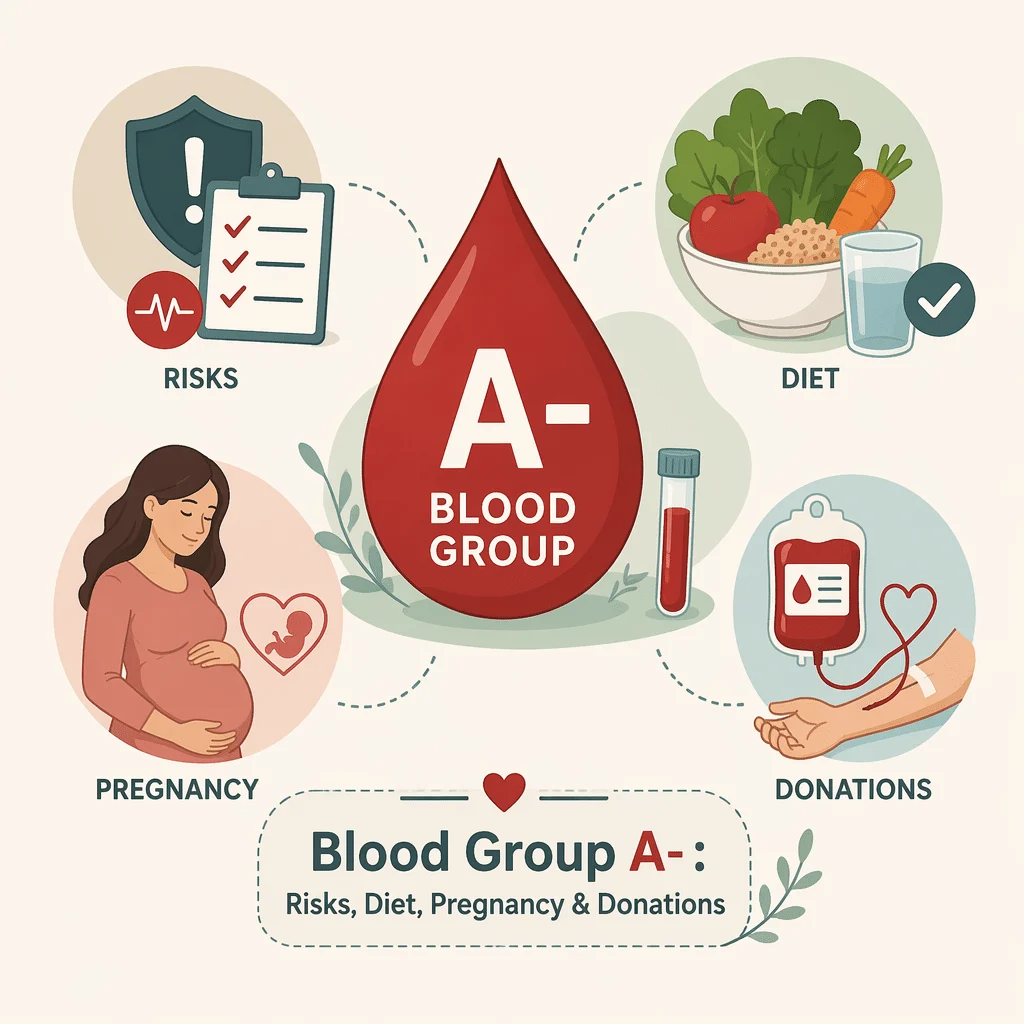
Grupa sanguină A negativ, scrisă adesea A−, înseamnă că globulele tale roșii poartă antigenul A, dar nu au proteina Rh D. Este același tip ABO ca A pozitiv, cu o singură diferență esențială: statutul Rh negativ. Acest detaliu rareori îți afectează viața de zi cu zi, însă devine foarte important în timpul sarcinii și înainte de orice transfuzie. Acest ghid se concentrează pe ce adaugă în plus statutul negativ, explicat pe înțelesul tuturor: cum se moștenește A negativ, cât de rar este, de ce contează atât de mult în sarcină, cui poți dona sânge și de la cine poți primi, și când trebuie să îți informezi echipa medicală despre grupa ta. Pentru noțiunile de bază ABO pe care A negativ le împarte cu A pozitiv — cum se formează antigenul A și legăturile sale cu coagularea sau cancerul — consultă ghidul nostru complementar despre grupa sanguină A.
Ce înseamnă grupa sanguină A negativ (A−)
Grupa sanguină A negativ combină două sisteme sanguine separate. Din sistemul ABO, globulele tale roșii poartă antigenul A, un marker de suprafață, iar plasma ta conține anticorpi anti-B. Din sistemul Sistemul Rh, îți lipsește proteina Rh D, ceea ce înregistrează semnul minus.
Un aspect diferențiază sistemul Rh de ABO. Te naști cu anticorpi anti-B, dar nu te naști cu anticorpi anti-Rh (anti-D). O persoană Rh negativ produce anticorpi anti-D doar după ce a fost expusă la globule roșii Rh pozitiv, de obicei printr-o transfuzie sau o sarcină. Tocmai de aceea A negativ necesită o atenție specială în aceste două situații și aproape în nicio altă împrejurare.
Pe scurt, A negativ este un tip ABO frecvent (A) asociat cu un statut Rh mai rar (negativ). Componenta A determină comportamentul chimic al grupei, în timp ce componenta negativ stă la baza regulilor practice prezentate mai jos.
Cât de rar este sângele A negativ?
A negativ este o grupă sanguină minoritară. Potrivit Crucii Roșii Americane, reprezintă aproximativ 6% din populația Statelor Unite. Este mai frecventă în rândul persoanelor de origine europeană și mult mai rară în multe populații asiatice și africane, unde sângele Rh negativ este în general neobișnuit.
Deoarece unitățile Rh negativ sunt mai greu de găsit decât tipurile comune, cum ar fi O pozitiv sau A pozitiv, centrele de transfuzie le gestionează cu grijă. Față de alte grupe ABO, cum ar fi tipul B, raritatea sângelui Rh-negativ este cea care face din grupa A negativ una valoroasă pentru donare și importantă de cunoscut pentru propria îngrijire. Serviciile de transfuzie monitorizează stocurile locale pentru a putea acoperi nevoile pacienților Rh-negativ și ale situațiilor de urgență. Dintre cele opt grupe principale de sânge, A negativ se află în jumătatea mai puțin frecventă — un context util atunci când auzi că spitalele fac apel la donatorii Rh-negativ.
Cum moștenești grupa A negativ
Rezultatul tău de grupă A negativ provine din două gene independente pe care le moștenești de la părinții tăi. Componenta ABO este controlată de o genă de pe cromozomul 9, iar cum se transmite grupa A poți citi în ghidul nostru dedicat grupa sanguină A. Componenta Rh este controlată de o altă genă (RHD), situată pe cromozomul 1.
Partea Rh urmează un tipar clar. A fi Rh-pozitiv este dominant, iar a fi Rh-negativ este recesiv. Asta înseamnă că ești Rh-negativ doar atunci când moștenești o copie Rh nefuncțională de la ambii părinți.
Aceasta explică o surpriză frecventă. Doi părinți Rh-pozitivi pot avea un copil Rh-negativ dacă fiecare dintre ei poartă în secret câte o copie negativă. Astfel, un bebeluș A negativ poate fi născut de părinți cu grupa A pozitiv, O pozitiv sau alte combinații Rh-pozitive, atâta timp cât copiile potrivite de ABO și Rh se aliniază. Grupa de sânge vizibilă nu spune întreaga poveste genetică.
Sarcina și grupa A negativ: factorul Rh care contează cel mai mult
Pentru majoritatea persoanelor cu grupa A negativ, sarcina este momentul în care grupa contează cel mai mult. Problema nu este antigenul A, ci statusul Rh-negativ — un aspect bine înțeles și perfect gestionabil prin îngrijire prenatală de rutină.
O potențială problemă apare doar într-o situație specifică: atunci când o persoană Rh-negativă este însărcinată cu un bebeluș Rh-pozitiv. Bebelușul poate moșteni sânge Rh-pozitiv de la un tată Rh-pozitiv. Deoarece panoul tău prenatal îți înregistrează grupa ABO și statusul Rh de la început, echipa medicală planifică din timp pentru această situație. Prezentarea noastră despre analize de sânge din timpul sarcinii arată unde se încadrează determinarea grupei sanguine printre celelalte analize.
Dacă bebelușul este Rh-pozitiv depinde de celălalt părinte. Dacă tatăl este Rh-negativ, bebelușul va fi și el Rh-negativ, iar incompatibilitatea Rh nu poate apărea. Dacă tatăl este Rh-pozitiv, bebelușul poate fi fie Rh-pozitiv, fie Rh-negativ, în funcție de copiile genice pe care le poartă tatăl. Deoarece acest lucru este greu de prezis din exterior, îngrijirea prenatală tratează orice sarcină Rh-negativă ca și cum bebelușul ar putea fi Rh-pozitiv, până când testele arată altceva.
Sensibilizarea și boala hemolitică
În timpul sarcinii, în mod normal nu împarți sânge cu bebelușul tău, dar o mică cantitate de sânge fetal poate trece în circulația ta, mai ales la naștere. Dacă acele celule sunt Rh-pozitive, sistemul tău imunitar poate începe să producă anticorpi anti-D, un proces numit sensibilizare Rh.
O primă sarcină cu Rh-pozitiv este de obicei neafectată, deoarece anticorpii au nevoie de timp pentru a se forma. Îngrijorarea apare la o sarcină ulterioară cu Rh-pozitiv, când anticorpii anti-D existenți pot traversa placenta și pot ataca globulele roșii ale bebelușului. Aceasta este boala hemolitică a fătului și a nou-născutului, care poate provoca anemie și icter și, în cazuri grave, complicații mai serioase. Scopul principal al îngrijirii Rh moderne este de a preveni sensibilizarea înainte ca aceasta să se producă.
Imunoglobulina Rh: prevenție care funcționează
Tratamentul preventiv constă într-o injecție cu imunoglobulină Rh (cunoscută și ca anti-D sau sub denumirea comercială RhoGAM). Aceasta împiedică organismul tău să formeze anticorpi anti-D și funcționează doar dacă nu ai fost deja sensibilizată. Medicul tău verifică acest lucru printr-un test de screening al anticorpilor.
| Când se administrează de obicei imunoglobulina Rh | De ce |
|---|---|
| În jurul săptămânii 28 de sarcină | O doză de rutină pentru a preveni sensibilizarea în cursul sarcinii |
| În primele 72 de ore după nașterea unui bebeluș Rh-pozitiv | Previne formarea anticorpilor după naștere |
| După sângerare, traumatism abdominal, avort spontan sau proceduri precum amniocenteza | Sângele se poate amesteca în timpul acestor evenimente și poate declanșa sensibilizarea |
Dacă bebelușul tău se naște Rh-negativ, doza de după naștere nu este necesară. Tot mai mulți medici pot verifica statusul Rh al tatălui sau pot testa Rh-ul fetal dintr-o probă de sânge a mamei, ceea ce ajută la orientarea tratamentului. Concluzia este reconfortantă: cu îngrijire la timp, marea majoritate a sarcinilor cu grupa A negativ sunt complet sănătoase.
Dacă anticorpii s-au format deja
Dacă o sarcină anterioară sau o transfuzie te-a sensibilizat deja, o injecție cu imunoglobulină Rh nu mai poate remedia situația, astfel că îngrijirea se concentrează pe monitorizare atentă. Specialiștii urmăresc nivelul anticorpilor anti-D din sângele tău și pot folosi o ecografie nedureroasă a fluxului sanguin al bebelușului, numită Doppler pe artera cerebrală medie, pentru a detecta semne timpurii de anemie. Majoritatea sarcinilor afectate sunt gestionate cu succes prin această abordare de supraveghere atentă. În numărul mic de cazuri grave, tratamente precum transfuzia de sânge efectuată bebelușului înainte de naștere sunt disponibile în centre specializate. Acesta este încă un motiv pentru care testele prenatale timpurii contează atât de mult pentru oricine are grupa A negativ.
Transfuzie și donare pentru grupa sanguină A negativ
Determinarea grupei sanguine stă la baza transfuziilor sigure, iar faptul că ești Rh-negativ înăsprește regulile în două direcții. Deoarece îți lipsește proteina Rh D, ar trebui să primești doar globule roșii Rh-negative, astfel că opțiunile tale ca primitor sunt mai limitate decât în cazul unei persoane Rh-pozitive.
| Direcția globulelor roșii | Grupa sanguină A negativ (A−) |
|---|---|
| Poate primi globule roșii de la | Doar A−, O− |
| Poate dona globule roșii la | A+, A−, AB+, AB− |
Câteva precizări fac aceste reguli mai clare. Ca primitor, sursele sigure de globule roșii pentru tine sunt doar A negativ și O negativ, deoarece adăugarea antigenului A sau B, sau a oricăror celule Rh-pozitive, ar putea declanșa o reacție. Ca donator, globulele tale roșii pot ajuta o gamă largă de primitori, inclusiv A pozitiv și AB pacienți, ceea ce explică în parte de ce donările de sânge A negativ sunt atât de căutate.
Mai sunt două lucruri utile de știut. Într-o urgență reală, când nu există timp pentru confirmarea grupei, O negativ globulele roșii sunt folosite deoarece reprezintă donatorul universal de globule roșii. Iar înainte de orice transfuzie, laboratorul efectuează o probă de compatibilitate și un screening de anticorpi pentru a confirma compatibilitatea — același pas de tipizare și screening inclus în mod obișnuit în analize de sânge înainte de operație. Regulile pentru plasmă și trombocite diferă de cele pentru globulele roșii, astfel că fiecare component este verificat separat.
Există și un motiv legat de disponibilitate în spatele acestor reguli. Deoarece sângele Rh-negativ este rar, spitalele încearcă să îl rezerve pentru pacienții Rh-negativi și sunt deosebit de atente cu fetele și femeile Rh-negative care ar putea rămâne însărcinate. Primirea de sânge Rh-pozitiv le-ar putea sensibiliza și ar putea complica o sarcină viitoare. Această gestionare atentă explică în parte de ce donarea de sânge A negativ are un impact atât de mare — fiecare unitate poate fi greu de înlocuit.
Grupa A negativ îți schimbă riscurile de sănătate?
Aici este util să separi cele două componente ale grupei tale. Asocierile cu anumite boli despre care se citește în legătură cu grupa sanguină A — cum ar fi o ușoară diferență în tendința de coagulare sau în riscul de cancer gastric și pancreatic — provin din antigenul A al sistemului ABO, nu din semnul Rh. Prin urmare, A negativ și A pozitiv împărtășesc aceleași tendințe legate de ABO, iar detalii echilibrate despre acest subiect găsești în ghidul nostru despre grupa sanguină A.
Faptul că ești Rh-negativ în sine nu este asociat cu nicio boală. Importanța sa ține de siguranța transfuziilor și de sarcină, nu de sănătatea ta de zi cu zi. Ideea populară că ar trebui să urmezi o dietă specială în funcție de grupa sanguină nu este susținută de dovezi, și asta se aplică la A negativ la fel ca la orice altă grupă.
În practică, sănătatea ta este influențată mult mai mult de vârstă, istoricul familial, tensiunea arterială, alimentație, activitate fizică și alți markeri de laborator decât de grupa ta de sânge. A negativ nu este un diagnostic și nu este un motiv de îngrijorare.
Viața cu grupa de sânge A negativ
Să știi că ești A negativ este cu adevărat util, mai ales în situații de urgență și în sarcină. Câteva obiceiuri simple te ajută să profiți la maximum de această informație.
Păstrează o evidență a grupei tale. Poartă un card cu grupa de sânge sau adaugă A negativ la fișa medicală de pe telefon — acest lucru poate accelera deciziile dacă ai vreodată nevoie de îngrijiri urgente. Reține că o analiză de rutină hemoleucogramă completă nu îți arată grupa ABO și Rh, deoarece numără celulele în loc să identifice antigenele, astfel că grupa ta trebuie confirmată printr-un test dedicat de determinare a grupei sanguine. Poți vedea ce presupune acesta în prezentarea noastră despre procesul analizei de sânge.
Gândește-te să donezi sânge. Donatorii Rh negativ sunt mereu necesari, iar hematiile A negativ ajută mulți primitori. Dacă ești însărcinată sau plănuiești o sarcină, asigură-te că echipa de îngrijire prenatală știe că ești Rh negativ, pentru a putea programa testarea anticorpilor și administrarea imunoglobulinei anti-D, dacă este cazul. Când călătorești, poate fi util să știi că unitățile Rh negativ pot fi mai puțin disponibile în unele regiuni.
Când contează grupa A negativ pentru îngrijirea ta
În viața de zi cu zi, grupa A negativ nu necesită niciun tratament special și nicio schimbare a stilului de viață. Grupa ta devine importantă într-un număr limitat de situații clare, iar cunoașterea lor te ajută să acționezi la momentul potrivit.
Spune-i echipei medicale că ești A negativ, sau Rh negativ, înainte de orice intervenție chirurgicală planificată sau transfuzie și la prima consultație prenatală. În timpul sarcinii, contactează medicul prompt după orice sângerare vaginală, traumatism abdominal sau pierdere de sarcină, deoarece o doză de imunoglobulină anti-D poate fi necesară în aproximativ 72 de ore pentru a preveni sensibilizarea. Anumite simptome necesită întotdeauna atenție urgentă, indiferent de grupa de sânge, cum ar fi sângerarea abundentă în sarcină sau mișcările fetale reduse. În afara acestor momente, cel mai bun pas este același pentru toată lumea: concentrează-te pe factorii dovedit că îți protejează sănătatea și lasă echipa medicală să combine grupa ta de sânge cu tabloul tău medical complet.
Glosar
| Termen | Definiție |
|---|---|
| Anti-D (imunoglobulina anti-Rh) | O injecție care previne formarea de anticorpi împotriva sângelui Rh pozitiv la o persoană Rh negativ. |
| Testul de screening al anticorpilor | Un test de sânge care verifică dacă ai format deja anticorpi, inclusiv anti-D. |
| Testul de compatibilitate (crossmatch) | Un test de laborator care amestecă sângele donatorului cu cel al primitorului pentru a confirma compatibilitatea. |
| Boala hemolitică a fătului și a nou-născutului | O afecțiune în care anticorpii materni atacă globulele roșii ale bebelușului, provocând anemie sau icter. |
| Antigenul Rh D | Proteina de pe globulele roșii a cărei absență face ca sângele să fie Rh-negativ, cum este cazul grupei A negativ. |
| Sensibilizarea Rh | Procesul prin care o persoană Rh-negativă formează anticorpi anti-D după expunerea la sânge Rh-pozitiv. |
| Gena RHD | Gena de pe cromozomul 1 care controlează dacă produci sau nu proteina Rh D. |
| Determinare de grup și screening de anticorpi | Testare de rutină pre-transfuzională care confirmă grupa ta ABO și Rh și verifică prezența anticorpilor. |
Întrebări frecvente
Este A negativ cea mai rară grupă de sânge?
Nu. Grupa A negativ este neobișnuită, reprezentând aproximativ 6% din populația Statelor Unite, dar este departe de a fi cea mai rară. AB negativ este și mai puțin frecvent, iar grupele cu adevărat rare, cum ar fi Rhnull, apar la doar câțiva oameni din întreaga lume. Ceea ce face A negativ remarcabil nu este raritatea extremă, ci faptul că sângele Rh-negativ în general este mai puțin disponibil decât sângele Rh-pozitiv. Această lipsă explică de ce spitalele gestionează cu atenție unitățile de sânge Rh-negativ și de ce donatorii cu grupa A negativ sunt valoroși, chiar dacă această grupă este relativ răspândită în unele populații.
Pot doi părinți Rh-pozitivi să aibă un copil A negativ?
Da. Statutul Rh-negativ este recesiv, ceea ce înseamnă că un copil este Rh-negativ doar dacă moștenește o copie nefuncțională Rh de la ambii părinți. Doi părinți Rh-pozitivi pot purta fiecare câte o copie negativă ascunsă fără a fi ei înșiși Rh-negativi, și pot transmite ambele copii unui copil. Combinat cu genele ABO potrivite, acel copil poate fi A negativ. Prin urmare, un rezultat A negativ la un bebeluș este perfect normal chiar și atunci când niciunul dintre părinți nu este Rh-negativ, deoarece grupa de sânge vizibilă nu arată copiile pe care un părinte le poartă în mod silențios.
Am nevoie întotdeauna de injecția anti-D dacă sunt A negativ și însărcinată?
Nu întotdeauna, dar de cele mai multe ori da. Imunoglobulina Rh este recomandată atunci când ești Rh-negativă, nu ai format deja anticorpi anti-D și bebelușul tău ar putea fi Rh-pozitiv. De obicei se administrează în jurul săptămânii 28 și din nou în termen de 72 de ore de la naștere dacă bebelușul este Rh-pozitiv, precum și după evenimente precum sângerări sau anumite proceduri medicale. Dacă bebelușul tău este confirmat Rh-negativ, doza de după naștere nu este necesară. Medicul tău folosește un screening de anticorpi și, uneori, testarea Rh fetală pentru a decide ce ai nevoie, astfel că totul este adaptat sarcinii tale.
Poate o persoană cu grupa A negativ să primească sânge A pozitiv?
În îngrijirea de rutină, nu. Deoarece sângele de tip A negativ nu conține proteina Rh D, primirea de globule roșii Rh-pozitive ar putea determina sistemul tău imunitar să formeze anticorpi anti-D, ceea ce contează pentru transfuziile și sarcinile viitoare. Persoanelor cu grupa A negativă li se administrează de obicei globule roșii A negative sau O negative. Într-o urgență rară, cu risc vital, când nu există sânge Rh-negativ disponibil, echipa medicală poate fi nevoită să cântărească alte opțiuni, însă regula standard este să se folosească globule roșii Rh-negative pentru pacienții Rh-negativi ori de câte ori este posibil.
Este grupa A negativă dăunătoare pentru sănătatea mea?
Nu. A fi Rh-negativ nu este o boală și nu îți afectează sănătatea de zi cu zi. Importanța sa se limitează la siguranța transfuziilor și la sarcină. Orice asocieri modeste cu starea de sănătate pe care le-ai putea fi citit despre grupa A țin de componenta ABO a grupei tale, nu de semnul Rh, și se aplică în egală măsură grupei A pozitive. Nu există nimic la grupa A negativă care să necesite tratament și nu este necesară o dietă specială. Cel mai util este să te concentrezi pe factori de sănătate doveziți, cum ar fi activitatea fizică, alimentația și gestionarea oricăror afecțiuni existente.
De ce ar trebui să păstrez o evidență a grupei mele sanguine A negative?
Pentru că poate accelera acordarea unui îngrijiri sigure. Dacă ai vreodată nevoie de o transfuzie urgentă, echipa medicală trebuie să folosească sânge Rh-negativ compatibil, iar cunoașterea grupei tale în avans ajută. Statutul tău de A negativ contează, de asemenea, înainte de operații și pe parcursul sarcinii. Purtarea unui card cu grupa sanguină sau adăugarea acesteia la ID-ul medical de pe telefon face ca informația să fie disponibilă atunci când contează. Chiar și așa, spitalele vor confirma grupa ta dintr-o probă proaspătă înainte de transfuzie, deoarece consecințele unei incompatibilități sunt grave.
Surse
- Crucea Roșie Americană — Grupele sanguine explicate: A, B, AB și O
- Mayo Clinic — Testul de sânge pentru factorul Rh
- Cleveland Clinic — Factorul Rh: Incompatibilitate, complicații și sarcină
Lectură suplimentară
- Grupa sanguină A: Caracteristici, riscuri pentru sănătate și ce înseamnă grupa ta
- Grupe sanguine explicate: tipuri, riscuri și testare
- Înțelegerea sistemului Rh: Cauze și riscuri
- Grupa sanguină O: semnificație, riscuri și beneficii
- Analize de sânge în sarcină: ce se verifică
Înțelege-ți rezultatele analizelor cu AI DiagMe
Grupa ta sanguină este doar o linie dintr-un buletin de analize, iar restul poate părea la fel de greu de înțeles. Dacă rezultatele tale includ lucruri precum grupa ABO și Rh, un test de anticorpi sau o hemogramă completă, AI DiagMe le poate traduce într-un limbaj simplu și în pași clari de urmat. Instrumentul te ajută să înțelegi ce înseamnă valorile tale, astfel încât să poți purta o conversație mai încrezătoare cu medicul tău. Îți sprijină înțelegerea și nu înlocuiește judecata medicului tău și nici nu oferă un diagnostic.
➡️ Obține interpretarea rezultatelor în câteva minute