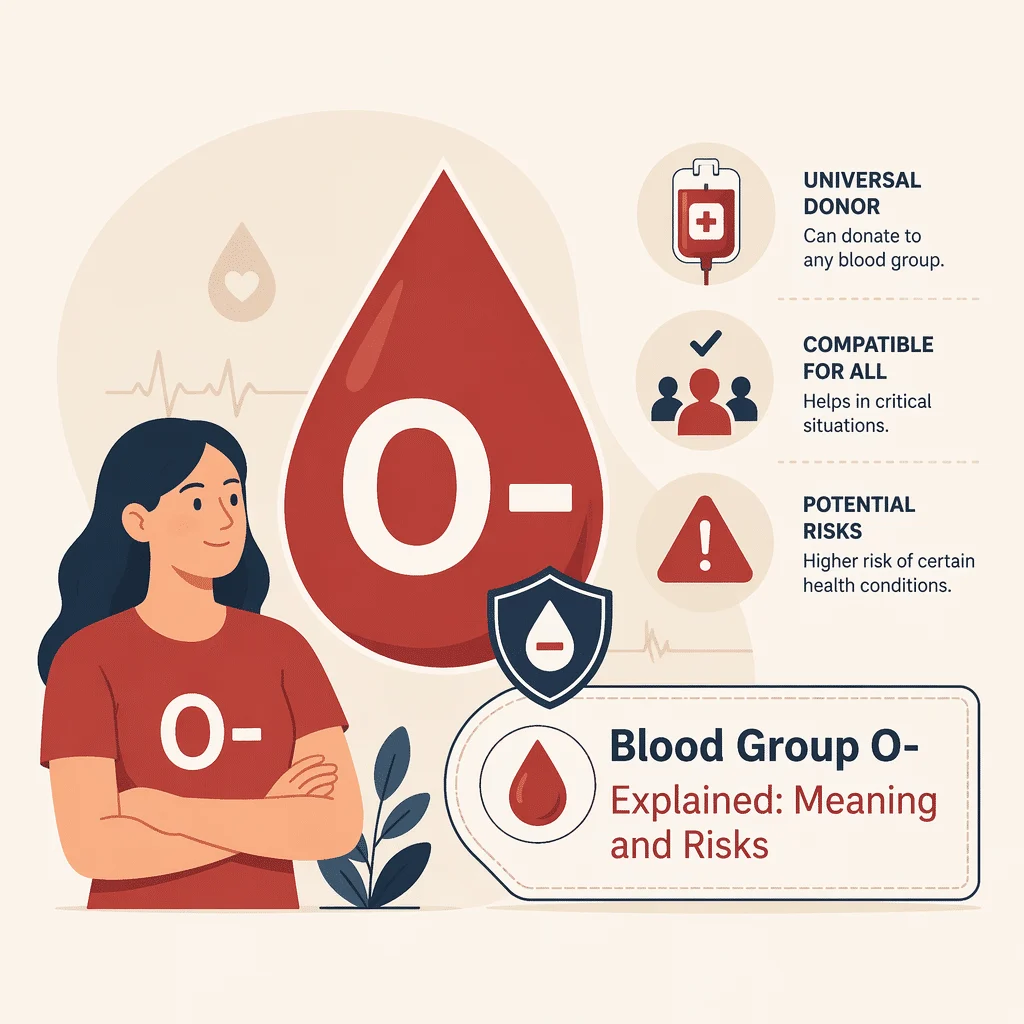
Grupa sanguină 0 negativ este una dintre cele mai discutate grupe de sânge, adesea numită “donatorul universal” și aproape întotdeauna în lipsă. Dacă analizele tale arată 0 Rh negativ, globulele tale roșii nu poartă niciun marker A, B sau Rh(D) — o combinație care face sângele tău deosebit de util pentru alții și, în sarcină, demn de urmărit cu atenție. Acest ghid se concentrează pe ce este specific grupei 0 negativ: de ce este donatorul universal de globule roșii, de ce băncile de sânge se confruntă mereu cu lipsa lui, ce grupe poate primi în siguranță și cum influențează Rh-ul negativ îngrijirea în sarcină. Pentru o imagine de ansamblu despre ce înseamnă grupa O în general, consultă ghidul nostru dedicat grupa sanguină O. Aici, atenția rămâne pe negativ.
Ce face grupa sanguină 0 negativ diferită?
Fiecare grupă sanguină este definită de două sisteme care funcționează împreună: sistemul ABO și factorul Rh. Grupa 0 negativ se află într-un colț specific al acestei hărți. “O” înseamnă că globulele tale roșii nu prezintă nici antigenul A, nici antigenul B, iar “negativ” înseamnă că le lipsește și antigenul Rh(D), cea mai importantă proteină Rh. Cu alte cuvinte, globulele roșii 0 negativ nu poartă niciunul dintre cei trei markeri care stau la baza majorității reacțiilor transfuzionale.
Această suprafață „goală" este sursa a tot ceea ce urmează. Deoarece pe globulele roșii 0 negativ nu există nimic pe care sistemul imunitar al primitorului să îl atace, ele pot fi transfuzate pe scară largă. Însă plasma aceleiași persoane conține în continuare anticorpi anti-A și anti-B, iar sistemul imunitar al unei persoane 0 negativ poate învăța să producă anticorpi anti-D dacă intră vreodată în contact cu celule Rh pozitive — un detaliu extrem de important în sarcină.
Grupa 0 negativ nu este frecventă. Se întâlnește la doar aproximativ 7% dintre persoanele din Statele Unite, iar proporția este mai mică în multe alte populații. Pentru mecanismele complete ale antigenilor, anticorpilor și modul în care grupa O se situează față de A, B și AB, ghidul nostru despre grupa sanguină O acoperă noțiunile de bază; acest articol le presupune cunoscute și analizează ce este specific tipului negativ.
De ce sângele O negativ este donatorul universal
O negativ este numit donatorul universal de globule roșii deoarece globulele sale roșii pot fi transfuzate unui primitor de aproape orice grupă sanguină fără a declanșa o reacție ABO sau Rh(D) imediată. Această proprietate îl face sângele de elecție în momentele în care nu există timp de pierdut. Ideea datează de la începutul secolului al XX-lea, când oamenii de știință au realizat că globulele roșii din grupa O, lipsite de markerii A și B, puteau fi administrate cel mai larg; faptul că este Rh negativ elimină cealaltă sursă majoră de reacție.
Spitalele apelează la O negativ atunci când un pacient sângerează abundent și grupa sa sanguină nu este încă cunoscută — în traumatisme majore, în complicații la naștere sau la urgențe înainte ca rezultatele de laborator să fie disponibile. Este, de asemenea, cea mai sigură opțiune implicită pentru nou-născuții care au nevoie de transfuzie, deoarece sistemul lor imunitar este încă în dezvoltare. Când fiecare minut contează, transfuzarea O negativ mai întâi și confirmarea grupei proprii a pacientului ulterior poate salva vieți.
Există limite importante ale etichetei de „universal". Aceasta se aplică globulelor roșii, nu sângelui integral sau plasmei, iar chiar și O negativ este potrivit mai precis ori de câte ori timpul permite: o probă de compatibilitate și un screening de anticorpi verifică în continuare compatibilitatea cu zecile de sisteme de grupe sanguine dincolo de ABO și Rh. Prin urmare, O negativ este donatorul universal pentru urgențe, nu o garanție absolută că oricare două persoane sunt compatibile.
Rezerva de sânge O negativ: de ce este mereu necesară
Poate ai observat că campaniile de donare de sânge îi vizează în mod special pe donatorii O negativ. Motivul este un dezechilibru între ofertă și cerere. O negativ reprezintă o mică parte din populație, dar este folosit cu mult peste proporția sa numerică, tocmai pentru că este opțiunea implicită de urgență pentru pacienții a căror grupă sanguină este necunoscută.
Două presiuni se cumulează. În primul rând, fiecare spital are nevoie de o rezervă permanentă de O negativ pentru traumatisme și urgențe, astfel că stocul este consumat constant. În al doilea rând, persoanele cu O negativ pot primi la rândul lor doar globule roșii O negativ, ceea ce înseamnă că același stoc limitat trebuie să acopere atât utilizarea de urgență, cât și nevoile de transfuzie de rutină ale pacienților O negativ. O negativ este, de asemenea, tipul la care se apelează atunci când un nou-născut are nevoie de sânge și când anumite produse trebuie să fie Rh negativ, ceea ce subțiază și mai mult același bazin restrâns de donatori.
Când stocurile scad, serviciile de transfuzie emit recomandări de conservare pentru ca sângele 0 negativ să fie rezervat celor care nu pot primi altceva. De aceea, o singură donație de 0 negativ este atât de valoroasă și de aceea centrele de transfuzie îi încurajează pe donatorii eligibili de 0 negativ să doneze cât de des le este permis.
Cu ce grupe sanguine este compatibil sângele 0 negativ
În cazul transfuziilor de globule roșii, sângele 0 negativ se comportă foarte diferit, în funcție de dacă ești donator sau primitor.
| Dacă ești 0 negativ | Compatibilitatea globulelor roșii |
|---|---|
| Donarea către alții | Orice grupă sanguină — A, B, AB și 0, pozitivă sau negativă |
| Primirea de la alții | Doar O negativ |
Ca donator, ești în fruntea listei: globulele tale roșii pot fi transfuzate oricui. Ca primitor, ești la capătul cel mai restrictiv, deoarece anticorpii anti-D fac ca globulele roșii Rh pozitive să nu fie o opțiune sigură pentru tine într-o transfuzie planificată. Acest lucru este deosebit de important pentru fete și femei care ar putea rămâne însărcinate, deoarece primirea de sânge Rh pozitiv ar putea genera anticorpi care să afecteze o sarcină viitoare.
Plasma urmează o logică inversă. Deoarece plasma de tip 0 conține atât anticorpi anti-A, cât și anti-B, ea poate fi donată doar altor primitori de tip 0. Concluzia practică este simplă: sângele 0 negativ este generos ca donator de globule roșii, dar pretențios ca primitor — tocmai de aceea menținerea lui în stoc contează atât de mult și de aceea înregistrarea grupei tale sanguine poate economisi timp dacă vei avea vreodată nevoie de o transfuzie.
Sângele 0 negativ și sarcina: legătura cu factorul Rh
Pentru persoanele cu grupa 0 negativ, cea mai importantă considerație de sănătate nu este „0", ci „negativul". Îngrijorarea se referă la incompatibilitatea Rh: atunci când un părinte Rh negativ poartă un copil care este Rh pozitiv. Copilul poate moșteni sânge Rh pozitiv de la un partener Rh pozitiv, iar dacă globulele roșii fetale pătrund în circulația sanguină a părintelui, sistemul imunitar al acestuia poate începe să producă anticorpi anti-D. Acest fenomen se numește sensibilizare Rh.
O primă sarcină este de obicei neafectată, deoarece anticorpii se formează lent. Riscul apare la sarcinile Rh pozitive ulterioare, când anticorpii deja formați pot traversa placenta și pot distruge globulele roșii ale copilului — o afecțiune numită boala hemolitică a fătului și a nou-născutului. Vestea bună este că aceasta poate fi acum prevenită în mare măsură cu un medicament numit imunoglobulină anti-D (Rh), comercializat sub denumiri precum RhoGAM și Rhophylac, care împiedică sistemul imunitar să formeze acești anticorpi de la bun început.
Anti-D se administrează în momente specifice și contează doar atunci când bebelușul este sau ar putea fi Rh pozitiv:
| Când se oferă de obicei imunoglobulina anti-D | De ce |
|---|---|
| În jurul săptămânii 28 de sarcină | Protecție de rutină împotriva amestecului neobservat de sânge |
| În termen de 72 de ore după naștere, dacă bebelușul este Rh pozitiv | Previne formarea anticorpilor după naștere |
| După un avort spontan, avort provocat sau sarcină ectopică | Sângele fetal și cel parental se pot amesteca |
| După amniocenteză, biopsie de vilozități coriale (CVS) sau traumatism abdominal | Procedurile sau traumatismele pot provoca sângerare prin placentă |
| După orice sângerare vaginală în timpul sarcinii | Posibilă hemoragie feto-maternă |
Dacă celălalt părinte biologic este și el Rh negativ, bebelușul va fi și el Rh negativ, iar anti-D nu este necesar. Dacă un părinte a format deja anticorpi anti-D, injecția nu mai ajută, iar sarcina este urmărită mai atent prin ecografie și monitorizarea anticorpilor. De aceea analizele de sânge prenatale de rutină includ întotdeauna determinarea grupei ABO și a Rh-ului, plus un screening de anticorpi, și de aceea este atât de util să știi că ești O negativ înainte de sarcină sau la începutul acesteia.
Donarea de sânge O negativ: de ce donația ta contează
Dacă ești O negativ și ești eligibil să donezi, sângele tău se numără printre cele mai căutate în orice bancă de sânge. Deoarece poate fi folosit pentru aproape orice pacient în situații de urgență, colectările de sânge O negativ sunt o prioritate pentru serviciile de transfuzie din întreaga lume.
Majoritatea adulților sănătoși pot dona sânge integral aproximativ o dată la opt săptămâni (circa 56 de zile) în Statele Unite, deși regulile exacte depind de tipul de donare și de centrul local; în majoritatea statelor trebuie să ai cel puțin 16 sau 17 ani și să îndeplinești cerințele de greutate și stare de sănătate. Unii donatori O negativ sunt rugați să doneze “double red” (eritrocite duble), care colectează mai multe globule roșii odată și sunt programate la intervale mai mari. Înainte de donare, centrul îți verifică starea de sănătate, călătoriile recente și medicamentele, așa că este util să menționezi orice schimbări.
Câțiva pași simpli fac donarea mai ușoară: bea suficientă apă înainte, mănâncă normal și odihnește-te puțin după aceea, cu o gustare. Donarea nu îți schimbă grupa de sânge și nu îți afectează sănătatea pe termen lung; pentru un donator O negativ, este una dintre cele mai directe modalități de a ajuta pacienți pe care nu îi vei întâlni niciodată.
Afectează în vreun fel sănătatea ta de zi cu zi faptul că ești O negativ?
În sine, a fi Rh negativ nu aduce niciun avantaj sau dezavantaj general pentru sănătate în viața de zi cu zi. Nu te face mai vulnerabil și nu este ceva ce trebuie să gestionezi în afara sarcinii, transfuziei și donării.
O negativ împărtășește micile asocieri de sănătate legate de grupa O în general — de exemplu, persoanele cu grupa O tind să aibă niveluri ușor mai scăzute ale anumitor proteine de coagulare, ceea ce este asociat cu un risc marginal mai mic pentru unele tromboze. Aceste efecte sunt minore și rareori influențează îngrijirea medicală; medicii se uită la panel de coagulare și la istoricul tău general, nu la grupa ta de sânge, iar ghidul nostru complementar explică aceste asocieri mai detaliat. Aspectul esențial specific pentru O negativ este că statusul Rh contează în situații clinice, nu în modul în care ar trebui să mănânci, să faci mișcare sau să trăiești zi de zi.
Cunoașterea și înregistrarea statusului tău O negativ
Grupa ta de sânge este confirmată printr-un test de laborator simplu pe o mică probă de sânge. Tehnicienii amestecă globulele tale roșii cu reactivi anti-A, anti-B și anti-D și urmăresc apariția aglutinării; dacă celulele tale nu reacționează cu niciunul dintre ele, rezultatul este raportat ca O Rh negativ. Când o reacție este slabă sau neclară, laboratoarele pot folosi testarea moleculară pentru a o clarifica. Poți vedea ce presupune această vizită în prezentarea noastră despre procesul analizei de sânge, iar ghidul nostru despre cum să citirea rezultatelor analizelor de sânge explică modul în care este structurat raportul.
Pentru O negativ, păstrarea unei evidențe a grupei tale este deosebit de utilă. Este relevantă atunci când planifici o sarcină, când donezi sânge și înainte de intervenții — grupa ta este confirmată de rutină ca parte a analize de sânge înainte de operație, de exemplu. O notă în portalul tău de pacient sau pe un card este convenabilă, dar nu înlocuiește testarea: spitalele retipizează întotdeauna un pacient înainte de o transfuzie, deoarece consecințele unei erori sunt grave.
Când contează cel mai mult O negativ — și când să mergi la medic
În viața de zi cu zi, grupa ta de sânge îți afectează rareori sănătatea. Pentru O negativ, devine importantă în câteva situații specifice:
- În timpul sarcinii, pentru screeningul Rh și administrarea imunoglobulinei anti-D când este indicată
- În urgențe și traumatisme majore, unde sângele O negativ poate fi transfuzat înainte de tipizare
- Înainte și în timpul intervențiilor chirurgicale, când ar putea fi necesară o transfuzie
- Pentru transplanturile de organe, măduvă osoasă sau celule stem, unde compatibilitatea este verificată
- Când donezi sânge, mai ales ca donator O negativ, foarte căutat
Merită să discuți cu un medic dacă ești Rh negativ(ă) și planifici o sarcină, în special pentru a confirma statusul Rh al partenerului și pentru a înțelege dacă imunoglobulina anti-D va face parte din îngrijirea ta. Ar trebui să ceri sfat și dacă ai sângerări vaginale sau un traumatism abdominal în timpul sarcinii, deoarece acestea pot fi momente în care se administrează anti-D. Ca întotdeauna, grupa ta de sânge este cel mai utilă atunci când un medic o interpretează împreună cu simptomele, istoricul și celelalte rezultate ale analizelor tale — nu de una singură.
Glosar
| Termen | Definiție |
|---|---|
| Imunoglobulina anti-D (Rh) | Un medicament (precum RhoGAM) administrat persoanelor Rh negative pentru a împiedica sistemul imunitar să producă anticorpi anti-D. |
| Testul de screening al anticorpilor | Un test de sânge care verifică dacă o persoană a format deja anticorpi împotriva antigenelor de pe globulele roșii. |
| Testul de compatibilitate (crossmatch) | Un test de laborator care amestecă sângele unui donator cu cel al unui primitor pentru a confirma compatibilitatea înainte de transfuzie. |
| Boala hemolitică a fătului și a nou-născutului | O afecțiune în care anticorpii unui părinte traversează placenta și distrug globulele roșii ale bebelușului. |
| Antigenul Rh(D) | Principala proteină Rh de pe globulele roșii; prezența ei te face Rh pozitiv(ă), iar absența ei te face Rh negativ(ă). |
| Sensibilizarea Rh | Procesul prin care sistemul imunitar al unei persoane Rh negative începe să producă anticorpi după ce intră în contact cu globule roșii Rh pozitive. |
| Donator universal | O persoană ale cărei globule roșii (O negativ) pot fi donate în siguranță aproape oricărui primitor în caz de urgență. |
| Sânge integral | Sânge care nu a fost separat în componentele sale, cum ar fi globulele roșii, plasma și trombocitele. |
Întrebări frecvente
Este O negativ cea mai rară grupă de sânge?
Nu. Grupa O negativ este neobișnuită — doar aproximativ 7% dintre persoanele din Statele Unite o au — dar nu este cea mai rară; AB negativ este și mai rar întâlnit. Ceea ce face O negativ special este cererea, nu raritatea. Deoarece poate fi administrat aproape oricui în situații de urgență, este folosit mult mai mult decât ar sugera numărul donatorilor, motiv pentru care băncile de sânge monitorizează cu atenție stocurile de O negativ.
Dacă sunt O negativ(ă), pot primi sânge O pozitiv în caz de urgență?
De obicei, nu. Persoanelor cu grupa O negativ li se administrează globule roșii O negativ, deoarece sângele Rh pozitiv ar putea declanșa formarea de anticorpi anti-D. Precauția este cea mai mare în cazul fetelor și femeilor care ar putea rămâne însărcinate, deoarece acești anticorpi ar putea afecta o sarcină viitoare. În situații de penurie extremă, medicii pot face excepții bine cântărite pentru anumiți pacienți, dar regula generală este să se rezerve sângele Rh negativ pentru primitorii Rh negativi ori de câte ori este posibil.
Contează grupa de sânge a partenerului meu dacă sunt O negativ(ă) și însărcinată?
Da, poate. Incompatibilitatea Rh este o problemă doar dacă bebelușul este Rh pozitiv, iar bebelușul poate fi Rh pozitiv numai dacă celălalt părinte biologic are sânge Rh pozitiv. Dacă ambii părinți sunt Rh negativ, bebelușul va fi Rh negativ și imunoglobulina anti-D nu este necesară. Deoarece statusul partenerului nu este întotdeauna cunoscut, medicii administrează adesea anti-D ca măsură de precauție și monitorizează pe parcursul sarcinii.
Am nevoie de imunoglobulină anti-D în prima mea sarcină?
De obicei, da. Deși prima sarcină cu făt Rh pozitiv nu este de regulă afectată, sensibilizarea poate începe totuși în mod silențios în cursul acesteia, iar scopul este de a preveni formarea anticorpilor înainte ca aceștia să apară. Din acest motiv, anti-D este oferit de obicei în jurul săptămânii 28 și din nou după naștere dacă bebelușul este Rh pozitiv, precum și după evenimente precum sângerare sau amniocenteză — chiar și în cazul primei sarcini. Medicul tău va adapta momentul administrării în funcție de situația ta.
Cât de des pot dona sânge dacă sunt donator O negativ?
În Statele Unite, majoritatea persoanelor pot dona sânge integral aproximativ o dată la opt săptămâni, în timp ce donările de eritrocite duble (power red) sunt programate la intervale mai mari. Regulile exacte depind de tipul de donare, starea ta de sănătate și centrul local de transfuzie. Deoarece grupa O negativ este mereu solicitată, donarea regulată atunci când ești eligibil are un impact deosebit de mare, dar trebuie să urmezi întotdeauna recomandările centrului tău privind intervalele dintre donări.
Sângele O negativ este cu adevărat „universal"?
Pentru globulele roșii, în mare parte da — sângele O negativ poate fi transfuzat pacienților de orice grupă ABO și tip Rh în situații de urgență. Dar această etichetă are limitele ei. Nu se aplică sângelui integral sau plasmei, iar chiar și sângele O negativ este testat prin crossmatch și screening de anticorpi atunci când există timp, deoarece alte sisteme de grupe sanguine mai mici pot provoca în continuare reacții. Prin urmare, O negativ este donatorul universal pentru necesitățile urgente de globule roșii, nu o garanție de compatibilitate în orice situație.
Surse
- Crucea Roșie Americană: Grupele de sânge explicate
- Cleveland Clinic: Factorul Rhesus (Rh) — Incompatibilitate, Complicații și Sarcină
- MedlinePlus (National Institutes of Health): Incompatibilitatea Rh
Lectură suplimentară
- Grupa sanguină O: semnificație, riscuri și beneficii
- Înțelegerea sistemului Rh: cauze și riscuri
- Grupe sanguine explicate: tipuri, riscuri și testare
- Analizele de sânge în sarcină: ce se verifică
- Analize de sânge înainte de operație: teste explicate
Înțelege-ți rezultatele analizelor cu AI DiagMe
A vedea „O Rh negativ" pe un buletin de analize e un lucru; a înțelege restul — de la grupele ABO și Rh până la testul de anticorpi sau hemoleucograma completă — e cu totul altceva. AI DiagMe este un instrument care îți explică ce înseamnă rezultatele analizelor tale într-un limbaj clar, de zi cu zi, ca să poți pune întrebări mai precise și să te simți pregătit la consultații. Este conceput să sprijine dialogul cu echipa ta medicală, nu să diagnosticheze sau să înlocuiască medicul tău.
➡️ Obține interpretarea rezultatelor în câteva minute