




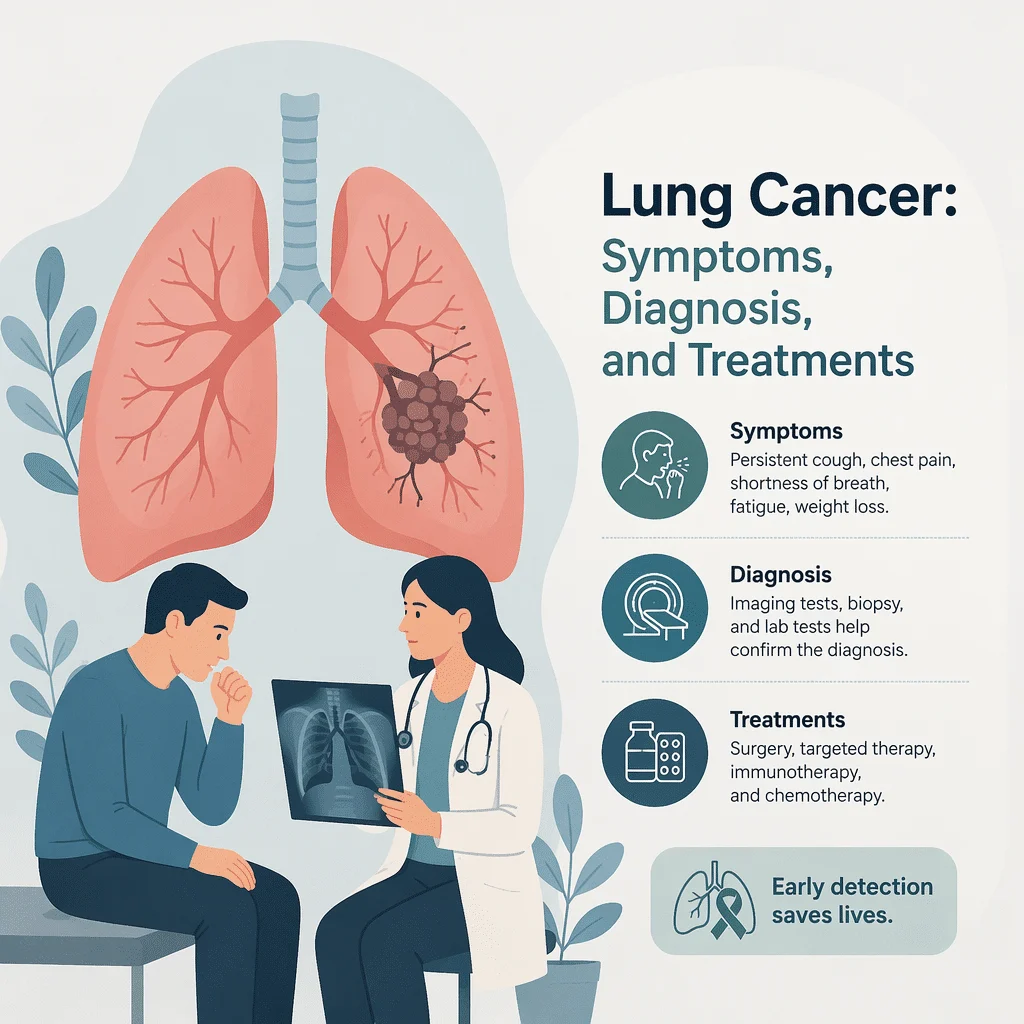
Longkanker is een van de meest voorkomende en ernstigste vormen van kanker wereldwijd, maar het is ook een gebied waarop vroegere opsporing en slimmere diagnostiek de uitkomsten gestaag verbeteren. Het begint wanneer abnormale cellen in de longen ongecontroleerd gaan groeien, vaak zonder duidelijke waarschuwingssignalen in de vroege stadia. Begrijpen hoe de ziekte zich ontwikkelt, welke symptomen aandacht verdienen en hoe artsen de diagnose stellen, kan je helpen sneller te handelen en bij elke stap betere vragen te stellen. In dit artikel lees je wat longkanker is, wie het meeste risico loopt, hoe er op gescreend en gediagnosticeerd wordt, welke behandelingen er vandaag de dag worden gebruikt en hoe bloedtests en biomarkers in het bredere plaatje passen. De toon is praktisch en geruststellend: nuttige informatie, geen reden tot paniek.
Wat is longkanker?
Longkanker is een ziekte waarbij cellen die de luchtwegen of het longweefsel bekleden ongecontroleerd gaan delen en een tumor vormen. Na verloop van tijd kunnen deze cellen gezond weefsel verdringen, de ademhaling belemmeren en zich in sommige gevallen naar andere delen van het lichaam verspreiden. Artsen verdelen de ziekte in twee grote groepen die zich anders gedragen en anders worden behandeld, en dat is precies waarom het zo belangrijk is het type vroeg vast te stellen.
De twee belangrijkste typen
Niet-kleincellig longcarcinoom (NSCLC) is goed voor ongeveer 8 op de 10 gevallen. Het groeit over het algemeen langzamer en omvat subtypes zoals adenocarcinoom, plaveiselcelcarcinoom en grootcellig carcinoom. Kleincellig longcarcinoom (SCLC) komt minder vaak voor, maar groeit en verspreidt zich doorgaans sneller, en het wordt sterk in verband gebracht met roken. Het type is belangrijk omdat het de keuze van de behandeling, het tempo van de zorg en de tests die je medisch team zal aanvragen bepaalt. Het beïnvloedt ook welke biomarkers het waard zijn om te meten — een punt waar we hieronder op terugkomen.
Wat veroorzaakt longkanker en wie loopt risico?
Roken blijft de grootste oorzaak van longkanker en is verantwoordelijk voor de grote meerderheid van de gevallen. Maar het is niet de enige oorzaak, en een aanzienlijk deel van de mensen bij wie de diagnose wordt gesteld, heeft nooit gerookt. Het risico bouwt zich geleidelijk op en weerspiegelt een combinatie van blootstellingen, genetische factoren en leeftijd, zodat geen enkele factor het volledige verhaal vertelt.
- Tabaksrook, waaronder huidig of vroeger roken en regelmatige blootstelling aan meeroken.
- Radon, een van nature voorkomend radioactief gas dat zich binnenshuis kan ophopen en de belangrijkste oorzaak is bij mensen die nooit hebben gerookt.
- Blootstelling op de werkplek aan stoffen zoals asbest, dieseluitlaatgassen, silica en bepaalde metalen.
- Langdurige blootstelling aan luchtvervuiling buitenshuis over vele jaren.
- Een familiegeschiedenis van longkanker, of eerdere bestralingstherapie van de borstkas.
- Hogere leeftijd en langdurige longaandoeningen zoals chronisch obstructieve longziekte (COPD).
Eén of meer risicofactoren hebben, betekent niet dat je de ziekte zult krijgen, en sommige mensen zonder enige risicofactor krijgen hem toch. Risicofactoren helpen vooral om te bepalen wie het meest baat heeft bij screening, en om iedereen die momenteel rookt eraan te herinneren dat stoppen op elke leeftijd het risico verlaagt.
Symptomen en vroege waarschuwingssignalen
Longkanker in een vroeg stadium veroorzaakt vaak helemaal geen klachten, en dat is precies waarom screening zo belangrijk is voor mensen met een hoog risico. Als er wel symptomen optreden, kunnen ze gemakkelijk worden aangezien voor een aanslepende verkoudheid, bronchitis of een langdurige “rokershoest.” De onderstaande signalen komen veel voor, maar zijn niet specifiek: veel andere aandoeningen kunnen dezelfde klachten veroorzaken.
- Een hoest die langer dan drie weken aanhoudt, of een verandering in een hoest die je al lange tijd hebt.
- Bloed ophoesten, ook al is het een kleine hoeveelheid of zijn het slechts streepjes in het slijm.
- Kortademigheid of piepende ademhaling die nieuw is of erger wordt.
- Aanhoudende pijn in de borst, schouder of rug, soms erger bij ademhalen of hoesten.
- Een schorre stem, terugkerende luchtweginfecties of onverklaarbare vermoeidheid.
- Onverklaarbaar gewichtsverlies of verlies van eetlust.
Signalen die gemakkelijk over het hoofd worden gezien
Longkanker kan ook mensen treffen die nooit hebben gerookt, en bij die groep worden symptomen soms langer genegeerd. In sommige gevallen zijn de eerste aanwijzingen afkomstig van kanker die zich al heeft verspreid, zoals botpijn, hoofdpijn of zwelling in de nek of het gezicht. Omdat deze symptomen sterk overlappen met onschuldige aandoeningen, zijn ze geen bewijs van kanker, maar elke klacht die langer dan twee à drie weken aanhoudt, verdient een medische beoordeling. Om te zien hoe vergelijkbare luchtwegklachten worden onderzocht bij heel verschillende aandoeningen, kun je lezen ons artikel over longembolie, en raadpleeg onze gids over astma en chronische luchtwegaandoeningen.
Wanneer moet je een arts raadplegen?
- Je hoest bloed op, in welke hoeveelheid dan ook.
- Een hoest, pijn op de borst of kortademigheid houdt langer dan twee à drie weken aan.
- Je hebt onverklaarbaar gewichtsverlies, ernstige vermoeidheid of terugkerende luchtweginfecties.
- Je hebt een hoog risico vanwege je rookgeschiedenis en hebt nooit over screening gesproken.
Hoe longkanker wordt vastgesteld
Geen enkele test stelt longkanker vast. Artsen combineren beeldvorming, een weefselmonster en aanvullend laboratoriumonderzoek om te bevestigen of er sprake is van kanker, het type te bepalen en vast te stellen hoe ver de kanker zich heeft verspreid.
Beeldvorming en biopsie
Een röntgenfoto van de borst is vaak de eerste stap wanneer klachten optreden, maar kleine tumoren kunnen daarmee worden gemist. Een CT-scan geeft een veel gedetailleerder beeld en kan knobbeltjes, hun grootte en nabijgelegen lymfeklieren in kaart brengen. Als een gebied er verdacht uitziet, is een biopsie de enige manier om kanker te bevestigen: daarbij wordt een klein stukje weefsel afgenomen, vaak via een dunne buis die in de luchtwegen wordt gebracht (bronchoscopie) of met een naald die door beeldvorming wordt geleid. Een PET-scan kan vervolgens worden gebruikt om te controleren of de ziekte zich heeft verspreid, wat helpt bij het bepalen van het stadium.
De rol van bloedonderzoek en tumormarkers
Bloedonderzoek stelt op zichzelf geen diagnose van longkanker, maar speelt wel een belangrijke ondersteunende rol. Standaard bloedpanels controleren je algemene gezondheid en of je fit genoeg bent voor behandeling. Je kunt onze gids over het volledig bloedbeeld raadplegen om te zien wat die waarden betekenen. Bepaalde tumormarkers — eiwitten die kunnen stijgen wanneer een tumor actief is — worden soms gemeten om een bekende kanker in de loop van de tijd te volgen, niet zozeer om die in eerste instantie op te sporen. Bij longkanker kunnen dit onder meer CEA (carcinoembryonaal antigeen), CYFRA 21-1, NSE (neuronenspecifiek enolase) en ProGRP zijn; de laatste twee zijn nuttiger bij kleincellige longkanker. Lees voor meer achtergrond ons overzicht van tumormarkers bij de behandeling van kankerraadplegen, en bekijk onze gids over de CEA-bloedtest. Een enzym genaamd LDH wordt ook soms gevolgd, en je kunt onze gids voor de LDH-bloedtest.
Eén belangrijke kanttekening: tumormarkers zijn geen betrouwbare screeningsinstrumenten voor gezonde mensen, omdat ze normaal kunnen zijn bij echte kankers en verhoogd kunnen zijn door onschuldige aandoeningen. Ze zijn het nuttigst als trend, geïnterpreteerd samen met beeldvorming en je klachten. Lees voor meer verdieping onze uitleg over afwijkende bloedwaarden.
Screening op longkanker: wie komt in aanmerking voor een lage-dosis CT-scan
Screening houdt in dat mensen die zich goed voelen worden getest om kanker vroeg op te sporen, wanneer die het best behandelbaar is. Voor longkanker is de aanbevolen screeningstest een lage-dosis CT-scan (LDCT): een snelle scan die een kleine hoeveelheid straling gebruikt om gedetailleerde beelden van de longen te maken. De U.S. Preventive Services Task Force geeft dit een graad B-aanbeveling, en de U.S. Centers for Disease Control and Prevention hanteren dezelfde criteria.
Jaarlijkse screening wordt aanbevolen voor volwassenen die aan alle drie de volgende voorwaarden voldoen:
- Leeftijd tussen 50 en 80 jaar.
- Een rookgeschiedenis van 20 pakjaarequivalenten of meer. Een pakjaar staat voor het roken van gemiddeld één pakje per dag gedurende één jaar; 20 pakjaren kan dus betekenen: één pakje per dag gedurende 20 jaar, of twee pakjes per dag gedurende 10 jaar.
- Momenteel roken, of gestopt zijn binnen de afgelopen 15 jaar.
Screening kan worden gestopt zodra iemand 15 jaar niet meer heeft gerookt, of als een ander gezondheidsprobleem de levensverwachting of de mogelijkheid tot curatieve chirurgie zou beperken. Als u denkt dat u in aanmerking komt, is het de moeite waard om screening met uw arts te bespreken, want longkanker ontdekken voordat er klachten optreden is een van de duidelijkste manieren om de kansen te verbeteren.
Biomarker- en moleculair onderzoek: behandeling afstemmen op uw tumor
Wanneer longkanker is vastgesteld, met name niet-kleincellige longkanker, wordt een stukje van de tumor vaak opgestuurd voor biomarker- of moleculair onderzoek. Hierbij wordt gezocht naar specifieke veranderingen in de genen of eiwitten van de kanker die voorspellen welke behandelingen het meest kans van slagen hebben. Dit is een van de grootste verschuivingen in de longkankerzorg van het afgelopen decennium: van een standaardbehandeling voor iedereen naar keuzes die zijn afgestemd op elke individuele tumor.
- EGFR, ALK en ROS1 zijn voorbeelden van genveranderingen die, wanneer aanwezig, kunnen worden gekoppeld aan specifieke doelgerichte therapieën.
- PD-L1 is een eiwit op tumorcellen dat helpt inschatten hoe goed immunotherapie kan werken.
- Circulerend tumor-DNA, of ctDNA, kan worden gemeten in een bloedmonster via wat vaak een “vloeibare biopsie” wordt genoemd. Dit is nuttig wanneer weefsel beperkt beschikbaar is of om een kanker in de loop van de tijd te volgen.
De onderstaande tabel geeft een overzicht van hoe de belangrijkste onderzoeken en markers samenhangen, van de eerste scan tot de moleculaire details die de behandeling sturen.
| Onderzoek of marker | Waar het naar kijkt | Hoe het doorgaans wordt gebruikt |
|---|---|---|
| Lage-dosis CT (LDCT) | Kleine knobbeltjes of massa's in de longen | Screening van mensen met een hoog risico; vaak de eerste beeldvormingsstap |
| Biopsie | Een klein weefselmonster uit de tumor | Het bevestigen van de diagnose en het exacte kankertype |
| CEA en CYFRA 21-1 | Eiwitten die bij sommige tumoren verhoogd kunnen zijn | Helpt bij het bewaken van een bekende kanker in de loop van de tijd, niet voor screening |
| EGFR, ALK en ROS1 | Specifieke genveranderingen in de tumor | De kanker koppelen aan een doelgerichte therapie |
| PD-L1 | Een eiwit op het oppervlak van tumorcellen | Inschatten hoe goed immunotherapie kan werken |
| Circulerend tumor-DNA (ctDNA) | Tumor-DNA-fragmenten in een bloedmonster | Een vloeibare biopsie om veranderingen op te sporen of de behandeling te volgen |
| Volledig bloedbeeld (CBC) | Rode bloedcellen, witte bloedcellen en bloedplaatjes | Controle van de algemene gezondheid en de geschiktheid voor behandeling |
Hoe longkanker wordt behandeld
De behandeling hangt af van het type longkanker, het stadium, de biomarkerresultaten en uw algehele gezondheid. Veel mensen krijgen een combinatie van behandelingen, en de plannen worden steeds meer op maat gemaakt in plaats van standaard.
- Chirurgie verwijdert de tumor en wordt het vaakst toegepast bij niet-kleincellige longkanker in een vroeg stadium.
- Radiotherapie gebruikt gerichte energie om kankercellen te vernietigen, soms om vroege ziekte te genezen en soms om klachten te verlichten.
- Chemotherapie gebruikt geneesmiddelen die snel delende cellen doden en blijft een hoeksteen in veel situaties, met name bij kleincellig longkanker.
- Doelgerichte therapie gebruikt medicijnen die een specifieke genverandering blokkeren, zoals EGFR of ALK, en wordt gekozen op basis van moleculair onderzoek.
- Immunotherapie helpt het immuunsysteem de kanker te herkennen en aan te vallen, en wordt vaak bepaald op basis van de PD-L1-uitslag.
De keuze tussen deze opties is een gezamenlijke beslissing, waarbij biomarkeruitslagen steeds vaker centraal staan in dat gesprek. Daarom is het hierboven beschreven onderzoek geen formaliteit: het kan rechtstreeks bepalen welke behandeling u wordt aangeboden.
Recente wetenschappelijke ontwikkelingen
Het longkankeronderzoek heeft zich snel ontwikkeld, en een aantal recente ontwikkelingen zijn het waard om in begrijpelijke taal te begrijpen. Geen van de onderstaande studies is een reden om uw eigen behandeling te wijzigen zonder uw arts te raadplegen, maar samen laten ze zien welke kant het vakgebied opgaat.
Vloeibare biopsie wordt volwassener
Overzichtsartikelen uit 2024 en 2025 beschrijven hoe bloedgebaseerde “vloeibare biopsie”-tests, die zoeken naar tumor-DNA-fragmenten (ctDNA) in een gewone bloedafname, steeds vaker worden gebruikt om longkanker te helpen diagnosticeren, een behandeling te kiezen en veranderingen in de loop van de tijd te volgen. Wat dit voor u betekent, is dat bepaalde informatie waarvoor vroeger een weefselbiopsie nodig was, in bepaalde situaties ook uit een bloedtest kan komen. Deze tests worden nog verder verfijnd en vervangen beeldvorming of weefselonderzoek nog niet, maar ze zijn wel een echte en groeiende rol in de zorg.
Immunotherapie, gestuurd door PD-L1
Een overzichtsartikel uit 2022 in een toonaangevend oncologietijdschrift hielp immunotherapie te vestigen als eerstelijnsoptie voor veel mensen met gevorderd niet-kleincellig longkanker. Sindsdien hebben een systematische review en meta-analyse uit 2024 in JAMA Oncology, en een systematische review en meta-analyse uit 2025, onderzocht of immunotherapie voor of rondom een operatie kan worden gegeven. Een meta-analyse combineert veel studies om het algemene patroon te zien; deze toonden aan dat het toevoegen van immunotherapie kan verbeteren hoe goed tumoren reageren, waarbij het voordeel wordt beïnvloed door de PD-L1-waarden. Wat dit voor u betekent, is dat een PD-L1-uitslag niet zomaar een getal op een rapport is: het kan uw behandelteam helpen beoordelen of immunotherapie waarschijnlijk zal helpen.
Doelgerichte therapie na chemoradiotherapie
In een gerandomiseerde gecontroleerde studie uit 2024, gepubliceerd in het New England Journal of Medicine, vertraagde het toevoegen van het EGFR-gerichte middel osimertinib na chemoradiotherapie de terugkeer van de ziekte bij mensen met niet-resecteerbaar stadium III EGFR-gemuteerd niet-kleincellig longcarcinoom. Een gerandomiseerde gecontroleerde studie is een onderzoek waarbij behandelingen eerlijk worden vergeleken door ze willekeurig toe te wijzen. De praktische conclusie is dat het kennen van de EGFR-status van een tumor de deur kan openen naar behandelingen die zijn afgestemd op die specifieke verandering, en dat is precies waarvoor moleculaire diagnostiek bedoeld is.
Uw risico verlagen
Niet elk geval van longkanker is te voorkomen, maar het risico kan wel worden verminderd. De krachtigste stap is niet beginnen met roken, of stoppen als u dat doet, want het risico begint al snel na het stoppen te dalen en blijft dalen in de loop der jaren. Uw woning testen op radon, blootstelling op de werkplek en in de omgeving beperken, en screeningsadvies opvolgen als u daarvoor in aanmerking komt, bieden extra bescherming. Als u al een diagnose heeft gekregen, ondersteunen diezelfde stappen nog steeds uw algehele gezondheid tijdens en na de behandeling.
Glossarium
| Termijn | Definitie |
|---|---|
| NSCLC | Niet-kleincellig longcarcinoom, de meest voorkomende groep longkankers, die doorgaans langzamer groeit. |
| SCLC | Kleincellig longcarcinoom, een minder voorkomend maar sneller groeiend type dat sterk gelinkt is aan roken. |
| LDCT | Lage-dosis computertomografie, het aanbevolen beeldvormingsonderzoek voor longkankerscreening. |
| Biopsie | Het verwijderen van een klein weefselmonster om dit te onderzoeken op kankercellen. |
| Biomarker | Een meetbaar kenmerk van een tumor, zoals een genverandering of eiwit, dat de behandeling kan sturen. |
| EGFR en ALK | Genveranderingen die, wanneer ze in een tumor worden gevonden, gekoppeld kunnen worden aan specifieke doelgerichte therapieën. |
| PD-L1 | Een eiwit op tumorcellen dat wordt gebruikt om in te schatten hoe goed immunotherapie kan werken. |
| ctDNA (vloeibare biopsie) | Tumor-DNA-fragmenten die in een bloedmonster worden aangetroffen en worden gebruikt om kanker te helpen diagnosticeren of te monitoren. |
| Pakjejaar | Een manier om de rookgeschiedenis te meten: één pakje per dag gedurende één jaar staat gelijk aan één pakjejaar. |
| Stadiëring | Het beschrijven van hoe groot een kanker is en of deze zich heeft verspreid, wat de behandeling stuurt. |
Veelgestelde vragen
Wat zijn de eerste tekenen van longkanker?
Longkanker in een vroeg stadium veroorzaakt vaak geen klachten, en dat is precies waarom screening belangrijk is voor hoogrisicogroepen. Wanneer er wel tekenen optreden, zijn de meest voorkomende: een hoest die langer dan drie weken aanhoudt, een verandering in een al lang bestaande hoest, kortademigheid, pijn op de borst of het ophoesten van bloed. Omdat deze klachten ook bij veel andere, minder ernstige aandoeningen voorkomen, zijn ze geen bewijs van kanker, maar aanhoudende klachten moeten altijd door een arts worden onderzocht.
Kan longkanker genezen worden?
Sommige longkankers kunnen worden genezen, en de kans is het grootst wanneer de ziekte vroeg wordt ontdekt en via een operatie kan worden verwijderd of met gerichte bestraling kan worden behandeld. Vergevorderde longkanker is niet in elk geval te genezen, maar moderne doelgerichte therapieën en immunotherapie kunnen de ziekte langer onder controle houden en de kwaliteit van leven verbeteren. De uitkomsten verschillen sterk van persoon tot persoon, dus uw behandelteam is de beste bron voor wat realistisch is in uw situatie.
Is longkankerscreening alleen voor rokers?
Screening met een lage-dosis CT-scan wordt momenteel aanbevolen voor volwassenen tussen de 50 en 80 jaar met een aanzienlijke rookgeschiedenis die nog steeds roken of binnen de afgelopen 15 jaar zijn gestopt. Mensen die nooit hebben gerookt worden niet routinematig gescreend, omdat het voordeel niet is aangetoond voor groepen met een lager risico. Als u niet zeker weet of u in aanmerking komt, kan uw arts uw geschiedenis bekijken en de voor- en nadelen uitleggen.
Kan longkanker aanwezig zijn bij een normale röntgenfoto van de borst of een normale bloedtest?
Ja. Een röntgenfoto van de borst kan kleine tumoren missen, en er bestaat geen bloedtest die longkanker op zichzelf betrouwbaar kan aan- of uitsluiten. Daarom wordt voor screening een lage-dosis CT-scan gebruikt in plaats van een röntgenfoto of bloedonderzoek, en verdienen aanhoudende klachten altijd vervolgonderzoek, ook als eerdere tests normaal leken.
Wat veranderen biomarkers zoals EGFR en PD-L1 in de praktijk?
Biomarkers beschrijven de biologie van een specifieke tumor. Het vinden van een afwijking zoals EGFR of ALK kan betekenen dat er een doelgerichte therapie beschikbaar is, terwijl een PD-L1-uitslag helpt voorspellen hoe nuttig immunotherapie kan zijn. In de praktijk kunnen deze tests rechtstreeks bepalen welke behandeling u wordt aangeboden, en daarom zijn ze nu een standaard onderdeel van de diagnose van niet-kleincellig longkanker.
Wat is de overlevingskans bij longkanker?
De overleving hangt sterk af van het type, het stadium bij diagnose, de biomarkerresultaten en de algehele gezondheid, waardoor één enkel getal misleidend kan zijn. Over het algemeen heeft longkanker die vroeg wordt ontdekt een veel betere prognose dan longkanker die pas wordt gevonden nadat deze zich heeft verspreid — dat is de belangrijkste reden waarom screening en snelle evaluatie van klachten zo belangrijk zijn. Uw medisch team kan cijfers geven die passen bij uw specifieke diagnose.
Bronnen
- U.S. Preventive Services Task Force. Lung Cancer: Screening (Grade B recommendation), 2021. https://www.uspreventiveservicestaskforce.org/uspstf/recommendation/lung-cancer-screening
- Centers for Disease Control and Prevention. Lung Cancer Screening. https://www.cdc.gov/lung-cancer/screening/index.html
- National Cancer Institute. Non-Small Cell Lung Cancer Treatment (PDQ) — Patient Version. https://www.cancer.gov/types/lung/patient/non-small-cell-lung-treatment-pdq
- Ma L, et al. Liquid biopsy techniques and lung cancer: diagnosis, monitoring and evaluation. Journal of Experimental & Clinical Cancer Research, 2024. https://doi.org/10.1186/s13046-024-03026-7
- A Review of Circulating Tumor DNA (ctDNA) and the Liquid Biopsy in Cancer Diagnosis, Screening, and Monitoring Treatment Response. Medical Science Monitor, 2025. https://doi.org/10.12659/MSM.949300
- Neoadjuvant Chemoimmunotherapy for NSCLC: A Systematic Review and Meta-Analysis. JAMA Oncology, 2024. https://doi.org/10.1001/jamaoncol.2024.0057
- Efficacy of neoadjuvant, adjuvant, and perioperative immunotherapy in non-small cell lung cancer across different PD-L1 expression levels: a systematic review and meta-analysis. Frontiers in Immunology, 2025. https://doi.org/10.3389/fimmu.2025.1569864
- Reck M, et al. First-Line Immunotherapy for Non-Small-Cell Lung Cancer. Journal of Clinical Oncology, 2022. https://doi.org/10.1200/JCO.21.01497
- Osimertinib after Chemoradiotherapy in Stage III EGFR-Mutated NSCLC. New England Journal of Medicine, 2024. https://doi.org/10.1056/NEJMoa2402614
Verder lezen
- Darmkanker: oorzaken, symptomen en behandelingen
- Maagkanker: oorzaken, symptomen en behandelingen
- Alvleesklierkanker: begrijpen, diagnosticeren en behandelen
- Borstkanker: begrijpen, behandeling en preventie
- Begrijp je bloedonderzoekuitslagen: een eenvoudige gids
Begrijp uw laboratoriumresultaten met AI DiagMe.
Ontvang binnen enkele minuten een interpretatie van uw resultaten.
Een diagnose longkanker brengt een stroom aan cijfers met zich mee — van een volledig bloedbeeld tot tumormarkers zoals CEA en moleculaire uitslagen zoals EGFR, ALK en PD-L1. AI DiagMe helpt je begrijpen wat deze laboratoriumwaarden in gewone taal betekenen, zodat je afspraken ingaat met duidelijkere vragen. Het is bedoeld om je uitslagen te begrijpen, niet om een diagnose te stellen, en vervangt nooit het oordeel van je eigen arts.