




アンチトロンビンIII検査は、血液が固まりすぎないようにする天然の抗凝固タンパク質を測定する検査です。原因不明または繰り返す血栓が生じた後や、特定の治療を開始する前に、体内の凝固を抑えるブレーキが正常に機能しているかどうかを確認するために行われることが多い検査です。この記事では、アンチトロンビンIIIの働き、基準値と照らし合わせた結果の読み方、低値・高値が示す可能性のある意味、そして専門医への受診が必要なタイミングについて解説します。また、入院中のヘパリン治療とアンチトロンビンの関係をわかりやすく説明するほか、用語集や患者さんからよくある質問への回答もご覧いただけます。
アンチトロンビンIIIとは?
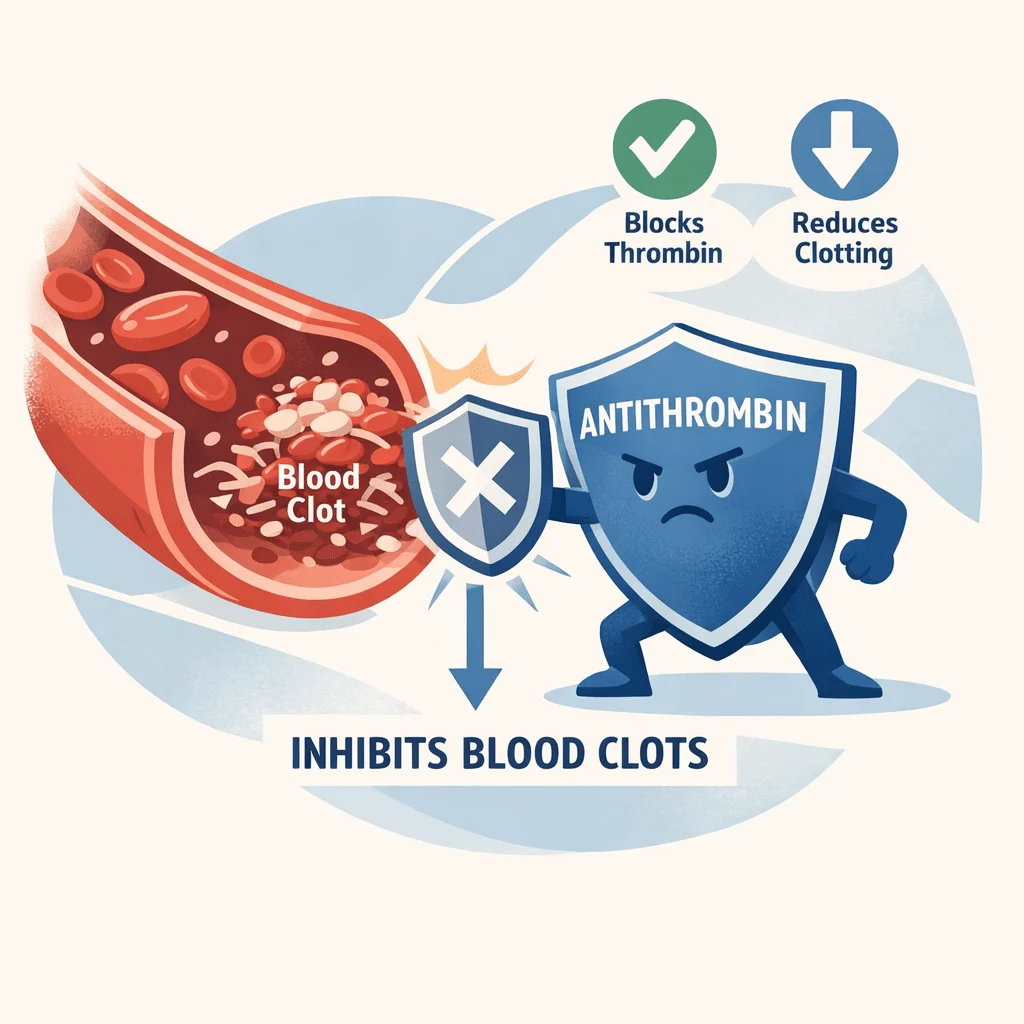
アンチトロンビンIII(通常は単にアンチトロンビンと呼ばれます)は、主に肝臓で作られ血流中に放出されるタンパク質です。その役割は、血液凝固にブレーキをかけることです。血液は怪我の後に出血を止めるために固まる必要がありますが、その働きは役目を終えたら止まらなければなりません。そうでなければ、健康な血管の中で血栓が成長し続けてしまいます。
アンチトロンビンは、凝固に関わる2つの重要な酵素であるトロンビンとXa因子に結合して不活性化することで、この役割を果たします。アンチトロンビンがこれらの酵素に結合すると、凝固カスケードをそれ以上進めることができなくなります。これは継続的かつ低レベルで行われるプロセスであり、正常で損傷のない血管内で血液がスムーズに流れるよう保っています。
ヘパリン療法においてアンチトロンビンが重要な理由
アンチトロンビンには、臨床的に重要なもう一つの役割があります。それは、手術・透析・血栓治療のために病院で使用される速効性の抗凝固薬「ヘパリン」の標的となることです。ヘパリンは凝固因子を直接阻害するのではなく、アンチトロンビンに結合してその働きを約1,000倍に高めます。つまり、ヘパリンの効果は血液中のアンチトロンビンの量に依存します。アンチトロンビン値が非常に低い場合、ヘパリンが期待通りに血液を薄めることができなくなることがあり、これを臨床的に「ヘパリン抵抗性」と呼びます。
医師がこの検査を指示する理由
アンチトロンビン検査は、通常の血液検査には含まれていません。凝固バランスの異常が疑われる特定の理由がある場合に、検査が依頼されます。
主な理由としては、誘因のない深部静脈血栓症や肺塞栓症(特に45歳未満の方)、血栓症の強い家族歴、一般的なリスク因子が除外されているにもかかわらず繰り返す血栓、原因不明の流産、あるいは入院中に安全な抗凝固レベルに達するために通常より高用量のヘパリンが必要な場合などが挙げられます。この検査は、プロテインC、 プロテインS値、および遺伝性凝固異常変異も通常確認される、より広範な血栓性素因(トロンボフィリア)の精査の一部として行われます。
タイミングも重要です。妊娠中、急性血栓イベント中、または特定の薬を服用中は、アンチトロンビン値が一時的に変動することがあるため、医師はできる限りこれらの状況を避けてから検査を行うことを好みます。あるいは、そのような状況下で得られた結果を特に慎重に解釈します。急性疾患中や新たな血栓形成直後に初めて検査を受けた場合、医師は急性期が落ち着いてから再検査を勧めることがあります。これは、より通常のベースライン値を確認するためです。
アンチトロンビンIII検査の結果の見方
検査報告書には、結果が正常活性に対するパーセンテージで表示されます。場合によっては、抗原(タンパク質量)の測定値が別途記載されることもあります。アンチトロンビン活性の一般的な成人基準範囲はおよそ80〜120%ですが、正確な基準値は検査機関や測定方法によって若干異なります。
| 結果の区分 | おおよその範囲 | 一般的な意味 |
|---|---|---|
| 基準範囲内 | 約80〜120% | 抗凝固機能は正常範囲内です |
| 軽度低値 | おおよそ60〜80% | 部分的な欠乏症、または一時的な後天性の原因を反映している可能性があります |
| 中等度〜高度低値 | 60%未満 | 重篤な欠乏症と一致することが多く、専門医によるフォローアップが必要になる場合があります |
| 高 | 120%超 | 通常は一時的な所見であり、臨床的な問題となることはほとんどありません |
検査方法は機関によって異なるため、一般的な数値ではなく、ご自身の検査報告書に記載されている基準範囲と照らし合わせてください。異常値が1回だけ見られた場合は、それ自体が診断を意味するものではなく、医師と相談するための出発点に過ぎません。
活性検査と抗原検査の違い
検査機関によっては、アンチトロンビンの値を「活性」と「抗原」の2つに分けて報告することがあります。活性検査はタンパク質が実際にどれだけ正常に機能しているかを測定し、抗原検査は機能の有無にかかわらず存在するタンパク質の量を測定します。この2つを比較することで、量の問題なのか質の問題なのかを区別でき、根本的な原因の特定に役立ちます。
アンチトロンビンIII低値の原因と種類
基準値を下回る結果は高値よりもはるかに多く見られ、医師はその原因を遺伝性と後天性に分けて考えます。
遺伝性アンチトロンビン欠乏症
遺伝性アンチトロンビン欠乏症はSERPINC1遺伝子の変異によって引き起こされ、約2,000〜3,000人に1人の割合で発症すると推定されています。常染色体優性遺伝のパターンをたどるため、罹患した親を持つ子どもは約50%の確率でこの変異を受け継ぎます。I型欠乏症では構造的に正常なタンパク質の量が減少し、II型欠乏症では量は正常でも機能が低下したタンパク質が産生されます。いずれの場合も血液の抗凝固能が低下し、生涯における初回血栓症(多くの場合、45歳以前に発症する深部静脈血栓症または肺塞栓症)のリスクが高まります。
後天性アンチトロンビン欠乏症
後天性欠乏症は、遺伝子変異ではなく別の疾患が原因となって後天的に発症します。主な原因として、肝疾患、腎臓からのタンパク質喪失、急性疾患時の消費亢進などが挙げられます。以下にまとめます。
| 原因 | アンチトロンビンが低下する理由 |
|---|---|
| 重篤な肝疾患 | アンチトロンビンは肝臓で産生されるため、肝疾患が進行すると産生量が低下します。関連する検査値については、当サイトの 肝機能検査ガイド |
| ネフローゼ症候群 | この腎疾患では、アンチトロンビンが尿中に直接失われます。詳しくは当サイトの 腎機能パネルの概要 |
| 播種性血管内凝固症候群(DIC) | 広範な凝固活性化により、アンチトロンビンは他の凝固因子とともに急速に消費される |
| 長期ヘパリン療法 | ヘパリンの長期使用により、消費量の増加を通じてアンチトロンビンが徐々に低下することがある |
| 大手術または急性疾患 | 重篤な疾患や大きな手術によって、一時的に数値が低下することがあります |
アンチトロンビンIIIが高い場合:数値が高いと何を意味するか
アンチトロンビン値が基準範囲を上回ることはまれであり、欠乏症と比べて臨床的な意義ははるかに小さいのが一般的です。エストロゲンを含むホルモン療法中、急性肝炎の初期段階、または妊娠初期に上昇が見られることがあります。こうした上昇は通常一時的なものであり、原因となる状態が改善されれば特別な治療を行わなくても自然に正常化することがほとんどです。
アンチトロンビンIII、ヘパリン抵抗性、および入院中のケア
ヘパリンはアンチトロンビンを介して効果を発揮するため、アンチトロンビン値が低いと通常用量のヘパリンが効きにくくなることがあります。これは特に、人工心肺装置を使用する心臓手術中や、長期間ヘパリン持続投与を受けている重症患者において問題となります。安全な凝固時間を達成するために通常より大量のヘパリンが必要な場合、医療チームは他の原因の検索とあわせてアンチトロンビン活性を測定することがあります。対応策としては、ヘパリン増量、アンチトロンビン補充、新鮮凍結血漿の投与、またはアンチトロンビンに依存しない抗凝固薬(直接トロンビン阻害薬など)への切り替えが選択肢となります。
判断の目安:検査結果が出た後に一般的に行われること
| あなたの状況 | 一般的な次のステップ |
|---|---|
| 正常値、症状なし | このマーカー単独では特別な経過観察は不要 |
| 軽度低値、血栓の既往なし、家族歴なし | 経過観察が行われることが多く、手術・妊娠・長期安静の際には予防措置が検討される |
| 血栓症の既往がある場合の低値 | 血栓性素因の精密検査のため血液専門医への紹介 |
| 家族スクリーニングで発見された低値 | 遺伝カウンセリングと個別リスクの検討が行われ、抗凝固療法が自動的に開始されるわけではないことが多い |
| 入院中・ヘパリン使用中に発見された低値 | 急性疾患により一時的に数値が低下することがあるため、担当医チームが再評価する |
受診のタイミング
抗トロンビンの検査結果が異常であり、以下のいずれかの症状がある場合は、活動性の血栓が生じているサインである可能性があるため、速やかに医療機関を受診してください:
- 片脚の突然の腫れ、痛み、熱感、または赤みは、次の疾患を示唆することがある: 深部静脈血栓症または関連する血栓イベント
- 原因不明の息切れ、呼吸時に悪化する胸痛、または血を吐く症状
- 遺伝性凝固障害と最近診断された家族がいる
- 欠乏症が確認または疑われる場合の手術・妊娠・ホルモン避妊薬開始の予定
これらの症状は、最後に血液検査を受けた時期にかかわらず、緊急の医療評価が必要です。検査結果はある一時点の状態を反映しているにすぎません。
アンチトロンビン欠乏症と向き合う:日常でできること
欠乏症が確定した場合、治療計画はその重症度と個人の病歴によって異なります。健康的な血液循環をサポートする一般的な対策としては、十分な水分補給、旅行中や手術後の長時間の安静を避けること、健康的な体重の維持、そして禁煙(タバコは血栓形成を促進するため)が挙げられます。欠乏症が判明している方は、処置を受ける前に新しい医療機関を受診する際に必ず診断について伝えてください。手術前後の管理計画の調整が必要になる場合があります。これらの生活習慣の改善は、抗凝固療法が処方されている場合の代替にはなりません。あくまでも担当医の治療計画を補うものであり、それに取って代わるものではありません。
妊娠は特に注意が必要な時期です。既知の欠乏症がある方にとって、最もリスクの高い期間のひとつだからです。妊娠中は出産に備えて体が自然と血液を固まりやすい状態になるため、既存の欠乏症の影響がさらに強まることがあります。遺伝性欠乏症が確認されている多くの女性は、妊娠中および出産後数週間にわたって予防的な抗凝固注射を受けます。具体的な治療計画は、血液専門医と産婦人科医が連携して決定します。欠乏症があることがわかっていて妊娠を考えている場合は、できれば妊娠前の早い段階で担当医に相談しておくと、モニタリングと予防のための計画を立てる時間を確保できます。
家族も検査の対象となる場合があります。遺伝性欠乏症は予測可能な遺伝パターンに従うため、診断を受けた方の一親等の親族(両親・兄弟姉妹・子ども)も、特に手術・妊娠・ホルモン系避妊薬の使用を検討している場合には、検査を勧められることがあります。検査で陽性と判明しても、これまで血栓を経験したことがない親族に対して、長期的な抗凝固療法がすぐに開始されるわけではありません。通常は、リスクが高いとわかっている時期に絞った予防対策が中心となります。
最新の科学的進歩
PubMedによると、米国血液学会(American Society of Hematology)は2023年に、抗トロンビン・プロテインC・プロテインS欠乏症を含む血栓性素因検査に関するエビデンスに基づいた最新ガイドラインを発表しました(Middeldorp et al., Blood Advances, 2023; DOI)。専門委員会は、避妊薬を開始する前の一般集団へのスクリーニングは有用ではないと結論づける一方、抗トロンビン欠乏症の家族歴があり、ホルモン療法や血栓予防を検討している場合など、特定の状況では対象を絞った検査を推奨しました。わかりやすく言えば、抗トロンビン検査は一般的なスクリーニングツールとしてではなく、疑いのある理由がある方に対して行うときに最も効果を発揮するということが、このガイドラインで改めて確認されています。
2024年のシステマティックレビューおよびメタアナリシスでは、10万7,000人以上のデータを統合し、遺伝性血栓性素因の各タイプが実際にどの程度血栓リスクを高めるかを定量化しました(Alnor et al., Annals of Hematology, 2024; DOI)。その結果、抗トロンビン欠乏症は他の遺伝性凝固障害と比較して中程度のリスクを持つことがわかりました。リスクは確かに上昇しますが、以前の小規模な研究が示唆していたよりもやや低い水準でした。読者の方にとって、これは安心できる情報です。欠乏症はリスクを高めますが、そのリスクの大きさは以前の推定より控えめである可能性があります。これが、医師が検査結果だけで判断するのではなく、個人の病歴や家族歴を合わせて考慮し、すべての欠乏症を同じように扱わない理由のひとつです。
CDCのために実施された2025年の系統的レビューでは、アンチトロンビン欠乏症を含む遺伝性血液凝固異常を持つ女性がホルモン避妊法を使用した場合の血栓リスクについて検討されました(Tepper et al., 避妊, 2025; DOI)。この研究では、エストロゲンを含む避妊法は、すでに血栓性素因を持つ女性において血栓リスクをさらに高める可能性があることが示されました。一方、プロゲスチン単独製剤に関するエビデンスは依然として限られています。あなたへの意味:既知の欠乏症をお持ちで避妊を検討している場合は、担当医に相談することをお勧めします。エストロゲンを含まない方法は、この状況では一般的により安全と考えられているためです。ただし、根拠となるエビデンスの確実性はまだ低いとされており、今後の研究によってこのガイダンスがさらに精緻化されることが期待されています。
医療機関側の研究として、2025年に心臓外科手術を受けた605人の患者を対象とした研究では、体外循環(バイパス手術)中のヘパリン抵抗性がアンチトロンビン活性の低下によって説明できるかどうかが直接検証されました(Kim et al., Journal of Cardiothoracic and Vascular Anesthesia, 2025; DOI)。意外なことに、術前のアンチトロンビン活性はこのグループにおけるヘパリン抵抗性と有意な関連を示しませんでした。むしろ、活動性感染症と大動脈手術がより強いリスク因子でした。これは長年の仮説に新たな視点をもたらす初期の質の高い知見であり、一部の外科的状況では、低アンチトロンビンがヘパリン抵抗性の原因として従来考えられていたほど重要ではない可能性を示唆しています。また、その予防のためにアンチトロンビン濃縮製剤を常規的に投与することが必ずしも必要ではないかもしれません。これはまだ単一の研究であり、さらなる研究が蓄積されるにつれて、病院間での診療は引き続き異なる場合があります。
また、2023年にジョンズ・ホプキンス大学が行った研究では、体外式膜型人工肺(ECMO)という心肺補助装置を使用している小児における後天性アンチトロンビン欠乏症が調査されました(Procaccini et al., British Journal of Clinical Pharmacology, 2023; DOI)。この重症患者集団では欠乏症が多く見られ、アンチトロンビン補充後も約3分の1の測定値は低いままでした。ECMOを受けている子どもの家族にとって、これは集中治療におけるアンチトロンビンのモニタリングが発展途上の分野であり、投与戦略がまだ完全には標準化されておらず、引き続き改善が進められていることを示しています。
用語集
| 用語 | 定義 |
|---|---|
| アンチトロンビン(アンチトロンビンIII) | 過剰な血液凝固を防ぐために、トロンビンおよび第Xa因子を阻害する肝臓で作られるタンパク質 |
| 血栓性素因(血栓形成傾向) | 遺伝性または後天性の、血液が凝固しやすくなった状態 |
| トロンビン | フィブリノゲンをフィブリンに変換する中心的な凝固酵素で、血栓の網目構造を形成する |
| 第Xa因子 | トロンビンの活性化を助ける凝固酵素で、アンチトロンビンや一部の抗凝固薬の主要な標的 |
| ヘパリン抵抗性 | 標準的なヘパリン用量に対する反応が低下した状態で、アンチトロンビン活性の低下と関連することがある |
| SERPINC1遺伝子 | アンチトロンビンの産生に関する指示を提供する遺伝子。この遺伝子の変異が遺伝性欠乏症の原因となります |
| 播種性血管内凝固症候群(DIC) | 広範な凝固活性化により凝固因子が消費され、出血と血栓形成が同時に起こることがある重篤な状態 |
| ネフローゼ症候群 | 尿中に大量のタンパク質が失われる腎疾患で、アンチトロンビンも失われることがある |
| 常染色体優性遺伝 | どちらかの親から変異した遺伝子を1コピー受け継ぐだけで、その状態を引き起こす可能性がある遺伝パターン |
よくある質問
アンチトロンビンIIIの値が危険なほど低いとはどのくらいですか?
「危険」とみなされる値に一律の基準はありません。リスクは数値だけでなく、臨床的な状況全体によって異なるからです。ただし、活性値がおよそ60%を下回る場合、特に血栓の個人歴や家族歴がある場合には、医師がより慎重に対応するのが一般的です。重篤な欠乏症に加えて、手術や妊娠などの急性リスク因子が重なると、懸念はさらに高まります。血液専門医は、一律の基準を当てはめるのではなく、あなたの症状や病歴と合わせて、あなた固有の検査値を総合的に判断します。
アンチトロンビンIIIの値を自然に改善することはできますか?
遺伝子変異そのものは変わらないため、食事や生活習慣で遺伝性の欠乏症を改善することはできません。ただし、活動的に過ごす、長時間の安静を避ける、禁煙する、健康的な体重を維持するといった、血行を良好に保つための一般的な習慣は、全体的な血栓リスクを下げるのに役立ちます。肝臓病などの後天性疾患が原因で数値が低い場合は、その根本的な疾患を治療することで、抗トロンビン値が時間とともに回復することがあります。
抗トロンビンIIIと抗トロンビンは同じものですか?
はい、同じです。このタンパク質は、数十年前にいくつかの番号付き抗トロンビン活性が記載された際に「抗トロンビンIII」と命名されましたが、現在は「抗トロンビン」が同じタンパク質の標準的な学術名となっています。検査報告書、医学文献、または医師の説明において、どちらの用語も同じ意味で使われることがあります。
抗トロンビンIII欠乏症は、それ自体で症状を引き起こしますか?
通常、そうではありません。欠乏症のある方の多くは、実際に血栓が形成されるまで症状が現れないため、この状態は最初の血栓症が起きた後や、家族の一人が診断されたことをきっかけとした家族スクリーニングによって初めて発見されることがよくあります。これが、医師が若い方に生じた原因不明の血栓を深刻に受け止め、背景にある原因を調べる重要な理由の一つです。
アンチトロンビンIIIはどのくらいの頻度で再検査すべきですか?
再検査のタイミングは最初に検査を行った理由によって異なるため、一律のスケジュールはありません。症状のない方で軽度の異常値が一度だけ見られた場合は、次回の受診時に話し合うだけで済むこともありますが、血栓の既往歴がある確定的な欠乏症の場合は、血液専門医による定期的な経過観察が行われることが多いです。担当医が状況に応じた個別のフォローアップ計画を立ててくれます。
薬がアンチトロンビンIIIの検査結果に影響することはありますか?
はい、影響します。特に長期間のヘパリン使用は、消費量の増加によりアンチトロンビン活性の測定値を低下させることがあります。一方、エストロゲンを含む薬剤は値を上昇させることがあります。そのため、ホルモン避妊薬を含め、服用中のすべての薬について検査機関と担当医に必ず伝えることが大切です。そうすることで、結果がベースラインの値を反映しているかどうかを正しく判断することができます。
アンチトロンビンIIIは、体内の自然な血栓コントロールシステムの中心に位置し、次のようなマーカーと連携して働いています: aPTT, プロテインC、そして Dダイマー これは、医師が凝固機能の状態をより詳しく把握するためのものです。これらの値の意味を理解することで、予防計画をより自信を持って実践し、次回の受診時により的確な質問ができるようになります。AI DiagMeは、このような検査結果をわかりやすく理解するためのサービスです。診断を行ったり、医師の診療に取って代わったりすることなく、あなたの数値が示す内容を平易な言葉で説明します。
AI DiagMeで血液検査の結果をわかりやすく確認
参考文献
- アンチトロンビンIII注射 — クリーブランドクリニック
- 遺伝性アンチトロンビン欠乏症 — MedlinePlus Genetics、米国国立医学図書館(NIH)
- 深部静脈血栓症(DVT):症状と原因 — メイヨークリニック
- Middeldorp et al., American Society of Hematology 2023 Guidelines for Management of Venous Thromboembolism: Thrombophilia Testing — Blood Advances, 2023 (PubMed)
- Alnor et al., 遺伝性血栓性素因を持つ成人における静脈血栓塞栓症リスク:系統的レビューとメタアナリシス — Annals of Hematology, 2024 (PubMed)
- Tepper et al., Thrombosis Risk with the Use of Hormonal Contraception Among Women with Thrombophilia: An Updated Systematic Review — Contraception, 2025 (PubMed)
- Kim et al., Analysis of Risk Factors for Heparin Resistance During Cardiac Surgery: Does Antithrombin Deficiency Cause Heparin Resistance? — Journal of Cardiothoracic and Vascular Anesthesia, 2025 (PubMed)
- Procaccini et al., Evaluation of Acquired Antithrombin Deficiency in Paediatric Patients Supported on Extracorporeal Membrane Oxygenation — British Journal of Clinical Pharmacology, 2023 (PubMed)
関連記事
- 凝固検査の解説:PT、PTT、INR、Dダイマー
- プロテインC:血液検査の結果をわかりやすく解説する完全ガイド
- プロテインS検査の結果:数値の意味と重要性を理解する
- ビタミンK:検査結果を理解して正しく対処する
- 手術前の血液検査:どんな検査が行われ、なぜ必要なのか