Antitrombiini III -koe mittaa luonnollista antikoagulanttivalkuaisainetta, joka estää verta hyytymästä liian helposti. Lääkäri määrää tämän kokeen yleensä selittämättömän tai toistuvan veritulpan jälkeen tai ennen tiettyjen hoitojen aloittamista, jotta voidaan tarkistaa, toimiiko kehon oma hyytymisjarru normaalisti. Tässä artikkelissa selitetään, mitä antitrombiini III tekee, miten luet tuloksesi suhteessa viitearvoihin, mitä matala tai korkea arvo voi tarkoittaa ja milloin löydös edellyttää erikoislääkärin arviota. Löydät myös selkokielisen katsauksen siihen, miten antitrombiini liittyy hepariinihoitoon sairaalassa, sekä tässä käytettyjen termien sanaston ja vastaukset yleisimpiin potilaskysymyksiin.
Mikä on antitrombiini III?
Antitrombiini III – jota kutsutaan yleensä vain antitrombiinniksi – on pääasiassa maksassa tuotettu valkuaisaine, joka vapautuu verenkiertoon. Sen tehtävä on toimia hyytymisen jarruna. Veren täytyy hyytyä verenvuodon pysäyttämiseksi vamman jälkeen, mutta tämä prosessi on sammuttava uudelleen, kun tehtävä on suoritettu – muuten hyytymät voisivat jatkaa kasvuaan terveiden verisuonten sisällä.
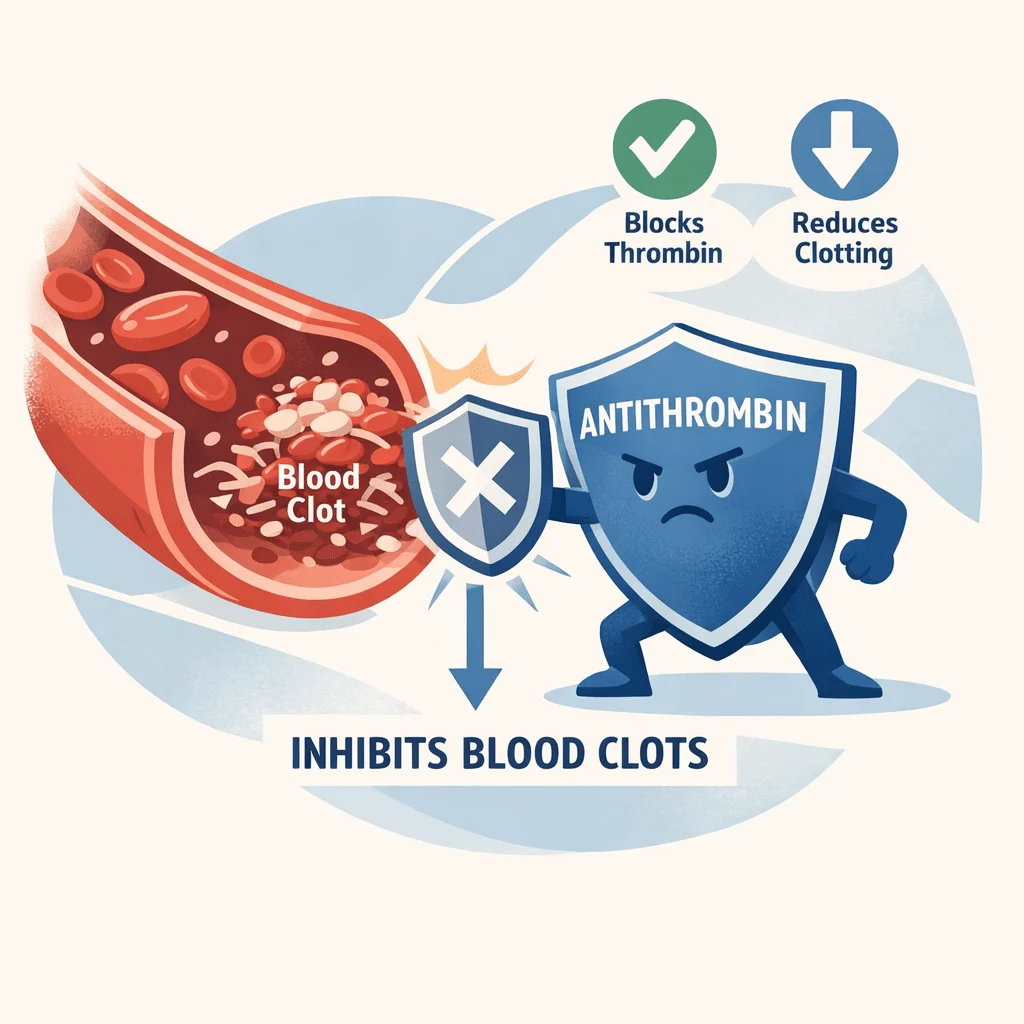
Antitrombiini tekee tämän sitoutumalla kahteen keskeiseen hyytymisentsyymiin – trombiiniin ja tekijä Xa:han – ja inaktivoimalla ne. Kun antitrombiini tarttuu niihin, ne eivät enää pysty käynnistämään hyytymiskaskadia eteenpäin. Tämä on jatkuva, matalan tason prosessi, joka pitää veresi virtaamassa sujuvasti normaalien, vaurioitumattomien verisuonten läpi.
Miksi antitrombiini on tärkeä hepariinihoidossa
Antitrombiinilla on myös toinen, kliinisesti tärkeä rooli: se on hepariinin kohde. Hepariini on nopeasti vaikuttava verenohennuslääke, jota käytetään sairaaloissa leikkausten, dialyysin ja olemassa olevien veritulppien hoidossa. Hepariini ei suoraan estä hyytymistekijöitä, vaan se sitoutuu antitrombiiniin ja nopeuttaa sen toimintaa noin tuhannen kertaisesti. Tämä tarkoittaa, että hepariini voi toimia vain yhtä tehokkaasti kuin veressäsi on käytettävissä olevaa antitrombiinia. Jos antitrombiinin taso on hyvin matala, hepariini ei välttämättä ohenna verta odotetulla tavalla – tätä tilannetta lääkärit kutsuvat hepariiniresistenssiksi.
Miksi lääkärisi voi määrätä tämän testin
Antitrombiini-testi ei kuulu rutiiniveritutkimuksiin. Se tilataan yleensä silloin, kun on erityinen syy epäillä veren hyytymistasapainon häiriötä.
Yleisiä syitä ovat ilman selvää laukaisevaa tekijää ilmaantunut syvä laskimotukos tai keuhkoembolia, erityisesti alle 45-vuotiaalla; vahva sukuhistoria veritulpista; toistuvat tukokset, vaikka tavanomaiset riskitekijät on suljettu pois; selittämätön keskenmenon toistuminen; tai sairaalaympäristössä tilanne, jossa potilas tarvitsee epätavallisen suuria hepariiniannoksia turvallisen antikoagulaatiotason saavuttamiseksi. Testi on osa laajempaa trombofiliatutkimusta, johon kuuluu yleensä myös proteiini C:n, proteiini S -taso, ja perinnölliset hyytymismutaatiot.
Myös ajoituksella on merkitystä. Koska raskaus, akuutit veritulppatapahtumat ja tietyt lääkkeet voivat kaikki tilapäisesti muuttaa antitrombiinin tasoja, lääkärit suosivat usein testin tekemistä näiden tilanteiden ulkopuolella, kun se on mahdollista – tai tulkitsevat niiden aikana saadun tuloksen erityisen varovaisesti. Jos ensimmäinen testisi tehdään akuutin sairauden aikana tai pian uuden veritulpan jälkeen, lääkärisi saattaa suositella uusintamittausta myöhemmin, akuutin vaiheen mentyä ohi, jotta nähdään tavallisempi lähtötasosi.
Kuinka lukea antitrombiini III -testituloksesi
Laboratorioraporttisi näyttää tuloksesi prosentteina normaalista aktiivisuudesta, ja sen rinnalla saattaa olla erillinen antigeeni- (proteiinimäärä) mittaus. Tyypillinen aikuisen viitearvo antitrombiinin aktiivisuudelle on noin 80–120 %, vaikka tarkat raja-arvot vaihtelevat hieman laboratorion ja testausmenetelmän mukaan.
| Tulosluokka | Likimääräinen viitealue | Yleinen merkitys |
|---|---|---|
| Normaali | Noin 80–120 % | Antikoagulanttitoiminta on odotetulla tasolla |
| Lievästi matala | Noin 60–80 % | Voi viitata osittaiseen puutokseen tai tilapäiseen hankittuun syyhyn |
| Kohtalaisesti tai merkittävästi matala | Alle 60 % | Viittaa selvempään puutostilaan, joka usein edellyttää erikoislääkärin seurantaa |
| Korkea | Yli 120 % | Yleensä tilapäinen löydös, jolla on rajallinen kliininen merkitys |
Vertaa aina omaa tulostasi oman laboratorioraporttisi viitearvoihin yleisten lukujen sijaan, sillä menetelmät vaihtelevat laboratorioiden välillä. Yksittäinen poikkeava arvo on lähtökohta keskustelulle lääkärisi kanssa – ei itsessään diagnoosi.
Aktiivisuus- vs. antigeenimittaus
Jotkut laboratoriot ilmoittavat antitrombiinista kaksi erillistä arvoa: aktiivisuuden ja antigeenin. Aktiivisuustesti mittaa, kuinka hyvin proteiini toimii käytännössä, kun taas antigeeenitesti mittaa proteiinin määrää riippumatta siitä, toimiiko se oikein. Näiden kahden vertailu auttaa erottamaan määrään liittyvän ongelman laadullisesta ongelmasta, mikä on tärkeää perimmäisen syyn selvittämiseksi.
Matalan antitrombiini III:n ymmärtäminen: syyt ja tyypit
Viitearvon alittava tulos on paljon yleisempi kuin kohonnut arvo, ja lääkärit jakavat syyt perinnöllisiin ja hankittuihin.
Perinnöllinen antitrombiinin puutos
Perinnöllinen antitrombiinin puutos johtuu mutaatiosta SERPINC1-geenissä, ja sen arvioidaan esiintyvän noin yhdellä 2 000–3 000 ihmisestä. Se periytyy autosomaalisesti dominantisti, eli puutostilaa sairastavan vanhemman lapsella on noin 50 %:n todennäköisyys periä mutaatio. Tyypin I puutostilassa rakenteellisesti normaalia proteiinia on vähemmän, kun taas tyypin II puutostilassa proteiinia tuotetaan normaalisti, mutta se ei toimi kunnolla. Kummassakin tapauksessa veren antikoagulanttinen kapasiteetti heikkenee, mikä lisää ensimmäisen veritulpan elinikäistä riskiä – usein syvä laskimotukos tai keuhkoembolia ilmaantuu ennen 45 vuoden ikää.
Hankittu antitrombiinin puutos
Hankittu puutos kehittyy myöhemmin elämässä jonkin muun sairauden – ei geenimuutoksen – seurauksena. Yleisiä syitä ovat maksasairaus, munuaisten kautta tapahtuva proteiinihukka sekä kuluminen akuutin sairauden aikana, kuten alla on kuvattu.
| Syy | Miksi antitrombiini laskee |
|---|---|
| Vaikea maksasairaus | Maksa tuottaa antitrombiinia, joten pitkälle edennyt maksasairaus heikentää sen tuotantoa; aiheeseen liittyviä merkkiaineita käsitellään maksan toimintakokeiden oppaassamme |
| Nefroottinen oireyhtymä | Tässä munuaistilassa elimistö menettää antitrombiinia suoraan virtsaan – aihetta käsitellään munuaisten toimintapaneelin yleiskatsauksessamme |
| Disseminoitunut intravaskulaarinen koagulaatio (DIC) | Laajalle levinnyt hyytymisaktiviteetti kuluttaa nopeasti antitrombiinia sekä muita hyytymistekijöitä |
| Pitkäaikainen hepariinihoito | Pitkittynyt hepariinin käyttö voi vähitellen laskea antitrombiinin tasoa lisääntyneen kulutuksen seurauksena |
| Suuri leikkaus tai akuutti sairaus | Vakava sairaus ja suuret leikkaukset voivat tilapäisesti laskea tasoja |
Korkea antitrombiini III -taso: mitä kohonnut tulos tarkoittaa
Viitearvon ylittävä antitrombiiniarvo on harvinainen, eikä sillä yleensä ole yhtä suurta kliinistä merkitystä kuin puutoksella. Se voi esiintyä estrogeenia sisältävän hormonihoidon aikana, akuutin maksatulehduksen varhaisvaiheessa tai raskauden ensimmäisellä kolmanneksella. Nämä kohonneet arvot ovat yleensä tilapäisiä ja palautuvat tavallisesti itsestään, kun taustalla oleva syy on poistunut.
Antitrombiini III, hepariiniresistenssi ja sairaalahoito
Koska hepariini tarvitsee antitrombiinia toimiakseen, matalat antitrombiiniarvot voivat heikentää tavanomaisten hepariiniannosten tehoa – erityisesti sydänleikkauksissa, joissa käytetään sydän-keuhkokonetta, tai kriittisesti sairailla potilailla, jotka saavat pitkäkestoista hepariini-infuusiota. Kun potilas tarvitsee poikkeuksellisen suuria hepariiniannoksia turvallisen hyytymisajan saavuttamiseksi, hoitotiimi saattaa tarkistaa antitrombiiniaktiivisuuden osana selvittelyä muiden mahdollisten syiden ohella. Hoitovaihtoehtoja voivat olla suurempi hepariiniannos, antitrombiinikorvaushoito, tuore pakastettu plasma tai siirtyminen antikoagulanttiin, joka ei ole riippuvainen antitrombiinista, kuten suoraan trombiinin estäjään.
Päätöksenteon tueksi: mitä tuloksesi jälkeen yleensä tapahtuu
| Tilanteesi | Yhteinen seuraava askel |
|---|---|
| Normaali tulos, ei oireita | Tämän yksittäisen merkkiaineen osalta ei tarvita erityistä seurantaa |
| Lievästi matala tulos, ei aiempaa tukosta, ei sukuhistoriaa | Seurataan usein; varotoimia harkitaan leikkauksen, raskauden tai liikkumattomuuden yhteydessä |
| Matala tulos ja aiempi veritulppa | Lähete hematologille kattavaa trombofiliatutkimusta varten |
| Matala tulos löydetty perheseulonnassa | Geneettinen neuvonta ja yksilöllinen riskikeskustelu, usein ilman automaattista antikoagulanttihoitoa |
| Matala tulos sairaalahoidon aikana hepariinihoidossa | Hoitotiimi arvioi tilanteen uudelleen, sillä akuutti sairaus voi tilapäisesti laskea tasoja |
Milloin mennä lääkäriin
Ota yhteyttä terveydenhuollon ammattilaiseen viipymättä, jos sinulla on poikkeava antitrombiiniarvo yhdistettynä johonkin seuraavista, sillä ne voivat olla merkkejä aktiivisesta veritulpasta:
- Äkillinen turvotus, kipu, lämpö tai punoitus toisessa jalassa, mikä voi viitata syvään laskimotukokseen tai vastaavaan hyytymätapahtumaan
- Selittämätön hengenahdistus, rintakipu joka pahenee hengittäessä tai veren yskiminen
- Perheenjäsenellä on äskettäin todettu perinnöllinen hyytymishäiriö
- Suunniteltu leikkaus, raskaus tai hormonaalisen ehkäisyn aloittaminen tiedossa olevan tai epäillyn puutoksen yhteydessä
Nämä oireet vaativat kiireellistä lääkärin arviointia riippumatta siitä, milloin viimeisin verikoe on otettu – laboratoriotulos kuvaa vain yhtä hetkeä ajassa.
Eläminen antitrombiinipuutoksen kanssa: käytännön toimenpiteet
Jos sinulla on todettu puutos, hoitosuunnitelmasi riippuu sen vakavuudesta ja henkilökohtaisesta terveyshistoriastasi. Yleisiä terveyttä tukevia toimia ovat riittävä nesteiden juominen, pitkien liikkumattomuusjaksojen välttäminen matkoilla tai leikkauksen jälkeen, terveellisen painon ylläpitäminen sekä tupakoinnin lopettaminen, sillä tupakka edistää verihyytymien muodostumista. Jokaisen, jolla on todettu puutos, tulisi kertoa siitä kaikille uusille terveydenhuollon ammattilaisille ennen toimenpidettä, koska leikkauksen aikainen suunnittelu saattaa vaatia muutoksia. Nämä elintapamuutokset eivät korvaa antikoagulanttihoitoa silloin, kun se on määrätty – ne tukevat lääkärisi hoitosuunnitelmaa, eivät korvaa sitä.
Raskaus ansaitsee erityismaininnan, sillä se on yksi riskialttiimmista ajanjaksoista henkilölle, jolla on todettu puutos. Raskaus itsessään siirtää elimistön luonnostaan kohti voimakkaampaa hyytymistä valmistautuakseen synnytykseen, ja tämä vaikutus voi pahentaa olemassa olevaa puutosta. Monet naiset, joilla on todettu perinnöllinen puutos, saavat ehkäiseviä verenohennusinjektioita raskauden aikana ja useita viikkoja synnytyksen jälkeen. Tarkan hoitosuunnitelman laatii hematologi yhteistyössä synnytyslääkärin kanssa. Jos tiedät, että sinulla on puutos ja suunnittelet raskautta, ota asia puheeksi ajoissa – mieluiten jo ennen raskaaksi tulemista – jotta hoitotiimillä on aikaa valmistella seuranta- ja ehkäisysuunnitelma.
Myös perheenjäsenet ovat osa kokonaiskuvaa. Koska perinnöllinen puutos seuraa ennustettavaa perintökaavaa, diagnoosin saaneen henkilön lähisukulaisille – eli vanhemmille, sisaruksille ja lapsille – voidaan tarjota testausta, erityisesti jos he harkitsevat leikkausta, raskautta tai hormonaalista ehkäisyä. Sukulainen, jolla testi on positiivinen mutta jolla ei ole koskaan ollut veritulppaa, ei automaattisesti aloita pitkäaikaista antikoagulanttihoitoa; sen sijaan painopiste on yleensä kohdennetussa ehkäisyssä tunnetusti suuremman riskin ajanjaksoina.
Uusimmat tieteelliset edistysaskeleet
PubMedin mukaan American Society of Hematology julkaisi vuonna 2023 päivitetyt näyttöön perustuvat ohjeet trombofiliatestauksen osalta, mukaan lukien antitrombiinin, proteiini C:n ja proteiini S:n puutos (Middeldorp et al., Blood Advances, 2023; DOI-koodi). Paneeli totesi, että laaja väestöseulonta ennen ehkäisyn aloittamista ei ole hyödyllistä, mutta suositteli kohdennettua testausta tietyissä tilanteissa – esimerkiksi silloin, kun suvussa esiintyy antitrombiinin puutosta ja henkilö harkitsee hormonihoitoa tai tromboprofylaksiaa. Käytännössä tämä vahvistaa, että antitrombiinin testaus toimii parhaiten, kun se kohdistetaan henkilöihin, joilla on todellinen syy epäilyyn – ei yleisenä seulontatyökaluna.
Vuoden 2024 järjestelmällinen katsaus ja meta-analyysi yhdisti tiedot yli 107 000 henkilöltä selvittääkseen, kuinka paljon perinnölliset trombofiliatyypit todella lisäävät hyytymisriskiä (Alnor ym., Annals of Hematology, 2024; DOI-koodi). Sen mukaan antitrombiinin puutos aiheuttaa keskitasoisen riskin verrattuna muihin perinnöllisiin hyytymishäiriöihin – riski on selvästi kohonnut, mutta jonkin verran pienempi kuin aiemmissa, pienemmissä tutkimuksissa oli arvioitu. Lukijalle tämä on rauhoittava tarkennus: puutos kyllä nostaa riskiä, mutta riskin suuruus saattaa olla vaatimattomampi kuin vanhat arviot antoivat ymmärtää. Tämä on yksi syy siihen, miksi lääkärisi punnitsee henkilökohtaista ja sukuhistoriaasi laboratoriotuloksen rinnalla sen sijaan, että kohtelisi jokaista puutosta samalla tavalla.
Vuoden 2025 järjestelmällinen katsaus, joka tehtiin CDC:lle, tutki tromboosiriskiä naisilla, joilla on perinnöllinen hyytymishäiriö – mukaan lukien antitrombiinin puutos – ja jotka käyttävät hormonaalista ehkäisyä (Tepper ym., Contraception, 2025; DOI-koodi). Katsauksen mukaan estrogeenia sisältävä ehkäisy näytti lisäävän hyytymisriskiä entisestään naisilla, joilla on jo trombofiliadiagnoosi, kun taas pelkkää progestiinia sisältävistä menetelmistä näyttö jäi niukemmaksi. Mitä tämä tarkoittaa sinulle: jos sinulla on todettu puutos ja harkitset ehkäisyä, asia kannattaa ottaa puheeksi lääkärisi kanssa – estrogeenittomia vaihtoehtoja pidetään yleisesti turvallisempina tässä yhteydessä. Taustalla olevan näytön varmuus on kuitenkin edelleen arvioitu matalaksi, eli lisätutkimuksia odotetaan tarkentamaan näitä suosituksia.
Sairaalaympäristössä vuoden 2025 tutkimus, johon osallistui 605 sydänleikkauspotilasta, testasi suoraan, selittääkö matala antitrombiiniaktiivisuus hepariiniresistenssiä ohitusleikkauksen aikana (Kim ym., Journal of Cardiothoracic and Vascular Anesthesia, 2025; DOI-koodi). Yllättäen preoperatiivinen antitrombiiniaktiivisuus ei ollut tässä ryhmässä merkittävästi yhteydessä hepariiniresistenssiin; aktiivinen infektio ja aortakirurgia olivat sen sijaan vahvempia riskitekijöitä. Tämä on varhainen mutta hyvin suunniteltu löydös, joka tarkentaa pitkään vallinnutta käsitystä — se viittaa siihen, että tietyissä kirurgisissa yhteyksissä matala antitrombiini saattaa selittää hepariiniresistenssiä aiemmin luultua vähemmän, eikä antitrombiinikonsentraatin rutiininomainen antaminen sen ehkäisemiseksi ole aina välttämätöntä. Kyseessä on toistaiseksi yksittäinen tutkimus, ja käytännöt saattavat vaihdella sairaaloiden välillä, kun lisää tutkimustietoa kertyy.
Erikseen mainittakoon, että Johns Hopkinsin vuoden 2023 tutkimuksessa tarkasteltiin hankittua antitrombiinipuutosta lapsilla, joita tuettiin ekstrakorporaalisella membraanihapetuksella (ECMO) eli sydän-keuhkokoneella (Procaccini ym., British Journal of Clinical Pharmacology, 2023; DOI-koodi). Puutos oli yleistä tässä kriittisesti sairaiden potilaiden ryhmässä, ja noin kolmasosa mittauksista pysyi matalana jopa antitrombiinikorvaushoidon jälkeen. ECMO-hoitoa saavien lasten perheille tämä korostaa, että antitrombiinin seuranta tehohoidossa on kehittyvä ala, jossa annostelustrategioita hiotaan edelleen eikä niitä ole vielä täysin vakioitu.
Sanasto
| Termi | Määritelmä |
|---|---|
| Antitrombiini (antitrombiini III) | Maksan tuottama proteiini, joka estää trombiinin ja tekijä Xa:n toimintaa liiallisen veren hyytymisen ehkäisemiseksi |
| Trombofiilia | Lisääntynyt taipumus veren hyytymiseen, joko perinnöllinen tai hankittu |
| Trombiini | Keskeinen hyytymisentsyymi, joka muuttaa fibrinogeenin fibriiniksi — hyytymän muodostavaksi verkoksi |
| Tekijä Xa | Hyytymisentsyymi, joka auttaa aktivoimaan trombiinia; antitrombiinin ja joidenkin antikoagulanttilääkkeiden keskeinen kohde |
| Hepariiniresistenssi | Heikentynyt vaste tavallisille hepariiniannoksille, joka liittyy joskus matalaan antitrombiiniaktiivisuuteen |
| SERPINC1-geeni | Geeni, joka ohjaa antitrombiinin tuotantoa; tämän geenin mutaatiot aiheuttavat perinnöllisen puutoksen |
| Disseminoitunut intravaskulaarinen koagulaatio (DIC) | Vakava tila, jossa laajalle levinnyt hyytymisaktiviteetti kuluttaa hyytymistekijöitä ja voi aiheuttaa samanaikaisesti sekä verenvuotoa että hyytymistä |
| Nefroottinen oireyhtymä | Munuaissairaus, jossa virtsaan erittyy merkittävästi proteiineja, mukaan lukien antitrombiinia |
| Autosomaalinen dominantti periytyminen | Perinnöllinen malli, jossa yksi mutaatiokopio kummalta tahansa vanhemmalta riittää mahdollisesti aiheuttamaan tilan |
Usein kysytyt kysymykset
Mikä on vaarallisen matala antitrombiini III -taso?
Ei ole olemassa yhtä yleispätevää raja-arvoa sille, mikä on "vaarallinen", koska riski riippuu koko kliinisestä kokonaisuudesta eikä pelkästään yhdestä luvusta. Siitä huolimatta alle noin 60 %:n aktiivisuustasot herättävät yleensä enemmän huolta lääkäreissä, erityisesti jos henkilöllä tai hänen lähisukulaisillaan on ollut veritulppia. Vaikea puutos yhdistettynä akuutteihin laukaiseviin tekijöihin, kuten leikkaukseen tai raskauteen, lisää huolta entisestään. Hematologisi tulkitsee juuri sinun arvoasi yhdessä oireidesi ja sairaushistoriasi kanssa sen sijaan, että soveltaisi samaa kiinteää raja-arvoa kaikille.
Voiko antitrombiini III -tasoja parantaa luonnollisin keinoin?
Ruokavalio ja elämäntavat eivät voi korjata geneettistä puutosta, koska taustalla oleva geenimuutos pysyy muuttumattomana. Yleiset verenkiertoa tukevat tavat – kuten liikunnallinen aktiivisuus, pitkittyneen liikkumattomuuden välttäminen, tupakoimattomuus ja terveellisen painon ylläpitäminen – voivat kuitenkin auttaa pienentämään kokonaisveritulppariskiäsi. Jos matala taso johtuu hankinnaisesta sairaudesta, kuten maksasairaudesta, taustalla olevan sairauden hoitaminen voi antaa antitrombiiniarvojen palautua ajan myötä.
Onko antitrombiini III sama kuin antitrombiini?
Kyllä. Proteiini nimettiin alun perin antitrombiini III:ksi, kun useita numeroituja antitrombiiniaktiivisuuksia kuvattiin vuosikymmeniä sitten, mutta "antitrombiini" on nykyään saman proteiinin vakiintunut tieteellinen nimi. Saatat nähdä kumpaakin termiä käytettävän toistensa synonyymeinä laboratorioraporteissa, lääketieteellisessä kirjallisuudessa ja lääkärisi puheessa.
Aiheuttaako antitrombiini III -puutos oireita itsessään?
Yleensä ei. Useimmilla puutosta sairastavilla ei ole oireita ennen kuin veritulppa todella muodostuu, minkä vuoksi tila havaitaan usein vasta ensimmäisen tromboosin jälkeen tai perheen seulonnassa, kun sukulaisella on todettu sama tila. Tämä on tärkeä syy siihen, miksi lääkärit suhtautuvat nuoremmalla henkilöllä esiintyvään selittämättömään veritulppaan riittävän vakavasti tutkiakseen taustalla olevia syitä.
Kuinka usein antitrombiini III tulisi mitata uudelleen?
Ei ole olemassa yleispätevää aikataulua, koska uusintatestauksen tarve riippuu siitä, miksi testi alun perin tilattiin. Yksittäinen lievästi poikkeava tulos oireettomalla henkilöllä saatetaan yksinkertaisesti käydä läpi tulevalla vastaanottokäynnillä, kun taas vahvistettu puutos ja veritulppahistoria johtavat usein hematologin toteuttamaan säännöllisempään seurantaan. Lääkärisi laatii sinulle yksilöllisen seurantasuunnitelman tilanteesi perusteella.
Voivatko lääkkeet vaikuttaa antitrombiini III -testitulokseeni?
Kyllä. Hepariinin käyttö, erityisesti pitkäaikainen käyttö, voi laskea mitattua antitrombiiniaktiivisuutta lisääntyneen kulutuksen vuoksi, kun taas estrogeenia sisältävät lääkkeet voivat nostaa sitä. Tämän vuoksi on tärkeää kertoa laboratoriolla ja lääkärillesi kaikista käyttämistäsi lääkkeistä, mukaan lukien hormonaaliset ehkäisyvalmisteet, jotta tuloksesi voidaan tulkita oikeassa yhteydessä eikä sen oleteta heijastavan lähtötasoasi.
Antitrombiini III on kehosi luonnollisen hyytymisen hallintajärjestelmän ytimessä, ja se toimii yhdessä sellaisten merkkiaineiden kanssa kuin aPTT, proteiini C, ja D-dimeeri antaakseen lääkäreille kattavamman kuvan hyytymisterveydestäsi. Kun ymmärrät, mitä nämä arvot tarkoittavat, voit seurata ennaltaehkäisevää suunnitelmaa luottavaisemmin ja esittää tarkempia kysymyksiä seuraavalla lääkärikäynnilläsi. AI DiagMe on suunniteltu auttamaan sinua ymmärtämään tällaisia tuloksia – se selittää, mitä lukusi kertovat, selkeällä kielellä ilman diagnoosin tekemistä tai lääkärisi hoidon korvaamista.
Ymmärrä laboratoriotuloksiasi tekoälyn DiagMen avulla
Tulkitse tuloksesi muutamassa minuutissa
Lähteet
- Antitrombiini III -injektio — Cleveland Clinic
- Perinnöllinen antitrombiinin puutos — MedlinePlus Genetics, U.S. National Library of Medicine (NIH)
- Syvä laskimotukos (DVT): oireet ja syyt — Mayo Clinic
- Middeldorp ym., American Society of Hematology 2023 -ohjeet laskimoveritulppien hallintaan: trombofiliatestaus — Blood Advances, 2023 (PubMed)
- Alnor ym., Laskimoveritulpan riski aikuisilla, joilla on perinnöllinen trombofilia: systemaattinen katsaus ja meta-analyysi — Annals of Hematology, 2024 (PubMed)
- Tepper ym., Veritulpan riski hormonaalisen ehkäisyn käytössä trombofiliaa sairastavilla naisilla: päivitetty systemaattinen katsaus — Contraception, 2025 (PubMed)
- Kim ym., Hepariiniresistenssin riskitekijöiden analyysi sydänleikkauksen aikana: aiheuttaako antitrombiinin puutos hepariiniresistenssiä? — Journal of Cardiothoracic and Vascular Anesthesia, 2025 (PubMed)
- Procaccini ym., Hankitun antitrombiinin puutoksen arviointi lapsipotilailla, joita tuetaan kehonulkoisella happeuttamisella (ECMO) — British Journal of Clinical Pharmacology, 2023 (PubMed)
Lisälukemista
- Koagulaatiopaneelin selitys: PT, PTT, INR ja D-dimeeri
- Proteiini C: Täydellinen opas verikokeen ymmärtämiseen
- Proteiini S -testin tulokset: Tasojesi ja niiden merkityksen ymmärtäminen
- K-vitamiini: Ymmärrä tulokset ja toimi niiden perusteella
- Verikokeita ennen leikkausta: mitä tutkimuksia tehdään ja miksi