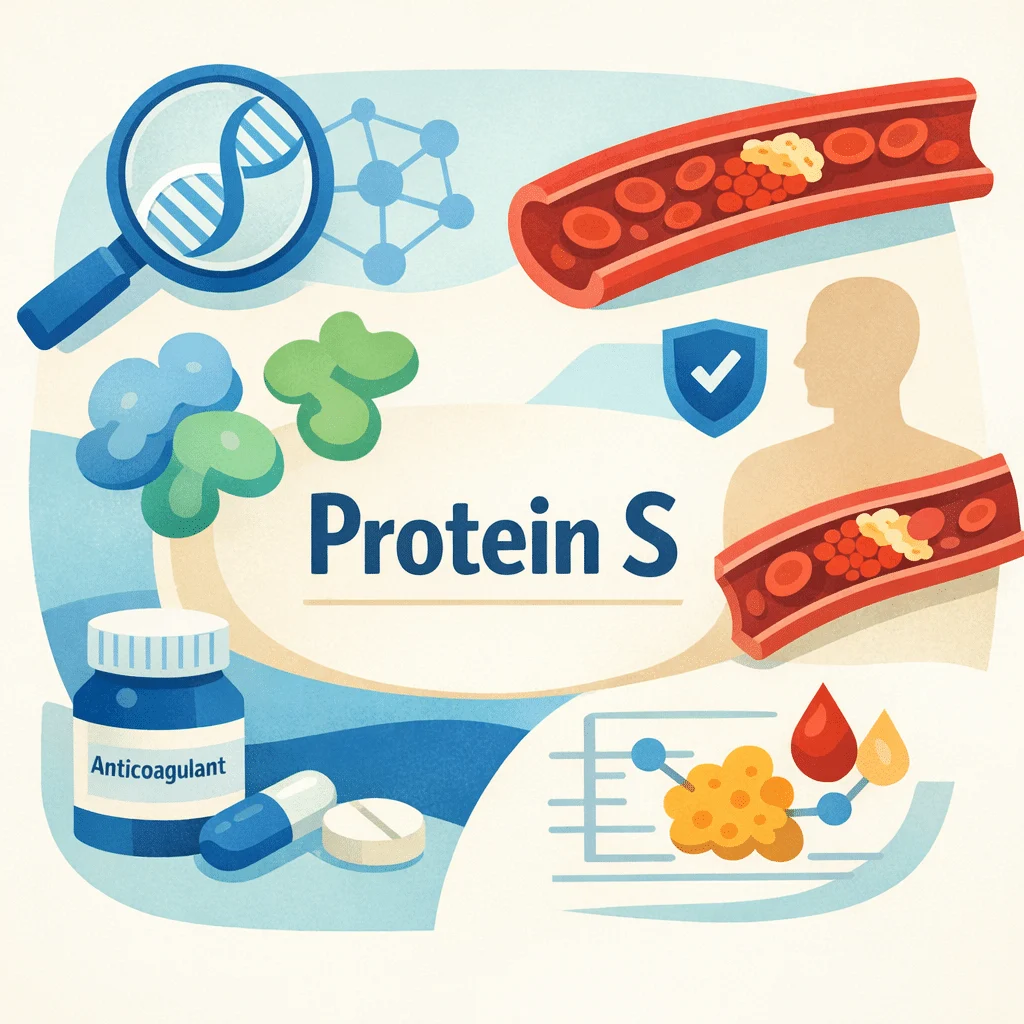
プロテインS欠乏症は、血液凝固を調節するこの天然タンパク質が不足しているか、正常に機能しない状態であり、望ましくない血栓ができるリスクが高まります。プロテインSは通常、凝固システムのバランスを保つ補助タンパク質として働くため、不足するとそのバランスが崩れ、過剰な凝固に傾くことがあります。この記事では、プロテインSの働き、検査レポートに記載される総量・遊離型・活性値の読み方、低値の原因、そして正確な解釈においてタイミングがなぜ重要なのかを説明します。また、検査が実際に有用かどうかを医師がどのように判断するかについての最新の研究もご紹介します。
プロテインSとはどのようなタンパク質で、どのような働きをするのですか?
プロテインSは主に肝臓で作られ、血漿中を循環するタンパク質です。血管の内側を覆う内皮細胞も少量を産生しています。血流中のプロテインSの約60%はC4b結合タンパク質という別のタンパク質と結合して不活性化され、残りの約40%が遊離型として循環しています。この遊離型が実際に機能する生物学的活性を持つ部分です。
プロテインSは補因子として機能します。つまり、単独で働くのではなく、別の分子の効果を高める役割を担っています。その相手となるのが活性化プロテインCで、血栓が役割を果たした後に、凝固因子である第Va因子と第VIIIa因子を分解する天然の抗凝固物質です。プロテインSはこの分解を大幅に促進します。機能的なプロテインSが十分でない場合、活性化プロテインCの働きは著しく低下し、凝固因子が必要以上に長く活性化したままになることがあります。原因不明の血栓を調べる医師が この関連する天然抗凝固タンパク質 を同時に検査することが多いのは、どちらかが不足している場合に共通する根本的な問題が示唆されるためです。
この調節機能が重要な理由
血液凝固は精密にバランスが保たれたシステムです。凝固因子は、けがの後に出血を止めるために素早く活性化される必要がありますが、修復が完了したら、プロテインS、プロテインC、アンチトロンビンといった天然の抗凝固物質がその活動をオフにする必要があります。これらの「ブレーキ」のひとつが欠如または機能低下すると、本来必要のない血管内で血栓が形成されやすい状態、すなわち血栓性素因(血栓形成傾向)に傾くことがあります。関連する天然抗凝固物質も同様の調節的役割を果たしており、このシステムをより深く理解したい方は アンチトロンビンIII検査とその臨床的意義 をご覧ください。
医師がプロテインS検査を指示する理由
プロテインS検査は通常の血液検査には含まれていません。医師が指示するのは主に凝固異常を調べる場合で、最も多いのは、明らかな原因なく静脈血栓症(静脈内に生じた異常な血栓)を発症した後です。これには、脚の深部静脈に血栓が形成される深部静脈血栓症や、血栓が肺に移動して血流を遮断する肺塞栓症が含まれます。詳しい臨床像を知りたい方は 肺塞栓症の症状と診断に関する詳細ガイドをご参照ください。また、若い年齢で初めて血栓が生じた場合、血栓が繰り返し起こる場合、または血栓症の強い家族歴がある場合にも、この検査が検討されます。
遺伝性血液凝固障害の検査には実際のコストがかかり、適切でないタイミングで行うと誤解を招く結果が出る可能性があるため、現在の血液学のガイダンスは、以前と比べて検査対象者の選定がより慎重になっています。2023年の米国血液学会のガイドラインでは、プロテインSを含む血栓性素因検査は、ホルモン避妊薬の開始や予防的治療に関する意思決定に結果が影響するような場合(例えばプロテインS、プロテインC、またはアンチトロンビン欠乏症の家族歴がある場合)など、特定の状況に限定して行うことが最善であると述べています(Middeldorp et al., Blood Advances、2023年)。つまり、この検査が最も有用なのは、結果によって次のステップが実際に変わる場合であり、血栓が生じた後に単純な好奇心から行うものではありません。医師が検査を指示する場合、多くは広範な検査パネルの一部として行われます。 凝固系検査パネル全体がどのように組み合わさっているか を理解することで、プロテインSだけでは全体像を把握できない理由がわかります。
プロテインS検査の結果を読み解く
検査結果が届いたとき、レポートには関連する3つの測定値(プロテインS総量、遊離プロテインS、プロテインS活性)のうち1つ以上が記載されている場合があります。それぞれが異なる情報を示しており、違いを理解することで異常値のフラグの意味が把握しやすくなります。この専門的なマーカーに取り組む前に、まず全体的な理解を深めたい方は、 血液検査の結果の読み方に関する基本ガイド をご覧ください。
総量・遊離型・活性:各項目の意味
プロテインS総抗原は、結合型・遊離型を問わず、存在するすべてのタンパク質分子を測定します。遊離プロテインS抗原は、結合していない活性型の分画のみを測定します。これは活性化プロテインCを実際に補助する部分です。プロテインS活性は、分子数を単純に数えるのではなく、実験室での凝固反応においてタンパク質がどれだけ機能しているかを調べる機能的アッセイです。遊離プロテインSが生物学的な働きを担う部分であるため、欠乏症のスクリーニングにおいては、3つの中で最も臨床的に有用な指標と多くの検査機関が考えています。
以下の表は、検査レポートにこれらの値がどのように表示されるかの典型的な例と、成人の一般的な基準範囲を示しています。検査方法や対象集団は検査機関によって異なるため、ご自身の結果には必ず各検査機関が記載した基準範囲を適用してください。
| 測定項目 | 反映する内容 | 成人の一般的な基準範囲 |
|---|---|---|
| プロテインS総抗原 | 結合型・遊離型を含むすべてのプロテインS分子 | 約70〜140% |
| 遊離プロテインS抗原 | 結合していない生物学的活性型の分画のみ | 約70〜140% |
| プロテインS活性 | 凝固アッセイにおける機能的パフォーマンス | 約65〜140% |
検査機関では、基準範囲外の結果にアスタリスクや矢印などの記号、または色分けを使って注意を促すことがよくあります。赤字で表示された値や下向き矢印が付いた値は、通常、正常値を下回っていることを示しています。フリープロテインSと活性の両方が低い場合は本当の欠乏症を強く示唆しますが、他の値に異常がなく1回の測定でのみ低値が出た場合は、それほど心配する必要はありません。
検査結果を読み解くための簡単なチェックリスト
受診前に検査結果を理解するために役立つ、いくつかの簡単なステップをご紹介します。まず、総量・遊離型・活性のいずれが測定されたかを確認してください。これらの値は互いに置き換えられるものではありません。次に、他の情報源の数値ではなく、ご自身の検査報告書に記載されている基準範囲と照らし合わせてください。第三に、複数の測定値に異常があるかどうかを確認してください。遊離抗原と活性の両方が一致して異常を示す場合、その所見はより信頼性が高まります。第四に、妊娠や最近の体調不良など、一時的に値を下げる可能性のある状況がないか確認してください。最後に、症状や病歴を含めた全体像の解釈は、必ず医療専門家に委ねてください。
結果に影響するタイミング:妊娠、ホルモン、体調不良
プロテインSの値は一定ではありません。病気ではない一般的な状況でも、生理的にプロテインSが低下することがあります。これはこの検査を理解するうえで最も重要な実践的ポイントの一つです。検査のタイミングが適切でないと、本来は正常な人が欠乏症のように見えたり、その逆になったりすることがあります。
妊娠中はプロテインSの値が自然に低下し、その程度が大きいこともあります。この影響は出産後も数週間続くことがあります。妊娠中の方は、 妊娠中に行われる血液検査の一般的な内容 を参照すると、このパターンをより広い文脈で理解するのに役立ちます。複合経口避妊薬や一部のホルモン補充療法など、エストロゲンを含む薬剤も、同様のホルモン経路を通じてプロテインSの値を低下させます。血栓が形成されると、凝固反応の一環としてプロテインSが一時的に消費されるため、血栓症が活動中またはその直後に検査を行うと、実際の基準値を反映しない偽の低値が出ることがあります。抗凝固療法もさらに複雑な要因となります。ワルファリンなどのビタミンK拮抗薬は、肝臓がプロテインSの活性型を産生するためにビタミンKを必要とするため、プロテインSの産生を低下させます。この関係は、 ビタミンKが凝固検査の結果に与える影響、一方、他のアッセイタイプの中には、使用する検査方法に固有の形で、異なる抗凝固薬の種類によって影響を受けるものもあります。
これらの影響が重なり合うため、専門家たちはますます次の点を強調しています。妊娠中、ホルモン薬の服用中、急性血栓の発症中、または特定の抗凝固薬の使用中に得られた単一の異常なプロテインS検査結果は、最終的な診断として扱うべきではありません。最も信頼性の高いアプローチは、これらの状況から十分に離れた時期に検査を行い、一時的な影響が消えた後に再検査で異常所見を確認することです。その間に手術が予定されている方は、 術前血液検査で一般的に調べる項目 を確認しておくと、何を調べるかがわかります。
遺伝性プロテインS欠乏症と後天性プロテインS欠乏症
医師はプロテインS低値を大きく2つのカテゴリーに分類しており、この区別は長期的な管理方法に影響します。
遺伝性欠乏症
遺伝性プロテインS欠乏症は、プロテインSを作るための指示を提供する遺伝子であるPROS1遺伝子の変異によって引き起こされる遺伝性疾患です。通常、常染色体優性遺伝の形式で受け継がれます。つまり、親から変異した遺伝子のコピーを1つ受け継ぐだけで血栓リスクが高まり、この疾患を持つ人は変異遺伝子を子どもそれぞれに約50%の確率で伝える可能性があります。米国国立医学図書館によると、プロテインS欠乏症は約500人に1人に影響を与えると推定されており、この欠乏症を持つ人の約50〜60%が生涯のうちに静脈血栓塞栓症を発症します。より重篤なまれな型は、両親から変異遺伝子を受け継いだ場合に起こり、新生児に電撃性紫斑病(purpura fulminans)と呼ばれる重篤な血栓性疾患を引き起こすことがあります。
後天性欠乏症
後天性プロテインS欠乏症は、遺伝子変異ではなく別の医学的状況によって後天的に発症するもので、一般的に遺伝性の型よりも多く見られます。認められている原因としては、妊娠および産後期間、エストロゲン含有薬、ビタミンK拮抗薬による抗凝固療法、肝臓が主な産生部位であることから生じる重篤な肝疾患、腎臓からのタンパク質喪失を引き起こすネフローゼ症候群、ループスなどの一部の自己免疫疾患、および一部の急性感染症が挙げられます。根本的な原因が一時的であることが多いため、後天性欠乏症は原因が治療または除去されると回復することが多く、生涯にわたる遺伝性の型とは異なります。
異常値があなたの健康に意味すること
タンパクS欠乏症が確認された場合、深部静脈血栓症と肺塞栓症の両方を含む総称である静脈血栓塞栓症のリスクが高まります。遺伝性タンパクS欠乏症の方は、一般集団と比べて初回血栓症のリスクが明らかに高く、45歳未満で発症することも少なくありません。ただし、軽度の欠乏症がある方の多くは生涯にわたって血栓を発症しないため、この所見は将来の疾患を確定するものではなく、複数あるリスク因子のひとつとして理解するのが適切です。医師は血栓が溶け始めた後に測定される関連断片を調べることがあります。詳しくは以下をご覧ください。 Dダイマー検査が血栓性素因の精査をどのように補完するか.
タンパクS高値は欠乏症に比べてはるかにまれで、研究も十分に進んでいません。慢性炎症性疾患や抗凝固療法の中止後に報告された例もありますが、高値の臨床的意義はまだ明確ではなく、それ単独で治療が必要とされることは一般的にありません。
最新の科学的進歩
近年の血液学の文献では、タンパクSの生物学的な解明よりも、実際の臨床においていつ・どのように検査を行うべきかの精緻化に焦点が当てられており、これは検査結果の解釈にも直接影響します。
米国血液学会(American Society of Hematology)が2023年に発表したエビデンスに基づくガイドラインでは、血栓性素因に関する既存の研究を検討した結果、複合経口避妊薬の開始前に一般集団を対象としたスクリーニング検査は推奨されないと結論づけられました。また、その他のほとんどの状況においても、タンパクS欠乏症の家族歴がホルモン療法の選択や妊娠前後の予防に関する意思決定に影響する場合など、状況に応じた条件付きの検査のみが適切とされています(Middeldorp et al., Blood Advances, 2023)。つまり、タンパクS検査が最も有用なのは、その結果が特定の意思決定に直接関わる場合であり、日常的な安心確認のために行うものではないということです。
2024年に発表された詳細なレビュー( 血栓と止血に関するセミナー )では、タンパクS欠乏症が古典的な遺伝性血栓性素因の中でも最も正確な診断が難しいとされる理由が検討されています。このレビューによると、タンパクSは結合型と遊離型の両方の形で血中を循環しており、すべての欠乏症の種類を確実に検出できる単一の検査法は存在しないとされています。また、第V因子ライデン(factor V Leiden)と呼ばれる遺伝子変異など、よく見られる干渉因子がタンパクS活性の結果を偽低値にする一方で、抗原レベルには影響しない場合があることも説明されています(Moore, 血栓と止血に関するセミナー, 2024)。このことから、医師が真の欠乏症を確定する前に検査を繰り返したり、複数の検査法を組み合わせたりすることが多い理由がわかります。
2025年に発表された症例報告( 臨床生化学 はこの課題を直接示しています。臨床医たちは、初回の血栓性素因パネル検査でプロテインS欠乏症が疑われた若い妊婦患者について報告しました。しかし8か月後に再検査を行い、PROS1遺伝子の遺伝子解析と組み合わせた結果、妊娠の影響および干渉する遺伝子変異を考慮すると、実際には真の欠乏症の診断基準を満たしていないことが明らかになりました(Hansen et al., 臨床生化学、2025年)。この実際の症例は、特に妊娠中の単一の異常値が必ずしも最終的な答えではなく、後日再検査を行うことがなぜ重要かを示しています。
2025年に上級実践看護師向けに発表されたレビューでは、プロテインS欠乏症を含む5つの古典的な遺伝性血栓性素因に関する現在の考え方がまとめられました。これらの素因を持つ人の多くは血栓を発症することはなく、国内ガイドラインでは、陽性結果が治療方針の変更や家族への利益につながる場合に限って検査を行うことが推奨されており、広範なスクリーニングは控える方向にあると述べられています(Tinkle, Journal of the American Association of Nurse Practitioners、2026年)。これは、欠乏症の所見がそれ単独で結論を出すものではなく、より大きなリスク全体像の一部であることを改めて示しています。
最後に、2025年に Expert Review of Molecular Diagnostics に掲載された論評では、プロテインS欠乏症の診断において、従来の機能的アッセイおよび抗原アッセイに加えてPROS1遺伝子の遺伝子検査をより積極的に活用すべきかどうかという、この分野での継続的な議論が取り上げられました(Favaloro et al., Expert Review of Molecular Diagnostics、2025年)。検査方法は現在も進化し続けているため、結果が不明確な場合は、どの種類のアッセイが使用されたかを担当医に確認することをお勧めします。
受診のタイミング
ほとんどの方は、プロテインSについて意識する必要はありません。ただし、特定の状況では速やかに医療機関を受診することが必要であり、過去にプロテインSの異常が確認されている場合は、それらのサインをいち早く認識することが特に重要です。
片方の脚や腕に突然の痛み、腫れ、赤み、または熱感が現れた場合は、深部静脈血栓症(DVT)の可能性があるため、すぐに医療機関を受診してください。突然の息切れ、呼吸時に悪化する胸の痛み、動悸、または血を吐く(喀血)などの症状は肺塞栓症を示す可能性があり、緊急の診察が必要です。突然の激しい頭痛や、顔のゆがみ・言葉が出にくいなど脳卒中のサインが見られる場合も、すぐに医療機関を受診してください。
45歳未満で原因不明の血栓が生じたことがある方、脳や腹部など通常とは異なる部位に静脈血栓ができた方、血栓を繰り返している方、または血栓性疾患の強い家族歴がある方(特に家族にプロテインS・プロテインC・アンチトロンビン欠乏症の確定診断を受けた方がいる場合)は、緊急ではありませんが、検査について担当医にご相談ください。また、エストロゲン含有の避妊薬やホルモン療法を検討している女性で、このような家族歴がある場合は、治療を開始する前に医療提供者に必ずお伝えください。
確定した欠乏症のフォローアップ
タンパク質S欠乏症が適切な再検査で確認された場合、その後の管理は画一的なものではなく、個人に合わせた対応が行われます。軽度で無症状の欠乏症があり、血栓形成の既往がない方は、一般的に、すでに静脈血栓塞栓症を経験した方とは大きく異なる管理が行われます。後者の場合は、長期または生涯にわたる抗凝固療法が必要になる可能性が高くなります。妊娠、予定手術、長期の安静・不動状態は、過去に血栓が生じたことがない方でも、既知の欠乏症がある場合に一時的な抗凝固薬などの予防措置が検討される状況です。こうした判断は個人の病歴や欠乏症の種類に大きく左右されるため、血液専門医または最初の検査を依頼した主治医と連携しながら決定されます。これらの診察に備えたい方は、こちらもご覧ください: 主要な血液検査マーカーの総合用語集 関連する専門用語に慣れるために。
用語集
| 用語 | 定義 |
|---|---|
| 活性化プロテインC | 凝固因子VaおよびVIIIaを分解する天然の抗凝固物質で、プロテインSはその補因子です。 |
| 補因子(コファクター) | 単独では作用せず、別のタンパク質の働きを高める補助分子のこと。 |
| 深部静脈血栓症(DVT) | 深部静脈(多くは脚)に形成される血栓。 |
| 遊離型プロテインS | 血液中のプロテインSのうち、タンパク質と結合していない部分で、生物学的に活性のある分画とされています。 |
| PROS1遺伝子 | プロテインSを作るための指示を提供する遺伝子で、変異があると遺伝性欠乏症を引き起こすことがあります。 |
| 肺塞栓症(PE) | 血栓が肺の動脈に移動して詰まる状態で、生命を脅かす可能性があります。 |
| 血栓性素因(血栓形成傾向) | 遺伝性または後天性を問わず、血液が通常よりも固まりやすい傾向のこと。 |
| ビタミンK拮抗薬 | ワルファリンなどの抗凝固薬の一種で、プロテインSを含むビタミンK依存性凝固タンパク質の肝臓での産生を抑制します。 |
| 静脈血栓塞栓症(VTE) | 静脈内に血栓が形成される状態の総称で、深部静脈血栓症(DVT)と肺塞栓症の両方を含みます。 |
よくある質問
プロテインSとプロテインCは同じものですか?
いいえ、両者は同じ調節システムの中で協調して働く、異なる2つのタンパク質です。プロテインCは活性化されると、過剰な凝固因子を分解する酵素として機能します。一方、プロテインSはその補因子として働き、この分解プロセスをより効率的に進める役割を担います。どちらのタンパク質が欠乏しても、それぞれ独立して血栓症のリスクを高める可能性があるため、原因不明の血栓を調べる際には、医師が両方を同時に検査することが多いです。
妊娠中にプロテインSが低い値で戻ってきたのはなぜですか?
妊娠中はプロテインSが一時的に低下する最も一般的な原因の一つです。妊娠に伴うホルモン変化によって血中濃度が自然に低下し、この影響は出産後も数週間続くことがあります。妊娠中に低い値が出ても、必ずしも真の欠乏症があるとは限りません。遺伝性の疾患が疑われる場合は、妊娠やホルモン変化が落ち着いた後に再検査を行うことが一般的に推奨されています。
一時的な欠乏症と生涯続く欠乏症はどのように見分けますか?
一時的または後天的な欠乏症は、妊娠の終了、医師の監督下での抗凝固薬の一時中断、急性疾患の回復など、根本的な原因が解消されれば、通常は正常範囲に戻ります。一方、遺伝性の欠乏症は、時期を変えて複数回検査を行っても、また一時的な影響がない状況でも、持続的に低い値を示します。標準的な血液検査だけでは判断が難しい場合、PROS1遺伝子の遺伝子検査が遺伝性の原因を確認するのに役立つことがあります。
新しい血液サラサラの薬はプロテインSの検査に影響しますか?
直接経口抗凝固薬(DOAC)は、ビタミンK拮抗薬のようにプロテインSの実際の濃度を低下させることは一般的にありませんが、測定に使用される一部の機能的な検査法に干渉し、誤った結果を生じさせることがあります。そのため、検査はDOACを開始する前、または医師の監督下で一時的に中断した後に行うのが最善とされることが多く、薬剤と検査法の相互作用ではなく、真のベースライン値を反映した結果を得ることができます。
プロテインSが低いと、血栓ではなく出血が起こることはありますか?
いいえ、プロテインS欠乏症は出血ではなく、血栓が形成されやすくなる傾向と関連しています。これは、プロテインSが凝固を抑制する体の自然なブレーキの一つとして機能しているためです。出血は、欠乏症が確認された場合に処方される抗凝固薬の副作用として起こることがありますが(特に用量が多すぎる場合)、これは欠乏症そのものではなく治療によるものです。
プロテインS欠乏症は妊娠や妊孕性に影響しますか?
欠乏症は直接的に妊孕性を低下させるわけではありませんが、習慣性流産や子癇前症など、特定の妊娠合併症のリスクを高める可能性があります。これは、胎盤に影響を与える小さな血栓と関連していると考えられています。また、妊娠自体もホルモンの変化とは無関係な理由でプロテインSの値を低下させるため、欠乏症が判明している、または疑われる女性が妊娠中または妊娠を計画している場合は、産科チームによるより密な経過観察が一般的に行われます。
参考文献
- プロテインS欠乏症:概要・原因・症状・治療 — クリーブランドクリニック: https://my.clevelandclinic.org/health/diseases/21877-protein-s-deficiency
- プロテインS欠乏症 — MedlinePlus遺伝学、米国国立医学図書館(NIH): https://medlineplus.gov/genetics/condition/protein-s-deficiency/
- 深部静脈血栓症(DVT)— 症状と原因、Mayo Clinic: https://www.mayoclinic.org/diseases-conditions/deep-vein-thrombosis/symptoms-causes/syc-20352557
- Middeldorp S, et al. American Society of Hematology 2023 guidelines for management of venous thromboembolism: thrombophilia testing — Blood Advances, 2023 (PubMed): https://doi.org/10.1182/bloodadvances.2023010177
- Moore GW. Thrombophilia Screening: Not So Straightforward — Seminars in Thrombosis and Hemostasis, 2024 (PubMed): https://doi.org/10.1055/s-0044-1786807
- Hansen RS, et al. Diagnosing protein S deficiency – Navigating challenges — Clinical Biochemistry, 2025 (PubMed): https://doi.org/10.1016/j.clinbiochem.2025.110950
- Tinkle MB. 遺伝性血栓性素因:遺伝学と検査に関する考慮事項 — Journal of the American Association of Nurse Practitioners, 2026 (PubMed): https://doi.org/10.1097/JXX.0000000000001216
- Favaloro EJ, Moore GW, Pasalic L. Diagnosing thrombophilia: the case for genetic or functional testing? — Expert Review of Molecular Diagnostics, 2025 (PubMed): https://doi.org/10.1080/14737159.2025.2588621
関連記事
- プロテインC:血液検査の結果をわかりやすく解説する完全ガイド
- 凝固検査の解説:PT、PTT、INR、Dダイマー
- アンチトロンビンIII検査:数値の見方と意味をわかりやすく解説
- Dダイマー血液検査:検査結果をわかりやすく解説
- 肺塞栓症:症状・検査・治療
プロテインSの検査結果を自分で確認しようとすると、疑問が増えることも少なくありません。特に、妊娠中やホルモン剤の使用中、または最近血栓ができた場合は、数値に影響が出ている可能性があります。AI DiagMeはあなたの検査レポートを読み取り、総プロテインS・遊離型・活性値など各数値の意味を、医師の診察前にわかりやすい言葉で説明します。このサービスは検査結果を理解するためのものであり、病気の診断や医師への相談に代わるものではありません。