Testul antitrombin III măsoară o proteină anticoagulantă naturală care împiedică sângele tău să se coaguleze prea ușor. Medicii recomandă de obicei acest test după un cheag de sânge inexplicabil sau recurent, ori înainte de a începe anumite tratamente, pentru a verifica dacă „frâna" naturală a coagulării funcționează normal. Acest articol explică ce face antitrombina III, cum să îți interpretezi rezultatul față de valorile de referință, ce poate însemna un nivel scăzut sau crescut și când este nevoie de un specialist. Vei găsi, de asemenea, o explicație pe înțelesul tuturor despre legătura dintre antitrombină și tratamentul cu heparină în spital, un glosar al termenilor folosiți și răspunsuri la întrebările frecvente ale pacienților.
Ce este antitrombina III?
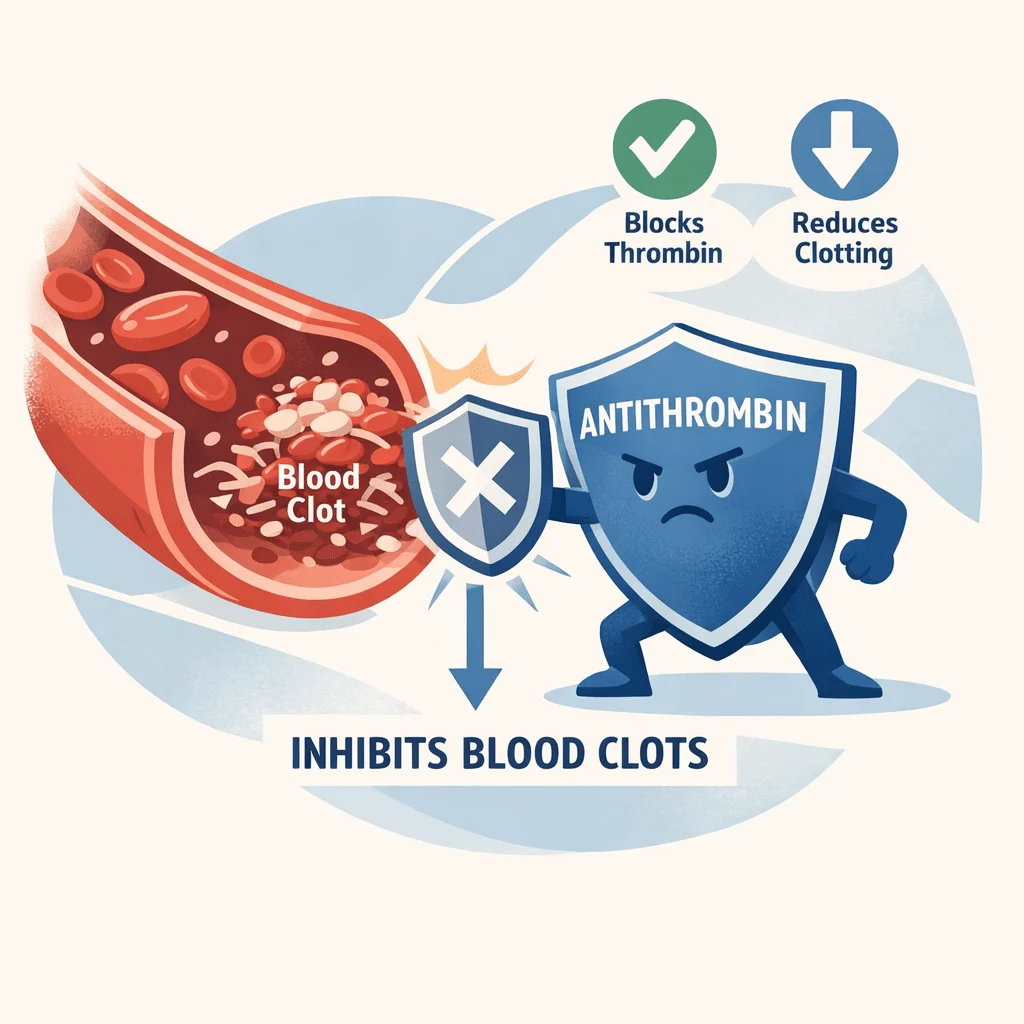
Antitrombina III, numită de obicei simplu antitrombină, este o proteină produsă în principal de ficat și eliberată în sânge. Rolul ei este să acționeze ca o frână a coagulării. Sângele trebuie să se coaguleze pentru a opri sângerarea după o leziune, dar acest proces trebuie să se oprească odată ce și-a îndeplinit rolul — altfel cheagurile ar putea continua să crească în interiorul vaselor de sânge sănătoase.
Antitrombina face acest lucru legându-se de două enzime cheie ale coagulării — trombina și factorul Xa — și inactivându-le. Odată ce antitrombina se leagă de ele, acestea nu mai pot propulsa cascada coagulării înainte. Este un proces continuu, de intensitate redusă, care menține sângele tău să curgă lin prin vasele normale, neafectate.
De ce contează antitrombina în tratamentul cu heparină
Antitrombina are și un al doilea rol, important din punct de vedere clinic: este ținta heparinei, un medicament anticoagulant cu acțiune rapidă folosit în spitale pentru intervenții chirurgicale, dializă și tratamentul cheagurilor existente. Heparina nu blochează direct factorii de coagulare; în schimb, se leagă de antitrombină și îi accelerează acțiunea de aproximativ o mie de ori. Aceasta înseamnă că heparina poate funcționa doar atât de bine cât permite cantitatea de antitrombină disponibilă în sângele tău. Dacă nivelul antitrombinei este foarte scăzut, heparina s-ar putea să nu subțieze sângele conform așteptărilor — o situație pe care medicii o numesc rezistență la heparină.
De ce îți poate recomanda medicul acest test
Testul antitrombinei nu face parte din analizele de rutină. Este solicitat de obicei atunci când există un motiv specific de a suspecta o problemă în echilibrul coagulării.
Motivele frecvente includ o tromboză venoasă profundă sau o embolie pulmonară neprovocată, mai ales la o persoană sub 45 de ani; un istoric familial puternic de cheaguri de sânge; cheaguri recurente în ciuda eliminării factorilor de risc obișnuiți; pierderi de sarcină inexplicabile; sau, în mediul spitalicesc, atunci când un pacient are nevoie de doze neobișnuit de mari de heparină pentru a atinge un nivel sigur de anticoagulare. Testul face parte dintr-un bilanț mai amplu de trombofilii, care include de obicei și proteina C, nivelurile de proteină S, precum și mutații genetice ale coagulării.
Momentul testării contează și el. Deoarece sarcina, evenimentele acute de coagulare și anumite medicamente pot modifica temporar nivelurile de antitrombină, medicii preferă adesea să efectueze testul în afara acestor situații, când este posibil, sau să interpreteze un rezultat obținut în aceste condiții cu precauție suplimentară. Dacă primul tău test a fost efectuat în timpul unei boli acute sau la scurt timp după formarea unui nou cheag, medicul tău îți poate recomanda o măsurătoare repetată mai târziu, după ce perioada acută a trecut, pentru a vedea nivelul tău de bază mai tipic.
Cum să citești rezultatul testului de antitrombină III
Buletinul tău de analize va arăta rezultatul ca procent din activitatea normală, uneori alături de o măsurătoare separată a antigenului (cantitatea de proteină). Un interval de referință tipic pentru activitatea antitrombinei la adulți este de aproximativ 80% până la 120%, deși valorile exacte variază ușor în funcție de laborator și de metoda de testare.
| Categoria rezultatului | Interval aproximativ | Semnificație generală |
|---|---|---|
| Normal | Aproximativ 80–120% | Funcția anticoagulantă se încadrează în intervalul așteptat |
| Ușor scăzut | Aproximativ 60–80% | Poate reflecta o deficiență parțială sau o cauză dobândită temporară |
| Moderat până la sever scăzut | Sub 60% | Mai consistent cu o deficiență semnificativă, care necesită adesea urmărire de către un specialist |
| Crescută | Peste 120% | De obicei un rezultat temporar, cu relevanță clinică limitată |
Compară întotdeauna valoarea ta cu intervalul de referință tipărit pe propriul tău buletin de analize, nu cu o valoare generală, deoarece metodele diferă între laboratoare. O singură valoare anormală este un punct de plecare pentru o discuție cu medicul tău, nu un diagnostic în sine.
Testarea activității față de testarea antigenului
Unele laboratoare raportează două valori separate ale antitrombinei: activitatea și antigenul. Testul de activitate măsoară cât de bine funcționează efectiv proteina, în timp ce testul de antigen măsoară cantitatea de proteină prezentă, indiferent dacă funcționează corect sau nu. Compararea celor două ajută la diferențierea unei probleme de cantitate față de una de calitate, ceea ce contează pentru identificarea cauzei de bază.
Antitrombina III scăzută: cauze și tipuri
Un rezultat sub limita normală este mult mai frecvent decât unul crescut, iar medicii împart cauzele în categorii ereditare și dobândite.
Deficiența ereditară de antitrombină
Deficiența ereditară de antitrombină este cauzată de o mutație a genei SERPINC1 și se estimează că afectează aproximativ 1 din 2.000–3.000 de persoane. Urmează un model de transmitere autozomal dominant, ceea ce înseamnă că un copil al unui părinte afectat are aproximativ 50% șanse să moștenească mutația. Deficiența de tip I implică o cantitate redusă de proteină cu structură normală, în timp ce deficiența de tip II produce o cantitate normală de proteină care nu funcționează corespunzător. În ambele cazuri, capacitatea anticoagulantă a sângelui este redusă, ceea ce crește riscul pe parcursul vieții de a face un prim cheag de sânge — adesea o tromboză venoasă profundă sau o embolie pulmonară, care apare de obicei înainte de vârsta de 45 de ani.
Deficiența dobândită de antitrombină
Deficiența dobândită apare mai târziu în viață din cauza unei alte afecțiuni medicale, nu a unei modificări genetice. Printre cauzele frecvente se numără bolile hepatice, pierderea de proteine prin rinichi și consumul crescut în cursul unei boli acute, rezumate mai jos.
| Cauză | De ce scade antitrombina |
|---|---|
| Boală hepatică severă | Ficatul produce antitrombina, astfel că boala hepatică avansată reduce producția; markerii asociați sunt prezentați în ghidul nostru privind testele funcției hepatice |
| Sindrom nefrotic | Această afecțiune renală determină pierderea antitrombinei direct în urină, un subiect abordat în prezentarea generală a panelului de funcție renală |
| Coagulare intravasculară diseminată (CID) | Activarea generalizată a coagulării consumă rapid antitrombina împreună cu alți factori de coagulare |
| Terapia prelungită cu heparină | Utilizarea îndelungată a heparinei poate reduce treptat antitrombina prin consum crescut |
| Intervenție chirurgicală majoră sau boală acută | Bolile grave și intervențiile chirurgicale extinse pot reduce tranzitoriu nivelurile |
Niveluri crescute de antitrombină III: ce înseamnă un rezultat ridicat
Un nivel de antitrombină peste limita normală este rar și, în general, are o semnificație clinică mult mai redusă decât o deficiență. Poate apărea în cursul terapiei hormonale cu estrogeni, în faza inițială a unei inflamații hepatice acute sau în primul trimestru de sarcină. Aceste creșteri sunt de obicei temporare și se remit de regulă fără tratament specific, odată ce cauza de bază dispare.
Antitrombina III, rezistența la heparină și îngrijirea în spital
Deoarece heparina depinde de antitrombină pentru a funcționa, nivelurile scăzute de antitrombină pot reduce eficacitatea dozelor standard de heparină, în special în timpul intervențiilor chirurgicale cardiace care implică un aparat cord-plămân sau la pacienții în stare critică aflați sub perfuzii prelungite cu heparină. Când un pacient necesită doze neobișnuit de mari de heparină pentru a atinge un timp de coagulare sigur, echipa medicală poate verifica activitatea antitrombinei ca parte a investigației, alături de alte explicații posibile. Opțiunile de tratament pot include o doză mai mare de heparină, înlocuirea antitrombinei, plasmă proaspătă congelată sau trecerea la un anticoagulant care nu depinde de antitrombină, cum ar fi un inhibitor direct al trombinei.
Un ghid de orientare: ce se întâmplă de obicei după obținerea rezultatului tău
| Situația ta | Pasul următor obișnuit |
|---|---|
| Rezultat normal, fără simptome | Nu este necesară o monitorizare specifică doar pentru acest marker |
| Ușor scăzut, fără antecedente de cheag, fără istoric familial | De obicei monitorizat; se iau în considerare măsuri de precauție în jurul intervențiilor chirurgicale, sarcinii sau perioadelor de imobilizare |
| Rezultat scăzut cu antecedente personale de cheag de sânge | Trimitere la un hematolog pentru o evaluare completă a trombofilie |
| Rezultat scăzut descoperit prin screening familial | Consiliere genetică și discuție individualizată despre riscuri, adesea fără inițierea automată a terapiei anticoagulante |
| Rezultat scăzut în timpul spitalizării, sub tratament cu heparină | Reevaluat de echipa medicală curantă, deoarece o boală acută poate scădea tranzitoriu nivelurile |
Când să mergi la medic
Contactează imediat medicul tău dacă ai un rezultat anormal al antitrombinei însoțit de oricare dintre următoarele, deoarece acestea pot fi semne ale unui cheag de sânge activ:
- Umflătură bruscă, durere, căldură sau roșeață la un picior, care pot sugera o tromboză venoasă profundă sau un alt eveniment trombotic asociat
- Dificultăți de respirație inexplicabile, durere în piept care se agravează la respirație sau tuse cu sânge
- Un membru al familiei diagnosticat recent cu o tulburare ereditară de coagulare
- Planuri pentru o intervenție chirurgicală, sarcină sau inițierea contracepției hormonale în cazul unui deficit cunoscut sau suspectat
Aceste simptome necesită evaluare medicală urgentă, indiferent de când a fost efectuat ultimul tău test de sânge, deoarece un rezultat de laborator reflectă doar un moment specific în timp.
Viața cu deficit de antitrombină: pași practici
Dacă ai o deficiență confirmată, planul de îngrijire va depinde de severitatea acesteia și de istoricul tău personal. Măsurile generale care susțin o circulație sănătoasă includ hidratarea corespunzătoare, evitarea perioadelor lungi de imobilitate în timpul călătoriilor sau după intervenții chirurgicale, menținerea unei greutăți sănătoase și renunțarea la fumat, deoarece tutunul favorizează formarea cheagurilor. Orice persoană cu o deficiență cunoscută ar trebui să informeze fiecare nou medic despre acest diagnostic înainte de o procedură, deoarece planificarea perioperatorie poate necesita ajustări. Niciunul dintre acești pași de stil de viață nu înlocuiește tratamentul anticoagulant atunci când acesta este prescris; ei completează planul medicului tău, nu îl înlocuiesc.
Sarcina merită o atenție specială, deoarece reprezintă una dintre perioadele cu cel mai mare risc pentru o persoană cu o deficiență cunoscută. Sarcina în sine determină în mod natural o tendință mai mare de coagulare a organismului, pentru a se pregăti de naștere, iar acest efect poate amplifica o deficiență preexistentă. Multe femei cu o deficiență ereditară confirmată primesc injecții preventive anticoagulante în timpul sarcinii și timp de câteva săptămâni după naștere, planul exact fiind stabilit de un hematolog care colaborează cu un obstetrician. Dacă știi că ai o deficiență și plănuiești o sarcină, discutând despre aceasta din timp — ideal înainte de concepție — îi oferi echipei tale medicale timp să pregătească un plan de monitorizare și prevenție.
Membrii familiei fac și ei parte din tabloul clinic. Deoarece deficiența ereditară urmează un tipar de transmitere previzibil, rudele de gradul întâi — adică părinții, frații și copiii — ale unei persoane diagnosticate cu această afecțiune pot fi testate la rândul lor, mai ales dacă iau în considerare o intervenție chirurgicală, o sarcină sau contracepția hormonală. O rudă care testează pozitiv, dar nu a avut niciodată un cheag, nu începe automat un tratament anticoagulant pe termen lung; în schimb, accentul se pune de obicei pe prevenția țintită în perioadele cu risc crescut cunoscut.
Cele mai recente progrese științifice
Conform PubMed, Societatea Americană de Hematologie a publicat în 2023 ghiduri actualizate bazate pe dovezi privind testarea trombofilie, inclusiv deficiența de antitrombină, proteina C și proteina S (Middeldorp et al., Blood Advances, 2023; DOI). Grupul de experți a constatat că screeningul populațional larg înainte de începerea contracepției hormonale nu este util, dar a recomandat testarea țintită în situații specifice, cum ar fi un istoric familial de deficiență de antitrombină atunci când cineva ia în considerare terapia hormonală sau tromboprofilaxia. Pe înțelesul tuturor, aceasta confirmă că testarea antitrombinei este cel mai eficientă atunci când este orientată către persoanele cu un motiv real de suspiciune, și nu ca instrument de screening general.
O analiză sistematică și meta-analiză din 2024 a adunat date de la peste 107.000 de persoane pentru a cuantifica cât de mult cresc efectiv riscul de coagulare diferitele tipuri de trombofilii ereditare (Alnor et al., Annals of Hematology, 2024; DOI). S-a constatat că deficitul de antitrombină prezintă un nivel intermediar de risc față de alte tulburări de coagulare ereditare — semnificativ crescut, dar oarecum mai scăzut decât sugeraseră studiile anterioare, mai mici. Pentru cititori, aceasta este o nuanță liniștitoare: un deficit crește riscul, dar amploarea acestui risc poate fi mai modestă decât estimările mai vechi implicau, ceea ce reprezintă unul dintre motivele pentru care medicul tău ia în considerare istoricul personal și familial alături de rezultatul analizei, în loc să trateze fiecare deficit în mod identic.
O analiză sistematică din 2025, realizată pentru CDC, a examinat riscul de tromboză la femeile cu o tendință ereditară de coagulare, inclusiv deficit de antitrombină, care utilizează contracepție hormonală (Tepper et al., Contracepție, 2025; DOI). S-a constatat că metodele contraceptive care conțin estrogen par să crească și mai mult riscul de coagulare la femeile care au deja o trombofilă, în timp ce dovezile privind metodele doar cu progesteron au rămas mai limitate. Ce înseamnă asta pentru tine: dacă ai un deficit cunoscut și iei în considerare o metodă contraceptivă, merită să discuți cu medicul tău, deoarece opțiunile fără estrogen sunt considerate în general mai sigure în acest context — deși certitudinea dovezilor de bază este încă descrisă ca scăzută, ceea ce înseamnă că sunt așteptate mai multe cercetări pentru a rafina aceste recomandări.
Din perspectiva spitalicească, un studiu din 2025 realizat pe 605 pacienți supuși chirurgiei cardiace a testat direct dacă activitatea scăzută a antitrombinei explică rezistența la heparină în timpul operației pe cord deschis (Kim et al., Journal of Cardiothoracic and Vascular Anesthesia, 2025; DOI). Surprinzător, activitatea preoperatorie a antitrombinei nu a fost asociată semnificativ cu rezistența la heparină în acest grup; infecția activă și chirurgia aortică au fost factorii de risc mai importanți. Aceasta este o constatare timpurie, dar bine concepută, care nuanțează o presupunere de lungă durată — sugerează că, în anumite contexte chirurgicale, nivelul scăzut de antitrombină poate fi o explicație mai puțin importantă pentru rezistența la heparină decât se credea anterior și că administrarea de rutină a concentratului de antitrombină pentru prevenirea acesteia nu este întotdeauna necesară. Acesta rămâne un singur studiu, iar practica poate continua să varieze între spitale pe măsură ce se acumulează mai multe cercetări.
Separat, un studiu din 2023 de la Johns Hopkins a analizat deficiența dobândită de antitrombină la copiii susținuți cu oxigenare extracorporeală prin membrană (ECMO), un aparat de suport cardiac și pulmonar (Procaccini et al., British Journal of Clinical Pharmacology, 2023; DOI). Deficitul era frecvent în această populație de pacienți critici, iar aproximativ o treime din măsurători au rămas scăzute chiar și după înlocuirea antitrombinei. Pentru familiile copiilor aflați pe ECMO, acest lucru subliniază că monitorizarea antitrombinei în terapia intensivă este un domeniu în evoluție, strategiile de dozare fiind încă în curs de rafinare, nu pe deplin standardizate.
Glosar
| Termen | Definiție |
|---|---|
| Antitrombina (antitrombina III) | O proteină produsă de ficat care inhibă trombina și factorul Xa pentru a preveni coagularea excesivă a sângelui |
| Trombofilii | O tendință crescută a sângelui de a forma cheaguri, fie ereditară, fie dobândită |
| Trombină | O enzimă cheie a coagulării care transformă fibrinogenul în fibrină, rețeaua care formează un cheag |
| Factorul Xa | O enzimă a coagulării care ajută la activarea trombinei; o țintă principală a antitrombinei și a unor medicamente anticoagulante |
| Rezistența la heparină | Un răspuns redus la dozele standard de heparină, uneori asociat cu activitate scăzută a antitrombinei |
| Gena SERPINC1 | Gena care furnizează instrucțiunile pentru producerea antitrombinei; mutațiile la acest nivel cauzează deficiența ereditară |
| Coagulare intravasculară diseminată (CID) | O afecțiune gravă în care activarea coagulării pe scară largă consumă factorii de coagulare, putând provoca simultan sângerare și formare de cheaguri |
| Sindrom nefrotic | O afecțiune renală care determină pierderi semnificative de proteine prin urină, inclusiv antitrombina |
| Transmitere autozomal dominantă | Un model genetic în care o singură copie a genei mutate, moștenită de la oricare dintre părinți, este suficientă pentru a putea provoca afecțiunea |
Întrebări frecvente
Ce nivel al antitrombinei III este considerat periculos de scăzut?
Nu există o valoare-limită universală pentru „periculos", deoarece riscul depinde de întregul tablou clinic, nu doar de cifră. Cu toate acestea, nivelurile de activitate sub aproximativ 60% sunt în general tratate cu mai multă seriozitate de către clinicieni, mai ales în prezența unui istoric personal sau familial de tromboze. O deficiență severă, combinată cu factori declanșatori acuți precum intervenția chirurgicală sau sarcina, ridică și mai mult nivelul de îngrijorare. Hematologul tău interpretează valoarea ta specifică împreună cu simptomele și istoricul tău, fără a aplica un prag fix pentru toată lumea.
Pot fi îmbunătățite natural nivelurile de antitrombină III?
Dieta și stilul de viață nu pot corecta o deficiență genetică, deoarece mutația genică de bază rămâne neschimbată. Totuși, obiceiurile generale care susțin o circulație sănătoasă — cum ar fi menținerea activității fizice, evitarea imobilității prelungite, renunțarea la fumat și menținerea unei greutăți sănătoase — pot contribui la reducerea riscului general de tromboză. Dacă un nivel scăzut este cauzat de o afecțiune dobândită, precum boala hepatică, tratarea acelei afecțiuni de bază poate permite nivelurilor de antitrombină să se recupereze în timp.
Antitrombina III este același lucru cu antitrombina?
Da. Proteina a fost denumită inițial antitrombină III când, cu zeci de ani în urmă, au fost descrise mai multe activități antitrombotice numerotate, însă „antitrombina" este acum denumirea științifică standard pentru aceeași proteină. Este posibil să întâlnești ambii termeni folosiți în mod interschimbabil pe buletinele de analize, în literatura medicală și de către medicul tău.
Deficitul de antitrombină III provoacă simptome prin el însuși?
De obicei, nu. Majoritatea persoanelor cu deficit nu prezintă niciun simptom până când se formează efectiv un cheag de sânge, motiv pentru care afecțiunea este adesea descoperită abia după o primă tromboză sau în urma unui screening familial, odată ce o rudă a primit diagnosticul. Acesta este un motiv important pentru care medicii iau în serios un cheag inexplicabil apărut la o persoană tânără și investighează cauzele subiacente.
Cât de des ar trebui retestată antitrombina III?
Nu există un calendar universal, deoarece retestarea depinde de motivul pentru care a fost solicitată inițial analiza. Un rezultat ușor anormal la o persoană fără simptome poate fi pur și simplu discutat la o vizită viitoare, în timp ce un deficit confirmat cu antecedente de tromboză implică adesea o monitorizare periodică mai structurată de către un hematolog. Medicul tău va stabili un plan de urmărire personalizat în funcție de situația ta.
Pot medicamentele să influențeze rezultatul analizei mele de antitrombină III?
Da. Utilizarea heparinei, în special pe termen prelungit, poate scădea activitatea măsurată a antitrombinei din cauza consumului crescut, în timp ce medicamentele care conțin estrogeni o pot crește. Din acest motiv, este important să informezi laboratorul și medicul tău despre fiecare medicament pe care îl iei, inclusiv contracepția hormonală, pentru ca rezultatul să poată fi interpretat în contextul corect, și nu considerat automat ca reflectând nivelul tău de bază.
Antitrombina III se află în centrul sistemului natural de control al coagulării din corpul tău, acționând alături de markeri precum aPTT, proteina C, și D-dimer pentru a oferi medicilor o imagine mai completă a sănătății tale de coagulare. Înțelegerea semnificației acestor valori te poate ajuta să urmezi un plan preventiv cu mai multă încredere și să pui întrebări mai precise la următoarea consultație. AI DiagMe este conceput să te ajute să înțelegi rezultate ca acestea — îți explică ce arată valorile tale în limbaj simplu, fără să te diagnosticheze și fără să înlocuiască îngrijirea medicului tău.
Înțelege-ți rezultatele analizelor cu AI DiagMe
Obține interpretarea rezultatelor în câteva minute
Surse
- Injecție cu Antitrombină III — Cleveland Clinic
- Deficiența Ereditară de Antitrombină — MedlinePlus Genetics, Biblioteca Națională de Medicină a SUA (NIH)
- Tromboza Venoasă Profundă (TVP): Simptome și Cauze — Mayo Clinic
- Middeldorp et al., Ghidurile Societății Americane de Hematologie 2023 pentru Managementul Tromboembolismului Venos: Testarea Trombofiliei — Blood Advances, 2023 (PubMed)
- Alnor et al., Riscul de Tromboembolism Venos la Adulții cu Trombofilii Ereditare: O Revizuire Sistematică și Meta-Analiză — Annals of Hematology, 2024 (PubMed)
- Tepper et al., Riscul de tromboză asociat utilizării contracepției hormonale la femeile cu trombofilii: o revizuire sistematică actualizată — Contraception, 2025 (PubMed)
- Kim et al., Analiza factorilor de risc pentru rezistența la heparină în timpul chirurgiei cardiace: deficiența de antitrombină cauzează rezistență la heparină? — Journal of Cardiothoracic and Vascular Anesthesia, 2025 (PubMed)
- Procaccini et al., Evaluarea deficienței dobândite de antitrombină la pacienții pediatrici susținuți prin oxigenare extracorporeală cu membrană — British Journal of Clinical Pharmacology, 2023 (PubMed)
Lectură suplimentară
- Panoul de coagulare explicat: PT, PTT, INR și D-dimer
- Proteina C: ghid complet pentru înțelegerea analizei tale de sânge
- Rezultatele testului Proteina S: înțelege nivelurile tale și semnificația lor
- Vitamina K: Înțelege și acționează în funcție de rezultatele tale
- Analize de sânge înainte de operație: ce teste se fac și de ce