プロテインC欠乏症とは、体内の天然抗凝固タンパク質が不足しているか、または正常に機能しないために、異常な血栓ができるリスクが高まる状態です。生まれつきの遺伝性のものと、肝臓病や特定の薬剤などによって後天的に生じるものがあります。このガイドでは、プロテインCの働き、検査結果で低値・高値が出た場合の読み方、欠乏の原因、そして検査のタイミングが重要な理由を説明します。また、最新の研究をわかりやすくまとめた内容と、すぐに医療機関を受診すべき警告サインの一覧もご紹介します。
プロテインCとは何か、なぜ重要なのか?
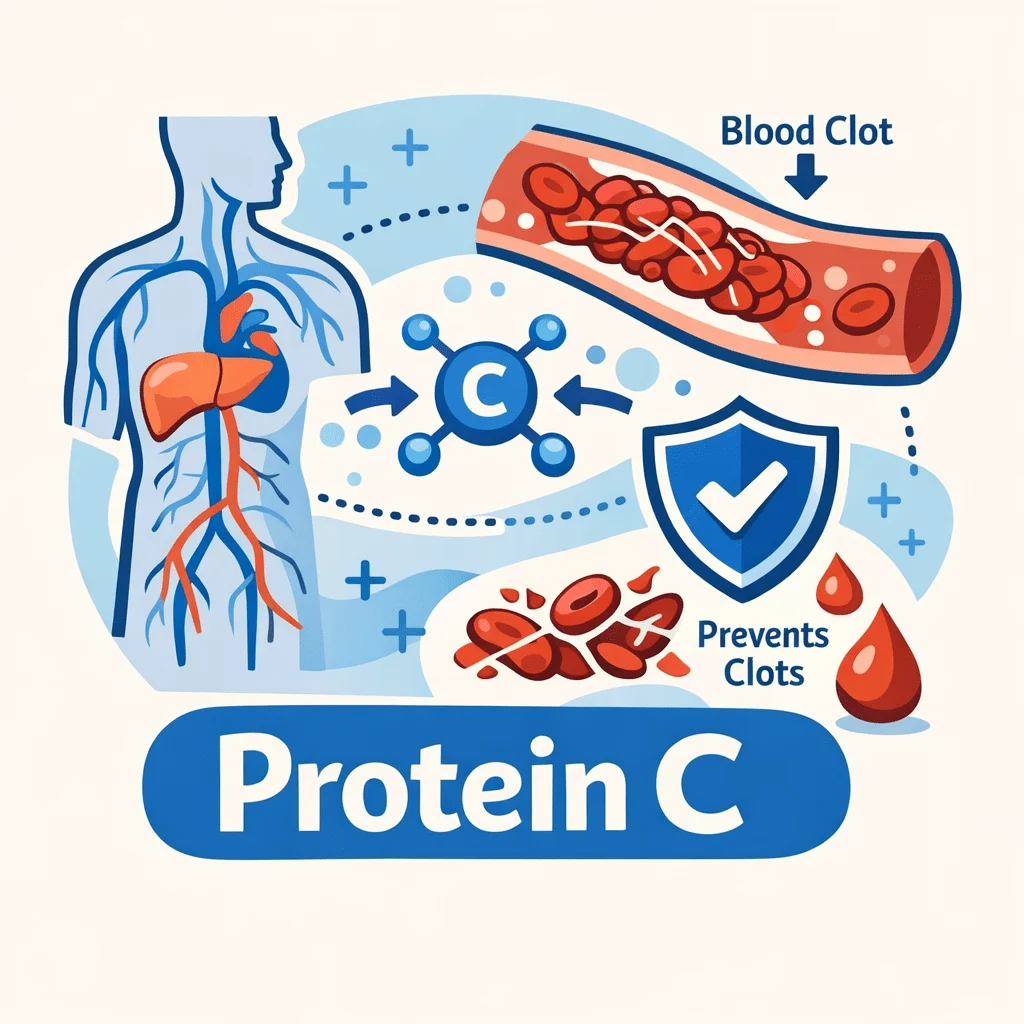
プロテインCは肝臓で作られる小さなタンパク質で、不活性な状態で血液中を循環しています。体が凝固をコントロールする必要があるとき、プロテインCは活性化プロテインC(APC)と呼ばれる活性型に変換されます。この活性型タンパク質が凝固因子Va・VIIIaという2つの因子を阻害することで、凝固カスケードの進行を抑えます。簡単に言えば、プロテインCは血液凝固システムが過剰に働かないようにするブレーキの役割を果たしています。
このブレーキ機能が重要なのは、凝固がバランスの問題だからです。体はケガの後の出血を止めるために血栓を形成する必要がありますが、同時に正常な血管内で血栓が形成されるのを防がなければなりません。プロテインCは、プロテインSやアンチトロンビンとともに、このバランスを保つ天然抗凝固因子の一つです。医師が通常プロテインC検査を指示するのは、原因不明または再発性の血栓が生じた場合や、近親者に既知の凝固異常がある場合です。
プロテインCの検査結果の読み方
検査報告書には通常、プロテインCが正常活性に対するパーセンテージで記載され、その横に検査機関の基準範囲が示されています。成人の一般的な基準範囲はおよそ70〜140%ですが、検査機関や測定方法によって異なります。インターネット上の数値と比較するのではなく、必ずご自身の報告書に記載されている基準範囲と照らし合わせてください。
検査機関によっては、プロテインCの「活性値」(タンパク質がどれだけ正常に機能しているかを測定)と「抗原量」(機能に関わらずタンパク質がどれだけ存在するかを測定)の2つの値を別々に報告する場合があります。両方を測定することで、次のセクションで説明する2種類の遺伝性欠乏症を区別するのに役立ちます。「L」の表示、下向きの矢印、または赤字でフラグが立てられた結果は、通常、基準範囲を下回っていることを示しています。
| プロテインC活性レベル | 一般的な分類 |
|---|---|
| 70%超 | 通常、正常基準範囲内 |
| 50〜70% | 軽度欠乏;定期的な経過観察が行われることが多い |
| 30〜50% | 中等度欠乏;通常は専門医による評価が行われる |
| 30%未満 | 重度欠乏;血液内科による密な経過観察が必要 |
これらの区分はあくまでも目安であり、固定された基準値ではありません。また、ご自身の検査機関の基準範囲が常に優先されます。1回の低値だけでは永続的な欠乏症の確定にはなりません。日常的なさまざまな状況によって一時的に値が低下することがあり、その詳細については次のセクションで説明します。
検査のタイミングと薬が結果に影響する理由
プロテインC検査には、多くの患者さんが見落としがちな実際的な注意点があります。不適切なタイミングで採血すると、結果が誤った値を示す可能性があります。急性血栓症の最中や直後に検査を行うと、血栓形成そのものによって凝固関連タンパク質が一時的に消費されるため、実際より低い値が出ることがあります。このため、医師は通常、血栓の治療後に患者さんの状態が安定してから少なくとも数週間後に検査を行うことを推奨しています。
抗凝固薬を使用している場合は、さらに状況が複雑になります。ワルファリンはプロテインCの産生を低下させます。これは、プロテインCが機能するためにビタミンKを必要とするためです。そのため、ワルファリン服用中に検査を行うと、プロテインCが本来正常な方でも、人工的に低い値が出ることがあります。直接経口抗凝固薬(DOAC)も一部の機能的アッセイに影響を与える場合があります。このため、遺伝性欠乏症の可能性を調べる医師は、医師の管理のもとで抗凝固療法を一時中断または完了させてから、診断用の採血を行うことが多いです。
妊娠もまた結果に影響を与える状況の一つです。妊娠中は自然に凝固傾向が高まるため、そのバランスを保つためにプロテインCの値がほぼ安定しているか、わずかに上昇することがあります。そのため、妊娠中に採取した結果はその背景を考慮して解釈されます。
プロテインC欠乏症:遺伝性と後天性
プロテインC欠乏症は、生まれつきのものか、別の疾患によって後から生じるものかによって、大きく2つに分類されます。
遺伝性プロテインC欠乏症
遺伝性欠乏症は、プロテインCを作るための指示を担うPROC遺伝子の変異によって引き起こされます。米国国立医学図書館のサービスであるMedlinePlus Geneticsによると、この疾患は常染色体優性遺伝のパターンで受け継がれます。つまり、変異した遺伝子コピーが1つあるだけで軽度の欠乏症を引き起こすのに十分なことが多く、変異したコピーを2つ受け継いだ場合はより重篤な病型となります。軽度の遺伝性プロテインC欠乏症は一般人口のおよそ500人に1人に見られますが、そのほとんどは血栓を発症することはありません。
遺伝学者は遺伝性欠乏症を2つのタイプに分類しています。タイプIはプロテインCそのものが不足しているタイプで、活性値と抗原値がともに低下します。タイプIIはプロテインCの量は正常でも正しく機能しないタイプで、抗原値は正常に見える一方、活性値が低下します。このため、医師が活性値だけでなく両方の検査を指示することがあります。
後天性プロテインC欠乏症
後天性欠乏症は、遺伝子の変化ではなく別の疾患が原因で生じるもので、根本的な原因が治療されると通常は改善します。主な誘因には以下のものがあります:
- 重篤な肝疾患。プロテインCは肝臓で産生されるためです。
- ビタミンK欠乏症。プロテインCの産生にはビタミンKが必要なためです。
- 播種性血管内凝固症候群(DIC)。全身の凝固タンパクが急速に消費される重篤な状態です。
- ワルファリン療法、特に治療開始後の数日間。
- 重篤な感染症または敗血症、および大手術直後の時期。
ワルファリン誘発性皮膚壊死:重要な安全上の問題
プロテインCの生物学的特性には、医学的緊急事態として認識されているため、特に説明が必要な重要な側面があります。ワルファリンはビタミンKの再利用を阻害し、時間の経過とともに複数の凝固因子を低下させますが、プロテインCは半減期が非常に短く、血栓形成を促進する凝固因子よりも早く低下します。ワルファリン治療開始後の1〜3日間、この特性により凝固活性が低下する前に一時的に上昇するという逆説的な状態が生じることがあり、これは「ワルファリン誘発性過凝固状態」と呼ばれることがあります。
プロテインC欠乏症がすでに診断されていない人では、この時期に皮膚の細小血管に小さな血栓が生じ、大腿部・臀部・乳房などに痛みを伴う赤または紫色の斑点が現れることがあります。放置すると組織壊死に進行する可能性があります。これを「ワルファリン誘発性皮膚壊死」といいます。クリーブランドクリニックによると、この合併症はまれであり、臨床医はヘパリンなどの速効性抗凝固薬をワルファリンと同時に開始し、ワルファリンが十分に効果を発揮するまで継続することでリスクを軽減します。この方法は「ブリッジング療法」と呼ばれています。
ご自身やご家族がワルファリンを開始して、治療開始から1週間以内に新たな痛みを伴う皮膚の変色に気づいた場合は、通常の経過観察の電話ではなく、速やかに医療機関を受診してください。
プロテインC異常に関連する疾患
欠乏症以外にも、血栓性素因の検査でプロテインCとともに頻繁に取り上げられる関連疾患がいくつかあります。
活性化プロテインC抵抗性
この状態では、プロテインCは正常なレベルで存在し、正常に活性化されますが、プロテインCが標的とする凝固因子がその抑制効果に抵抗します。最も一般的な原因は第V因子遺伝子の変異(第V因子ライデン変異)で、活性化プロテインCが第Va因子を効率よく不活化できないよう、その形状を変化させます。これは遺伝性の凝固リスク因子の中でも比較的よく見られるもので、特にヨーロッパ系の人々に多く認められます。
プロテインC高値
プロテインCの上昇は欠乏症よりもはるかにまれであり、それ単独では通常問題になりません。急性炎症時に体の代償反応の一環として現れることがあるほか、特定の薬剤との関連で見られることもあります。低値とは異なり、高値は特定の出血性疾患や血栓性疾患との関連は通常なく、治療を必要としないことがほとんどです。
受診のタイミング
プロテインC欠乏症は、血栓が形成されるまで通常は無症状です。そのため、検査値の数字を気にするよりも、血栓の症状を見逃さないことのほうが重要です。以下のいずれかの症状が現れた場合は、直ちに救急受診してください。
- 片方の脚や腕に突然現れる腫れ、痛み、熱感、または赤み。深部静脈血栓症のサインである可能性があります。
- 突然の息切れ、呼吸とともに悪化する鋭い胸の痛み、または血を吐く症状。肺塞栓症のサインである可能性があります。
- ワルファリン開始後の数日間に現れる、新たな痛みを伴う皮膚の変色が広がる場合。
- 突然の片側の脱力感、言語障害、または視力の変化。脳卒中のサインである可能性があります。
緊急ではありませんが、血栓性疾患の家族歴があり、妊娠を計画している場合、ホルモン系避妊薬を開始する場合、または大手術を予定している場合は、早めに医師に相談してください。事前に検査や予防措置が必要になることがあります。
欠乏症が確定した場合の管理
治療は個人に合わせて行われ、欠乏症の重症度や過去に血栓が生じたことがあるかどうかによって異なります。軽度で症状のない欠乏症の方は、日常的な治療をまったく必要としないことも多く、手術・妊娠・長時間の安静など、リスクが高まる時期により注意を払うだけで十分な場合があります。すでに血栓を経験したことがある方は、長期的な抗凝固療法が必要になる可能性が高く、薬の種類や治療期間は血液専門医が決定します。
生活習慣の改善は、医療的なケアを補うものであり、代わりになるものではありません。適度に体を動かす、長時間座り続けない、禁煙する、健康的な体重を維持するといった取り組みは、血栓リスク全体を下げるのに役立ちます。抗凝固薬を服用している場合は、ビタミンKを完全に避けるのではなく、毎日の摂取量をできるだけ一定に保つことが大切です。ビタミンKの摂取量が急激に変動すると、薬の効果に影響することがあります。
最新の科学的進歩
プロテインC欠乏症に関する研究は進み続けており、検査や治療の選択に対する医師の考え方も更新されています。2023年に国際血栓止血学会(ISTH)が発表した報告では、プロテインC欠乏症を含む重篤な遺伝性血栓性疾患を持つ患者に対して、より新しく使いやすい種類の抗凝固薬である直接経口抗凝固薬(DOAC)を使用することに関するエビデンスが検討されました。大規模なランダム化試験ではなく、主に小規模なコホート研究から得られたデータによると、DOACはほとんどの患者においてワルファリンなどの従来薬と同程度の効果があることが示されましたが、最も重症なケースについてはデータがまだ限られているとも指摘されています。これが意味することは:プロテインC欠乏症があり、担当医がワルファリンではなくDOACを勧めた場合、その選択はほとんどの状況において現在のエビデンスに基づいたものです。ただし、血液専門医は最終的な判断を下す前に、患者個人の重症度を総合的に考慮します。
米国血液学会の教育プログラムを通じて発行された学術誌『Hematology』の2023年のレビューでは、血栓性素因検査における一般的な落とし穴が検討され、最も一般的な検査方法では見逃される可能性のある稀なプロテインC欠乏症の形態が具体的に説明されています。これは、その特定の方法がタンパク質の機能不全のすべての様式を捉えられないためです。この知見は、大規模な臨床試験ではなく専門家の症例観察に基づくものであり、まだ発展途上の初期的なエビデンスですが、単一の検査値だけに頼るのではなく、適切な検査を選択してその限界を考慮できる専門医が解釈を行うべき理由を改めて示しています。
特定の研究結果にとどまらず、血栓性素因の専門家たちも最近の文献の中で、プロテインC欠乏症は深部静脈血栓症(DVT)や肺塞栓症といった静脈内の血栓リスクを明らかに高める一方で、心筋梗塞や脳卒中の原因となる動脈内の血栓リスクを高めるかどうかについては、それほど明確ではないと強調しています。この区別は、より大規模な集団研究が蓄積されるにつれてさらに精緻化されていますが、すでに医師が患者に説明する際の指針となっています。つまり、プロテインC検査の結果は主に静脈血栓のリスクを評価するものであり、動脈疾患に関連するリスク因子は別途検討されます。
用語集
| 用語 | 定義 |
|---|---|
| 活性化プロテインC(APC) | 凝固因子VaおよびVIIIaを阻害し、凝固カスケードを抑制するプロテインCの活性型。 |
| 抗凝固薬 | 血液の凝固を遅らせたり防いだりする、天然または医薬品の物質。 |
| 深部静脈血栓症(DVT) | 深部静脈(多くは脚)に形成される血栓。 |
| 播種性血管内凝固症候群(DIC) | 体内のあちこちで広範囲に血栓が形成され、凝固タンパク質が消費されることで、血栓リスクと出血リスクの両方が高まる重篤な状態。 |
| 第V因子ライデン(Factor V Leiden) | 凝固第V因子を活性化プロテインCに対して抵抗性にし、血栓リスクを高める一般的な遺伝子変異。 |
| PROC遺伝子 | プロテインCを作るための情報を持つ遺伝子。この遺伝子に変異があると、遺伝性欠乏症を引き起こします。 |
| 肺塞栓症(PE) | 肺動脈の閉塞で、通常は深部静脈から移動した血栓が原因で起こります。 |
| 血栓性素因(血栓形成傾向) | 遺伝性または後天性を問わず、血栓を形成しやすい傾向が高まるあらゆる状態の総称。 |
| ワルファリン誘発性皮膚壊死 | ワルファリン治療開始後数日以内に起こる稀で重篤な合併症で、小さな血栓により皮膚組織が壊死するもの。プロテインC欠乏症が未診断の場合に起こりやすい。 |
よくある質問
プロテインC欠乏症とプロテインS欠乏症は同じですか?
いいえ、ただし両者は密接に関連しており、多くの場合一緒に検査されます。プロテインCは主要な抗凝固酵素であり、プロテインSはその補因子として働き、活性化プロテインCがより効率的に機能するのを助けます。どちらか一方だけに欠乏症がある場合も、両方に欠乏症がある場合もあり、それぞれが独立して静脈血栓のリスク上昇と関連しています。原因不明の血栓症を調べる際、医師は通常、同じ血栓性素因パネルの一部として両方の検査を行います。
プロテインC欠乏症は流産の原因になりますか?
プロテインC欠乏症は、胎盤に影響を与える小さな血栓に関連する可能性があり、習慣性流産を含む妊娠合併症の一因として研究されています。ただし、すべての症例でその関係が完全に確立されているわけではなく、欠乏症が診断されている方でも、特に適切な管理のもとでは、多くの妊娠が合併症なく経過します。欠乏症と診断されており、妊娠中または妊娠を計画している場合は、血液専門医または母体胎児医学の専門医に管理計画について相談してください。
プロテインC欠乏症は自然に治ることはありますか?
PROC遺伝子の変異による遺伝性欠乏症は、一時的な状態ではなく遺伝的体質を反映しているため、生涯にわたって続きます。一方、肝疾患、ビタミンK欠乏症、または薬の影響による後天性欠乏症は、根本的な原因が治療されると改善または解消することがあります。これが、急性疾患や薬の変更後に、1回の結果を最終的なものとして受け入れるのではなく、再検査を勧める場合がある理由の一つです。
プロテインC欠乏症では、避けるべき食べ物はありますか?
プロテインC欠乏症そのものに対して、特別な食事制限は必要ありません。食事に関する主な注意点は、ワルファリンを服用している場合にのみ当てはまります。この薬は、安定したビタミンK摂取量に依存して予測どおりに効果を発揮するためです。その場合、目標は「避けること」ではなく「一定に保つこと」です。葉物野菜などビタミンKを含む食品を、極端に少なかったり多かったりするのではなく、一定のパターンで摂取することが大切です。抗凝固薬を服用中に大きな食事の変更を検討する場合は、事前に担当の医療チームに相談してください。
プロテインC欠乏症の診断に遺伝子検査は必要ですか?
診断に遺伝子検査は必須ではなく、通常は標準的な血液検査でプロテインC活性および抗原レベルが繰り返し低値を示すことに基づいて診断されます。PROC遺伝子変異の遺伝子検査は、強い家族歴がある方での原因確認、既知の保因者の家族における結果の明確化、遺伝性と一時的な後天性の鑑別など、特定の状況で有用な場合があります。あなたの具体的なケースで遺伝子検査が有益かどうかは、血液専門医に相談してください。
プロテインC欠乏症があっても、通常どおり運動できますか?
はい、定期的な運動は一般的に制限されるどころか、むしろ推奨されています。体を動かすことで血流が促進され、血管全体の健康維持にも役立つからです。主な注意点は、運動そのものではなく、長時間の動かない状態に関係しています。長距離フライト、長期の安静、何時間も座ったままでいる状況が血栓リスクを高めます。適度な運動や激しい運動ではありません。抗凝固薬を服用中に怪我のリスクが高い活動を予定している場合は、事前に医師に相談して注意事項を確認してください。
プロテインCの欠乏症は、血液の凝固機能全体の中で理解すべき問題であり、一つの検査値だけを単独で解釈しても、全体像を把握することはほとんどできません。プロテインCのような凝固検査の結果は、以下のような関連マーカーと合わせて確認することで、 プロテインS値, アンチトロンビンIII活性など)、および Dダイマー(血栓マーカー) 単一の数値だけよりも、より明確で完全な全体像が得られます。AI DiagMeは、アップロードされた検査レポートを読み取り、これらの値をそれぞれわかりやすい言葉で説明します。診断を行ったり、医師の代わりになるものではなく、検査結果が何を示しているかを理解するお手伝いをします。
AI DiagMeで血液検査の結果をわかりやすく確認
参考文献
- プロテインC欠乏症 — MedlinePlus遺伝学、国立医学図書館(NIH)
- プロテインC欠乏症:概要・原因・症状・治療 — クリーブランドクリニック
- 静脈血栓塞栓症(血栓)について — CDC
- Chiasakul and Bauer, 血栓性素因検査の注意点と要点, Hematology Am Soc Hematol Educ Program, 2023 (DOI)
- Kovac et al., 重篤な血栓性素因を持つ患者における静脈血栓塞栓症の二次予防への直接経口抗凝固薬の使用:ISTH SSC小委員会からの報告, Journal of Thrombosis and Haemostasis, 2024 (DOI)
関連記事
- プロテインS検査の結果:数値の意味と重要性を理解する
- 凝固検査の解説:PT、PTT、INR、Dダイマー
- ビタミンK:検査結果を理解して正しく対処する
- 肺塞栓症:症状・検査・治療
- 血液検査の結果の見方:完全ガイド