
High monocytes on a blood test means you have more of these white blood cells than the typical reference range. Monocytes are part of your immune system’s first line of defense, and a result outside the normal range is common and often temporary. In this article you’ll learn what monocytes do, how to read the absolute and percentage values on your report, what raises or lowers a count, and when it is worth a conversation with your doctor.
What are monocytes and what do they do?
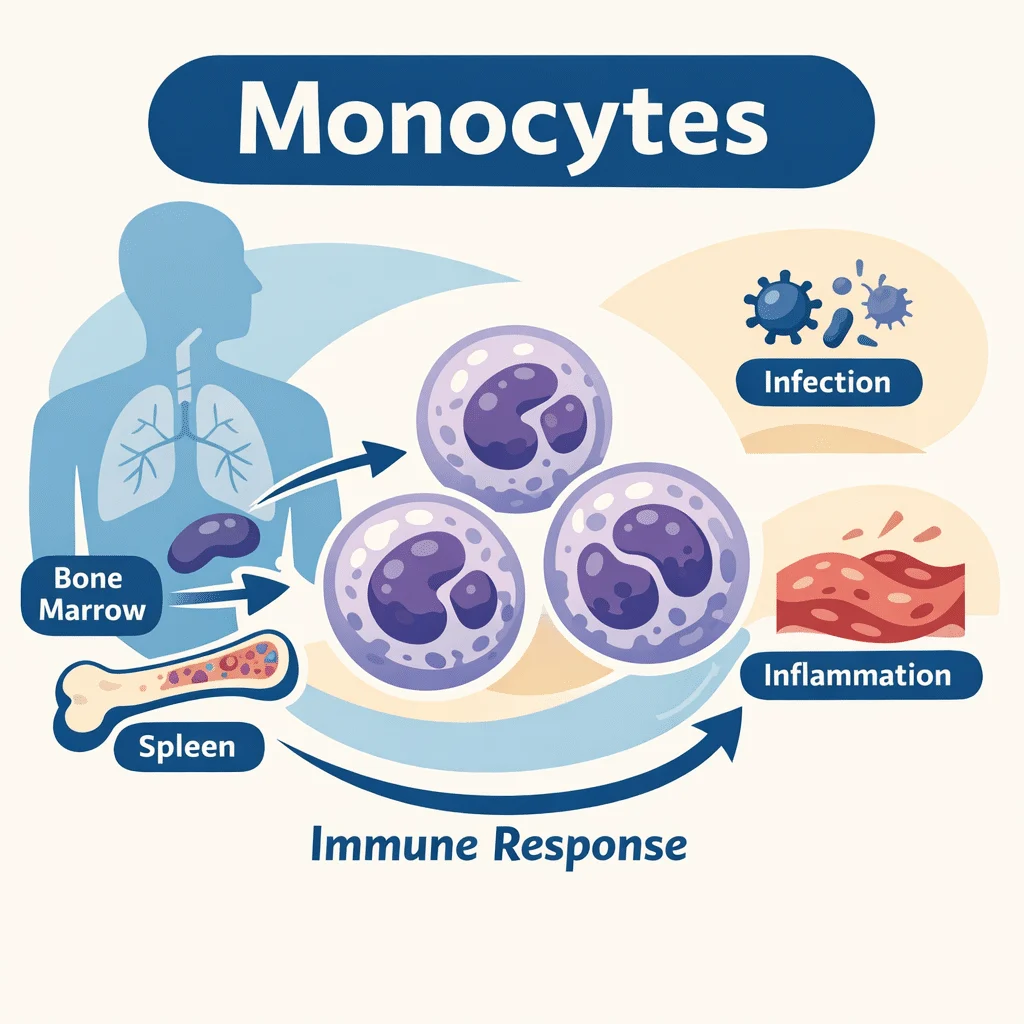
Monocytes are a type of white blood cell, also called a leukocyte. They are made from stem cells in your bone marrow, the soft tissue inside your bones. Once released into the bloodstream, monocytes circulate for one to three days before moving into body tissues, where they turn into other cells that carry out longer-term immune work.
Think of monocytes as an early-warning patrol. They travel through your blood, sensing signs of trouble such as bacteria, viruses, or damaged tissue. When they find a problem, they leave the blood vessel and enter the affected tissue. There, they transform into macrophages, a word that means “big eater,” or into dendritic cells, which help direct the rest of the immune response.
The main jobs of monocytes
Monocytes contribute to your health in several connected ways:
- Defending against bacteria, viruses, and other invaders.
- Clearing away dead or damaged cells so tissue can heal.
- Helping repair tissue after an injury.
- Regulating how strong or long an inflammatory response becomes.
- Presenting fragments of invaders to other immune cells so the body can mount a targeted defense.
Doctors measure monocytes as part of a complete blood count with differential, a routine test that also reports neutrophils, lymphocytes, eosinophils, and basophils. Reading the monocyte count together with these other values, rather than in isolation, is what makes the result useful.
How to read your monocyte test results
On a lab report, monocytes usually appear inside a section called the white cell differential or leukocyte formula. Results are shown in two related ways.
The absolute count tells you the actual number of monocyte cells in a set volume of blood, often written as cells per microliter (cells/µL) or as x10⁹/L. The relative percentage tells you what share of your total white blood cells are monocytes. A typical adult report might show an absolute monocyte count of 520 cells/µL, with a reference range of roughly 200 to 800 cells/µL, alongside a relative value of 8%, with a reference range of about 2% to 10%.
Doctors generally weigh the absolute count more heavily than the percentage. The percentage can shift simply because another white cell type, like neutrophils or lymphocytes, has changed, even if your actual monocyte number has not moved at all.
Typical monocyte reference ranges
Reference ranges vary slightly between laboratories and depend on the equipment and population used to establish them. The table below gives commonly used adult ranges as a general guide; always compare your result with the specific range printed on your own report.
| Measurement | Typical adult reference range |
|---|---|
| Absolute monocytes | 200–800 cells/µL (0.2–0.8 x10⁹/L) |
| Monocyte percentage | 2–10% of total white blood cells |
| Monocytosis threshold (adults) | Above roughly 800–1,000 cells/µL, or above 10% of white cells |
| Monocytopenia threshold (adults) | Below roughly 200 cells/µL |
A reference range represents the values seen in about 95% of a healthy population used to build the range. This means a small number of healthy people will naturally fall just outside it. A result slightly above or below the line is not automatically a cause for concern; the size of the deviation and whether it persists over time both matter.
A short checklist for reading your result
- Check whether your result sits inside the reference range printed on your own report.
- Note how far outside the range the value is, if it is abnormal.
- Compare it with previous results, if you have them, to see whether a trend is developing.
- Look at the other white blood cell types in the same differential.
- Consider the result alongside any symptoms you currently have.
What causes high monocytes (monocytosis)?
Monocytosis simply means your monocyte count is above the normal range. It has many possible causes, most of which are not serious.
Infections
Persistent or chronic infections often push monocyte counts up as the body ramps up production of these cells. Tuberculosis is a classic example, frequently appearing alongside a chronic cough and fatigue. Other infections, including some viral illnesses, can cause a temporary rise as well.
Chronic inflammatory and autoimmune diseases
Conditions such as rheumatoid arthritis, inflammatory bowel disease, and lupus can raise monocyte production because the immune system is chronically activated. Joint pain, digestive symptoms, or fatigue often accompany these conditions.
Blood and bone marrow disorders
Less commonly, a persistent and marked monocytosis can reflect a bone marrow condition, such as chronic myelomonocytic leukemia or a myelodysplastic syndrome. These conditions are usually accompanied by other abnormal findings, such as anemia, and require a bone marrow examination to confirm. It helps to keep this in context: the vast majority of monocytosis cases trace back to infection or inflammation, not a blood cancer.
Stress and everyday factors
Physical stress, including recovery from surgery, intense exercise, or even pregnancy, can temporarily raise the monocyte count without indicating disease.
What causes low monocytes (monocytopenia)?
Monocytopenia, a monocyte count below the normal range, is less common than monocytosis and is generally viewed as less concerning when it appears on its own.
- Medications: Certain immunosuppressants and corticosteroids can lower monocyte counts. This is usually an expected and monitored effect of treatment.
- Bone marrow conditions: Aplastic anemia, a rare disease that reduces production of all blood cell types, can lower monocytes alongside red cells and platelets.
- Immune deficiencies: Some rare genetic immune disorders can cause monocytopenia, often showing up as repeated infections beginning in childhood.
An isolated low monocyte count, with every other blood value normal, is generally lower priority for follow-up than an unexplained high count. Still, only a doctor looking at your full picture can say what a specific result means for you.
A simple decision path for an abnormal result
If your monocyte count came back outside the reference range, this general path can help you think through next steps. It is not a substitute for medical advice, and your doctor may recommend something different based on your full history.
| Your situation | Common next step |
|---|---|
| Mild elevation, no symptoms, first time seeing this result | A repeat test in 4 to 6 weeks is often reasonable to see if the value settles on its own |
| Mild elevation that persists on repeat testing | A medical consultation to look for an underlying cause |
| Moderate to marked elevation, with or without symptoms | A medical consultation within a few weeks is generally advised |
| Low count, everything else on the panel normal | A recheck in 1 to 2 months is often suggested |
| Any abnormal count with warning signs listed below | Contact your doctor promptly rather than waiting for a routine recheck |
Latest scientific advances
Monocytes were once viewed mainly as simple cleanup cells. Research over the past few years has expanded that picture considerably, showing that monocytes also carry information about long-term health risks that goes beyond infection.
A large study of the UK Biobank, which followed more than 420,000 adults with no heart disease at the start, looked at several white blood cell-based inflammation measurements, including ratios involving monocytes, and their connection to later heart disease, stroke, and heart failure. The study found that these inflammation measurements were consistently linked to a higher chance of developing cardiovascular problems over time, and that adding them to standard risk calculators modestly improved how well those calculators identified people at future risk. In plain terms, this means your everyday blood differential may carry small but real clues about heart health that go beyond checking for infection alone. A cohort, mentioned here and below, is simply a large group of people who are tracked over months or years so researchers can see what health events happen to them over time.
A separate French study followed people with type 2 diabetes and examined their monocytes in detail, including which sub-types of monocyte were most common in each person’s blood. Researchers found that certain monocyte patterns were tied to a build-up of calcium in the heart’s arteries, a marker doctors use to estimate cardiovascular risk, and that a higher monocyte count was linked to a greater chance of a heart-related event over the following few years in that same group. This means that for people already living with type 2 diabetes, monocyte counts and patterns may eventually help doctors judge who could benefit from closer cardiovascular monitoring, alongside the risk factors already in routine use, such as blood pressure and cholesterol.
Both findings come from observational research, meaning researchers watched what happened in existing groups of people rather than testing a specific treatment. This is a valuable and increasingly rigorous type of evidence, but it is still an early step toward changing day-to-day care, and it does not mean a single monocyte value can predict an individual’s future heart health on its own. Larger studies and clinical validation are typically needed before findings like these become part of routine guidelines. For now, monocyte counts remain most useful as one piece of a much larger clinical picture, interpreted by a doctor alongside your symptoms, other blood work, and personal health history.
When to see a doctor about your monocyte count
Most abnormal monocyte results are not emergencies, and simple monitoring by your regular doctor is often enough. Certain signs, though, deserve prompt medical attention, especially if a high monocyte count is accompanied by them:
- Unexplained fever lasting more than two weeks.
- Extreme fatigue that limits your usual daily activities.
- Heavy night sweats.
- Significant, unintentional weight loss.
- Lymph nodes that stay swollen for an extended period.
- Infections that keep recurring or that seem unusual for your age and health.
If a mild, isolated abnormality resolves on repeat testing and you feel well, ongoing monitoring by your primary care doctor is usually sufficient. When in doubt, ask your doctor directly. They can refer you to a hematologist, a specialist in blood conditions, if a closer look is needed.
Everyday habits that support healthy immune function
No single food or habit will directly normalize a monocyte count, since the count mainly reflects what your immune system is responding to. That said, general habits that support a well-functioning immune system are worth building into daily life.
Regular, moderate physical activity helps the body regulate inflammation over time; most guidance points to around 30 minutes of activity on most days. Quality sleep, generally 7 to 8 hours a night, supports normal immune signaling. Managing chronic stress through relaxation techniques, movement, or simply protecting downtime can also make a meaningful difference, since prolonged stress can influence how the immune system behaves. Limiting tobacco and excess alcohol use protects overall immune health as well. If inflammation is part of the picture, eating patterns that favor vegetables, fatty fish, and whole foods while limiting heavily processed items and added sugar are commonly recommended alongside any medical treatment your doctor prescribes.
Glossary
| Term | Definition |
|---|---|
| Monocyte | A type of white blood cell made in the bone marrow that patrols the blood and can transform into macrophages or dendritic cells to fight infection and clear damaged tissue. |
| Monocytosis | A monocyte count above the normal reference range, most often linked to infection, inflammation, or everyday stress on the body. |
| Monocytopenia | A monocyte count below the normal reference range, sometimes related to medications or, less often, bone marrow conditions. |
| Macrophage | A cell that a monocyte turns into after leaving the bloodstream; the name means big eater, describing its role in engulfing microbes and debris. |
| White blood cell differential | The section of a blood test report that breaks down the total white blood cell count into its five types, including monocytes. |
| Absolute count | The actual number of a specific cell type in a set volume of blood, generally considered more informative than a percentage alone. |
| Reference range | The span of values considered typical in a healthy population, set individually by each laboratory. |
| Bone marrow | The soft tissue inside bones where blood cells, including monocytes, are produced. |
| Cohort study | A type of research that follows a large group of people over time to see which health events occur and what factors are linked to them. |
| Chronic myelomonocytic leukemia (CMML) | A rare blood and bone marrow condition that can cause a persistent, marked increase in monocytes and requires specialist evaluation to diagnose. |
Frequently asked questions about monocytes
What is considered a high monocyte count?
In most adult reference ranges, an absolute monocyte count above roughly 800 to 1,000 cells per microliter, or a relative value above about 10% of total white blood cells, is flagged as high. Exact cutoffs vary slightly by laboratory, so always compare your number with the range printed on your own report rather than a general figure.
What causes high monocytes?
The most common causes are infections, especially chronic ones such as tuberculosis, and inflammatory or autoimmune conditions like rheumatoid arthritis or inflammatory bowel disease. Everyday stress, recovery from surgery, and pregnancy can also raise the count temporarily. Less commonly, a persistent and marked elevation can point to a bone marrow condition that needs further testing.
Do high monocytes indicate cancer?
Rarely. The large majority of high monocyte results are explained by infection or inflammation rather than cancer. Persistent, unexplained monocytosis, especially alongside other abnormal blood values such as anemia, can occasionally be an early sign of a blood cancer like chronic myelomonocytic leukemia, which is why doctors investigate results that do not resolve or that fit a broader worrying pattern.
How is a high monocyte count treated?
There is no direct treatment aimed at the monocyte number itself. Doctors treat the underlying cause, such as an antibiotic course for a bacterial infection or anti-inflammatory medication for an autoimmune condition. Once the underlying issue resolves, the monocyte count typically returns to its normal range on its own.
Can you have high monocytes with no symptoms?
Yes. Mild to moderate monocytosis can be completely without symptoms, particularly if it is a temporary reaction to a minor, unnoticed infection or to stress on the body. This is one reason routine blood tests are useful for catching patterns early. That said, a persistent elevation with no obvious cause is still generally worth discussing with a doctor.
Do children have different monocyte reference ranges than adults?
Yes. Newborns and young children naturally have higher monocyte counts than adults, reflecting a maturing immune system. Pediatric reference ranges account for this, so a value that would be flagged as high in an adult may be entirely normal for a child of a given age.
Understand your lab results with AI DiagMe
Making sense of a monocyte result usually means looking at the full complete blood count together, including your white blood cell differential, red blood cell values, and platelet count, alongside your symptoms and medical history. AI DiagMe can help you understand what these values may suggest in plain language, so you arrive at your next appointment with clearer questions. This tool is designed to help you understand your results, not to diagnose you or replace your doctor’s judgment.
Get your results interpreted in minutes
Sources
- Blood Differential — MedlinePlus (National Library of Medicine, NIH)
- What Is Monocytosis? — Cleveland Clinic
- Histology, Monocytes — StatPearls, NCBI Bookshelf (National Library of Medicine)
- Qin P, Ho FK, Celis-Morales CA, Pell JP — Association between systemic inflammation biomarkers and incident cardiovascular disease in 423,701 individuals: evidence from the UK biobank cohort — Cardiovascular Diabetology, 2025 — https://doi.org/10.1186/s12933-025-02721-9
- Julla J, et al. — Blood Monocyte Phenotype Is A Marker of Cardiovascular Risk in Type 2 Diabetes — Circulation Research, 2023 — https://consensus.app/papers/details/69caaff473df5032a12f681a45482054/
Further reading
- This guide connects naturally to how to read a full complete blood count report.
- If your report also flags a different white cell type, this article explains what causes a high lymphocyte count.
- Neutrophils are another key part of the differential, and this piece explains what elevated neutrophil counts reveal about health risk.
- For readers concerned about a blood cancer connection, this article describes how a blood test can help flag leukemia.
- If inflammation markers were also flagged on your panel, you may want to read about what a high CRP level generally means.
- To understand any other flagged value on your report, this resource explains how to approach an abnormal blood test result.