Menopauza și glicemia sunt mai strâns legate decât li se spune majorității femeilor. Un studiu publicat pe 4 august 2026 în Menopauza, revista The Menopause Society, a constatat că femeile cu diabet de tip 2 sau prediabet au raportat atât un număr mai mare de simptome menopauze, cât și simptome mai intense, comparativ cu femeile cu glicemie normală. Ceea ce face descoperirea practică este modul în care cercetătorii au clasificat participantele: nu după un diagnostic dintr-un dosar medical, ci după două valori obișnuite de laborator — glicemia à jeun și HbA1c. În acest articol vei afla ce a arătat cu adevărat studiul, ce analize stau în spatele acestor două valori și cum să le citești fără a trage concluzii pripite.
Ce a descoperit noul studiu
Cercetătorii au studiat 296 de femei sud-coreene cu vârste între 40 și 64 de ani. Fiecărei participante i s-au măsurat glicemia à jeun și HbA1c, iar pe această bază a fost încadrată într-un grup diabetic sau non-diabetic. Simptomele menopauze au fost evaluate cu un chestionar standardizat, Midlife Women’s Symptom Index.
Femeile din grupul diabetic au raportat mai multe simptome și le-au evaluat ca mai intense. Diferența s-a menținut și după ce cercetătorii au luat în calcul alți factori care ar fi putut-o explica. Un detaliu contează pentru interpretare: diferența a apărut clar la femeile deja aflate la postmenopauză, nu la cele încă în premenopauză sau în tranziția perimenopauze.
Acesta a fost un studiu transversal — o singură fotografie de moment, într-o singură țară, pe mai puțin de 300 de femei. Arată o asociere, nu o cauză. Glicemia crescută poate agrava cu adevărat simptomele; simptomele dificile pot perturba somnul și obiceiurile care mențin glicemia stabilă; sau un al treilea factor, cum ar fi acumularea de grăsime abdominală, poate fi responsabil de ambele în același timp.
De ce menopauza și glicemia se influențează reciproc
Estrogenul influențează modul în care organismul procesează glucoza. Pe măsură ce nivelul de estrogen scade în perioada de tranziție, sensibilitatea la insulină tinde să se reducă, grăsimea se redistribuie spre abdomen, iar tensiunea arterială și lipidele evoluează adesea într-o direcție nefavorabilă. Studiile despre tranziția la menopauză descriu acest ansamblu de modificări ca un factor de risc cardiovascular independent, separat de efectele îmbătrânirii în sine.
Legătura funcționează în ambele sensuri. Transpirațiile nocturne și somnul fragmentat cresc nivelul hormonilor de stres și reduc toleranța la glucoză a doua zi. Kilogramele acumulate în zona taliei agravează rezistența la insulină, iar rezistența la insulină a fost la rândul ei asociată cu bufeuri mai intense. Echipa noastră a tratat deja subiectul rezistența la insulină fără obezitate, care explică de ce o greutate normală nu exclude această problemă.
Analizele de sânge care conturează acest tablou
Nicio analiză singulară nu surprinde în totalitate sănătatea metabolică la mijlocul vieții. Setul de teste de mai jos este cel pe care medicii îl evaluează de obicei împreună.
| Analiză | Ce măsoară | De ce contează la menopauză |
|---|---|---|
| Glicemia à jeun | Zahărul din sânge după 8 ore sau mai mult fără mâncare | Test de screening de primă linie; identifică prediabetul cu mult înainte să apară simptomele |
| HbA1c | Glicemia medie pe aproximativ trei luni | Nu este influențat de masa de ieri; folosit pentru diagnostic și monitorizare |
| Insulina à jeun și HOMA-IR | Cât de mult lucrează pancreasul pentru a menține glicemia normală | Poate crește cu ani înainte ca glicemia în sine să se modifice |
| Profil lipidic | LDL, HDL și trigliceride | Se agravează frecvent în perioada de tranziție, adesea fără simptome |
| TSH | Funcția tiroidiană | Bolile tiroidiene imită menopauza: oboseală, modificări de greutate, schimbări de dispoziție, transpirații |
| FSH și estradiol | Statusul hormonal ovarian | Util doar atunci când stadiul menopauzei este cu adevărat neclar |
Ultimul rând merită o precizare. Menopauza este diagnosticată de obicei pe baza simptomelor și a istoricului ciclului menstrual, nu printr-o analiză de sânge. Ghidul nostru detaliază panoul hormonal feminin și ce înseamnă fiecare rezultat, iar un articol separat acoperă nivelurile de estradiol de-a lungul ciclului.
Cum să-ți citești valorile
Glicemie à jeun și HbA1c
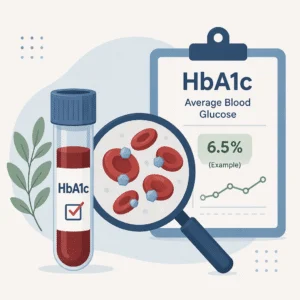
CDC stabilește aceleași praguri pentru femei la orice vârstă. O glicemie à jeun de 99 mg/dL sau mai mică este normală, între 100 și 125 mg/dL indică prediabet, iar 126 mg/dL sau mai mult la două teste separate indică diabet. Pentru HbA1c, sub 5,7% este normal, între 5,7% și 6,4% înseamnă prediabet, iar 6,5% sau mai mult înseamnă diabet. Paginile noastre de referință explică nivelurile glicemiei à jeun și cum se interpretează și rezultatele HbA1c și intervalele țintă.
Prediabetul este intervalul care contează cel mai mult aici, deoarece este frecvent, silențios și reversibil. Dacă vrei să transformi un procent într-o valoare de zi cu zi, publicăm un tabel de conversie din HbA1c în glicemia medie.
Un singur rezultat nu înseamnă diagnostic
O valoare crescută izolată poate reflecta o infecție, un tratament cu corticosteroizi, o săptămână stresantă sau un post care nu a fost respectat. Diagnosticul se pune de obicei pe baza a două rezultate anormale sau a unui rezultat plus simptome clare. Înainte de consultație, verifică regulile privind postul înainte de analizele de sânge, și consultați prezentarea noastră despre analize de sânge pentru diabet.
Când să faci testul și când să mergi la medic
Grupul de Lucru pentru Servicii Preventive din SUA recomandă screening-ul pentru prediabet și diabet de tip 2 la adulții cu vârste între 35 și 70 de ani care sunt supraponderali sau obezi, repetat aproximativ o dată la trei ani dacă rezultatele sunt normale. Multe femei din această grupă de vârstă se află și în tranziția spre menopauză, ceea ce face ca acesta să fie un moment potrivit pentru a verifica ambele aspecte.
Programează-te mai devreme la medic dacă observi sete neobișnuită, urinare frecventă, scădere inexplicabilă în greutate, vedere încețoșată, răni care se vindecă greu sau infecții recurente. Menționează-i medicului tău și dacă bufeurile, oboseala sau schimbările de dispoziție îți perturbă viața de zi cu zi, indiferent de valoarea glicemiei — aceste simptome merită tratate în sine.
Cele mai recente progrese științifice
Iată ce adaugă cercetările recente, pe înțelesul tuturor.
- Studiul din 2026 publicat în Menopauza este primul care testează această întrebare la femeile coreene de vârstă mijlocie. Concluzia: femeile ale căror valori ale glicemiei à jeun și HbA1c se încadrau în intervalul diabetic au raportat mai multe simptome de menopauză și mai intense, în special după menopauză. Ce înseamnă asta pentru tine: dacă simptomele par mai severe decât te așteptai, este rezonabil să ceri un control metabolic. Rezultatul reprezintă o asociere dintr-un singur instantaneu, deci trebuie interpretat ca un semnal, nu ca o dovadă.
- O analiză din 2024 privind tranziția spre menopauză a concluzionat că această tranziție în sine remodelează sănătatea cardiometabolică — compoziția corporală, tensiunea arterială, lipoproteinele și sensibilitatea la insulină se modifică toate. Ce înseamnă asta pentru tine: valori care au fost stabile timp de douăzeci de ani pot deriva în decadele patru și cinci de viață fără nicio schimbare în obiceiurile tale, astfel că o comparație cu rezultatele tale anterioare este mai informativă decât un singur instantaneu.
- O analiză din 2023 privind sănătatea metabolică după menopauză a descris modul în care creșterea în greutate abdominală, dislipidemia aterogenă — un profil lipidic care favorizează formarea plăcilor arteriale — rezistența la insulină și tensiunea arterială crescută tind să se acumuleze împreună. Ce înseamnă asta pentru tine: merită să-ți citești glicemia și rezultatele profilului lipidic împreună, nu pe rând.
- O analiză din 2025 privind menopauza și diabetul a evidențiat cât de multe rămân necunoscute, inclusiv dacă menopauza crește riscul de diabet independent de procesul de îmbătrânire. Ce înseamnă asta pentru tine: fii precaută față de afirmațiile categorice în oricare direcție; răspunsul sincer de astăzi este că cele două sunt legate, dar relația de cauzalitate nu este stabilită.
Glosar
| Termen | Definiție |
|---|---|
| HbA1c | Hemoglobina glicată. Reflectă media glicemiei tale pe aproximativ trei luni, exprimată ca procent. |
| Prediabet | Glicemie mai mare decât normalul, dar sub pragul diabetului. Adesea reversibilă. |
| Rezistență la insulină | O stare în care celulele răspund slab la insulină, astfel că pancreasul trebuie să producă mai multă pentru a menține glucoza la nivel normal. |
| Perimenopauza | Anii de fluctuații hormonale dinaintea opririi definitive a menstruației. |
| Postmenopauza | Perioada care începe la douăsprezece luni după ultima menstruație. |
| Simptome vasomotorii | Termenul medical pentru bufeuri și transpirații nocturne. |
| Studiu transversal | Un studiu care măsoară totul la un moment dat. Poate arăta asocieri, nu cauze. |
| HOMA-IR | Un scor calculat pe baza glicemiei à jeun și a insulinei à jeun, folosit pentru a estima rezistența la insulină. |
Întrebări frecvente
Menopauza cauzează diabet?
Nu, menopauza nu cauzează diabet prin ea însăși. Ea coincide însă cu modificări care cresc riscul: sensibilitate mai scăzută la insulină, mai multă grăsime abdominală și un profil lipidic mai puțin favorabil. Vârsta, istoricul familial, greutatea și activitatea fizică rămân factorii principali. Cercetătorii nu au stabilit încă dacă menopauza adaugă un risc independent de procesul de îmbătrânire.
Glicemia crescută poate provoca bufeuri?
Nu în mod direct, și niciun studiu nu a demonstrat că scăderea glicemiei elimină bufeurile. Cercetările din 2026 sugerează că femeile cu valori în zona diabetului raportează mai multe simptome în general și mai intense. Somnul de proastă calitate, transpirațiile nocturne și controlul glicemiei se influențează reciproc, ceea ce face puțin probabilă orice explicație simplă, într-un singur sens.
Ce analiză de sânge confirmă menopauza?
De obicei, niciuna. La femeile de peste 45 de ani cu simptome tipice și cicluri neregulate, menopauza este un diagnostic clinic. FSH și estradiolul sunt recomandate în situații neclare, cum ar fi menopauza înainte de 45 de ani, după histerectomie sau când simptomele ar putea avea o altă cauză. Pagina noastră despre panel hormonal feminin explică când fiecare analiză aduce informații utile.
Ar trebui să îmi verific glicemia la menopauză chiar dacă mă simt bine?
Prediabetul nu are de obicei simptome, așa că faptul că te simți bine nu îți spune mare lucru. Dacă ai între 35 și 70 de ani și ai greutate în exces, screeningul este recomandat indiferent de stadiul menopauzei. În afara acestui grup, discută cu medicul tău despre riscul tău personal, în loc să faci analize din impuls.
Terapia hormonală îmi poate influența rezultatele glicemiei?
Terapia hormonală pentru menopauză a fost asociată cu îmbunătățiri modeste ale metabolismului glucozei și al lipidelor în mai multe studii, dar nu este prescrisă pentru a trata sau preveni diabetul. Dacă urmezi terapie hormonală, menționează acest lucru când îți faci analizele de sânge și discută orice modificare a rezultatelor cu medicul care ți-a prescris tratamentul.
Trebuie să fiu pe nemâncate înainte de testul HbA1c?
Nu. HbA1c reflectă media glicemiei din ultimele trei luni, deci mâncatul înainte de recoltare nu o modifică. Glicemia à jeun necesită un post de peste noapte, așa că dacă ambele sunt solicitate împreună, ți se va cere de obicei să fii à jeun.
Surse
- Centers for Disease Control and Prevention — Diabetes Testing, 2026 — https://www.cdc.gov/diabetes/diabetes-testing/index.html
- US Preventive Services Task Force — Prediabetes și diabet de tip 2: Screening — https://www.uspreventiveservicestaskforce.org/uspstf/recommendation/screening-for-prediabetes-and-type-2-diabetes
- National Institute on Aging, National Institutes of Health — What Is Menopause? — https://www.nia.nih.gov/health/menopause/what-menopause
- Yang YL, Kim Y, Shin Y — Asocierea dintre diabetul zaharat de tip 2 și simptomele menopauzei la femeile coreene de vârstă mijlocie — Menopause, 2026 — https://doi.org/10.1097/GME.0000000000002883
- Uddenberg ER et al. — Tranziția la menopauză și riscul cardiovascular — Maturitas, 2024 — https://consensus.app/papers/details/c250d2e7f68a5a9199a4915caad89428/
- Anagnostis P et al. — Sănătatea cardiovasculară și menopauza, sănătatea metabolică — Best Practice & Research Clinical Endocrinology & Metabolism, 2023 — https://consensus.app/papers/details/208a411e7a5953969637011e111e2176/
- Rodriguez CP et al. — Menopauza și diabetul: asocieri interconectate de risc — Endocrine Research, 2025 — https://consensus.app/papers/details/40d4ff0268835edfa802d75a2ba7ecdd/
Lectură suplimentară
- Simptomele, etapele și tratamentul menopauzei
- Cum să-ți citești rezultatele analizelor de sânge
- Scorul HOMA-IR de rezistență la insulină
- Panoul metabolic complet
- Analize TSH din sânge și rezultatele tiroidiene
Înțelege-ți rezultatele analizelor cu AI DiagMe
Analizele de sânge de la vârsta mijlocie vin rareori cu o explicație. O glicemie à jeun în zona prediabetului, un HbA1c care a crescut treptat, un FSH care spune puțin de unul singur — fiecare valoare capătă mai mult sens când este citită alături de celelalte. AI DiagMe îți transformă buletinul de analize în limbaj simplu, astfel încât să ajungi la următoarea consultație știind exact ce rezultate să discuți cu medicul. Te ajută să-ți înțelegi analizele; nu pune diagnostice și nu înlocuiește medicul tău.
Obține interpretarea rezultatelor în câteva minute