
Menopause and Blood Sugar: What a New Study Changes

目录

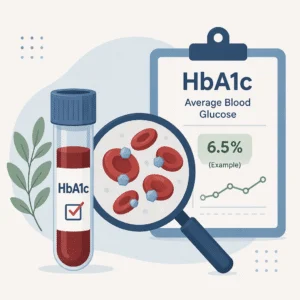
Menopause and blood sugar checked together on a lab report showing fasting glucose and HbA1c results

⚕️ 本文仅供参考,不能替代医疗建议。请务必咨询医生以解读您的检查结果。.

Menopause and blood sugar are more closely connected than most women are told. A study published on 4 August 2026 in 绝经, the journal of The Menopause Society, found that women with type 2 diabetes or prediabetes reported both a greater number of menopausal symptoms and more severe ones than women whose blood sugar was normal. What makes the finding practical is how the researchers sorted participants: not by a label in a medical file, but by two ordinary lab values — fasting blood glucose and HbA1c. In this article you will learn what the study actually showed, which tests sit behind those two numbers, and how to read them without jumping to conclusions.

What the new study found

Researchers studied 296 South Korean women aged 40 to 64. Each participant had her fasting blood glucose and HbA1c measured, and was placed in a diabetic group or a non-diabetic group on that basis alone. Menopausal symptoms were then scored with a standard questionnaire, the Midlife Women’s Symptom Index.

Women in the diabetic group reported more symptoms, and rated them as more intense. The difference held up after the researchers accounted for other factors that might explain it. One detail matters for interpretation: the gap showed up clearly in women who were already postmenopausal, and not in those who were still premenopausal or in the perimenopausal transition.

This was a cross-sectional study — a single snapshot, in one country, in fewer than 300 women. It shows an association, not a cause. Higher blood sugar may genuinely worsen symptoms; harder symptoms may disrupt the sleep and habits that keep glucose stable; or a third factor, such as central weight gain, may be driving both at once.

Why menopause and blood sugar affect each other

Oestrogen influences how the body handles glucose. As oestrogen declines across the transition, insulin sensitivity tends to fall, fat shifts toward the abdomen, and blood pressure and lipids often move in an unfavourable direction. Reviews of the menopause transition describe this cluster as a contributor to cardiovascular risk in its own right, separate from ageing alone.

The traffic runs both ways. Night sweats and broken sleep raise stress hormones and reduce glucose tolerance the next day. Weight gained around the waist worsens insulin resistance, and insulin resistance has in turn been linked to more troublesome hot flashes. Our team has already covered insulin resistance without obesity, which explains why a normal weight does not rule the problem out.

The blood tests that map this picture

No single test captures midlife metabolic health. The panel below is what clinicians typically look at together.

测试它测量的是什么Why it matters at menopause
空腹血糖Sugar in the blood after 8 hours or more without foodFirst-line screening test; flags prediabetes long before symptoms appear
糖化血红蛋白约三个月内的平均血糖水平Not thrown off by yesterday’s meal; used for diagnosis and follow-up
Fasting insulin and HOMA-IR胰腺为维持血糖正常所付出的努力程度Can move years before glucose itself rises
血脂检测LDL, HDL and triglyceridesFrequently worsens across the transition, often silently
促甲状腺激素甲状腺功能Thyroid disease imitates menopause: fatigue, weight change, mood, sweats
FSH 与雌二醇Ovarian hormone statusUseful only when the menopausal stage is genuinely unclear

The last row deserves a caveat. Menopause is usually diagnosed on symptoms and cycle history, not on a blood draw. Our guide details the female hormone panel and what each result means,另一篇单独的文章则介绍了 estradiol levels across the cycle.

How to read your numbers

空腹血糖与糖化血红蛋白(HbA1c)

The CDC sets the same cut-offs for women at every age. A fasting glucose of 99 mg/dL or below is normal, 100 to 125 mg/dL indicates prediabetes, and 126 mg/dL or above on two separate tests indicates diabetes. For HbA1c, below 5.7% is normal, 5.7% to 6.4% is prediabetes, and 6.5% or above is diabetes. Our reference pages explain fasting blood glucose levels and their interpretationHbA1c results and target ranges.

Prediabetes is the band that matters most here, because it is common, silent and reversible. If you want to translate a percentage into an everyday figure, we publish 糖化血红蛋白(A1C)与平均血糖对照表.

One result is not a diagnosis

A single raised value can reflect an infection, a course of steroids, a stressful week or a fast that was not respected. Diagnosis normally rests on two abnormal results, or one result plus clear symptoms. Before your appointment, check the rules on 验血前禁食, and see our overview of 糖尿病血液检查.

何时接受检测,何时就医

The US Preventive Services Task Force recommends screening for prediabetes and type 2 diabetes in adults aged 35 to 70 who are overweight or have obesity, repeated roughly every three years if normal. Many women in that age band are also in the menopause transition, which makes it a natural moment to check both.

Book an appointment sooner if you notice unusual thirst, frequent urination, unexplained weight loss, blurred vision, slow-healing wounds or recurrent infections. Also raise it with your doctor if hot flashes, fatigue or mood changes are disrupting daily life, whatever your glucose reading — those symptoms deserve treatment on their own terms.

最新科学进展

Here is what the recent research adds, in plain terms.

  • The 2026 study in 绝经 is the first to test this question in Korean midlife women. What it found: women whose fasting glucose and HbA1c placed them in the diabetic range reported more menopausal symptoms, and stronger ones, mainly after menopause. What this means for you: if symptoms feel heavier than you expected, a metabolic check-up is a reasonable thing to ask for. The result is an association from a single snapshot, so it should be read as a signal, not proof.
  • A 2024 review of the menopause transition concluded that the transition itself reshapes cardiometabolic health — body composition, blood pressure, lipoproteins and insulin sensitivity all shift. What this means for you: numbers that were stable for twenty years can drift in your forties and fifties without any change in your habits, so a comparison against your own earlier results is more informative than a single snapshot.
  • A 2023 review of metabolic health after menopause described how abdominal weight gain, atherogenic dyslipidaemia — a lipid profile that favours artery plaque — insulin resistance and raised blood pressure tend to accumulate together. What this means for you: it is worth reading your glucose and your lipid panel results side by side rather than one at a time.
  • A 2025 review of menopause and diabetes set out how much is still unknown, including whether menopause raises diabetes risk independently of ageing. What this means for you: be wary of confident claims in either direction; the honest answer today is that the two are linked but the causal arrow is not settled.

词汇表

学期定义
糖化血红蛋白Glycated haemoglobin. Reflects your average blood sugar over about three months, expressed as a percentage.
糖尿病前期Blood sugar higher than normal but below the diabetes threshold. Often reversible.
胰岛素抵抗A state in which cells respond poorly to insulin, so the pancreas must produce more to keep glucose normal.
围绝经期The years of hormonal fluctuation before periods stop for good.
绝经后期The period beginning twelve months after the final menstrual period.
血管舒缩症状潮热和盗汗的医学术语。
Cross-sectional studyA study measuring everything at one moment in time. It can show links, not causes.
HOMA-IRA score calculated from fasting glucose and fasting insulin, used to estimate insulin resistance.

常见问题解答

Does menopause cause diabetes?

No, menopause does not cause diabetes on its own. It does coincide with changes that raise risk: lower insulin sensitivity, more abdominal fat and less favourable lipids. Age, family history, weight and physical activity remain the dominant factors. Researchers have not yet established whether menopause adds risk independently of ageing.

Can high blood sugar cause hot flashes?

Not directly, and no study has shown that lowering glucose removes hot flashes. What the 2026 research suggests is that women in the diabetic range report more symptoms overall, and more intense ones. Poor sleep, night sweats and glucose control also influence one another, which makes any simple one-way explanation unlikely.

Which blood test confirms menopause?

Usually none. In women over 45 with typical symptoms and changing cycles, menopause is a clinical diagnosis. FSH and estradiol are reserved for unclear situations, such as menopause before 45, after a hysterectomy, or when symptoms could have another cause. Our page on the 女性激素检测 explains when each test adds something.

Should I check my blood sugar at menopause even if I feel fine?

Prediabetes usually has no symptoms, so feeling fine tells you little. If you are between 35 and 70 and carry excess weight, screening is recommended regardless of menopausal status. Outside that group, discuss your personal risk with your doctor rather than testing on impulse.

Can hormone therapy affect my glucose results?

Menopausal hormone therapy has been associated with modest improvements in glucose handling and lipids in several reviews, but it is not prescribed to treat or prevent diabetes. If you are on hormone therapy, mention it when you have blood work, and discuss any change in your results with the prescriber.

做HbA1c检测前需要空腹吗?

No. HbA1c reflects three months of average glucose, so eating beforehand does not change it. Fasting glucose does require an overnight fast, so if both are ordered together you will usually be asked to fast.

来源

延伸阅读

利用 AI DiagMe 了解您的实验室结果

Midlife blood work rarely comes with an explanation. A fasting glucose in the prediabetes band, an HbA1c that has crept up, an FSH that says little on its own — each number means more when read alongside the others. AI DiagMe turns your lab report into plain language, so you arrive at your next appointment knowing which results to ask about. It helps you understand your analyses; it does not diagnose, and it does not replace your doctor.

几分钟内即可获得结果解读

作者

  • AI DiagMe

    AI DiagMe团队汇聚了医生、临床专家和医学编辑。我们的文章由健康传播专业人士撰写,并由我们科学委员会的医生进行审核和验证。该委员会由在血液科、内分泌科和全科等专科领域执业的医院医生组成。负责编辑工作的Julien Priour拥有巴黎高等商学院(HEC Paris)的MBA学位,并曾在法国国家可持续发展研究所(IRD,FUN-MOOC,2026)接受过科学写作和出版方面的培训。每篇文章都基于最新的临床指南和同行评审的医学出版物。.

相关文章