



























폐경기와 혈당은 대부분의 여성이 알고 있는 것보다 훨씬 밀접하게 연관되어 있습니다. 2026년 8월 4일 폐경, 미국 폐경학회(The Menopause Society) 학술지에 발표된 연구에 따르면, 제2형 당뇨병 또는 당뇨 전단계인 여성은 혈당이 정상인 여성보다 폐경 증상의 수가 더 많고 증상의 정도도 더 심한 것으로 나타났습니다. 이 연구 결과가 실용적인 이유는 연구진이 참가자를 분류한 방식에 있습니다. 의무 기록의 진단명이 아니라, 공복 혈당과 당화혈색소(HbA1c)라는 두 가지 일반적인 검사 수치를 기준으로 분류했기 때문입니다. 이 글에서는 연구가 실제로 무엇을 밝혔는지, 이 두 수치의 배경이 되는 검사는 무엇인지, 그리고 섣불리 결론을 내리지 않고 수치를 어떻게 읽어야 하는지 알아봅니다.
새로운 연구에서 밝혀진 내용
연구진은 40~64세 한국 여성 296명을 대상으로 연구를 진행했습니다. 참가자 전원의 공복 혈당과 당화혈색소(HbA1c)를 측정하여 당뇨병 그룹과 비당뇨병 그룹으로 분류했습니다. 이후 표준화된 설문지인 중년 여성 증상 지수(Midlife Women's Symptom Index)를 활용해 갱년기 증상을 점수화했습니다.
당뇨병 그룹의 여성들은 더 많은 증상을 보고했으며, 증상의 강도도 더 높게 평가했습니다. 이 차이는 연구진이 결과에 영향을 미칠 수 있는 다른 요인들을 보정한 후에도 유지되었습니다. 해석에서 중요한 세부 사항이 있습니다. 이 격차는 이미 폐경 후 단계에 있는 여성들에게서 뚜렷하게 나타났으며, 아직 폐경 전이거나 폐경 이행기에 있는 여성들에게서는 나타나지 않았습니다.
이 연구는 단면 연구로, 한 국가에서 300명 미만의 여성을 대상으로 한 단일 시점의 스냅샷입니다. 이는 인과관계가 아닌 연관성을 보여줍니다. 높은 혈당이 실제로 증상을 악화시킬 수도 있고, 심한 증상이 혈당을 안정적으로 유지하는 데 필요한 수면과 생활 습관을 방해할 수도 있으며, 또는 복부 비만과 같은 제3의 요인이 두 가지 모두를 동시에 유발하고 있을 수도 있습니다.
폐경과 혈당이 서로 영향을 미치는 이유
에스트로겐은 신체가 포도당을 처리하는 방식에 영향을 줍니다. 폐경 이행기 동안 에스트로겐이 감소하면 인슐린 감수성이 떨어지고, 지방이 복부 쪽으로 이동하며, 혈압과 지질 수치가 불리한 방향으로 변하는 경향이 있습니다. 폐경 이행기에 관한 연구들은 이러한 변화들의 집합이 노화 자체와는 별개로 심혈관 위험에 기여하는 요인임을 설명합니다.
이 관계는 양방향으로 작용합니다. 야간 발한과 수면 장애는 스트레스 호르몬을 높이고 다음 날 포도당 내성을 떨어뜨립니다. 허리 주변에 쌓인 체중은 인슐린 저항성을 악화시키고, 인슐린 저항성은 다시 더 심한 안면 홍조와 연관되는 것으로 알려져 있습니다. 저희 팀은 이미 비만 없는 인슐린 저항성에 대해 다룬 바 있으며, 이 글에서는 정상 체중이라도 이 문제를 배제할 수 없는 이유를 설명합니다.
이 상태를 파악하는 혈액 검사
중년기 대사 건강을 하나의 검사만으로 파악할 수는 없습니다. 아래 패널은 임상의들이 함께 살펴보는 검사들입니다.
| 검사 항목 | 측정 대상 | 폐경기에 중요한 이유 |
|---|---|---|
| 공복 혈당 | 8시간 이상 공복 후 혈중 혈당 | 1차 선별 검사로, 증상이 나타나기 훨씬 전에 당뇨 전단계를 발견합니다 |
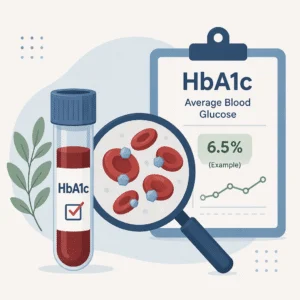
| 당화혈색소(HbA1c) | 약 3개월간의 평균 혈당 | 전날 식사의 영향을 받지 않아 진단 및 경과 관찰에 활용됩니다 |
| 공복 인슐린 및 HOMA-IR | 혈당을 정상으로 유지하기 위해 췌장이 얼마나 열심히 일하는지 | 혈당 자체가 오르기 수년 전부터 변화가 나타날 수 있습니다 |
| 지질 검사 | LDL, HDL 및 중성지방 | 폐경 이행기 동안 흔히 조용히 악화됩니다 |
| TSH | 갑상선 기능 | 갑상선 질환은 피로, 체중 변화, 기분 변화, 발한 등 폐경 증상과 유사하게 나타납니다 |
| FSH와 에스트라디올 | 난소 호르몬 상태 | 폐경 단계가 실제로 불분명한 경우에만 유용합니다 |
마지막 항목에는 주의가 필요합니다. 폐경은 보통 혈액 검사가 아닌 증상과 월경 주기 이력을 바탕으로 진단합니다. 저희 가이드에서는 여성 호르몬 패널과 각 결과의 의미, 또 다른 글에서는 주기에 따른 에스트라디올 수치.
내 수치 이해하기
공복 혈당 및 당화혈색소(HbA1c)
미국 질병통제예방센터(CDC)는 모든 연령대의 여성에게 동일한 기준을 적용합니다. 공복 혈당 99 mg/dL 이하는 정상, 100~125 mg/dL는 당뇨 전단계, 두 번의 별도 검사에서 126 mg/dL 이상이면 당뇨병을 의미합니다. 당화혈색소(HbA1c)의 경우 5.7% 미만은 정상, 5.7%~6.4%는 당뇨 전단계, 6.5% 이상은 당뇨병입니다. 저희 참고 페이지에서 공복 혈당 수치와 그 해석 및 당화혈색소(HbA1c) 결과와 목표 범위.
당뇨 전단계는 여기서 가장 중요한 구간입니다. 흔하고, 증상이 없으며, 되돌릴 수 있기 때문입니다. 퍼센트 수치를 일상적인 수치로 환산하고 싶다면 저희가 제공하는 당화혈색소(A1C)와 평균 혈당 수치 환산표.
하나의 결과만으로는 진단이 되지 않습니다
단 한 번의 수치 이상은 감염, 스테로이드 복용, 스트레스가 심한 한 주, 또는 공복 규칙을 지키지 않은 것을 반영할 수 있습니다. 진단은 보통 두 번의 비정상 결과, 또는 한 번의 결과와 명확한 증상을 함께 고려합니다. 진료 전에 혈액 검사 전 공복, 그리고 저희 개요를 확인하세요 당뇨병 혈액 검사.
검사 시기와 병원 방문이 필요한 경우
미국 예방 서비스 태스크포스(US Preventive Services Task Force)는 과체중이거나 비만인 35~70세 성인을 대상으로 당뇨 전단계 및 2형 당뇨병 선별 검사를 권고하며, 정상 결과가 나온 경우 약 3년마다 반복 검사를 받도록 하고 있습니다. 이 연령대의 많은 여성이 갱년기 이행기에 해당하기도 하므로, 두 가지를 함께 확인하기에 자연스러운 시기이기도 합니다.
갈증이 심해지거나, 소변을 자주 보거나, 이유 없이 체중이 줄거나, 시야가 흐려지거나, 상처가 잘 낫지 않거나, 감염이 반복된다면 더 빨리 진료를 예약하세요. 혈당 수치와 관계없이 안면홍조, 피로감, 기분 변화가 일상생활을 방해하고 있다면 의사에게 알리세요. 이러한 증상들은 그 자체만으로도 치료가 필요할 수 있습니다.
최신 과학적 발전
최근 연구에서 밝혀진 내용을 쉽게 정리해 드립니다.
- 2026년에 발표된 연구( 폐경 는 이 주제를 한국 중년 여성을 대상으로 처음 검토한 연구입니다. 연구 결과, 공복 혈당과 당화혈색소(HbA1c)가 당뇨 범위에 해당하는 여성일수록 갱년기 증상을 더 많이, 그리고 더 강하게 경험하는 것으로 나타났으며, 이는 주로 폐경 이후에 두드러졌습니다. 이것이 의미하는 바: 증상이 예상보다 심하게 느껴진다면, 대사 건강 검진을 요청하는 것이 합리적입니다. 다만 이 결과는 단일 시점의 관찰 연구에서 나온 연관성이므로, 확정적인 근거가 아닌 하나의 신호로 받아들이는 것이 좋습니다.
- 2024년에 발표된 갱년기 이행기 관련 리뷰 연구는 이 시기 자체가 심장대사 건강을 전반적으로 변화시킨다고 결론지었습니다. 체성분, 혈압, 지질 수치, 인슐린 감수성이 모두 달라집니다. 이것이 의미하는 바: 20년간 안정적이었던 수치가 40~50대에 접어들면서 생활 습관의 변화 없이도 달라질 수 있습니다. 따라서 단순히 현재 수치 하나만 보는 것보다, 이전 검사 결과와 비교해 보는 것이 훨씬 더 유용합니다.
- 2023년에 발표된 폐경 후 대사 건강 관련 리뷰 연구는 복부 지방 증가, 죽상동맥경화성 이상지질혈증(동맥 내 플라크 형성을 촉진하는 지질 이상), 인슐린 저항성, 혈압 상승이 함께 나타나는 경향이 있다고 설명했습니다. 이것이 의미하는 바: 혈당 수치와 지질 검사 결과 를 따로따로 보지 말고 함께 놓고 비교해 보는 것이 좋습니다.
- 2025년에 발표된 갱년기와 당뇨병에 관한 리뷰 연구는 아직 밝혀지지 않은 부분이 많다는 점을 지적했습니다. 갱년기가 노화와 무관하게 독립적으로 당뇨병 위험을 높이는지도 아직 명확하지 않습니다. 이것이 의미하는 바: 어느 방향으로든 단정적인 주장은 주의해서 받아들이세요. 현재로서는 두 가지가 연관되어 있다는 것은 분명하지만, 인과관계의 방향은 아직 확립되지 않았습니다.
용어 설명
| 용어 | 정의 |
|---|---|
| 당화혈색소(HbA1c) | 당화혈색소. 약 3개월간의 평균 혈당 수치를 퍼센트(%)로 나타낸 지표입니다. |
| 당뇨 전단계 | 혈당이 정상보다 높지만 당뇨병 기준에는 미치지 않는 상태입니다. 생활 습관 개선으로 되돌릴 수 있는 경우가 많습니다. |
| 인슐린 저항성 | 세포가 인슐린에 잘 반응하지 못하는 상태로, 혈당을 정상으로 유지하기 위해 췌장이 더 많은 인슐린을 분비해야 합니다. |
| 폐경 이행기(갱년기) | 월경이 완전히 멈추기 전까지 호르몬이 변동하는 기간입니다. |
| 폐경 후 | 마지막 월경 후 12개월이 지난 시점부터 시작되는 기간입니다. |
| 혈관운동 증상 | 안면 홍조와 야간 발한을 가리키는 의학 용어입니다. |
| 단면 연구 | 특정 시점의 모든 것을 측정하는 연구입니다. 연관성은 보여줄 수 있지만 인과관계는 밝힐 수 없습니다. |
| HOMA-IR | 공복 혈당과 공복 인슐린 수치를 이용해 계산하는 점수로, 인슐린 저항성을 추정하는 데 사용됩니다. |
자주 묻는 질문
폐경이 당뇨병을 유발하나요?
아니요, 폐경 자체가 당뇨병을 일으키지는 않습니다. 다만 폐경은 위험을 높이는 여러 변화와 함께 나타납니다. 인슐린 감수성 저하, 복부 지방 증가, 지질 수치 악화 등이 그 예입니다. 나이, 가족력, 체중, 신체 활동이 여전히 가장 중요한 요인입니다. 폐경이 노화와 독립적으로 위험을 높이는지는 아직 연구로 확인되지 않았습니다.
혈당이 높으면 안면 홍조가 생길 수 있나요?
직접적인 관련은 없으며, 혈당을 낮춘다고 안면 홍조가 사라진다는 연구 결과도 없습니다. 2026년 연구에서 시사하는 것은, 당뇨 범위에 해당하는 여성들이 전반적으로 더 많고 더 심한 증상을 보고한다는 점입니다. 수면 장애, 야간 발한, 혈당 조절은 서로 영향을 주고받기 때문에 단순한 일방향적 설명은 맞지 않습니다.
폐경을 확인하는 혈액 검사는 무엇인가요?
대부분의 경우 특별한 검사가 필요하지 않습니다. 45세 이상의 여성에게 전형적인 증상과 월경 주기 변화가 있다면 폐경은 임상적으로 진단합니다. FSH와 에스트라디올 검사는 45세 이전의 폐경, 자궁 절제술 후, 또는 증상의 원인이 불분명한 경우처럼 판단이 어려운 상황에서만 시행합니다. 각 검사가 언제 도움이 되는지는 여성 호르몬 패널 검사 페이지에서 확인하실 수 있습니다.
아무 증상이 없어도 폐경기에 혈당 검사를 받아야 하나요?
당뇨 전단계는 대부분 증상이 없기 때문에 아무 이상이 없다고 느껴도 안심할 수 없습니다. 35세에서 70세 사이이고 과체중이라면 폐경 여부와 관계없이 선별 검사가 권장됩니다. 이 범위에 해당하지 않는다면 충동적으로 검사를 받기보다 담당 의사와 개인적인 위험 요인에 대해 상담하세요.
호르몬 치료가 혈당 검사 결과에 영향을 줄 수 있나요?
폐경기 호르몬 치료는 여러 연구에서 혈당 조절과 지질 수치를 소폭 개선하는 것과 관련이 있었지만, 당뇨병 치료나 예방을 위해 처방되지는 않습니다. 호르몬 치료를 받고 있다면 혈액 검사 시 이를 알리고, 결과에 변화가 있으면 처방 의사와 상담하세요.
HbA1c 검사 전에 공복을 유지해야 하나요?
아닙니다. 당화혈색소(HbA1c)는 3개월간의 평균 혈당을 반영하므로 검사 전에 음식을 먹어도 결과에 영향을 주지 않습니다. 공복 혈당 검사는 전날 밤부터 금식이 필요하므로, 두 검사를 함께 처방받은 경우에는 보통 금식을 요청받게 됩니다.
출처
- 미국 질병통제예방센터(CDC) — 당뇨병 검사, 2026 — https://www.cdc.gov/diabetes/diabetes-testing/index.html
- 미국 예방 서비스 태스크포스 — 당뇨 전단계 및 제2형 당뇨병: 선별 검사 — https://www.uspreventiveservicestaskforce.org/uspstf/recommendation/screening-for-prediabetes-and-type-2-diabetes
- 미국 국립노화연구소(National Institute on Aging), 미국 국립보건원(National Institutes of Health) — 폐경이란 무엇인가? — https://www.nia.nih.gov/health/menopause/what-menopause
- Yang YL, Kim Y, Shin Y — 한국 중년 여성의 제2형 당뇨병과 갱년기 증상 간의 연관성 — Menopause, 2026 — https://doi.org/10.1097/GME.0000000000002883
- Uddenberg ER 외 — 폐경 이행기와 심혈관 질환 위험 — Maturitas, 2024 — https://consensus.app/papers/details/c250d2e7f68a5a9199a4915caad89428/
- Anagnostis P et al. — Cardiovascular health and the menopause, metabolic health — Best Practice & Research Clinical Endocrinology & Metabolism, 2023 — https://consensus.app/papers/details/208a411e7a5953969637011e111e2176/
- Rodriguez CP 외 — 폐경과 당뇨병: 위험 요인의 상호 연관성 — Endocrine Research, 2025 — https://consensus.app/papers/details/40d4ff0268835edfa802d75a2ba7ecdd/
추가 읽을거리
AI DiagMe로 내 검사 결과 이해하기
중년기에 받는 혈액 검사 결과는 설명 없이 나오는 경우가 많습니다. 당뇨 전단계 범위에 걸친 공복 혈당, 조금씩 올라간 당화혈색소(HbA1c), 단독으로는 의미를 파악하기 어려운 FSH 수치 — 이 숫자들은 함께 읽을 때 비로소 더 많은 것을 알려줍니다. AI DiagMe는 검사 결과지를 알기 쉬운 언어로 풀어 드려, 다음 진료 때 어떤 수치를 물어봐야 할지 파악하고 방문할 수 있도록 도와드립니다. 검사 결과를 이해하는 데 도움을 드리는 서비스이며, 진단을 내리거나 의사를 대신하지 않습니다.