Menopausa e glicemia sono più strettamente collegate di quanto venga detto alla maggior parte delle donne. Uno studio pubblicato il 4 agosto 2026 su Menopausa, la rivista di The Menopause Society, ha rilevato che le donne con diabete di tipo 2 o prediabete riferivano sia un numero maggiore di sintomi menopausali sia sintomi più intensi rispetto alle donne con glicemia nella norma. Ciò che rende il risultato concretamente utile è il modo in cui i ricercatori hanno classificato le partecipanti: non in base a un'etichetta nel fascicolo medico, ma attraverso due comuni valori di laboratorio — la glicemia a digiuno e l'HbA1c. In questo articolo scoprirai cosa ha effettivamente dimostrato lo studio, quali esami si celano dietro quei due valori e come leggerli senza trarre conclusioni affrettate.
Cosa ha scoperto il nuovo studio
I ricercatori hanno studiato 296 donne sudcoreane di età compresa tra 40 e 64 anni. A ciascuna partecipante sono stati misurati la glicemia a digiuno e l'HbA1c, e sulla sola base di questi valori è stata assegnata a un gruppo diabetico o a un gruppo non diabetico. I sintomi menopausali sono stati poi valutati con un questionario standardizzato, il Midlife Women’s Symptom Index.
Le donne nel gruppo diabetico hanno riferito più sintomi, valutandoli anche come più intensi. La differenza è rimasta significativa anche dopo che i ricercatori hanno tenuto conto di altri fattori che avrebbero potuto spiegarla. Un dettaglio è importante per l'interpretazione: il divario è emerso chiaramente nelle donne già in postmenopausa, e non in quelle ancora in premenopausa o nella fase di transizione perimenopausale.
Si trattava di uno studio trasversale — una fotografia istantanea, condotta in un solo paese, su meno di 300 donne. Mostra un'associazione, non una causa. Una glicemia più alta potrebbe effettivamente peggiorare i sintomi; sintomi più difficili da gestire possono disturbare il sonno e le abitudini che mantengono stabile la glicemia; oppure un terzo fattore, come l'aumento di peso addominale, potrebbe essere alla base di entrambi contemporaneamente.
Perché menopausa e glicemia si influenzano a vicenda
Gli estrogeni influenzano il modo in cui il corpo gestisce il glucosio. Con il calo degli estrogeni durante la transizione, la sensibilità all'insulina tende a diminuire, il grasso si sposta verso l'addome, e la pressione sanguigna e i lipidi spesso evolvono in senso sfavorevole. Le revisioni sulla transizione menopausale descrivono questo insieme di cambiamenti come un fattore di rischio cardiovascolare a sé stante, indipendente dal solo invecchiamento.
Il meccanismo funziona in entrambe le direzioni. Le sudorazioni notturne e il sonno frammentato aumentano gli ormoni dello stress e riducono la tolleranza al glucosio il giorno successivo. Il peso accumulato intorno alla vita peggiora la resistenza all'insulina, che a sua volta è stata associata a vampate di calore più fastidiose. Il nostro team ha già trattato la resistenza all'insulina senza obesità, che spiega perché un peso nella norma non esclude il problema.
Gli esami del sangue che fotografano questa situazione
Nessun singolo esame riesce a cogliere la salute metabolica nella mezza età. Il pannello qui sotto mostra ciò che i medici valutano tipicamente nel loro insieme.
| Test | Cosa misura | Perché è importante in menopausa |
|---|---|---|
| glicemia a digiuno | Zucchero nel sangue dopo 8 ore o più di digiuno | Esame di screening di prima scelta; individua il prediabete molto prima che compaiano i sintomi |
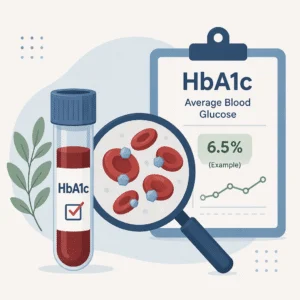
| HbA1c | La glicemia media negli ultimi tre mesi circa | Non influenzato dal pasto del giorno prima; usato per la diagnosi e il monitoraggio |
| Insulina a digiuno e HOMA-IR | Quanto lavora il pancreas per mantenere la glicemia nella norma | Può modificarsi anni prima che la glicemia stessa si alzi |
| pannello lipidico | LDL, HDL e trigliceridi | Spesso peggiora durante la transizione, frequentemente in modo silenzioso |
| TSH | Funzione tiroidea | La malattia tiroidea imita la menopausa: stanchezza, variazioni di peso, sbalzi d'umore, sudorazioni |
| FSH ed estradiolo | Stato ormonale ovarico | Utile solo quando la fase menopausale è genuinamente incerta |
L'ultima riga merita una precisazione. La menopausa viene di solito diagnosticata in base ai sintomi e alla storia del ciclo mestruale, non a un esame del sangue. La nostra guida illustra nel dettaglio il pannello degli ormoni femminili e il significato di ogni risultato, e un articolo separato tratta i livelli di estradiolo durante il ciclo.
Come leggere i tuoi valori
Glicemia a digiuno e HbA1c
Il CDC stabilisce gli stessi valori soglia per le donne a qualsiasi età. Una glicemia a digiuno pari o inferiore a 99 mg/dL è normale, da 100 a 125 mg/dL indica prediabete, e 126 mg/dL o più in due test separati indica diabete. Per l'HbA1c, al di sotto del 5,7% è normale, dal 5,7% al 6,4% è prediabete, e dal 6,5% in su è diabete. Le nostre pagine di riferimento spiegano i valori della glicemia a digiuno e come interpretarli e la nostra Informativa i risultati dell'HbA1c e i valori target.
Il prediabete è la fascia che conta di più in questo contesto, perché è comune, silenzioso e reversibile. Se vuoi convertire una percentuale in un dato di uso quotidiano, pubblichiamo una tabella di conversione dall'HbA1c alla glicemia media.
Un solo risultato non è una diagnosi
Un singolo valore elevato può riflettere un'infezione, un ciclo di corticosteroidi, una settimana stressante o un digiuno non rispettato. La diagnosi si basa normalmente su due risultati anomali, oppure su un risultato più sintomi chiari. Prima della visita, controlla le regole su digiuno prima di un esame del sangue, e consulta la nostra panoramica su esami del sangue per il diabete.
Quando sottoporsi al test e quando consultare un medico.
La US Preventive Services Task Force raccomanda lo screening per il prediabete e il diabete di tipo 2 negli adulti tra i 35 e i 70 anni in sovrappeso o con obesità, da ripetere circa ogni tre anni se i risultati sono nella norma. Molte donne in questa fascia d'età si trovano anche nella transizione verso la menopausa, il che rende questo un momento naturale per controllare entrambi gli aspetti.
Prenota un appuntamento prima del previsto se noti sete insolita, minzione frequente, perdita di peso inspiegabile, visione offuscata, ferite che faticano a guarire o infezioni ricorrenti. Parlane anche con il tuo medico se vampate di calore, stanchezza o sbalzi d'umore stanno interferendo con la vita quotidiana, indipendentemente dal tuo valore di glicemia — quei sintomi meritano attenzione di per sé.
Ultimi progressi scientifici
Ecco cosa aggiunge la ricerca recente, in parole semplici.
- Lo studio del 2026 pubblicato su Menopausa è il primo a esaminare questa domanda nelle donne coreane in età di mezza età. Risultato: le donne con glicemia a digiuno e HbA1c nella fascia diabetica hanno riferito più sintomi menopausali, e più intensi, soprattutto dopo la menopausa. Cosa significa per te: se i sintomi ti sembrano più pesanti del previsto, richiedere un controllo metabolico è una cosa ragionevole da fare. Il risultato è un'associazione ricavata da un'istantanea unica, quindi va letto come un segnale, non come una prova.
- Una revisione del 2024 sulla transizione menopausale ha concluso che la transizione stessa ridisegna la salute cardiometabolica — composizione corporea, pressione sanguigna, lipoproteine e sensibilità all'insulina cambiano tutte. Cosa significa per te: valori che erano stabili per vent'anni possono spostarsi tra i quaranta e i cinquant'anni senza alcun cambiamento nelle tue abitudini, quindi confrontarli con i tuoi risultati precedenti è più informativo di un'unica misurazione isolata.
- Una revisione del 2023 sulla salute metabolica dopo la menopausa ha descritto come l'aumento di peso addominale, la dislipidemia aterogena — un profilo lipidico che favorisce le placche nelle arterie — la resistenza all'insulina e la pressione alta tendano ad accumularsi insieme. Cosa significa per te: vale la pena leggere i tuoi valori di glucosio e il tuo pannello lipidico uno accanto all'altro, anziché uno alla volta.
- Una revisione del 2025 su menopausa e diabete ha evidenziato quanto ancora sia sconosciuto, incluso se la menopausa aumenti il rischio di diabete indipendentemente dall'invecchiamento. Cosa significa per te: diffida delle affermazioni sicure in un senso o nell'altro; la risposta onesta oggi è che i due fenomeni sono collegati, ma il nesso causale non è ancora chiarito.
Glossario
| Termine | Definizione |
|---|---|
| HbA1c | Emoglobina glicata. Riflette la tua glicemia media negli ultimi tre mesi circa, espressa in percentuale. |
| Prediabete | Glicemia più alta del normale ma al di sotto della soglia del diabete. Spesso reversibile. |
| Resistenza all'insulina | Una condizione in cui le cellule rispondono male all'insulina, costringendo il pancreas a produrne di più per mantenere la glicemia nella norma. |
| Perimenopausa | Gli anni di fluttuazioni ormonali che precedono la cessazione definitiva delle mestruazioni. |
| Postmenopausa | Il periodo che inizia dodici mesi dopo l'ultima mestruazione. |
| Sintomi vasomotori | Il termine medico per indicare le vampate di calore e le sudorazioni notturne. |
| Studio trasversale | Uno studio che misura tutto in un unico momento. Può mostrare associazioni, non cause. |
| HOMA-IR | Un punteggio calcolato a partire dalla glicemia a digiuno e dall'insulinemia a digiuno, utilizzato per stimare la resistenza all'insulina. |
Domande frequenti
La menopausa causa il diabete?
No, la menopausa da sola non causa il diabete. Coincide però con cambiamenti che aumentano il rischio: minore sensibilità all'insulina, più grasso addominale e un profilo lipidico meno favorevole. Età, familiarità, peso e attività fisica rimangono i fattori principali. I ricercatori non hanno ancora stabilito se la menopausa aggiunga un rischio indipendente dall'invecchiamento.
La glicemia alta può causare le vampate di calore?
Non direttamente, e nessuno studio ha dimostrato che abbassare la glicemia elimini le vampate. Ciò che la ricerca del 2026 suggerisce è che le donne con valori nella fascia diabetica riferiscono più sintomi in generale, e più intensi. Il sonno disturbato, le sudorazioni notturne e il controllo glicemico si influenzano a vicenda, il che rende improbabile qualsiasi spiegazione semplice e unidirezionale.
Quale esame del sangue conferma la menopausa?
Di solito nessuno. Nelle donne over 45 con sintomi tipici e cicli irregolari, la menopausa è una diagnosi clinica. FSH ed estradiolo vengono richiesti solo in situazioni poco chiare, come la menopausa prima dei 45 anni, dopo un'isterectomia, o quando i sintomi potrebbero avere un'altra causa. La nostra pagina su pannello ormonale femminile spiega quando ciascun esame è utile.
Devo controllare la glicemia in menopausa anche se mi sento bene?
Il prediabete di solito non dà sintomi, quindi stare bene non ti dice molto. Se hai tra i 35 e i 70 anni e sei in sovrappeso, lo screening è consigliato indipendentemente dallo stato menopausale. Al di fuori di questo gruppo, parla con il tuo medico del tuo rischio personale invece di fare il test d'impulso.
La terapia ormonale può influenzare i miei risultati del glucosio?
La terapia ormonale per la menopausa è stata associata a modesti miglioramenti nella gestione del glucosio e dei lipidi in diverse revisioni, ma non viene prescritta per trattare o prevenire il diabete. Se stai seguendo una terapia ormonale, segnalalo quando fai le analisi del sangue e discuti qualsiasi variazione nei risultati con chi te l'ha prescritta.
Devo essere a digiuno prima del test HbA1c?
No. L'HbA1c riflette la media del glucosio degli ultimi tre mesi, quindi mangiare prima del prelievo non la modifica. La glicemia a digiuno richiede invece un digiuno notturno, quindi se vengono richiesti entrambi ti verrà di solito chiesto di essere a digiuno.
Fonti
- Centers for Disease Control and Prevention — Test per il diabete, 2026 — https://www.cdc.gov/diabetes/diabetes-testing/index.html
- US Preventive Services Task Force — Prediabete e diabete di tipo 2: screening — https://www.uspreventiveservicestaskforce.org/uspstf/recommendation/screening-for-prediabetes-and-type-2-diabetes
- National Institute on Aging, National Institutes of Health — What Is Menopause? — https://www.nia.nih.gov/health/menopause/what-menopause
- Yang YL, Kim Y, Shin Y — Associazione tra diabete mellito di tipo 2 e sintomi menopausali nelle donne coreane di mezza età — Menopause, 2026 — https://doi.org/10.1097/GME.0000000000002883
- Uddenberg ER et al. — Transizione menopausale e rischio cardiovascolare — Maturitas, 2024 — https://consensus.app/papers/details/c250d2e7f68a5a9199a4915caad89428/
- Anagnostis P et al. — Salute cardiovascolare e menopausa, salute metabolica — Best Practice & Research Clinical Endocrinology & Metabolism, 2023 — https://consensus.app/papers/details/208a411e7a5953969637011e111e2176/
- Rodriguez CP et al. — Menopausa e diabete: associazioni di rischio interconnesse — Endocrine Research, 2025 — https://consensus.app/papers/details/40d4ff0268835edfa802d75a2ba7ecdd/
Approfondimenti
- Sintomi, fasi e trattamento della menopausa
- Come leggere i tuoi esami del sangue
- Il punteggio HOMA-IR per la resistenza all'insulina
- Il pannello metabolico completo
- L'esame del sangue TSH e i risultati della tiroide
Scopri i tuoi referti con AI DiagMe
Le analisi di mezza età raramente vengono accompagnate da una spiegazione. Una glicemia a digiuno nella fascia del prediabete, un'HbA1c che è salita gradualmente, un FSH che da solo dice poco — ogni valore acquista più senso se letto insieme agli altri. AI DiagMe trasforma il tuo referto di laboratorio in un linguaggio chiaro, così arrivi alla prossima visita sapendo già su quali risultati fare domande. Ti aiuta a capire le tue analisi; non fa diagnosi e non sostituisce il tuo medico.
Ottieni l'interpretazione dei tuoi risultati in pochi minuti