
Menopause dan gula darah ternyata lebih erat kaitannya daripada yang selama ini disampaikan kepada kebanyakan wanita. Sebuah studi yang diterbitkan pada 4 Agustus 2026 di Mati haid, jurnal The Menopause Society, menemukan bahwa wanita dengan diabetes tipe 2 atau pradiabetes melaporkan jumlah gejala menopause yang lebih banyak sekaligus lebih berat dibandingkan wanita dengan kadar gula darah normal. Yang membuat temuan ini praktis adalah cara peneliti mengelompokkan peserta: bukan berdasarkan diagnosis di rekam medis, melainkan dari dua nilai laboratorium biasa — gula darah puasa dan HbA1c. Dalam artikel ini Anda akan mengetahui apa yang sebenarnya ditunjukkan oleh studi tersebut, tes apa yang ada di balik kedua angka itu, dan cara membacanya tanpa terburu-buru mengambil kesimpulan.
Apa yang ditemukan oleh studi terbaru ini
Para peneliti mempelajari 296 wanita Korea Selatan berusia 40 hingga 64 tahun. Setiap peserta diukur kadar gula darah puasa dan HbA1c-nya, lalu dikelompokkan ke dalam kelompok diabetes atau kelompok non-diabetes berdasarkan kedua nilai tersebut. Gejala menopause kemudian dinilai menggunakan kuesioner standar, yaitu Midlife Women’s Symptom Index.
Wanita dalam kelompok diabetes melaporkan lebih banyak gejala dan menilainya lebih intens. Perbedaan ini tetap terlihat setelah peneliti memperhitungkan faktor-faktor lain yang mungkin memengaruhinya. Satu detail penting untuk interpretasi: kesenjangan ini tampak jelas pada wanita yang sudah memasuki fase pascamenopause, dan tidak pada mereka yang masih dalam fase pramenopause atau transisi perimenopause.
Ini adalah studi potong lintang — satu gambaran sesaat, di satu negara, dengan kurang dari 300 wanita. Studi ini menunjukkan adanya asosiasi, bukan hubungan sebab-akibat. Kadar gula darah yang lebih tinggi mungkin memang memperburuk gejala; gejala yang berat mungkin mengganggu tidur dan kebiasaan yang menjaga kestabilan glukosa; atau faktor ketiga, seperti penumpukan lemak di perut, mungkin mendorong keduanya sekaligus.
Mengapa menopause dan gula darah saling memengaruhi
Estrogen memengaruhi cara tubuh mengelola glukosa. Seiring menurunnya kadar estrogen selama masa transisi, sensitivitas insulin cenderung berkurang, lemak bergeser ke area perut, serta tekanan darah dan kadar lipid sering bergerak ke arah yang kurang menguntungkan. Tinjauan mengenai transisi menopause menggambarkan kumpulan perubahan ini sebagai faktor yang berkontribusi terhadap risiko kardiovaskular tersendiri, terpisah dari proses penuaan semata.
Hubungan ini berjalan dua arah. Keringat malam dan tidur yang terganggu meningkatkan hormon stres serta menurunkan toleransi glukosa keesokan harinya. Penumpukan lemak di sekitar pinggang memperburuk resistensi insulin, dan resistensi insulin pada gilirannya dikaitkan dengan hot flash yang lebih mengganggu. Tim kami telah membahas resistensi insulin tanpa obesitas, yang menjelaskan mengapa berat badan normal tidak berarti masalah ini bisa dikesampingkan.
Pemeriksaan darah yang memetakan kondisi ini
Tidak ada satu tes pun yang dapat menggambarkan kesehatan metabolik di usia paruh baya secara menyeluruh. Panel berikut adalah yang biasanya diperiksa oleh dokter secara bersamaan.
| Tes | Apa yang diukur | Mengapa ini penting saat menopause |
|---|---|---|
| Kadar glukosa darah puasa | Kadar gula darah setelah 8 jam atau lebih tanpa makan | Tes skrining lini pertama; mendeteksi prediabetes jauh sebelum gejala muncul |
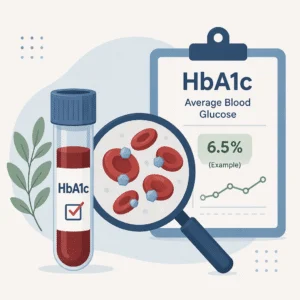
| HbA1c | Rata-rata kadar gula darah selama kurang lebih tiga bulan | Tidak terpengaruh oleh makanan kemarin; digunakan untuk diagnosis dan pemantauan |
| Insulin puasa dan HOMA-IR | Seberapa keras pankreas bekerja untuk menjaga kadar glukosa tetap normal | Dapat berubah bertahun-tahun sebelum kadar glukosa itu sendiri meningkat |
| Panel lipid | LDL, HDL, dan trigliserida | Sering memburuk selama masa transisi, biasanya tanpa gejala yang terasa |
| TSH | Fungsi tiroid | Penyakit tiroid meniru gejala menopause: kelelahan, perubahan berat badan, perubahan suasana hati, dan keringat berlebih |
| FSH dan estradiol | Status hormon ovarium | Berguna hanya jika tahap menopause benar-benar belum jelas |
Baris terakhir perlu diberi catatan. Menopause biasanya didiagnosis berdasarkan gejala dan riwayat siklus haid, bukan dari hasil tes darah. Panduan kami membahas secara rinci panel hormon wanita dan arti setiap hasilnya, dan artikel terpisah membahas kadar estradiol sepanjang siklus.
Cara membaca angka Anda
Gula darah puasa dan HbA1c
CDC menetapkan batas nilai yang sama untuk wanita di semua usia. Gula darah puasa 99 mg/dL atau di bawahnya tergolong normal, 100 hingga 125 mg/dL menunjukkan prediabetes, dan 126 mg/dL atau lebih pada dua tes terpisah menunjukkan diabetes. Untuk HbA1c, di bawah 5,7% adalah normal, 5,7% hingga 6,4% adalah prediabetes, dan 6,5% atau lebih adalah diabetes. Halaman referensi kami menjelaskan kadar glukosa darah puasa dan cara membacanya dan hasil HbA1c dan rentang targetnya.
Prediabetes adalah rentang yang paling penting di sini, karena kondisi ini umum terjadi, tidak menimbulkan gejala, dan dapat dipulihkan. Jika Anda ingin mengubah persentase menjadi angka yang lebih mudah dipahami sehari-hari, kami menerbitkan tabel konversi A1C ke rata-rata kadar gula darah.
Satu hasil bukan berarti diagnosis
Satu nilai yang tinggi bisa mencerminkan adanya infeksi, penggunaan steroid, minggu yang penuh tekanan, atau puasa yang tidak dijalankan dengan benar. Diagnosis biasanya didasarkan pada dua hasil yang tidak normal, atau satu hasil ditambah gejala yang jelas. Sebelum janji temu Anda, periksa aturan mengenai berpuasa sebelum tes darah, dan lihat ikhtisar kami tentang tes darah diabetes.
Kapan harus melakukan tes, dan kapan harus menemui dokter?
US Preventive Services Task Force merekomendasikan skrining prediabetes dan diabetes tipe 2 pada orang dewasa berusia 35 hingga 70 tahun yang kelebihan berat badan atau mengalami obesitas, diulang kira-kira setiap tiga tahun jika hasilnya normal. Banyak wanita dalam rentang usia tersebut juga sedang menjalani masa transisi menopause, sehingga ini menjadi momen yang tepat untuk memeriksa keduanya sekaligus.
Buat janji lebih awal jika Anda mengalami rasa haus yang tidak biasa, sering buang air kecil, penurunan berat badan tanpa sebab yang jelas, penglihatan kabur, luka yang lambat sembuh, atau infeksi yang berulang. Sampaikan juga kepada dokter Anda jika hot flash, kelelahan, atau perubahan suasana hati mengganggu aktivitas sehari-hari, terlepas dari hasil gula darah Anda — gejala-gejala tersebut perlu ditangani tersendiri.
Kemajuan ilmiah terkini
Berikut ini ringkasan temuan penelitian terbaru dalam bahasa yang mudah dipahami.
- Studi tahun 2026 yang diterbitkan di Mati haid adalah yang pertama menguji pertanyaan ini pada wanita Korea paruh baya. Temuannya: wanita yang kadar gula darah puasa dan HbA1c-nya berada dalam rentang diabetes melaporkan lebih banyak gejala menopause, dan lebih berat, terutama setelah menopause. Artinya bagi Anda: jika gejala yang Anda rasakan terasa lebih berat dari yang diperkirakan, meminta pemeriksaan metabolik adalah hal yang wajar untuk dilakukan. Hasil ini merupakan asosiasi dari satu titik waktu saja, sehingga harus dibaca sebagai sinyal, bukan bukti.
- Sebuah tinjauan tahun 2024 tentang transisi menopause menyimpulkan bahwa transisi itu sendiri mengubah kesehatan kardiometabolik — komposisi tubuh, tekanan darah, lipoprotein, dan sensitivitas insulin semuanya berubah. Artinya bagi Anda: angka-angka yang stabil selama dua puluh tahun bisa bergeser di usia empat puluhan dan lima puluhan tanpa ada perubahan pada kebiasaan Anda, sehingga membandingkan dengan hasil Anda sebelumnya jauh lebih informatif daripada hanya melihat satu hasil saja.
- Sebuah tinjauan tahun 2023 tentang kesehatan metabolik setelah menopause menggambarkan bagaimana penambahan berat badan di area perut, dislipidemia aterogenik — profil lipid yang mendukung pembentukan plak di arteri — resistensi insulin, dan tekanan darah tinggi cenderung muncul bersamaan. Artinya bagi Anda: ada baiknya membaca hasil gula darah dan hasil panel lipid Anda secara berdampingan, bukan satu per satu.
- Sebuah tinjauan tahun 2025 tentang menopause dan diabetes menguraikan betapa banyak hal yang masih belum diketahui, termasuk apakah menopause meningkatkan risiko diabetes secara independen dari proses penuaan. Artinya bagi Anda: berhati-hatilah terhadap klaim yang terlalu yakin ke arah mana pun; jawaban jujur saat ini adalah bahwa keduanya saling berkaitan, namun arah sebab-akibatnya belum dapat dipastikan.
Glosarium
| Ketentuan | Definisi |
|---|---|
| HbA1c | Hemoglobin terglikasi. Mencerminkan rata-rata kadar gula darah Anda selama sekitar tiga bulan, dinyatakan dalam persentase. |
| Pradiabetes | Kadar gula darah lebih tinggi dari normal tetapi masih di bawah ambang batas diabetes. Seringkali dapat dipulihkan. |
| Resistensi insulin | Kondisi di mana sel-sel tubuh merespons insulin dengan buruk, sehingga pankreas harus memproduksi lebih banyak insulin untuk menjaga kadar gula darah tetap normal. |
| Perimenopause | Tahun-tahun fluktuasi hormonal sebelum menstruasi berhenti sepenuhnya. |
| Pascamenopause | Periode yang dimulai dua belas bulan setelah menstruasi terakhir. |
| Gejala vasomotor | Istilah medis untuk hot flash dan keringat malam. |
| Studi potong lintang | Studi yang mengukur segala sesuatu pada satu titik waktu. Studi ini dapat menunjukkan keterkaitan, bukan penyebab. |
| HOMA-IR | Skor yang dihitung dari glukosa puasa dan insulin puasa, digunakan untuk memperkirakan resistensi insulin. |
Pertanyaan yang sering diajukan
Apakah menopause menyebabkan diabetes?
Tidak, menopause sendiri tidak menyebabkan diabetes. Namun, menopause bersamaan dengan perubahan yang meningkatkan risiko: sensitivitas insulin yang menurun, lemak perut yang bertambah, dan profil lipid yang kurang menguntungkan. Usia, riwayat keluarga, berat badan, dan aktivitas fisik tetap menjadi faktor utama. Para peneliti belum memastikan apakah menopause menambah risiko secara independen dari proses penuaan.
Apakah kadar gula darah tinggi bisa menyebabkan hot flash?
Tidak secara langsung, dan belum ada penelitian yang membuktikan bahwa menurunkan kadar glukosa dapat menghilangkan hot flash. Yang disarankan oleh penelitian tahun 2026 adalah bahwa wanita dengan kadar glukosa dalam rentang diabetes melaporkan lebih banyak gejala secara keseluruhan, dan gejalanya lebih intens. Tidur yang buruk, keringat malam, dan kontrol glukosa juga saling memengaruhi satu sama lain, sehingga penjelasan sederhana satu arah kemungkinan besar tidak tepat.
Tes darah apa yang memastikan menopause?
Biasanya tidak ada. Pada wanita di atas 45 tahun dengan gejala khas dan siklus haid yang berubah, menopause adalah diagnosis klinis. FSH dan estradiol hanya digunakan untuk situasi yang tidak jelas, seperti menopause sebelum usia 45, setelah histerektomi, atau ketika gejala mungkin memiliki penyebab lain. Halaman kami tentang panel hormon wanita menjelaskan kapan masing-masing tes memberikan informasi tambahan.
Apakah saya perlu memeriksa gula darah saat menopause meskipun merasa baik-baik saja?
Pradiabetes biasanya tidak menimbulkan gejala, sehingga merasa baik-baik saja tidak memberikan banyak informasi. Jika Anda berusia antara 35 dan 70 tahun dan memiliki kelebihan berat badan, skrining dianjurkan terlepas dari status menopause Anda. Di luar kelompok tersebut, diskusikan risiko pribadi Anda dengan dokter daripada melakukan tes secara impulsif.
Apakah terapi hormon dapat memengaruhi hasil gula darah saya?
Terapi hormon menopause telah dikaitkan dengan perbaikan sederhana dalam pengelolaan glukosa dan lipid dalam beberapa tinjauan, tetapi tidak diresepkan untuk mengobati atau mencegah diabetes. Jika Anda sedang menjalani terapi hormon, sebutkan hal tersebut saat melakukan pemeriksaan darah, dan diskusikan setiap perubahan pada hasil Anda dengan dokter yang meresepkannya.
Apakah saya perlu puasa sebelum tes HbA1c?
Tidak. HbA1c mencerminkan rata-rata glukosa selama tiga bulan, sehingga makan sebelumnya tidak memengaruhinya. Glukosa puasa memang memerlukan puasa semalaman, jadi jika keduanya dipesan bersamaan, Anda biasanya akan diminta untuk berpuasa.
Sumber
- Centers for Disease Control and Prevention — Pemeriksaan Diabetes, 2026 — https://www.cdc.gov/diabetes/diabetes-testing/index.html
- US Preventive Services Task Force — Pradiabetes dan Diabetes Tipe 2: Skrining — https://www.uspreventiveservicestaskforce.org/uspstf/recommendation/screening-for-prediabetes-and-type-2-diabetes
- National Institute on Aging, National Institutes of Health — Apa Itu Menopause? — https://www.nia.nih.gov/health/menopause/what-menopause
- Yang YL, Kim Y, Shin Y — Hubungan antara diabetes melitus tipe 2 dan gejala menopause pada wanita Korea paruh baya — Menopause, 2026 — https://doi.org/10.1097/GME.0000000000002883
- Uddenberg ER et al. — Transisi menopause dan risiko penyakit kardiovaskular — Maturitas, 2024 — https://consensus.app/papers/details/c250d2e7f68a5a9199a4915caad89428/
- Anagnostis P et al. — Kesehatan kardiovaskular dan menopause, kesehatan metabolik — Best Practice & Research Clinical Endocrinology & Metabolism, 2023 — https://consensus.app/papers/details/208a411e7a5953969637011e111e2176/
- Rodriguez CP et al. — Menopause dan diabetes: keterkaitan risiko yang saling berhubungan — Endocrine Research, 2025 — https://consensus.app/papers/details/40d4ff0268835edfa802d75a2ba7ecdd/
Bacaan lebih lanjut
- Gejala, tahapan, dan penanganan menopause
- Cara membaca hasil tes darah Anda
- Skor resistensi insulin HOMA-IR
- Panel metabolik komprehensif
- Tes darah TSH dan hasil fungsi tiroid
Pahami hasil lab Anda dengan AI DiagMe.
Hasil laboratorium di usia paruh baya jarang disertai penjelasan. Kadar gula darah puasa yang masuk rentang pradiabetes, HbA1c yang perlahan meningkat, atau FSH yang tidak banyak berarti jika dibaca sendiri — setiap angka menjadi lebih bermakna ketika dibaca bersama angka lainnya. AI DiagMe mengubah laporan laboratorium Anda menjadi bahasa yang mudah dipahami, sehingga Anda datang ke janji dokter berikutnya dengan tahu hasil mana yang perlu ditanyakan. Layanan ini membantu Anda memahami hasil analisis Anda; bukan untuk mendiagnosis, dan tidak menggantikan dokter Anda.
Dapatkan interpretasi hasil Anda dalam hitungan menit.