


























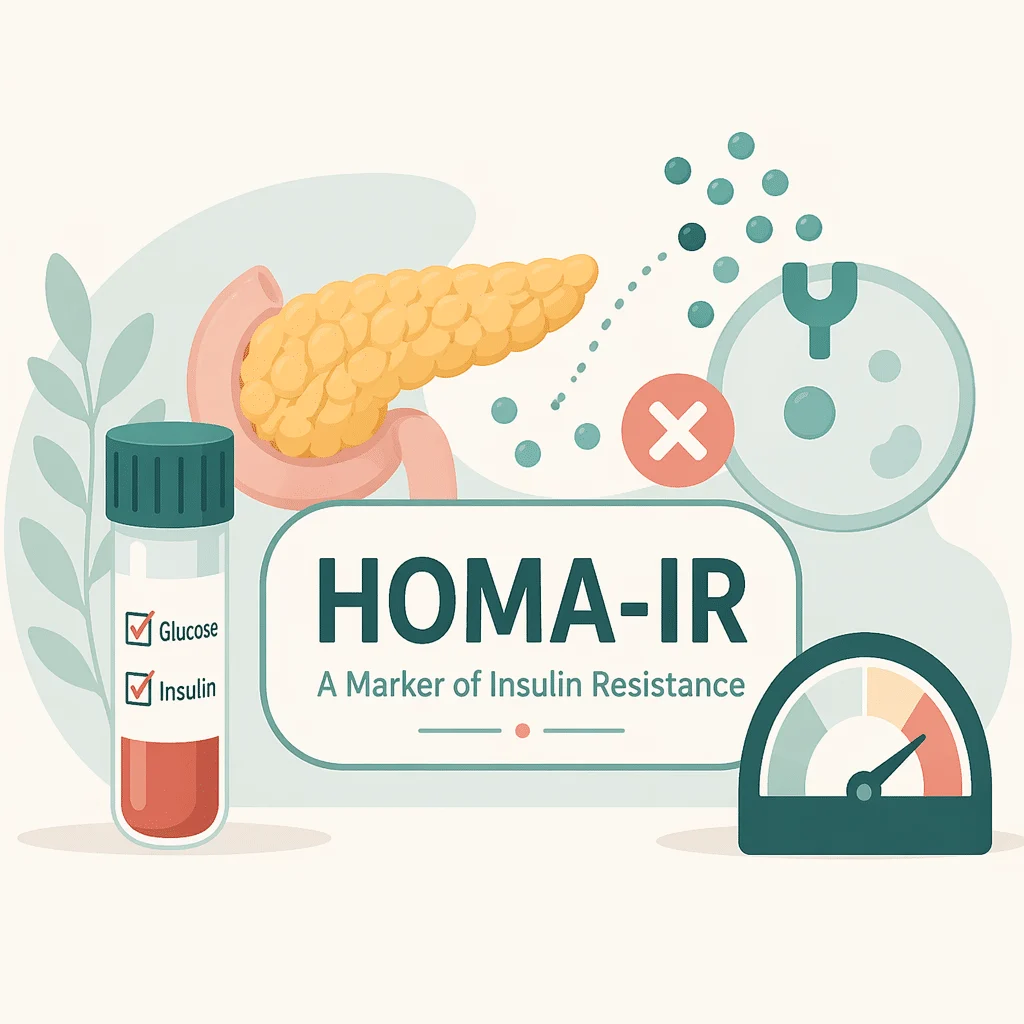
Când primești un buletin de analize cu termenul HOMA-IR, de obicei apar mai multe întrebări decât răspunsuri. Acest ghid îți explică ce măsoară testul HOMA-IR, cum se calculează scorul din două valori uzuale din sânge și ce poate însemna un rezultat normal, la limită sau ridicat pentru sănătatea ta metabolică. Vei găsi, de asemenea, limitele cunoscute ale testului, indici mai noi studiați de cercetători și pași practici dacă scorul tău este ridicat. Scopul este claritatea, nu îngrijorarea, astfel încât să poți discuta rezultatele cu medicul tău dintr-o poziție informată.
Ce măsoară HOMA-IR și cum se calculează
HOMA-IR este prescurtarea de la Homeostatic Model Assessment of Insulin Resistance (Evaluarea Modelului Homeostatic al Rezistenței la Insulină). Nu presupune o recoltare separată de sânge. Este un calcul care combină două rezultate deja prezente pe un panou metabolic standard: glicemia à jeun și insulina à jeun. Deoarece ambele valori provin din același eșantion de sânge recoltat pe nemâncate, un laborator sau un medic poate calcula scorul HOMA-IR fără a solicita un test suplimentar.
Formula înmulțește insulina à jeun (în microunități pe mililitru) cu glicemia à jeun (în milimoli pe litru), apoi împarte rezultatul la 22,5. Constanta 22,5 provine din cercetarea originală din 1985 care a introdus modelul și standardizează scorul astfel încât un adult sănătos, sensibil la insulină, să obțină o valoare apropiată de 1,0.
Logica din spatele acestui număr este simplă. Insulina este hormonul pe care pancreasul îl eliberează pentru a ajuta glucoza să treacă din sânge în celule, unde este folosită ca energie. Când celulele răspund bine la insulină, pancreasul nu trebuie să lucreze intens, astfel că insulina à jeun rămâne scăzută în raport cu glicemia à jeun. Când celulele rezistă semnalului insulinei, pancreasul compensează eliberând mai multă insulină, ceea ce crește produsul din calcul și împinge scorul în sus.
Medicii se bazează pe HOMA-IR deoarece acesta aproximează o procedură de cercetare mult mai complexă, numită clamp hiperinsulinemic-euglicemic, considerată metoda de referință pentru măsurarea directă a rezistenței la insulină. Tehnica clamp necesită perfuzii intravenoase continue de glucoză și insulină timp de mai multe ore, într-un cadru de cercetare, ceea ce o face impractică pentru îngrijirea de rutină. HOMA-IR oferă o estimare rezonabilă dintr-o singură recoltare de sânge à jeun, motiv pentru care rămâne cel mai utilizat marker surogat atât în practica clinică, cât și în cercetarea populațională.
Valorile normale, la limită și ridicate ale HOMA-IR
Intervalele de referință pentru HOMA-IR nu sunt perfect standardizate, iar valorile pot varia în funcție de laborator, de metoda specifică de dozare a insulinei utilizată și de populația pe baza căreia a fost stabilit intervalul. Cu toate acestea, majoritatea medicilor și studiilor publicate folosesc repere similare celor de mai jos ca punct de plecare general.
| Scorul HOMA-IR | Interpretare generală |
|---|---|
| Sub 1,0 | Sensibilitate optimă la insulină |
| 1,0 până la 1,9 | Posibilă rezistență la insulină incipientă sau ușoară |
| 2,0 până la 2,9 | Rezistență la insulină moderată probabilă |
| 3,0 sau mai mare | Rezistență la insulină semnificativă probabilă |
O singură valoare HOMA-IR reprezintă o imagine de moment, nu un verdict. Durata postului, o boală recentă, somnul insuficient și chiar metoda specifică de dozare a insulinei folosită de laborator pot modifica rezultatul într-o măsură semnificativă. De obicei, un medic dorește să observe un tipar pe parcursul mai multor teste, alături de istoricul greutății tale, circumferința taliei, istoricul familial și alți markeri, înainte de a trage concluzii despre sănătatea ta metabolică.
Ce determină rezistența la insulină
Rezistența la insulină are rareori o singură cauză. De obicei se instalează treptat, dintr-o combinație de factori care se potențează reciproc de-a lungul lunilor sau anilor.
Excesul de grăsime corporală, în special grăsimea viscerală depusă în jurul organelor abdominale, este unul dintre cei mai constanți factori identificați de cercetători. Grăsimea viscerală eliberează semnale inflamatorii și acizi grași care interferează cu modul în care celulele musculare și hepatice răspund la insulină. Un stil de viață sedentar amplifică acest efect, deoarece mișcarea regulată este una dintre cele mai directe modalități prin care organismul își crește sensibilitatea la insulină, independent de modificările de greutate.
Dieta joacă și ea un rol important. Dietele bogate în carbohidrați rafinați, zaharuri adăugate și alimente ultra-procesate sunt asociate cu o rezistență mai mare la insulină în studiile populaționale, cel mai probabil prin creșterile repetate ale glicemiei și insulinei care suprasolicită pancreasul. Clinicienii observă frecvent acest tipar reflectat în valori crescute ale nivelul trigliceridelor pe un profil lipidic standard, deoarece aceiași factori alimentari și metabolici tind să crească ambii markeri în același timp. Privarea cronică de somn și stresul necontrolat cresc și ele nivelul de cortizol circulant, un hormon care poate reduce efectul insulinei asupra celulelor.
Genetica și vârsta contribuie independent de stilul de viață. Un istoric familial de diabet de tip 2 crește riscul de bază, iar sensibilitatea la insulină scade ușor în mod natural odată cu vârsta. Anumite afecțiuni și medicamente adaugă o influență suplimentară, printre care sindromul ovarelor polichistice, sindromul Cushing, unele corticosteroizi și anumite medicamente antipsihotice. Niciunul dintre acești factori nu garantează în sine apariția rezistenței la insulină, dar împreună explică de ce două persoane cu o greutate similară pot avea scoruri HOMA-IR destul de diferite.
HOMA-IR față de glicemia à jeun și HbA1c
O întrebare frecventă este de ce un medic ar calcula HOMA-IR când există deja glicemia à jeun și HbA1c. Cele trei teste măsoară lucruri înrudite, dar distincte, și fiecare are rolul său.
| Analiză | Ce reflectă | Utilizare tipică |
|---|---|---|
| HOMA-IR | Cât de mult lucrează pancreasul pentru a menține glicemia normală | Estimarea rezistenței la insulină, adesea înainte ca glicemia să crească |
| Glicemie à jeun | Glicemia la un moment dat, pe nemâncate | Screening pentru prediabet și diabet |
| HbA1c | Glicemia medie pe aproximativ trei luni | Diagnostic și monitorizare pe termen lung |
Concluzia practică este că HOMA-IR poate semnala un tipar compensator, adică organismul lucrează din greu pentru a menține glicemia normală, înainte ca această compensare să înceapă să cedeze și glicemia sau HbA1c să crească. De aceea, unii clinicieni îl consideră un semnal mai precoce, deși în practică este folosit mai des în cercetare și în medii specializate decât în screeningul de rutină din medicina primară. Cei care își compară propriile valori în timp pot consulta direct ambii markeri, deoarece ghidurile noastre acoperă interpretarea glicemiei à jeun și valori normale HbA1c mai în detaliu.
Limitele testului HOMA-IR
HOMA-IR este o estimare utilă, nu un instrument de diagnostic precis, iar înțelegerea limitelor sale ajută la punerea oricărui rezultat individual în perspectivă.
În primul rând, testul depinde în mare măsură de un post corect respectat. Mâncatul, consumul oricărei băuturi în afară de apă sau stresul semnificativ în orele dinaintea recoltării sângelui pot modifica atât valorile glicemiei, cât și ale insulinei, distorsionând scorul. În al doilea rând, metodele de dozare a insulinei nu sunt perfect standardizate între laboratoare, astfel că același eșantion de sânge testat în două laboratoare diferite poate produce uneori rezultate ușor diferite. În al treilea rând, HOMA-IR reflectă doar condițiile de post. Nu surprinde modul în care corpul tău gestionează glucoza după masă, ceea ce unii cercetători consideră la fel de relevant pentru riscul pe termen lung.
În al patrulea rând, și merită știut, principalele autorități în sănătate precizează că HOMA-IR a fost dezvoltat și este utilizat în principal în contexte de cercetare, nu pentru diagnosticul de rutină. Conform Institutul Național pentru Diabet și Boli Digestive și Renale, testarea rezistenței la insulină în mod specific este utilizată în principal în studiile de cercetare, iar screeningul de rutină pentru prediabet și diabet de tip 2 se bazează în schimb pe glicemia à jeun, HbA1c sau testul de toleranță orală la glucoză. Acest lucru nu înseamnă că HOMA-IR nu are valoare. Înseamnă că scorul este interpretat cel mai bine de un medic alături de alți markeri, nu izolat.
În plus, valorile prag variază în funcție de populație, vârstă, sex și compoziție corporală, astfel că un prag validat într-un grup de studiu poate să nu se aplice cu exactitate altuia. Acesta este unul dintre motivele pentru care cercetătorii continuă să exploreze indici complementari, discutați mai jos.
Un ghid simplu de interpretare a rezultatului tău HOMA-IR
Dacă te uiți la o valoare HOMA-IR pe un buletin de analize, acest cadru general te poate ajuta să te gândești la pașii următori, deși sfatul medicului tău are întotdeauna prioritate, ținând cont de întreaga ta situație de sănătate.
- Rezultat sub aproximativ 1,0–1,9, fără alte constatări îngrijorătoare: un screening anual sau bianual de rutină, în cadrul controalelor standard, este de obicei rezonabil.
- Rezultat la limită sau moderat crescut, alături de factori de risc precum excesul de greutate, un stil de viață sedentar sau antecedente familiale de diabet: discută cu medicul tău despre schimbări ale stilului de viață și despre posibilitatea retestării peste trei până la șase luni.
- Rezultat clar crescut, mai ales alături de glicemie à jeun ridicată, profil lipidic anormal sau simptome precum oboseală neobișnuită sau modificări ale pielii: programează o consultație promptă pentru a discuta investigații suplimentare sau trimitere la un specialist.
Când să mergi la medic
Anumite situații necesită o discuție mai promptă cu un medic, în loc să aștepți o consultație de rutină. Contactează medicul tău dacă scorul HOMA-IR este ridicat și însoțit de glicemie à jeun sau HbA1c crescute, dacă observi simptome noi precum oboseală persistentă, sete crescută, urinare frecventă sau pete întunecate, catifelate pe piele cunoscute sub numele de acanthosis nigricans, sau dacă ai un istoric familial puternic de diabet de tip 2 și nu ai fost niciodată evaluat pentru risc metabolic. Femeile cu cicluri neregulate, creștere excesivă a părului sau acnee asociate cu un scor ridicat ar trebui să discute cu medicul lor despre sindromul ovarelor polichistice ca posibilă afecțiune conexă. Niciunul dintre aceste semne nu reprezintă o urgență în sine, dar sunt motive întemeiate pentru a programa o consultație în loc să aștepți.
Factori de stil de viață care îți influențează scorul
Vestea îmbucurătoare este că rezistența la insulină poate fi adesea modificată, iar scorurile HOMA-IR se pot îmbunătăți vizibil prin schimbări susținute.
Activitatea fizică regulată este unul dintre cei mai direcți factori de care dispui. Atât exercițiile aerobice, cât și antrenamentele de rezistență îmbunătățesc eficiența cu care celulele musculare absorb glucoza, iar efectul poate apărea în câteva săptămâni de activitate constantă, independent de o pierdere semnificativă în greutate. Țintirea a aproximativ 150 de minute de activitate moderată pe săptămână, combinată cu două sau mai multe sesiuni de forță, se aliniază cu recomandările marilor organizații de sănătate pentru sănătatea metabolică în general.
Tiparele alimentare bogate în fibre, legume, cereale integrale și proteine slabe, care limitează în același timp carbohidrații rafinați și zaharurile adăugate, se corelează constant cu o sensibilitate mai bună la insulină în cercetare. Un model alimentar de tip mediteranean are în special dovezi repetate în sprijinul unui metabolism mai sănătos al glucozei și insulinei.
Gestionarea greutății, atunci când este relevantă, are un efect deosebit de important. O cercetare de referință finanțată de NIH în cadrul Programului de Prevenire a Diabetului a constatat că persoanele cu risc crescut de diabet de tip 2 care au slăbit între cinci și șapte procente din greutatea inițială prin dietă și activitate fizică și-au redus semnificativ șansele de a dezvolta diabet — efect strâns legat de îmbunătățirea sensibilității la insulină. Oricine urmărește acest tip de risc în timp poate consulta și ghidul nostru mai amplu despre cauzele, simptomele și tratamentele diabetului pentru context despre cum poate evolua prediabetul dacă acești factori sunt lăsați neabordați. Prioritizarea unui somn consistent și adecvat și adoptarea unor obiceiuri de reducere a stresului, cum ar fi plimbări scurte zilnice sau exerciții de respirație, completează cei mai bine susținuți factori disponibili în prezent.
Progrese științifice recente
Cercetările privind rezistența la insulină sunt în continuă desfășurare, iar câteva descoperiri recente ajută la plasarea testului HOMA-IR într-un context mai larg, fără a modifica aspectele fundamentale descrise mai sus.
Cercetătorii au comparat HOMA-IR cu o alternativă mai nouă și mai simplă, numită indicele trigliceride-glucoză, adesea abreviat TyG. O analiză a datelor din sondajele naționale de sănătate din Statele Unite a arătat că indicele TyG a identificat ușor mai bine sindromul metabolic la adulți față de HOMA-IR, deși ambii markeri au fost asociați semnificativ cu riscul. Ce înseamnă asta pentru tine: TyG folosește două valori — trigliceridele à jeun și glicemia à jeun — care fac deja parte dintr-un profil lipidic și metabolic standard, astfel că poate fi estimat uneori fără un test separat de insulină. Nu înlocuiește HOMA-IR, dar arată că cercetătorii rafinează activ modul în care rezistența la insulină este estimată din analizele de rutină. Notă: un studiu transversal analizează un grup mare de persoane la un moment dat, util pentru identificarea asocierilor, dar incapabil în sine să demonstreze că un factor îl cauzează pe altul.
O analiză separată realizată pe un cohort de sănătate comunitară de dimensiuni medii din China a comparat indicele HOMA-IR și indicele TyG cu markeri ai sănătății vaselor de sânge, nu doar cu riscul de diabet. Studiul a constatat că HOMA-IR era mai strâns legat de un marker al rigidității arteriale numit scor CAVI anormal, precum și de modificările renale timpurii măsurate prin proteine în urină, în timp ce indicele TyG corela mai strâns cu o altă măsurătoare a rigidității arterelor mari. Ce înseamnă asta pentru tine: acest lucru sugerează că HOMA-IR și TyG pot surprinde aspecte oarecum diferite ale riscului cardiometabolic, în loc să fie interschimbabile, confirmând de ce medicii analizează adesea un ansamblu de markeri împreună, în loc să se bazeze pe un singur scor. Notă: un studiu de cohortă urmărește un grup definit de persoane de-a lungul timpului, ajutând cercetătorii să observe cum se leagă un marker de anumite rezultate pe măsură ce acestea apar în mod natural, deși nu poate stabili relații de cauzalitate la fel ca un studiu controlat.
Niciuna dintre aceste cercetări nu schimbă recomandările de bază din acest articol. HOMA-IR rămâne o estimare utilă și bine stabilită a rezistenței la insulină, care trebuie interpretată cel mai bine alături de glicemia à jeun, HbA1c, profilul lipidic și tabloul general al sănătății tale de către un medic calificat.
Glosar
| Termen | Definiție |
|---|---|
| HOMA-IR | Modelul de evaluare homeostatică a rezistenței la insulină, un scor calculat care combină glicemia à jeun și insulina à jeun. |
| Rezistență la insulină | O stare în care celulele răspund slab la insulină, determinând pancreasul să producă mai multă insulină pentru a menține glicemia în limite normale. |
| Insulina à jeun | Cantitatea de insulină circulantă în sânge după o noapte de post, una dintre cele două valori folosite pentru calcularea HOMA-IR. |
| Glicemie à jeun | Glicemia măsurată pe nemâncate, folosită atât de sine stătător pentru depistarea diabetului, cât și ca parte a calculului HOMA-IR. |
| HbA1c | Un test de sânge care reflectă media glicemiei din ultimele trei luni, folosit pentru diagnosticarea și monitorizarea diabetului. |
| Sindromul metabolic | Un grup de afecțiuni, printre care tensiunea arterială crescută, excesul de grăsime abdominală și colesterolul anormal, care împreună cresc riscul cardiovascular și riscul de diabet. |
| Indicele TyG | Indicele trigliceride-glucoză, un marker calculat mai nou al rezistența la insulină bazat pe trigliceridele à jeun și glicemia à jeun. |
| Grăsimea viscerală | Grăsimea depusă în jurul organelor abdominale, diferită de grăsimea de sub piele, strâns legată de rezistența la insulină. |
Întrebări frecvente despre testul HOMA-IR
Pot calcula singur scorul HOMA-IR acasă?
Da, dacă ai valorile glicemiei à jeun și ale insulinei à jeun dintr-un test de sânge recent, poți aplica singur formula standard sau poți folosi un calculator HOMA-IR online. Cu toate acestea, interpretarea semnificației acestui număr pentru sănătatea ta necesită în continuare un context clinic — inclusiv istoricul greutății, simptomele și celelalte valori de laborator — așa că este recomandat să discuți orice rezultat calculat de tine cu medicul tău, în loc să acționezi pe cont propriu.
Testul HOMA-IR este același lucru cu testul de insulină à jeun?
Nu. Testul de insulină à jeun măsoară un singur parametru: cantitatea de insulină din sânge după o noapte de post. HOMA-IR combină acel rezultat al insulinei à jeun cu glicemia à jeun într-o formulă specifică, pentru a obține un scor unic care estimează rezistența la insulină mai complet decât oricare dintre valori luate separat. Cei care doresc să aprofundeze acea valoare individuală pot consulta ghidul nostru despre testul de insulină din sânge, care explică insulina à jeun în sine.
Trebuie să fiu à jeun înainte de testul HOMA-IR?
Da. Deoarece calculul depinde de glicemia à jeun și de insulina à jeun, un rezultat precis necesită un post de opt până la douăsprezece ore înainte, de obicei peste noapte, permițând doar apă. Mâncatul, băuturile îndulcite sau chiar cafeaua cu smântână pot modifica rezultatul.
Poate varia intervalul normal al HOMA-IR de la un laborator la altul?
Da, și acesta este unul dintre aspectele mai confuze ale testului pentru pacienți. Laboratoare diferite pot folosi metode diferite de dozare a insulinei și populații de referință diferite, ceea ce poate modifica ușor intervalul normal. Compară întotdeauna rezultatul tău cu intervalul de referință specific tipărit pe propriul tău buletin de analize, nu cu un număr găsit în altă parte.
Un scor HOMA-IR crescut înseamnă că am deja diabet?
Nu neapărat. Un scor ridicat indică rezistență la insulină, un factor de risc pentru prediabet și diabet de tip 2, dar nu reprezintă în sine un diagnostic de diabet. Diabetul se diagnostichează pe baza glicemiei à jeun, a HbA1c sau a testului de toleranță la glucoză orală, raportate la praguri diagnostice specifice. Mulți oameni cu un scor HOMA-IR crescut nu ajung niciodată la diabet, mai ales dacă adoptă schimbări ale stilului de viață.
Poate scorul HOMA-IR să se îmbunătățească și cât de repede?
Da, HOMA-IR se poate îmbunătăți prin schimbări susținute ale activității fizice, alimentației, somnului și greutății, iar unele studii arată o îmbunătățire măsurabilă a sensibilității la insulină în câteva săptămâni de la începerea exercițiilor regulate. O îmbunătățire semnificativă și durabilă a scorului în sine devine mai evidentă de obicei după câteva luni de obiceiuri constante, iar medicul tău te poate ajuta să stabilești un interval rezonabil pentru retestare.
Surse
- National Institute of Diabetes and Digestive and Kidney Diseases (NIDDK) — Rezistența la insulină și prediabetul — National Institutes of Health, 2025 — citește prezentarea generală NIDDK
- Mayo Clinic Staff — Diabetul de tip 2: Simptome și cauze — Mayo Clinic, 2025 — citește prezentarea generală Mayo Clinic
- Cleveland Clinic — Rezistența la insulină: ce este, cauze, simptome și tratament — Cleveland Clinic, 2024 — citește prezentarea generală Cleveland Clinic
- Wan H, Cao H, Ning P — Superioritatea indicelui trigliceride-glucoză față de modelul homeostaziei în predicția sindromului metabolic pe baza analizei datelor NHANES — Scientific Reports, 2024 — vizualizează studiul pe PubMed
- Liang J, Zhou T, Wang X, et al. — Comparison Between Triglyceride Glucose Index and Homeostasis Model Assessment of Insulin Resistance in Their Associations with Vascular Dysfunction: Danyang Study — Pulse, 2025 — vizualizează studiul pe PubMed
Lectură suplimentară
- Glicemia à jeun: ghidul tău complet de interpretare
- Valori normale HbA1c: semnificație și niveluri țintă
- Analiză de insulină din sânge: înțelege valorile tale și ce înseamnă
- Testul peptidei C: niveluri crescute și scăzute explicate
- Diabet: cauze, simptome și tratamente
Un scor HOMA-IR spune rareori întreaga poveste de unul singur și are cel mai mult sens când este citit alături de rezultate conexe, cum ar fi glicemia à jeun, HbA1c și profilul lipidic. Medicii repetă frecvent testul de insulină à jeun împreună cu HOMA-IR pentru a confirma tiparul și pot verifica și nivelurile peptidei C când tipul de rezistență la insulină nu este clar. Analizând un profil complet panelul metabolic complet împreună cu acești markeri, obții adesea o imagine mai clară a sănătății metabolice decât dintr-un singur număr. AI DiagMe te ajută să înțelegi ce arată propriul tău buletin de analize, în limbaj simplu, astfel încât să intri la următoarea consultație mai bine pregătit. Este conceput să îți sprijine înțelegerea, nu să te diagnosticheze sau să înlocuiască medicul tău.
Înțelege-ți rezultatele analizelor cu AI DiagMe
Obține interpretarea rezultatelor în câteva minute