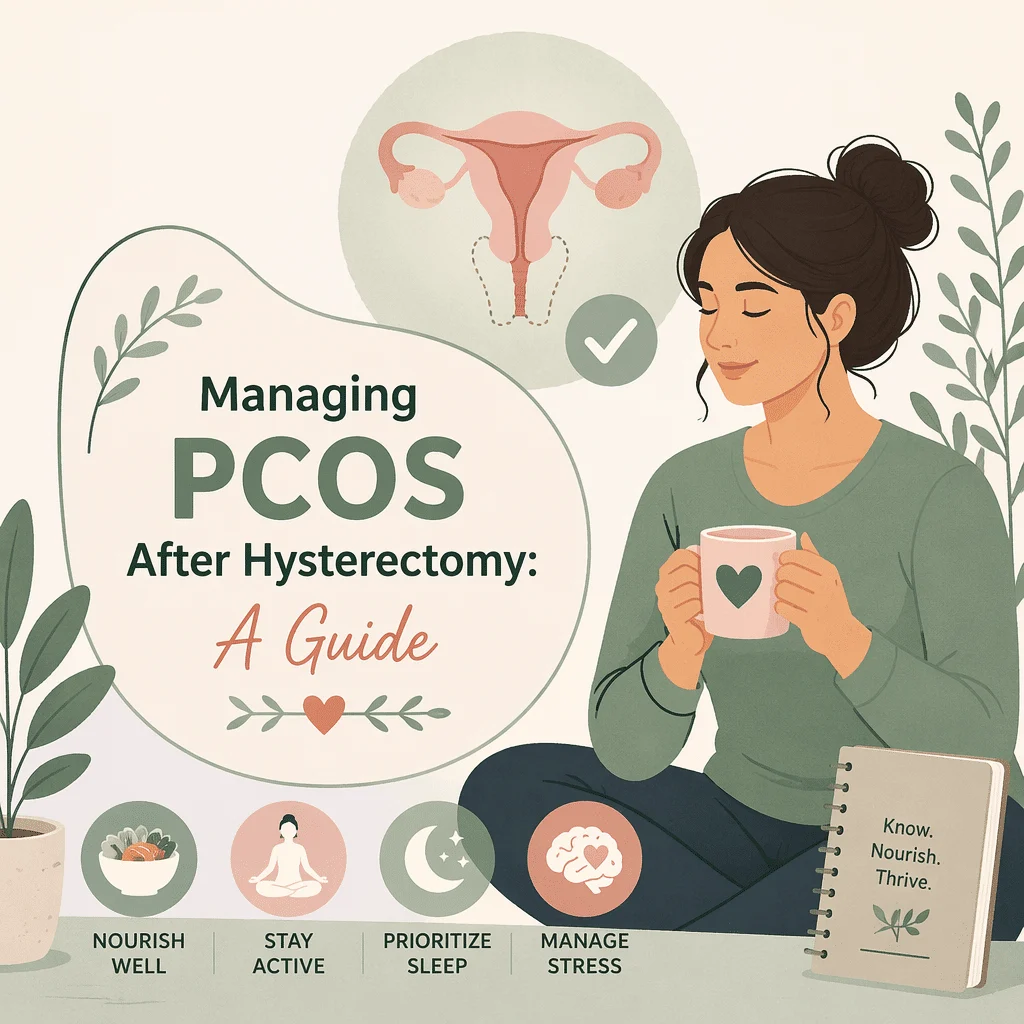
PCOS după histerectomie este una dintre cele mai neînțelese situații din sănătatea femeilor. Multe femei sunt informate, sau pur și simplu presupun, că îndepărtarea uterului pune capăt sindromului ovarelor polichistice. Nu este așa. Histerectomia îndepărtează uterul; PCOS este o afecțiune a ovarelor și a metabolismului. Menstruația se oprește, dar sindromul în sine continuă. În acest articol vei afla ce schimbă cu adevărat operația, de ce răspunsul depinde în totalitate de faptul că ovarele au fost păstrate sau îndepărtate, care este singurul risc care dispare cu adevărat și cum se modifică urmărirea medicală — de la monitorizarea ciclurilor la urmărirea simptomelor și a analizelor de sânge. Scopul este practic: ce să urmărești, ce să testezi și când să contactezi medicul tău.
De ce PCOS după histerectomie nu dispare pur și simplu
Confuzia este de înțeles. Pentru majoritatea femeilor, fața vizibilă a PCOS este menstruația neregulată. Când menstruația dispare, pare că afecțiunea a fost rezolvată. Ceea ce a fost îndepărtat cu adevărat este organul care producea simptomul, nu organul care produce problema.
Ce îndepărtează cu adevărat operația
Histerectomia este îndepărtarea chirurgicală a uterului. Ovarele sunt organe separate și nu sunt îndepărtate decât dacă chirurgul le scoate deliberat printr-o procedură suplimentară efectuată în același timp, numită ooforectomie. Terminologia poate crea confuzie, de aceea este important să fii precisă:
- Histerectomia totală înseamnă că uterul și colul uterin au fost îndepărtate. În ciuda cuvântului „totală", aceasta nu spune nimic despre ovare, care sunt de obicei lăsate la locul lor.
- Histerectomia supracervicală sau parțială înseamnă că uterul a fost îndepărtat, iar colul uterin a rămas. Și în acest caz, ovarele reprezintă o chestiune separată.
- Histerectomia cu salpingo-ooforectomie bilaterală înseamnă că uterul, ambele trompe uterine și ambele ovare au fost îndepărtate. Aceasta este singura variantă în care ovarele sunt scoase.
Dacă nu ești sigură ce tip de intervenție ai avut, raportul operator sau raportul de anatomie patologică îți vor spune. Este cea mai utilă informație pentru a înțelege ce urmează, și merită să o soliciți.
Semnalul pe care îl pierzi este menstruația, nu sindromul
PCOS este determinat de ovare care produc mai mulți androgeni decât de obicei, foarte adesea însoțit de rezistență la insulină, în care organismul are nevoie de mai multă insulină decât ar trebui pentru a menține glicemia stabilă. Niciunul dintre aceste mecanisme nu se află în uter. Dacă ovarele au rămas, ele continuă să producă hormoni exact ca înainte, iar caracteristicile hormonale și metabolice ale PCOS rămân neschimbate. Biblioteca noastră explică simptomele, cauzele și testele de diagnostic ale PCOS în întregime, inclusiv criteriile Rotterdam și managementul standard, astfel încât acest articol să rămână concentrat pe ce este specific vieții după operație.
Două situații diferite, două urmăriri medicale diferite
Aproape orice întrebare legată de acest subiect are același răspuns: depinde de ovare. Cele două scenarii nu sunt variante ale aceleiași situații; sunt situații clinice cu adevărat diferite, cu simptome diferite și monitorizare diferită.
| Întrebare | Ovare păstrate | Ambele ovare îndepărtate |
|---|---|---|
| SOPC continuă? | Da. Producția hormonală rămâne neschimbată. | Producția ovariană de androgeni se oprește, dar tiparul metabolic persistă adesea. |
| Stare hormonală | Ciclurile continuă în tăcere până la menopauza naturală. | Menopauză chirurgicală, cu debut imediat. |
| Simptome tipice | Creștere excesivă a părului, acnee, subțierea părului de pe scalp, modificări de greutate. | Bufeuri, transpirații nocturne, tulburări de somn și de dispoziție, uscăciune vaginală. |
| Risc cardiometabolic | Continuă ca înainte de operație. | Continuă, iar sănătatea oaselor și a inimii necesită o monitorizare separată. |
| Principalul instrument de monitorizare | Analize de sânge pentru androgeni și metabolism. | Analize metabolice plus monitorizare specifică menopauzei. |
Dacă ambele ovare au fost îndepărtate, ai intrat în menopauza chirurgicală, nu într-o tranziție treptată, iar schimbarea este bruscă, nu eșalonată pe parcursul mai multor ani. Acest ghid acoperă simptomele și etapele menopauzei în detaliu, pe care merită să îl citești alături de acesta dacă situația ți se aplică.
Singurul risc care dispare cu adevărat
Există o veste cu adevărat bună, și merită spusă pe față. În sindromul ovarelor polichistice (SOP), ovulația este adesea neregulată, astfel că mucoasa uterină poate fi expusă la estrogen perioade lungi de timp, fără efectul de echilibru al progesteronului. Medicii numesc aceasta estrogen necontracarat, iar de-a lungul anilor crește riscul ca mucoasa uterină să se îngroașe anormal și, în unele cazuri, riscul de cancer endometrial. Acel risc necesită prezența unui uter. Odată ce uterul a fost îndepărtat, țesutul expus riscului dispare, iar această îngrijorare specifică nu mai face parte din urmărirea ta medicală.
Aceasta este o liniștire reală și, pentru multe femei, a fost unul dintre motivele pentru care intervenția chirurgicală a fost luată în discuție de la bun început. Este și singurul aspect al SOP pe care histerectomia îl rezolvă.
Ce rămâne exact la fel
Tot ce ține de aspectul metabolic al SOPC rămâne neafectat de intervenția chirurgicală. Rezistența la insulină nu se îmbunătățește pentru că uterul a fost îndepărtat. Nici tendința spre trigliceride mai ridicate și colesterol HDL protector mai scăzut nu se ameliorează. La fel, nici riscul crescut pe termen lung de diabet de tip 2 și boli cardiovasculare care însoțesc sindromul.
Acest lucru contează, deoarece după o histerectomie este ușor să ai senzația că pagina s-a întors și să renunți treptat la consultațiile de urmărire. În practică, este exact invers: intervenția chirurgicală elimină simptomul care înainte îți motiva programările, astfel că aspectul metabolic trebuie monitorizat în mod deliberat, nu ocazional.
Cum este monitorizat SOPC după histerectomie, fără prezența menstruației
Aceasta este esența practică a problemei. Înainte de operație, durata ciclului era un indicator aproximativ, dar util, al modului în care sindromul evolua. Acel indicator a dispărut definitiv. Urmărirea medicală se mută, prin urmare, pe două lucruri pe care le poți în continuare măsura: simptomele pe care le poți observa și analizele de sânge.
Analizele de sânge care înlocuiesc monitorizarea ciclului
Setul exact de analize este o decizie a medicului tău, în funcție de istoricul și simptomele tale, dar testele de mai jos sunt cele care preiau de obicei rolul principal atunci când menstruația nu mai poate fi folosită ca semnal.
| Analiză | Ce urmărește | De ce contează după operație |
|---|---|---|
| Testosteron total și liber | Nivelurile de androgeni, total și fracția activă | Cea mai directă măsură a componentei ovariene a SOP atunci când ciclurile nu pot fi observate |
| SHBG | Proteina transportoare care leagă testosteronul în sânge | Un rezultat scăzut poate indica simptome în ciuda unui testosteron total normal |
| DHEA-S | Producția de androgeni de la nivelul glandelor suprarenale | Diferențiază o sursă suprarenală de androgeni de una ovariană |
| HbA1c sau glicemia à jeun | Controlul mediu al glicemiei | Urmărește rezistența la insulină, pe care operația nu o modifică |
| Profil lipidic | Fracțiile de colesterol și trigliceridele | Tiparul caracteristic SOP persistă și alimentează riscul cardiovascular |
| TSH și prolactina | Funcția tiroidiană și secreția hormonului hipofizar | Exclude afecțiunile care imită simptomele SOP |
Fiecare dintre acestea are propria sa logică. Echipa noastră detaliază cauzele și riscurile testosteronului crescut la femeiși un articol separat explică nivelurile de globulină de legare a hormonilor sexuali (SHBG), ceea ce explică de ce un rezultat al testosteronului total luat singur poate părea liniștitor și totuși să nu reflecte imaginea completă. Un alt ghid descrie nivelurile de DHEA și ce semnifică acestea, iar biblioteca noastră descrie un panel hormonal feminin pentru o imagine mai amplă a hormonilor reproductivi.
Pe latura metabolică, această resursă oferă informații despre un tabel de conversie A1C care transformă un rezultat HbA1c într-o valoare medie a glicemiei, iar un ghid separat explică un profil lipidic complet. Pentru a exclude afecțiunile care imită SOPC, echipa noastră prezintă valori normale ale hormonilor tiroidieni iar un alt articol acoperă niveluri ridicate de prolactină.
De ce AMH și ecografia se interpretează diferit acum
Două instrumente familiare se comportă diferit după operație. Hormonul anti-Müllerian, sau AMH, reflectă rezerva de foliculi mici din ovare și tinde să fie ridicat în PCOS. Dacă ambele ovare au fost îndepărtate, AMH scade la un nivel foarte scăzut sau nedetectabil și nu mai oferă nicio informație despre sindrom. Dacă ovarele au fost păstrate, AMH le reflectă în continuare, însă scade treptat cu vârsta, astfel că o singură valoare înseamnă mult mai puțin fără un punct de comparație.
Ecografia pelvină are o problemă similară. Examinarea este în continuare posibilă din punct de vedere tehnic atunci când ovarele sunt prezente, dar raportul va descrie un pelvis fără uter, iar ovarele pot fi poziționate diferit sau mai greu de vizualizat după operație. Niciunul dintre aceste instrumente nu este inutil, dar niciunul nu trebuie interpretat la fel cum ar fi fost interpretat înainte de intervenție.
Simptome care merită urmărite și când să contactezi medicul
Fără un ciclu menstrual de urmărit, simptomele pe care le observi tu însuți devin sistemul de avertizare timpurie. Merită să ții o evidență informală a celor de mai jos, deoarece o schimbare lentă pe parcursul mai multor luni este ușor de ratat și ușor de descris unui medic dacă ai notat-o:
- Apariția sau accentuarea creșterii părului pe față, piept, abdomen sau spate.
- Subțierea părului la creștet sau lărgirea cărării.
- Acnee apărută de-a lungul liniei maxilarului sau care persistă mult după adolescență.
- Creștere în greutate concentrată în zona abdomenului, mai ales fără o schimbare a obiceiurilor.
- Sete crescută, urinare frecventă sau oboseală neobișnuită.
- Pete de piele închise la culoare, cu aspect catifelat, la nivelul gâtului, axilelor sau zonei inghinale.
- Sforăit puternic sau trezire fără senzația de odihnă, care pot indica apnee în somn.
Contactează medicul tău prompt, fără să aștepți o programare de rutină, dacă observi o creștere rapidă a părului facial sau corporal în câteva luni, o îngroșare a vocii sau apariția alopeciei de tip masculin, deoarece o schimbare rapidă a simptomelor legate de androgeni necesită evaluare urgentă. Același lucru este valabil pentru simptomele care sugerează glicemie crescută, cum ar fi sete intensă cu urinare frecventă și scădere inexplicabilă în greutate. Durerea în piept, dificultatea de respirație la efort ușor sau apariția durerii ori umflăturii la un gambă sunt motive pentru a solicita îngrijire urgentă, nu pentru a face o programare.
Gestionarea zilnică care rămâne în continuare relevantă
Deoarece factorii care stau la baza PCOS nu s-au schimbat, măsurile zilnice care au ajutat înainte de operație continuă să ajute și după. Activitatea fizică regulată, care combină exercițiile aerobice cu antrenamentul de rezistență, îmbunătățește modul în care organismul gestionează insulina, independent de orice schimbare în greutate. Obiceiurile alimentare care mențin glicemia stabilă, în loc să o crească brusc, rămân baza practică, iar somnul contează mai mult decât i se acordă de obicei credit, deoarece somnul de proastă calitate agravează direct rezistența la insulină.
Deciziile privind medicamentele aparțin medicului tău. Tratamentele folosite înainte de operație pentru simptomele legate de androgeni sau pentru rezistența la insulină pot fi în continuare potrivite după aceasta, dar unele opțiuni sunt alese diferit atunci când nu mai există uter și nu mai este nevoie de reglarea ciclului menstrual. Aceasta este o discuție pe care trebuie să o ai cu medicul tău, nu o schimbare pe care să o faci pe cont propriu. Dacă ambele ovare au fost îndepărtate, orice discuție despre terapia hormonală are propriile considerații separate, care trebuie individualizate împreună cu medicul tău.
Cele mai recente progrese științifice
Cercetările publicate în ultimii trei ani au clarificat două aspecte care contează direct în acest context: cât de serios trebuie luată latura cardiovasculară și metabolică a PCOS și cum poate fi evaluat sindromul atunci când semnalele obișnuite nu sunt disponibile. Concluziile de mai jos provin din studii publicate în reviste medicale de specialitate între 2023 și 2025, rezumate în limbaj accesibil.
Cea mai amplă analiză recentă a reunit douăzeci de studii care acopereau peste un milion de femei și a constatat că cele cu PCOS aveau un risc semnificativ mai mare de evenimente cardiovasculare, inclusiv infarct miocardic și accident vascular cerebral, față de femeile fără această afecțiune. Pe baza acestor rezultate, ghidul internațional PCOS din 2023 recomandă acum ca toate persoanele cu PCOS să beneficieze de o evaluare completă a riscului cardiovascular. O analiză globală separată a ajuns la aceeași concluzie, estimând că riscul general de boală cardiovasculară la femeile cu PCOS este de aproximativ o dată și jumătate mai mare față de femeile fără această condiție. Ce înseamnă asta pentru tine: tocmai acea parte a PCOS pe care histerectomia nu o atinge este cea care implică riscul pe termen lung, astfel că monitorizarea tensiunii arteriale, a glicemiei și a colesterolului nu este o îngrijire opțională.
Ghidul internațional din 2023 a adus și o modificare notabilă în ceea ce privește diagnosticul, acceptând AMH ca alternativă la ecografie la adulte. O meta-analiză a optzeci și două de studii a examinat ulterior cât de bine funcționează AMH în practică, iar concluzia a fost nuanțată: AMH este un test de susținere util, dar nu poate diagnostica PCOS de unul singur, iar laboratoarele nu au ajuns la un consens privind o singură valoare-limită. Ce înseamnă asta pentru tine: dacă medicul tău îți recomandă AMH după o histerectomie, tratează-l ca pe o piesă dintr-un puzzle mai mare, nu ca pe un verdict, și ține cont că interpretarea depinde de laboratorul care a efectuat analiza.
Referitor la operație în sine, o analiză sistematică a rezultatelor pe termen lung a constatat că îndepărtarea ambelor ovare în momentul histerectomiei, în special la femeile mai tinere, a fost asociată cu un risc cardiovascular mai mare pe termen lung, colesterol crescut, diabet și tensiune arterială ridicată, alături de un risc mai scăzut de cancer mamar. Un studiu de cohortă danez foarte amplu, care a urmărit aproape 143.000 de femei după histerectomie din motive non-oncologice, a ajuns la o concluzie similară, susținând practica actuală de a păstra ovarele la femeile premenopauzale care nu prezintă un risc crescut de cancer ovarian. Ce înseamnă asta pentru tine: aceasta este o informație de fundal pentru o discuție cu chirurgul tău, nu o regulă, iar dacă decizia a fost deja luată, este un context, nu ceva de reconsiderat.
Un alt rezultat merită cunoscut, cu prudența cuvenită. Un studiu realizat pe femei postmenopauzale a constatat că histerectomia a fost asociată cu o progresie mai rapidă a îngroșării precoce a pereților arteriali, comparativ cu menopauza naturală, iar acest lucru a fost valabil chiar și pentru femeile ale căror ovare fuseseră conservate. Numărul de femei din acel grup particular a fost mic, deci acesta este un rezultat preliminar care necesită în continuare confirmare. Ce înseamnă asta pentru tine: este încă un motiv pentru a trata urmărirea cardiovasculară după histerectomie ca pe ceva activ, nu de la sine înțeles, indiferent ce s-a întâmplat cu ovarele tale.
Glosar de termeni cheie
| Termen | Definiție |
|---|---|
| Histerectomie | Intervenție chirurgicală prin care se îndepărtează uterul. Ovarele nu sunt îndepărtate dacă nu se efectuează simultan și o ooforectomie. |
| Ooforectomie | Intervenție chirurgicală prin care se îndepărtează un ovar. Bilaterală înseamnă că ambele ovare au fost îndepărtate. |
| Salpingo-ooforectomie | Îndepărtarea unui ovar împreună cu trompa uterină corespunzătoare. |
| Menopauză chirurgicală | Menopauza care debutează imediat deoarece ambele ovare au fost îndepărtate, în loc să se instaleze treptat de-a lungul anilor. |
| Androgeni | Un grup de hormoni, inclusiv testosteronul, prezenți la toată lumea, dar produși în cantități mai mari în cazul sindromului ovarelor polichistice (SOP). |
| Testosteron liber | Fracțiunea de testosteron care circulă liberă, nelegată, și este disponibilă să acționeze asupra țesuturilor. |
| SHBG | Globulina care leagă hormonii sexuali (SHBG), o proteină produsă de ficat care leagă testosteronul și controlează cât din aceasta rămâne activă. |
| DHEA-S | Sulfatul de dehidroepiandrosteron, un androgen produs în principal de glandele suprarenale, nu de ovare. |
| Rezistență la insulină | O stare în care organismul are nevoie de mai multă insulină decât de obicei pentru a menține glicemia în limite normale. |
| AMH | Hormonul anti-Müllerian, un marker sanguin care reflectă numărul de foliculi mici din ovare. |
| Estrogen necontrabalansat | Estrogenul acționează asupra mucoasei uterine fără efectul de echilibrare al progesteronului, ceea ce poate îngroșa această mucoasă în timp. |
Întrebări frecvente
Poți avea SOP după o histerectomie totală?
Da. Cuvântul „total" se referă la îndepărtarea uterului împreună cu colul uterin, nu la ovare. În majoritatea histerectomiilor totale, ovarele sunt lăsate la locul lor, astfel că ele continuă să producă hormoni, iar sindromul persistă odată cu ele. Singura variantă a intervenției care îndepărtează și ovarele este histerectomia cu salpingo-ooforectomie bilaterală. Dacă nu ești sigură ce intervenție ai avut, raportul operator va specifica acest lucru în mod explicit, și este perfect rezonabil să îți rogi chirurgul sau medicul de familie să confirme.
Dispare SOP după îndepărtarea ovarelor?
Parțial, dar nu în totalitate. Îndepărtarea ambelor ovare oprește producția ovariană de androgeni, astfel că simptomele legate de hormoni, cum ar fi creșterea excesivă a părului și acneea, se ameliorează de obicei în timp. Ceea ce nu se oprește este componenta metabolică. Rezistența la insulină, profilul lipidic și riscul pe termen lung asociat de diabet de tip 2 și boli cardiovasculare persistă și necesită în continuare monitorizare. Îndepărtarea ovarelor aduce și menopauza chirurgicală, cu propriile nevoi de urmărire, astfel că este mai corect să descrii această intervenție ca pe un schimb al unui set de probleme cu altul, nu ca pe o vindecare.
Poate fi diagnosticat SOP pentru prima dată după o histerectomie?
Da, și nu este neobișnuit. Multe femei ajung la intervenție chirurgicală cu un SOP care nu a fost niciodată identificat oficial, adesea pentru că sângerările abundente sau neregulate au fost tratate ca problemă în sine. După operație, simptome persistente precum creșterea excesivă a părului sau creșterea glicemiei duc la investigații, iar tabloul clinic de fond devine vizibil. Diagnosticul în această situație se bazează pe simptome și analize de sânge, nu pe istoricul ciclului menstrual, care nu mai este disponibil, astfel că urmează de obicei un traseu ușor diferit față de diagnosticul standard.
Mai este relevant metforminul pentru SOP după o histerectomie?
Metforminul acționează asupra rezistenței la insulină, nu asupra uterului, astfel că motivul pentru care a putut fi prescris nu este afectat de intervenție. Dacă rămâne potrivit pentru tine este o decizie pe care o ia medicul tău, în funcție de valorile glicemiei, de celelalte medicamente pe care le iei și de modul în care îl tolerezi. Ceea ce se schimbă după operație este justificarea tratamentelor folosite în principal pentru reglarea ciclului menstrual sau pentru protejarea mucoasei uterine, deoarece niciunul dintre aceste scopuri nu mai este valabil. Merită să discuți acest aspect la următoarea consultație, în loc să acționezi pe cont propriu.
De ce este în continuare greu să îți menții greutatea după operație?
Pentru că mecanismul din spatele acesteia nu s-a schimbat. Rezistența la insulină face mai ușoară acumularea de grăsime și mai dificilă eliminarea ei, iar o histerectomie nu modifică nimic în acest sens. Dacă ambele ovare au fost îndepărtate, scăderea bruscă a estrogenului poate schimba și locul în care organismul depozitează grăsimea, de obicei spre zona abdominală. Nimic din toate acestea nu face schimbarea imposibilă, dar înseamnă că rezultatele tind să apară mai lent decât la cineva fără SOP și că perseverența contează mai mult decât intensitatea.
Mai am nevoie de o ecografie pelvină?
Nu pentru diagnosticarea PCOS în modul în care era utilizată înainte. Dacă ovarele au fost îndepărtate, nu mai există nimic de evaluat prin ecografie. Dacă au fost păstrate, o ecografie este în continuare posibilă și poate fi recomandată pentru un motiv specific, cum ar fi investigarea durerii pelvine sau a unui chist ovarian suspectat, însă numărarea foliculilor nu mai servește scopului de odinioară. În practică, monitorizarea după histerectomie se bazează pe analize de sânge și simptome, imagistica fiind rezervată pentru o întrebare clinică bine definită.
Surse
- Eunice Kennedy Shriver National Institute of Child Health and Human Development — Polycystic Ovary Syndrome (PCOS), National Institutes of Health — nichd.nih.gov
- MedlinePlus — Hysterectomy, U.S. National Library of Medicine — medlineplus.gov
- Cleveland Clinic — Polycystic Ovary Syndrome (PCOS): symptoms, diagnosis and treatment — my.clevelandclinic.org
- Teede HJ, Tay CT, Laven JJE, et al. — Recommendations From the 2023 International Evidence-based Guideline for the Assessment and Management of Polycystic Ovary Syndrome — Journal of Clinical Endocrinology and Metabolism, 2023 — doi.org/10.1210/clinem/dgad463
- Tay CT, Mousa A, Vyas A, et al. — Actualizarea Ghidului Internațional Bazat pe Dovezi privind Sindromul Ovarelor Polichistice din 2023: Perspective dintr-o Revizuire Sistematică și Meta-Analiză privind Bolile Cardiovasculare Clinice Crescute în Sindromul Ovarelor Polichistice — Journal of the American Heart Association, 2024 — doi.org/10.1161/JAHA.123.033572
- Wan Z, Zhao J, Ye Y, et al. — Riscul și incidența bolilor cardiovasculare asociate cu sindromul ovarelor polichistice — European Journal of Preventive Cardiology, 2024 — doi.org/10.1093/eurjpc/zwae066
- van der Ham K, Laven JSE, Tay CT, et al. — Hormonul anti-Müllerian ca biomarker de diagnostic pentru sindromul ovarelor polichistice și morfologia ovariană polichistică: o revizuire sistematică și meta-analiză — Fertility and Sterility, 2024 — doi.org/10.1016/j.fertnstert.2024.05.163
- Hassan H, Allen I, Sofianopoulou E, et al. — Long-term outcomes of hysterectomy with bilateral salpingo-oophorectomy: a systematic review and meta-analysis — American Journal of Obstetrics and Gynecology, 2023 — doi.org/10.1016/j.ajog.2023.06.043
- Gottschau M, Rosthoj S, Settnes A, et al. — Long-Term Health Consequences After Ovarian Removal at Benign Hysterectomy: A Nationwide Cohort Study — Annals of Internal Medicine, 2023 — doi.org/10.7326/M22-1628
- Chen IJ, Shoupe D, Karim R, et al. — The association of hysterectomy with or without ovarian conservation with subclinical atherosclerosis progression in healthy postmenopausal women — Menopause, 2023 — doi.org/10.1097/GME.0000000000002192
Lectură suplimentară
- Niveluri de glucoză: cauze, simptome și tratamente
- Analizele de sânge pentru diabet: glucoza, HbA1c și insulina explicate
- Raportul colesterolului explicat: semnificație și riscuri
- Ce înseamnă HDL colesterol scăzut: cauze și riscuri
- Profilul lipidic avansat: ce testează și cine are nevoie de el
Înțelege-ți rezultatele analizelor cu AI DiagMe
Odată ce menstruația nu mai face parte din tabloul clinic, analizele de sânge devin principala modalitate de monitorizare a PCOS în timp, iar o pagină de valori nu este întotdeauna ușor de înțeles pe cont propriu. AI DiagMe îți citește rezultatele în context și îți explică, pe înțelesul tău, ce spun de fapt markeri precum testosteronul total și liber, HbA1c, profilul lipidic sau testele tiroidiene. Este conceput să te ajute să îți înțelegi propriile rezultate și să pregătești întrebări mai bune pentru consultație. Nu pune un diagnostic și nu înlocuiește medicul tău.
Obține interpretarea rezultatelor în câteva minute