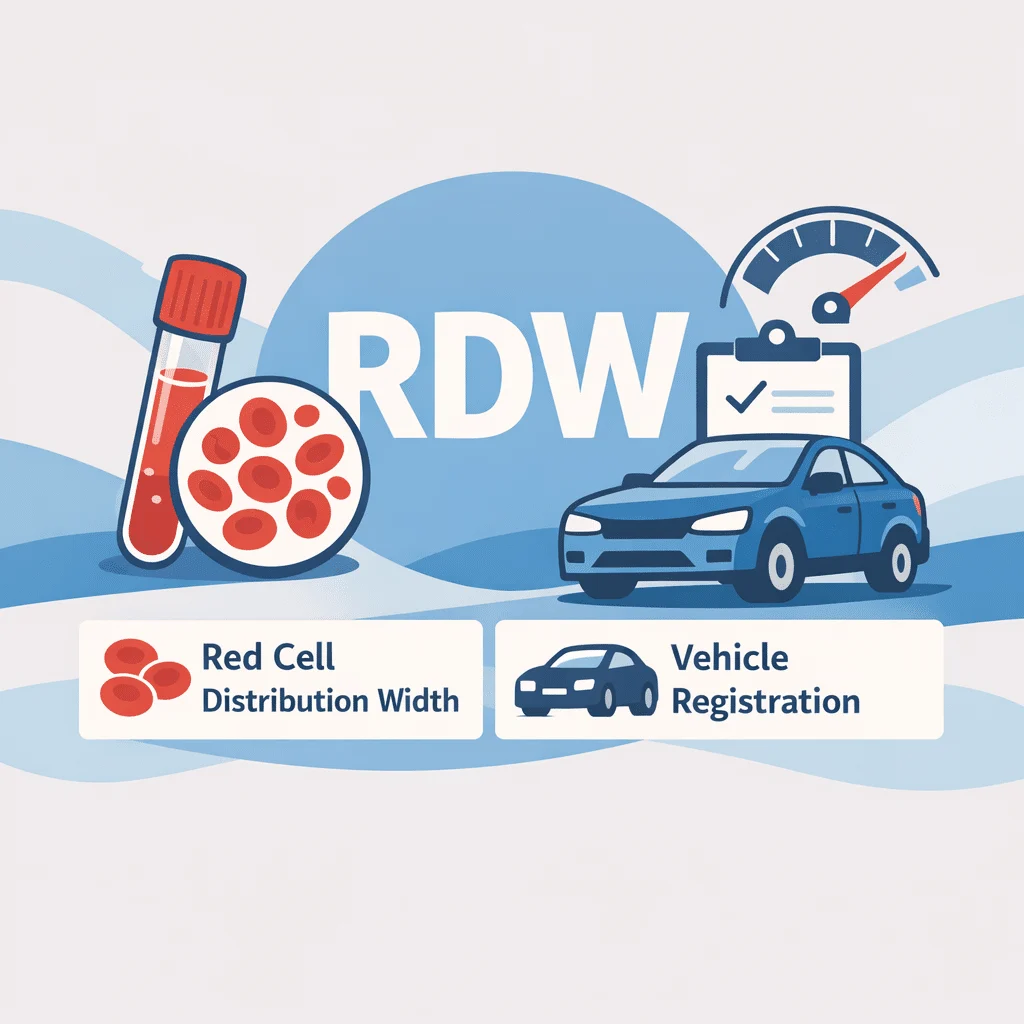
Testul RDW din sânge măsoară cât de mult variază globulele tale roșii ca dimensiune și este unul dintre cei mai trecuți cu vederea indicatori dintr-o hemogramă completă. Reprezintă lărgimea distribuției eritrocitelor (red cell distribution width), iar deși hemoglobina sau VEM (volumul eritrocitar mediu) primesc de obicei mai multă atenție, RDW se modifică adesea înaintea altor markeri, ceea ce îl face un semnal precoce util despre starea globulelor tale roșii. În acest articol vei afla ce măsoară testul RDW, cum să citești un rezultat normal, crescut sau scăzut, ce dezvăluie combinarea lui cu VEM, cauzele frecvente ale unei valori anormale și când merită o discuție cu medicul tău.
Ce măsoară testul RDW din sânge
RDW înseamnă lărgimea distribuției eritrocitelor (red cell distribution width). Face parte dintr-o hemogramă completă care include globulele roșii, globulele albe și trombocitele și descrie cât de uniforme sunt globulele tale roșii (eritrocitele) ca dimensiune și volum. Laboratoarele obțin rezultatul dintr-o histogramă, un grafic care reprezintă fiecare globulă roșie din proba ta în funcție de dimensiune. Când majoritatea celulelor se grupează strâns în jurul aceleiași dimensiuni, RDW este scăzut. Când dimensiunile celulelor sunt răspândite pe o plajă largă în grafic, RDW este crescut. Dacă ești la început cu citirea unui buletin de analize în general, ghidul nostru despre cum să citești rezultatele analizelor de sânge acoperă structura pe care o au toate buletinele înainte de a te aprofunda într-un marker specific precum acesta.
Medicii folosesc termenul anizocitoză pentru a descrie o populație de globule roșii cu variații semnificative de dimensiune. Imaginează-ți globulele roșii ca pe o flotă de livrare care transportă oxigen către fiecare țesut din corpul tău. O flotă uniformă funcționează eficient, în timp ce o flotă care amestecă vehicule foarte mici și foarte mari sugerează că ceva s-a schimbat în procesul de producție. Testul RDW din analizele de sânge este, în esență, un control de calitate al acestei flote.
De unde vine RDW: legătura cu măduva osoasă
Globulele roșii sunt produse în măduva osoasă — țesutul moale din interiorul oaselor mari — printr-un proces continuu care înlocuiește aproximativ unu la sută din globulele roșii circulante în fiecare zi. În condiții normale, această „linie de asamblare" produce celule de dimensiuni destul de uniforme, lot după lot. Anumite deficiențe de nutrienți, stări inflamatorii sau afecțiuni ale măduvei osoase pot perturba această uniformitate, iar amestecul rezultat de dimensiuni celulare se reflectă printr-un RDW crescut, adesea înainte ca alte modificări să devină evidente. Deoarece RDW reflectă direct acest proces de producție, uneori se modifică înainte ca nivelul hemoglobinei, care transportă oxigenul prin sânge, sau numărul de globule roșii să iasă din intervalele lor de referință — acesta este unul dintre motivele pentru care medicii îl consideră un semnal precoce util, de urmărit în timp, nu evaluat dintr-o singură determinare.
Valorile normale ale RDW și ce arată analizele tale
În majoritatea buletinelor de analize, rezultatul testului RDW apare ca procent în secțiunea hemoleucogramei complete, uneori alături de o a doua valoare numită RDW-SD (deviație standard, exprimată în femtolitri, nu în procente). Cele două măsoară aspecte înrudite, dar ușor diferite ale variației de dimensiune, iar oricare dintre ele poate apărea în funcție de echipamentul laboratorului tău. Dacă buletinul tău include și RDW-CV, acesta este pur și simplu versiunea coeficientului de variație a aceleiași măsurători, exprimată procentual, nu în unități absolute.
La adulți, un interval de referință tipic este cuprins între aproximativ 11,5% și 14,5%, deși acesta poate varia ușor în funcție de laborator și de analizor — similar cu intervalele pe care le vei găsi pentru alți markeri în tabelul nostru cu valorile normale ale analizelor de sânge pe paneluri. Tabelul de mai jos rezumă modul în care rezultatele sunt de obicei clasificate.
| Rezultat | Interval tipic | Ce sugerează în general |
|---|---|---|
| RDW normal | Aproximativ 11,5% – 14,5% | Globulele roșii sunt destul de uniforme ca dimensiune |
| RDW crescut | Peste aproximativ 14,5%, adesea semnalat la 15% sau mai mult | Variație mare a dimensiunii globulelor roșii, care poate indica o deficiență de nutrienți sau un alt proces subiacent |
| RDW scăzut | Sub aproximativ 11,5% | Globulele roșii sunt neobișnuit de uniforme; rareori semnificativ în sine |
Compară întotdeauna valoarea ta cu intervalul de referință tipărit pe buletinul tău de analize, nu cu un tabel generic, deoarece echipamentele și populațiile de referință diferă de la un laborator la altul. O singură valoare ușor în afara intervalului tipărit, fără simptome, este frecventă și adesea nu reprezintă prin ea însăși un semn de boală.
Combinarea RDW cu MCV pentru o imagine mai clară
RDW este rareori interpretat singur în practica clinică. Citit alături de volumul eritrocitar mediu (MCV), care măsoară dimensiunea medie a globulelor roșii, se poate restrânge considerabil lista explicațiilor posibile. Această pereche de valori este unul dintre cele mai utile repere în interpretarea hemoleucogramei complete, deoarece RDW îți arată cât de variate sunt celulele tale, în timp ce MCV îți spune dacă dimensiunea medie a celulelor este mică, normală sau mare.
| Rezultat RDW | Rezultat MCV | Tipar asociat frecvent cu |
|---|---|---|
| Crescută | Normal | Deficit de fier în stadiu incipient, înainte ca dimensiunea celulelor să se fi modificat complet |
| Crescută | Scăzut | Anemie feriprivă avansată sau anumite talasemii |
| Crescută | Crescută | Deficit de vitamina B12 sau acid folic |
| Normal | Crescută | Unele cazuri de boală hepatică cronică sau afecțiuni ale măduvei osoase |
| Normal | Scăzut | Anemia bolilor cronice sau anumite forme de talasemie |
Acest tabel descrie tipare frecvente, nu diagnostice. Aceeași combinație de valori poate avea cauze diferite la persoane diferite, astfel că medicul interpretează întotdeauna hemoleucograma completă împreună cu simptomele tale, istoricul medical și, atunci când este necesar, analize suplimentare, cum ar fi un profil al fierului care măsoară feritina și saturația transferinei.
Ce cauzează un rezultat crescut la testul RDW
Un rezultat peste intervalul de referință este cea mai frecventă anomalie întâlnită de medici la acest marker și reprezintă adesea primul indiciu într-o evaluare mai amplă a anemiei. Mai multe afecțiuni, de la foarte comune la mai rare, pot crește RDW, iar majoritatea au la bază o perturbare a procesului de formare a noilor globule roșii.
Deficit de fier
Rezervele scăzute de fier sunt cea mai frecventă cauză a unui RDW crescut. Fierul este esențial pentru sinteza hemoglobinei, iar când aportul este insuficient, măduva osoasă începe să producă un amestec de globule roșii în loc de un lot uniform, ceea ce lărgește distribuția. De aceea, RDW este adesea verificat împreună cu un rezultat scăzut al feritinei, care indică rezerve de fier epuizate.
Deficit de vitamina B12 sau acid folic
Atât vitamina B12, cât și folatul (vitamina B9) sunt necesare pentru sinteza normală a ADN-ului în timpul maturării globulelor roșii. Lipsa oricăruia dintre acești nutrienți duce la producerea unor celule anormal de mari, numite macrocite, amestecate cu celule de dimensiuni normale, ceea ce crește RDW. Medicii confirmă uneori acest tipar printr-un analiză de sânge pentru acid folic care măsoară nivelul de vitamina B9.
Hemoliză și pierdere de sânge
Când globulele roșii sunt distruse prematur, printr-un proces numit hemoliză, măduva osoasă compensează eliberând în circulație celule mai tinere, cunoscute sub numele de reticulocite, mai repede decât de obicei. Aceste celule imature tind să fie mai mari decât globulele roșii mature, ceea ce lărgește distribuția dimensiunilor și crește RDW.
Afecțiuni ale măduvei osoase și alte cauze
Sindroamele mielodisplazice, un grup de afecțiuni ale măduvei osoase care perturbă producția normală de celule sanguine, pot crește RDW împreună cu alte anomalii la hemoleucogramă. O transfuzie de sânge recentă poate, de asemenea, să crească temporar rezultatul, deoarece globulele roșii ale donatorului diferă adesea ușor ca dimensiune față de cele proprii — un efect care dispare de obicei în câteva săptămâni, pe măsură ce populația ta de celule devine din nou dominantă. Afecțiunile cronice, cum ar fi boala inflamatorie intestinală, boala hepatică sau boala renală cronică, sunt alte posibilități pe care medicul le poate lua în considerare dacă nu se identifică imediat o cauză. Când RDW este crescut împreună cu o dimensiune medie a celulelor mai mare decât normalul, tiparul se suprapune adesea cu ceea ce este descris în ghidul nostru despre valori MCV crescute și cauzele lor frecvente, deoarece cei doi markeri evoluează frecvent împreună în anemiile prin deficit de vitamine.
Ce înseamnă un rezultat RDW scăzut sau normal la analiза de sânge
Un RDW normal este un semn liniștitor că globulele tale roșii sunt destul de uniforme ca dimensiune, deși nu exclude orice afecțiune hematologică posibilă, deoarece unele forme de anemie mențin RDW în limite normale chiar și atunci când hemoglobina este scăzută. Acesta este unul dintre motivele pentru care medicii interpretează RDW ca parte a unui tipar în cadrul hemoleucogramei complete, nu ca un indicator de tip „trece/pică" de sine stătător.
Un RDW scăzut, adică globulele tale sunt neobișnuit de uniforme, este rar și nu este considerat în general un marker de boală în sine. Poate apărea uneori alături de anumite tipuri de anemie, cum ar fi anemia din bolile cronice sau unele forme de talasemie, și este uneori observat împreună cu un rezultat MCV scăzut care reflectă globule roșii mai mici decât de obicei. Chiar și așa, RDW-ul scăzut în sine este rareori elementul care determină investigații suplimentare. Dacă vezi un rezultat scăzut în analizele tale, de obicei nu este ceva îngrijorător privit izolat.
Semnificația RDW crescut față de RDW scăzut la analiза de sânge
Deoarece valorile „crescute" și „scăzute" au o importanță foarte diferită pentru acest marker, o comparație alăturată te poate ajuta să îți citești propriul raport cu mai multă încredere.
| Aspect | RDW crescut | RDW scăzut |
|---|---|---|
| Cât de frecvent este | Cea mai frecventă constatare anormală | Neobișnuit |
| Importanță clinică tipică | Determină adesea verificarea VEM, feritinei și a nivelurilor de vitamine | Rareori tratat ca atare, de sine stătător |
| Asocieri frecvente | Deficit de fier, B12 sau folat; hemoliză; afecțiuni ale măduvei osoase | Observat uneori în anemia bolilor cronice sau în trăsăturile de talasemie |
| Pasul următor obișnuit | Interpretează alături de VEM și, dacă este necesar, de testele pentru fier sau vitamine | De obicei nu necesită urmărire specifică de sine stătătoare |
Când să mergi la medic pentru rezultatul tău RDW
Majoritatea rezultatelor RDW ușor anormale nu reprezintă urgențe și pot aștepta o consultație de rutină, însă câteva situații necesită atenție mai promptă.
- RDW-ul tău este semnificativ peste intervalul de referință, nu doar ușor în afara lui.
- Un RDW anormal apare împreună cu hemoglobină scăzută, hematocrit scăzut sau un VEM marcat în cadrul aceleiași hemoleucograme complete.
- Ai simptome de anemie, cum ar fi oboseală persistentă, dificultăți de respirație la efort, amețeli, palpitații sau paloare vizibilă a pielii.
- Rezultatul rămâne crescut pe parcursul a două sau mai multe teste separate, fără să revină în intervalul normal.
- Ai scădere inexplicabilă în greutate, simptome digestive persistente sau sânge în scaun, alături de un rezultat anormal.
Dacă niciuna dintre aceste situații nu se aplică și valoarea ta depășește doar ușor intervalul de referință tipărit, fără simptome asociate, este rezonabil să o menționezi la următoarea consultație programată, în loc să cauți îngrijire urgentă. Când ai îndoieli, o scurtă întrebare adresată medicului tău este întotdeauna alegerea mai sigură.
Nutriție și stil de viață pentru globule roșii sănătoase
Deoarece deficiențele de nutrienți stau la baza multor rezultate RDW crescute, alimentația este un punct de plecare practic odată ce un medic a identificat cauza. Fierul există în două forme: fier hem, găsit în carnea roșie, pasăre și pește, pe care organismul îl absoarbe eficient, și fier non-hem, găsit în linte, fasole, tofu și spanac, a cărui absorbție se îmbunătățește atunci când este combinat cu o sursă de vitamina C. Vitamina B12 provine în principal din produse de origine animală, precum carne, pește, ouă și lactate, motiv pentru care persoanele care urmează diete strict vegetale au uneori nevoie de suplimentare. Folatul este concentrat în legumele cu frunze verzi închise, leguminoase și citrice. Cuprul, prezent în nuci, semințe și fructe de mare, joacă și el un rol de susținere în modul în care organismul utilizează fierul. Activitatea fizică regulată și moderată susține circulația sănătoasă și funcția generală a măduvei osoase, deși nu înlocuiește tratarea unei deficiențe de nutrienți sau a unei afecțiuni medicale subiacente, odată ce aceasta a fost identificată.
Cele mai recente progrese științifice
Cercetătorii au explorat în ultimii ani RDW-ul mult dincolo de anemie, deoarece producția măduvei osoase este sensibilă la inflamație și stres metabolic în întregul organism, nu doar la nivelurile de fier și vitamine.
Un studiu amplu a analizat modul în care RDW combinat cu o proteină din sânge numită albumină se raportează la supraviețuirea pe termen lung în populația generală, nu doar la persoanele deja diagnosticate cu o boală specifică. Folosind date medicale de la peste 460.000 de adulți din două studii naționale majore din Statele Unite și Regatul Unit, urmăriți timp de aproximativ nouă până la paisprezece ani, cercetătorii au descoperit că persoanele cu un raport RDW-albumină mai ridicat prezentau un risc semnificativ mai mare de deces din orice cauză în perioada studiată, inclusiv din cauza bolilor de inimă, cancerului și afecțiunilor respiratorii. Ce înseamnă asta pentru tine: nu înseamnă că o singură valoare RDW îți prezice riscul personal pentru o boală specifică, dar susține ideea că RDW reflectă procese mai largi din organism, cum ar fi inflamația, alături de rolul său tradițional în diagnosticarea anemiei. Este un studiu amplu și bine conceput, dar descrie o asociere la nivel de populație, nu o relație de tip cauză-efect pentru o persoană anume, iar cercetătorii subliniază că sunt necesare studii suplimentare înainte ca scorurile de risc bazate pe RDW să poată fi utilizate în practica medicală curentă.
Separat, mai multe studii de dimensiuni mai mici publicate în ultimii ani au examinat RDW ca marker al severității bolii în afecțiuni specifice, inclusiv probleme respiratorii legate de somn și anumite infecții, constatând în general că valori mai ridicate ale RDW sunt asociate cu o boală mai severă. Ce înseamnă asta pentru tine: aceste rezultate confirmă că RDW este un semnal sensibil și nespecific al stresului fiziologic, mai degrabă decât un marker specific unei singure boli — tocmai de aceea este întotdeauna interpretat împreună cu simptomele tale și cu celelalte valori din analizele de sânge, nu citit izolat. Acestea sunt descoperiri aflate în stadii incipiente, care sunt încă confirmate pe grupuri mai mari și mai diverse de pacienți, deci ar trebui privite ca un domeniu activ de cercetare, nu ca un ghid clinic definitiv.
Glosar
| Termen | Definiție |
|---|---|
| RDW (lărgimea distribuției globulelor roșii) | O măsură a variației dimensiunii globulelor roșii, raportată de obicei ca procent. |
| Anizocitoză | Termenul medical pentru o populație de globule roșii care prezintă variații semnificative de dimensiune. |
| VEM (volumul eritrocitar mediu) | Dimensiunea medie a globulelor tale roșii, citită de obicei împreună cu RDW. |
| Hemoleucogramă completă (HLG) | O analiză de sânge frecventă care numără și descrie globulele roșii, globulele albe și trombocitele. |
| Hemoglobină | Proteina bogată în fier din interiorul globulelor roșii care transportă oxigenul în tot organismul. |
| Reticulocit | Un globul roșu tânăr, imatur, eliberat recent din măduva osoasă, de obicei mai mare decât o celulă matură. |
| Macrocit | Un globul roșu mai mare decât normal, asociat adesea cu deficiența de vitamina B12 sau de acid folic. |
| Talasemia | O afecțiune ereditară care afectează producția de hemoglobină și poate cauza anemie de severitate variabilă. |
| Sindrom mielodisplazic | Un grup de afecțiuni ale măduvei osoase care perturbă producția normală a celulelor sanguine. |
| Interval de referință | Intervalul de valori considerat tipic pentru o populație sănătoasă, care poate varia ușor de la un laborator la altul. |
Întrebări frecvente
Ce nivel al RDW este considerat periculos?
Nu există o valoare RDW care să semnaleze automat un pericol. Majoritatea laboratoarelor marchează rezultatele de peste aproximativ 14,5%–15% ca fiind ridicate, însă semnificația oricărei valori depinde de cât de mult depășește intervalul de referință al laboratorului tău, dacă și alți markeri — precum hemoglobina sau VEM — sunt anormali și dacă ai simptome. Un rezultat semnificativ crescut, mai ales dacă persistă la analize repetate sau este însoțit de simptome precum oboseală sau dificultăți de respirație, merită discutat prompt cu medicul, mai mult decât o valoare ușor peste limita superioară. Doar un medic care îți analizează întregul buletin de analize poate stabili dacă o valoare specifică necesită atenție urgentă.
Pot medicamentele să influențeze rezultatul analizei RDW din sânge?
Da, anumite medicamente pot influența RDW-ul. Unele medicamente de chimioterapie care afectează funcția măduvei osoase îl pot crește, iar unele antivirale administrate pe termen lung au fost asociate cu modificări ale acestuia. Pe de altă parte, tratamentul cu succes al unei deficiențe subiacente — de exemplu, terapia cu fier pentru anemia feriprivă — determină de obicei scăderea treptată a unui RDW crescut, pe măsură ce sunt produse globule roșii noi, mai uniforme. Merită să îi spui medicului tău despre fiecare medicament și supliment pe care îl iei atunci când discutați un rezultat anormal, deoarece acest context ajută la interpretare.
Un RDW crescut poate fi vreodată semn de cancer?
RDW nu este un marker specific pentru cancer, iar un rezultat crescut reflectă mult mai frecvent o deficiență de nutrienți, inflamație sau un alt proces benign. Cu toate acestea, unele studii au observat o asociere statistică între un RDW persistent crescut și anumite tipuri de cancer, legată probabil de inflamația cronică sau de efectele bolii asupra nutriției, nu de o relație directă de cauză-efect. Un singur rezultat RDW crescut nu reprezintă un diagnostic de cancer și nu trebuie tratat ca atare, însă o valoare care rămâne ridicată fără o explicație evidentă — mai ales dacă este însoțită de alte simptome îngrijorătoare — poate determina medicul tău să investigheze mai departe.
Se modifică RDW odată cu vârsta sau diferă între bărbați și femei?
RDW poate crește ușor odată cu înaintarea în vârstă, iar adulții în vârstă prezintă uneori valori marginal mai ridicate fără ca aceasta să reflecte o boală. La femeile de vârstă fertilă, RDW poate fluctua oarecum în funcție de pierderile de sânge menstruale și de rezervele de fier, deși în general ar trebui să rămână în limite rezonabile. Acestea sunt de obicei variații mici și treptate, nu modificări dramatice, astfel că un rezultat net anormal merită aceeași atenție indiferent de vârsta sau sexul tău.
Cum pot reduce un RDW crescut în mod natural?
Cea mai eficientă abordare este tratarea cauzei de bază, odată ce medicul tău a identificat-o, deoarece RDW în sine nu este ceva ce se gestionează direct. Dacă se confirmă o deficiență de fier, vitamina B12 sau folat, corectarea acesteia prin dietă, suplimente sau tratament medical aduce de obicei RDW-ul înapoi spre intervalul normal în săptămânile sau lunile următoare, pe măsură ce globulele roșii nou produse devin mai uniforme. Nu se recomandă să încerci să scazi RDW-ul doar prin dietă, fără a cunoaște cauza, deoarece abordarea nutrițională potrivită depinde în totalitate de deficiența care, dacă există, stă la baza rezultatului.
Poate crește RDW-ul în timpul sarcinii?
Da, o creștere ușoară a RDW-ului este frecventă în timpul sarcinii, în special în trimestrele al doilea și al treilea, legată de creșterea volumului sanguin și de necesarul mai mare de fier și folat. Aceasta este considerată în general o adaptare fiziologică normală, nu un motiv de îngrijorare. O creștere mai pronunțată poate necesita însă o monitorizare mai atentă pentru a depista și corecta o eventuală deficiență nutrițională reală, astfel că femeile însărcinate cu un rezultat crescut ar trebui totuși să discute cu medicul care le urmărește sarcina.
Lectură suplimentară
- CBC versus CMP — cum diferă cele două paneluri
- niveluri ridicate de vitamina B12 și cauzele lor
- rezultate scăzute ale MCHC și cauzele lor frecvente
- un rezultat crescut al capacității totale de legare a fierului
- ce verifică un panel sanguin complet dincolo de hemoleucogramă
Surse
- RDW (Red Cell Distribution Width) — MedlinePlus, National Library of Medicine: https://medlineplus.gov/lab-tests/rdw-red-cell-distribution-width/
- Analiză de sânge RDW: ce este, procedură și rezultate — Cleveland Clinic: https://my.clevelandclinic.org/health/diagnostics/22980-rdw-blood-test
- Hemoleucograma completă (CBC) — Mayo Clinic: https://www.mayoclinic.org/tests-procedures/complete-blood-count/about/pac-20384919
- Hao M, Jiang S, Tang J, et al. — Raportul dintre lărgimea distribuției globulelor roșii și nivelul albuminei și riscul de mortalitate — JAMA Network Open, 2024: https://doi.org/10.1001/jamanetworkopen.2024.13213
O hemoleucogramă completă, precum cea care raportează RDW-ul tău, include adesea mai multe valori conexe care merită înțelese împreună, cum ar fi hemoglobina, MCV și markerii de fier precum feritina. Citirea acestor valori alături unele de altele, nu izolat, te ajută să înțelegi — nu să diagnostichezi — ce s-ar putea întâmpla cu globulele tale roșii și te poate ajuta să pui întrebări mai bune la următoarea consultație. Acest tip de interpretare te ajută să îți înțelegi rezultatele, dar nu te diagnostichează și nu înlocuiește judecata medicului tău.
Înțelege-ți rezultatele analizelor cu AI DiagMe
Obține interpretarea rezultatelor în câteva minute