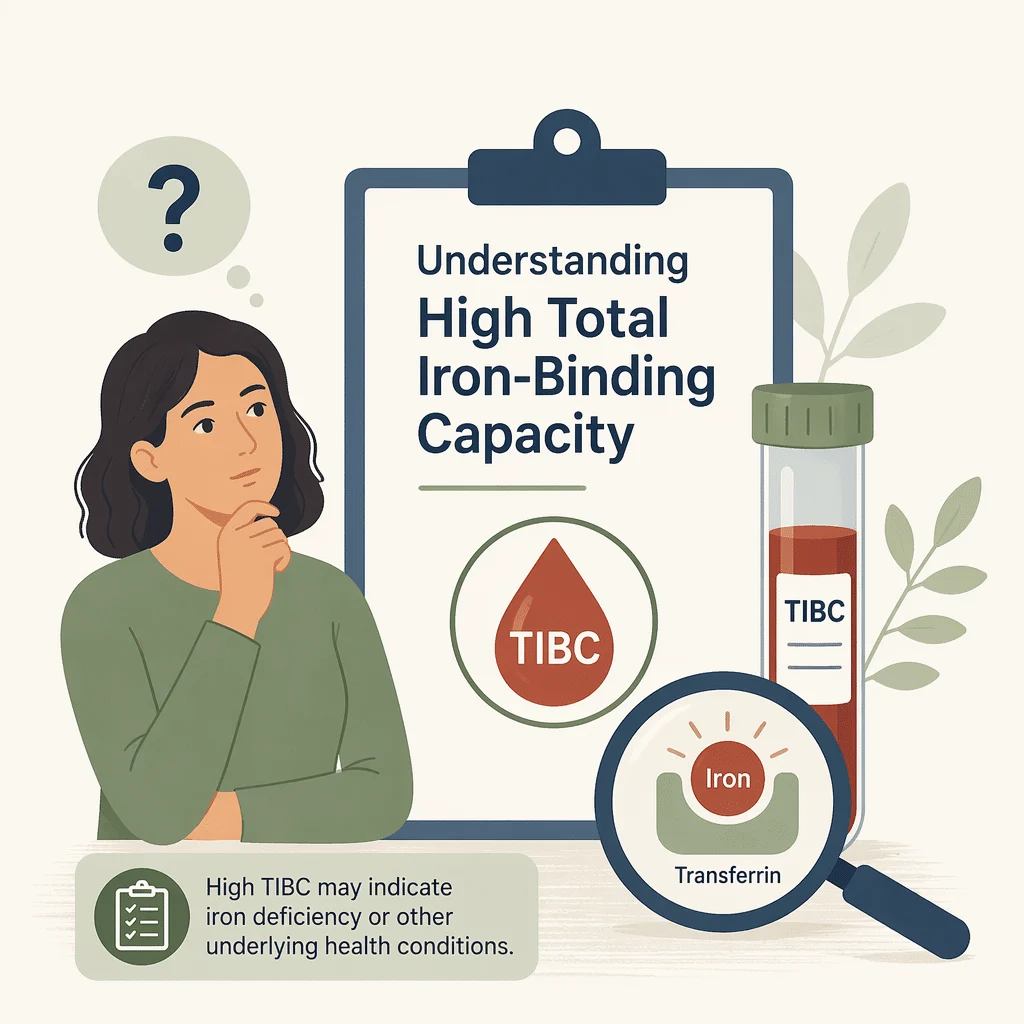
O capacitate totală de legare a fierului crescută la analizele de sânge înseamnă, de obicei, că organismul tău duce lipsă de fier – nu că are prea mult. Sună paradoxal, și tocmai asta este cel mai confuz lucru legat de acest marker. Capacitatea totală de legare a fierului, prescurtată TIBC, nu măsoară cât fier ai în organism. Măsoară cât fier ar putea transporta sângele tău dacă fiecare loc disponibil ar fi ocupat. Când fierul scade, organismul produce mai multă proteină care îl transportă, astfel că valoarea crește. În acest articol vei afla ce măsoară de fapt acest test, de ce TIBC evoluează în sens invers față de fier, cum se interpretează împreună cu fierul seric, feritina și saturația transferinei, și care combinații indică o deficiență de fier mai degrabă decât o inflamație. Vei afla, de asemenea, de ce singura valoare de referință care contează este cea tipărită pe propriul tău buletin de analize.
Ce măsoară de fapt o capacitate totală de legare a fierului crescută
Fierul nu circulă liber în sânge. Fierul neataşat este reactiv din punct de vedere chimic și ar putea deteriora țesuturile, de aceea aproape tot fierul călătorește legat de o proteină transportoare produsă de ficat, numită transferină. Gândește-te la transferină ca la o flotă de taxiuri, iar la fier ca la pasageri. TIBC estimează câte locuri de pasageri există în acea flotă în momentul în care ți s-a recoltat sângele.
De aceea, acest marker este descris ca o capacitate, nu ca o cantitate. Așa cum explică enciclopedia MedlinePlus, testul există pentru a arăta cât de bine poate transporta proteina purtătoare fierul din sângele tău. Un rezultat marcat ca ridicat în buletinul tău îi spune medicului că există mai multe „locuri libere" decât de obicei — ceea ce spune ceva despre flotă, nu despre pasageri. Echipa noastră explică panoul complet de analize ale fierului și cum se corelează markerii săi.
TIBC, UIBC și transferina sunt trei perspective asupra aceluiași lucru
Laboratoarele obțin aceleași informații prin metode diferite, de aceea buletinele de analize pentru fier pot arăta diferit de la un laborator la altul. Unele măsoară fierul seric (locurile deja ocupate) și capacitatea de legare a fierului nesaturat sau UIBC (locurile încă libere), apoi le adună pentru a obține TIBC. Altele măsoară direct proteina transferină și calculează TIBC pe baza ei. În practică, un TIBC crescut și o transferină crescută au, de obicei, aceeași semnificație. Acest ghid acoperă rolul transferinei în transportul fierului.
De ce crește TIBC când scade fierul
Această relație inversă este esența markerului și merită să ne oprim puțin asupra ei. Când rezervele de fier încep să scadă, ficatul răspunde producând mai multă transferină. Organismul încearcă să capteze fierul mai eficient: mai mulți purtători în circulație înseamnă șanse mai mari de a prelua și livra fierul absorbit din alimente. Mai mulți purtători înseamnă și mai multe „locuri libere", iar mai multe locuri libere înseamnă o capacitate măsurată mai mare.
Astfel, direcția se inversează. Scăderea fierului împinge TIBC în sus. Creșterea fierului sau rezervele pline împing TIBC în jos. O capacitate totală de legare a fierului crescută este, prin urmare, un semnal de lipsă, nu de abundență — exact opusul a ceea ce presupun majoritatea oamenilor când văd cuvântul „crescut" pe un buletin de analize.
Imaginea în oglindă este la fel de utilă. Când rezervele de fier sunt pline, sau când organismul se confruntă cu inflamație cronică, boli cronice, afecțiuni hepatice sau alimentație deficitară, producția de transferină scade și TIBC coboară. Un TIBC scăzut sau chiar normal la o persoană cu fier clar scăzut este în sine un indiciu important, la care revenim mai jos.
De ce o capacitate totală de legare a fierului crescută nu spune mare lucru singură
Luat singur, acest număr nu îți poate spune dacă ai deficit de fier. Este una dintre cele patru valori care trebuie citite împreună: fierul seric, feritina, TIBC și saturația transferinei. Fiecare are un unghi mort pe care celelalte îl acoperă.
Fierul seric reprezintă cantitatea care circulă în acel moment și variază considerabil pe parcursul zilei și după o masă sau o tabletă de fier, astfel că o singură determinare izolată nu este de încredere. Feritina reflectă cât fier este stocat în rezerve. TIBC reflectă capacitatea de transport. Saturația transferinei leagă toate aceste informații într-o imagine completă.
Cum se calculează saturația transferinei
Saturația transferinei, adesea abreviată TSAT, reprezintă fierul seric împărțit la TIBC, exprimat ca procent. Răspunde la o întrebare simplă: din toate locurile disponibile, câte sunt efectiv ocupate? Deoarece TIBC se află la numitor, o creștere a TIBC scade saturația chiar și atunci când fierul seric nu s-a modificat deloc. Această legătură matematică este exact motivul pentru care cele două valori nu se interpretează niciodată separat. Detaliem, de asemenea, nivelurile de saturație a fierului și cauzele lor frecvente.
Feritina adaugă dimensiunea lipsă, deoarece este cea mai apropiată estimare de rutină a fierului stocat în organism. Punctul ei slab este că poate crește în caz de infecție sau inflamație, indiferent de nivelul fierului, ceea ce poate masca o deficiență reală. Articole separate acoperă cauzele, simptomele și tratamentul feritinei scăzute și cauzele și riscurile nivelurilor ridicate de feritină.
Citirea tiparului pe întregul panel de fier
Valoarea TIBC capătă sens doar atunci când o corelezi cu celelalte trei markeri. Tabelul de mai jos prezintă combinațiile clasice pe care medicii le urmăresc. Intrările descriu doar direcția, deoarece valorile numerice de referință diferă de la un laborator la altul și de la un analizor la altul.
| Tabloul clinic | CTLF | Fier seric | Feritină | Saturația transferrinei |
|---|---|---|---|---|
| Deficit de fier | Crescută | Scăzut | Scăzut | Scăzut |
| Anemia din boli cronice sau inflamație | Scăzut sau normal | Scăzut | Normală sau crescută | Scăzut sau normal |
| Supraîncărcare cu fier | Scăzut sau normal | Crescută | Crescută | Crescută |
| Sarcina sau medicamentele care conțin estrogen | Crescută | Normal sau scăzut | Normal sau scăzut | Normal sau scăzut |
Distincția care contează cel mai mult
Compară primele două rânduri. În ambele, fierul seric este scăzut și persoana poate simți oboseală, lipsă de aer sau epuizare. Ceea ce le diferențiază este TIBC. În deficiența reală de fier, organismul intensifică producția de transferină, astfel că TIBC crește și feritina scade. În anemia din boli cronice, numită uneori anemie de inflamație, organismul reține deliberat fierul din circulație cât timp inflamația este activă: TIBC rămâne scăzut sau normal, iar feritina este normală sau chiar crescută, deoarece feritina se comportă atât ca proteină inflamatorie, cât și ca proteină de stocare.
A face această distincție corect schimbă ce urmează, deoarece suplimentele de fier ajută într-o situație, nu și în cealaltă. Din acest motiv, markerii inflamatori sunt adesea măsurați împreună cu panelul de fier, iar noi explicăm și markerul de inflamație CRP și cum se interpretează. Echipa noastră descrie simptomele, cauzele și tipurile de anemie într-un ghid dedicat.
A treia linie merge în sens invers. În supraîncărcarea cu fier, capacitatea de transport scade în timp ce fierul se înmulțește, astfel că saturația crește. Acest teritoriu aparține unei alte discuții, iar un ghid separat prezintă cum să scazi în siguranță nivelul ridicat de fier.
Cauze frecvente ale unei capacități totale de legare a fierului crescute
Deficit de fier
Aceasta este explicația cea mai frecventă, cu o marjă largă. Rezervele scad din cauza pierderii de sânge — cel mai adesea prin menstruații abundente sau sângerări lente la nivelul tractului digestiv —, din cauza unui aport insuficient, a unei absorbții deficitare (cum se întâmplă în boala celiacă sau după anumite tipuri de chirurgie gastrică) sau pentru că necesarul a crescut mai repede decât oferta, ca în perioadele de creștere rapidă și în antrenamentele de anduranță.
Sarcină
Sarcina crește TIBC printr-un mecanism fiziologic normal, nu din cauza unei boli. Volumul sanguin crește considerabil, necesarul de fier se ridică, iar producția de transferină crește ca urmare. Un rezultat crescut în timpul sarcinii este de așteptat și se interpretează în raport cu valorile specifice sarcinii, nu cu cele standard pentru adulți. Echipa noastră analizează analizele de sânge efectuate în timpul sarcinii.
Medicamentele care conțin estrogen
Contraceptivele orale combinate și unele forme de terapie hormonală cresc transferina circulantă și, prin urmare, TIBC, fără nicio deficiență de fier subiacentă. Aceasta este o cauză bine recunoscută a unui rezultat izolat crescut la o persoană care se simte perfect bine și este unul dintre detaliile care merită menționate atunci când discuți raportul tău cu medicul.
Direcțiile mai puțin frecvente
Un TIBC semnificativ scăzut indică altceva în întregime — inflamație, boală cronică de rinichi sau ficat, malnutriție sau pierdere de proteine și, uneori, supraîncărcare cu fier. Rezultatele pot fi influențate și de un comprimat de fier luat recent, o transfuzie recentă sau o probă recoltată la o oră neobișnuită din zi, motiv pentru care medicii rareori acționează pe baza unui singur rezultat izolat.
De ce intervalul de referință al propriului tău laborator este singurul care contează
TIBC depinde de metoda de analiză utilizată. Valoarea considerată normală variază în funcție de metoda folosită de laborator, de echipamentele disponibile și de populația față de care a fost validată. MedlinePlus precizează direct pentru acest test: intervalele de valori normale pot varia ușor între diferite laboratoare, unele laboratoare folosesc unități de măsură diferite sau analizează tipuri diferite de probe, iar semnificația rezultatelor tale specifice trebuie discutată cu medicul tău.
Consecința practică este simplă. Compară valoarea ta cu intervalul de referință tipărit în coloana alăturată din propriul tău buletin de analize, nu cu o cifră găsită pe un forum sau într-un articol general. Un rezultat ușor în afara intervalului de referință este un motiv de discuție cu medicul, nu un diagnostic. Explicăm cum sunt stabilite valorile normale ale analizelor de sânge mai în detaliu.
Tendința în timp este de obicei mai informativă decât orice valoare izolată. Un TIBC care crește progresiv în analize succesive, alături de o ferritină în scădere, spune o poveste mai clară decât o singură valoare la limită.
Când să mergi la medic pentru o capacitate totală de legare a fierului ridicată
Un TIBC izolat crescut la o persoană fără simptome este rareori o urgență, dar nici nu ar trebui ignorat. Programează o consultație cu medicul tău dacă rezultatul ridicat este însoțit de oricare dintre următoarele:
- Oboseală persistentă, lipsă de aer la efort ușor, amețeli sau palpitații
- Piele neobișnuit de palidă, unghii fragile, căderea părului sau fisuri la colțurile gurii
- Picioare neliniștite noaptea sau pofte de gheață, amidon sau alte substanțe necomestibile
- Sângerări menstruale abundente sau prelungite
- Scaune negre, gudronate sau cu sânge vizibil, ori scădere inexplicabilă în greutate
- O afecțiune digestivă cunoscută, o intervenție chirurgicală gastrică recentă sau o dietă care exclude grupuri alimentare importante
Solicită sfat medical urgent pentru dureri în piept, leșin sau dificultăți severe de respirație. Iar dacă un test anterior a fost normal și situația s-a schimbat, adu ambele rezultate la consultație: comparația este adesea cel mai util lucru din cameră.
Cele mai recente progrese științifice
Cercetările privind testele de fier au avansat rapid în ultimii trei ani, ajungând în mare parte la o singură concluzie: niciun marker luat singur nu este de încredere. Iată ce adaugă studiile recente, pe înțelesul tuturor.
O analiză din 2024 privind evaluarea statusului fierului a concluzionat că fiecare marker de rutină, inclusiv TIBC, devine mai greu de interpretat în prezența inflamației și că utilizarea combinată a mai multor markeri oferă rezultate mai bune decât bazarea pe unul singur. Ce înseamnă asta pentru tine: un medic care solicită patru analize ale fierului în același timp urmează o practică corectă, nu una excesivă.
O analiză din 2023 a controverselor de diagnostic a examinat panoul clasic — fierul seric, feritina, transferina și saturația — și a identificat punctele oarbe ale fiecăruia. A analizat, de asemenea, măsurători mai noi, cum ar fi receptorul solubil al transferinei, o proteină eliberată de celule atunci când au nevoie de fier, și hepcidina, un hormon care controlează cantitatea de fier admisă în sânge. Acestea rămân în mare parte instrumente de cercetare, nu analize de rutină, astfel că absența lor din buletinul tău de analize este normală.
O analiză din 2024 publicată într-o revistă de hematologie a trasat o linie mai clară între deficiența absolută de fier — când rezervele sunt cu adevărat epuizate — și deficiența funcțională de fier, în care fierul există în organism, dar este blocat din cauza inflamației. Ce înseamnă asta pentru tine: două persoane pot fi ambele epuizate, cu o saturație scăzută, și totuși să aibă nevoie de tratamente complet diferite — încă un motiv pentru care se interpretează întregul tablou, nu un singur număr.
O analiză din 2025 publicată într-o revistă de biochimie clinică a argumentat că pragurile pentru ferritină pe care multe laboratoare le tipăresc sunt stabilite mai jos decât susțin dovezile, astfel că unele persoane cu adevărat deficitare în fier sunt informate că rezultatul lor este normal. Revizuirea acestor praguri este în curs de discuție activă, nu un subiect tranșat. Ce înseamnă asta pentru tine: o ferritină raportată ca normală nu închide întotdeauna problema, mai ales când TIBC este crescut și simptomele persistă.
În cele din urmă, un studiu din 2025 privind statusul fierului în sarcină a constatat că compoziția corporală și inflamația pot denatura markerii fierului la începutul sarcinii, făcându-i mai puțin fiabili în a prezice cine va deveni deficitar ulterior. Este vorba de un singur studiu, nu de o concluzie definitivă, și confirmă ceea ce echipele obstetricale fac deja: reevaluarea statusului fierului pe parcursul sarcinii, în loc să fie judecat o singură dată.
Glosar de termeni cheie
| Termen | Definiție |
|---|---|
| Capacitatea totală de legare a fierului (CTLF) | Un test de sânge care estimează cât de mult fier ar putea transporta sângele tău, pe baza cantității de proteină transportoare aflată în circulație. Crește atunci când rezervele de fier scad. |
| Transferina | Proteina produsă de ficat care transportă fierul prin sânge. TIBC măsoară, în esență, cât din aceasta este disponibilă. |
| Capacitatea de legare a fierului nesaturat (UIBC) | Partea din capacitatea de transport care nu este ocupată în prezent de fier. Adăugată la fierul seric, dă TIBC. |
| Fier seric | Cantitatea de fier care circulă în sânge în momentul recoltării. Variază pe parcursul zilei și după mese sau suplimente. |
| Feritină | Proteina care stochează fierul. Este indicatorul de rutină obișnuit al rezervelor de fier, dar crește și în caz de inflamație. |
| Saturația transferinei (TSAT) | Fierul seric împărțit la TIBC, exprimat ca procent. Arată ce parte din capacitatea de transport disponibilă este utilizată. |
| Anemia din bolile cronice | Anemie cauzată de inflamație persistentă sau de o boală cronică, în care fierul este reținut din circulație, nu absent. Se mai numește și anemie a inflamației. |
| Interval de referință | Intervalul de valori pe care un anumit laborator îl consideră tipic, tipărit lângă rezultatul tău. Depinde de metoda și echipamentul folosit. |
| Hepcidina | Un hormon care reglează cât de mult fier intră în sânge din intestin și din depozite. În prezent este utilizat mai ales ca măsurătoare de cercetare. |
| Receptorul solubil al transferinei (sTfR) | Un marker care reflectă cât de intens solicită celulele corpului fier. Mai puțin influențat de inflamație decât feritina, dar nu este încă utilizat de rutină. |
Întrebări frecvente
De ce este TIBC crescut în anemia feriprivă?
Deoarece organismul reacționează la lipsă prin creșterea producției de transferină, proteina care transportă fierul. Mai multă proteină transportoare în circulație înseamnă mai multe locuri de legare neocupate, iar TIBC măsoară exact aceste locuri. Astfel, cu cât rezervele sunt mai goale, cu atât capacitatea măsurată tinde să fie mai mare. Este aceeași logică ca și trimiterea unor camioane suplimentare de livrare atunci când stocurile sunt reduse: flota crește chiar dacă marfa scade. De aceea, un TIBC crescut combinat cu o ferritină scăzută și o saturație scăzută reprezintă semnătura clasică de laborator a deficienței de fier.
Ce înseamnă un TIBC crescut cu fier normal?
Cel mai adesea înseamnă că rezervele de fier se epuizează, dar fierul circulant nu a scăzut încă. Organismul crește proteina transportoare devreme, înainte ca nivelul din sânge să scadă, astfel că un TIBC crescut poate apărea în timp ce fierul seric este încă normal. Sarcina și medicamentele care conțin estrogen produc același tipar fără nicio deficiență. Medicul tău va analiza de obicei feritina și saturația transferinei pentru a le diferenția și poate repeta pur și simplu panelul după câteva luni.
Există simptome ale unui TIBC total crescut?
Valoarea crescută în sine nu provoacă simptome. Orice simți provine din situația de bază, cel mai adesea un nivel scăzut de fier, care poate cauza oboseală, dificultăți de respirație, paloare, unghii fragile, căderea părului sau picioare neliniștite. Mulți oameni cu TIBC crescut se simt complet bine, mai ales când cauza este sarcina sau un medicament hormonal. De aceea, rezultatul este interpretat în contextul simptomelor tale și al celorlalte analize din panou, nu de unul singur.
Care este diferența dintre TIBC și UIBC?
Descriu aceeași capacitate din perspective opuse. UIBC, sau capacitatea de legare a fierului nesaturat, numără doar locurile de legare care sunt în prezent libere. TIBC le numără pe toate, atât cele ocupate, cât și cele libere, și este egal cu UIBC plus fierul seric. Unele laboratoare măsoară UIBC și calculează TIBC, altele fac invers. Când ambele sunt raportate ca ridicate, mesajul este același: există multă capacitate de transport neutilizată în sângele tău.
Un TIBC crescut înseamnă cancer?
Nu. Un TIBC crescut nu este un marker de cancer și, în sine, indică mult mai frecvent o deficiență de fier decât ceva grav. Merită știut că unele cancere provoacă pierderi lente de sânge, care la rândul lor duc la deficiență de fier, astfel că o deficiență de fier inexplicabilă la un adult este de obicei investigată pentru a găsi o sursă de sângerare. Acea investigație are scopul de a identifica o cauză, nu de a evalua valoarea TIBC în sine, iar cele mai multe cauze descoperite sunt benigne.
Poate sarcina să crească TIBC?
Da, și se întâmplă frecvent. Volumul sanguin crește în timpul sarcinii, necesarul de fier crește și producția de transferină crește în consecință, astfel că un TIBC mai ridicat este un rezultat așteptat, nu un semnal de alarmă. Este interpretat în raport cu valorile specifice sarcinii, iar statusul fierului este de obicei reverificat la intervale regulate pe parcursul sarcinii, nu evaluat pe baza unui singur test.
Surse
- MedlinePlus Enciclopedie Medicală — Capacitatea totală de legare a fierului — Biblioteca Națională de Medicină a SUA https://medlineplus.gov/ency/article/003489.htm
- Institutul Național pentru Inimă, Plămâni și Sânge — Anemia: Anemia prin deficiență de fier — NHLBI, Institutele Naționale de Sănătate https://www.nhlbi.nih.gov/health/anemia/iron-deficiency-anemia
- Mayo Clinic — Anemia prin deficiență de fier: Diagnostic și tratament https://www.mayoclinic.org/diseases-conditions/iron-deficiency-anemia/diagnosis-treatment/drc-20355040
- Ems T. — Evaluarea statusului fierului — Current Opinion in Clinical Nutrition and Metabolic Care, 2024 https://pubmed.ncbi.nlm.nih.gov/38847622/
- Diagnosticarea deficienței de fier: Controverse și indicatori noi — Best Practice and Research Clinical Anaesthesiology, 2023 https://pubmed.ncbi.nlm.nih.gov/39764832/
- Deficiența absolută și funcțională de fier: Biomarkeri, impact asupra sistemului imunitar și terapie — Blood Reviews, 2024 https://pubmed.ncbi.nlm.nih.gov/39142965/
- Reevaluarea pragurilor de ferritină pentru diagnosticarea deficienței de fier — Clinical Biochemistry, 2025 https://pubmed.ncbi.nlm.nih.gov/41033542/
- Adipozitatea maternă și inflamația: Factori de risc pentru deficiența de fier în sarcină — The Journal of Nutrition, 2025 https://pubmed.ncbi.nlm.nih.gov/40886951/
Lectură suplimentară
- Cum să citești o hemoleucogramă completă
- Cum să-ți citești rezultatele analizelor de sânge
- Tratamentele hemocromatozei, un ghid practic
- Simptomele, cauzele și tratamentele deficienței de vitamina B12
- Valorile normale ale analizelor de sânge explicate
Înțelege-ți rezultatele analizelor cu AI DiagMe
Un panel de fier are sens doar atunci când markerii săi sunt citiți împreună, și tocmai acesta este tipul de interpretare combinată care este greu de realizat singur în fața unui buletin de analize. AI DiagMe preia valorile din propriile tale rezultate — inclusiv capacitatea totală de legare a fierului, fierul seric, feritina și saturația transferinei — și explică în limbaj simplu ce sugerează combinația și ce întrebări merită ridicate. Este conceput să te ajute să îți înțelegi rezultatele, nu să te diagnosticheze, și nu înlocuiește medicul tău.
Obține interpretarea rezultatelor în câteva minute