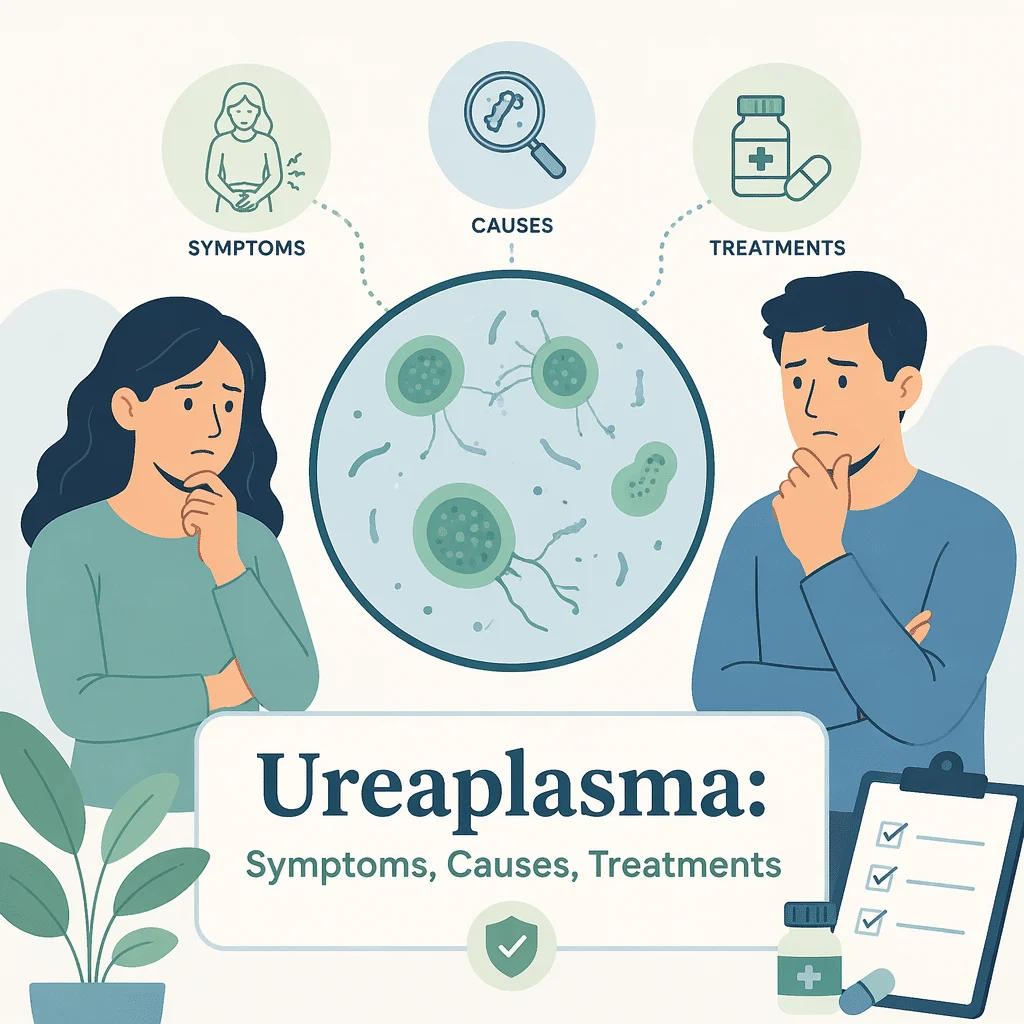
Majoritatea oamenilor încep să caute informații despre simptomele de ureaplasma după ce primesc un rezultat de laborator cu un nume necunoscut pe el, nu pentru că se simt rău. Această ordine contează, deoarece Ureaplasma se încadrează într-o categorie aparte: este o bacterie care trăiește liniștit în tractul genital și urinar al unui număr mare de adulți sănătoși și provoacă boală doar ocazional. Un test pozitiv, în sine, nu reprezintă un diagnostic. În acest articol vei afla ce este Ureaplasma, care simptome sunt cu adevărat legate de ea, cum o detectează laboratoarele și cum să interpretezi un rezultat pozitiv în raport cu situația ta — indiferent dacă nu ai niciun simptom, dacă ai acuze urinare sau genitale active sau dacă ești în mijlocul unui control de sarcină sau de fertilitate. Vei găsi, de asemenea, ce spun cercetările recente despre rezistența la antibiotice și despre soliditatea dovezilor care leagă Ureaplasma de fertilitate și de nașterea prematură.
Ce este de fapt Ureaplasma
Ureaplasma este un gen de bacterii foarte mici care colonizează mucoasa tractului genital și urinar. Două specii trăiesc la om: Ureaplasma urealyticum și Ureaplasma parvum. Ambele au o caracteristică neobișnuită: nu au perete celular. Această particularitate explică în mare parte modul în care sunt tratate, deoarece antibioticele la care se gândesc primii cei mai mulți oameni — penicilina și amoxicilina — atacă peretele celular al bacteriilor. Împotriva unui organism care nu are perete celular, ele nu au niciun efect.
Două specii, un nume confuz
Rapoartele indică adesea doar Ureaplasma species, deși multe paneluri le separă pe cele două. Ureaplasma parvum este mai frecventă la persoanele sănătoase și este considerată în general mai puțin predispusă să cauzeze boală. Ureaplasma urealyticum este identificată mai rar, dar apare mai frecvent în studiile privind inflamația uretrală și modificările parametrilor spermei.
Comensal, agent patogen sau ambele?
Cuvântul pentru un microb care trăiește pe corp fără a provoca daune este comensal. Ureaplasma este cel mai bine înțeleasă ca un organism comensal care se poate comporta ocazional ca un patogen oportunist, adică un organism care creează probleme doar atunci când circumstanțele îi sunt favorabile. Aceste circumstanțe par să implice cantitatea de bacterii prezentă, echilibrul comunității microbiene din jur, dacă mucoasa genitală a fost afectată și starea apărării imunitare a persoanei. Această dublă identitate explică de ce două persoane pot purta același organism și pot primi sfaturi complet diferite.
Simptomele Ureaplasma la bărbați și femei
Simptomele Ureaplasma, atunci când apar, nu sunt distinctive. Nimic din ele nu indică în mod specific acest organism față de alte zeci, motiv pentru care medicii investighează mai întâi cauzele frecvente. Fiecare simptom de mai jos este comun și cu chlamydia, gonoreea, Mycoplasma genitalium, trichomoniaza, supracreșterea de levuri și vaginoza bacteriană.
Simptomele Ureaplasma raportate cel mai des de bărbați
- Senzație de arsură sau înțepătură la urinare
- O secreție subțire, apoasă sau tulbure din penis, adesea mai evidentă dimineața
- Mâncărime în interiorul meatului uretral
- Nevoia de a urina mai des sau mai urgent decât de obicei
- Durere surdă la nivelul testiculelor
Împreună, acestea sunt descrise ca uretrite, adică inflamația uretrei, tubul care transportă urina în afara corpului. Când testele pentru gonoree ies negative, medicii numesc tabloul clinic uretrite non-gonococice, iar Ureaplasma este unul dintre mai mulți agenți patogeni luați în considerare în această etapă.
Simptomele Ureaplasma raportate cel mai des de femei
- Arsură la urinare sau o senzație persistentă de urgență cu puțină urină eliminată
- O modificare a secreției vaginale, în volum, culoare sau miros
- Durere la nivelul intrării vaginale; multe femei observă pentru prima dată senzație persistentă de arsură vaginală
- Disconfort în timpul sau după actul sexual
- Durere surdă în abdomenul inferior sau în zona pelviană
Deoarece simptomele de ureaplasma se suprapun complet cu afecțiuni mult mai frecvente, un rezultat pozitiv la o femeie cu dureri pelviene rareori clarifică situația. Aceleași acuze pot indica în egală măsură o infecție urinară, iar această posibilitate este de obicei verificată prima.
Semne care indică altceva
Câteva semne ies din tiparul obișnuit al simptomelor de ureaplasma și indică o problemă care necesită atenție separată: febră, o secreție groasă galben-verzuie, ulcere sau vezicule genitale, umflarea dureroasă a unui singur testicul și sângerare după contact sexual. Un examen pelvin poate evidenția, de asemenea, o col uterin friabil. Când acuza principală este o erupție cutanată și nu o secreție, medicii vor dori să excludă chlamydia, care poate produce ea însăși o erupție cutanată cauzată de chlamydia. În cazul unor proeminențe pe pielea genitală, este util să se compare foliculită și simptome de herpes.
Cum detectează laboratoarele Ureaplasma
De la culturi dificile la paneluri moleculare
Deoarece Ureaplasma nu are perete celular și crește greu pe plăcile de cultură obișnuite, a fost istoric dificil de detectat. Testarea modernă se bazează pe amplificarea acizilor nucleici, de obicei o metodă bazată pe PCR care copiază și apoi detectează fragmente de ADN bacterian. Probele provin dintr-un specimen de urină din primul jet sau dintr-un tampon uretral, vaginal sau endocervical. Multe laboratoare includ Ureaplasma într-un panel multiplex alături de chlamydia, gonoree, Mycoplasma genitalium și trichomonas, motiv pentru care mulți oameni descoperă că o poartă fără să fi cerut acest lucru.
Ce altceva apare în raport
Un rezultat molecular rareori vine singur. O sumar de urină poate arăta, de asemenea, valori crescute de leucocitele în urină, un semn că sistemul imunitar reacționează la ceva în tractul urinar. Porțiunea cu bandelete a aceluiași test măsoară esteraza leucocitară, o enzimă eliberată de acele globule albe. Pentru a vedea cum se interpretează fiecare linie în practică, consultă ghid de interpretare a rezultatelor sumarului de urină. Atunci când inflamația pare mai extinsă, un medic poate verifica și nivelurile de proteină C reactivă.
De ce un rezultat pozitiv nu înseamnă un diagnostic
Un test PCR răspunde la o singură întrebare precisă: dacă ADN-ul acestui organism este prezent, și o face cu mare sensibilitate. Nu spune nimic despre dacă organismul cauzează ceva. Deoarece Ureaplasma este purtată fără niciun efect nociv de o mare parte dintre adulții activi sexual, detectarea ei la o persoană care se simte bine este un rezultat așteptat, nu o descoperire îngrijorătoare. Un diagnostic de boală asociată cu Ureaplasma necesită trei lucruri simultan: simptome de ureaplasma sau inflamație măsurabilă, un test pozitiv și excluderea rezonabilă a cauzelor mai probabile.
Rezultatul tău este pozitiv: ce înseamnă în situația ta
Același rezultat pe un raport de laborator înseamnă lucruri diferite în funcție de cine îl citește. Tabelul de mai jos prezintă cele trei situații pe care medicii le întâlnesc cel mai frecvent.
| Situația ta | Ce înseamnă de obicei un rezultat pozitiv | Ce se întâmplă de obicei în continuare |
|---|---|---|
| Fără simptome; Ureaplasma a apărut pe un panel pe care nu l-ai solicitat | Purtarea unui organism comensal frecvent. Acesta este de departe cel mai frecvent scenariu și nu este tratat ca o infecție. | De obicei nu este necesar tratament. Antibioticele nu sunt recomandate în general, deoarece nu s-a demonstrat niciun beneficiu, în timp ce costurile în efecte secundare și rezistență sunt reale. |
| Simptomele Ureaplasma sunt prezente, urinare sau genitale | Un posibil factor contribuitor, dar numai după ce chlamydia, gonoreea, Mycoplasma genitalium, trichomonaza, infecția cu candida și vaginoza bacteriană au fost excluse. | Evaluarea inflamației măsurabile, excluderea cauzelor frecvente, apoi o discuție despre dacă un tratament antibiotic țintit este justificat. |
| Sarcină sau investigații pentru fertilitate în curs | Interpretată cu mai multă precauție, deoarece Ureaplasma este asociată cu inflamația internă a uterului și cu modificări ale parametrilor spermei, deși dovezile sunt neuniforme. | Evaluare individuală de către echipa de obstetrică sau fertilitate, bazată pe tabloul clinic complet, nu doar pe rezultatul testului. |
De ce nu se recomandă screeningul de rutină
Principalele organisme clinice nu recomandă screeningul persoanelor fără simptome pentru Ureaplasma. Cleveland Clinic afirmă clar că medicii nu efectuează screening de rutină pentru aceasta și că testarea este indicată persoanelor cu simptome la care cauzele mai frecvente au fost deja excluse. Raționamentul are patru componente.
- Purtătoria este frecventă. Un test care revine pozitiv la un număr mare de persoane sănătoase nu poate, prin el însuși, să separe persoanele sănătoase de cele bolnave.
- Nu s-a demonstrat niciodată că tratamentul ajută purtătorii fără simptome. Nu există niciun beneficiu dovedit în eradicarea unui organism care nu provoacă probleme.
- Antibioticele au costuri reale. Efectele secundare, perturbarea comunității microbiene normale și riscul de rezistență cad asupra unei persoane care nu era bolnavă de la bun început.
- Supradiagnosticarea duce la supratratament. O linie pozitivă pe o fișă a unei persoane sănătoase poate declanșa anxietate, teste repetate, tratament inutil al partenerului și tensiuni inutile — un lanț de prejudicii provocat de o constatare fără semnificație clinică.
Nimic din toate acestea nu este un motiv pentru a ignora simptomele reale. Este un motiv pentru a trata testul ca pe o singură informație, nu ca pe un verdict.
Tratamentul și problema rezistenței
Ce antibiotice se folosesc
Deoarece Ureaplasma nu are perete celular, penicilinele și cefalosporinele sunt ineficiente. Tratamentul, acolo unde este justificat, se bazează pe clase de medicamente care acționează în interiorul celulei bacteriene: tetracicline precum doxiciclina și macrolide precum azitromicina. Ce medicament, la ce doză și pentru cât timp sunt decizii ale unui medic care îți cunoaște istoricul, și acestea variază în funcție de starea de sarcină și de tiparele locale de rezistență. Un tratament este luat în considerare doar atunci când sunt prezente simptome de ureaplasma și alte cauze au fost excluse.
Rezistența este în creștere
Rezistența la macrolide și tetracicline a fost documentată în populațiile de Ureaplasma din întreaga lume și variază semnificativ de la o regiune la alta. Un tratament care odinioară elimina simptomele în mod sigur poate să nu mai fie eficient. Dacă simptomele persistă după tratament, cel mai util pas următor este să te întorci la medic, nu să repeți același antibiotic, deoarece acuzele persistente indică mai des un diagnostic alternativ ratat decât un Ureaplasma rezistent. Aceeași presiune redefinește modul în care sunt gestionate alte infecții genitale, un tipar deja vizibil în testarea gonoreei rezistente la medicamente.
Ce rol au partenerii
Ureaplasma se poate transmite între parteneri prin contact sexual și de la mamă la copil în jurul momentului nașterii. Deoarece purtarea acestui microorganism este răspândită și de obicei inofensivă, tratarea unui partener fără simptome nu reprezintă practica standard. Prezervativele reduc transmiterea și rămân utile pentru infecțiile cu adevărat importante.
Sarcina, nou-născuții și fertilitatea
În sarcină
Acesta este contextul în care Ureaplasma este luată cel mai în serios. Speciile de Ureaplasma se numără printre microorganismele cel mai frecvent identificate în lichidul amniotic al femeilor cu infecție intrauterină, iar inflamația la acest nivel reprezintă o cale recunoscută spre nașterea prematură. Prezența Ureaplasma în vagin nu prezice o naștere prematură, iar majoritatea femeilor purtătoare nasc la termen. Ceea ce înseamnă totuși este că, atunci când apar semne de infecție în timpul sarcinii, Ureaplasma este unul dintre microorganismele pe care echipa obstetricală le va lua în considerare. Îngrijirea prenatală de rutină include deja standarde analize de sânge din timpul sarcinii.
La nou-născuți
La bebelușii născuți foarte prematur, colonizarea căilor respiratorii cu Ureaplasma a fost studiată ca posibil factor contributor la displazia bronhopulmonară, o afecțiune pulmonară cronică a prematurității. Aceasta este o problemă specifică terapiei intensive neonatale și nu are nicio relevanță pentru un adult sănătos cu un rezultat pozitiv la tamponul de recoltare.
În investigațiile de fertilitate
Fertilitatea este domeniul în care dovezile sunt cele mai slabe, iar marketingul cel mai zgomotos. Studiile au raportat asocieri între Ureaplasma urealyticum și modificări ale parametrilor spermei, însă cercetările sunt inconsistente și în mare parte observaționale, ceea ce înseamnă că pot arăta că două lucruri apar împreună fără a demonstra că unul îl cauzează pe celălalt. O investigație de fertilitate include de obicei un test de sânge pentru fertilitate alături de analiza spermei, iar un rezultat pentru Ureaplasma este interpretat în cadrul acestei imagini mai complete.
Când să consulți un medic
Lista de mai jos transformă toate cele de mai sus în praguri practice pentru a acționa în cazul simptomelor de ureaplasma.
- Solicită o evaluare promptă în caz de febră însoțită de durere pelvină sau testiculară, tumefiere testiculară unilaterală, ulcerații genitale sau secreții abundente.
- Programează o consultație de rutină dacă ai senzație de arsură la urinare, modificări ale secrețiilor sau disconfort în timpul actului sexual care durează mai mult de câteva zile.
- Întoarce-te la medicul tău dacă simptomele persistă după terminarea unui tratament antibiotic complet, în loc să repeți același tratament.
- Discută cu echipa ta de obstetrică dacă ești însărcinată și ți s-a spus că ești purtătoare de Ureaplasma.
- Menționează-l în cadrul unui bilanț de fertilitate, alături de celelalte rezultate ale tale.
- Cere o opinie liniștitoare, nu antibiotice, dacă nu ai simptome și Ureaplasma a apărut pur și simplu pe un panel de analize.
Cele mai recente progrese științifice
Cercetările din ultimii trei ani au clarificat imaginea în trei domenii: dacă aceste organisme provoacă boli, cât de eficienți mai sunt antibioticele și ce înseamnă ele pentru fertilitate și sarcină. Fiecare studiu de mai jos este rezumat în limbaj simplu.
O analiză pusă direct: comensal sau patogen?
O analiză din 2023 publicată în Revue Medicale Suisse a evaluat dovezile privind Ureaplasma urealyticum, Ureaplasma parvum și înrudita Mycoplasma hominis, concluzionând că rolul lor în boală rămâne cu adevărat neclar. Testarea pe scară largă, au argumentat autorii, invită la supradiagnosticare, adică la identificarea și tratarea a ceva care nu ar fi cauzat niciodată niciun rău.
Ce înseamnă asta pentru tine: atunci când un rezultat pozitiv apare fără simptome, răspunsul bazat pe dovezi este liniștirea, nu antibioticele, iar un medic care refuză să trateze urmează recomandările cercetării.
Rezistența a fost cartografiată pe regiuni
O analiză din 2024 publicată în Critical Reviews in Microbiology a adunat date globale despre frecvența cu care Ureaplasma dezvoltă rezistență la antibioticele folosite împotriva sa și despre mecanismele din spatele acestei rezistențe. Ratele variază considerabil de la o țară la alta, iar atât macrolidele, cât și tetraciclinele, cele două clase principale de tratament, sunt afectate.
Ce înseamnă asta pentru tine: un tratament care funcționează bine într-o țară poate fi mai puțin eficient în alta, iar un tratament eșuat nu este neapărat greșeala cuiva. Acesta este și un motiv concret pentru a nu lua antibiotice pentru un test pozitiv fără simptome.
O analiză combinată a examinat calitatea spermei
O revizuire sistematică și meta-analiză din 2025 — o metodă care combină mai multe studii separate într-o estimare globală — a constatat că bărbații cu rezultat pozitiv pentru Ureaplasma urealyticum aveau tendința de a prezenta mai multe globule albe în spermă și parametri seminali ușor mai slabi față de bărbații cu rezultat negativ.
Ce înseamnă asta pentru tine: dacă ești investigat(ă) pentru dificultăți de concepere, acest rezultat poate fi unul dintre factorii pe care specialistul îi ia în considerare. Nu stabilește o cauză și nu înseamnă că antibioticele vor restabili calitatea spermei.
O analiză mai amplă a găsit dovezile privind fertilitatea echilibrate
O revizuire sistematică din 2023 a evaluat unsprezece organisme cu transmitere sexuală, printre care și Ureaplasma, în raport cu infertilitatea masculină. Concluzia a fost că dovezile sunt aproape egale, cu aproximativ același număr de studii de calitate similară indicând în direcții opuse.
Ce înseamnă asta pentru tine: tratează cu scepticism real afirmațiile sigure de pe internet că Ureaplasma provoacă infertilitate. Concluzia sinceră este că cercetătorii nu știu încă.
Prematuri și boală pulmonară cronică
O revizuire sistematică și meta-analiză din 2024 a adunat studii despre bebeluși foarte prematuri și a constatat că cei ale căror căi respiratorii prezentau Ureaplasma urealyticum aveau un risc mai mare de a dezvolta displazie bronhopulmonară. Studiile incluse au variat ca metodologie, astfel că rezultatul necesită confirmare suplimentară.
Ce înseamnă asta pentru tine: aceasta privește terapia intensivă neonatală, nu sănătatea sexuală a adulților. Pentru un adult cu un tampon pozitiv și fără simptome, nu schimbă nimic.
Microorganismul găsit cel mai frecvent în infecțiile din interiorul uterului
O analiză din 2023 privind corioamnionita clinică — adică infecția sau inflamația membranelor care înconjoară bebelușul — a raportat că speciile de Ureaplasma sunt microorganismele identificate cel mai frecvent în aceste cazuri, de obicei alături de altele. Alegerea antibioticelor în aceste situații trebuie să acopere bacteriile fără perete celular, lucru pe care combinațiile standard nu îl fac întotdeauna.
Ce înseamnă asta pentru tine: într-o sarcină complicată de semne de infecție, Ureaplasma se află pe lista specialistului. Acesta este un motiv să raportezi prompt febra sau secreția neobișnuită, nu un motiv să te testezi când ești bine.
Glosar
| Termen | Definiție |
|---|---|
| Comensal | Un microb care trăiește pe sau în corp fără a provoca boală. O mare parte din bacteriile de pe pielea sănătoasă și din tractul genital sunt comensal. |
| Patogen oportunist | Un microorganism care în mod normal nu provoacă niciun rău, dar poate cauza îmbolnăvire atunci când condițiile se schimbă — de exemplu, când sistemul imunitar este slăbit sau o suprafață tisulară este lezată. |
| Colonizare | Prezența bacteriilor pe o suprafață a corpului fără semne de infecție. Colonizarea nu este același lucru cu boala. |
| Uretrită | Inflamația uretrei, tubul care transportă urina în afara corpului. Provoacă de obicei senzație de arsură la urinare și uneori secreții. |
| Uretrită non-gonococică (UNG) | Uretrită care nu este cauzată de gonoree. Mai multe organisme pot fi responsabile, iar în multe cazuri nu este identificat niciun organism. |
| Test de amplificare a acizilor nucleici (NAAT) | O metodă de laborator, adesea bazată pe PCR, care multiplică cantități minuscule de ADN ale unui organism până când pot fi detectate. Este foarte sensibilă, ceea ce reprezintă atât punctul său forte, cât și limitarea sa. |
| Panel multiplex | Un singur test de laborator care caută simultan mai mulți agenți patogeni diferiți dintr-o singură probă. |
| Macrolidă | O clasă de antibiotice care include azitromicina și claritromicina. Macrolidele acționează în interiorul celulei bacteriene, nu asupra peretelui acesteia. |
| Tetraciclină | O clasă de antibiotice care include doxiciclina, acționând și ea în interiorul celulei bacteriene. |
| Corioamnionită | Infecție sau inflamație a membranelor care înconjoară bebelușul în timpul sarcinii. Este diagnosticată și tratată de echipa de obstetrică. |
Întrebări frecvente
Simptomele de ureaplasma dispar de la sine?
De cele mai multe ori, întrebarea nu prea se aplică, deoarece Ureaplasma nu este ceva de care majoritatea oamenilor trebuie să scape. Trăiește în tractul genital al multor adulți sănătoși ca un rezident normal, deci nu există nimic de eliminat. Nivelurile bacteriei se modifică de la sine în timp, iar un test efectuat la câteva luni distanță poate trece ușor de la pozitiv la negativ fără niciun tratament. Acolo unde există simptome reale și cauzele frecvente au fost excluse, acestea se pot ameliora de la sine, dar acuzele persistente merită o evaluare medicală, nu așteptare.
Care este diferența dintre Ureaplasma parvum și Ureaplasma urealyticum?
Sunt două specii separate din același gen. Ureaplasma parvum este cea mai frecvent întâlnită dintre cele două și este considerată, în general, mai puțin predispusă să provoace boli. Ureaplasma urealyticum este detectată ceva mai rar, dar apare mai frecvent în studiile privind inflamația uretrală și calitatea spermei. În practică, distincția dintre ele schimbă rareori ce urmează, deoarece decizia de a trata se bazează pe prezența simptomelor și pe excluderea altor cauze, nu pe specia menționată în raport.
Dacă am Ureaplasma, trebuie testat și partenerul meu?
Nu neapărat. Deoarece atât de mulți oameni sunt purtători de Ureaplasma fără nicio problemă, testarea sau tratarea unui partener care se simte bine nu este o practică standard și poate crea îngrijorare fără niciun beneficiu pentru sănătate. Situația se schimbă dacă partenerul tău are propriile simptome sau dacă simptomele tale revin după finalizarea unui tratament. În acea situație, un medic poate dori să vă evalueze pe amândoi împreună. Merită, de asemenea, să reții că un rezultat pozitiv pentru Ureaplasma nu spune nimic sigur despre când sau de la cine a fost dobândită.
Merită testele de Ureaplasma făcute acasă?
Sunt tehnic capabile, dar răspund la o întrebare care rareori este utilă în sine. Un kit de acasă îți va spune dacă ADN-ul organismului este prezent — ceea ce, pentru majoritatea oamenilor, va fi — și nu poate să îți spună dacă acel rezultat explică ceva din ce simți. Rezultatul ajunge apoi fără contextul pe care un medic l-ar oferi. Dacă ai simptome, testarea pentru cauzele frecvente cu urmărire clinică este mai utilă. Dacă nu ai niciun simptom, un rezultat pozitiv va cauza probabil mai multă îngrijorare decât va rezolva.
Poate fi tratată Ureaplasma fără antibiotice?
Nu există niciun tratament non-antibiotic dovedit care să eradicheze Ureaplasma și niciun supliment sau probiotic nu a demonstrat că poate face acest lucru. Totuși, aspectul mai relevant pentru majoritatea oamenilor este că eradicarea nu este, de obicei, scopul urmărit. Acolo unde nu există simptome, nu se recomandă, în general, niciun tratament. Acolo unde există simptome și alte cauze au fost excluse, un antibiotic prescris de un medic este opțiunea susținută de dovezi. Orice produs comercializat ca un remediu natural pentru Ureaplasma trebuie tratat cu prudență.
Este Ureaplasma clasificată ca infecție cu transmitere sexuală?
Se încadrează cu greu în categoriile obișnuite. Ureaplasma se poate transmite între parteneri în timpul actului sexual, acesta fiind unul dintre modurile prin care oamenii o dobândesc, însă nu este clasificată în general alături de infecții precum chlamydia sau gonoreea, deoarece este purtată fără nicio consecință de foarte multe persoane și pentru că un rezultat pozitiv nu indică prezența unei boli. Cleveland Clinic precizează că tocmai din acest motiv nu este considerată o infecție cu transmitere sexuală. Un rezultat pozitiv nu este dovada că cineva a făcut ceva greșit.
Surse
- Cleveland Clinic – Ureaplasma: infecție, cauze, simptome și tratament – https://my.clevelandclinic.org/health/articles/ureaplasma
- Young A, Toncar A, Leslie SW, Wray AA – Urethritis – StatPearls, National Library of Medicine, 2024 – https://www.ncbi.nlm.nih.gov/books/NBK537282/
- MedlinePlus Medical Encyclopedia – Uretrită – National Library of Medicine – https://medlineplus.gov/ency/article/000439.htm
- Stavart L, Baud D, Eyer M – Ureaplasma urealyticum, Ureaplasma parvum și Mycoplasma hominis: comensal sau patogen? – Revue Medicale Suisse, 2023 – https://doi.org/10.53738/REVMED.2023.19.845.1835
- Liu W, Yang T, Kong Y, Xie X – Infecțiile cu Ureaplasma: noutăți privind epidemiologia, rezistența la antimicrobiene și patogeneza – Critical Reviews in Microbiology, 2024 – https://doi.org/10.1080/1040841X.2024.2349556
- Kukoyi OS, Ashonibare VJ, Adegbola CA, Akhigbe TM, et al. – Ureaplasma urealyticum crește numărul leucocitelor din lichidul seminal și reduce calitatea spermei umane: o revizuire sistematică și meta-analiză – Basic and Clinical Andrology, 2025 – https://doi.org/10.1186/s12610-025-00262-5
- Khalafalla K, El Ansari W, Sengupta P, Majzoub A, et al. – Sunt infecțiile cu transmitere sexuală asociate cu infertilitatea masculină? O revizuire sistematică și o evaluare aprofundată a dovezilor și mecanismelor de acțiune a 11 agenți patogeni – Arab Journal of Urology, 2023 – https://doi.org/10.1080/2090598X.2023.2218566
- Chen X, Huang X, Zhou Q, Kang H, et al. – Asocierea dintre colonizarea cu Ureaplasma urealyticum și displazia bronhopulmonară la prematuri: o revizuire sistematică și meta-analiză – Frontiers in Pediatrics, 2024 – https://doi.org/10.3389/fped.2024.1436568
- Jung E, Romero R, Suksai M, Gotsch F, et al. – Corioamnionita clinică la termen: definiție, patogeneză, microbiologie, diagnostic și tratament – American Journal of Obstetrics and Gynecology, 2023 – https://doi.org/10.1016/j.ajog.2023.02.002
Lectură suplimentară
- Nitriți în urină: cauze, simptome și riscuri
- Mucus în urină: cauze, simptome și analize
- Virusul papiloma uman: cauze, simptome și tratamente
- Rezultat Babeș-Papanicolau normal cu test HPV pozitiv
- Hiperspermia: cauze, simptome și riscuri
Înțelege-ți rezultatele analizelor cu AI DiagMe
Un rezultat Ureaplasma are sens doar alături de tot restul analizelor din buletin, și exact acolo se blochează cei mai mulți oameni. AI DiagMe îți citește documentele de laborator și le explică pe înțelesul tău, de la sumar de urină și numărul de leucocite până la markeri de inflamație precum proteina C reactivă și panourile hormonale folosite în evaluările de fertilitate. Te ajută să ajungi la consultație știind ce măsoară fiecare linie și ce întrebări merită puse. Nu pune diagnostice și nu înlocuiește medicul tău.
Obține interpretarea rezultatelor în câteva minute