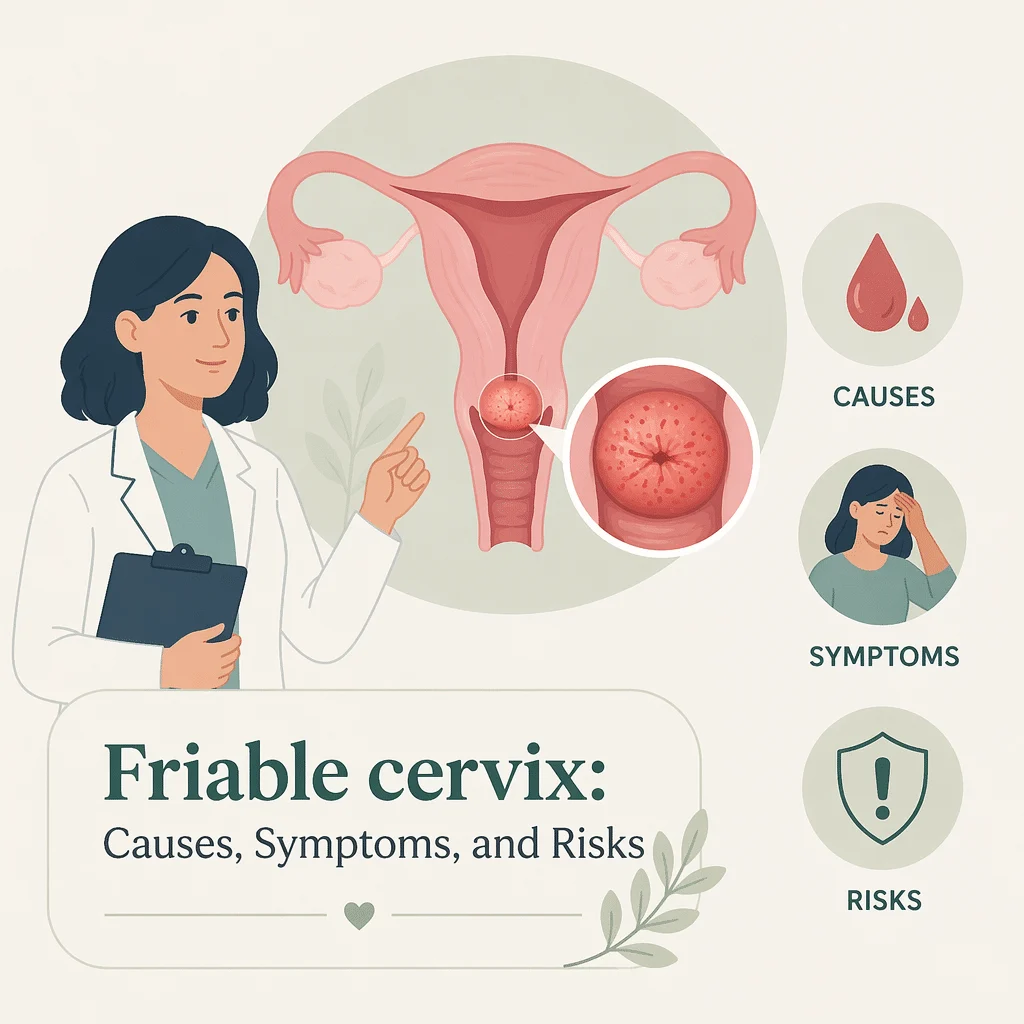
Un col uterin friabil este un col a cărui suprafață este atât de delicată încât sângerează sau pătează după un contact ușor, cum ar fi actul sexual, un test Babeș-Papanicolaou sau introducerea unui tampon. Cuvântul “friabil” înseamnă pur și simplu “ușor de iritat sau de deteriorat,” iar medicii îl folosesc pentru a descrie un țesut care arată inflamat și sângerează la cel mai mic contact. Este o constatare fizică, nu un diagnostic în sine, iar majoritatea afecțiunilor care stau la baza lui sunt frecvente și tratabile. Chiar și așa, deoarece sângerarea după sex poate uneori semnala ceva mai grav, merită întotdeauna o evaluare corespunzătoare. În acest articol vei afla ce înseamnă un col uterin friabil, ce îl cauzează, simptomele la care să fii atentă, cum îl diagnostichează medicii, cum funcționează tratamentul și când să faci o programare.
Ce înseamnă un col uterin friabil?
Colul uterin este capătul îngust, inferior al uterului, care se deschide în partea superioară a vaginului. Suprafața sa este în mod normal netedă, fermă și roz pal. Când această suprafață devine inflamată, subțiată sau acoperită de celule mai fragile, poate sângera ușor la un contact blând. Acesta este sensul pe care îl are un medic când notează un col uterin friabil în timpul unui examen: țesutul sângerează mult mai ușor decât ar trebui să o facă un țesut cervical sănătos.
Friabilitatea este o descriere, nu o boală în sine. O asistentă sau un medic o poate nota după un examen cu speculum sau un test de screening de rutină, când colul sângerează în momentul în care tamponul sau spatula îl atinge. Această constatare îi spune echipei medicale că ceva irită sau slăbește suprafața și îi îndrumă spre întrebarea reală: de ce sângerează colul atât de ușor?
Este colul uterin friabil întotdeauna o problemă?
De obicei, nu. La multe persoane, cauza este minoră și reversibilă, cum ar fi o infecție temporară sau o modificare normală, legată de hormoni, a celulelor cervicale. La altele, colul uterin sângerează din cauza unei afecțiuni tratabile care necesită pur și simplu îngrijirea potrivită. Un număr mic de cazuri implică modificări precanceroase ale celulelor, motiv pentru care un col uterin care sângerează nu trebuie niciodată ignorat, chiar dacă te simți perfect bine în rest. Evaluarea lui înseamnă să fii temeinic, nu să presupui ce e mai rău.
Ce cauzează un col uterin friabil?
Mai multe afecțiuni pot face colul uterin fragil. Acestea variază de la infecții de scurtă durată la modificări hormonale naturale și, mai rar, modificări precanceroase ale celulelor. Înțelegerea principalelor cauze face mai ușor de înțeles de ce medicul tău poate solicita mai multe teste înainte de a stabili un plan de tratament.
Infecție și cervicită
Inflamația colului uterin, cunoscută sub numele de cervicită, este unul dintre cele mai frecvente motive pentru care suprafața sângerează ușor. Infecțiile cu transmitere sexuală sunt factori declanșatori frecvenți, printre care gonoreea, trichomoniaza și chlamydia. Un simplu tampon poate identifica chlamydia, iar tratarea infecției calmează de obicei inflamația, astfel că sângerarea dispare. Dezechilibrele care nu sunt transmise sexual, cum ar fi vaginoza bacteriană, pot inflama și ele colul uterin. Infecțiile cu transmitere sexuală sunt extrem de frecvente și nu implică nicio vină; testarea pentru ele este pur și simplu o parte firească din grija față de propria sănătate.
Ectropion cervical
Uneori, celulele glandulare moi care căptușesc în mod normal interiorul canalului cervical se extind pe suprafața exterioară a colului uterin. Aceasta se numește ectropion cervical și mai poate fi numită și eroziune cervicală, deși nu există o eroziune propriu-zisă. Celulele din canalul interior sunt mai delicate și bogat vascularizate cu vase de sânge mici, astfel că sângerează mai ușor decât celulele mai rezistente din exterior. Ectropionul este frecvent în timpul sarcinii, în timp ce se folosesc contraceptive hormonale combinate și pe parcursul anilor fertili. Nu este dăunător și adesea nu necesită tratament, cu excepția cazului în care sângerarea devine supărătoare.
Modificările hormonale, sarcina și menopauza
Hormonii influențează puternic colul uterin. Nivelul mai ridicat de estrogen din timpul sarcinii sau al administrării pilulei contraceptive poate favoriza ectropionul și un flux sanguin mai intens, ceea ce explică parțial de ce colul uterin este mai fragil în sarcină și sângerează de obicei fără consecințe în această perioadă. După menopauză se întâmplă contrariul: scăderea estrogenului poate subția și usca colul uterin și peretele vaginal, lăsând țesuturile fragile într-un mod diferit. Aceleași modificări hormonale stau la baza multor simptome familiare simptome ale menopauzei. Atunci când pot fi implicate fluctuații hormonale, medicul poate recomanda un panel hormonal feminin pentru a construi o imagine mai completă a ceea ce se întâmplă.
Deoarece sarcina crește probabilitatea unui col uterin sensibil și ușor iritabil, o mică sângerare după contact sexual sau după un tampon de recoltare este frecventă la femeile însărcinate și rareori reprezintă, în sine, un motiv de îngrijorare. Orice sângerare în sarcină trebuie totuși semnalată medicului tău, care poate distinge o pată inofensivă de o problemă ce necesită atenție. Consultațiile prenatale de rutină includ deja analize de sânge din timpul sarcinii, iar echipa medicală poate adăuga verificări ori de câte ori o sângerare necesită explicații.
Polipi și iritație fizică
Polipii cervicali sunt formațiuni mici, de obicei benigne, care atârnă de colul uterin ca o lacrimă. Sunt fragili și pot sângera după contact sexual sau după un examen ginecologic. Iritația de zi cu zi poate juca și ea un rol: un diafragm sau un pesar care nu se potrivesc bine, dușurile vaginale frecvente, substanțele chimice iritante din săpunuri sau spray-uri sau contactul sexual intens pot lăsa suprafața colului în stare brută. Îndepărtarea polipului sau eliminarea factorului iritant rezolvă adesea sângerarea fără niciun alt tratament.
HPV, modificările precanceroase și cancerul de col uterin
Mai rar, fragilitatea reflectă modificări celulare anormale legate de virusul papiloma uman. Infecția persistentă cu un tip HPV cu risc crescut poate produce, în decurs de câțiva ani, modificări precanceroase și, într-o minoritate de cazuri, cancer de col uterin. De aceea medicii iau în serios sângerarea după contact sexual: scopul testelor este de a exclude cancerul de col uterin, nu de a presupune că este prezent. Vestea bună este că screening-ul de rutină detectează în mod fiabil o infecție HPV cu risc crescut cu mult înainte ca problemele să se dezvolte, tocmai de aceea controalele regulate sunt atât de eficiente.
Cauze frecvente pe scurt
| Cauză posibilă | Indicii tipice | Abordare obișnuită |
|---|---|---|
| Cervicita (infecție) | Secreții vaginale, sângerare după contact sexual, uneori fără niciun simptom | Testează și tratează infecția |
| Ectropion cervical | Adesea fără simptome; sângerare ușoară; frecvent în sarcină sau în timpul utilizării pilulei contraceptive | De obicei niciun tratament; o procedură minoră dacă sângerarea este supărătoare |
| Estrogen scăzut (menopauză) | Uscăciune, subțierea mucoasei, sângerare după contact sexual | Gestionarea uscăciunii; discutarea opțiunilor de estrogen local |
| Polip cervical | Sângerare după contact sexual sau între menstruații | Îndepărtare simplă dacă sângerează |
| Modificări celulare legate de HPV | Adesea fără simptome; descoperită la screening | Colposcopie, monitorizare sau tratament după caz |
Simptomele unui col uterin friabil
Un col uterin friabil adesea nu provoacă niciun simptom și este descoperit doar în cadrul unui control de rutină. Când apar simptome, cel mai frecvent este o sângerare ușoară sau spotting după actul sexual, uneori numit sângerare post-coitală. Pot apărea și alte semne, în funcție de cauza fragilității.
- Sângerare ușoară sau spotting după contact sexual
- Sângerare sau spotting între menstruații
- Secreții vaginale neobișnuite, cu modificări de culoare, cantitate sau miros
- Disconfort pelvin ușor sau durere în timpul actului sexual
- Iritația suprafeței poate declanșa și senzație persistentă de arsură vaginală
Aceste simptome se suprapun cu multe afecțiuni obișnuite, astfel că, luate separat, nu indică un singur diagnostic. Contează tiparul. Sângerările repetate după contact sexual, secrețiile noi sau cu miros neplăcut ori sângerările între menstruații necesită o evaluare medicală, nu o abordare de tipul „așteptăm să vedem". Notează rapid când tinde să apară sângerarea și ce pare să o declanșeze — acest lucru îl poate ajuta pe medicul tău să identifice cauza mai repede.
Cum se diagnostichează colul uterin friabil
Deoarece friabilitatea este un indiciu, nu un diagnostic, scopul consultației este de a identifica cauza de bază. Nu este vorba să te îngrijorezi, ci să corelezi constatarea cu explicația potrivită, adesea foarte simplă. Medicul tău va combina de obicei o scurtă discuție despre istoricul tău medical cu un examen fizic și unul sau mai multe teste specifice.
Examen pelvin și screening cervical
În cadrul unui examen pelvin, speculul îi permite medicului să vizualizeze colul uterin și să observe dacă sângerează la contact. Testul de screening cervical (testul Babeș-Papanicolaou) recoltează câteva celule pentru a verifica eventualele modificări anormale, iar testul HPV detectează virusul cu risc crescut. Recomandările naționale ale Colegiului American al Obstetricienilor și Ginecologilor explică când este recomandat fiecare test. Multe persoane primesc un Papanicolaou normal cu test HPV pozitiv, un rezultat frecvent pe care medicul tău îl poate interpreta și urmări corespunzător.
Testarea pentru infecții
Tampoanele recoltate de la nivelul colului uterin și al vaginului pot identifica infecții precum gonoreea, trichomoniaza și vaginoza bacteriană. Deoarece acestea sunt tratabile, excluderea sau confirmarea lor timpurie rezolvă adesea problema rapid și previne răspândirea. Uneori se folosesc și analize de urină alături de tampoane, astfel că procesul este rapid și simplu.
Colposcopie și biopsie
Dacă screening-ul sugerează celule anormale, următorul pas este adesea o colposcopie — o examinare detaliată a colului uterin cu ajutorul unui dispozitiv optic cu lumină. Medicul poate preleva o mică mostră de țesut, numită biopsie, pentru a fi analizată la laborator. Astfel se confirmă sau se exclud modificările precanceroase, iar aceasta este cea mai sigură metodă de a explica un col uterin care rămâne friabil în ciuda tratamentului pentru cauze mai simple.
Tratament: rezolvarea cauzei de bază
Nu există un tratament unic pentru colul uterin friabil, deoarece abordarea corectă depinde în totalitate de cauza care îl provoacă. Odată ce aceasta este clară, tratamentul este de obicei simplu și eficient.
- Infecții: antibioticele pentru infecțiile bacteriene cu transmitere sexuală și vaginoza bacteriană, sau medicamentul potrivit pentru alte infecții, elimină de obicei inflamația.
- Ectropionul cervical: adesea nu necesită tratament; dacă sângerarea persistă, medicul poate sigila zona fragilă cu căldură, frig (crioterapie) sau azotat de argint.
- Nivelul scăzut de estrogen după menopauză: hidratanții vaginali sau estrogenul local pot restabili rezistența țesutului, atunci când este indicat.
- Polipi: o procedură rapidă la cabinet poate îndepărta un polip sângerând, de obicei fără disconfort sau cu disconfort minim.
- Modificări precanceroase: tratamentul elimină sau distruge celulele anormale și este extrem de eficient când este depistat devreme.
Indiferent de cauză, tratarea ei oprește de obicei sângerarea și restabilește confortul. Medicul tău îți va recomanda și un program de screening de urmărire adaptat vârstei și istoricului tău, astfel încât orice modificare să poată fi depistată prompt.
Când să mergi la medic
Majoritatea cauzelor unui col uterin fragil, care sângerează ușor, sunt benigne, dar sângerarea după contact sexual este un simptom pe care nu ar trebui să încerci niciodată să îl diagnostichezi singură. Programează o consultație dacă observi oricare dintre următoarele.
- Sângerare după actul sexual care apare de mai multe ori sau revine în mod repetat
- Sângerare sau spotting între menstruații, sau orice sângerare după menopauză
- Secreții vaginale noi, abundente sau cu miros neplăcut
- Durere pelvină, febră sau durere în timpul actului sexual
- Un test de screening care a depășit termenul recomandat sau a revenit cu rezultat anormal
Solicită îngrijire medicală urgentă dacă sângerarea este abundentă, dacă ești însărcinată și sângerezi sau dacă te simți slăbită sau foarte rău. Evaluarea timpurie este liniștitoare în marea majoritate a cazurilor și, atunci când este nevoie de tratament, surprinde problema în stadiul în care este cel mai ușor de gestionat.
Cele mai recente progrese științifice
Cercetările din perioada 2023–2026 au schimbat modul în care colul uterin este evaluat și monitorizat, ceea ce contează pentru oricine al cărui col a fost descris ca friabil. Iată ce înseamnă cele mai recente dovezi pentru tine, explicat pe înțelesul tuturor.
Poți recolta singur/ă proba pentru HPV
În 2026, Societatea Americană de Cancer și-a actualizat ghidurile pentru a susține recoltarea proprie a probelor vaginale în testarea HPV, în care persoana își recoltează singură tamponul, fără a depinde exclusiv de o probă recoltată de un clinician (Perkins și colaboratorii, 2026). Un consens de experți din 2025 a ajuns la aceeași concluzie (Wentzensen și colaboratorii, 2025). Ce înseamnă asta pentru tine: screeningul cervical devine tot mai ușor accesibil, iar un col uterin sensibil sau iritabil nu mai trebuie să fie un obstacol în calea testării.
Screeningul începe acum cu testul HPV
O revizuire sistematică din 2025 — un tip de studiu care reunește mai multe cercetări anterioare pentru a evalua dovezile în ansamblu — a confirmat că screeningul bazat pe HPV este cea mai eficientă metodă de prevenire a cancerului de col uterin (Pillay și colaboratorii, 2025). Ce înseamnă asta pentru tine: dacă această concluzie te îndeamnă să faci screening, testul HPV este un prim pas important, iar un rezultat negativ pentru HPV cu risc crescut este extrem de liniștitor, chiar și atunci când colul uterin pare iritat.
Colposcopia devine tot mai standardizată
Un consens european de experți publicat în 2023 a stabilit standarde mai clare pentru colposcopie — examinarea mărită a colului uterin folosită atunci când rezultatele screeningului sunt anormale (McGee și colaboratorii, 2023). Ce înseamnă asta pentru tine: dacă ești îndrumată spre o colposcopie pentru a explica sângerarea, procedura este din ce în ce mai consecventă și bazată pe dovezi, indiferent de clinica unde se efectuează. Acestea sunt evoluții încurajatoare, nu instrucțiuni de autotreatament; deciziile privind screeningul trebuie luate întotdeauna împreună cu un medic care îți cunoaște istoricul.
Glosar de termeni cheie
| Termen | Definiție |
|---|---|
| Col uterin friabil | Un col uterin a cărui suprafață sângerează sau prezintă pete ușor la un contact ușor, cum ar fi actul sexual sau un tampon de recoltare. |
| Colul uterin | Partea îngustă, inferioară a uterului, care se deschide în partea superioară a vaginului. |
| Cervicita | Inflamația colului uterin, cauzată adesea de o infecție. |
| Ectropion cervical | O stare frecventă și inofensivă în care celulele mai moi din canalul intern se află pe suprafața exterioară a colului uterin și sângerează mai ușor. |
| Sângerare după contact sexual | Sângerare sau pete care apar după actul sexual. |
| HPV (virusul papiloma uman) | Un virus foarte frecvent; tipurile cu risc crescut, persistente, pot provoca modificări ale celulelor cervicale. |
| Testul Babeș-Papanicolaou | Un test de screening cervical care verifică celulele de pe colul uterin pentru a detecta modificări anormale. |
| Colposcopie | O examinare detaliată a colului uterin cu ajutorul unui dispozitiv optic cu iluminare, folosită atunci când rezultatele screeningului sunt anormale. |
| Biopsie | Prelevarea unui mic fragment de țesut pentru examinare în laborator. |
| Vaginoza bacteriană | Un dezechilibru frecvent al bacteriilor vaginale care poate irita colul uterin. |
Întrebări frecvente
Înseamnă că am cancer dacă am colul uterin friabil?
Nu. La majoritatea persoanelor, cauza este o afecțiune frecventă și tratabilă, cum ar fi o infecție, ectropionul cervical sau o modificare hormonală — nu cancerul. Deoarece sângerarea după contact sexual poate fi, uneori, un semn precoce al unor modificări precanceroase, medicii o evaluează din precauție. Screeningul și, atunci când este necesar, colposcopia pot exclude cancerul cu un grad ridicat de certitudine.
Poate fi normal un col uterin friabil?
Uneori, da. Ectropionul cervical, care face adesea colul să sângereze ușor, este o variație normală, deosebit de frecventă în timpul sarcinii, în anii fertili și în timpul utilizării contracepției hormonale. Nu este o boală și de multe ori nu necesită tratament. Chiar și așa, un medic ar trebui să confirme că ectropionul, și nu o altă cauză, stă la baza sângerării, înainte să presupui că este inofensivă.
Se poate vindeca de la sine un col uterin friabil?
Depinde de cauză. Când friabilitatea apare dintr-o infecție de scurtă durată, tratarea acelei infecții permite de obicei colului uterin să se vindece în câteva săptămâni. Ectropionul poate dispărea de la sine odată ce nivelurile hormonale se modifică, de exemplu după sarcină. Cauzele precum polipii sau modificările precanceroase necesită însă un tratament specific, nu doar așteptarea unei îmbunătățiri.
Este frecvent colul uterin friabil în sarcină?
Da. Nivelul mai ridicat de estrogen și fluxul sanguin crescut fac ca un col friabil să fie frecvent în sarcină, iar o ușoară pătare după contact sexual sau după o consultație este adesea inofensivă în această perioadă. Totuși, ar trebui să îi comunici orice sângerare din timpul sarcinii medicului tău, care poate face diferența între o pătare obișnuită și o situație ce necesită atenție mai atentă.
Poate afecta colul uterin friabil fertilitatea?
Colul uterin friabil în sine nu cauzează de obicei infertilitate. Ceea ce contează este afecțiunea care stă la baza lui. Infecțiile cu transmitere sexuală netratate, de exemplu, se pot răspândi uneori la organele reproductive, astfel că diagnosticarea și tratarea cauzei ajută la protejarea atât a confortului tău acum, cât și a fertilității tale pe viitor.
Este sigur să faci sex cu colul uterin friabil?
De obicei, da, deși s-ar putea să observi o ușoară pătare după aceea. Dacă actul sexual este inconfortabil sau sângerarea este abundentă ori persistentă, este indicat să faci o pauză și să consulți mai întâi un medic. Odată ce cauza de bază este tratată, majoritatea persoanelor revin la activitatea obișnuită fără sângerări.
Surse
- Mayo Clinic — Cervicita: Simptome și cauze — mayoclinic.org
- Cleveland Clinic — Cervicita: Cauze, simptome, diagnostic și tratament — clevelandclinic.org
- MedlinePlus (Biblioteca Națională de Medicină a SUA) — Cervicita — medlineplus.gov
- American College of Obstetricians and Gynecologists — Screeningul cancerului de col uterin — acog.org
- Perkins RB, Wolf AMD, Church TR, et al. — Self-collected vaginal specimens for HPV testing: an update to the American Cancer Society cervical cancer screening guideline — CA: A Cancer Journal for Clinicians, 2026 — pubmed.ncbi.nlm.nih.gov
- Wentzensen N, Massad LS, Clarke MA, et al. — Self-collected vaginal specimens for HPV testing: recommendations from the Enduring Consensus Cervical Cancer Screening and Management Guidelines Committee — Journal of Lower Genital Tract Disease, 2025 — pubmed.ncbi.nlm.nih.gov
- Pillay J, Gates A, Guitard S, et al. — Screening for the prevention and early detection of cervical cancer: systematic reviews for the Canadian Task Force on Preventive Health Care — Systematic Reviews, 2025 — pubmed.ncbi.nlm.nih.gov
- McGee AE, Alibegashvili T, Elfgren K, et al. — European consensus statement on expert colposcopy — European Journal of Obstetrics & Gynecology and Reproductive Biology, 2023 — pubmed.ncbi.nlm.nih.gov
Lectură suplimentară
- Testul de autorecoltare HPV: ce este nou în screeningul cervical
- Greața în perimenopauză: cauze și tratamente
- Analiză FSH: descifrarea unui hormon reproductiv cheie
- Ghid test de sarcină: acuratețe și interpretare
- Gonoreea rezistentă la medicamente: ce se schimbă în rezultatele tale de laborator
Înțelege-ți rezultatele analizelor cu AI DiagMe
Dacă un col uterin fragil a dus la efectuarea unui test Babeș-Papanicolau, HPV sau ITS, rezultatele pot fi greu de înțeles pe cont propriu. AI DiagMe te ajută să înțelegi rezultatele ginecologice și de laborator frecvente — de la testul Papanicolau și screeningul HPV până la un panel ITS sau o hemoleucogramă completă — în limbaj clar și simplu. Este conceput pentru a te ajuta să îți înțelegi rezultatele și să pregătești întrebări mai precise pentru consultație, nu pentru a te diagnostica sau a înlocui medicul tău.
Obține interpretarea rezultatelor în câteva minute