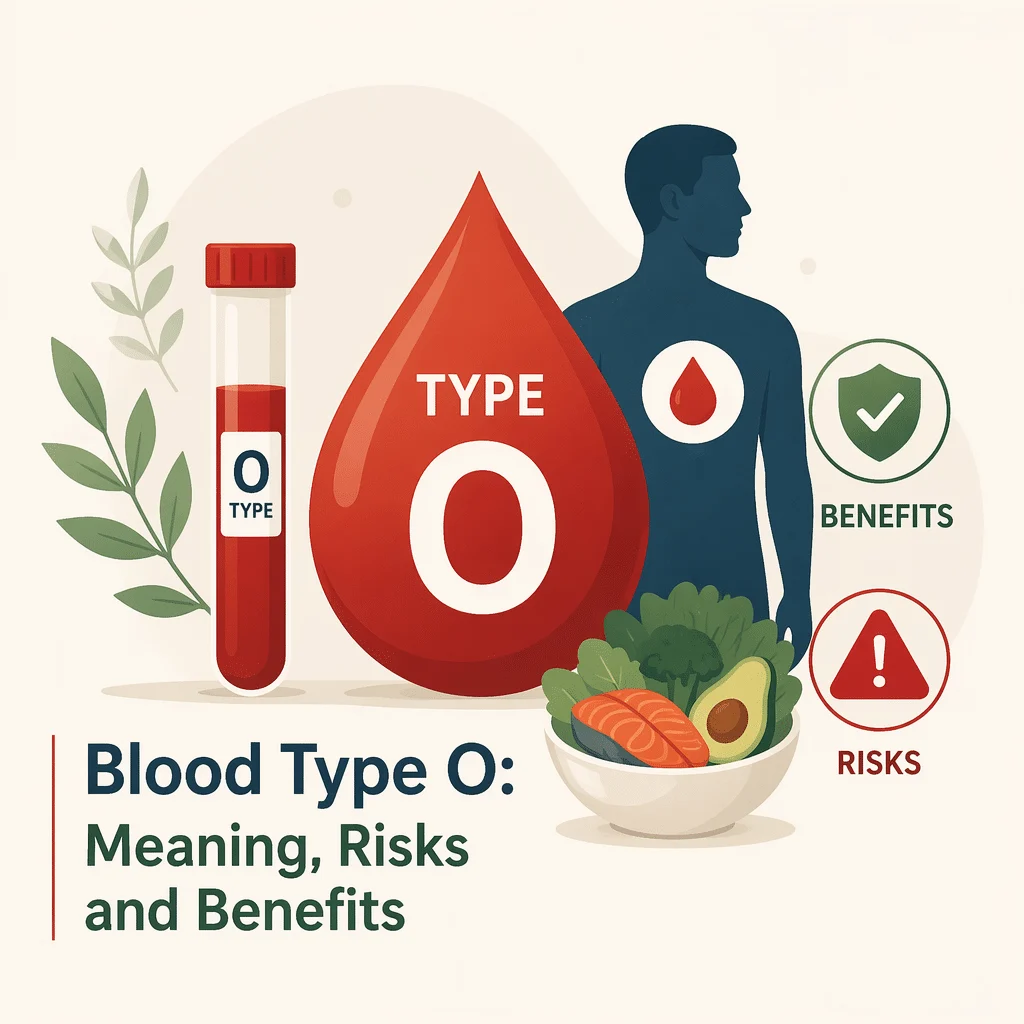
Grupa sanguină O este cea mai frecventă grupă sanguină din Statele Unite, totuși mulți oameni nu știu cu exactitate ce înseamnă aceasta pentru sănătatea lor. Dacă analizele tale indică O pozitiv sau O negativ, globulele tale roșii nu poartă antigenele A sau B — markerii de suprafață care definesc o grupă sanguină — iar acest mic detaliu biologic are consecințe reale pentru transfuzii, sarcină și îngrijirile de urgență. În acest articol vei afla ce definește grupa sanguină O, cum se moștenește, cui poți dona și de la cine poți primi în siguranță, legăturile modeste cu starea de sănătate descoperite de cercetători, și cum îți poți confirma grupa și o poți păstra în evidențe. Scopul este să explice faptele medicale într-un limbaj simplu, astfel încât să poți acționa pe baza unor informații corecte, nu a unor mituri.
Majoritatea persoanelor cu grupa O sunt Rh pozitive: vezi ce înseamnă în practică grupa de sânge O pozitiv.
Ce înseamnă grupa sanguină O?
Grupa sanguină O înseamnă că globulele tale roșii nu poartă nici antigenul A, nici antigenul B pe suprafața lor. Antigenele sunt mici markeri pe care sistemul imunitar îi citește ca pe niște etichete cu nume, hotărând ce aparține corpului tău și ce nu. Fără markerii A sau B de afișat, globulele roșii de tip O par „goale" pentru sistemul imunitar al altor persoane.
Există și o a doua parte importantă a grupei O. Plasma ta — partea lichidă a sângelui — conține atât anticorpi anti-A, cât și anticorpi anti-B. Aceștia sunt proteine de apărare care ar ataca imediat orice globule roșii de tip A sau B care ar pătrunde în fluxul tău sanguin. Acesta este motivul principal pentru care transfuziile la persoanele cu grupa O trebuie să fie atent compatibilizate și influențează aproape tot ce ține de această grupă sanguină.
Grupa O este cea mai frecventă grupă ABO din Statele Unite, ceea ce explică în parte de ce este atât de importantă pentru rezervele de sânge. Pentru a vedea cum se situează față de celelalte grupe, prezentarea noastră despre grupele sanguine explicate compară grupele A, B, AB și O într-un singur loc.
O pozitiv față de O negativ: care este diferența?
Să știi că ești „grupa O" înseamnă doar jumătate din informație. Cealaltă jumătate este factorul Rh, o proteină separată de pe globulele roșii. Dacă celulele tale o poartă, ești O pozitiv (O+). Dacă nu o poartă, ești O negativ (O−). Sistemele ABO și Rh se moștenesc independent, deci sunt raportate împreună, de exemplu ca „O Rh pozitiv."
O pozitiv este una dintre cele mai frecvente grupe de sânge, în timp ce O negativ este comparativ rar: doar aproximativ 7% dintre persoanele din Statele Unite îl au. Tocmai această raritate îl face atât de valoros. Deoarece globulele roșii O negativ pot fi administrate pacienților din orice grupă, ele reprezintă prima alegere în situații de urgență și pentru nou-născuții fragili, atunci când nu există timp pentru confirmarea grupei. Donatorii O negativ sunt încurajați să doneze regulat.
Pentru tine, ca pacient, diferența practică privește în principal transfuzia și sarcina. O persoană O pozitiv poate primi globule roșii O pozitiv sau O negativ, în timp ce o persoană O negativ poate primi doar globule roșii O negativ. În sarcină, factorul Rh negativ este detaliul care determină investigații suplimentare și tratament preventiv, indiferent de grupa ta ABO.
Cum funcționează sistemul de grupe sanguine ABO
Perioada Sistemul de grupe sanguine ABO clasifică sângele folosind două caracteristici legate: antigenele de pe globulele tale roșii și anticorpii din plasma ta. Trei variante ale genei, numite alele — A, B și O — controlează acest tipar. Alelele A și B adaugă fiecare o structură specifică de zahăr pe suprafața globulei roșii. Alela O produce o versiune inactivă care nu adaugă nimic, astfel că celulele de tip O nu afișează niciun zahăr.
Sistemul imunitar învață devreme să tolereze propriii antigeni și să producă anticorpi împotriva celor pe care nu îi are. O persoană cu grupa A produce anticorpi anti-B, una cu grupa B produce anticorpi anti-A, iar una cu grupa O produce ambii tipuri. Dacă sunt transfuzate globule roșii incompatibile, acești anticorpi pot declanșa hemoliza — distrugerea rapidă a globulelor roșii — ceea ce este periculos. Pentru a preveni acest lucru, laboratoarele determină grupa ABO și factorul Rh, efectuează adesea un screening de anticorpi și un test de compatibilitate (amestecând sângele donatorului cu cel al primitorului) înainte de eliberarea sângelui pentru transfuzie.
Cum se moștenește grupa sanguină O
Moștenești câte o alelă ABO de la fiecare părinte. Alela O este recesivă, ceea ce înseamnă că se exprimă doar atunci când o primești de la ambii părinți — un genotip notat OO. Deoarece alelele A și B sunt dominante, o singură alelă A sau B va masca o alelă O moștenită.
În practică, de aceea doi părinți cu grupa O vor avea aproape întotdeauna copii cu grupa O, în timp ce părinții care poartă alele A sau B pot avea copii cu mai multe grupe diferite. Există variante rare și subgrupe slabe care pot face uneori un rezultat mai greu de interpretat — în aceste cazuri, un specialist sau testarea genetică poate fi de ajutor. Aceleași reguli de moștenire explică profilurile grupei A, tipul B, și grupa AB.
Cui poate dona și de la cine poate primi sânge grupa O
Compatibilitatea este cel mai practic motiv pentru a-ți înțelege grupa de sânge, iar grupa O se comportă foarte diferit ca donator față de situația în care este recipient. Tabelul de mai jos acoperă transfuziile de globule roșii, cel mai frecvent tip.
| Dacă grupa ta de sânge este | Poți dona hematii la | Poți primi globule roșii de la |
|---|---|---|
| O negativ (O−) | Orice grupă de sânge (donatorul universal de globule roșii) | Doar O negativ |
| O pozitiv (O+) | O+, A+, B+ și AB+ | O+ și O− |
Globulele roșii O negativ pot fi transfuzate aproape oricui, motiv pentru care spitalele le păstrează în stoc pentru urgențe și pentru nou-născuți, atunci când nu există timp pentru a confirma grupa pacientului. Compromisul este strict: persoanele cu grupa O pot primi doar globule roșii de tip O, astfel că atât unitățile O− cât și O+ sunt în cerere constantă și adesea în cantitate insuficientă.
Plasma funcționează în direcția opusă. Deoarece plasma de tip O conține atât anticorpi anti-A, cât și anti-B, ea poate fi administrată doar altor recipienți de tip O. În același timp, o persoană cu grupa O poate primi plasmă de la orice grupă ABO. Pe scurt, grupa O este donatorul universal pentru globule roșii și recipientul universal pentru plasmă. Un aspect important de reținut: termenul „donator universal" se referă specific la globulele roșii, nu la sângele integral, iar spitalele efectuează întotdeauna verificări încrucișate atunci când timpul permite.
Grupa sanguină O și sănătatea ta: ce înseamnă cu adevărat aceste asocieri
Cercetătorii au asociat grupa ABO cu mai multe rezultate privind starea de sănătate, însă diferențele sunt mici pentru fiecare individ în parte și rareori influențează singure deciziile medicale. Cea mai consistentă constatare privește coagularea sângelui. Persoanele cu grupa O tind să aibă niveluri mai scăzute ale factorului von Willebrand și ale factorului VIII, două proteine care ajută sângele să coaguleze.
Acest tipar are implicații în ambele sensuri. Pe partea benefică, grupa O este asociată cu un risc ușor mai scăzut de tromboembolism venos — formarea unui cheag într-o venă — și, în unele studii, cu un risc puțin mai mic pentru anumite afecțiuni cardiace și vasculare, comparativ cu grupele non-O. Pe de altă parte, nivelurile mai scăzute ale proteinelor de coagulare pot însemna o tendință ușor mai mare de sângerare în anumite situații. Este important să păstrăm perspectiva: medicii evaluează coagularea cu un panel de coagulare și un tablou clinic complet, nu din grupa ta sanguină, iar un factor von Willebrand foarte scăzut este semnul caracteristic al boala von Willebrand și nu pe baza unui rezultat normal de tip O.
Antigenele grupelor sanguine apar și pe alte celule în afara globulelor roșii, astfel că pot interacționa cu infecțiile. Tipul ABO apare în cercetările privind ulcerul gastric legat de bacteria H. pylori, malaria severă și câteva infecții intestinale, grupa O prezentând uneori un risc mai mare și alteori unul mai mic. Aceste asocieri îi ajută pe oamenii de știință să studieze populații, dar nu reprezintă predicții personale și nu sunt un motiv de îngrijorare.
Grupa sanguină O în sarcină și la nou-născuți
În timpul sarcinii, factorul Rh contează de obicei mai mult decât grupa ABO. Preocuparea bine-cunoscută este situația în care un părinte Rh negativ poartă un copil Rh pozitiv; aceasta este depistată în mod curent și gestionată printr-o injecție preventivă (imunoglobulină anti-Rh) care împiedică sistemul imunitar al părintelui să reacționeze.
Tipul ABO poate juca un rol mai mic. Dacă un părinte are grupa O și bebelușul moștenește grupa A sau B, anticorpii anti-A sau anti-B ai părintelui pot traversa placenta și pot distruge o parte din globulele roșii ale bebelușului. Aceasta provoacă boala hemolitică ABO a nou-născutului, care este de obicei ușoară — apare adesea ca icter în primele zile de viață — și mult mai puțin gravă decât boala Rh. Majoritatea bebelușilor afectați au nevoie doar de monitorizare sau de un tratament simplu, cum ar fi fototerapia.
Rutinar analize de sânge din timpul sarcinii includ tiparea ABO și Rh, plus un screening de anticorpi, astfel încât orice incompatibilitate să fie identificată din timp și monitorizată. Dacă planifici o sarcină și nu îți cunoști grupa sau statusul Rh, este rezonabil să le confirmi cu medicul tău.
Dieta în funcție de grupa de sânge O: ce spune știința
Poate ai văzut afirmații că persoanele cu grupa O ar trebui să urmeze o dietă bogată în proteine, săracă în cereale, de tip „ancestral". Aceasta provine din populara „dietă după grupa de sânge", care atribuie un plan alimentar diferit fiecărei grupe ABO și sugerează că potrivirea alimentelor cu grupa de sânge îmbunătățește sănătatea.
Studiile științifice nu au găsit dovezi solide care să susțină această teorie. Cercetările nu arată că grupa ta ABO prezice ce dietă ți se potrivește cel mai bine sau că mâncatul „după grupa de sânge" aduce beneficii în plus față de o alimentație sănătoasă în general. Atunci când persoanele care urmează aceste planuri se simt mai bine, îmbunătățirea se datorează de obicei consumului mai mare de alimente integrale și mai puțin procesate — schimbări care ajută majoritatea oamenilor, indiferent de grupa de sânge.
O abordare mai fiabilă este o dietă echilibrată, adaptată afecțiunilor tale medicale, nevoilor nutriționale și preferințelor personale. Dacă te gândești la o schimbare majoră sau ai o afecțiune precum diabetul sau colesterolul ridicat, merită să discuți mai întâi cu un medic sau cu un dietetician autorizat care îți poate personaliza sfaturile.
Cum să îți afli (și să îți notezi) grupa de sânge
Grupa de sânge se confirmă printr-un test de laborator rapid, pe un mic eșantion de sânge recoltat dintr-o venă. Tehnicienii amestecă globulele tale roșii cu reactivi anti-A și anti-B și urmăresc apariția aglutinării, apoi verifică din nou testând plasma ta cu celule A și B cunoscute — o verificare încrucișată integrată, numită uneori tipare directă și inversă. Un pas separat identifică factorul Rh. Când un rezultat este neclar, laboratoarele moderne pot folosi metode moleculare (bazate pe ADN) pentru a-l clarifica.
Un raport tipic listează pur și simplu grupa ta ABO și statusul Rh, de exemplu „O Rh negativ." Dacă restul rezultatelor tale arată ca un zid de abrevieri, ghidul nostru despre cum să citirea rezultatelor analizelor de sânge explică structura, iar ce presupune vizita în sine poți vedea în ghidul nostru pas cu pas al procesul analizei de sânge. Deoarece grupa ta este verificată înainte de transfuzii și operații, apare frecvent în analize de sânge înainte de operație.
Păstrarea unui document — pe un card de portofel sau în portalul tău de pacient — este practică, mai ales pentru donatorii regulați. Chiar și așa, spitalele retestează întotdeauna înainte de o transfuzie, în loc să se bazeze pe un card, o notă sau un tatuaj, deoarece riscurile unei erori sunt mari.
Când contează cel mai mult grupa ta de sânge — și când să mergi la medic
În viața de zi cu zi, grupa ta de sânge are un efect redus asupra sănătății tale. Devine cu adevărat importantă în câteva situații:
- Înainte și în timpul intervenției chirurgicale, când poate fi necesară o transfuzie
- Pe parcursul sarcinii, pentru screeningul ABO și Rh
- În urgențe și traumatisme majore, când o transfuzie rapidă și sigură poate salva vieți
- Pentru transplanturile de organe, măduvă osoasă sau celule stem, unde compatibilitatea este esențială
- Pentru donatorii regulați de sânge, în special cei cu grupa O negativ
Să îți cunoști grupa sanguină este util pentru planificare și pentru evidențele tale personale, dar nu este ceva la care trebuie să te gândești în fiecare zi și nu înlocuiește îngrijirea medicală. Ia în considerare să discuți cu un medic dacă planifici o sarcină și nu ești sigur(ă) de statusul Rh al tău sau al partenerului tău, dacă tu sau rude apropiate aveți antecedente de sângerări sau tromboze inexplicabile, sau dacă un rezultat de laborator te lasă nedumerit(ă). Un medic poate interpreta grupa ta sanguină împreună cu simptomele, istoricul și celelalte analize ale tale — ceea ce este întotdeauna mai relevant decât grupa sanguină singură.
Glosar
| Termen | Definiție |
|---|---|
| sistemul ABO | Principala metodă de clasificare a sângelui — în A, B, AB sau O — pe baza antigenelor de pe globulele roșii. |
| Anticorp | O proteină pe care sistemul imunitar o produce pentru a identifica și a ataca substanțele pe care le consideră străine, cum ar fi antigenele sanguine necunoscute. |
| Antigen | Un marker de pe suprafața unei celule pe care sistemul imunitar îl poate recunoaște ca aparținând sau nu organismului. |
| Testul de compatibilitate (crossmatch) | Un test de laborator care amestecă sângele unui donator cu cel al unui primitor pentru a confirma compatibilitatea înainte de transfuzie. |
| Boala hemolitică a nou-născutului | O afecțiune în care anticorpii unui părinte atacă globulele roșii ale bebelușului; forma ABO este de obicei ușoară. |
| factorul Rh | O proteină sanguină separată (antigenul D); prezența sa te face Rh pozitiv, iar absența sa te face Rh negativ. |
| Donator universal | O persoană ale cărei globule roșii (O negativ) pot fi donate în siguranță aproape oricărui primitor în caz de urgență. |
| Factorul von Willebrand | O proteină care ajută sângele să se coaguleze; persoanele cu grupa O tind să aibă niveluri mai scăzute ale acesteia. |
Întrebări frecvente
Este grupa sanguină O cea mai rară?
Nu. O pozitiv este una dintre cele mai frecvente grupe sanguine din Statele Unite, deci majoritatea persoanelor cu grupa O sunt departe de a fi rare. O negativ este o altă poveste: doar un procent mic de oameni o au, iar pentru că poate fi transfuzată aproape oricui, este mereu la mare căutare. Așadar, „grupa O" include atât un tip foarte frecvent (O+), cât și unul mai rar și extrem de valoros (O−).
Îmi poate schimba grupa sanguină vreodată?
Pentru aproape toată lumea, nu. Grupa ta ABO și factorul Rh sunt determinate de genele moștenite și rămân aceleași toată viața. Există excepții extrem de rare: un transplant de măduvă osoasă sau de celule stem de la un donator cu o grupă diferită poate schimba grupa, iar unele cancere sau infecții pot altera temporar modul în care aceasta apare în laborator. Dacă un rezultat nou te surprinde, merită să ceri medicului tău să îl confirme, în loc să presupui că grupa ta s-a schimbat cu adevărat.
Pot doi părinți cu grupa sanguină O să aibă un copil care să nu fie grupa O?
În aproape toate cazurile, nu. Grupa O este recesivă, deci un părinte cu grupa O are două alele O și poate transmite, în mod normal, doar O. Când ambii părinți au grupa O, copiii lor au aproape întotdeauna tot grupa O. Excepțiile extrem de rare implică variante genetice neobișnuite, cum ar fi fenotipul Bombay, unde testele standard pot fi înșelătoare. Dacă moștenirea genetică pare să nu se potrivească, un specialist poate investiga mai îndeaproape.
Este vreo grupă sanguină „mai sănătoasă" decât alta?
Nu în vreun mod semnificativ. Cercetătorii au descoperit mici diferențe de risc mediu între grupele sanguine — de exemplu, grupa O este asociată cu un risc ușor mai scăzut pentru anumite tromboze — dar aceste efecte sunt minore și nu prezic sănătatea niciunei persoane în parte. Stilul de viață, istoricul familial și factorii de risc obișnuiți contează mult mai mult. Nu există o grupă sanguină „cea mai bună" sau „cea mai rea", iar grupa ta singură nu este un motiv de îngrijorare sau de liniște.
Trebuie să îmi memorez grupa sanguină pentru o urgență?
Este util să știi și să ai notat undeva, dar nu trebuie să te bazezi pe memorie. Spitalele retestează întotdeauna grupa de sânge a unui pacient înainte de o transfuzie, în loc să se bazeze pe un card, un tatuaj sau o notiță pe telefon, deoarece o greșeală ar putea fi periculoasă. Cunoașterea grupei tale poate fi totuși utilă pentru planificare, donare și propriile tale evidențe. Cea mai sigură abordare este să o confirmi printr-un test de laborator și să o notezi în dosarul tău medical.
Pot infecțiile să fie influențate de grupa sanguină O?
Într-o mică măsură, da. Antigenele grupelor de sânge se găsesc pe multe celule, iar unele bacterii, virusuri și paraziți interacționează cu ele, ceea ce poate influența ușor riscul sau severitatea unor infecții. Grupa O apare în cercetările privind ulcerul gastric legat de H. pylori și malaria severă, printre altele. Aceste asocieri sunt modeste și se referă la nivel de populație, nu la predicții individuale, deci grupa O nu este un motiv să te aștepți la mai multe sau mai puține infecții în viața de zi cu zi.
Surse
- MedlinePlus (National Institutes of Health): Blood typing
- Cleveland Clinic: Grupele sanguine
- Crucea Roșie Americană: Grupele de sânge explicate
Lectură suplimentară
- Grupe sanguine explicate: tipuri, riscuri și testare
- Înțelegerea sistemului Rh: cauze și riscuri
- Grupa sanguină A+: Ghid de sănătate, riscuri și beneficii
- Grupa sanguină B+: Semnificație și ghid de sănătate
- Grupa sanguină AB: semnificație, trăsături și riscuri pentru sănătate
Înțelege-ți rezultatele analizelor cu AI DiagMe
Grupa ta de sânge este doar o linie dintr-un buletin de analize, iar restul — de la un rezultat de tipizare sanguină (grupare ABO și Rh) până la o hemogramă completă sau teste de coagulare — poate fi la fel de greu de înțeles. AI DiagMe este un instrument care te ajută să înțelegi ce înseamnă rezultatele tale de laborator într-un limbaj clar, de zi cu zi, astfel încât să poți pune întrebări mai bune și să te simți mai pregătit. Este conceput pentru a sprijini discuția cu echipa ta medicală, nu pentru a diagnostica sau a înlocui medicul tău.
➡️ Obține interpretarea rezultatelor în câteva minute