
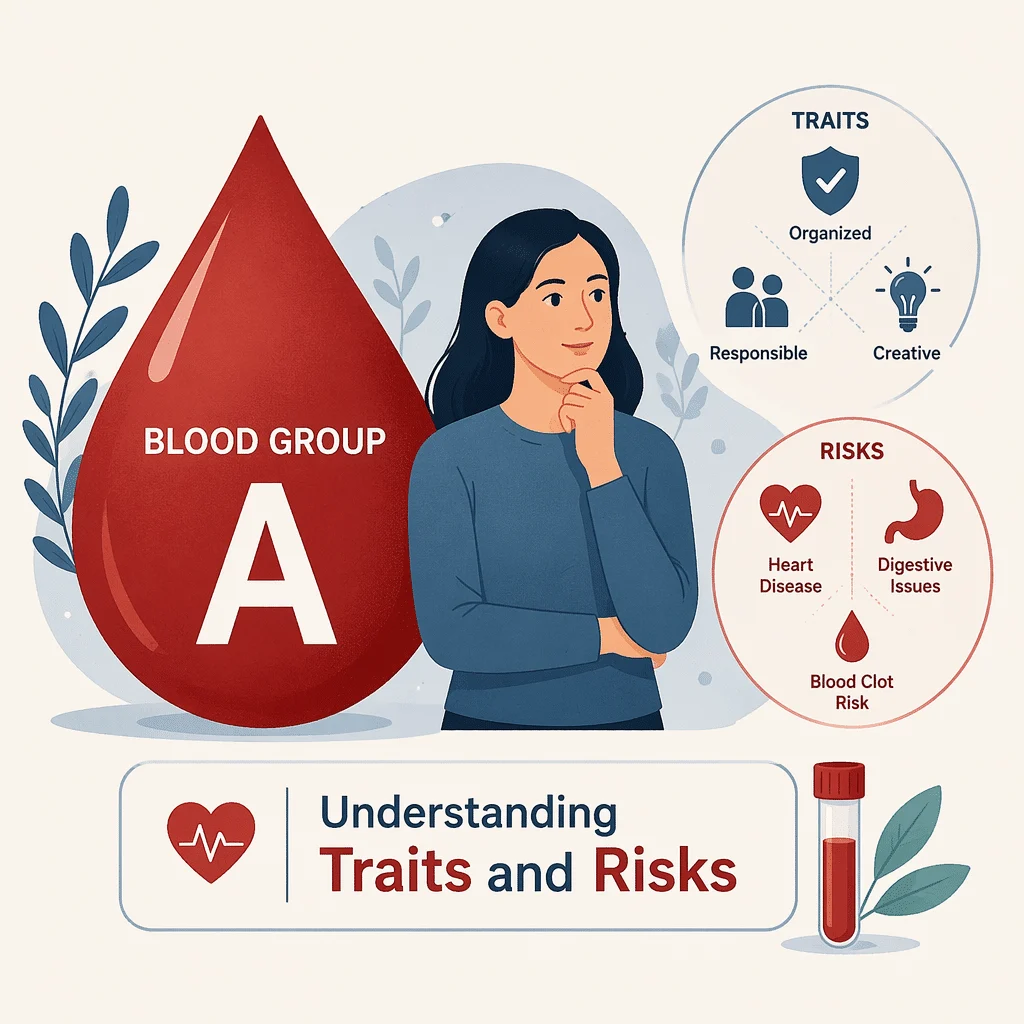
Grupa sanguină A este una dintre cele patru grupe principale din sistemul ABO și înseamnă pur și simplu că globulele tale roșii poartă un marker numit antigenul A. Dacă tocmai ți-ai aflat grupa sau ești curios ce spune aceasta despre sănătatea ta, acest ghid îți explică esențialul pe înțelesul tuturor. Vei afla cum este definită grupa sanguină A, cum o moștenești, cât de frecventă este și ce arată cu adevărat cercetările despre legăturile ei cu coagularea, cancerul și infecțiile. Acoperim, de asemenea, informații despre transfuzii și sarcină, cum îți poți confirma grupa printr-un test simplu și când contează cu adevărat grupa sanguină pentru îngrijirea ta medicală. Scopul este să îți oferim informații clare și echilibrate, nu să te alarmăm: grupa sanguină este doar o mică piesă dintr-un puzzle de sănătate mult mai amplu.
Ce înseamnă grupa sanguină A
Grupa sanguină A descrie sângele ale cărui globule roșii prezintă antigenul A pe suprafața lor. Un antigen este o moleculă pe care sistemul imunitar o poate recunoaște ca „proprie" sau „străină". Grupa ta sanguină face parte din sistemul ABO, care cuprinde patru grupe principale, alături de B, AB și O.
Persoanele cu grupa sanguină A au și anticorpi anti-B în partea lichidă a sângelui (plasmă). Acești anticorpi sunt descriși ca natural prezenți, adică există fără nicio transfuzie anterioară. Se formează în prima copilărie și sunt gata să atace orice globule roșii care prezintă antigenul B.
Antigenul A și factorul Rh formează împreună grupa ta completă
Grupa ta sanguină completă combină două sisteme separate. Primul este sistemul ABO (A, B, AB sau O). Al doilea este factorul Rh, o proteină care fie este prezentă (pozitiv), fie absentă (negativ).
Când le combini, grupa sanguină A se împarte în două tipuri uzuale: A pozitiv (A+) și A negativ (A−). Astfel, „grupa sanguină A" reprezintă jumătatea ABO a etichetei, în timp ce semnul plus sau minus indică statusul tău Rh.
Cum citește sistemul tău imunitar antigenele sanguine
Sistemul tău imunitar verifică în permanență suprafețele celulare și tolerează antigenele pe care le recunoaște ca proprii. Dacă întâlnește un antigen necunoscut, poate declanșa o reacție de apărare. Exact de aceea determinarea grupei sanguine este esențială înainte de o transfuzie.
Dacă cineva cu grupa sanguină A ar primi celule roșii de tip B, anticorpii anti-B ai acestuia ar ataca celulele donatorului și ar declanșa o reacție transfuzională, care poate fi gravă. Compatibilitatea dintre donator și primitor previne acest lucru și reprezintă baza medicinei transfuzionale sigure.
Genetică: cum moștenești grupa sanguină A
Grupa ta ABO este determinată de o genă de pe cromozomul 9, iar tu moștenești câte o copie de la fiecare părinte. Varianta A a genei codifică o enzimă (o glicoziltransferază) care atașează zahărul de tip A pe celulele roșii. Varianta O este inactivă și nu adaugă niciun zahăr, motiv pentru care celulele O nu poartă nici antigenul A, nici antigenul B.
Din punct de vedere genetic, A este dominant față de O. Aceasta înseamnă că ai grupa sanguină A dacă moștenești fie două copii A (genotip AA), fie o copie A și una O (genotip AO). A și B sunt codominante, astfel că moștenirea unui A și a unui B produce tipul AB.
Acest lucru explică unele surprize în familie. Doi părinți cu grupa sanguină A, dar care poartă fiecare o copie ascunsă O, pot avea un copil cu grupa O. Nu pot avea însă un copil cu grupa B sau AB, deoarece niciunul dintre părinți nu poartă o copie B.
Subtipurile A1 și A2
Grupa sanguină A nu este complet uniformă. Majoritatea persoanelor cu tipul A aparțin unui subgrup numit A1, în timp ce o parte mai mică aparține subgrupului A2, care exprimă antigenul A mai slab. În viața de zi cu zi, această distincție contează rareori, dar băncile de sânge o iau uneori în considerare în cadrul testărilor de compatibilitate atente, mai ales pentru transfuzii repetate.
Cât de frecventă este grupa sanguină A?
Proporția persoanelor cu grupa sanguină A variază considerabil în funcție de regiune și origine. În Statele Unite, tipul O este cel mai frecvent, urmat de tipul A. Grupa A este, de asemenea, răspândită în mare parte a Europei, în timp ce alte regiuni au proporții mai mari de tipul B sau O.
Aceste tipare nu sunt simple curiozități. Centrele de transfuzie și spitalele monitorizează distribuția locală a grupelor sanguine pentru a menține un stoc echilibrat de donații. Deoarece oferta trebuie să corespundă cererii, donatorii cu grupe comune și rare deopotrivă joacă un rol important în menținerea unui inventar de sânge stabil și echilibrat.
Grupa sanguină A și sănătatea ta: ce arată dovezile
Cercetătorii studiază relația dintre grupa sanguină și boli de mai bine de un secol, iar câteva asocieri sunt acum bine documentate. Este important să le interpretezi corect. Acestea sunt legături statistice la nivel populațional, de obicei modeste ca amploare, și nu determină niciodată soarta unei singure persoane.
Pentru aproape fiecare afecțiune de mai jos, factori precum vârsta, istoricul familial, fumatul, dieta, tensiunea arterială și alți markeri de laborator contează mult mai mult decât grupa ta ABO. Grupa sanguină A nu este un diagnostic, un test de screening sau un motiv de îngrijorare.
| Afecțiune | Ce sugerează cercetările despre grupa sanguină A | Cât de puternică este legătura | Ce înseamnă asta pentru tine |
|---|---|---|---|
| Cheaguri de sânge venoase (TVP, EP) | Un risc relativ ușor mai mare față de grupa O | Consistent în studii, dar efectul este mic | Imobilizarea, intervențiile chirurgicale, hormonii și istoricul familial contează mult mai mult |
| Cancer gastric (de stomac) | O creștere mică a riscului | Observat de mult timp, dar modest | Infecția cu H. pylori și dieta sunt principalii factori |
| Cancer pancreatic | Un risc ușor mai mare față de grupa O | Modest | Fumatul și istoricul familial domină riscul |
| COVID-19 și unele infecții | Posibile mici diferențe de susceptibilitate | Rezultate mixte și inconsistente | Măsurile standard de prevenție se aplică tuturor, indiferent de grupă |
Coagularea și inima
Cea mai clară legătură privește coagularea sângelui. Persoanele cu grupe sanguine non-O, inclusiv A, tind să aibă niveluri mai ridicate a două proteine implicate în coagulare: factorul von Willebrand și factorul VIII. În medie, acest lucru crește ușor riscul de cheaguri în vene, cum ar fi tromboza venoasă profundă și embolia pulmonară.
Creșterea este reală, dar modestă, iar riscul absolut pentru majoritatea oamenilor rămâne scăzut. Dacă ai un istoric personal sau familial de cheaguri, medicul tău poate recomanda o panel de coagulare pentru a evalua modul în care sângele tău coagulează, nu doar grupa sanguină în sine.
Asocieri cu cancerul
Încă de la începuturile cercetărilor privind grupele sanguine, grupa A a fost asociată cu un risc ușor mai mare de cancer gastric. Principala cauză a cancerului gastric este însă infecția cronică cu bacteria Helicobacter pylori, nu grupa ta ABO.
Grupele non-O, inclusiv A, prezintă și o mică creștere a riscului de cancer pancreatic în studii de amploare. Și în acest caz, efectul este modest și depășit cu mult de fumat, vârstă și istoricul familial. Niciuna dintre aceste asocieri nu modifică recomandările standard de screening pentru o persoană obișnuită.
Infecții și imunitate
Unele studii au analizat dacă grupa ABO influențează riscul de infecții, inclusiv rapoarte din perioada pandemiei de COVID-19 care sugerau că grupa A ar putea fi asociată cu o susceptibilitate ușor mai mare, iar grupa O cu una ușor mai mică. Rezultatele au fost mixte și inconsistente, iar orice efect pare a fi mic.
Concluzia practică este simplă. Metodele dovedite de prevenție, cum ar fi vaccinarea acolo unde este recomandată și igiena corespunzătoare, se aplică tuturor, indiferent de grupa sanguină A. Grupa ta nu îți oferă mai multă sau mai puțină protecție în viața de zi cu zi.
Rezistă „dieta pentru grupa sanguină A" în fața dovezilor?
Poate ai citit că oamenii ar trebui să mănânce în funcție de grupa lor de sânge, cu alimente specifice pentru grupa A. Această idee, popularizată în anii '90, susține că grupa ta ABO determină ce alimente digerezi cel mai bine.
Cercetările independente nu au confirmat această teorie. Nicio autoritate medicală sau nutrițională de renume nu recomandă modificarea dietei în funcție de grupa ABO. Studiile care au identificat beneficii pentru sănătate în urma acestor planuri alimentare au atribuit beneficiile alimentelor sănătoase în sine, nu grupei de sânge a persoanei.
O dietă echilibrată, activitatea fizică regulată și gestionarea unor afecțiuni precum hipertensiunea arterială sau colesterolul crescut sunt cele care îți protejează sănătatea în mod real. Aceste principii sunt valabile indiferent dacă ai grupa A, B, AB sau O.
Donarea și transfuzia pentru grupa de sânge A
Determinarea grupei de sânge este esențială pentru siguranța transfuziei. Persoanele cu grupa A pot dona globule roșii altor primitori cu grupa A și celor cu grupa AB, cu condiția ca factorul Rh să fie compatibil. Pot primi globule roșii de la donatori cu grupa A și de la cei cu grupa O.
Regulile exacte depind de statusul tău Rh, după cum este rezumat mai jos pentru globulele roșii.
| Grupa ta de sânge | Poate primi globule roșii de la | Poate dona globule roșii la |
|---|---|---|
| A pozitiv (A+) | A+, A−, O+, O− | A+, AB+ |
| A negativ (A−) | A−, O− | A+, A−, AB+, AB− |
Mai merită reținute două aspecte. În primul rând, compatibilitatea plasmei funcționează în sens invers față de cea a globulelor roșii, de aceea grupa AB este donatorul universal de plasmă, în timp ce donatorul universal de globule roșii este O negativ. În al doilea rând, înainte de orice transfuzie, laboratorul efectuează o probă de compatibilitate și un screening de anticorpi pentru a confirma compatibilitatea. Același tip de testare face parte din analize de sânge înainte de operațiede rutină. Într-o urgență reală, când nu există timp pentru confirmarea grupei, globulele roșii O negativ pot fi administrate în siguranță.
Grupa de sânge A în sarcină și la nou-născuți
În timpul sarcinii, îngrijirea prenatală include în mod obișnuit verificarea atât a grupei ABO, cât și a factorului Rh. Aceste rezultate sunt înregistrate din timp și ajută echipa medicală să planifice o naștere în siguranță. Poți vedea cum se integrează aceasta cu celelalte analize prenatale în ghidul nostru despre analize de sânge din timpul sarcinii.
Pot conta două tipuri diferite de incompatibilitate. Incompatibilitatea Rh apare atunci când o mamă Rh negativă poartă un făt Rh pozitiv. Astfel, o mamă cu grupa A negativă poate fi monitorizată pentru aceasta și poate primi o injecție de protecție (imunoglobulină anti-D) pentru a preveni reacția sistemului imunitar în sarcina actuală și în cele viitoare.
Incompatibilitatea ABO este o problemă separată și, de obicei, ușoară. Este cel mai relevantă atunci când mama are grupa O, iar bebelușul are grupa A sau B. Atunci când provoacă boala hemolitică a nou-născutului, rezultatul se limitează adesea la icter care se rezolvă cu un tratament simplu, cum ar fi fototerapia. Medicii verifică aceste situații și îngrijesc nou-născuții în consecință, astfel că majoritatea bebelușilor nu sunt deloc afectați.
Cum îți afli grupa de sânge și când contează cu adevărat
Să știi dacă ai grupa sanguină A este simplu, iar informația poate fi cu adevărat utilă în caz de urgență sau în timpul sarcinii.
Testul de determinare a grupei sanguine
Grupa ta sanguină se confirmă printr-un simplu test de determinare a grupei sanguine, efectuat la o clinică, un spital sau un centru de transfuzie. Laboratorul verifică antigenele A și B de pe globulele roșii și anticorpii din plasmă, apoi înregistrează rezultatul ABO și Rh. Poți afla ce presupune o recoltare de sânge din ghidul nostru despre procesul analizei de sânge.
Câteva informații practice sunt utile. O hemoleucogramă completă de rutină nu îți dezvăluie grupa ABO, deoarece numără celulele în loc să identifice antigenele, așa că determinarea grupei sanguine trebuie solicitată separat. Există kituri de testare la domiciliu, dar acuratețea lor variază, deci este recomandat să confirmi orice rezultat obținut acasă printr-un laborator. Donarea de sânge este o altă modalitate sigură de a-ți afla grupa. Indiferent de metodă, păstrează o copie a rezultatului oficial pentru evidențele tale.
Când contează cu adevărat grupa ta de sânge
În viața de zi cu zi, grupa sanguină A nu necesită nicio măsură specială și nu există nimic de “tratat.” Grupa ta devine importantă mai ales în situații specifice: înainte de o transfuzie sau intervenție chirurgicală planificată, în timpul sarcinii și dacă ai sau ai în familie un istoric de cheaguri de sânge.
Anumite simptome necesită întotdeauna atenție medicală urgentă, indiferent de grupa de sânge. Umflarea sau durerea bruscă într-un picior, dificultatea bruscă de respirație sau durerea în piept pot semnala un cheag de sânge și trebuie tratate ca urgențe. Simptomele digestive persistente, pierderea inexplicabilă în greutate sau orice schimbare îngrijorătoare trebuie discutate cu medicul tău. Răspunsul corect nu este niciodată să îți schimbi obiceiurile de sănătate în funcție de grupa de sânge, ci să te concentrezi pe factorii de risc doveziți care se aplică tuturor.
Glosar
| Termen | Definiție |
|---|---|
| Antigenul A | Markerul de suprafață de pe globulele roșii care definește grupa sanguină A. |
| Sistemul de grupe sanguine ABO | Principalul sistem de clasificare a grupelor sanguine care împarte oamenii în A, B, AB sau O. |
| Anticorpi anti-B | Proteine din plasma sângelui de grupă A care atacă globulele roșii ce poartă antigenul B. |
| Testul de compatibilitate (crossmatch) | Un test de laborator care amestecă sângele donatorului cu cel al primitorului pentru a confirma compatibilitatea. |
| Glicoziltransferaza | Enzima, codificată de gena A, care construiește antigenul A pe globulele roșii. |
| Boala hemolitică a nou-născutului | O afecțiune în care anticorpii mamei atacă globulele roșii ale bebelușului; în cazul incompatibilității ABO, este de obicei ușoară. |
| factorul Rh | Un antigen separat, înregistrat ca pozitiv sau negativ, care contează pentru transfuzii și sarcină. |
| Factorul von Willebrand | O proteină de coagulare care tinde să fie mai ridicată la grupele non-O, inclusiv A. |
Întrebări frecvente
Grupa sanguină A este același lucru cu A pozitiv?
Nu exact. „Grupa sanguină A" se referă doar la partea ABO a tipului tău, adică globulele tale roșii poartă antigenul A. „Pozitiv" sau „negativ" vine dintr-un sistem separat, factorul Rh. Astfel, grupa A include două tipuri uzuale: A pozitiv (A+) și A negativ (A−). Grupa ta sanguină completă combină ambele informații, de aceea un buletin de analize arată ceva de genul A+, nu doar A. Ambele componente contează pentru transfuzii sigure și pentru îngrijirea în sarcină.
Pot doi părinți cu grupa sanguină A să aibă un copil cu o altă grupă?
Da, și aceasta este o sursă frecventă de confuzie. Dacă ambii părinți sunt grupa A, dar fiecare poartă în mod „tăcut" o copie O a genei (genotip AO), fiecare sarcină are aproximativ o șansă din patru de a produce un copil cu grupa O. Ceea ce doi părinți cu grupa A nu pot face este să producă un copil cu grupa B sau AB, deoarece niciunul dintre ei nu are o copie B de transmis. Moștenirea urmează genele, nu doar grupa sanguină vizibilă, așa că un copil cu grupa O „surpriză" este perfect normal.
Ar trebui să mă îngrijorez din cauza riscurilor de sănătate asociate grupei sanguine A?
Nu. Asocierile dintre grupa sanguină A și afecțiuni precum tromboza sau cancerul gastric sunt reale, dar modeste, și descriu grupuri mari de oameni, nu indivizi. Riscul tău personal este influențat mult mai mult de vârstă, istoricul familial, fumat, alimentație, activitate fizică, tensiune arterială și alți markeri de laborator. Grupa sanguină nu este un diagnostic și nici un instrument de screening, și nu există nimic legat de faptul că ești grupa A care să necesite tratament. Cel mai util pas este să gestionezi factorii de risc dovedit, care se aplică tuturor.
Poate să se schimbe grupa mea sanguină de-a lungul vieții?
Din punct de vedere practic, nu. Grupa ta ABO este stabilită de gene înainte de naștere și rămâne aceeași pe tot parcursul vieții. Evenimente medicale extrem de rare pot modifica grupa măsurată într-o probă — cel mai clar exemplu este transplantul de măduvă osoasă sau de celule stem, după care primitorul poate dobândi grupa sanguină a donatorului. Anumite boli pot provoca, de asemenea, modificări temporare și slabe în modul în care apar antigenele în laborator. În afara acestor situații neobișnuite, rezultatul tău de grupă sanguină A nu se va schimba.
De ce spitalele îmi cer întotdeauna grupa sanguină?
Deoarece este esențial pentru siguranța îngrijirii medicale în mai multe situații. Dacă ai vreodată nevoie de o transfuzie, sângele tău trebuie să fie compatibil pentru a evita o reacție periculoasă, astfel că spitalele confirmă grupa ABO și factorul Rh printr-un test de compatibilitate și un screening de anticorpi înainte de transfuzie. Grupa ta este verificată și înainte de multe intervenții chirurgicale, precum și în mod obișnuit în cadrul îngrijirii prenatale. Chiar dacă îți cunoști deja grupa, laboratorul o verifică dintr-o probă proaspătă, fără a se baza pe memorie, deoarece riscurile unei incompatibilități sunt mari.
Teoria personalității bazate pe grupa de sânge A este reală?
Nu. Ideea că grupa de sânge A este legată de un anumit tip de personalitate este populară în unele culturi, dar nu are nicio bază științifică. Studiile riguroase nu au găsit o legătură dovedită între grupa ABO și trăsături de caracter, personalitate sau temperament. Grupa ta de sânge reflectă antigenele de pe globulele roșii, ceea ce nu are nicio legătură cu modul în care gândești sau te comporți. Este o credință inofensivă, dar nu ar trebui să influențeze deciziile legate de relații, carieră sau sănătate.
Surse
- Crucea Roșie Americană — Grupele sanguine explicate: A, B, AB și O
- American Society of Hematology — Siguranța transfuziilor și compatibilitatea sanguină
- StatPearls (NIH/NCBI Bookshelf) — Sistemul grupelor de sânge ABO
Lectură suplimentară
- Grupe sanguine explicate: tipuri, riscuri și testare
- Înțelegerea sistemului Rh: Cauze și riscuri
- Grupa sanguină O: semnificație, riscuri și beneficii
- Grupa de sânge B: Semnificație, caracteristici și riscuri pentru sănătate
- Grupa sanguină AB: semnificație, trăsături și riscuri pentru sănătate
Înțelege-ți rezultatele analizelor cu AI DiagMe
Grupa ta de sânge este doar un rând dintr-un buletin de analize, iar restul poate părea la fel de greu de înțeles. Dacă rezultatele tale includ grupa ABO și factorul Rh, o hemogramă completă, un screening de anticorpi sau un panel de coagulare (teste de coagulare a sângelui), AI DiagMe le poate traduce în limbaj simplu și îți poate indica pașii următori. Instrumentul te ajută să înțelegi ce înseamnă valorile tale, astfel încât să poți purta o discuție mai încrezătoare cu medicul tău. Îți sprijină înțelegerea și nu înlocuiește judecata medicului tău și nici nu oferă un diagnostic.
➡️ Obține interpretarea rezultatelor în câteva minute