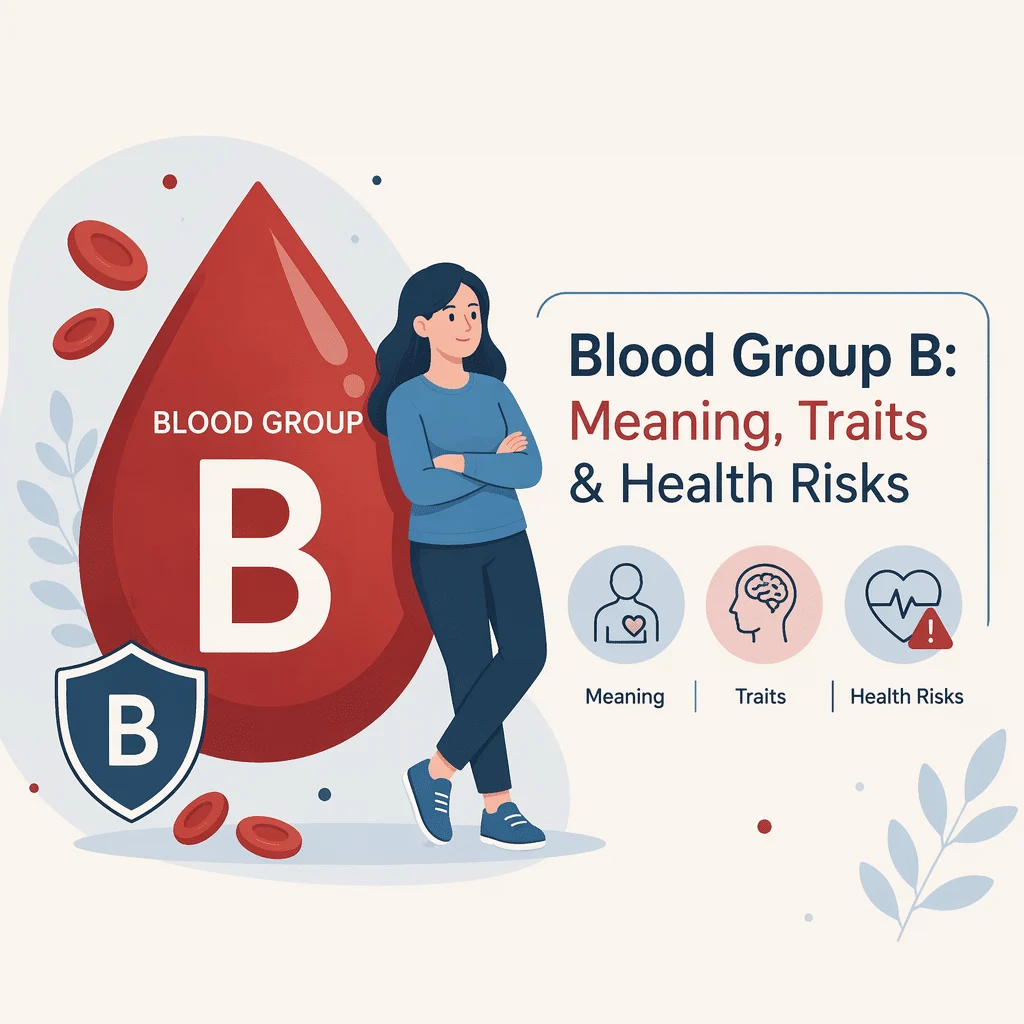
Grupa sanguină B este una dintre cele patru grupe principale din sistemul ABO, definită printr-un singur marker — antigenul B — aflat pe suprafața globulelor tale roșii. Dacă ai grupa B, probabil ai câteva întrebări: Este rară? Se confirmă „trăsăturile de personalitate" asociate cu ea? Ce sânge poți primi în siguranță? Și îți influențează grupa sanguină riscurile pentru sănătate? Acest ghid răspunde la fiecare întrebare pe înțelesul tuturor. Vei afla cum se formează antigenul B, cum se moștenește grupa B și cât de frecventă este, regulile de transfuzie care te protejează, ce spune cu adevărat știința despre „trăsăturile" legate de grupa sanguină, asocierile modeste cu sănătatea urmărite de cercetători și ce înseamnă grupa sanguină B în contextul sarcinii și al testelor medicale.
Iată pe scurt esențialul, înainte să intrăm în detalii:
- Globulele roșii de tip B poartă antigenul B, iar plasma de tip B conține anticorpi anti-A.
- Aproximativ 1 din 11 persoane din Statele Unite are grupa B pozitiv, iar B negativ este mult mai rară.
- Pentru transfuziile de globule roșii, grupa B poate primi sânge de tip B și O, cu potrivirea factorului Rh.
- Ideea populară că grupa sanguină îți modelează personalitatea este un mit fără nicio bază științifică solidă.
- Orice „riscuri" pentru sănătate legate de grupa ta sanguină sunt minore și contează mult mai puțin decât stilul de viață și istoricul familial.
Ce înseamnă grupa sanguină B
Grupa sanguină B înseamnă că globulele tale roșii prezintă antigenul B, un marker specific pe bază de zaharuri, recunoscut de sistemul tău imunitar. În același timp, plasma ta (partea lichidă a sângelui) conține anticorpi anti-A. Acești anticorpi sunt proteine de apărare care ar ataca globulele de tip A dacă ar pătrunde vreodată în fluxul tău sanguin — tocmai de aceea transfuziile trebuie să fie compatibile.
Grupa B face parte din Sistemul de grupe sanguine ABO, care îi clasifică pe toți în A, B, AB sau O în funcție de antigenele purtate de globulele roșii. Peste aceasta se suprapune un al doilea marker, factorul Rh: dacă este prezent, ești B pozitiv (B+), iar dacă este absent, ești B negativ (B−).
Această combinație nu este doar un detaliu tehnic pe un buletin de analize. Grupa ta ABO și factorul Rh ghidează transfuziile de sânge sigure, transplanturile de organe și îngrijirea în sarcină. A le cunoaște poate economisi timp în caz de urgență și poate preveni reacții imune periculoase. Este, de asemenea, una dintre puținele trăsături moștenite pe care le poți exprima printr-o singură literă — și tocmai de aceea atrage atât de multe mituri, de la diete speciale la tipologii de personalitate, pe care acest ghid le lămurește mai jos.
Cum se formează antigenul B
Antigenul B este construit de o mică mașinărie moleculară. Gena ABO conține instrucțiunile pentru o enzimă numită glicoziltransferază, al cărei rol este să atașeze un anumit zahăr la o structură de bază deja prezentă pe suprafața globulelor roșii, cunoscută sub numele de antigenul H.
La persoanele cu grupa sanguină B, această enzimă adaugă un zahăr numit galactoză. Această singură adăugare creează markerul B. La grupa A, o altă enzimă adaugă un zahăr diferit. La grupa O, enzima nu funcționează, astfel că nu se adaugă niciun marker A sau B, rămânând doar structura H de bază. Această structură H este fundația pe care se construiește fiecare grupă ABO. Într-o afecțiune foarte rară numită fenotipul Bombay, structura H lipsește cu totul, astfel că enzima B nu are pe ce să lucreze, iar tipizarea de rutină poate fi înșelătoare — un motiv pentru care laboratoarele confirmă rezultatele neobișnuite cu verificări suplimentare.
De aceea, diferența dintre grupele sanguine se reduce la chimie, nu la calitate. O grupă nu este mai puternică sau mai sănătoasă decât alta. Antigenul B este pur și simplu rezultatul zahărului pe care enzima moștenită de tine îl atașează.
Cum se moștenește grupa sanguină B și cât de frecventă este
Moștenești câte o copie a genei ABO, numită alelă, de la fiecare părinte. Alelele A și B sunt codominante, adică ambele se exprimă dacă le porți, în timp ce alela O este recesivă și rămâne ascunsă în spatele lui A sau B. Astfel, o persoană cu grupa sanguină B are fie două alele B (BB), fie o alelă B și una O (BO).
Aceasta explică o întrebare pe care multe familii o pun: doi părinți cu grupa B pot avea un copil cu grupa O. Dacă ambii părinți sunt BO, fiecare poate transmite alela O ascunsă, rezultând un copil OO. Înseamnă, de asemenea, că nu poți ghici cu certitudine propria grupă sanguină după cea a unui bunic, deoarece alelele O ascunse pot trece în liniște din generație în generație. Aceeași logică separă grupa B de grupa sanguină A și de grupa AB, care poartă atât alela A, cât și alela B.
Grupa B este o grupă de sânge minoritară în mare parte a lumii. În Statele Unite, aproximativ 9% dintre oameni sunt B pozitiv, iar mai puțin de 2% sunt B negativ. Grupa B este considerabil mai frecventă în anumite zone din Asia, inclusiv India și Asia Centrală, motiv pentru care băncile de sânge își planifică stocurile în funcție de tiparele regionale. Dacă ești B+ sau B− depinde de factorul Rh, iar această distincție devine importantă atât pentru transfuzii, cât și pentru sarcină.
Grupa sanguină B și compatibilitatea la transfuzii
Echipele de transfuzie potrivesc sângele donatorului cu cel al primitorului pentru a evita o reacție în care anticorpii distrug celulele transfuzate. Deoarece plasma ta de tip B conține anticorpi anti-A, nu trebuie să primești hematii de tip A sau AB. Poți, în schimb, să primești în siguranță hematii de tip B și O, potrivite cu tipul tău Rh. Spre deosebire de majoritatea anticorpilor, anti-A din plasma ta se formează în mod natural în primele luni de viață, probabil prin expunerea la zaharuri similare din mediul înconjurător — de aceea chiar și o primă nepotrivire, la o persoană care nu a mai primit niciodată o transfuzie, poate declanșa o reacție.
Tabelul de mai jos rezumă regulile privind hematiile pentru grupa B.
| Grupa ta de sânge | Hematii pe care le poți primi | Poți dona hematii la |
|---|---|---|
| B pozitiv (B+) | B+, B−, O+, O− | B+, AB+ |
| B negativ (B−) | B−, O− | B+, B−, AB+, AB− |
Plasma urmează logica inversă, deoarece plasma transportă anticorpii, nu antigenele. Plasma de tip B poate fi donată primitorilor de tip B și O. Ca referință, grupa O negativul este donatorul universal de hematii, în timp ce AB este donatorul universal de plasmă.
Într-o urgență reală, când nu există timp pentru a confirma grupa ta, clinicienii pot administra hematii O-negativ, deoarece acestea nu poartă markerii A, B sau Rh. Înainte de proceduri planificate, laboratorul efectuează totuși o probă de compatibilitate — un test rapid care amestecă probele donatorului și ale primitorului pentru a confirma că sunt compatibile. Aceasta face parte din procedura standard de analize de sânge înainte de operație și este unul dintre motivele pentru care este util să îți cunoști grupa sanguină din timp. Pentru transfuziile de trombocite și plasmă, regulile de potrivire diferă din nou, dar banca de sânge gestionează aceste detalii pentru ca produsul potrivit să ajungă la pacientul potrivit.
„Trăsăturile" grupei sanguine B și personalitatea: mit versus realitate
Mulți oameni care caută informații despre grupa sanguină B sunt, de fapt, curioși în legătură cu „trăsăturile" de personalitate asociate acesteia. În Japonia și în mai multe culturi din Asia de Est, o credință populară susține că grupa ta de sânge îți modelează caracterul, grupa B fiind adesea descrisă ca creativă, independentă și spontană. Ideea datează din anii 1920, când profesorul japonez Takeji Furukawa a propus-o.
Știința nu susține acest lucru. Studii ample și riguroase — inclusiv unele care au folosit binecunoscutul model al celor Cinci Mari trăsături de personalitate — nu au reușit să găsească nicio legătură fiabilă între grupa sanguină ABO și personalitate. Puținele rezultate pozitive nu se repetă în grupuri diferite, ceea ce este un semnal clasic de avertizare al unui tipar fals. Cercetătorii clasifică teoria personalității bazate pe grupa sanguină drept pseudoștiință.
Există și un motiv pentru a fi deosebit de sceptic. Istoricii notează că teoria a câștigat teren parțial ca reacție la o afirmație europeană timpurie conform căreia persoanele cu grupa B ar fi biologic „inferioare" — o idee lipsită de orice bază și plină de prejudecăți. Clasificarea oamenilor după grupa sanguină nu îți spune nimic despre cine sunt cu adevărat.
Un alt aspect lămurește o confuzie frecventă. „Personalitatea de tip B" despre care poate ai auzit — stilul calm și relaxat, pus în contrast cu „Tipul A" ambițios — provine dintr-un concept legat de sănătatea inimii din anii 1950 și nu are nicio legătură cu faptul de a avea grupa sanguină B. Singurele „trăsături" cu adevărat specifice grupei B sunt biologice: antigenul B, anticorpii anti-A și regulile de compatibilitate care decurg din acestea.
Grupa sanguină B și riscurile pentru sănătate: ce arată cercetările cu adevărat
Este firesc să fii curios în legătură cu riscurile pentru sănătate, dar răspunsul sincer este că grupa ta sanguină reprezintă un factor foarte mic. Cercetătorii au identificat tipare statistice în rândul grupelor ABO, însă acestea descriu grupuri, nu indivizi, și rareori modifică sfaturile medicale de zi cu zi.
Cel mai clar semnal privește coagularea sângelui. Persoanele cu grupe sanguine non-O — A, B și AB — tind să aibă niveluri mai ridicate a două proteine implicate în coagulare: factorul von Willebrand și factorul VIII. Studii populaționale ample asociază acest lucru cu un risc ușor mai mare de cheaguri venoase, cum ar fi tromboza venoasă profundă sau embolia pulmonară, comparativ cu grupa O. Creșterea este reală, dar mică, iar tabloul coagulării este evaluat mult mai bine cu ajutorul unui panel de coagulare și al istoricului tău personal decât pe baza grupei sanguine.
Unele studii raportează, de asemenea, rate ușor mai ridicate ale anumitor evenimente arteriale și câteva tipuri de cancer, inclusiv cancerul pancreatic, la grupele non-O. Și în acest caz, efectele sunt modeste și nu reprezintă un destin. Cercetătorii au explorat și dacă grupa ABO influențează susceptibilitatea la anumite infecții, deoarece unele bacterii și virusuri interacționează cu acești markeri de zahăr, însă rezultatele sunt contradictorii și nu schimbă modul în care cineva este investigat sau tratat. Nici grupa O nu este lipsită de riscuri: tinde să însemne un risc mai scăzut de cheaguri de sânge, dar o tendință ușor mai mare de sângerare. Fiecare grupă implică un echilibru între avantaje și dezavantaje.
Concluzia practică este una liniștitoare. Tensiunea arterială, fumatul, greutatea corporală, activitatea fizică, colesterolul și istoricul familial îți influențează sănătatea mult mai mult decât faptul că ești de grupă B. Măsurile standard de prevenție se aplică tuturor, indiferent de grupa sanguină.
Grupa sanguină B, sarcina și bebelușul tău
Îngrijirea prenatală include în mod obișnuit determinarea grupei ABO și a factorului Rh la începutul sarcinii, ca parte a analize de sânge din timpul sarcinii. Acest lucru ajută echipa medicală să planifice din timp și să urmărească două probleme distincte.
Prima este incompatibilitatea ABO. Dacă bebelușul moștenește o grupă ABO diferită de cea a mamei, anticorpii mamei pot trece la bebeluș și pot provoca o formă de obicei ușoară de boală hemolitică a nou-născutului, manifestată adesea prin icter în primele zile de viață. Aceasta apare cel mai frecvent când mama este de grupă O; la o mamă de grupă B, este neobișnuită și, în general, ușoară. În timpul sarcinii, un test de screening al anticorpilor verifică dacă mama a dezvoltat anticorpi care ar putea afecta bebelușul; după naștere, medicii urmăresc nivelul bilirubinei nou-născutului — pigmentul responsabil de icter — și folosesc fototerapia dacă acesta crește. Clinicienii monitorizează icterul neonatal și îl tratează atunci când este necesar.
A doua problemă este incompatibilitatea Rh, care urmează un mecanism complet diferit. Poate apărea atunci când o mamă Rh-negativă poartă un bebeluș Rh-pozitiv și este prevenită printr-o injecție specifică de imunoglobulină anti-D în timpul sarcinii și după naștere. O mamă B-pozitivă este Rh-pozitivă și nu prezintă risc din acest punct de vedere. O mamă B-negativă, însă, ar trebui să se asigure că echipa medicală știe acest lucru, pentru ca Sistemul Rh să fie gestionată corect.
Cum se testează grupa sanguină B și când contează cel mai mult
Analizele confirmă grupa sanguină B prin două verificări complementare. La tiparea directă, globulele roșii sunt amestecate cu reactivi care conțin anti-A și anti-B; celulele de tip B reacționează cu reactivul anti-B. La tiparea inversă, plasma ta este testată cu celule A și B cunoscute pentru a confirma tiparul de anticorpi. Kiturile rapide pot oferi răspunsuri imediate, iar dacă un rezultat este neclar, laboratoarele pot citi direct gena ABO. Reține că determinarea grupei sanguine este un test separat față de hemoleucogramă completă (CBC), care măsoară celulele tale, nu antigenele. Înainte de o transfuzie, spitalele efectuează de obicei o tipare și screening pentru a confirma grupa ABO și tipul Rh și pentru a detecta anticorpi neașteptați, urmată de un test de compatibilitate dacă sângele va fi efectiv administrat. Grupa pe care o declari din memorie este întotdeauna reverificată, deoarece o eroare de etichetare sau de reamintire la acest pas poate fi periculoasă.
Nou-născuții reprezintă un caz special. Bebelușii nu și-au format încă propriii anticorpi ABO, astfel că tiparea inversă nu este fiabilă în primele luni, iar medicii se bazează pe testul de antigen și, uneori, pe grupele sanguine ale părinților.
Grupa ta sanguină contează cel mai mult într-un număr limitat de situații clare. Merită să o cunoști și să o notezi înainte de:
- Orice transfuzie sau operație planificată, unde laboratorul îți confirmă grupa în cadrul analize de sânge înainte de operație.
- Sarcinii, pentru ca problemele legate de ABO și Rh să poată fi gestionate din timp.
- Urgențelor, unde a-ți purta grupa pe un card sau în telefon poate economisi timp prețios.
- Donării de organe sau sânge, unde compatibilitatea este esențială.
Câțiva pași simpli îți oferă controlul: păstrează o notă digitală sau fizică cu grupa ta, informează echipele medicale înainte de proceduri programate, verifică cererea locală dacă donezi și ține pasul cu analizele de rutină. Iar când un rezultat te lasă nesigur, este util să știi cum să citește-ți rezultatele analizelor de sânge ca să poți pune întrebări mai bune.
Glosar
| Termen | Definiție |
|---|---|
| Sistemul de grupe sanguine ABO | Sistemul principal care clasifică sângele în A, B, AB sau O pe baza antigenelor de pe globulele roșii. |
| Anticorp | O proteină din sânge care recunoaște și se leagă de un marker străin specific. Plasma de tip B conține anticorpi anti-A. |
| Antigen | Un marker de pe suprafața celulei pe care sistemul imunitar îl poate recunoaște. Antigenul B definește grupa sanguină B. |
| Testul de compatibilitate (crossmatch) | Un test de laborator care amestecă sângele donatorului cu cel al primitorului pentru a confirma compatibilitatea înainte de o transfuzie. |
| Factorul VIII | O proteină care ajută sângele să se coaguleze. Nivelurile tind să fie mai ridicate la grupele sanguine non-O. |
| Glicoziltransferaza | Enzima care atașează un zahăr pe globulele roșii pentru a crea antigenul A sau B. |
| Boala hemolitică a nou-născutului (HDN) | O afecțiune în care anticorpii mamei distrug globulele roșii ale bebelușului, provocând adesea icter ușor. |
| factorul Rh | Un al doilea marker al globulelor roșii care face sângele pozitiv (prezent) sau negativ (absent), ca în B+ sau B−. |
| factorul von Willebrand (VWF) | O proteină de coagulare legată de grupa ABO; grupele non-O tind să aibă niveluri mai ridicate. |
Întrebări frecvente
Grupa sanguină B este rară?
Este o grupă minoritară. În Statele Unite, aproximativ 9% dintre oameni sunt B pozitiv, iar mai puțin de 2% sunt B negativ, ceea ce face din B negativ una dintre grupele mai puțin frecvente. Frecvențele variază considerabil în funcție de origine și regiune, iar grupa B este mai comună în unele zone din Asia. Raritatea contează mai ales pentru rezervele de sânge: deoarece donatorii B negativ sunt puțini, centrele de transfuzie depun eforturi să păstreze stocuri suficiente pentru pacienții care au nevoie.
Îmi poate schimba grupa sanguină B în cursul vieții?
Nu. Grupa ta ABO este stabilită de genele moștenite la concepție și rămâne aceeași toată viața. Excepțiile rare implică un transplant de măduvă osoasă sau de celule stem, unde noile celule ale donatorului pot modifica grupa în timp, sau anumite boli grave și cancere care alterează temporar modul în care sunt produse celulele sanguine. În viața de zi cu zi, poți considera grupa sanguină B ca permanentă.
Pot doi părinți cu grupa sanguină B să aibă un copil cu altă grupă sanguină?
Da. Multe persoane cu grupa B poartă o alelă B și o alelă O ascunsă. Dacă ambii părinți transmit alela O, copilul lor va fi grupa O, chiar dacă ambii părinți sunt grupa B. Aceasta este genetică normală și nu este un motiv de îngrijorare. Grupa unui copil poate fi B sau O atunci când ambii părinți sunt grupa B, în funcție de alelele pe care le transmit.
“Dieta pentru grupa sanguină B” este susținută de știință?
Nu. Ideea că fiecare grupă sanguină ar trebui să urmeze o dietă specifică nu este susținută de dovezi solide. Studiile care au testat aceste diete au constatat că orice beneficii proveneau din faptul că dieta era mai sănătoasă în general, nu din potrivirea ei cu o grupă sanguină. Nu este nevoie să alegi alimentele în funcție de faptul că ai grupa B. Sfaturile obișnuite — multe legume, alimente integrale și echilibru — se aplică tuturor.
Grupa sanguină B îmi crește riscul de cheaguri de sânge sau boli de inimă?
Ușor, cel mult. Grupele sanguine non-O, inclusiv B, sunt asociate cu niveluri moderat mai ridicate ale proteinelor de coagulare și cu un risc ușor crescut de tromboză venoasă față de grupa O. Efectul este minor și nu înseamnă, prin el însuși, că vei avea o problemă. Greutatea, tensiunea arterială, fumatul, nivelul de activitate fizică și istoricul familial îți influențează riscul mult mai mult, iar acestea sunt aspectele la care să te concentrezi.
Trebuie să fac ceva special în viața de zi cu zi pentru că am grupa B?
Nu chiar. A avea grupa sanguină B nu impune o dietă specială, suplimente sau îngrijorări suplimentare. Principala utilitate este practică: cunoaște-ți grupa, păstreaz-o în evidențe și comunic-o înainte de o intervenție chirurgicală, în timpul sarcinii sau în caz de urgență. În rest, aceleași obiceiuri sănătoase și controale de rutină recomandate tuturor sunt exact ceea ce îți este de folos.
Surse
- Grupa sanguină B (fapte despre B pozitiv și B negativ) — Crucea Roșie Americană
- Grupele sanguine: diferențe, raritate și compatibilitate — Cleveland Clinic
- Siguranța sângelui și compatibilitatea — Societatea Americană de Hematologie
Lectură suplimentară
- Grupe sanguine explicate: tipuri, riscuri și testare
- Înțelegerea sistemului Rh: Cauze și riscuri
- Grupa sanguină A: înțelegerea trăsăturilor și riscurilor
- Grupa sanguină O: semnificație, riscuri și beneficii
- Grupa sanguină AB: semnificație, trăsături și riscuri pentru sănătate
Înțelege-ți rezultatele analizelor cu AI DiagMe
Să știi că ai grupa sanguină B este un bun punct de plecare, dar majoritatea analizelor de laborator merg mult mai departe decât simpla grupă — incluzând hemoleucograma, testele de coagulare și multe alte valori care pot fi ușor interpretate greșit. AI DiagMe transformă aceste rezultate într-un limbaj clar și accesibil, evidențiind ce iese din tipar, astfel încât să poți purta o discuție mai bine orientată cu medicul tău. Te ajută să îți înțelegi rezultatele; nu pune diagnostice și nu înlocuiește niciodată judecata medicului tău.
➡️ Obține interpretarea rezultatelor în câteva minute