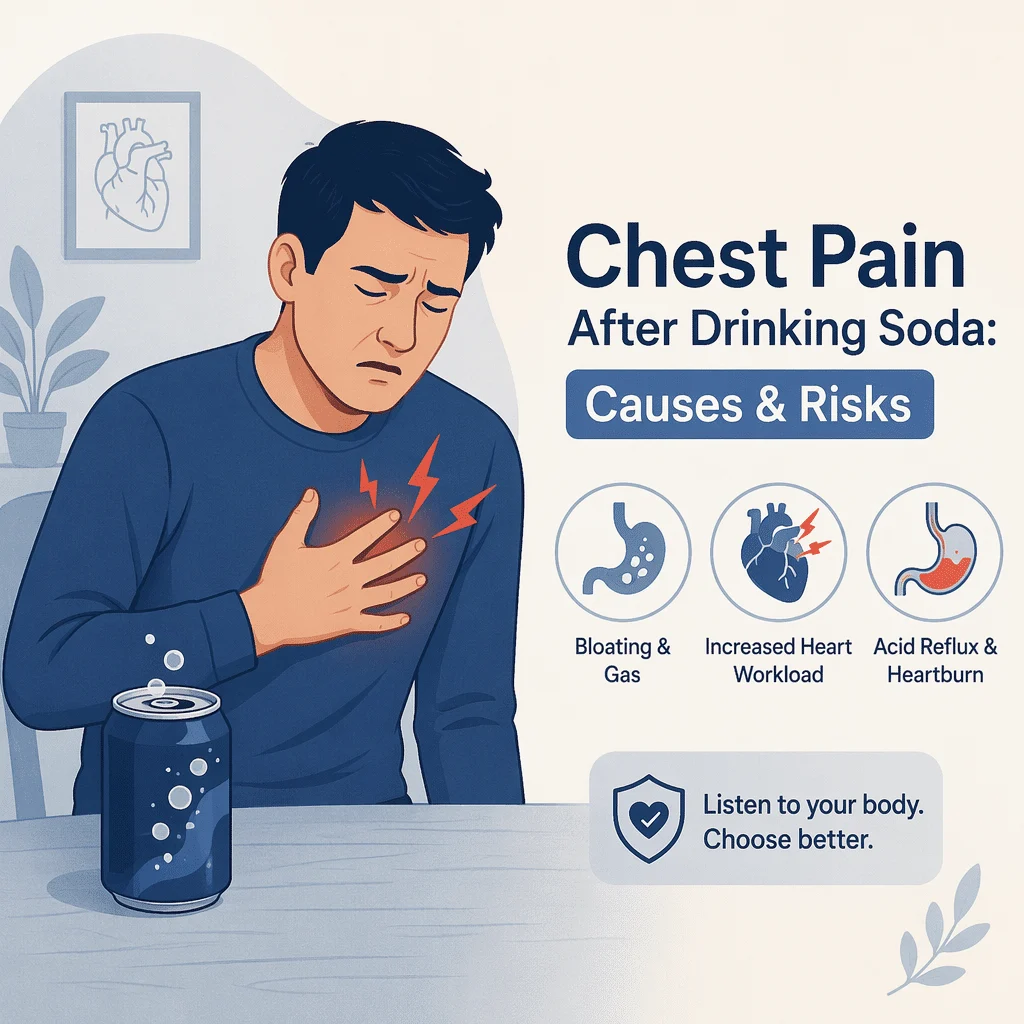
Durerea în piept după consumul de sifon este frecventă și, la majoritatea oamenilor, își are originea în tractul digestiv, nu la inimă. Carbonatarea destinde stomacul, gazele urcă spre esofag și rezultatul poate fi o senzație de strângere, arsură sau înțepătură chiar în spatele sternului. Această explicație liniștitoare este de obicei corectă, dar nu întotdeauna – iar excepțiile sunt cele care contează cu adevărat: un infarct miocardic, o ruptură a esofagului sau o problemă cu aorta pot debuta tocmai în momentul în care cineva ține în mână o doză de cola. În acest articol vei afla care simptome necesită îngrijire de urgență înainte de orice altceva, ce fac băuturile carbogazoase în stomac și esofag, de ce durerea de reflux și durerea cardiacă sunt atât de greu de diferențiat și ce analize ajută la clarificarea tabloului clinic.
Când durerea în piept după ce bei suc carbogazos este o urgență
Începe de aici, nu de la sfârșitul articolului. Băutura din mâna ta nu decide dacă durerea în piept este periculoasă. Simptomele sunt cele care decid. Dacă tiparul de mai jos seamănă cu ce simți, tratează situația ca pe o urgență și sună la 112, chiar dacă ești convins că este doar gaz.
Semne de alarmă care necesită îngrijire de urgență imediat
- Presiune, strângere, greutate sau tensiune în centrul sau în partea stângă a pieptului, care durează mai mult de câteva minute
- Durere care iradiază spre maxilar, gât, umăr, spate, abdomenul superior sau oricare dintre brațe
- Transpirații reci, greață, vărsături, amețeală sau senzația bruscă că ceva este foarte greșit
- Dificultăți de respirație în repaus sau după un efort minim
- Durere severă în piept care apare imediat după vărsături puternice sau eforturi violente de vomitat
- Durere bruscă, sfâșietoare sau ca o ruptură, care se extinde spre spate
- Leșin, puls rapid și neregulat sau durere care se agravează continuu
Mayo Clinic menționează arsurile la stomac și indigestia printre prezentările recunoscute ale unui infarct miocardic – tocmai de aceea explicația cu sifonul este nesigură ca autodiagnostic. Femeile, persoanele în vârstă și persoanele cu diabet au mai des simptome care nu corespund descrierii clasice. Această secțiune acoperă cauzele durerii sub sânul stâng, dar localizarea durerii singură nu exclude niciodată o cauză cardiacă.
| Ce observi | Ce poate sugera | Ce să faci |
|---|---|---|
| Presiune sau strângere care iradiază spre maxilar, gât, spate sau un braț, însoțită de transpirații, greață sau dificultăți de respirație | Posibil infarct miocardic, indiferent de ce beam | Sună la 112 imediat |
| Durere severă în piept apărută imediat după vărsături puternice sau eforturi de vomitat | Posibilă ruptură a esofagului (sindromul Boerhaave) | Sună la 112 imediat |
| Durere bruscă, sfâșietoare, care iradiază spre spate, uneori cu pulsuri inegale la brațe | Posibilă urgență aortică | Sună la 112 imediat |
| Disconfort toracic apăsător declanșat de efort și care dispare în câteva minute de repaus | Posibilă angină | Evaluare medicală urgentă, nu îngrijire la domiciliu |
| Arsură în spatele sternului, gust acru, mai rău în poziție culcată, ameliorată de un antiacid | Refluxul este probabil, dar o cauză cardiacă nu este exclusă | Consultați un medic în aceeași zi dacă simptomul este nou, sever sau recurent |
| Senzație de presiune, plenitudine și balonare la câteva minute după o băutură carbogazoasă, care dispare după eructație | Distensia stomacului și gazele intestinale sunt cauze probabile | Îngrijire la domiciliu; consultați un medic dacă episoadele se repetă |
O regulă merită menționată separat. Dacă durerea în piept apare după vărsături puternice — fie după prea multă băutură carbogazoasă și alcool, fie după o boală sau după eforturi violente de vomitat — medicii trebuie să ia în considerare o ruptură a peretelui esofagului. Este o afecțiune rară, urgentă, care poate imita atât de bine un infarct miocardic încât poate înșela primele runde de investigații.
De ce băuturile carbogazoase pot provoca dureri în piept
Odată excluse urgențele, majoritatea episoadelor au o explicație mecanică. Patru mecanisme sunt responsabile pentru cea mai mare parte a cazurilor și acționează adesea împreună.
Distensia stomacului și gazele intestinale
O cutie de suc carbogazos eliberează dioxid de carbon dizolvat, care se transformă înapoi în gaz de îndată ce întâlnește căldura stomacului tău. Stomacul se destinde, presiunea internă crește, iar această distensie se simte ca o senzație de plenitudine, tensiune sau o presiune ascuțită în partea superioară a abdomenului și în partea inferioară a pieptului. Gazul care urcă poate rămâne blocat în spatele sternului înainte de a scăpa sub formă de eructație. Băutul rapid, folosirea unui pai și consumul de băuturi pe stomacul gol amplifică toate aceste efecte, motiv pentru care aceeași cutie poate cauza probleme în unele zile și niciuna în altele.
Valva de la baza esofagului
Un inel muscular numit sfincterul esofagian inferior ține în mod normal conținutul stomacului acolo unde îi este locul. Când stomacul este destins, acest inel se relaxează mai des și pentru mai mult timp, lăsând acidul să urce. Atât MedlinePlus, cât și Institutul Național pentru Diabet și Boli Digestive și Renale descriu arsurile la stomac ca o senzație de arsură în mijlocul pieptului, uneori suficient de intensă pentru a fi confundată cu o durere cardiacă. Echipa noastră explică și cum se dezvoltă tusea cauzată de refluxul acid când acel acid ajunge la gât și căile respiratorii.
Spasmul esofagian și șocul provocat de băuturile reci
Esofagul este un tub muscular, iar atunci când se contractă necoordinat, rezultatul este o durere strânsă, apăsătoare, care durează de la câteva secunde la câteva minute. Lichidele foarte reci înghițite rapid sunt un factor declanșator recunoscut la persoanele predispuse, motiv pentru care același simptom poate apărea după apă cu gheață, nu doar după suc carbogazos. Un ghid separat descrie semnalele de alarmă din spatele senzației de furnicături în piept pentru cititorii al căror simptom seamănă mai mult cu o senzație electrică decât cu o presiune apăsătoare.
Aciditatea, cafeina și zahărul
Băuturile cola sunt acide prin natura lor, astfel că materialul refluat poate fi mai iritant decât acidul gastric singur. Cafeina relaxează aceeași valvă și poate crește ritmul cardiac, pe care unele persoane îl simt ca pe o bătaie puternică a inimii, mai degrabă decât ca pe o durere. Zahărul adaugă propria sa povară pe termen lung, iar un alt ghid explică ce dezvăluie nivelurile glicemiei cum îl procesează organismul tău.
Suprapunerea care face această întrebare periculoasă
Durerea cauzată de reflux și durerea cardiacă parcurg aceleași căi nervoase, astfel că creierul primește semnale similare de la organe foarte diferite. Cleveland Clinic descrie durerea toracică din reflux ca o presiune puternică sau o senzație de strângere — exact cuvintele pe care pacienții le folosesc pentru angină. Angina apare adesea după masă, deoarece digestia direcționează sângele spre intestine și crește efortul inimii, astfel că simptomele care apar după mâncare sau băutură nu exclud o cauză cardiacă.
Două scurtături obișnuite nu funcționează aici. Ameliorarea după un antiacid pare dovada unui reflux, dar o analiză sistematică care a inclus nouăsprezece studii a arătat că un tratament scurt cu un medicament blocant al acidului identifică majoritatea cazurilor reale de reflux, dar dă și rezultate pozitive la mulți oameni care nu au reflux. Iar durerea care se agravează în poziție culcată este tipică refluxului, totuși angina instabilă poate apărea și în repaus.
Clinicienii nu pot diferenția cele două afecțiuni doar pe baza simptomelor, motiv pentru care protocoalele formale pentru durerea toracică se bazează pe investigații, nu pe intuiție.
Tipare de simptome care schimbă probabilitățile
Niciun simptom singur nu stabilește diagnosticul, dar combinațiile modifică probabilitatea.
- Arsura care urcă spre gât cu un gust acru sau amar indică mai degrabă refluxul
- Ameliorarea clară după eructații sau eliminarea gazelor indică mai degrabă distensia
- Disconfortul care apare în mod constant la efort și dispare în câteva minute de repaus indică mai degrabă o cauză cardiacă
- Durerea reprodusă prin apăsarea pe peretele toracic sau prin răsucire indică mai degrabă o origine musculară sau articulară
- Lipsa de aer disproporționată față de durere merită întotdeauna o evaluare urgentă
- Dificultatea la înghițire, senzația că mâncarea se oprește în gât, vărsăturile cu sânge, scaunele negre sau pierderea neintenționată în greutate sunt semne de alarmă care necesită evaluare promptă
Echipa noastră explică și cauzele dificultății de respirație după masă, un simptom care se suprapune în mare măsură cu acesta. Semnele de alarmă contează, deoarece refluxul de lungă durată poate semnala mai mult decât o simplă iritație: această bibliotecă acoperă simptomele și cauzele cancerului gastric, iar infecția cu Helicobacter pylori este unul dintre motivele pentru care medicii preferă să testeze în loc să presupună. Un alt articol descrie cauzele vărsăturilor cu bilă când ceea ce urcă nu este doar acid.
Cum evaluează medicii durerea în piept după consumul de băuturi carbogazoase
Un departament de urgență nu începe prin a întreba ce ai băut. Începe prin a exclude diagnosticele care pot provoca daune în câteva ore, apoi lucrează în sens invers.
Teste de primă linie
- O electrocardiogramă, o înregistrare nedureroasă a activității electrice a inimii, de obicei în primele zece minute de la sosire
- Troponina din sânge, o proteină eliberată atunci când mușchiul inimii este lezat, măsurată la sosire și din nou puțin mai târziu
- Semne vitale, saturația oxigenului și radiografie toracică
- O tomografie computerizată (CT) atunci când se suspectează o ruptură a aortei sau a esofagului
Acest ghid detaliază ce înseamnă un rezultat crescut al troponinei, iar pagina noastră de referință listează analizele incluse într-un panel de markeri cardiaci.
Teste digestive după ce inima este exclusă ca sursă
Endoscopia superioară examinează mucoasa esofagului și a stomacului cu ajutorul unei camere. Monitorizarea ambulatorie a pH-ului măsoară cât de mult acid ajunge în esofag pe parcursul unei zile întregi. Manometria de înaltă rezoluție înregistrează undele de presiune ale deglutiției și poate identifica o tulburare de motilitate. Testarea pentru Helicobacter pylori prin testul respirator, din scaun sau din sânge este standard atunci când boala ulceroasă este luată în considerare.
Rezultate de laborator utile de înțeles
Pe lângă troponină, mai multe rezultate de rutină ajută la conturarea tabloului clinic. Un articol însoțitor explică valorile colesterolului dintr-un profil lipidic, care estimează riscul arterial pe termen lung, nu pericolul imediat. Echipa noastră explică și cum să citești o hemogramă completă, care poate evidenția anemia cauzată de o sângerare lentă în tractul digestiv. Glicemia à jeun și HbA1c arată cum procesează corpul tău zahărul, ceea ce este relevant atunci când sucul carbogazos este un obicei zilnic.
Cum să oprești durerea în piept după consumul de băuturi carbogazoase și cum să o previi
Acești pași se aplică doar după ce situațiile de urgență menționate mai sus au fost excluse. Dacă există orice îndoială, mergi mai întâi la medic și ocupă-te de reflux ulterior.
În momentul crizei
- Oprește-te din băut și stai în poziție verticală, deoarece poziția culcată agravează refluxul
- Slăbește hainele strânse la talie și respiră lent
- Lasă-te să râgâi în loc să suprimați eructațiile și plimbă-te ușor pentru a ajuta gazele să se elimine
- Bea o cantitate mică de apă plată, la temperatura camerei
- Un antiacid fără prescripție medicală poate ameliora senzația de arsură, dar tratează ameliorarea ca pe o informație, nu ca pe un diagnostic
- Dacă durerea durează mai mult de câteva minute, se agravează sau este însoțită de transpirații, lipsă de aer sau greață, sună la serviciile de urgență
Prevenirea episodului următor
- Bea băuturile carbogazoase încet, în cantități mai mici și nu pe stomacul gol
- Renunță la pai, care crește cantitatea de aer pe care o înghiți
- Evită băuturile carbogazoase reci dacă lichidele reci îți declanșează în mod constant simptomele
- Lasă două până la trei ore între ultima băutură și momentul în care te culci și ridică capul patului dacă simptomele te trezesc noaptea
- Reduce numărul de băuturi carbogazoase pe zi în loc să schimbi brandul
- Abordează factorii clasici favorizanți: fumatul, excesul de greutate abdominală, mesele copioase târzii și consumul excesiv de alcool
Apa minerală carbogazoasă are aceeași carbonatare, dar nu conține aciditatea, cafeina sau zahărul dintr-o cola, astfel că mulți oameni o tolerează mai bine. Apa plată rămâne cel mai sigur substitut.
Cele mai recente progrese științifice
Cercetările din ultimii trei ani au clarificat modul în care sunt înțelese carbonatarea, refluxul și durerea în piept. Nimic din acestea nu schimbă regulile de urgență de mai sus.
Bulele acționează cu adevărat asupra esofagului
Două echipe au folosit manometria de înaltă rezoluție — un tub subțire cu senzori de presiune care înregistrează cât de puternic se contractă esofagul în timpul deglutiției — pentru a compara apa plată cu apa carbogazoasă. Ambele studii, publicate în 2025, au arătat că înghițiturile de apă carbogazoasă produceau contracții mai puternice atunci când persoanele stăteau în poziție verticală, iar într-unul dintre studii, o parte din testele care păreau anormale cu apă plată au ieșit normale cu apă cu bule. Ce înseamnă asta pentru tine: bulele au un efect real și măsurabil asupra mușchiului esofagian, ceea ce susține o explicație bazată pe presiune pentru disconfort, nu una bazată pe leziuni. Acestea sunt constatări de laborator, nu o recomandare de a consuma sau de a evita băuturile carbogazoase.
Testul cu antiacide este un indiciu, nu un răspuns
O analiză sistematică și meta-analiză publicată în 2023, care a inclus nouăsprezece studii și aproximativ 1.700 de adulți, a măsurat cât de bine identifică refluxul un tratament scurt cu un medicament care reduce aciditatea. Acesta a detectat majoritatea persoanelor care aveau cu adevărat reflux, dar a dat rezultate pozitive și la mulți care nu aveau această afecțiune, și a funcționat mai bine — deși tot imperfect — la persoanele la care durerea toracică fusese deja demonstrată că nu provine de la inimă. Ce înseamnă asta pentru tine: dacă te simți mai bine luând un medicament care blochează acidul, acest lucru susține diagnosticul de reflux, dar singur nu exclude o cauză cardiacă.
Anxietatea amplifică durerea esofagiană resimțită cu adevărat
O analiză din 2024 publicată într-un jurnal de motilitate digestivă a raportat că anxietatea, panica și depresia sunt frecvente la persoanele al căror durere toracică provine din esofag și că acordarea unei atenții exagerate senzațiilor din piept poate face ca o simplă întindere să pară severă. Autorii descriu terapia cognitiv-comportamentală, un tratament structurat prin discuții, ca fiind opțiunea cu cel mai solid suport științific. Ce înseamnă asta pentru tine: dacă inima și esofagul tău sunt în regulă, dar durerea persistă, este posibil ca pur și simplu calea nervoasă care transmite semnalul să fie „amplificată" — și asta se poate trata.
Evaluarea de urgență a devenit mai rapidă
Un studiu din 2025 realizat în trei departamente de urgență din Statele Unite a comparat îngrijirea pacienților înainte și după introducerea troponinei de înaltă sensibilitate, un test de sânge care detectează cantități mult mai mici de proteină din mușchiul cardiac. Ulterior, pacienții au petrecut mai puțin timp în spital și mai puțini au fost internați. Ce înseamnă asta pentru tine: dacă mergi la urgență pentru durere în piept, șansele de a rămâne internat peste noapte sunt mai mici — ceea ce elimină un motiv frecvent pentru care oamenii amână să se prezinte.
Cauza rară care merită cunoscută
În 2024, medicii au raportat cazul unui bărbat de aproximativ șaizeci de ani al cărui durere în piept și electrocardiogramă semănau atât de mult cu un infarct, încât a primit un stent coronarian; o tomografie computerizată ulterioară a arătat că adevărata cauză era o ruptură a esofagului după vărsături violente. Ce înseamnă asta pentru tine: durerea în piept care apare imediat după vărsături puternice reprezintă o urgență în sine și poate imita un infarct suficient de bine încât să întârzie tratamentul corect.
Glosar de termeni cheie
| Termen | Definiție |
|---|---|
| Esofag | Tubul muscular care transportă alimentele și lichidele din gât spre stomac. |
| Sfincterul esofagian inferior | Inelul muscular de la baza esofagului care se deschide pentru a lăsa alimentele să treacă și se închide pentru a împiedica conținutul stomacului să urce. |
| Boala de reflux gastroesofagian (BRGE) | O afecțiune în care conținutul stomacului revine în esofag suficient de des pentru a provoca simptome sau leziuni. |
| Spasm esofagian | O contracție necoordinată a esofagului care produce o durere în piept de tip constrictiv, cu durată de câteva secunde până la câteva minute. |
| Durere toracică non-cardiacă | Durere în piept care seamănă cu durerea cardiacă, dar s-a dovedit că provine dintr-o altă sursă, cel mai adesea esofagul. |
| Angina pectorală | Disconfort toracic cauzat de reducerea fluxului de sânge către mușchiul inimii, declanșat în mod clasic de efort fizic și ameliorat de repaus. |
| Troponina | O proteină eliberată în sânge atunci când mușchiul cardiac este lezat; principalul test folosit pentru a detecta un infarct miocardic. |
| Manometrie de înaltă rezoluție | Un test care măsoară undele de presiune generate de esofag în timpul înghițirii, pentru a detecta tulburările de motilitate. |
| Sindromul Boerhaave | O ruptură completă a peretelui esofagului cauzată de o creștere bruscă a presiunii, de obicei în urma vărsăturilor puternice. Este o urgență chirurgicală. |
Întrebări frecvente
La cât timp după ce bei suc carbogazos apare de obicei durerea în piept?
Disconfortul cauzat de gaze și de distensia stomacului apare de obicei în câteva minute de la terminarea băuturii și se ameliorează după ce eructezi sau te miști puțin. Durerea de tip reflux apare adesea după zece până la șaizeci de minute, deoarece acidul are nevoie de timp să urce, și tinde să fie mai intensă dacă stai aplecat sau te întinzi după aceea. Momentul apariției singur nu poate confirma cauza. Durerea care începe în timpul unui efort fizic sau care durează mai mult de câteva minute și este însoțită de transpirații, dificultăți de respirație sau greață necesită o evaluare de urgență, indiferent de cât de recent ai băut ceva.
De ce mă doare pieptul când beau băuturi carbogazoase, dar nu și când beau apă?
Sucul carbogazos combină patru lucruri pe care apa simplă nu le are: dioxid de carbon dizolvat care se transformă în gaze în stomac, aciditate, zahăr și adesea cafeină. Gazele cresc presiunea din stomac și fac valva de la partea superioară să se relaxeze mai ușor, în timp ce aciditatea și cafeina fac orice reflux ulterior mai iritant. Apa simplă nu are niciunul dintre aceste efecte. Dacă și apa rece îți provoacă dureri în piept, explicația probabilă este un spasm esofagian sensibil la temperatură, nu reflux, și merită să menționezi asta medicului tău.
Cum pot ameliora acasă durerea în piept după ce beau suc carbogazos?
Odată ce cauzele de urgență au fost excluse, stai în poziție verticală în loc să te întinzi, slăbește orice îmbrăcăminte strânsă în jurul taliei, respiră lent și permite-ți să râgâi. Mersul ușor pe jos ajută gazele blocate să se deplaseze. Câteva înghițituri de apă la temperatura camerei pot calma senzația, iar un antiacid fără prescripție poate reduce arsura. Nu considera că ameliorarea produsă de un antiacid dovedește că inima ta este în regulă. Dacă durerea persistă mai mult de câteva minute, se intensifică sau este însoțită de transpirații, greață sau dificultăți de respirație, oprește orice automedicație și sună la serviciile de urgență.
Sucul dietetic sau Coke Zero au mai puține șanse să provoace dureri în piept?
Nu neapărat. Băuturile cola fără zahăr elimină zahărul, dar păstrează carbonatarea, aciditatea și, în majoritatea variantelor, cofeina — iar acestea sunt cele trei componente cel mai strâns legate de reflux și de distensia stomacului. Mulți oameni nu observă nicio diferență atunci când fac schimbarea. Dacă simptomele tale sunt cauzate în principal de bule, cantitatea pe care o bei și viteza cu care o bei vor conta mult mai mult decât dacă pe doză scrie „diet", „zero" sau „regular".
Poate apa carbogazoasă provoca aceleași dureri în piept ca sucul?
Poate, deși de obicei într-o măsură mai mică. Apa carbogazoasă conține același dioxid de carbon dizolvat, deci produce aceeași distensie a stomacului și același efect de împingere în sus a gazelor. Ceea ce îi lipsește este aciditatea unei băuturi cola, zahărul și cofeina, astfel că este mai puțin probabil să declanșeze arsuri prelungite. Persoanele care reacționează la orice băutură carbogazoasă se simt adesea mai bine cu apă plată, înghițituri mai mici și dacă beau în timpul mesei, nu pe stomacul gol.
Poate gazul blocat în piept să semene cu un atac de cord?
Da, și acesta este motivul pentru care această întrebare este atât de des căutată. Gazele blocate în spatele sternului pot produce presiune, senzație de strângere și chiar durere care iradiază spre umăr — simptome care se regăsesc și în descrierile clasice ale problemelor cardiace. Elementele distinctive nu sunt suficient de fiabile pentru a fi folosite singure: durerea cauzată de gaze cedează adesea după eructație sau schimbarea poziției, în timp ce durerea cardiacă tinde să persiste și să fie însoțită de transpirații, greață sau dificultăți de respirație. Când nu poți face diferența, presupune că este cauza mai gravă și consultă un medic.
Surse
- MedlinePlus, National Library of Medicine — GERD (boala de reflux gastroesofagian) — medlineplus.gov
- National Institute of Diabetes and Digestive and Kidney Diseases — Simptome & Cauze ale RGE & GERD — niddk.nih.gov
- Cleveland Clinic — Reflux acid & GERD — my.clevelandclinic.org
- Mayo Clinic — Atac de cord: simptome și cauze — mayoclinic.org
- Huang CW, Chen YY, Yen HH, et al. — Effect of carbonated water on esophageal high-resolution manometry metrics: a retrospective study — BMC Gastroenterology, 2025 — pubmed.ncbi.nlm.nih.gov/41331445
- Chou KC, Tseng PH, Yen HH, et al. — Effect of Carbonated Water on Esophageal Motility in Different Body Positions: A Study Based on High-Resolution Manometry — Neurogastroenterology & Motility, 2025 — pubmed.ncbi.nlm.nih.gov/40851345
- Ghoneim S, Wang J, El Hage Chehade N, et al. — Acuratețea diagnostică a testului cu inhibitori ai pompei de protoni în boala de reflux gastroesofagian și durerea toracică non-cardiacă: o revizuire sistematică și meta-analiză — Journal of Clinical Gastroenterology, 2023 — pubmed.ncbi.nlm.nih.gov/35324483
- Gonzalez-Ibarra F, Cruz-Ruiz M, Murillo Llanes J, et al. — Rolul factorilor psihologici în durerea toracică non-cardiacă de origine esofagiană — Journal of Neurogastroenterology and Motility, 2024 — pubmed.ncbi.nlm.nih.gov/38972864
- Martin JA, Zhang RS, Rhee AJ, et al. — Impactul clinic real al troponinei de înaltă sensibilitate în evaluarea durerii toracice la urgențe — Journal of the American Heart Association, 2025 — pubmed.ncbi.nlm.nih.gov/40240953
- Schalet R, Carro Cruz F, Berezowski I, et al. — Sindromul Boerhaave care imită sindromul coronarian acut — ACG Case Reports Journal, 2024 — pubmed.ncbi.nlm.nih.gov/39176213
Lectură suplimentară
- Colesterol ridicat: simptome, cauze, valori și tratament
- Testul ApoB și ce spune despre riscul cardiovascular
- Tensiunea arterială crescută: valori, cauze și cum o poți reduce
- Testul de sânge BNP și ce înseamnă rezultatul tău
- Greața nocturnă: cauze, semne de alarmă și ce te poate ajuta
Înțelege-ți rezultatele analizelor cu AI DiagMe
Durerea în piept care apare după o băutură carbogazoasă se dovedește de obicei a fi reflux sau gaze, dar singura modalitate de a exclude o cauză cardiacă este cu rezultate obiective. AI DiagMe îți citește analizele pe care le ai deja — de la troponină și un panel de markeri cardiaci până la un profil lipidic, o hemogramă completă sau un test pentru Helicobacter pylori — și îți explică fiecare valoare pe înțelesul tău. Te ajută să înțelegi ce înseamnă valorile tale și pe care dintre ele merită să le discuți cu medicul. Nu pune diagnostice și nu înlocuiește medicul tău.
Obține interpretarea rezultatelor în câteva minute