




























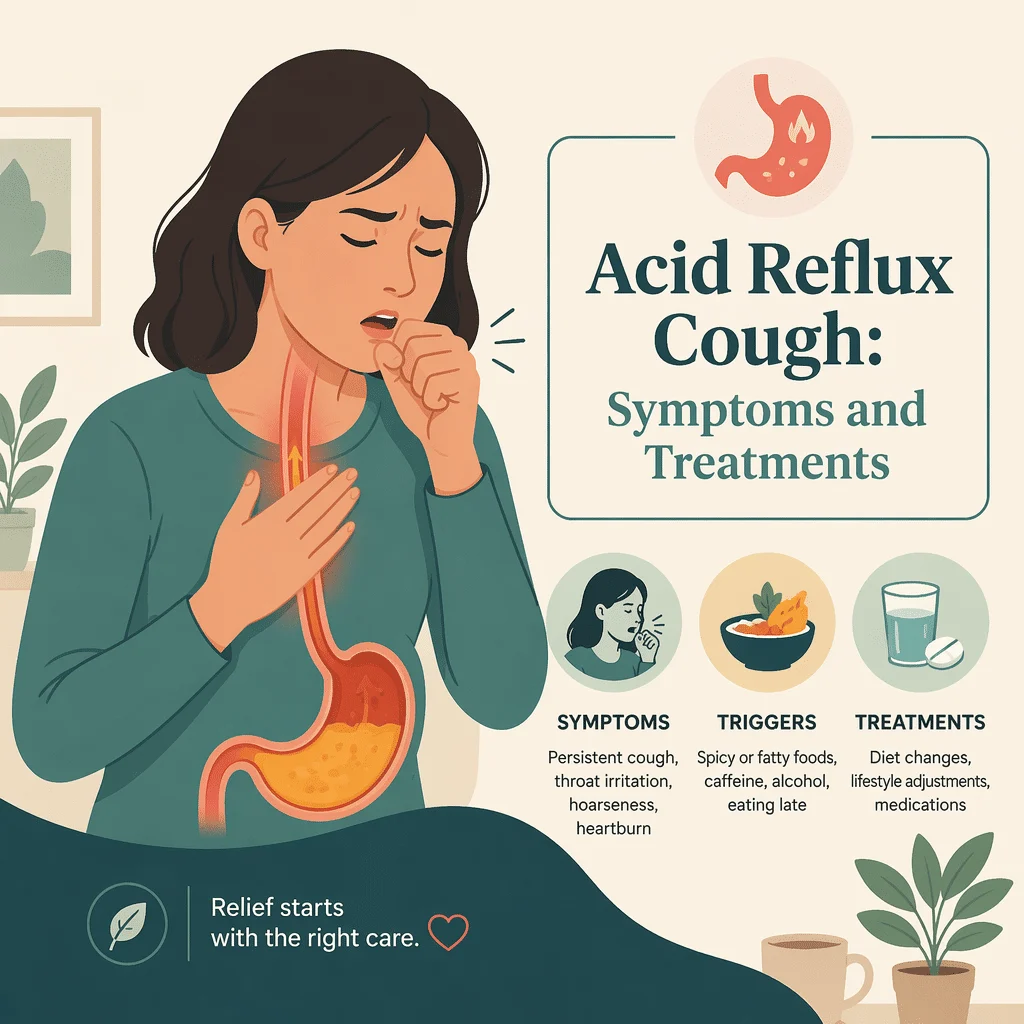
Tusea din reflux acid este o tuse persistentă cauzată de conținutul stomacului care urcă înapoi prin esofag. Este una dintre cele mai frecvente explicații oferite pentru o tuse care durează de săptămâni, dar și una dintre cele mai des greșite. Mulți oameni cu tuse legată de reflux nu au niciodată arsuri la stomac, așa că a ți se spune “nu poate fi reflux, nu ai arsuri” este nefolositor și adesea inexact.
În acest articol vei afla cum declanșează refluxul tusea prin două mecanisme distincte, cum se manifestă tusea, de ce refluxul este supradiagnosticat ca și cauză a tusei de lungă durată, cum sunt confundate medicamentele pentru tensiunea arterială cu acesta, cum este evaluat în realitate și ce ajută cu adevărat. Te rugăm să citești mai întâi caseta cu semnele de alarmă de mai jos: unele tuse nu trebuie puse niciodată pe seama refluxului fără o evaluare corespunzătoare.
Cum provoacă refluxul acid o tuse
Refluxul apare atunci când sfincterul esofagian inferior, inelul muscular dintre esofag și stomac, se relaxează la momentul nepotrivit și lasă conținutul stomacului să urce. Dacă tusești sau nu depinde de care dintre cele două căi foarte diferite este implicată.
Mecanismul unu: iritarea directă a gâtului și a căilor respiratorii
În prima cale, conținutul refluat urcă suficient de sus pentru a ajunge la laringe (cutia vocală) și la spatele gâtului. Acidul, enzimele digestive și sărurile biliare irită țesuturi care nu au fost niciodată concepute să intre în contact cu ele. Mucoasa se inflamează și reflexul de tuse se declanșează pentru a o curăța. Acest tipar este adesea numit reflux laringofaringian sau reflux silențios și explică simptomele de la nivelul gâtului care însoțesc tusea: curățarea constantă a gâtului, o senzație de iritație, răgușeală și uneori un gust acru sau amar în spută. Iritarea repetată poate lăsa gâtul cu un aspect neregulat, uneori numit gâtul cu aspect de piatră de pavaj.
Mecanismul doi: reflexul care se declanșează fără ca nimic să ajungă la gât
A doua cale îi surprinde pe mulți. Esofagul și căile respiratorii împart aceeași inervație prin nervul vag, astfel că atunci când acidul atinge esofagul inferior, această conexiune nervoasă comună poate declanșa reflexul de tuse în căile respiratorii, chiar dacă nimic nu a ajuns în apropierea gâtului. Acesta se numește reflexul esofago-bronșic.
Acesta este cel mai important lucru de reținut din tot acest subiect. Deoarece factorul declanșator se află jos în esofag și nu ajunge niciodată la gât sau în gură, poți avea o tuse cauzată cu adevărat de reflux fără niciun fel de arsuri la stomac. The Prezentarea generală NIDDK despre refluxul acid și BRGE este un bun punct de plecare în limbaj accesibil. Dacă un medic a exclus refluxul doar pentru că nu ai arsuri la stomac, acel raționament nu este corect.
Un al treilea element menține tusea activă după ce factorul declanșator inițial s-a calmat. Tusea repetată poate sensibiliza excesiv nervii care controlează reflexul de tuse, astfel încât stimuli minori — cum ar fi vorbitul, râsul, aerul rece sau parfumul — pot declanșa un acces. Medicii numesc acest fenomen hipersensibilitate la tuse, și este unul dintre motivele pentru care tusea poate persista chiar și atunci când refluxul este bine controlat.
Cum se simte tusea de reflux și când se agravează
Tabloul tipic este o tuse uscată, iritantă, neproductivă, mai degrabă decât una umedă, cu mucus, descrisă adesea ca o senzație de gâdilătură joasă în gât care trebuie eliminată prin tuse. Orice mucus expectorat este de obicei în cantitate mică și limpede sau alb, nu colorat.
Momentul apariției este indiciul cel mai revelator. Tusea de reflux tinde să se agraveze în una-două ore după masă, mai ales după o masă copioasă sau grasă, și când ești culcat, deoarece gravitația nu mai ține conținutul stomacului la locul lui. Mulți oameni o observă cel mai mult la culcare sau la trezire. Unii simt și o greață nocturnă, sau un gust amar la trezire care poate indica bilă, nu doar acid.
Alături de tuse, urmărește simptomele la nivelul gâtului: dregerea frecventă a vocii, răgușeală care este adesea mai pronunțată dimineața, senzația de glob faringian (senzația că ai ceva în gât, deși nu există nimic), și un gust acru sau amar. Unii raportează și senzație de strângere în piept sau de lipsă de aer după masă. Niciunul dintre aceste simptome nu confirmă refluxul în sine, dar împreună conturează un tablou clinic.
| Tiparul pe care îl observi | Ce poate sugera | Pasul următor recomandat |
|---|---|---|
| Tuse însoțită de arsuri la stomac sau regurgitații evidente | Refluxul este un factor posibil, deși rareori singurul | Discută cu un medic despre un tratament de probă structurat, cu o dată fixă de reevaluare |
| Tuse uscată, iritativă, fără arsuri la stomac | Poate fi totuși reflux prin reflexul esofago-bronșic, dar scurgerea postnazală, astmul sau hipersensibilitatea la tuse sunt la fel de probabile | Solicită investigarea celor trei cauze frecvente pe rând, în loc să se presupună că este reflux |
| Tuse apărută la câteva săptămâni după începerea unui nou medicament pentru tensiunea arterială | Un inhibitor ECA este o cauză clasică, adesea trecută cu vederea | Informează medicul prescriptor. Nu opri niciodată singur un medicament pentru tensiunea arterială |
| Tuse însoțită de oricare dintre semnele de alarmă enumerate mai jos | Trebuie exclusă mai întâi o altă cauză decât refluxul | Solicită o evaluare medicală promptă. Nu atribui tusea refluxului |
Cele trei cauze frecvente ale tusei cronice și de ce refluxul este supradiagnosticat
O tuse care durează mai mult de aproximativ opt săptămâni la un adult este considerată tuse cronică. La persoanele care nu fumează, au o radiografie toracică normală și nu iau inhibitori ECA, marea majoritate a cazurilor se datorează uneia dintre trei afecțiuni, singure sau în combinație.
Prima este sindromul de tuse prin afectarea căilor aeriene superioare, denumirea modernă pentru scurgerea postnazală. Mucusul din nas și sinusuri se scurge spre gât și îl irită, provocând o tuse cu dregerea vocii care poate arăta aproape identic cu refluxul. Alergia nazală sau inflamația sinusurilor stă la baza multor astfel de cazuri.
A doua este inflamația căilor respiratorii de tip astmatic: clasicul astmul, astm cu variantă de tuse, în care tusea este singurul simptom și nu există wheezing, și bronșita eozinofilică non-astmatică, în care căile respiratorii sunt inflamate, dar testele funcției pulmonare revin normale.
A treia este refluxul. Acesta face parte din listă și este cu adevărat frecvent. Dar este și cauza cel mai des invocată și cel mai puțin dovedită, iar aici greșesc cele mai multe articole de sănătate.
Iată care este situația reală. Refluxul este ușor de invocat, deoarece aproape toată lumea are un oarecare reflux, simptomele la nivelul gâtului sunt nespecifice, iar o laringoscopie care arată o laringe ușor roșie sau umflată este un semn notoriu de nesigur, care apare la mulți oameni fără niciun reflux. Studiile privind supresia acidă la persoanele cu tuse cronică fără dovezi obiective de reflux au fost în mare parte dezamăgitoare: analizele cumulate ale studiilor controlate cu placebo arată cel mult un beneficiu mediu modest, iar tratamentul mai îndelungat nu produce un efect mai mare. Recomandările specialiștilor în gastroenterologie și în tuse sunt, în consecință, prudente. O prescripție pe termen nedefinit de supresie acidă doar pentru tuse, la o persoană la care refluxul nu a fost niciodată demonstrat, nu este bine susținută de dovezi.
Prin urmare, „tusea ta este cauzată de reflux" ar trebui tratată ca o ipoteză de verificat, nu ca un diagnostic de acceptat. Aceste trei cauze coexistă frecvent, astfel că rezolvarea uneia și constatarea că tusea s-a ameliorat doar pe jumătate poate însemna că au existat două probleme de la bun început.
Medicamentele care provoacă tuse: capcana inhibitorilor ECA
Inhibitorii ECA (inhibitorii enzimei de conversie a angiotensinei) se numără printre cele mai frecvent prescrise medicamente pentru tensiunea arterială și pentru inimă, iar denumirile lor generice se termină în „-pril". O tuse uscată, persistentă și iritantă este un efect bine cunoscut al acestei clase de medicamente, cauzat de medicament în sine, nu de vreo problemă pulmonară sau gastrică.
Motivul pentru care acest lucru este ratat atât de des este legat de momentul apariției. Tusea poate începe la câteva zile după inițierea tratamentului, dar poate apărea și luni mai târziu, ceea ce rupe legătura mentală dintre pastilă și simptom. Arată apoi exact ca o tuse de reflux: uscată, iritantă, mai rea noaptea, cu nevoia de a-ți drege glasul. MedlinePlus menționează explicit medicamentele printre cauzele tusei cronice tocmai din acest motiv.
Regula aici este simplă și fără excepții. Dacă iei un inhibitor ECA și ai dezvoltat o tuse uscată persistentă, spune-i medicului care ți-a prescris tratamentul. Nu opri medicamentul din proprie inițiativă și nu sări peste doze pentru a “testa” dacă el este cauza. Hipertensiunea arterială netratată este periculoasă, iar oprirea unui medicament pentru inimă sau pentru tensiune fără supraveghere medicală poate face mult mai mult rău decât tusea. Decizia de a continua, de a schimba clasa de medicamente sau de a investiga alte cauze aparține medicului care ți-a prescris tratamentul.
Cum este evaluată în realitate o tuse legată de reflux
Istoricul medical face cea mai mare parte din muncă. Un medic va dori să știe de cât timp durează tusea, dacă este uscată sau productivă, ce o agravează, dacă există arsuri la stomac sau regurgitații, ce medicamente iei, dacă fumezi sau ai fumat și dacă ai simptome nazale sau alergice. Urmează un examen clinic al toracelui și, adesea, o radiografie toracică, în principal pentru a exclude alte explicații.
De acolo, abordarea obișnuită este un tratament de probă structurat: o ipoteză pe rând, o perioadă de tratament bine definită și o dată fermă de reevaluare la care tu și medicul judecați dacă tusea s-a schimbat cu adevărat. O prescripție pe termen nedefinit, fără reevaluare, este locul în care managementul tusei de reflux dă cel mai adesea greș. Ameliorarea sub tratament cu supresoare de acid nu dovedește prin ea însăși că tusea a fost cauzată de acid.
Când imaginea rămâne neclară sau un tratament de probă corect nu a dat rezultate, testarea obiectivă a refluxului este mai utilă decât o nouă rundă de ghiceli. Principalul test este monitorizarea ambulatorie pH-impedanță, care înregistrează episoadele de reflux pe parcursul unei zile sau mai mult. Componenta de impedanță contează cel mai mult, deoarece detectează refluxul indiferent dacă este acid sau nu. Endoscopia digestivă superioară poate fi folosită pentru a identifica inflamația esofagului, iar laringoscopia îi permite unui specialist să examineze laringele, deși aceste constatări trebuie interpretate cu prudență.
Analizele de sânge nu diagnostichează tusea de reflux. Sunt uneori folosite pentru a privi imaginea de ansamblu, de exemplu proteina C reactivă, un hemoleucograma completă, sau un test de sânge pentru alergii.
Ce ajută cu adevărat, sincer vorbind
Măsuri recomandate frecvent de medici
Măsurile non-medicamentoase sunt cele pe care majoritatea medicilor le recomandă în primul rând, iar riscurile asociate sunt reduse chiar și atunci când refluxul nu este singura cauză. Acestea includ, de obicei: mese mai mici, un interval de două până la trei ore între ultima masă și culcare, ridicarea capului patului cu câțiva centimetri astfel încât întregul corp superior să fie ușor înclinat (nu doar pernele îngrămădite sub cap) și identificarea alimentelor care declanșează simptomele. Acolo unde este cazul, scăderea în greutate, reducerea consumului de alcool și renunțarea la fumat au cel mai solid fundament științific. Evitarea raclajului forțat al gâtului ajută și el, deoarece irită laringele. Sorbirea apei sau folosirea pastilele pentru gât poate calma senzația de gâdilătură fără a trata cauza.
Unde se încadrează suprimarea acidă
Medicamentele care reduc aciditatea, inclusiv inhibitorii pompei de protoni, au cu siguranță un rol atunci când refluxul a fost demonstrat obiectiv. Folosite ca tratament de rutină pentru o tuse fără reflux dovedit, dezamăgesc adesea. Utilizarea pe termen lung nu este nici ea lipsită de riscuri, iar atât inițierea, cât și oprirea acestor medicamente reprezintă o decizie care îi aparține medicului tău, nu ceva pe care să o faci singur sau să o continui la nesfârșit fără o reevaluare.
Pentru tusea care persistă în ciuda tuturor acestor măsuri, clinicile specializate în tuse folosesc abordări orientate spre reflexul de tuse hipersensibil, nu spre acid: terapie logopedică cu tehnici de suprimare a tusei și neuromodulatoare prescrise care reduc semnalizarea nervoasă.
Cât durează până se ameliorează
Chiar și atunci când refluxul este cu adevărat cauza și tratamentul este corect, o tuse legată de reflux durează de obicei săptămâni sau luni până se ameliorează, nu zile. Ghidurile permit, de regulă, aproximativ opt până la douăsprezece săptămâni înainte de a aprecia dacă un tratament de probă a funcționat. Țesutul laringian inflamat se vindecă lent, iar un reflex de tuse sensibilizat are nevoie și mai mult timp pentru a se calma. Nimeni nu îți poate garanta că va dispărea complet, iar o ameliorare parțială este un rezultat frecvent și acceptat. Ce poți aștepta în mod rezonabil este un plan clar, o dată de reevaluare și o schimbare de direcție dacă acea dată trece fără îmbunătățire.
Semne de alarmă: când tusea nu trebuie pusă pe seama refluxului
Consultă un medic de urgență și nu accepta refluxul ca explicație dacă tusea este însoțită de oricare dintre următoarele:
- Tuse cu sânge
- Scădere în greutate neintenționată
- Transpirații nocturne abundente
- Febră
- Dificultăți de respirație
- Durere în piept
- Dificultăți la înghițit sau durere la înghițit
- O voce răgușită nouă care durează mai mult de trei săptămâni
- O umflătură la nivelul gâtului
- Tuse la orice persoană care fumează în prezent sau a fumat în trecut
Aceste simptome trebuie evaluate în mod independent. A atribui o astfel de tuse refluxului și a o trata cu supresie acidă în timp ce cauza reală rămâne neexaminată reprezintă cel mai grav prejudiciu evitabil în acest domeniu.
Institutul Național pentru Surditate și Alte Tulburări de Comunicare subliniază același lucru în privința vocii: răgușeala care durează mai mult de trei săptămâni necesită o consultație medicală.
Cele mai recente progrese științifice în tusea legată de reflux
Cercetările de după 2023 s-au orientat constant spre dovedirea refluxului înainte de a-l trata, renunțând la abordarea empirică.
O analiză agregată a studiilor privind supresia acidă (Floria și colaboratorii, 2024)
Ce s-a descoperit: această revizuire sistematică și meta-analiză a reunit unsprezece studii randomizate dublu-orb, controlate cu placebo, privind medicamentele care suprimă acidul la adulți cu tuse cronică nespecifică. Față de placebo, inhibitorii pompei de protoni au redus severitatea tusei doar ușor, iar cursurile mai lungi nu au produs o ameliorare mai mare. Ce înseamnă asta pentru tine: dacă ți s-a prescris supresie acidă pentru o tuse fără ca refluxul să fi fost demonstrat, un efect modest este așteptarea realistă, iar prelungirea tratamentului este puțin probabil să schimbe ceva.
Recenzia experților AGA privind refluxul în afara esofagului (Chen și colaboratorii, 2023)
Ce s-a descoperit: actualizarea ghidului de practică clinică al Asociației Americane de Gastroenterologie a concluzionat că niciun test unic nu poate confirma refluxul ca și cauză a simptomelor de la nivelul gâtului sau căilor aeriene, că ameliorarea sub supresie acidă nu trebuie considerată dovadă a refluxului și că, după un singur tratament de probă adecvat de până la aproximativ douăsprezece săptămâni, alte tratamente de probă cu medicamente diferite care suprimă acidul au un randament scăzut. De asemenea, s-a recomandat luarea în considerare a testării obiective a refluxului înainte de începerea tratamentului la persoanele cu tuse sau simptome la nivelul gâtului, dar fără arsuri tipice. Ce înseamnă asta pentru tine: dacă un tratament de probă corect a eșuat, testarea este un pas următor mai logic decât o altă pastilă.
O actualizare privind refluxul laringofaringian (Algara și Chan, 2025)
Ce s-a descoperit: această analiză a raportat că diagnosticele prezumtive de boală de reflux laringofaringian, stabilite doar pe baza simptomelor sau a constatărilor laringoscopice, sunt adesea incorecte, deoarece aceste constatări se corelează slab cu dovezile obiective ale refluxului. Autorii au pledat pentru testarea refluxului de la bun început, în locul supresiei acide empirice, și pentru tratamente care vizează mecanisme non-reflux, inclusiv terapia vocală, neuromodularea și terapia comportamentală. Ce înseamnă asta pentru tine: un laringe cu aspect roșu este, în cel mai bun caz, sugestiv, iar dacă tratamentul pentru reflux nu a dat rezultate, terapiile care vizează reflexul de tuse în sine reprezintă o direcție legitimă.
Refluxul non-acid în tusea persistentă (Lilly și Carroll, 2026)
Ce s-a descoperit: această analiză a observat că refluxul laringofaringian este un factor contribuitor frecvent la tusea cronică, dar adesea nu răspunde la supresia acidă, deoarece refluxul non-acid și cel slab acid sunt adesea responsabili în cazurile persistente. Testarea combinată prin impedanță și pH este descrisă ca standardul de referință pentru identificarea acestuia, cu agenți de barieră precum alginații și măsuri de stil de viață utilizate alături de supresia acidă doar acolo unde este indicat. Ce înseamnă asta pentru tine: o tuse care nu s-a ameliorat cu tratament de reducere a acidității nu exclude refluxul. Refluxul poate pur și simplu să nu fie acid, ceea ce necesită un test diferit.
Întrebări frecvente
Poți avea tuse din cauza refluxului fără să simți arsuri la stomac?
Da, și acest lucru este frecvent. Refluxul poate declanșa tusea printr-un reflex nervos comun între esofag și căile respiratorii, astfel încât tusea poate apărea chiar și atunci când nimic nu ajunge în gât și chiar și atunci când nu există nicio senzație de arsură. Când refluxul ajunge la laringe fără a provoca arsuri la stomac, este adesea numit reflux silențios. A ți se spune că tusea nu poate fi cauzată de reflux doar pentru că nu ai arsuri la stomac nu este un raționament solid. Pe de altă parte, absența arsurilor elimină și un indiciu ușor de identificat, motiv pentru care testarea obiectivă contează mai mult în această situație, nu mai puțin.
Cât durează până trece tusea cauzată de refluxul acid?
Mai mult decât se așteaptă majoritatea oamenilor. Chiar și atunci când refluxul este cu adevărat cauza și tratamentul este cel potrivit, intervalul obișnuit este de săptămâni până la luni, nu de zile. Ghidurile recomandă de obicei o perioadă de aproximativ opt până la douăsprezece săptămâni înainte de a decide dacă o abordare a funcționat. Țesutul laringian iritat se vindecă lent, iar un reflex de tuse care a devenit hipersensibil are nevoie de și mai mult timp pentru a se calma. O ameliorare parțială este un rezultat frecvent și acceptabil. Dacă nu s-a schimbat nimic până la data consultației tale de control, aceasta este o informație utilă și ar trebui să ducă la schimbarea planului, nu la continuarea aceluiași tratament.
Inhibitorii pompei de protoni vindecă tusea cauzată de reflux?
Adesea nu singuri. Dovezile cumulate din studiile controlate cu placebo efectuate pe persoane cu tuse cronică nespecifică arată doar o reducere medie mică a intensității tusei, iar cursurile mai lungi de tratament nu dau rezultate mai bune. Aceste medicamente sunt mult mai utile atunci când boala de reflux a fost demonstrată efectiv prin investigații. Ameliorarea în timp ce iei un astfel de medicament nu dovedește că tusea a fost cauzată de acid, iar utilizarea pe termen lung nu este o opțiune lipsită de riscuri. Decizia de a începe, continua sau opri tratamentul îi aparține medicului tău prescriptor și merită o evaluare atentă, nu o rețetă repetată la nesfârșit.
Ar putea medicamentul meu pentru tensiunea arterială să îmi provoace tusea?
Este cu adevărat posibil dacă iei un inhibitor ECA, o clasă ale cărei denumiri generice se termină în “-pril”. O tuse uscată, iritantă și persistentă este un efect recunoscut al acestor medicamente și, deoarece poate apărea la luni după începerea tratamentului, legătura este adesea trecută cu vederea, iar tusea este pusă pe seama refluxului. Spune-i medicului tău dacă acest lucru ți se aplică. Nu opri medicamentul pe cont propriu și nu sări peste doze pentru a testa teoria, deoarece tensiunea arterială ridicată netratată prezintă riscuri reale. Trecerea la o altă clasă de medicamente, dacă este potrivit, este o discuție simplă de purtat.
De ce tusea mea se agravează noaptea?
Poziția culcat elimină ajutorul gravitației, astfel că conținutul stomacului urcă mai ușor, iar episoadele de reflux din timpul nopții tind să dureze mai mult, deoarece înghiți mai rar în timp ce dormi. De aceea tusea atinge adesea apogeul la culcare sau la trezire. Congestia nazală și scurgerea postnazală se agravează și ele în poziție culcat, ceea ce explică parțial de ce tusea nocturnă singură nu poate distinge refluxul de cauzele căilor aeriene superioare. Ridicarea capului patului astfel încât întregul corp superior să fie înclinat și lăsarea unui interval de două până la trei ore între masă și culcare sunt măsurile pe care medicii le recomandă cel mai frecvent.
Cum sună o tuse cauzată de reflux?
De obicei uscată, scurtă și cu senzație de gâdilătură, mai degrabă decât profundă și cu mucus, apărând adesea în accese și însoțită de dregerea gâtului. Orice expectorație este de obicei redusă și clară sau albă. Cu toate acestea, sunetul este un indiciu diagnostic slab. Sindromul de tuse al căilor respiratorii superioare și astmul cu variantă de tuse pot produce o tuse uscată aproape identică, motiv pentru care momentul apariției, simptomele asociate, lista ta de medicamente și, acolo unde este necesar, testarea obiectivă au mult mai multă greutate decât cum sună tusea.
Glosar de termeni cheie
| Termen | Definiție |
|---|---|
| Boala de reflux gastroesofagian (BRGE) | Refluxul conținutului stomacului în esofag, suficient de frecvent sau de sever pentru a provoca simptome sau complicații |
| Refluxul laringofaringian (RLF) | Reflux care ajunge la gât și laringe, provocând adesea tuse, răgușeală și nevoia de a drege glasul, fără arsuri la stomac. Cunoscut și ca reflux silențios |
| Sfincterul esofagian inferior | Inelul muscular dintre esofag și stomac care în mod normal împiedică conținutul stomacului să urce în sus |
| Reflexul esofago-bronșic | Un reflex nervos, transmis prin nervul vag, prin care acidul din esofagul inferior declanșează tusea la nivelul căilor aeriene, fără ca nimic să ajungă în gât |
| Hipersensibilitatea la tuse | Un reflex de tuse excesiv de sensibil, în care factori minori precum vorbitul, râsul sau aerul rece declanșează tusea |
| Sindromul de tuse al căilor respiratorii superioare | Tuse cauzată de secrețiile nazale sau sinusale care irită gâtul. Termenul actual pentru scurgerea postnazală |
| Bronșita eozinofilică non-astmatică | Inflamație a căilor aeriene de tip astmatic care provoacă tuse, în timp ce testele funcției pulmonare rămân normale |
| Monitorizarea pH-impedanță | Un test ambulatoriu care înregistrează episoadele de reflux pe parcursul a 24 de ore sau mai mult și detectează atât refluxul acid, cât și cel non-acid |
| Laringoscopia | Examinarea laringelui cu un endoscop flexibil mic, efectuată de obicei de un medic specialist ORL |
| Inhibitor ECA | O clasă de medicamente pentru tensiunea arterială și inimă, cu denumiri generice care se termină în “-pril”, care pot provoca o tuse uscată persistentă |
| Senzația de glob | Senzația de nod sau strângere în gât atunci când nu există nicio cauză fizică |
Surse
- Institutul Național pentru Diabet și Boli Digestive și Renale. Refluxul acid (RGE și BRGE) la adulți
- MedlinePlus, Biblioteca Națională de Medicină. Tusea
- Institutul Național pentru Surditate și Alte Tulburări de Comunicare. Răgușeala
- Floria DE, Obeidat M, Kávási SB, et al. Systematic review and meta-analysis: proton pump inhibitors slightly decrease the severity of chronic cough. Scientific Reports, 2024. https://doi.org/10.1038/s41598-024-62640-9
- Chen JW, Vela MF, Peterson KA, Carlson DA. AGA Clinical Practice Update on the Diagnosis and Management of Extraesophageal Gastroesophageal Reflux Disease: Expert Review. Clinical Gastroenterology and Hepatology, 2023. https://doi.org/10.1016/j.cgh.2023.01.040
- Algara MA, Chan WW. Update on laryngopharyngeal reflux disease. Current Opinion in Gastroenterology, 2025. https://doi.org/10.1097/MOG.0000000000001108
- Lilly GL, Carroll TL. Laryngopharyngeal Reflux and Chronic Cough. Otolaryngologic Clinics of North America, 2026. https://doi.org/10.1016/j.otc.2026.03.015
Lectură suplimentară
- Flegmă cu gust neplăcut: cauze și tratamente
- Infecție sinusală: este contagioasă, cauze și riscuri
- Pastile pentru tuse: beneficii, utilizări și riscuri
- Astmul: o boală respiratorie explicată
- Respirație dificilă după masă: cauze și tratamente
Înțelege-ți rezultatele analizelor cu AI DiagMe
O tuse cauzată de reflux este diagnosticată clinic, pe baza istoricului tău medical, a răspunsului la un tratament de probă structurat și, acolo unde este indicat, prin teste specifice pentru reflux. Niciun analize de sânge nu poate confirma sau exclude această cauză. Dacă un medic investighează o tuse persistentă, poate verifica markeri inflamatori sau o hemogramă completă, ca parte a tabloului general, iar AI DiagMe te poate ajuta să înțelegi ce înseamnă acele valori înainte de consultație. AI DiagMe nu pune diagnostice și nu înlocuiește medicul tău.
Obține interpretarea rezultatelor în câteva minute