








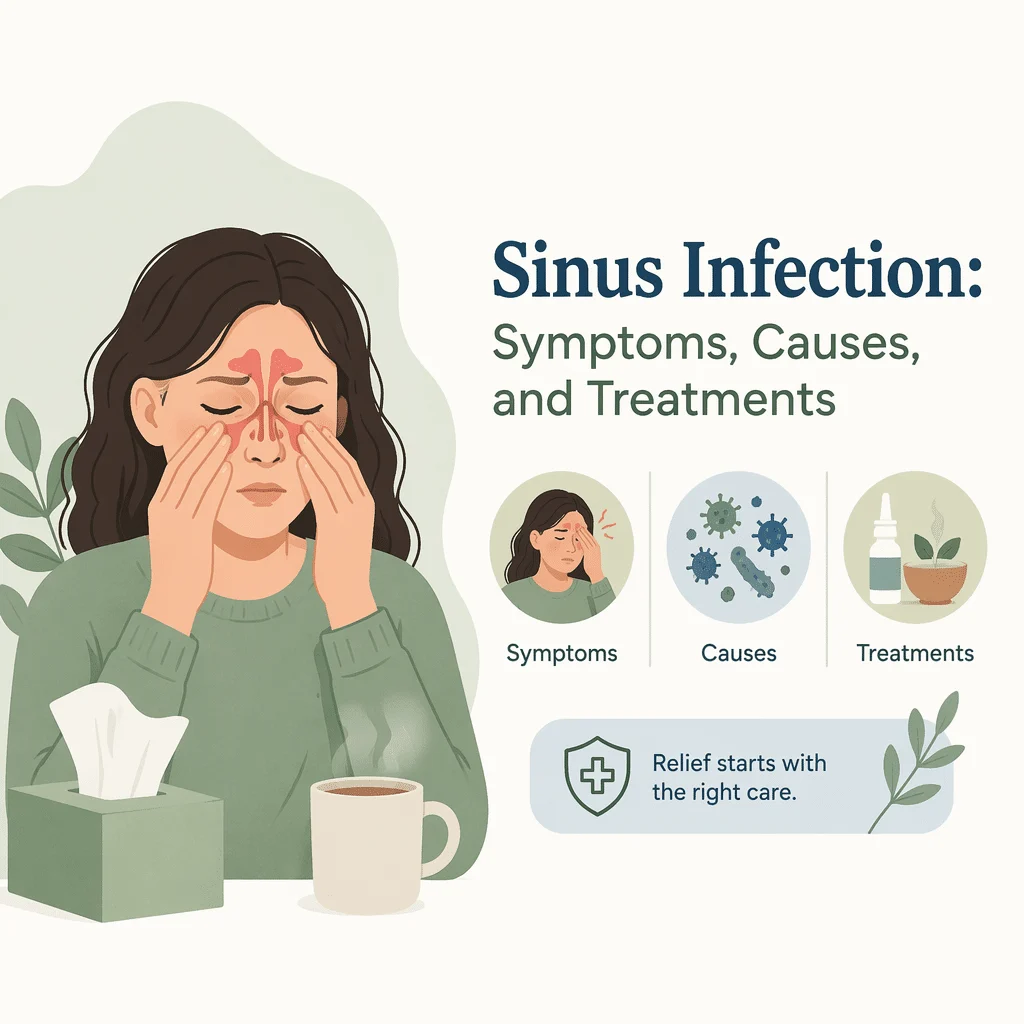
Een sinusinfectie, medisch bekend als sinusitis, is een van de meest voorkomende redenen waarom volwassenen de huisarts bezoeken met gezichtspijn, een verstopte neus en dik neusslijm. De meeste gevallen ontstaan na een gewone verkoudheid, verdwijnen vanzelf binnen een paar weken en vereisen nooit antibiotica. Toch kunnen de klachten behoorlijk vervelend zijn zolang ze duren, en het is niet altijd duidelijk wanneer zelfzorg voldoende is en wanneer een aanhoudende sinusinfectie medische aandacht nodig heeft. Deze gids legt uit wat een sinusinfectie is, hoe de acute en chronische vormen van elkaar verschillen, waarom de meeste viraal zijn, welke behandelingen echt helpen en welke waarschuwingssignalen betekenen dat je een arts moet raadplegen. Onderweg leer je ook hoe moderne richtlijnen voor verantwoord antibioticagebruik de zorg zowel veilig als effectief houden.
Wat is een sinusinfectie?
Uw sinussen zijn holle, met lucht gevulde ruimtes in de botten rondom uw neus, wangen en voorhoofd. Ze zijn bekleed met een dunne laag slijm die stof en ziektekiemen opvangt en afvoert naar de neus. Sinusitis ontstaat wanneer deze slijmvliezen opzwellen en ontsteken, de afvoerkanaaltjes vernauwen en slijm zich ophoopt in plaats van weg te stromen. Omdat de ontsteking bijna altijd ook de neusholtes betreft, gebruiken artsen vaak de preciezere term rinosinusitis.
Opgesloten slijm veroorzaakt druk en creëert een warme, vochtige omgeving waarin virussen of bacteriën kunnen gedijen. Daarom kan een gewone verkoudheid, die zelf een virale infectie van de neus en sinussen is, overgaan in wat de meeste mensen simpelweg een sinusinfectie noemen. Het goede nieuws is dat de zwelling doorgaans verdwijnt zodra de verkoudheid over is.
Acute, subacute en chronische sinusitis
Artsen delen sinusitis in op basis van hoe lang de klachten aanhouden. Acute sinusitis begint plotseling en duurt maximaal vier weken; meestal wordt het uitgelokt door een verkoudheid. Subacute sinusitis beschrijft klachten die vier tot twaalf weken aanhouden. Chronische sinusitis betekent een ontsteking die langer dan twaalf weken aanhoudt ondanks behandeling; deze vorm gedraagt zich anders en wordt meer aangedreven door aanhoudende ontsteking, allergieën of structurele problemen dan door één specifiek ziekteverwekker. Sommige mensen hebben ook recidiverende acute sinusitis, wat betekent dat ze meerdere afzonderlijke episodes per jaar doormaken.
Virale versus bacteriële infectie
De grote meerderheid van plotselinge sinusinfecties is viraal en hoort bij een gewone verkoudheid. Slechts een klein deel wordt bacterieel, meestal wanneer de klachten aanhouden zonder te verbeteren of even opklaren en daarna duidelijk verergeren. Dit onderscheid is enorm belangrijk voor de behandeling, omdat antibiotica werken tegen bacteriën maar niets doen tegen virussen. Door de twee van elkaar te onderscheiden, bepaalt u of u gewoon afwacht en de klachten beheert, of dat een recept mogelijk nuttig is.
Wat veroorzaakt een sinusinfectie?
Sinusitis ontstaat wanneer iets de normale sinusafvoer blokkeert of het slijmvlies irriteert. De veruit meest voorkomende oorzaak is een virale luchtweginfectie, maar verschillende andere factoren verhogen het risico of houden de klachten in stand.
- Verkoudheid door een virus, waarbij zwelling de sinusopeningen blokkeert.
- Allergieën zoals hooikoorts, die het neusslijmvlies ontstoken en prikkelbaar houden.
- Neuspoliepen, zachte goedaardige uitgroeiingen die de afvoer fysiek belemmeren.
- Een scheef neustussenschot of andere structurele vernauwing in de neus.
- Een bacteriële infectie bovenop een verkoudheid die niet is hersteld.
- Irriterende stoffen zoals tabaksrook, droge lucht en luchtvervuiling.
- Tandinfecties in de bovenste kiezen, die dicht bij de kaakholtes liggen.
Wanneer allergieën de sinussen voortdurend ontstoken houden, kan gericht onderzoek helpen de triggers te identificeren, zoals uitgelegd in onze gids over allergietesten in het bloed. Het opsporen en beheersen van die triggers is een van de meest effectieve manieren om te voorkomen dat een sinusinfectie terugkeert.
Klachten van een sinusinfectie en hoe ze veranderen
Het kenmerk van sinusitis is een combinatie van druk in het gezicht en een verstopte neus, niet één enkel symptoom. Het ongemak wordt vaak erger als je vooroverbuigt en kan variëren afhankelijk van welke sinussen aangetast zijn. Veelvoorkomende kenmerken zijn:
- Gezichtspijn, druk of een vol gevoel rond de neus, ogen, wangen of het voorhoofd.
- Een verstopte of dichtgezette neus waardoor ademhalen door de neus moeilijk is.
- Dikke neusuitscheiding die geel of groen kan zijn.
- Neusdruppeling, het gevoel dat slijm langs de achterkant van de keel loopt.
- Een verminderd of afwezig reuk- en smaakvermogen.
- Hoofdpijn, tandpijn of een pijnlijke bovenkaak.
- Hoesten, vaak erger 's nachts, en soms lichte koorts of vermoeidheid.
Aanhoudend neusdruppelen kan de achterkant van de keel ruw en geïrriteerd laten aanvoelen, een verschijning die wordt beschreven in ons artikel over kebbelsteen keel. Het tijdstip van de klachten is een nuttige aanwijzing: een virale infectie bereikt doorgaans een hoogtepunt rond dag drie tot vijf en verbetert daarna, terwijl klachten die langer dan tien dagen aanhouden zonder enige verbetering, of die verergeren na een eerste herstel, eerder wijzen op een bacteriële oorzaak.
Viraal of bacterieel: een kort overzicht
Geen enkel teken bewijst met zekerheid of sinusitis viraal of bacterieel is, maar het algehele patroon helpt. De onderstaande tabel geeft een overzicht van de verschillen die artsen afwegen bij de beslissing of antibiotica zinvol zijn.
| Functie | Waarschijnlijk viraal | Waarschijnlijk bacterieel |
|---|---|---|
| Duur | Verbetert binnen ongeveer 10 dagen | Duurt meer dan 10 dagen zonder verbetering |
| Klachtenpatroon | Geleidelijke verbetering na een paar dagen | Verbetert, maar verslechtert daarna duidelijk opnieuw |
| Koorts | Afwezig of mild | Hoger of aanhoudend, met ernstige pijn in het gezicht |
| Gebruikelijke eerste stap | Rust, voldoende drinken en klachtenverlichting | Medisch consult; antibiotica alleen als aan de criteria is voldaan |
Griep kan beginnen met vergelijkbare pijn, koorts en neusverstopping, dus het is nuttig om de tijdlijn en kenmerken te vergelijken die beschreven staan in onze gids over symptomen en preventie van griep.
Hoe artsen een sinusinfectie diagnosticeren
In de meeste gevallen stelt een arts de diagnose sinusitis op basis van je klachtengeschiedenis en een eenvoudig onderzoek, zonder aanvullende tests. De arts vraagt hoe lang de klachten al duren, of ze eerst verbeterden en daarna terugkwamen, en hoe ernstig de pijn in het gezicht en de koorts zijn. De arts kan ook in je neus kijken en zacht drukken op de wangen en het voorhoofd om te controleren op gevoeligheid.
Beeldvorming zoals een CT-scan van de sinussen wordt voorbehouden aan chronische, terugkerende of gecompliceerde gevallen, of wanneer een operatie wordt overwogen. Bij hardnekkige of ongewone aandoeningen kan een keel-neus-oorarts een neusendoscopie uitvoeren, waarbij een dunne camera wordt gebruikt om de sinusopeningen direct te bekijken. Bloedonderzoek is niet nodig om een gewone sinusinfectie vast te stellen, maar een arts kan ontstekings- of immuunmarkers controleren wanneer infecties steeds terugkeren. U kunt een dergelijk resultaat begrijpen met behulp van onze gids over hoge CRP-waarden, en soms wordt een andere niet-specifieke ontstekingstest toegevoegd, die u kunt leren lezen in onze uitleg over de bezinkingssnelheid van erytrocyten (BSE).
Gezichtspijn wordt veel vaker aan de sinussen toegeschreven dan terecht is; wanneer scans normaal zijn en verstopping afwezig is, is het de moeite waard onze gids te lezen over oorzaken en symptomen van migraine om in plaats daarvan een hoofdpijnaandoening te overwegen.
Behandeling: wat echt helpt bij een sinusinfectie
Omdat de meeste gevallen viraal zijn, bestaat de kern van de behandeling uit rust en de tijd nemen in plaats van antibiotica. Het doel is de verstopping te verlichten, slijm te verdunnen, pijn te verminderen en uw lichaam te ondersteunen terwijl de infectie verdwijnt. Door de behandeling af te stemmen op de oorzaak voorkomt u dat sinusitis overbehandeld wordt.
Zelfzorg en huismiddeltjes
Bij een typische acute sinusinfectie doen eenvoudige maatregelen het meeste werk:
- Zoutoplossing als neusspoeling of neusspray om slijm weg te spoelen en het slijmvlies te bevochtigen.
- Stoom inhaleren en een warme doek op het gezicht leggen om de verstopping los te maken.
- Extra vocht en rust om uw immuunsysteem zijn werk te laten doen.
- Vrij verkrijgbare pijnstillers zoals paracetamol of ibuprofen bij pijn en koorts.
- Decongestiva voor kortdurend gebruik, slechts enkele dagen, om rebound-verstopping te voorkomen.
- Een luchtbevochtiger om te voorkomen dat de binnenlucht uw neusholtes uitdroogt.
Neusspoeling met zoutoplossing verdient speciale aandacht omdat het goedkoop is, weinig nadelen heeft en een van de weinige thuisbehandelingen is die consistent door onderzoek wordt ondersteund. Bereid de spoelvloeistof altijd met gedestilleerd, steriel of eerder gekookt en afgekoeld water.
Wanneer antibiotica wel en niet gepast zijn
Antibiotica helpen alleen bij de minderheid van gevallen die echt bacterieel zijn. Ze voorschrijven bij een virale infectie versnelt het herstel niet en stelt je bloot aan bijwerkingen en antibioticaresistentie. Artsen schrijven antibiotica doorgaans alleen voor bij klachten die langer dan ongeveer tien dagen aanhouden zonder verbetering, die vanaf het begin ernstig zijn met hoge koorts en pijn in het gezicht, of die eerst verbeteren en daarna duidelijk verslechteren. Zelfs dan is een afwachtend beleid van een paar dagen vaak verstandig. De redenering achter deze voorzichtige aanpak kun je lezen in de CDC-richtlijnen over antibiotica bij sinusinfecties.
Chronische sinusitis behandelen
Chronische sinusitis wordt behandeld als een ontstekingsaandoening, niet als een enkelvoudige infectie. De behandeling richt zich vaak op dagelijkse spoeling met zoutoplossing en intranasale corticosteroïdsprays om de zwelling te verminderen, samen met het opsporen en beheersen van uitlokkende factoren zoals allergieën. Wanneer neuspoliepen of structurele blokkades aanwezig zijn, kan een keel-neus-oorarts endoscopische sinuschirurgie aanbevelen of, bij ernstige poliepziekte, nieuwere gerichte medicijnen. Omdat de onderste en bovenste luchtwegen met elkaar verbonden zijn, gaat chronische sinusontsteking vaak samen met longaandoeningen die besproken worden in ons artikel over astma als chronische luchtwegaandoening.
Preventie en dagelijkse zelfzorg
Je kunt niet elke sinusinfectie voorkomen, maar je kunt wel verminderen hoe vaak ze optreden en hoe erg ze zijn. Was je handen regelmatig en zorg dat je vaccinaties up-to-date zijn, zodat je minder kans hebt op verkoudheden en griep die de meeste episodes uitlokken. Beheer allergieën samen met je arts, want ongecontroleerde allergische ontsteking is een belangrijke oorzaak van terugkerende infecties.
Zorg voor vochtige maar niet vochtige binnenlucht, vermijd tabaksrook en gebruik zoutoplossingssprays bij droog weer of vliegreizen om het neusslijmvlies gezond te houden. Voldoende drinken houdt slijm dun en vloeibaar. Als verstopping vanuit je sinussen naar je oren trekt en druk of pijn veroorzaakt, legt ons overzicht van symptomen en behandeling van oorontsteking uit waar je op moet letten. Een veelvoorkomende zorg is of de ziekte overdraagbaar is, wat we beantwoorden in onze gids over besmettelijkheid sinusinfectie.
Wanneer naar de dokter en waarschuwingssignalen van complicaties
De meeste mensen kunnen sinusitis thuis behandelen, maar soms is medische hulp nodig. Neem contact op met een arts als de klachten langer dan tien dagen aanhouden zonder te verbeteren, steeds terugkomen of ernstig zijn. Vraag ook advies als je een verzwakt immuunsysteem hebt of een hoge koorts die niet zakt.
In zeldzame gevallen verspreidt een infectie zich buiten de sinussen naar het oog of de hersenen, wat een medisch noodgeval is. Zoek onmiddellijk spoedhulp als je een van deze alarmsignalen opmerkt:
- Zwelling, roodheid of uitpuiling rond één of beide ogen.
- Veranderingen in het zicht, zoals dubbelzien of wazig zien.
- Ernstige hoofdpijn met een stijve nek of verwardheid.
- Hoge koorts die niet zakt.
- Zwelling of roodheid die zich verspreidt over het voorhoofd of gezicht.
Deze complicaties zijn zeldzaam, maar ze vroeg herkennen maakt ze veel gemakkelijker te behandelen. Twijfel je over ernstige of snel veranderende klachten, dan is het altijd veiliger om je te laten onderzoeken.
Recente wetenschappelijke ontwikkelingen
Onderzoek van de afgelopen jaren heeft een voorzichtige, terughoudende aanpak van sinusitis bevestigd, terwijl er nieuwe opties zijn gekomen voor de moeilijkste chronische gevallen. Dit is wat recente hoogwaardige studies toevoegen, in begrijpelijke taal.
In 2025 hebben Amerikaanse keel-neus-oorspecialisten hun nationale richtlijn voor sinusitis bij volwassenen bijgewerkt en opnieuw benadrukt dat de meeste volwassenen met plotselinge sinusklachten niet meteen antibiotica nodig hebben. Ze onderschreven een korte periode van afwachtend beleid, wat betekent dat je de klachten gewoon een paar dagen in de gaten houdt voordat je een behandelbeslissing neemt. Wat dit voor jou betekent: als een arts aanraadt om even af te wachten in plaats van meteen iets voor te schrijven, is dat moderne, op bewijs gebaseerde zorg en geen verwaarlozing.
Een grote umbrella review uit 2024 — een studie die veel eerdere reviews samenvoegt — onderzocht hoe lang antibiotica ingenomen moeten worden bij luchtweginfecties, waaronder sinusitis. De conclusie was dat kortere kuren over het algemeen even goed werken als langere. Wat dit voor u betekent: als antibiotica echt nodig zijn, kunt u een kortere kuur verwachten dan vroeger — neem die precies in zoals voorgeschreven.
Een meta-analyse uit 2024 — een studie die de resultaten van meerdere onderzoeken statistisch combineert — bekeek antibiotica bij acute sinusitis bij kinderen, vergeleken met een nepmiddel. Er werd slechts een bescheiden voordeel gevonden; veel kinderen herstelden ook zonder antibiotica. Wat dit voor u betekent: zelfs bij kinderen is het voordeel van antibiotica kleiner dan veel ouders verwachten, en dat is precies waarom artsen er zorgvuldig mee omgaan.
Voor chronische sinusitis met neuspoliepen die niet reageert op standaardbehandeling, analyseerde een praktijkonderzoek uit 2025 biologicals — geneesmiddelen op basis van laboratoriumgemaakte antilichamen die een specifiek deel van het immuunsysteem kalmeren. In de dagelijkse praktijk verminderden ze de poliepen en verbeterden ze de neusverstopping en het reukvermogen. Wat dit voor u betekent: als u ernstige, langdurige sinusklachten heeft, bestaan er nu gerichte behandelingen die een specialist met u kan bespreken. Deze resultaten zijn gemiddelden over veel patiënten en worden nog steeds onderzocht, dus de juiste keuze hangt altijd af van uw persoonlijke situatie.
Woordenlijst met belangrijke termen
| Termijn | Definitie |
|---|---|
| Sinussen | Met lucht gevulde holtes in de botten rondom de neus, wangen en het voorhoofd, bekleed met slijmvlies. |
| Rinosinusitis | De medische naam voor ontsteking van de neus en sinussen samen, omdat beide vrijwel altijd tegelijk voorkomen. |
| Acute sinusitis | Een sinusinfectie die tot vier weken duurt, meestal uitgelokt door een verkoudheid. |
| Chronische sinusitis | Sinusontsteking die twaalf weken of langer aanhoudt ondanks behandeling. |
| Neusdruppeling | Het gevoel dat slijm langs de achterkant van de keel loopt. |
| Neuspoliepen | Zachte, goedaardige uitgroeiingen in de neus of sinussen die de afvoer kunnen blokkeren. |
| Neustussenschot afwijking | Een scheef tussenschot tussen de neusgaten dat één kant van de neus kan vernauwen. |
| Neusspoeling met zoutwater | De neusholtes spoelen met zoutwater om slijm weg te spoelen en verstopping te verminderen. |
| Neusendoscopie | Een onderzoek waarbij een dunne camera via de neus wordt ingebracht om de sinusopeningen te bekijken. |
Veelgestelde vragen
Hoe lang duurt een sinusinfectie?
Een typische virale sinusinfectie verbetert doorgaans binnen zeven tot tien dagen, al kan een aanhoudend hoestje of lichte neusverstopping nog iets langer aanhouden. De klachten zijn meestal het ergst in de eerste paar dagen en nemen daarna af. Als ze na tien dagen niet verbeteren, of duidelijk verergeren nadat ze al aan de beterende hand waren, kan de oorzaak bacterieel zijn en is het verstandig een arts te raadplegen.
Is een sinusinfectie besmettelijk?
Een sinusinfectie zelf wordt niet van persoon op persoon overgedragen, maar de virussen die de meeste gevallen veroorzaken — zoals verkoudheids- en griepvirussen — zeker wel. Wanneer iemand met een verkoudheid hoest, niest of oppervlakken deelt, kan hij of zij dat virus verspreiden, wat bij een ander vervolgens kan leiden tot een sinusinfectie. Handen wassen en hoesten afdekken verlagen het risico. Bacteriële sinusitis wordt over het algemeen niet als besmettelijk beschouwd.
Hoe weet ik of mijn sinusinfectie bacterieel of viraal is?
Geen enkele thuistest kan het bewijzen, maar het tijdsverloop is de beste aanwijzing. Virale infecties verbeteren doorgaans binnen ongeveer tien dagen. Een bacteriële infectie is waarschijnlijker wanneer de klachten langer dan tien dagen aanhouden zonder te verbeteren, van het begin af aan ernstig zijn met hoge koorts en hevige pijn in het gezicht, of verbeteren en daarna duidelijk weer verslechteren. Een arts gebruikt dit patroon — niet de kleur van je slijm — om te bepalen of antibiotica zinvol kunnen zijn.
Kun je een sinusinfectie echt in 24 uur kwijtraken?
Ondanks veelgestelde zoekvragen bestaat er geen betrouwbare manier om een sinusinfectie in één dag te genezen. De meeste zijn viraal en verdwijnen vanzelf binnen één tot twee weken. Wat je wél snel kunt doen, is de klachten verlichten met zoutoplossing-spoeling, stoom, voldoende vocht, rust en pijnstilling. Deze maatregelen zorgen voor meer comfort terwijl je lichaam de infectie in zijn eigen tempo bestrijdt.
Welke vrij verkrijgbare medicijnen helpen bij een sinusinfectie?
Verschillende vrij verkrijgbare middelen verlichten de klachten. Zoutoplossingen als neusspray of spoeling verwijderen slijm, pijnstillers zoals paracetamol of ibuprofen helpen tegen pijn en koorts, en een korte kuur met neusdruppels of -spray vermindert de verstopping. Neusspray met corticosteroïden kan de ontsteking kalmeren, zeker als allergieën een rol spelen. Gebruik decongestiva niet langer dan een paar dagen om terugkerende verstopping te voorkomen, en vraag een apotheker om advies als je andere medicijnen gebruikt of een hoge bloeddruk hebt.
Kunnen allergieën een sinusinfectie veroorzaken?
Allergieën veroorzaken geen infectie rechtstreeks, maar ze houden het slijmvlies van de neus en de sinussen opgezwollen, waardoor de afvoer wordt geblokkeerd en de weg wordt vrijgemaakt voor een sinusinfectie. Mensen met hooikoorts of jaarronde allergieën krijgen vaker sinusinfecties. Allergieën onder controle houden door blootstelling te vermijden, zoutoplossing-spoeling te gebruiken en een behandeling te volgen onder begeleiding van een arts, is een van de meest effectieve manieren om herhaalde episodes te voorkomen.
Bronnen
- Centers for Disease Control and Prevention — Sinus Infection Basics, 2024 — cdc.gov
- Mayo Clinic — Acute sinusitis: Symptoms and causes, 2023 — mayoclinic.org
- Cleveland Clinic — Sinus Infection (Sinusitis): Causes, Symptoms and Treatment, 2023 — clevelandclinic.org
- MedlinePlus, US National Library of Medicine — Sinusitis, 2025 — medlineplus.gov
- Payne SC, et al. — Clinical Practice Guideline: Adult Sinusitis Update — Otolaryngology–Head and Neck Surgery, 2025 — doi.org/10.1002/ohn.1344
- Kuijpers SME, et al. — The evidence base for the optimal antibiotic treatment duration of upper and lower respiratory tract infections: an umbrella review — The Lancet Infectious Diseases, 2024 — doi.org/10.1016/S1473-3099(24)00456-0
- Conway SJ, et al. — Antibiotics for Acute Sinusitis in Children: A Meta-Analysis — Pediatrics, 2024 — doi.org/10.1542/peds.2023-064244
- Cai S, et al. — Efficacy and Safety of Biologics for Chronic Rhinosinusitis With Nasal Polyps: A Meta-Analysis of Real-World Evidence — Allergy, 2025 — doi.org/10.1111/all.16499
Verder lezen
- Ontdek hoe de onderliggende virussen zich verspreiden in onze gids over besmettelijkheid sinusinfectie
- Onderscheid griep van sinusproblemen met onze gids over symptomen en preventie van griep
- Bekijk hoe verstopping de oren kan beïnvloeden in ons overzicht van symptomen en behandeling van oorontsteking
- Sluit andere oorzaken van hoofdpijn uit met onze gids over oorzaken en symptomen van migraine
- Begrijp keelveranderingen door neusdruppeling in ons artikel over kebbelsteen keel
Begrijp uw laboratoriumresultaten met AI DiagMe.
Een sinusinfectie wordt meestal vastgesteld op basis van je klachten, maar als infecties steeds terugkomen of een arts de ontsteking wil beoordelen, kunnen bloedtesten nuttige informatie toevoegen. AI DiagMe helpt je die uitslagen in begrijpelijke taal te lezen — of het nu gaat om een volledig bloedbeeld dat laat zien hoe je lichaam de infectie bestrijdt, een CRP-test die ontsteking aantoont, of een allergietest die zoekt naar de oorzaak van terugkerende klachten. Het is bedoeld om je te helpen je waarden te begrijpen en betere vragen te stellen aan je arts — niet om een diagnose te stellen of je arts te vervangen.
Ontvang binnen enkele minuten een interpretatie van uw resultaten.