




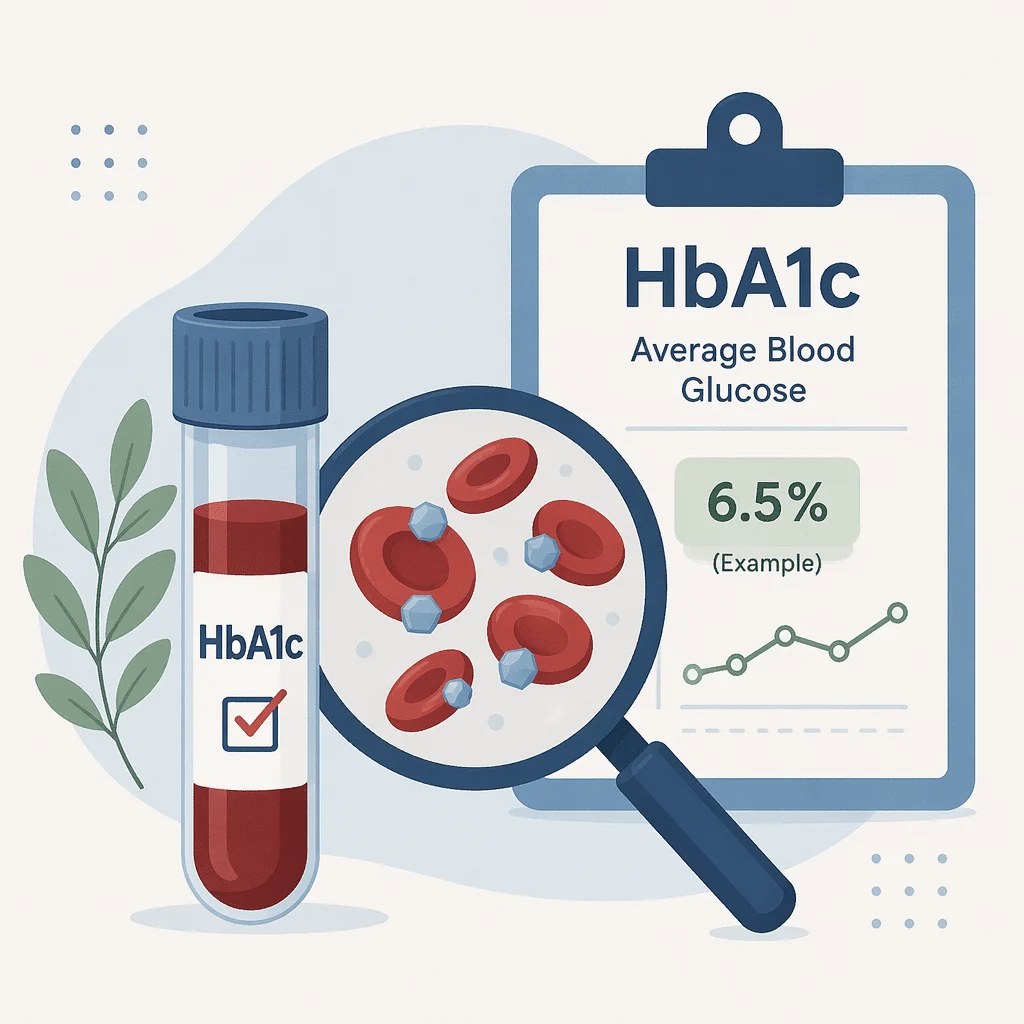
HbA1c検査は、ヘモグロビンにどれだけのブドウ糖(グルコース)が結合しているかをパーセントで測定するもので、過去2〜3か月間の平均血糖値を把握するために使われます。空腹時血糖検査がある一瞬の値を捉えるのに対し、この検査はより長期的な傾向を反映しており、糖尿病や糖尿病予備群の診断だけでなく、すでに診断を受けている方の血糖コントロールの状態を確認するためにも活用されます。このガイドでは、検査の仕組み、数値の意味、そして特定の血液疾患や腎臓の状態がある方で結果が正確に反映されないことがある理由について説明します。また、特に高齢者や虚弱な患者さんに向けて、目標値がより個別化されたアプローチへと変化しつつある点についても触れています。
HbA1c検査で実際に何を測定するのか
赤血球にはヘモグロビンというタンパク質が含まれており、体内に酸素を運ぶ役割を担っています。血液中にブドウ糖が流れると、その一部がヘモグロビンに結合します。この反応は「糖化」と呼ばれます。この結合は体が意図的にコントロールするものではなく、徐々に起こり、赤血球の寿命(約3か月)が尽きるまで維持されます。そのため、糖化ヘモグロビンの割合は、血液中にブドウ糖がどれだけ存在していたかに比例して蓄積されていきます。
検査結果はパーセントで報告されます。たとえば6.0%という値は、採取したヘモグロビンの6%にブドウ糖が結合していることを意味します。国や検査機関によっては、ミリモル毎モル(mmol/mol)という単位で表示されることもあり、この形式はアメリカ以外の国でよく使われています。赤血球は常に新しいものと入れ替わっているため、この数値は単なる一時点のスナップショットではなく、直近30日間の影響をより強く反映した「移動平均」として捉えることができます。
医師がこの検査を指示する理由
HbA1c検査は、主に2つの目的で使われます。1つ目は「診断」です。過体重、運動不足、糖尿病の家族歴など、糖尿病のリスク因子がある方をスクリーニングするために行われます。2つ目は「経過観察」です。すでに糖尿病と診断されている方の血糖コントロールの状態を確認するため、通常3〜6か月ごとに検査を行い、現在の治療が効果を上げているかどうかを評価します。
この検査には、日常的な血糖測定と比べて実用的なメリットがあります。空腹時に採血する必要がないため、一日のどの時間帯でも検査が受けられます。また、食事・ストレス・体調不良による血糖値の自然な変動を平均化してくれるため、単回の血糖測定よりも安定した情報が得られます。こうした理由から、HbA1c検査は定期的な血液検査の標準項目となっており、 糖尿病の血液検査 パネルの重要な指標の一つとなっています。
HbA1c検査の結果の見方
以下の表は、米国の多くの検査機関や専門機関がHbA1cの結果を評価する際に用いる基準値の範囲を示しています。これらはあくまでも一般的な目安であり、担当医はあなたの健康歴に応じて異なる目標値を設定する場合があります。
| HbA1c値 | カテゴリー | 推定平均血糖値 |
|---|---|---|
| 5.7%未満 | 基準範囲内 | 約90〜115 mg/dL |
| 5.7%〜6.4% | 糖尿病予備群 | 約117〜137 mg/dL |
| 6.5%以上 | 糖尿病 | 140 mg/dL以上 |
| 7.0%(一般的な治療目標) | コントロール中の糖尿病 | 約154 mg/dL |
1回の検査結果だけで全体像を把握することはほとんどできません。複数回の検査にわたる推移を、 空腹時血糖値 や症状と合わせて確認することで、単一の数値よりもはるかに正確な状況が見えてきます。検査報告書の読み方を基礎から学びたい方は、 血液検査の結果全体 で基準値や異常値フラグの基本的な見方を解説しています。
HbA1cの結果が誤解を招く場合
HbA1c検査は、赤血球が一定の寿命を持ち、グルコースがヘモグロビンに一定の速度で結合するという前提に基づいています。しかし、いくつかのよくある状態がこの前提を崩すことがあり、この点は検査の一般的な説明では見落とされがちです。
貧血と失血
赤血球が通常より速く破壊されたり、より早く新しい細胞に置き換えられたりする場合(一部の 貧血で起こるように)、グルコースがヘモグロビンに蓄積する時間が短くなります。その結果、HbA1cの値が実際の平均血糖値より人為的に低く出ることがあります。一方、鉄欠乏は値が偽高値になることがあるとされています。また、輸血を受けた場合も同様に結果が歪む可能性があります。輸血された赤血球は患者自身の細胞とは異なるグリケーション(糖化)の履歴を持つためです。
ヘモグロビン異常症
鎌状赤血球症やサラセミアなど、ヘモグロビンの構造を変化させる遺伝性疾患は、HbA1cを測定する一部の検査方法に影響を与えることがあります。特定の変異型と検査機関が使用するアッセイの種類によって、結果が偽高値または偽低値になる場合があります。鎌状赤血球形質のように、ヘモグロビン変異を持ちながら疾患の症状がない方でも、検査方法の影響を受けることがあるため、既知のヘモグロビン変異については検査を依頼した医師に必ず伝えることをお勧めします。
慢性腎臓病
進行した腎臓病は赤血球の寿命を短くし、貧血を伴うことも多く、いずれもHbA1cの信頼性を低下させます。腎機能が低下するにつれて、HbA1cが示す値と実際の平均血糖値との乖離が広がる傾向があります。そのため、糖尿病と重篤な 腎機能検査パネル 異常を併せて管理している医師は、HbA1cだけに頼らず、追加のモニタリング手段を活用することが多いです。
妊娠中
妊娠中は赤血球の入れ替わりが速まり、通常の血糖調節のしくみも変化するため、実際の血糖値の高さに比べてHbA1cが低く出ることがあります。特に妊娠中期・後期にこの傾向が強くなります。そのため、妊娠糖尿病のスクリーニングや管理には、HbA1cだけに頼らず、直接血糖値を測る検査が一般的に用いられています。
HbA1cが信頼できない場合の代替検査
上記のいずれかの病歴がある患者さんに対して、医師は別の検査を活用することができます。持続血糖モニタリング(CGM)は血糖値を直接・継続的に測定するため、HbA1cが前提とする赤血球の寿命に左右されません。フルクトサミンは、ヘモグロビン以外の血液中のタンパク質の糖化を反映し、過去2〜3週間の血糖状態を示します。赤血球の寿命の影響を受けないのも特徴です。詳しくは当サイトの フルクトサミン の解説をご覧ください。グリコアルブミンも同様の理由から、腎臓病の研究でよく使われるようになっています。これらはいずれも一般的な用途でHbA1cを完全に置き換えるものではありませんが、特定の患者さんでHbA1cの精度が低いとわかっている場合に、その不足を補う役割を果たします。
目標値は人それぞれ:一つの数値がすべてに当てはまるわけではない
臨床の現場では、HbA1cの目標値を一律に設定する考え方から離れつつあります。多くの糖尿病をもつ成人では7%前後が目標とされることが多いですが、高齢者・虚弱な方・認知症のある方・余命が限られている方に対しては、より緩やかな目標値を設定することが専門学会でも明確に推奨されています。厳格な血糖管理のリスク、特に低血糖発作のリスクが、得られるメリットを上回る可能性があるためです。
この考え方の変化には、シンプルな臨床的現実が背景にあります。血糖値を積極的に下げることで合併症予防の効果が現れるまでには何年もかかりますが、危険な低血糖発作のリスクはすぐに現れます。虚弱な85歳の方にとって、低血糖による転倒は、HbA1cがやや高い状態が何年続くよりも、たった一度の午後に大きなダメージをもたらすことがあります。一方、余命が長く健康状態の良い若い患者さんは、長期的な合併症を防ぐために、より厳格な管理から引き続き恩恵を受けることが多いです。
HbA1c異常と関連する病態
HbA1cが持続的に高い場合、多くは血糖調節の障害を示していますが、その原因はさまざまです。
- 2型糖尿病:インスリン抵抗性に加え、時間の経過とともにインスリン分泌が低下していく病態です。
- 1型糖尿病:膵臓のインスリン産生細胞が自己免疫によって破壊される病態で、発症が比較的急速なことが多いです。
- 妊娠糖尿病:妊娠に伴うホルモン変化がインスリン感受性に影響することで引き起こされます。
- 腹部の体重増加、高血圧、異常なコレステロール値などのリスク因子が重なるメタボリックシンドロームは、糖尿病の正式な診断に先行することが多い状態です。
- 薬の影響も考えられます。特に長期にわたるコルチコステロイドの使用は、糖尿病の有無にかかわらず、血糖値やHbA1cを上昇させることがあります。
HbA1cがおよそ4%を下回るような異常に低い値はまれであり、血糖コントロールが特別に良好なためというよりも、上述した測定精度の問題を示している可能性があります。特に、貧血や赤血球の寿命が短くなる別の原因が見られる場合はその可能性が高まります。
受診のタイミング
HbA1cの結果のほとんどは定期的なフォローアップで確認するのが適切ですが、より早めに受診すべき状況もあります。
- 前回の検査から明確な理由なく、HbA1cが0.5ポイント以上上昇または低下している場合。
- 結果が6.5%以上で、まだ糖尿病の正式な診断を受けていない場合。
- HbA1cが高く、原因不明の体重減少、強い口渇、持続的な倦怠感などの症状がある場合。
- 妊娠中または妊娠を考えており、ご自身または家族に糖尿病の既往歴がある場合。
- ヘモグロビン異常症、重篤な貧血、または進行した腎臓病があることがわかっている、あるいは疑われており、HbA1cの結果をそのまま信頼できるかどうか確認したい場合。
最新の科学的進歩
HbA1cの精度や目標値の設定に関する研究は現在も進んでおり、最近のいくつかの研究によって、実際の診療においてこの検査の限界が最も重要になる場面が明らかになってきています。
PubMedによると、2型糖尿病を持つ65歳以上の成人約18万人を追跡した2026年の英国の研究では、HbA1cがおよそ6.5%〜7.4%の範囲にあるときに死亡リスクが最も低く、それより低くても高くてもリスクが上昇することが示されました。この傾向はフレイル(虚弱)のあらゆる程度において共通して見られました(DOI)。入院リスクはHbA1cが6.5%未満の人で最も高く、この影響は重度のフレイルを持つ人で特に顕著で、より高い値の同様の患者と比べて入院リスクが4倍以上になっていました。これが意味すること:ご自身や家族が高齢でフレイルがある場合、HbA1cが「低い」ことが必ずしも良いサインとは限りません。積極的に数値を下げようとすることは、メリットよりもリスクが大きくなる可能性があります。一つの数値を追いかけるよりも、担当医と相談して個別の目標値を設定することが大切です。
PubMedによると、2025年に医学誌『Diabetic Medicine』に掲載された研究では、鎌状赤血球形質、貧血、腎機能障害など、HbA1cの精度に影響することが知られている状態を持つ人々に対して、フルクトサミンやグリコアルブミンへの切り替えが精度を改善するかどうかが検証されました(DOI)。研究者たちは、貧血がHbA1cと実際の平均血糖値との関係を大きく歪め、過小評価を引き起こすことを発見しましたが、鎌状赤血球形質単独では検査の精度に有意な影響を与えないことも明らかになりました。これがあなたにとって意味すること:ヘモグロビン異常のすべてが同じ精度リスクをもたらすわけではないため、一般的なラベルよりも具体的な診断が重要であり、結果を解釈する際には貧血に特に注意を払う必要があります。
PubMedによると、2026年に行われた血液透析中のステージ5慢性腎臓病患者を対象とした研究では、HbA1cはこのグループにおける心血管死リスクを確実に予測できなかった一方、新しい代替マーカーであるグリコアルブミンは、不良な転帰との間にはるかに強く一貫した関連性を示しました(DOI)。これがあなたにとって意味すること:特に透析を受けている場合など、進行した腎臓病と糖尿病を同時に管理しているのであれば、血糖コントロールをより正確に把握するために、HbA1cに加えて、あるいはHbA1cの代わりに代替マーカーを使用すべきかどうか、担当医療チームに相談してみてください。
PubMedによると、2024年に『World Journal of Diabetes』に掲載されたレビューでは、慢性腎臓病が進行するにつれてHbA1cの信頼性が低下する理由を検討し、貧血と赤血球寿命の変化が主な要因であることを指摘するとともに、この患者集団においてHbA1cでは見逃されてしまうリアルタイムの血糖パターンを把握する方法として持続血糖モニタリング(CGM)を取り上げました(DOI)。これがあなたにとって意味すること:腎臓病におけるHbA1cの精度の問題は些細な技術的事項ではなく、臨床医たちがその代替となるモニタリング方法を積極的に構築しているほど、十分に記録された問題です。
PubMedによると、2024年にシンガポールで行われた地域在住の高齢者を対象とした研究では、現在のガイドラインがこのグループに対してより緩やかな目標値を推奨しているにもかかわらず、虚弱および虚弱前段階の参加者において、フレイルに基づくガイドラインの基準値を用いて定義された厳格な血糖管理がいまだに一般的であることが明らかになりました(DOI)。これがあなたにとって意味すること:虚弱または高齢の患者に対してより緩やかな目標値を定めるガイドラインがある場合でも、実際の治療がすぐに追いつくとは限りません。そのため、現在のHbA1c目標値が糖尿病だけでなく、あなたの全体的な健康状態を反映しているかどうか、担当医に明確に確認することが大切です。
HbA1cを管理するための実践的なステップ
結果がどのカテゴリーに当てはまる場合でも、短期間の集中的な努力よりも、小さな変化を継続することのほうがHbA1cを着実に改善する傾向があります。週に約150分の中程度の運動を目標とした定期的な身体活動は、体がインスリンを効率よく使う力を高めます。精製された砂糖や高度に加工された炭水化物を減らし、野菜・赤身のたんぱく質・全粒穀物を積極的に取り入れることで、一日を通じて血糖値を安定させやすくなります。また、睡眠不足や慢性的なストレスはどちらもインスリン感受性を低下させるため、十分な睡眠とストレス管理も数値に影響する重要な要素です。
再検査の頻度は、検査結果とリスクプロファイルに合わせて決めることが大切です。HbA1cが正常範囲で主なリスク因子がない方は、2〜3年に1回の再検査で十分なことが多い一方、糖尿病予備群の方は通常6〜12か月ごとの確認が推奨されます。糖尿病と診断されている方は、血糖コントロールの安定度に応じて、一般的に3〜6か月ごとに検査を行います。
用語集
| 用語 | 定義 |
|---|---|
| グリケーション(糖化) | 酵素の助けを借りずに、グルコースがヘモグロビンなどのたんぱく質に結合する化学的なプロセス。 |
| ヘモグロビン異常症 | 鎌状赤血球症やサラセミアなど、ヘモグロビンの構造を変化させる遺伝性疾患。 |
| 推定平均血糖値(eAG) | HbA1cのパーセンテージを、mg/dL単位のおおよその平均血糖値に換算した計算値。 |
| フルクトサミン | ヘモグロビン以外の血中たんぱく質に結合したグルコースを反映する血液マーカーで、直近2〜3週間という短い期間をカバーします。 |
| グリコアルブミン | 血中たんぱく質であるアルブミンに結合したグルコースを測定するマーカー。一部の腎臓病の状況でHbA1cの代替として使用されます。 |
| 持続血糖モニタリング(CGM) | 昼夜を問わず、リアルタイムで血糖値を継続的に追跡する装着型センサーシステム。 |
| フレイル(虚弱) | 高齢者でよく評価される、生理的予備能が低下した臨床状態で、治療のリスクと利益のバランスを判断する際に考慮されます。 |
| 低血糖 | 震え、混乱、失神などの症状を引き起こすほど血糖値が低下した状態。 |
| 糖尿病予備群 | 血糖値が正常より高いものの、糖尿病と診断される基準値にはまだ達していない状態。 |
HbA1c検査に関するよくある質問
HbA1c検査の前に絶食する必要はありますか?
いいえ、必要ありません。空腹時血糖検査とは異なり、HbA1cは特定の時点ではなく数か月間の平均値を反映するため、検査前に食事や飲み物をとっても結果に大きな影響はありません。そのため、特別な準備なしに通常の採血の際にいつでも検査できる便利な検査です。
HbA1cが5.8%だとどういう意味ですか?
5.8%という結果は、5.7%〜6.4%の範囲に当たる「糖尿病予備群(前糖尿病)」に該当します。血糖値が通常より高めではあるものの、糖尿病の診断基準には達していないことを示しています。この数値の方の多くは、食事や運動習慣を見直すことで糖尿病への進行リスクを下げることができます。医師から6〜12か月後の再検査を勧められることもあります。
HbA1cは平均血糖値からどのように計算されますか?
検査機関では、血液サンプルから糖化ヘモグロビンの実際の割合を直接測定しており、血糖値の数値から計算しているわけではありません。ただし、HbA1cの割合がわかれば、標準的な計算式を使って推定平均血糖値に換算することができます。一部の検査報告書に記載されているmg/dLの数値は、この方法で算出されています。
HbA1cと空腹時血糖の結果が異なることはありますか?
はい、よくあることです。空腹時血糖はある一時点の血糖値を反映するのに対し、HbA1cは2〜3か月間の平均値を反映するため、両者の結果が一致しないことがあります。特に血糖値が変動している場合や、赤血球に影響を与える疾患がHbA1cの値を歪めている場合に起こりやすいです。結果が食い違う場合、医師は診断を下す前に検査を繰り返したり、別の種類の検査を追加したりすることがよくあります。
妊娠中にHbA1cは信頼できますか?
通常より信頼性が低くなります。妊娠中は赤血球の入れ替わりや糖代謝が変化するため、特に妊娠後期には実際の血糖値の暴露量に比べてHbA1cが低く出ることがあります。そのため、妊娠糖尿病のスクリーニングには、HbA1cだけでなく直接的な糖負荷試験(ブドウ糖負荷試験)が一般的に用いられます。
HbA1cの値が主治医の目標値と現在の一般的なガイドラインと一致しない場合はどうすればよいですか?
一般的なガイドラインはあくまでも出発点であり、すべての人に当てはまる固定のルールではありません。年齢、他の健康状態、低血糖のリスク、または余命に応じて、医師が異なる目標値を設定することがあります。ご自身が読んだ情報と比べて目標値が緩すぎる、または厳しすぎると感じる場合は、ご自身の状況に合わせた理由を医師に尋ねることをお勧めします。
一つの血液マーカーの意味を理解することは最初の一歩に過ぎません。他の検査結果と合わせて見ることで、全体像がより明確になることが多いです。AI DiagMeは、一つの数値だけでなく、検査レポート全体を理解するためのサービスです。専門的な数値をわかりやすい言葉に変換し、医師との診察で自信を持って話し合えるようサポートします。
AI DiagMeで血液検査の結果をわかりやすく確認
関連記事
参考文献
- CDC — A1C Test for Diabetes and Prediabetes — Centers for Disease Control and Prevention, 2024 — https://www.cdc.gov/diabetes/diabetes-testing/prediabetes-a1c-test.html
- MedlinePlus (National Library of Medicine) — Hemoglobin A1C (HbA1c) Test — U.S. National Institutes of Health, 2024 — https://medlineplus.gov/lab-tests/hemoglobin-a1c-hba1c-test/
- Harvard Health Publishing — Hemoglobin A1c (HbA1c): What to know if you have diabetes or prediabetes or are at risk for these conditions — Harvard Medical School, 2024 — https://www.health.harvard.edu/diseases-and-conditions/hemoglobin-a1c-hba1c-what-to-know-if-you-have-diabetes-or-prediabetes-or-are-at-risk-for-these-conditions
- Crabtree TSJ, Aldafas R, Qureshi N, Gordon J, Vinogradova Y, Idris I — The use of the electronic frailty index to optimise HbA1c targets in older individuals with type 2 diabetes — Age and Ageing, 2026 — https://doi.org/10.1093/ageing/afag149
- Niwaha AJ, Balungi PA, McDonald TJ, Hattersley AT, Shields BM, Nyirenda MJ, Jones AG — Glycated albumin and fructosamine do not improve accuracy of glycaemic control assessment in patients with conditions reported to affect HbA1c reliability — Diabetic Medicine, 2025 — https://doi.org/10.1111/dme.70011
- Bulatovic A, Dimkovic N, Jelic S, Jankovic A, Damjanovic T, Todorov-Sakic V, Bjedov J, Stopic B, Djuric P, Naumovic R — Glycated Albumin and Cardiovascular Mortality in CKD Stage V Patients with Diabetes Mellitus: A Five-Year Follow-Up Study — International Journal of Molecular Sciences, 2026 — https://doi.org/10.3390/ijms27052215
- Veeranki V, Prasad N — Utilising continuous glucose monitoring for glycemic control in diabetic kidney disease — World Journal of Diabetes, 2024 — https://doi.org/10.4239/wjd.v15.i10.2006
- Tan LF, Merchant RA — Prevalence of tight glycemic control based on frailty status and associated factors in community-dwelling older adults — Postgraduate Medical Journal, 2024 — https://doi.org/10.1093/postmj/qgae077