

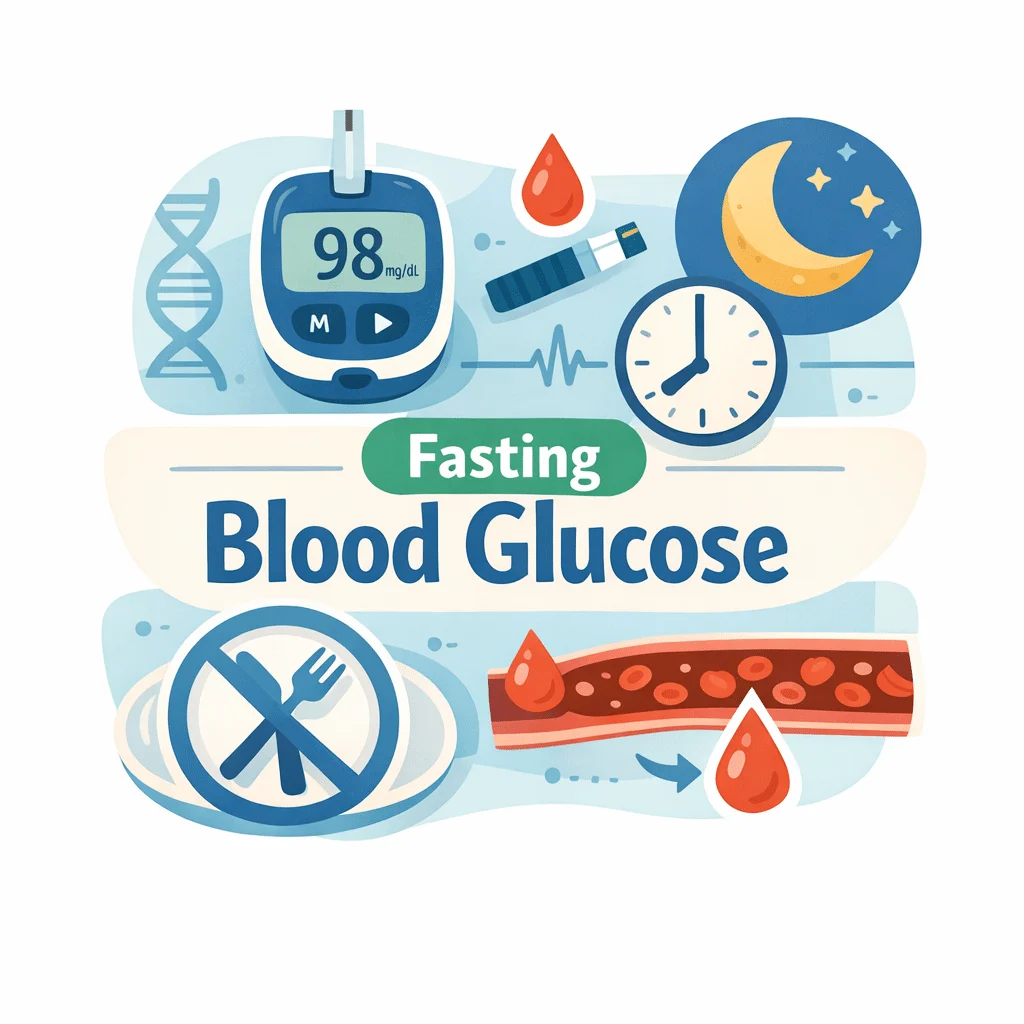
空腹時血糖検査は、アメリカで最もよく行われる血液検査のひとつです。それには十分な理由があります。この検査は、糖尿病予備群(前糖尿病)や2型糖尿病を早期に発見するための主要なスクリーニング検査だからです。最近の検査結果にこの数値が記載されていたなら、その数字が実際に何を意味するのか気になっているのではないでしょうか。この記事では、空腹時血糖が何を測定しているのか、正常・糖尿病予備群・糖尿病の各基準値の見方、数値が高くなる・低くなる原因、そして他の検査との比較に関する最新の研究についてわかりやすく解説します。また、よく使われる用語の平易な解説と、患者さんからよく寄せられる質問への回答もまとめています。
空腹時血糖検査で何がわかるか
空腹時血糖は、一定時間(通常8時間以上)食事をとらない状態で血液中を循環している糖の量を測定します。ブドウ糖(グルコース)は体の主なエネルギー源であり、食事から摂取した炭水化物や、食間に肝臓から放出される糖から供給されます。医療従事者は朝食前の早朝に採血を行うため、食後の血糖上昇ではなく、基準となる血糖値を反映した結果が得られます。
この数値を一定に保つホルモンは2つあります。膵臓で作られるインスリンは、血液中のブドウ糖を細胞に取り込み、エネルギーや貯蔵に使えるよう助けます。グルカゴンは逆の働きをし、血糖値が下がりすぎたときに肝臓へ貯蔵糖を放出するよう指示します。空腹時血糖は、直前の食事による影響を排除した状態で、このシステムがどれだけうまく機能しているかを医師が把握するための、クリアな指標となります。
医師がこの検査を指示する理由
医師が空腹時血糖を検査する主な目的は2つあります。症状はないものの糖尿病のリスク因子を持つ人へのスクリーニングと、すでに診断を受けている人の経過観察です。糖尿病前症や2型糖尿病の初期はほとんど自覚症状がないため、スクリーニングによって合併症が現れる何年も前に問題を発見できます。この検査は費用が安く、短時間で受けられ、広く普及しているため、グリコヘモグロビン(HbA1c)検査や経口ブドウ糖負荷試験(OGTT)と並ぶ第一選択の検査として今も使われています。
正常・糖尿病予備群・糖尿病の基準値
検査結果が出たら、その数値を3つの区分と照らし合わせます。正常な血糖コントロール、糖尿病予備群、そして糖尿病を定義する区分です。これらの基準値はアメリカ糖尿病学会(ADA)が定めており、疾病管理予防センター(CDC)や米国糖尿病・消化器・腎疾患研究所(NIDDK)でも同様の基準が採用されています。
| カテゴリー | 空腹時血糖(mg/dL) | 空腹時血糖(mmol/L) |
|---|---|---|
| 基準範囲内 | 100未満 | 5.6未満 |
| 糖尿病予備群 | 100〜125 | 5.6〜6.9 |
| 糖尿病 | 126以上(別の日に再検査で確認) | 7.0以上(別の日に再検査で確認) |
1回の高値だけで、すぐに診断が下されることはほとんどありません。体調不良、睡眠不足、断食が不完全だったといった日常的な要因でも数値が上がることがあるため、糖尿病の診断には通常、別の日に行った2回目の検査でも異常値が確認されることが必要です。ただし、数値が非常に高く、強い口渇や頻尿といった典型的な症状を伴う場合はこの限りではありません。これは米国糖尿病学会(ADA)の診療基準にも反映されている標準的な手順です。
数値が少し高い場合に多い原因
100 mg/dLをわずかに超える1回の結果だけでは、他のリスク因子や症状がなければ、必ずしも病気を示すわけではありません。医師が検査を繰り返したり、グリコヘモグロビン(HbA1c)検査を追加したり、空腹時の指示について確認したりするきっかけになる程度です。基準値からの差や、複数の検査結果全体のパターンのほうが、1回の孤立した数値よりも重要です。
検査結果の見方
多くの検査報告書では、空腹時血糖は「生化学検査」や「代謝パネル」といった項目の下に、腎機能や電解質の値と並んで記載されています。結果の隣には検査機関独自の基準範囲が示されており、高値には「H」、低値には「L」などのフラグや矢印が付いていることも多く、一目で確認できるようになっています。
受診前に数値を整理するための簡単なチェックリストです。
- 採血前に水のみで8時間以上絶食したことを確認してください。
- 今回の結果を、以前に測定した空腹時血糖の値と比較してください。
- 一般的な表ではなく、その検査機関独自の基準値からどれだけ離れているかを確認しましょう。
- 中性脂肪(トリグリセリド)やHbA1cなど、関連する検査値も基準範囲を外れていないか確認してください。
- 検査結果を医療従事者に持参し、ご自身の健康歴を踏まえた総合的な説明を受けてください。
空腹時血糖が高くなる原因
空腹時血糖の上昇(高血糖)は、多くの糖尿病診断における特徴的な所見です。このパターンを引き起こす原因はいくつかあり、それらを区別するには通常1つの検査だけでは不十分です。
2型糖尿病とインスリン抵抗性
2型糖尿病は、慢性的な高血糖の最も多い原因です。細胞がインスリンの働きに反応しにくくなり、血液中のブドウ糖が組織へうまく取り込まれなくなることで発症します。最初は膵臓がより多くのインスリンを分泌して補おうとしますが、長年にわたってこの代償機能が低下し、インスリンの分泌量が落ちていきます。空腹時血糖が繰り返し126 mg/dLを超え、さらに上昇した HbA1c値で診断が確定することが多いです。医師が膵臓の働き具合を確認するために インスリン血液検査 をあわせて検査することもあります。
糖尿病予備群
糖尿病予備群とは、空腹時血糖が100〜125 mg/dLの中間的な状態を指し、糖尿病の診断基準には達していないものの、早期のインスリン抵抗性があることを示しています。自覚症状がないことがほとんどであるため、35歳前後からの定期的なスクリーニングが非常に重要です。放置すると、糖尿病予備群の方のかなりの割合が2型糖尿病へ進行しますが、食事・運動・体重の改善によって回復できることも多い状態です。
1型糖尿病
1型糖尿病は、免疫系が膵臓のインスリン産生細胞を破壊する自己免疫疾患です。2型糖尿病と異なり、根本的な問題はインスリン抵抗性ではなく、インスリンの絶対的な不足です。症状は急速に現れることが多く、原因不明の体重減少、頻尿、強い倦怠感などが見られます。診断には通常、血糖検査と糖尿病関連自己抗体の検査が組み合わせて行われます。
妊娠糖尿病
妊娠糖尿病は、胎盤ホルモンがインスリン抵抗性を高めることで、主に妊娠中期から後期にかけて発症します。スクリーニングは通常、妊娠24〜28週の間に行われますが、リスク因子がある方はより早い時期に検査を受けることもあります。適切な管理により母子ともに守られ、多くの場合は出産後に改善しますが、将来的に2型糖尿病を発症するリスクが高まります。
空腹時血糖が低くなる原因
空腹時低血糖(異常に低い血糖値)は高血糖に比べてはるかにまれですが、それでも医師への相談が必要です。
反応性低血糖
この型は、真の空腹時ではなく、糖質の多い食事をとってから数時間後に起こるもので、インスリンの過剰な分泌反応が原因です。典型的な症状には、手の震え、発汗、動悸、急激な空腹感などがあります。
インスリノーマ
インスリノーマは、膵臓のインスリン産生細胞に発生するまれな腫瘍で、血糖値とは無関係にインスリンを分泌します。空腹時や運動時に低血糖発作を引き起こすことがあります。診断には、血中の低血糖値と不釣り合いに高いインスリン値の同時確認が必要で、場合によっては Cペプチド検査(膵臓自体がどれだけインスリンを産生しているかを示す指標)による補助検査も行われます。
その他の原因
糖尿病の治療薬、特にインスリンやスルホニル尿素薬は、用量が多い場合に低血糖を起こしやすい一般的な原因です。重篤な肝疾患、特定のホルモン欠乏症、膵臓以外の腫瘍によっても空腹時血糖が低下することがあります。
空腹時血糖・HbA1c・経口ブドウ糖負荷試験の違い
空腹時血糖は血糖を評価するための検査の一つに過ぎず、それぞれの検査は少しずつ異なるものを測定しています。 糖尿病の血液検査まとめ では3つの検査を並べて詳しく解説していますが、以下に簡単にまとめます。
空腹時血糖は、一晩絶食した後の一時点の血糖値を測定します。HbA1cは、ヘモグロビンに付着した糖の割合を測定することで、過去約2〜3か月間の平均血糖値を反映します。絶食は不要です。経口ブドウ糖負荷試験(OGTT)は、一定量の糖液を飲んだ後、2時間かけて体がどのように血糖を処理するかを調べるもので、空腹時血糖の一回測定では見逃しやすい食後の血糖上昇などの問題を発見できます。それぞれの検査が異なる時間帯を反映しているため、結果が一致しないこともあります。空腹時血糖が正常でもHbA1cが糖尿病予備群の範囲に入ることは珍しくなく、医師はこれを想定したうえで、一つの数値だけでなく全体像を総合的に判断します。
最新の科学的進歩
空腹時血糖とその関連検査に関する研究は、今も進化を続けています。最近の3つの知見は、医師が血糖検査を比較する方法や、患者が今後自分の血糖値をモニタリングする方法に特に関連しています。
持続血糖モニタリングは糖尿病ケアを超えて広がっています
PubMedによると、糖尿病のない1,000人以上の参加者を対象とした23件の研究をまとめた2026年のシステマティックレビュー(メタアナリシス)では、皮膚に装着して一日中血糖値を継続的に測定する小型センサーである持続血糖モニタリング(CGM)機器が、標準的なモニタリングや未実施の場合と比べて、平均血糖値を有意に改善することが示されました(Liao et al., 2026)。重要なのは、この効果が主に糖尿病予備群の方に集中していた点です。血糖調節が完全に正常な方では、追加的なメリットはほとんど見られませんでした。あなたへの意味:空腹時血糖値が糖尿病予備群の範囲にある場合、医師の指導のもとでCGMを試すことで、定期的な採血検査だけよりもリアルタイムで実践的なフィードバックが得られる可能性があります。ただし、このレビューでは、CGM単独よりも体系的な生活習慣指導と組み合わせた場合に最も効果的であることが示されています。この結果は複数の研究タイプ(小規模試験を含む)から得られたものであり、有望ではありますが、まだ確定的とは言えません。
1回の血糖測定値が2時間耐糖能試験の代わりになる
PubMedによると、1,000人以上の外来患者を対象とした2026年の研究が BMJ Open Diabetes Research & Care 経口ブドウ糖負荷試験(OGTT)の標準的な2時間後ではなく、開始から1時間後に血糖値を測定することで、糖尿病および糖尿病予備群を確実に検出できるかどうかを検討しました(Chen et al., 2026)に掲載されました。1時間後の血糖値は、両診断において従来の2時間後の結果と高い一致を示しました。あなたへの意味:空腹時血糖値が境界域だったために医師から経口ブドウ糖負荷試験を勧められた場合、検査時間をほぼ半分に短縮できる短縮版の検査が今後より一般的になる可能性があります。精度の低下はほとんどありません。ただし、これは単一施設での観察研究であるため、日常診療に広く導入される前に、より広範な検証が進められている段階です。
随時血糖検査は診断においてより有用になりつつあります
PubMedによると、バングラデシュの成人3,200人を対象とした2025年の横断研究が BMJ Openに掲載され、簡易的な随時血糖値(指先採血)を空腹時血糖値、経口ブドウ糖負荷試験、HbA1c(Bhowmik et al., 2025)。空腹なしの随時血糖検査は他の3つの検査と強い相関を示し、現行より低いカットオフ値を用いることで、現在のガイドラインが求める典型的な口渇・頻尿症状がなくても糖尿病の発見精度が向上しました。あなたへの意味:米国のガイドラインでは依然として空腹時血糖とHbA1cが診断の中心ですが、この研究は、空腹時検査の予約が難しい場合や受けられない状況で随時検査が早期発見に役立つという証拠の積み重ねに加わるものです。ただし、この研究はバングラデシュで行われたものであり、提案されたカットオフ値は米国のガイドライン機関にはまだ採用されておらず、米国の集団での確認が得られるまでは現地の診療基準には反映されません。
空腹時血糖を管理するための実践的なステップ
結果がどのカテゴリーに該当するかにかかわらず、フォローアップ検査の頻度と日常習慣はどちらも長期的な管理において重要な役割を果たします。
カテゴリー別のフォローアップ検査
- 正常血糖:35歳前後から始まる定期健診での年1回の検査が、ほとんどの成人にとって通常は十分です。
- 糖尿病予備群:生活習慣の改善とあわせて、3〜12か月ごとの再検査を医師が勧める場合があります。
- 糖尿病:主治医が個別のモニタリングスケジュールを設定します。多くの場合、3か月ごとの検査が含まれます。
食事と生活習慣
血糖値がやや高めの場合は、豆類・全粒穀物・非でんぷん質の野菜など低GI食品を積極的に取り入れ、清涼飲料水・菓子パン・フルーツジュースなど血糖値を急上昇させる食品を控えましょう。健康的な脂質を豊富に含む地中海式の食事パターンは、一貫した科学的根拠があります。また、食事を抜いてまとめ食いするのではなく、規則正しくバランスの取れた量に分けて食べることも、血糖値の安定に役立ちます。
身体活動は、インスリン感受性を改善するうえで最も強い科学的根拠の一つを持っています。有酸素運動と筋力トレーニングを組み合わせながら、週150分以上の中程度の運動を目標にし、長時間の座りっぱなしは短い運動休憩で区切るようにしましょう。過体重の方は、体重の5〜10%を減らすだけでも、体のインスリンへの反応を大きく改善できます。禁煙と適切な飲酒量の管理も、医師が推奨する基本的な生活習慣の一部です。
受診のタイミング
空腹時血糖の異常値のほとんどは、緊急ではなく通常のフォローアップで対応されます。ただし、より早めの受診が必要な状況もあります。
- 空腹時血糖が2回の別々の測定で130 mg/dLを超えている。
- 強い口渇、異常な倦怠感、頻尿、原因不明の体重減少などの症状に気づいた場合。
- 明確な理由なく、検査ごとに数値が大きく変動している。
- 糖尿病の強い家族歴があり、ご自身のリスクについて疑問をお持ちの方。
吐き気、嘔吐、深くて速い呼吸、意識の混乱、または果物のような甘い口臭がある場合は、すぐに医療機関を受診してください。これらは糖尿病性ケトアシドーシスのサインである可能性があり、早急な治療が必要な危険な合併症です。他にリスク因子がない場合、105 mg/dLなどの軽度の高値が1回だけ見られても、通常は経過観察で十分であり、過度に心配する必要はありません。ご自身の状況については、かかりつけ医に相談されることをおすすめします。
用語集
| 用語 | 定義 |
|---|---|
| 持続血糖モニター(CGM) | 一日中・夜間を通じて血糖値を継続的に測定できる小型の皮膚センサーで、繰り返し指先を刺す必要がありません。 |
| 空腹時血漿血糖値(FPG) | 8時間以上の絶食後に測定する血糖値で、糖尿病のスクリーニングおよび診断に使用されます。 |
| グルカゴン | 血糖値が下がったときに肝臓に蓄えられたグルコースを放出するよう指示する、膵臓で作られるホルモンです。 |
| グリコヘモグロビン(HbA1c) | 過去2〜3か月間の平均血糖値を反映する血液検査で、糖と結合したヘモグロビン(糖化ヘモグロビン)をもとに算出されます。 |
| 高血糖 | 血糖値が正常より高い状態で、糖尿病予備群や糖尿病の主な所見です。 |
| 低血糖 | 血糖値が正常より低い状態で、手の震え、発汗、意識の混乱などを引き起こすことがあります。 |
| インスリン | 血液中のグルコースをエネルギーや貯蔵のために細胞に取り込む働きを助ける、膵臓で作られるホルモンです。 |
| インスリン抵抗性 | 細胞がインスリンに対してうまく反応できない状態で、血糖値を正常に保つために膵臓がより多くのインスリンを分泌しなければならなくなります。 |
| 経口ブドウ糖負荷試験(OGTT) | 一定量の糖液を飲む前後の血糖値を測定する検査で、糖尿病や糖尿病予備群(前糖尿病)の発見に使用されます。 |
| 糖尿病予備群 | 正常値より高いものの糖尿病の診断基準には達していない血糖値の状態で、生活習慣の改善によって回復できることが多いです。 |
空腹時血糖に関するよくある質問
空腹時血糖値とHbA1cの違いは何ですか?
空腹時血糖は、一晩絶食した後の一時点における血糖値のスナップショットです。一方、HbA1cはヘモグロビンに付着した糖の割合を測定することで、過去約2〜3か月間の平均血糖値を反映します。どちらか一方がもう一方の代わりになるわけではなく、異なる時間帯をとらえ、異なる種類の問題を発見できるため、医師は両方を一緒に検査することがよくあります。たとえば、空腹時血糖が正常でもHbA1cが高い場合は、食後にのみ起こる血糖の急上昇を示している可能性があります。
空腹時血糖が正常でも糖尿病になることはありますか?
はい、その可能性はあります。空腹時血糖が正常範囲内でも、食後に血糖値が大きく上昇する方がいます。これは「食後高血糖」と呼ばれることがあります。経口ブドウ糖負荷試験(OGTT)や持続血糖モニタリングによってこのパターンを確認でき、空腹時血糖が正常でもHbA1cが高い場合もあります。空腹時血糖の結果が問題なくても疑いが残る場合に、医師が複数の種類の血糖検査を組み合わせて行うことがあるのはこのためです。
薬が空腹時血糖に影響することはありますか?
いくつかの薬剤クラスは血糖値の測定結果に影響を与えることがあります。コルチコステロイドは肝臓での糖産生を増加させてインスリン抵抗性を悪化させるため、空腹時血糖値が目に見えて上昇することがよくあります。高血圧に処方される一部の利尿薬も、血糖値をわずかに上昇させることがあります。一方、糖尿病の薬は、活動量や食事量に合わせて用量が調整されていない場合、血糖値が下がりすぎることがあります。服用しているすべての薬やサプリメントについて、必ず担当医と検査機関に伝えてください。こうした情報が、結果をどのように解釈すべきかを左右します。
なぜ朝の空腹時血糖値が高くなるのですか?
このパターンは「暁現象」と呼ばれることがよくあります。午前4時から8時頃にかけて、体は目覚めの準備としてコルチゾールや成長ホルモンなどのホルモンを自然に分泌します。これらのホルモンが血糖値を上昇させることがあります。インスリン抵抗性のある方では、この影響がより顕著に現れ、日中の血糖値よりも朝の測定値が高くなることがあります。このようなパターンが続く場合は担当医に相談してください。薬の服用タイミングや夕食の時間を調整する必要がある場合があります。
糖尿病でない人が持続血糖モニタリング(CGM)を使うとどのような仕組みですか?
持続血糖モニター(CGM)は、通常は腕や腹部に装着する小型のセンサーで、皮膚のすぐ下の組織液に含まれるグルコースを数分ごとに測定します。糖尿病のない方でも、特定の食事・運動・睡眠・ストレスが血糖パターンにどう影響するかを把握できます。これは1回の空腹時採血では決してわからないことです。現在の研究では、最も明確なメリットはすでに糖尿病予備群(前糖尿病)の方にあり、フィードバックが生活習慣の改善を後押しすることが示されています。血糖値が正常な健康な方への有用性については、まだ十分なエビデンスがありません。短期間のCGM使用があなたの状況に適しているかどうかは、医師にご相談ください。
空腹時血糖とOGTT(経口ブドウ糖負荷試験)の結果が一致しない場合はどうすればよいですか?
検査結果が一致しないことはよくあることで、検査ミスではなく想定の範囲内です。空腹時血糖、HbA1c、経口ブドウ糖負荷試験(OGTT)はそれぞれ血糖調節の異なる側面を測定しているため、一つの検査では正常でも別の検査では境界域になることがあります。これはそれぞれの検査の特性の違いを反映しているにすぎません。医師は通常、一つの数値だけで診断を下すのではなく、すべての検査結果を症状やリスク因子とあわせて総合的に判断します。結果に矛盾があると感じた場合は、検査を繰り返すかHbA1cを追加することで状況が明確になるかどうか、医師に相談してみましょう。
空腹時血糖の結果を理解することは大切な第一歩ですが、その数値だけでは全体像はわかりません。他の検査項目や個人の健康歴と合わせて読むことで、初めて意味が見えてきます。結果を並べて整理することで、担当医との診察で大きな話題になる前にパターンを見つけやすくなります。
AI DiagMeで血液検査の結果をわかりやすく確認
参考文献
- 糖尿病の検査 — 米国疾病予防管理センター(CDC)
- 糖尿病の検査と診断 — 米国国立糖尿病・消化器・腎臓病研究所(NIDDK)
- 糖尿病予備群:診断と治療 — メイヨー・クリニック
- Liao X, Li Y, Tang S, Xiao Y, Yu X, Huang R, Zhong T. “Continuous glucose monitoring in non-diabetic populations: a systematic review of observational and interventional studies with meta-analysis.” European Journal of Medical Research, 2026. DOI: 10.1186/s40001-026-03920-0 (PubMed経由)
- Chen L, Bian B, Ran H, Niu Y, Li Y, Su Q, Zhang H. “Feasibility of using OGTT 1-h PG as a diagnostic criterion for diabetes and pre-diabetes.” BMJ Open Diabetes Research & Care, 2026. DOI: 10.1136/bmjdrc-2025-005689 (PubMed経由)
- Bhowmik B, Siddiquee T, Munir SB, et al. “Random capillary blood glucose in the diagnosis of diabetes: a cross-sectional study in Bangladesh.” BMJ Open, 2025. DOI: 10.1136/bmjopen-2024-093938 (PubMed経由)