


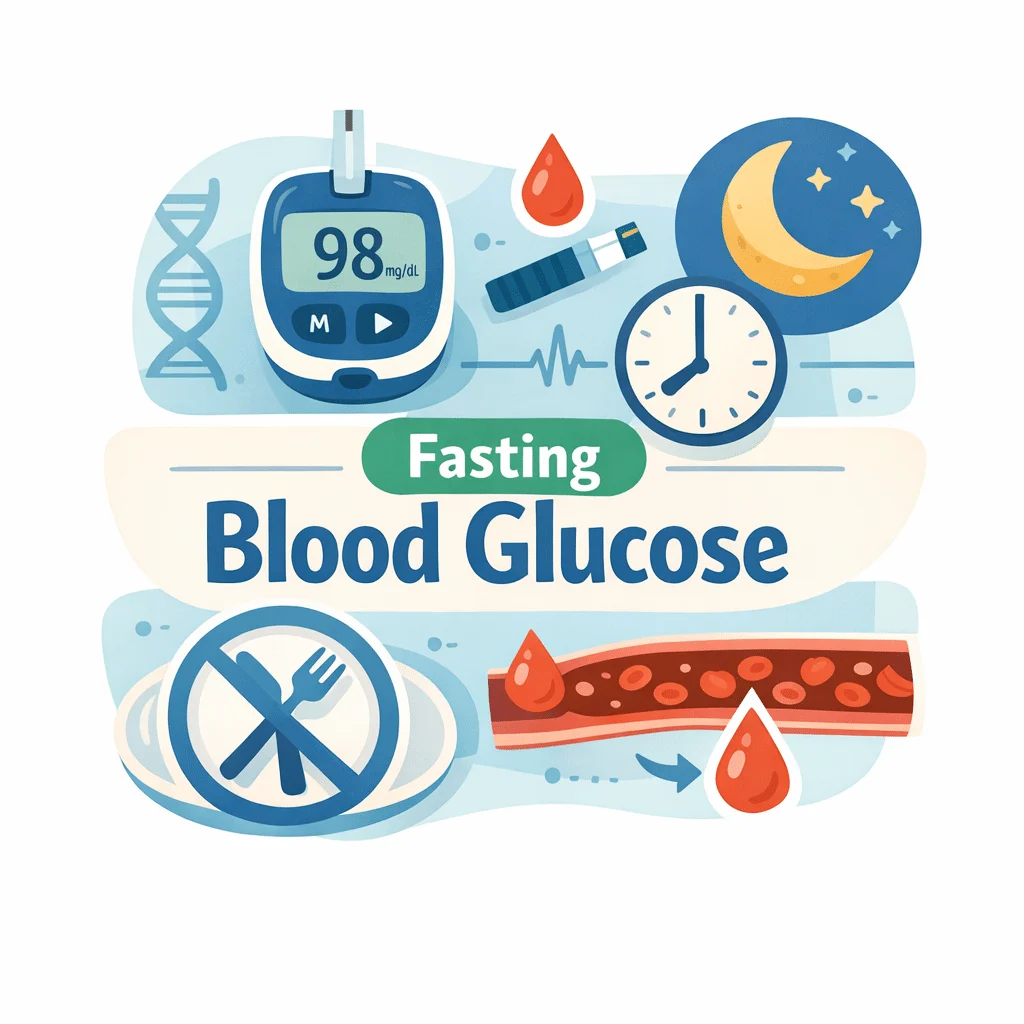
Paastoverensokeri on yksi yleisimmistä verikokeista, ja syystä: se on keskeinen seulontatyökalu prediabeteksen ja tyypin 2 diabeteksen tunnistamiseen. Jos viimeisimmässä laboratoriovastauksessasi näkyy tämä arvo, mietit todennäköisesti, mitä luku oikeastaan kertoo. Tässä artikkelissa selitetään, mitä paastoverensokeri mittaa, miten luet normaalit arvot sekä prediabetes- ja diabetesrajat, mitkä tekijät nostavat tai laskevat arvoa ja mitä uusin tutkimus sanoo sen vertailusta muihin testeihin. Löydät myös selkokielisen sanaston ja vastaukset yleisimpiin potilaskysymyksiin.
Mitä paastoverensokeri mittaa
Paastoverensokeri mittaa veressä kiertävän sokerin määrää sen jälkeen, kun et ole syönyt – yleensä vähintään kahdeksan tuntia. Glukoosi on kehosi tärkein energianlähde: sitä tulee syömistäsi hiilihydraateista sekä maksasi aterioiden välillä vapauttamasta sokerista. Terveydenhuollon ammattilainen ottaa näytteen aamulla ennen aamupalaa, jolloin tulos kuvaa verensokerisi perustasoa eikä aterian jälkeistä piikkiä.
Kaksi hormonia pitää tämän arvon tasaisena. Haiman tuottama insuliini auttaa solujasi ottamaan glukoosia verestä energiaksi tai varastoon. Glukagoni toimii päinvastoin: se käskee maksaa vapauttamaan varastoitua sokeria, kun taso laskee liian alas. Paastoverensokeri antaa lääkärille selkeän kuvan siitä, kuinka hyvin tämä järjestelmä toimii – ilman äskettäisen aterian aiheuttamaa häiriötä.
Miksi lääkäri määrää tämän testin
Lääkärit määräävät paastoverensokerin kahdesta pääsyystä: seulomaan oireettomia henkilöitä, joilla on diabeteksen riskitekijöitä, sekä seuraamaan jo diagnosoituja potilaita. Koska prediabetes ja varhainen tyypin 2 diabetes harvoin aiheuttavat selviä oireita, seulonta paljastaa ongelmat vuosia ennen komplikaatioiden kehittymistä. Testi on edullinen, nopea ja laajalti saatavilla, minkä vuoksi se on edelleen ensilinjan tutkimus glykoituneen hemoglobiinin mittauksen ja oraalisen glukoosirasituskokeen rinnalla.
Normaalit, prediabeteksen ja diabeteksen viitearvot
Kun tuloksesi on valmis, lukua verrataan kolmeen luokkaan, jotka määrittelevät normaalin sokeriaineenvaihdunnan, prediabeteksen ja diabeteksen. Nämä raja-arvot perustuvat American Diabetes Associationin suosituksiin, joita myös Centers for Disease Control and Prevention sekä National Institute of Diabetes and Digestive and Kidney Diseases noudattavat.
| Kategoria | Paastoglukoosi (mg/dL) | Paastoglukoosi (mmol/L) |
|---|---|---|
| Normaali | Alle 100 | Alle 5,6 |
| Prediabetes | 100–125 | 5,6–6,9 |
| Diabetes | 126 tai enemmän, vahvistettu toisella testillä | 7,0 tai enemmän, vahvistettu toisella testillä |
Yksittäinen kohonnut tulos johtaa harvoin suoraan diagnoosiin. Koska arkiset tekijät – kuten sairaus, huono uni tai epätäydellinen paasto – voivat nostaa lukemaa hieman, diabetesdiagnoosi edellyttää yleensä toisen poikkeavan testin eri päivänä. Poikkeuksena on tilanne, jossa arvo on hyvin korkea ja siihen liittyy tyypillisiä oireita, kuten voimakasta janontunnetta tai tiheää virtsaamista. Tämä on vakiintunut käytäntö, joka on kirjattu American Diabetes Associationin hoitosuosituksiin.
Mitä lievästi kohonneet arvot yleensä tarkoittavat
Yksittäinen tulos, joka on hieman yli 100 mg/dL ilman muita riskitekijöitä tai oireita, ei automaattisesti viittaa sairauteen. Se voi yksinkertaisesti johtaa siihen, että lääkärisi haluaa toistaa testin, tilata HbA1c-mittauksen tai tarkistaa, noudatitko paasto-ohjeita. Raja-arvosta etäisyys ja kokonaiskuva kaikkien tulostesi perusteella ovat tärkeämpiä kuin yksittäinen luku.
Laboratorioraportin lukeminen
Useimmissa laboratorioraporteissa paastoglukoosi löytyy otsikon, kuten “kemia” tai “aineenvaihduntapaneeli”, alta munuais- ja elektrolyyttiarvojen yhteydestä. Tuloksesi vieressä näkyy laboratorion oma viitearvo, ja monissa raporteissa on myös merkintä, kuten “H” korkeasta tai “L” matalasta arvosta, sekä nuolia nopeana visuaalisena vihjeenä.
Lyhyt tarkistuslista auttaa sinua ymmärtämään lukua ennen vastaanottokäyntiä.
- Varmista, että olit syömättä vähintään kahdeksan tuntia ennen verinäytteenottoa – vain vesi oli sallittu.
- Vertaa tämänpäiväistä tulosta aiempiin paastoverensokerin arvoihisi, jos niitä on.
- Kiinnitä huomiota siihen, kuinka kaukana lukusi on laboratorion omasta raja-arvosta – älä vertaa yleiseen taulukkoon.
- Tarkista, ovatko myös muut liittyvät arvot, kuten triglyseridit tai HbA1c, viiterajojen ulkopuolella.
- Vie raportti terveydenhuollon ammattilaiselle kokonaisvaltaista tulkintaa varten terveyshistoriasi kontekstissa.
Mikä aiheuttaa korkean paastoverensokerin
Kohonnut paastoverensokeri eli hyperglykemia on keskeinen löydös useimpien diabetesdiagnoosien taustalla. Useat eri tilat voivat aiheuttaa tämän kuvion, ja niiden erottaminen toisistaan vaatii yleensä useamman kuin yhden testin.
Tyypin 2 diabetes ja insuliiniresistenssi
Tyypin 2 diabetes on kroonisen hyperglykemian yleisin syy. Se kehittyy, kun solut muuttuvat resistenteiksi insuliinin vaikutuksille, jolloin glukoosi ei pääse siirtymään verestä kudoksiin. Haima kompensoi tätä aluksi tuottamalla enemmän insuliinia, mutta vuosien kuluessa tämä kompensaatio voi heikentyä ja insuliinin eritys vähentyä. Toistuvasti yli 126 mg/dl:n paastoglukoosi yhdistettynä kohonneeseen HbA1c-tulos, vahvistaa diagnoosin yleensä. Lääkärit määräävät joskus myös insuliiniverikoe glukoosin rinnalle arvioidakseen, kuinka kovasti haima työskentelee.
Prediabetes
Prediabetes tarkoittaa paastoglukoosia välillä 100–125 mg/dl – välivyöhykettä, joka viittaa varhaiseen insuliiniresistenssiin ilman, että varsinaisen diabeteksen raja ylittyy. Se on usein oireeton, minkä vuoksi säännöllinen seulonta noin 35 ikävuodesta alkaen on niin tärkeää. Jos tilaan ei puututa, huomattava osa prediabetesta sairastavista sairastuu tyypin 2 diabetekseen – vaikka tila on usein palautettavissa ruokavalion, liikunnan ja painonhallinnan avulla.
Tyypin 1 diabetes
Tyypin 1 diabetes on autoimmuunisairaus, jossa immuunijärjestelmä tuhoaa haiman insuliinia tuottavat solut. Toisin kuin tyypin 2 diabeteksessa, perussyynä on insuliinin täydellinen puute eikä insuliiniresistenssi. Oireet ilmaantuvat usein nopeasti ja voivat sisältää selittämätöntä laihtumista, tiheää virtsaamistarvetta ja voimakasta väsymystä. Diagnoosi perustuu yleensä verensokerimittauksiin sekä diabetekseen liittyvien vasta-aineiden tutkimiseen.
Raskausdiabetes
Raskausdiabetes ilmaantuu raskauden aikana, yleensä toisella tai kolmannella kolmanneksella, kun istukan hormonit lisäävät insuliiniresistenssiä. Seulonta tehdään tavallisesti raskausviikkojen 24–28 välillä, mutta lisäriskitekijöitä omaavia henkilöitä voidaan testata aiemmin. Hyvä hoitotasapaino suojaa sekä äitiä että vauvaa, ja tila häviää yleensä synnytyksen jälkeen – tosin se suurentaa tyypin 2 diabeteksen riskiä tulevaisuudessa.
Mikä aiheuttaa matalan paastoverensokerin
Paastohypoglykemia eli poikkeavan matala verensokeriarvo on paljon harvinaisempi kuin hyperglykemia, mutta sekin vaatii lääkärin arviota.
Reaktiivinen hypoglykemia
Tämä muoto ilmaantuu muutama tunti runsashiilihydraattisen aterian jälkeen eikä varsinaisen paaston aikana, ja se johtuu liiallisesta insuliinivasteesta. Tyypillisiä oireita ovat vapina, hikoilu, sydämentykytys ja äkillinen nälän tunne.
Insuliinioma
Insulinooma on harvinainen haiman insuliinia tuottavien solujen kasvain, joka erittää insuliinia verensokeritasosta riippumatta. Se voi aiheuttaa hypoglykemiakohtauksia paaston tai liikunnan yhteydessä. Diagnoosi perustuu matalan glukoosin ja epäasianmukaisesti korkean insuliinin samanaikaiseen löydökseen veressä, ja sitä voidaan tukea C-peptiditesti, joka kertoo, kuinka paljon haima itse tuottaa insuliinia.
Muut syyt
Diabeteslääkkeet – erityisesti insuliini ja sulfonyyliureat – ovat yleinen matalan verensokerin syy etenkin suuremmilla annoksilla. Myös vaikea maksasairaus, tietyt hormonipuutokset ja jotkin haiman ulkopuoliset kasvaimet voivat laskea paastoverensokeria.
Paastoverensokeri, HbA1c ja oraalinen glukoosinsietokoe
Paastoverensokeri on vain yksi useista verensokerin arviointiin käytettävistä testeistä, ja jokainen mittaa hieman eri asiaa. diabeteksen verikokeiden yleiskatsaus käsittelee kaikkia kolmea rinnakkain, mutta lyhyt yhteenveto on alla.
Paastoverensokeri kuvaa yhtä hetkeä yön yli kestäneen paaston jälkeen. HbA1c heijastaa keskimääräistä verensokerisi tasoa noin kahden–kolmen kuukauden ajalta mittaamalla sokerin peittämän hemoglobiinin osuuden, eikä se vaadi paastoa lainkaan. Oraalinen glukoosinsietokoe (OGTT) seuraa, miten elimistösi käsittelee mitatun sokerijuoman kahden tunnin aikana – tämä paljastaa ongelmia, jotka yksittäinen paastomittaus voi jättää huomaamatta, erityisesti aterian jälkeiset verensokeripiikit. Koska jokainen testi tarkastelee eri aikaväliä, tulokset eivät aina täsmää keskenään, ja normaali paastoverensokeri yhdistettynä prediabetesalueella olevaan HbA1c-arvoon ei ole harvinaista. Lääkärit odottavat tätä ja arvioivat kokonaiskuvaa yksittäisen luvun sijaan.
Uusimmat tieteelliset edistysaskeleet
Paastoglukoosia ja sen oheistestejä koskeva tutkimus kehittyy jatkuvasti. Kolme viimeaikaista löydöstä on erityisen merkityksellisiä sen kannalta, miten lääkärit vertailevat glukoositestejä ja miten sinä voit seurata omia verensokeritasojasi tulevaisuudessa.
Jatkuva glukoosiseuranta laajenee diabeteshoidon ulkopuolelle
PubMedin mukaan vuoden 2026 systemaattinen katsaus ja meta-analyysi, jossa yhdistettiin 23 tutkimusta ja yli 1 000 diabetesta sairastamatonta osallistujaa, osoitti, että jatkuvan glukoosiseurannan (CGM) laitteet – pienet iholla pidettävät anturit, jotka seuraavat glukoosia koko päivän ajan – paransivat merkittävästi keskimääräisiä verensokerilukemia verrattuna tavanomaiseen seurantaan tai seurannan puuttumiseen (Liao et al., 2026). Tärkeää on, että hyöty keskittyi henkilöihin, joilla oli jo prediabetes; täysin normaalin sokeriaineenvaihdunnan omaavat henkilöt eivät hyötyneet juuri lainkaan lisää. Mitä tämä tarkoittaa sinulle: jos paastoverensokerisi on prediabetesalueella, lääkärin valvonnassa toteutettu jatkuvan glukoosiseurannan (CGM) kokeilu voi tarjota hyödyllisempää, reaaliaikaista tietoa kuin pelkät ajoittaiset laboratoriotutkimukset – tosin katsauksen mukaan se toimii parhaiten yhdistettynä ohjattuun elintapavalmennukseen eikä yksinään käytettynä. Tulokset perustuvat erityyppisten tutkimusten yhdistelmään, mukaan lukien useita pienempiä kokeita, joten pidä niitä rohkaisevina mutta ei vielä lopullisina.
Yksittäinen verensokerimittaus voi korvata kahden tunnin rasituskokeen
PubMedin mukaan vuoden 2026 tutkimus, johon osallistui yli 1 000 avohoitopotilasta ja joka julkaistiin lehdessä BMJ Open Diabetes Research & Care , selvitti, voiko verensokerimittaus jo tunnin kuluttua oraalisen glukoositoleranssikokeen aloittamisesta – tavanomaisen kahden tunnin sijaan – tunnistaa luotettavasti diabeteksen ja prediabeteksen (Chen ym., 2026). Tunnin kohdalla mitattu arvo vastasi läheisesti perinteistä kahden tunnin tulosta molempien diagnoosien osalta. Mitä tämä tarkoittaa sinulle: jos lääkärisi suosittelee oraalista glukoositoleranssikoetta rajallisen paastoverensokeriarvosi vuoksi, lyhyempi versio tästä kokeesta saattaa yleistyä – se puolittaisi vastaanottoajan ilman merkittävää tarkkuuden heikkenemistä. Kyseessä oli yhden keskuksen seurantatutkimus, joten menetelmää validoidaan vielä laajemmin ennen kuin se muuttaa rutiinidiagnostiikkaa kaikkialla.
Satunnaiset verensokerimittaukset ovat yhä hyödyllisempiä diagnostiikassa
PubMedin mukaan vuoden 2025 poikkileikkaustutkimus, johon osallistui 3 200 aikuista Bangladeshissa ja joka julkaistiin lehdessä BMJ Open, vertaili yksinkertaista satunnaista verensokerimittausta sormenpäästä paastoverensokeriin, oraaliseen glukoositoleranssikokeeseen ja HbA1c-arvoon (Bhowmik ym., 2025). Satunnainen testi korreloi vahvasti muiden kolmen kanssa, ja nykyistä matalampi raja-arvo paransi sen tarkkuutta diabeteksen tunnistamisessa – ilman että vaadittiin klassisia jano- ja virtsaamisoireita, joita nykyiset hoitosuositukset edellyttävät. Mitä tämä tarkoittaa sinulle: vaikka Yhdysvaltojen suositukset perustuvat edelleen paaston jälkeiseen verensokeriin ja HbA1c:hen diagnoosin tekemisessä, tämä tutkimus vahvistaa kasvavaa näyttöä siitä, että nopeat, ilman paastoa tehtävät testit voivat auttaa tunnistamaan diabeteksen aiemmin tilanteissa, joissa paastoaikaa vaativalle käynnille pääsy on hankalaa tai mahdotonta. Tämä tutkimus tehtiin Bangladeshissa, joten sen ehdottamaa raja-arvoa ei ole vielä hyväksytty yhdysvaltalaisiin hoitosuosituksiin, ja se vaatisi vahvistuksen amerikkalaisissa väestöissä ennen kuin paikallisia käytäntöjä muutettaisiin.
Käytännön vinkkejä paastoverensokerin hallintaan
Riippumatta siitä, mihin kategoriaan tuloksesi kuuluu, sekä seurantatestien tiheys että päivittäiset elintavat vaikuttavat pitkäaikaiseen hallintaan.
Seurantatestit kategorian mukaan
- Normaali verensokeri: vuosittainen testaus rutiiniterveystarkastuksen yhteydessä riittää yleensä useimmille aikuisille noin 35 ikävuodesta alkaen.
- Prediabetes: lääkärisi saattaa suositella uusintatarkastusta 3–12 kuukauden välein elintapamuutosten ohella.
- Diabetes: terveydenhuollon ammattilaisesi laatii sinulle yksilöllisen seurantasuunnitelman, johon kuuluu usein tarkastus kolmen kuukauden välein.
Ravitsemus ja elintavat
Jos arvosi ovat hieman koholla, suosi matalan glykeemisen indeksin ruokia, kuten palkokasveja, täysjyväviljoja ja tärkkelystöntä kasviksia, ja vähennä nopeasti verensokeria nostavia sokereita, kuten virvoitusjuomia, leivonnaisia ja hedelmämehua. Terveellisiä rasvoja sisältävällä Välimeren ruokavaliolla on johdonmukainen tutkimusnäyttö taustallaan. Myös aterioiden jakaminen säännöllisiin, tasapainoisiin annoksiin aterioiden väliin jättämisen ja ylensyömisen sijaan auttaa pitämään arvot tasaisina.
Liikunnalla on yksi vahvimmista näyttöperusteista insuliiniherkkyyden parantamisessa. Tavoittele vähintään 150 minuuttia kohtalaisen rasittavaa liikuntaa viikossa yhdistämällä kestävyysharjoittelua ja voimaharjoittelua, ja tauota pitkiä istumisjaksoja lyhyillä liikuntahetkillä. Jopa 5–10 prosentin painonpudotus ylipainoisilla voi merkittävästi parantaa kehon insuliinivastetta. Tupakoinnin välttäminen ja alkoholin käytön pitäminen suositelluissa rajoissa täydentävät lääkäreiden suosittelemia keskeisiä elintapoja.
Milloin mennä lääkäriin
Useimmat poikkeavat paastoverensokeriarvot hoidetaan tavallisen seurannan kautta eikä kiireellistä hoitoa tarvita. Tietyissä tilanteissa on kuitenkin syytä hakeutua hoitoon nopeammin.
- Paastoverensokerisi ylittää 130 mg/dL kahdella erillisellä mittauskerralla.
- Huomaat oireita, kuten voimakasta janoa, epätavallista väsymystä, tiheää virtsaamistarvetta tai selittämätöntä laihtumista.
- Lukemasi vaihtelevat suuresti mittausten välillä ilman selvää syytä.
- Sinulla on vahva diabeteksen sukuhistoria ja kysymyksiä omasta riskistäsi.
Hakeudu kiireelliseen hoitoon, jos sinulla on pahoinvointia, oksentelua, syvää tai nopeaa hengitystä, sekavuutta tai hedelmäiseltä tuoksuvaa hengitystä – nämä voivat olla merkkejä diabeettisesta ketoasidoosista, joka on vaarallinen komplikaatio ja vaatii välitöntä hoitoa. Yksittäinen lievästi kohonnut tulos, kuten 105 mg/dL, ilman muita riskitekijöitä, vaatii yleensä vain seurantaa eikä syytä huoleen. Lääkärisi osaa parhaiten neuvoa sinua omassa tilanteessasi.
Sanasto
| Termi | Määritelmä |
|---|---|
| Jatkuva glukoosinseuranta (CGM) | Pieni ihosensori, joka seuraa verensokeritasoja päivän ja yön ympäri ilman toistuvia sormenpäämittauksia. |
| Paastoverensokeri (FPG) | Verensokerimittaus, joka otetaan vähintään kahdeksan tunnin paaston jälkeen ja jota käytetään diabeteksen seulontaan ja diagnosointiin. |
| Glukagoni | Haiman tuottama hormoni, joka käskee maksaa vapauttamaan varastoitua glukoosia, kun verensokeri laskee. |
| Glykoitunut hemoglobiini (HbA1c) | Verikoe, joka kuvastaa keskimääräistä verensokeria viimeisten kahden–kolmen kuukauden ajalta sokeroituneen hemoglobiinin perusteella. |
| Hyperglykemia | Normaalia korkeampi verensokeri, joka on keskeinen löydös prediabeteksessa ja diabeteksessa. |
| Hypoglykemia | Normaalia matalampi verensokeri, joka voi aiheuttaa vapinaa, hikoilua ja sekavuutta. |
| Insuliini | Haiman tuottama hormoni, joka auttaa soluja ottamaan glukoosia verestä energiaksi tai varastoitavaksi. |
| Insuliiniresistenssi | Tila, jossa solut reagoivat insuliiniin heikosti, jolloin haiman täytyy tuottaa enemmän insuliinia pitääkseen glukoositason kurissa. |
| Oraalinen glukoosirasituskoe (OGTT) | Koe, jossa mitataan verensokeri ennen sokeriliuoksen juomista ja sen jälkeen; käytetään diabeteksen ja esidiabeteksen toteamiseen. |
| Prediabetes | Verensokeri on normaalia korkeampi, mutta jää alle diabeteksen rajan; usein palautettavissa normaaliksi elintapamuutoksilla. |
Usein kysyttyjä kysymyksiä paastoverensokerista
Mitä eroa on paastoverensokerilla ja HbA1c:llä?
Paastoverensokeri kertoo sokeritasostasi yhdellä hetkellä yön yli kestäneen paaston jälkeen. HbA1c puolestaan kuvastaa keskimääräistä verensokeriasi viimeisten noin kahden tai kolmen kuukauden ajalta mittaamalla, kuinka suuri osa hemoglobiinista on sokeroitunut. Kumpikaan testi ei korvaa toista – lääkärit määräävät usein molemmat, koska ne kuvaavat eri aikavälejä ja voivat paljastaa erilaisia ongelmia. Esimerkiksi normaali paastoverensokeri yhdistettynä korkeaan HbA1c-arvoon voi viitata sokeripiikeihin, joita esiintyy vain aterioiden jälkeen.
Voiko paastoverensokeri olla normaali ja silti sairastaa diabetesta?
Kyllä, tämä on mahdollista. Joillakin ihmisillä paastolukemat pysyvät normaaleina, mutta verensokeri nousee merkittävästi aterioiden jälkeen – tätä kutsutaan joskus postprandiaaliseksi hyperglykemiaksi. Oraalinen glukoositoleranssitesti tai jatkuva glukoosinseuranta voi paljastaa tämän mallin, ja HbA1c saattaa myös olla koholla normaalista paastoarvosta huolimatta. Tämän vuoksi lääkärit määräävät joskus useamman kuin yhden glukoositestin, kun epäily jää voimaan huolimatta normaalista paastotuloksesta.
Miten lääkkeet voivat vaikuttaa paastoverensokeriin?
Useat lääkeryhmät voivat muuttaa verensokeriarvoja. Kortikosteroidit lisäävät maksan glukoosituotantoa ja heikentävät insuliiniherkkyyttä, mikä usein nostaa paastoarvoja selvästi. Myös tietyt verenpainelääkkeenä käytettävät diureetit voivat nostaa verensokeria jonkin verran. Toisaalta jotkin diabeteslääkkeet voivat laskea verensokerin liian alas, jos annoksia ei ole sovitettu fyysiseen aktiivisuuteen tai ruokailuun. Kerro aina lääkärillesi ja laboratorioon kaikista käyttämistäsi lääkkeistä ja lisäravinteista, sillä nämä tiedot vaikuttavat siihen, miten tulosta tulkitaan.
Miksi paastoverensokerini on aamulla korkeampi?
Tätä ilmiötä kutsutaan usein aamukoittoilmiöksi. Noin kello 4–8 välillä elimistö vapauttaa luonnollisesti hormoneja, kuten kortisolia ja kasvuhormonia, valmistautuakseen heräämiseen, ja nämä hormonit voivat nostaa verensokeria. Insuliiniresistenssiä sairastavilla tämä vaikutus voi olla voimakkaampi, jolloin aamuinen verensokeri on korkeampi kuin päivän mittaan mitatut arvot. Kerro lääkärillesi, jos tämä kaava toistuu säännöllisesti – joskus lääkityksen ajoitusta tai iltapalaa täytyy muuttaa.
Miten jatkuva glukoosinseuranta toimii henkilöillä, joilla ei ole diabetesta?
Jatkuva glukoosisensori (CGM) on pieni ihoon kiinnitettävä sensori, joka sijoitetaan yleensä olkavarteen tai vatsalle. Se mittaa glukoosia ihon alla olevasta kudosnesteestä muutaman minuutin välein. Diabetesta sairastamattomille se voi paljastaa, miten tietyt ateriat, liikunta, uni tai stressi vaikuttavat verensokeritasoihin – tietoa, jota yksittäinen paastoverinäyte ei koskaan tavoita. Nykytutkimuksen mukaan selkein hyöty on esidiabetesta sairastavilla, joilla lisäpalaute voi tukea elintapamuutoksia; näyttö terveiden, normoglykeemisten henkilöiden kohdalla on ohuempaa. Lääkäri voi neuvoa, sopiiko lyhytaikainen CGM-käyttö sinun tilanteeseesi.
Mitä pitää tehdä, jos paastoglukoosi ja OGTT-tulokset ovat ristiriidassa keskenään?
Testitulosten väliset erot ovat tavallisia eivätkä merkitse mittausvirhettä. Paastoglukoosi, HbA1c ja oraalinen glukoosinsietokoe mittaavat kukin eri puolta sokeriaineenvaihdunnasta, joten normaali tulos yhdessä testissä ja raja-arvo toisessa kertoo vain näistä eroista. Lääkärisi arvioi yleensä kaikkia tuloksia yhdessä oireidesi ja riskitekijöidesi kanssa eikä tee diagnoosia pelkän yksittäisen luvun perusteella. Jos tulokset tuntuvat ristiriitaisilta, kysy lääkäriltäsi, auttaisiko testin toistaminen tai HbA1c-mittauksen lisääminen selkeyttämään tilannetta.
Paastoglukoosituloksesi ymmärtäminen on tärkeä ensiaskel, mutta luku kertoo vain osan tarinasta – se saa täyden merkityksensä vasta muiden laboratorioarvojesi ja terveyshistoriasi rinnalla. Selkeä, rinnakkainen näkymä tuloksiisi helpottaa kuvioiden tunnistamista ennen kuin niistä tulee laajempi keskustelunaihe lääkärisi kanssa.
Ymmärrä laboratoriotuloksiasi tekoälyn DiagMen avulla
Tulkitse tuloksesi muutamassa minuutissa
Lähteet
- Diabeteksen testaus — Centers for Disease Control and Prevention
- Diabetestestit & diagnoosi — National Institute of Diabetes and Digestive and Kidney Diseases (NIDDK)
- Prediabetes: Diagnoosi ja hoito — Mayo Clinic
- Liao X, Li Y, Tang S, Xiao Y, Yu X, Huang R, Zhong T. “Continuous glucose monitoring in non-diabetic populations: a systematic review of observational and interventional studies with meta-analysis.” European Journal of Medical Research, 2026. DOI: 10.1186/s40001-026-03920-0 (via PubMed)
- Chen L, Bian B, Ran H, Niu Y, Li Y, Su Q, Zhang H. “Feasibility of using OGTT 1-h PG as a diagnostic criterion for diabetes and pre-diabetes.” BMJ Open Diabetes Research & Care, 2026. DOI: 10.1136/bmjdrc-2025-005689 (via PubMed)
- Bhowmik B, Siddiquee T, Munir SB, et al. “Random capillary blood glucose in the diagnosis of diabetes: a cross-sectional study in Bangladesh.” BMJ Open, 2025. DOI: 10.1136/bmjopen-2024-093938 (via PubMed)
Lisälukemista
- Diabeteksen verikoetestit: glukoosi, HbA1c ja insuliini
- Glykoitu hemoglobiini (HbA1c): Täydellinen oppaasi
- Insuliinin verikoe: Arvojesi ymmärtäminen
- Glukoositasot: syyt, oireet, hoidot
- Diabetes: Syyt, oireet ja hoidot