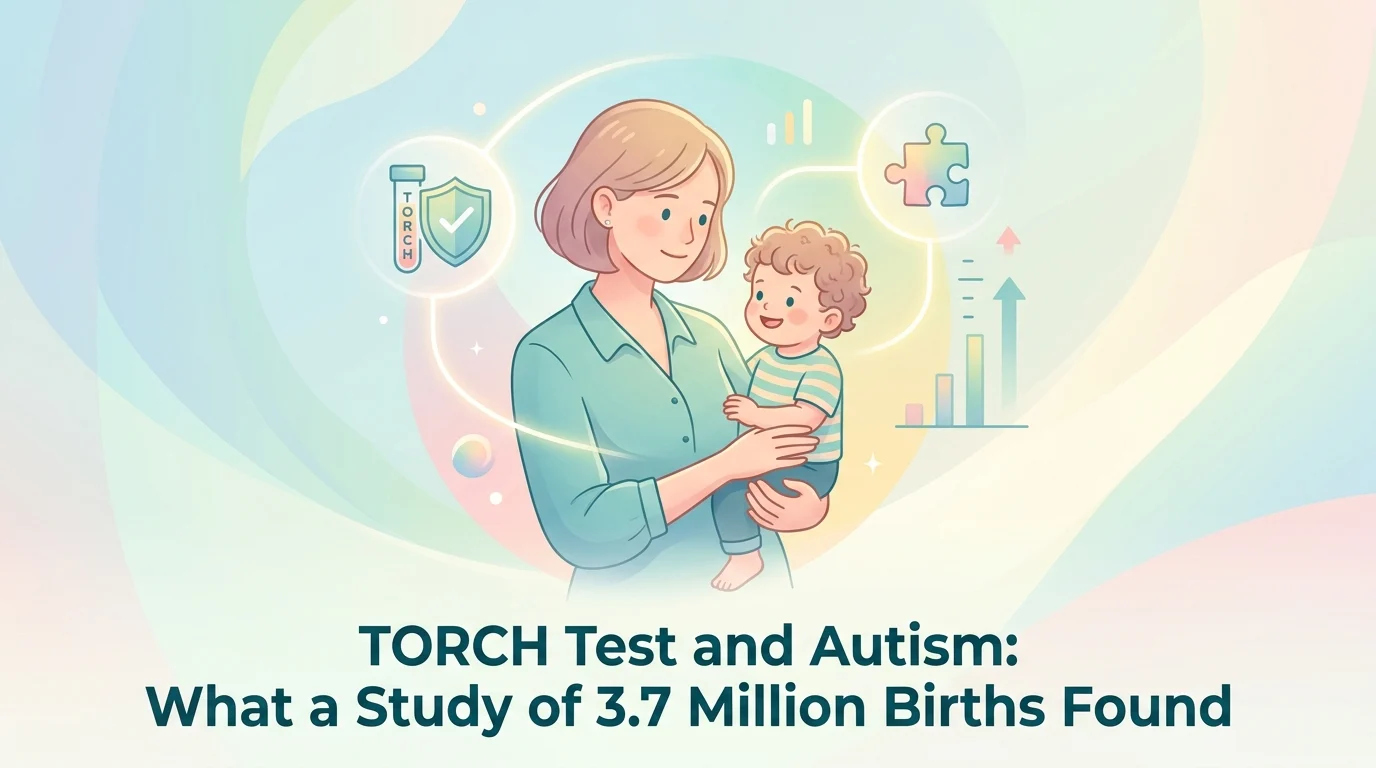
TORCH-testi on ryhmä verikokeita, joilla etsitään infektioita, joita raskaana oleva nainen voi siirtää vauvalle ennen syntymää – ja suuri ruotsalainen tutkimus, joka julkaistiin 21. syyskuuta 2026, on nostanut nämä infektiot jälleen otsikoihin. Karolinska Institutetin tutkijat seurasivat 3,7 miljoonaa ihmistä syntymästä lähtien jopa kolmen vuosikymmenen ajan. He havaitsivat, että niillä harvoilla vauvoilla, jotka syntyivät synnynnäisen TORCH-infektion kanssa, todettiin myöhemmin noin kolme kertaa todennäköisemmin autismi ja yli seitsemän kertaa todennäköisemmin kehitysvamma. Löydös on merkittävä, mutta se vaatii asiayhteyttä: nämä infektiot ovat harvinaisia, ja useita niistä voidaan ehkäistä tai hoitaa. Tässä artikkelissa kerromme, mitä tutkimus todella osoitti, mitä se tarkoittaa – ja mitä ei tarkoita – raskauden kannalta, sekä mitkä raskaudenaikaiset verikokeet tekevät todellisen suojaavan työn.
Mitä ruotsalainen TORCH-tutkimus osoitti
Tutkimus, joka julkaistiin JAMA Pediatrics -lehdessä, hyödynsi Ruotsin kansallisia rekistereitä, jotka kattavat lähes kaikki maassa vuosina 1987–2021 syntyneet henkilöt. Noin 3,7 miljoonasta ihmisestä 975:llä oli todettu syntyessään synnynnäinen TORCH-infektio, eli kohdussa saatu infektio. Tutkimusryhmä seurasi myöhempiä diagnooseja, koulutodistuksia ja muita neurokehityksellisiä tiloja jopa 30 vuoden ajan.
- Autismi todettiin noin kolme kertaa useammin lapsilla, jotka syntyivät TORCH-infektion kanssa.
- Kehitysvamma oli yli seitsemän kertaa yleisempi, ja sen vakavimmat muodot olivat yli kaksikymmentä kertaa yleisempiä.
- Yhteys autismiin oli vahvin silloin, kun lapsella oli myös kehitysvamma, mutta yhteys säilyi myös ilman sitä.
- Altistuneilla lapsilla oli hieman heikommat koulutodistukset 16-vuotiaana, vaikka heillä ei olisi ollut mitään diagnoosia.
- Pakko-oireisen häiriön kanssa ei ilmennyt johdonmukaista yhteyttä, ja yhteys ADHD:hen hävisi sisarusanalyysissa.
Sisarusanalyysi on tutkimusasetelman tärkein osa. Tutkijat vertasivat infektoituneita lapsia heidän omiin sisaruksiinsa, joilla ei ollut infektiota – tämä poistaa laskuista monia perheen yhteisiä tekijöitä, kuten geenit, tulotason ja kotiympäristön. Tulokset pitivät paikkansa, mikä viittaa siihen, että itse infektiot – eikä perheen tausta – selittävät suuren osan lisääntyneestä riskistä.
Todellinen riski, mutta harvinainen
Suhteelliset riskit ovat suuria, mutta absoluuttiset luvut ovat pieniä. Tutkijat arvioivat, että synnynnäiset TORCH-infektiot selittävät noin 1,2 % vaikean kehitysvammaisuuden tapauksista Ruotsissa ja vain noin 0,034 % autismin tapauksista – karkeasti yksi tapaus 3 000:sta. Yksinkertaisesti sanottuna: lähes kaikella autismilla ei ole mitään tekemistä näiden infektioiden kanssa.
Asianomaisten perheiden kannalta tilanne on kuitenkin erilainen. Tutkijat arvioivat, että noin joka viidennellä TORCH-infektion kanssa syntyneellä lapsella voidaan myöhemmin todeta autismi. He korostavat myös, että tartunnan siirtyminen äidiltä sikiölle on harvinaista: useimmat raskauden aikana saadut infektiot eivät koskaan läpäise istukkaa, eivätkä TORCH-infektioidenkaan usein tee niin.
Mitä TORCH-testi tutkii – infektio infektiolta
TORCH on lyhenne, ei yksittäinen sairaus. Cleveland Clinic luettelee siihen kuuluviksi toksoplasmoosi, muut infektiot kuten kuppa, HIV, parvovirus B19, vesirokko ja Zika, vihurirokko, sytomegalovirus (CMV) sekä herpes simplex -virus. TORCH-testin muodostavat verikoet mittaavat vasta-aineita – proteiineja, joita immuunijärjestelmäsi tuottaa kutakin taudinaiheuttajaa vastaan. MedlinePlus kuvaa TORCH-testiä, jota se kutsuu TORCH-seulaksi, lähinnä vastasyntyneille tehtäväksi testiksi ja toteaa, että positiivinen tulos edellyttää aina varmistustestejä sekä äidin testaamista.
| Infektio | Mitä laboratoriossa tutkitaan | Tavallinen asema yhdysvaltalaisessa äitiyshuollossa | Tärkein ehkäisykeino |
|---|---|---|---|
| Toksoplasmoosi | IgG- ja IgM-vasta-aineet Toxoplasma-loista vastaan | Testataan erityisestä syystä, ei rutiininomaisesti | Hyvin kypsennettty liha, pesty tuoreus, hiekkalaatikon siivous jonkun muun toimesta |
| Kuppa (“muut”-ryhmä) | Seulontavasta-ainetesti, jonka jälkeen varmistustesti | Suositellaan ensimmäisellä äitiysneuvolakäynnillä, toistetaan myöhemmin joillekin | Äidin ja kumppaneiden testaaminen ja nopea antibioottihoito |
| Vihurirokko | IgG-vasta-aineet, jotka osoittavat immuniteetin | Immuniteetti tarkistetaan yleensä raskauden alkuvaiheessa | Rokottaminen ennen raskautta |
| Sytomegalovirus (CMV) | IgG, IgM ja joskus IgG-aviditeetti | Ei rutiininomainen; määrätään altistuksen, oireiden tai ultraäänilöydösten jälkeen | Käsienpesu, pienten lasten syljen ja virtsan välttäminen |
| Herpes simplex | Pääasiassa PCR-näyte haavaumasta; vasta-ainetesteillä on rajallinen rooli | Käsitellään esitietojen ja oireiden perusteella | Infektion tunnistaminen ja hoito; keisarileikkausta suositellaan joskus aktiivisen purkauksen aikana |
TORCH-testin tulos luetaan kokonaisuutena, ei yksittäisenä arvona. IgM-vasta-aineet ilmaantuvat yleensä infektion alkuvaiheessa, kun taas IgG-vasta-aineet kehittyvät myöhemmin ja pysyvät usein elimistössä koko eliniän. Pelkkä positiivinen IgM-tulos ei yksinään todista tuoretta infektiota, sillä se voi säilyä kuukausia tai esiintyä väärän positiivisena. Tietopankkimme selittää CMV-verikokeen IgG-, IgM- ja aviditeettitulokset. Erillinen opas selittää toksoplasmoosi-IgG- ja IgM-tuloksiin, ja toisella sivulla kuvataan immunoglobuliini G -verikoetta. Laajemman kokonaiskuvan saamiseksi yleiskatsauksemme esittelee serologisen testin ja sen tärkeimmät osiot.
Mitä tämä tarkoittaa raskauden aikaisille verikokeille
Tutkimus ei edellytä uusia testejä, eikä se tarkoita, että jokaisessa raskaudessa tarvitaan täydellinen TORCH-testi. Se vahvistaa jo olemassa olevien ehkäisykeinojen merkitystä, ja useimmat niistä alkavat tavallisista raskauden aikaisista verikokeista. Oppaamme listaa raskauden aikaiset tavalliset verikokeet.
- Selvitä vihurirokkosuojasi ennen raskautta tai sen alkuvaiheessa. Ruotsalaiset tutkijat huomauttavat, että vihurirokkoa esiintyy Ruotsissa enää hyvin harvoin kansallisen rokoteohjelman ansiosta, ja rokottaminen ennen raskautta on edelleen paras tapa ehkäistä synnynnäinen vihurirokko.
- Älä jätä kuppatestiä väliin. CDC raportoi, että synnynnäisen kupan tapaukset ovat yli kolminkertaistuneet viime vuosina – vuonna 2024 todettiin lähes 4 000 tapausta, mikä on korkein vuosittainen luku sitten vuoden 1994. Infektio on parannettavissa, kun se havaitaan ja hoidetaan raskauden aikana.
- Kysy CMV:stä, jos olet paljon tekemisissä pienten lasten kanssa. Rokotetta ei ole, mutta käsienpesu sekä pienten lasten syljen ja virtsan välttäminen pienentävät tartuntariskiä.
- Vähennä toksoplasmoosille altistumista huolehtimalla ruokaturvallisuudesta ja kissanhiekan käsittelystä varoen.
- Tell your clinician about any history of genital herpes, especially as your due date approaches.
Routine prenatal panels also screen for infections outside the TORCH acronym, such as hepatitis B. Another article explains hepatitis blood test results. If you are planning a pregnancy, a preconception visit is the easiest moment to review immunity and vaccinations, because the rubella vaccine is not given during pregnancy.
Milloin kannattaa puhua lääkärille
- You develop fever, a rash, swollen glands or a flu-like illness in early pregnancy.
- You are not immune to rubella, or you do not know your status.
- A TORCH test or another antibody result shows a positive IgM or a pattern you do not understand.
- An ultrasound reports growth restriction or another finding your provider wants to investigate.
- Your newborn does not pass the hearing screen, or you have concerns about development later on.
When a baby is born with a congenital infection, pediatric teams usually plan closer follow-up of hearing, vision and development. That is where early support makes the biggest difference. For general guidance on any lab report, this page outlines a step-by-step method for reading blood test results.
Uusimmat tieteelliset edistysaskeleet
According to research indexed in PubMed, several recent studies add useful context to the Swedish findings. Here is what they show, in plain terms.
Early screening can make congenital syphilis disappear
A Danish register study, meaning an analysis of national health records, covered nearly 900,000 births between 2010 and 2024. It found only five babies with congenital syphilis, and none after 2016, which the authors credit to first-trimester screening. What this means for you: the syphilis line on an early prenatal report is one of the most protective tests you will have.
US screening still has gaps
An analysis of insurance claims in the American Journal of Public Health found that syphilis screening happened in about three out of four Medicaid-insured pregnancies, compared with more than nine out of ten commercially insured ones, and far fewer people were screened in the first trimester. What this means for you: if you are unsure whether you were tested, ask. It is a simple blood draw.
Babies with silent CMV often do well early on
A small US study followed infants who had congenital CMV but no symptoms at birth. At 12 months, they performed like other babies on standard development tests. The result is early and follow-up continues. What this means for you: a CMV diagnosis at birth does not automatically predict developmental problems, which is why calm, structured follow-up is the usual approach.
Congenital toxoplasmosis needs long follow-up
A French cohort, a group of children followed over time, included 646 children treated for congenital toxoplasmosis. About three in ten developed at least one eye lesion over a median of 12 years, sometimes into adulthood, although severe damage was rare. What this means for you: when a congenital infection is diagnosed, regular eye and development checkups matter for years, not months.
Sanasto
| Termi | Määritelmä |
|---|---|
| TORCH | An acronym for toxoplasmosis, other infections, rubella, cytomegalovirus and herpes simplex, germs that can pass from mother to fetus. |
| Congenital infection | An infection a baby acquires in the womb and already has at birth. |
| IgM ja IgG | Two antibody types. IgM usually appears early in an infection; IgG appears later and often lasts for life. |
| IgG-aviditeetti | A lab measure of how tightly IgG binds a germ. Low avidity points to a recent infection, high avidity to an older one. |
| Sibling comparison | A study method that compares brothers and sisters to rule out factors a family shares, such as genes or environment. |
| Intellectual disability | Lasting limits in learning, reasoning and everyday skills that start during development, graded from mild to profound. |
Usein kysytyt kysymykset
What is a TORCH test?
A TORCH test is a group of blood tests that looks for antibodies against toxoplasmosis, other infections such as syphilis, rubella, cytomegalovirus and herpes simplex. MedlinePlus describes it mainly as a newborn screen used when a baby may have been infected before birth. In pregnancy, doctors more often order the individual tests that fit a situation rather than the whole group at once.
When is a TORCH test done in pregnancy?
There is no single date. Some components, such as syphilis screening and a rubella immunity check, are typically done at the first prenatal visit. Tests for CMV or toxoplasmosis are usually ordered after a known exposure, symptoms such as fever or swollen glands, or an ultrasound finding. A full TORCH screen is mostly used in newborns who show signs of infection.
Do TORCH infections cause autism?
The Swedish study found a clear link, and its sibling design makes family factors an unlikely explanation. Still, these infections are rare and explain only a tiny share of autism, about one case in 3,000 in Sweden. Most children with autism were never exposed to a TORCH infection, and most babies exposed to one infection in pregnancy are not infected themselves.
Does a positive TORCH test mean my baby is infected?
No. A positive IgM can be a false positive or linger for months after an old infection, so confirmatory tests and sometimes an IgG avidity test are needed. Even a confirmed infection in the mother does not always reach the fetus. When needed, specialists use tests such as PCR on amniotic fluid to answer that question directly.
Can TORCH infections be prevented?
Many can. Vaccination before pregnancy prevents congenital rubella, and syphilis can be cured when screening finds it early. Food safety and avoiding cat litter lower the risk of toxoplasmosis, while handwashing and not sharing utensils with toddlers reduce CMV exposure. Tell your clinician about any history of genital herpes so a plan can be made before delivery.
Should I ask for a full TORCH panel during pregnancy?
Usually a targeted approach works better than a full TORCH test. Each infection is read differently, and a broad panel can return confusing antibody results that lead to extra testing and worry. Ask your provider which tests match your history, your immunity and your exposures, and make sure the standard first-visit screening has been done.
Lähteet
- MedlinePlus, US National Library of Medicine, National Institutes of Health — TORCH screen, 2024 — lue MedlinePlus-sivu
- Centers for Disease Control and Prevention — About Congenital Syphilis, 2025 — read the CDC page
- Cleveland Clinic — TORCH Infections, 2026 — read the Cleveland Clinic page
- Karolinska Institutet — Rare pregnancy infections linked to autism, September 21, 2026 — read the press release
- Sjöqvist H., Dalman C., Mataix-Cols D., Gardner R. M., Karlsson H. — Congenital TORCH Infections and Neurodevelopmental Outcomes — JAMA Pediatrics, 2026 — lue tutkimus
- Lausten-Thomsen U. et al. — Elimination of congenital syphilis: a nationwide register-based study, Denmark, 2010 to 2024 — Eurosurveillance, 2026 — lue tutkimus
- Suarez E. A. et al. — Prenatal Care and Congenital Syphilis in the United States: Characterizing Screening and Treatment — American Journal of Public Health, 2026 — lue tutkimus
- Stoyell S. M. et al. — Neurobehavioral outcomes of neonatal asymptomatic congenital cytomegalovirus infection at 12-months — Journal of Neurodevelopmental Disorders, 2024 — lue tutkimus
- Journé A. et al. — Long-term Ocular Outcomes in Congenital Toxoplasmosis Treated Perinatally — Pediatrics, 2024 — lue tutkimus
Lisälukemista
- Oppaamme selittää hCG levels week by week
- This article covers the fertility blood test panel
- Kirjastomme käsittelee yksityiskohtaisesti verenkuva
- This page describes abnormal blood test results and next steps
- Our reference chart summarizes normaalit verikokeiden vaihteluvälit
Ymmärrä laboratoriotuloksiasi tekoälyn DiagMen avulla
Prenatal serologies rarely arrive alone. They sit on the same report as a blood count, a blood type, glucose and other results, and each antibody line only makes sense next to the others. AI DiagMe reads your blood, urine or stool report in plain language, so you arrive at your appointment knowing what was measured and which questions to ask. It helps you understand your results; it does not diagnose and does not replace your doctor or midwife.
Tulkitse tuloksesi muutamassa minuutissa