Dementia: Symptoms, Causes, Types, and How It’s Diagnosed

目录

Dementia: Symptoms, Causes, Types, and How It's Diagnosed
经医学审核: Julien Priour

⚕️ 本文仅供参考,不能替代医疗建议。请务必咨询医生以解读您的检查结果。.

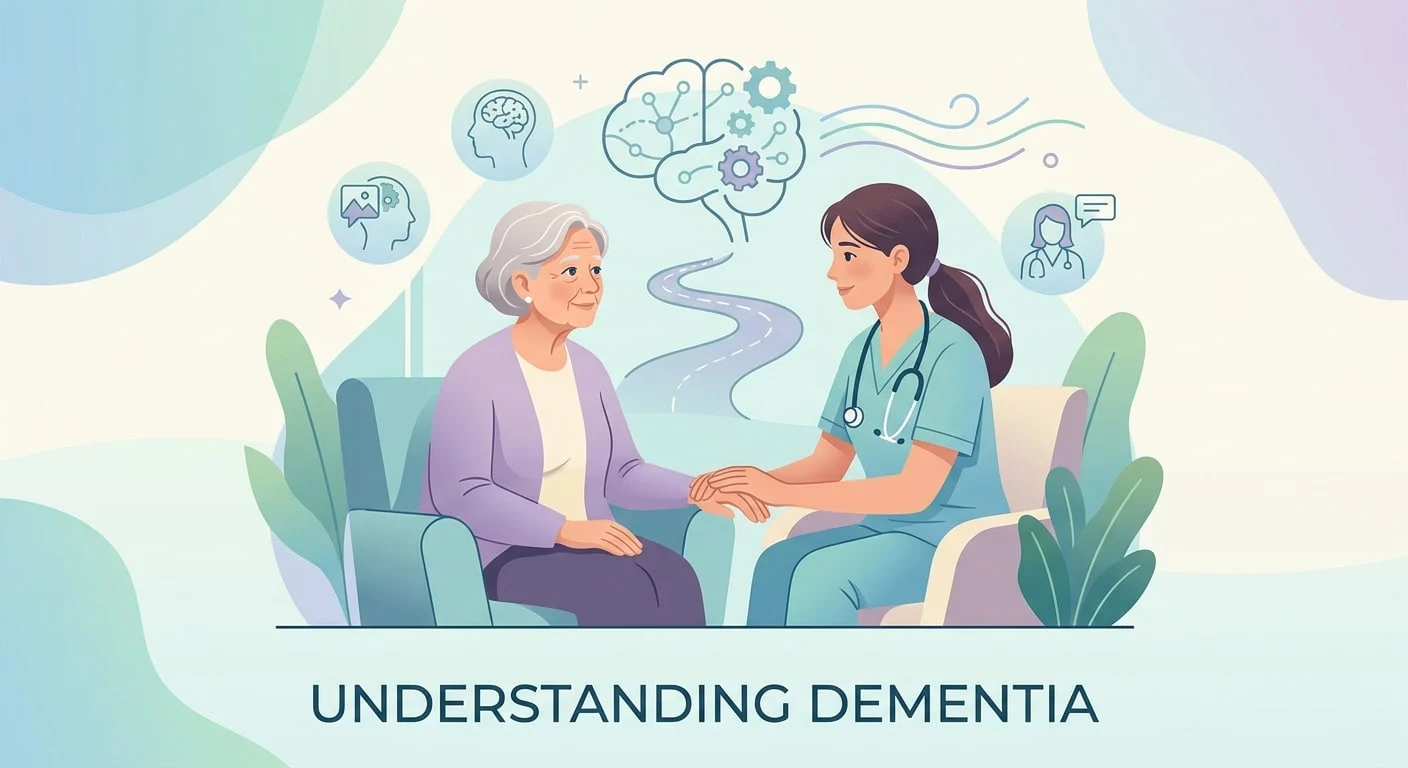
Dementia is not a single disease but an umbrella term for a serious decline in memory, thinking, and reasoning that interferes with everyday life. It becomes more common as people age, yet it is not a normal or unavoidable part of getting older. Many people confuse it with ordinary forgetfulness, or assume nothing can be done, when in reality some causes are treatable and a large share of the risk is preventable. In this article you will learn what dementia is, its early warning signs, the main types, what causes it, which risk factors you can change, how doctors diagnose it, and the latest research shaping care today.

What is dementia?

Dementia describes a group of symptoms that affect memory, thinking, language, judgment, and the ability to carry out daily activities. It happens when nerve cells in the brain, called neurons, stop working properly, lose their connections, and die. Because everyone loses some neurons with age, the key difference is scale: people with dementia experience far greater loss than normal aging would explain.

The condition ranges in severity. At the mildest stage it just begins to affect daily functioning; at the most severe stage a person depends completely on others for basic care. Dementia grows more common with age, and roughly one in three people aged 85 or older may have some form of it. Even so, many people reach their 90s with no signs of dementia at all, which is why doctors stress that it is a disease process rather than an expected part of growing old.

Early signs and symptoms of dementia

Early dementia can be subtle, and the first signs are easy to dismiss. The most common is memory loss for recent events, such as repeating the same question, misplacing objects, or forgetting appointments. Other early changes include trouble finding the right word, difficulty planning or following steps, getting lost in familiar places, and struggling to manage money or pay bills.

Symptoms vary by the type of dementia and tend to worsen gradually. Beyond memory, dementia can bring changes in mood and behavior, including:

  • Confusion, poor judgment, and difficulty concentrating
  • Trouble speaking, understanding, reading, or writing
  • Withdrawal from work, hobbies, or social activities
  • Personality changes, anxiety, agitation, or suspicion
  • Seeing or believing things that are not real (hallucinations or delusions)
  • Problems with balance, coordination, or movement

Occasionally forgetting a name and remembering it later is part of normal aging. Memory loss that is frequent, worsening, and paired with the changes above deserves a medical evaluation.

The main types of dementia

Dementia has several distinct forms, each with a different underlying cause. Identifying the type matters because it shapes what to expect and how to manage the condition. The table below summarizes the most common types and how they differ.

Type of dementiaShare of casesTypical featuresUnderlying change
阿尔茨海默病60–80%Gradual short-term memory loss, word-finding troubleAmyloid plaques and tau tangles in the brain
Vascular dementiaAbout 5–10%Slowed thinking, poor focus, often a step-wise declineReduced blood flow or strokes damaging the brain
Lewy body dementiaCommonVisual hallucinations, movement changes, swings in alertnessAlpha-synuclein deposits called Lewy bodies
Frontotemporal dementiaOften before age 60Changes in personality, behavior, and languageDamage to the frontal and temporal lobes
Mixed dementiaFrequent in older adultsOverlapping symptoms of more than one typeTwo or more disease processes at once

Dementia vs. Alzheimer’s disease

People often use the two words interchangeably, but they are not the same. Dementia is the umbrella term for the symptoms; Alzheimer’s disease is the specific brain disease that causes most cases. In other words, Alzheimer’s is one type of dementia, much as one fruit is one kind of produce. Because it accounts for the majority of cases, it helps to compare our dedicated guide to Alzheimer’s disease, see our guide to Alzheimer’s disease.

What causes dementia, and which causes are reversible

Most dementia results from progressive damage to neurons that, at present, cannot be reversed. But not every memory problem is dementia, and not every cause is permanent. Some medical conditions produce dementia-like symptoms that can improve, or even resolve completely, once the underlying problem is treated. This is the single most important reason to seek an early, accurate diagnosis rather than assuming the worst.

The conditions below can mimic dementia and are often identified with simple tests. Many of them show up in routine blood work, which is why doctors check them before concluding that symptoms are due to an irreversible disease.

Potentially treatable causeHow it is usually checked
Underactive thyroid (hypothyroidism)TSH and free T4 blood test
维生素B12或叶酸缺乏B12, folate, and sometimes homocysteine levels
Medication side effects or interactionsReview of all current medicines
DepressionMood assessment by a clinician
Normal-pressure hydrocephalusBrain imaging, plus walking and bladder changes
Infection, dehydration, or salt imbalanceBlood and urine tests

A thyroid imbalance, for example, can slow thinking and dull mood; read our guide to high TSH symptoms. Low vitamin levels can cause memory trouble and nerve changes that improve with treatment; see our guide to low vitamin B12. Some research also links a raised homocysteine level to faster cognitive decline; explore our guide to homocysteine levels and risks.

Dementia risk factors you can change

You cannot change your age or your genes, the two biggest non-modifiable risk factors. But a large and growing body of evidence shows that lifestyle and health conditions matter enormously. In 2024, an international expert group known as the Lancet Commission estimated that addressing 14 modifiable risk factors across life could prevent or delay nearly half of dementia cases worldwide.

These factors act at different ages. The Commission groups them roughly as follows:

  • Earlier life: less education
  • Midlife: hearing loss, high LDL cholesterol, depression, head injury, physical inactivity, diabetes, smoking, high blood pressure, obesity, and excessive alcohol
  • Later life: social isolation, air pollution, and untreated vision loss

A useful rule of thumb is that what is good for the heart is good for the brain. Controlling cardiovascular risk is central: high LDL cholesterol in midlife is now recognized as a risk factor, so read our guide to high cholesterol. Poorly managed blood sugar also raises risk, so see our overview of diabetes causes and symptoms. Treating low mood matters too, because depression in midlife is on the list; explore our article on depression. Staying physically active, protecting your hearing and vision, not smoking, and keeping socially connected round out a practical, evidence-based plan.

How dementia is diagnosed

There is no single test for dementia. Instead, doctors build a picture from several sources to confirm the diagnosis and, crucially, to rule out treatable causes first. The process usually starts with a primary care doctor and may involve a neurologist, geriatrician, or neuropsychologist.

A typical assessment includes a medical and family history, a physical exam, and cognitive and neurological tests that measure memory, problem-solving, language, and attention. Laboratory tests of blood and urine check for thyroid problems, vitamin deficiencies, infection, and other reversible contributors; if you want to understand a lab report, read 血液检测结果解读指南.

Brain scans add another layer. Computed tomography (CT) and magnetic resonance imaging (MRI) can reveal strokes, tumors, bleeding, or shrinkage of brain regions, while positron emission tomography (PET) can show patterns of brain activity. In specialist settings, analysis of cerebrospinal fluid, and newer blood biomarker tests, can help detect the proteins linked to Alzheimer’s. An early diagnosis will not always change the outcome, but it opens the door to treatment, planning, and support.

最新科学进展

Dementia research is moving quickly, and two developments stand out. They are promising, but each should be read with care: a research finding is not the same as a treatment proven for every individual.

According to studies indexed in PubMed, the 2024 report of the Lancet Commission concluded that around 45% of dementia cases are potentially preventable by addressing 14 modifiable risk factors over a lifetime, adding high LDL cholesterol and untreated vision loss to the list for the first time (Livingston G, et al., The Lancet, 2024, DOI). This is an expert consensus review of existing evidence rather than a single experiment, so the figure describes population-level potential, not a guarantee for any one person.

A second advance is the rise of blood tests for Alzheimer’s. In a 2024 study published in JAMA, a blood test measuring a protein called p-tau217 identified Alzheimer’s pathology with about 90% accuracy, compared with roughly 61% for primary care physicians and 73% for dementia specialists using standard methods (Palmqvist S, et al., JAMA, 2024, DOI). This was a prospective diagnostic study, and experts caution that such blood tests are not yet used alone to diagnose dementia, and that availability remains limited and guided by regulators.

何时应该去看医生

Memory changes can be unsettling, but they are not always dementia. It is worth contacting a healthcare professional when memory or thinking problems are new, worsening, or starting to interfere with daily life, work, or relationships. Early evaluation is valuable precisely because some causes can be treated.

Seek prompt medical attention if you notice:

  • A sudden change in confusion, alertness, or behavior, which can signal an infection or other urgent problem rather than dementia
  • Memory loss that disrupts everyday tasks, not just occasional forgetfulness
  • Getting lost in familiar places or difficulty handling money and medications
  • Personality or mood changes that worry you or those close to you

词汇表

学期定义
DementiaAn umbrella term for a decline in memory, thinking, and reasoning severe enough to interfere with daily life.
Cognitive functionMental processes such as memory, attention, language, and problem-solving.
Mild cognitive impairmentA noticeable decline in thinking that is greater than normal aging but does not yet disrupt daily life.
阿尔茨海默病The most common cause of dementia, marked by amyloid plaques and tau tangles in the brain.
Vascular dementiaDementia caused by reduced blood flow to the brain, often after strokes.
Lewy body dementiaDementia linked to protein deposits called Lewy bodies, often with hallucinations and movement changes.
Frontotemporal dementiaDementia affecting the frontal and temporal lobes, changing personality, behavior, and language.
DeliriumA sudden, often reversible state of confusion, frequently caused by infection, medication, or dehydration.
生物标志物A measurable biological signal, such as a protein in blood, used to detect or track a disease.

常见问题解答

What is the difference between dementia and Alzheimer’s disease?

Dementia is a general term for symptoms such as memory loss and impaired thinking that interfere with daily life. Alzheimer’s disease is the specific brain disease that causes most cases of dementia. So all Alzheimer’s is dementia, but not all dementia is Alzheimer’s, other causes include vascular, Lewy body, and frontotemporal dementia. Knowing the specific type helps guide expectations and care.

What are the first signs of dementia?

The earliest sign is usually memory loss for recent events, such as repeating questions or misplacing items. Other early changes include difficulty finding words, trouble planning or following steps, getting lost in familiar places, and problems managing money. These signs come on gradually. Occasional forgetfulness is normal, but frequent, worsening problems that affect daily life are worth discussing with a doctor.

Is dementia hereditary?

For most people, dementia is not directly inherited. Having a close relative with dementia can modestly raise your risk, but it does not mean you will develop it. Rare genetic forms exist, particularly some early-onset cases, and these run more clearly in families. Lifestyle and overall health play a large role for the common, later-life forms of dementia.

Can dementia be diagnosed with an MRI or a blood test?

Not on their own. An MRI can reveal strokes, shrinkage, or other changes and helps rule out causes, but it cannot diagnose dementia by itself. Newer blood tests can detect proteins linked to Alzheimer’s and are improving quickly, yet they are still used alongside cognitive testing and a clinical assessment, not as a standalone diagnosis. A full evaluation is needed to be confident.

Can dementia be prevented?

There is no guaranteed way to prevent dementia, but you can lower your risk. Evidence suggests that addressing factors such as high blood pressure, high cholesterol, diabetes, hearing and vision loss, smoking, inactivity, and social isolation may prevent or delay a substantial share of cases. Protecting your heart, staying active, and keeping mentally and socially engaged all support brain health.

Are dementia symptoms ever reversible?

Sometimes. Conditions such as thyroid problems, vitamin B12 deficiency, depression, medication side effects, and certain infections can cause symptoms that look like dementia but improve with treatment. That is why doctors test for these before concluding that symptoms come from an irreversible disease. An early evaluation gives the best chance of catching and treating a reversible cause.

来源

延伸阅读

利用 AI DiagMe 了解您的实验室结果

A diagnosis of dementia begins by ruling out treatable causes, and many of those clues appear in everyday blood work. AI DiagMe helps you make sense of results such as a thyroid test (TSH), vitamin B12, blood glucose or HbA1c, and a cholesterol panel, turning a confusing report into clear, plain-language explanations. It is designed to help you understand your results and prepare better questions for your doctor, not to diagnose you or replace medical care.

几分钟内即可获得结果解读

作者

  • AI DiagMe团队汇聚了医生、临床专家和医学编辑。我们的文章由健康传播专业人士撰写,并由我们科学委员会的医生进行审核和验证。该委员会由在血液科、内分泌科和全科等专科领域执业的医院医生组成。负责编辑工作的Julien Priour拥有巴黎高等商学院(HEC Paris)的MBA学位,并曾在法国国家可持续发展研究所(IRD,FUN-MOOC,2026)接受过科学写作和出版方面的培训。每篇文章都基于最新的临床指南和同行评审的医学出版物。.

相关文章