



























Lågt testosteron hos män är lätt att misstänka men förvånansvärt svårt att bekräfta. Testosteron följer ett dygnsrytm, vilket innebär att samma man kan ha ett normalt värde kl. 8 på morgonen och ett lågt värde kl. 16 på eftermiddagen. Ett enskilt provsvar – särskilt ett taget på eftermiddagen – ger därför väldigt lite information. Riktlinjerna kräver två låga morgonprover tagna på olika dagar innan man kan tala om hypogonadism.
I den här artikeln får du lära dig hur testosteronprovet faktiskt fungerar, varför tidpunkt och upprepade prover spelar så stor roll, vad totalt och fritt testosteron innebär och hur SHBG påverkar värdena, hur läkare skiljer ett testikelproblem från ett hypofysproblem, vilka symtom som verkligen pekar mot diagnosen, vilka reversibla orsaker som är värda att hitta först, och vad behandlingen innebär – inklusive dess effekt på fertiliteten.
Vad testosteron gör – och vad blodprovet mäter
Testosteron är det viktigaste androgenhormonet hos män. Merparten produceras av Leydigcellerna i testiklarna, på instruktion från två hypofyshormoner: luteiniserande hormon (LH) och follikelstimulerande hormon (FSH). LH driver testosteronproduktionen; FSH stödjer spermieproduktionen parallellt. Den här kedjan – från hypotalamus till hypofysen till testiklarna – kallas den hypotalamisk-hypofysär-gonadala axeln, och ett fel var som helst längs den kan sänka slutvärdet.
Nivåer som är för höga spelar också roll: se varför testosteron och hjärtrytm hänger ihop i båda ändarna av skalan.
Testosteron stödjer muskler och skelett, röda blodkropparnas produktion, sexuell lust, erektionsförmåga och utvecklingen av manliga könskaraktäristika under puberteten. Kvinnor producerar det också, men i mycket lägre nivåer, vilket är varför högt testosteron hos kvinnor är en separat klinisk fråga. Ett vanligt blodprov för testosteron mäter totalt testosteron: allt som cirkulerar i blodet, bundet och obundet tillsammans. Det värdet är utgångspunkten för varje bedömning, men ensamt ger det färre svar än de flesta förväntar sig.
Varför tidpunkt och upprepade prover spelar större roll än själva värdet
Testosteron har en tydlig dygnsrytm. Nivåerna är som högst tidigt på morgonen och sjunker sedan under dagen – och hos yngre män kan fallet vara tillräckligt stort för att flytta samma person från ett normalt till ett lågt resultat inom loppet av 24 timmar. Även mat spelar roll: en måltid, och särskilt en sockerrik sådan, sänker det cirkulerande testosteronet under några timmar. Av båda dessa skäl bör provet tas på morgonen, vanligtvis före kl. 10, och efter att man fastat över natten.
Den andra regeln är den som oftast hoppas över. Ett lågt provsvar är inte en diagnos. Endocrine Society och American Urological Association rekommenderar båda att ett initialt lågt värde bekräftas med ett andra morgonprov taget en annan dag innan hypogonadism diagnostiseras. Den europeiska urologiorganisationen EAU:s uppdatering från 2025 intar samma ståndpunkt. Den stora TRAVERSE-säkerhetsstudien tillämpade denna standard vid rekryteringen: männen behövde ha två låga fastande testosteronvärden för att få delta.
Det finns en praktisk anledning till att upprepa provet. Testosteron varierar från dag till dag hos samma man, laboratorieanalyser skiljer sig åt, och en övergående sjukdom, en period av dålig sömn eller en stressig vecka kan dra ner ett enskilt provsvar. Ett andra morgonprov filtrerar bort en stor andel falskt positiva resultat. Det förklarar också varför ett provsvar från ett drop-in-lab eller en postorderanalys tagen mitt på dagen aldrig bör betraktas som ett definitivt svar.
Totalt testosteron, fritt testosteron och varför SHBG spelar roll
Det mesta av testosteronet i blodet är inte fritt att verka. En stor del är hårt bundet till könshormonbindande globulin (SHBG) och mycket av resten är löst bundet till albumin. Bara en liten andel cirkulerar obundet. Fritt testosteron är just den obundna fraktionen, och det är den del som närmast speglar vad kroppens vävnader faktiskt upplever.
SHBG förklarar många förvirrande provsvar. Allt som höjer SHBG – däribland åldrande, överaktiv sköldkörtel, leversjukdom och östrogen – driver upp det totala testosteronet utan att nödvändigtvis höja den fria fraktionen. Allt som sänker SHBG, däribland fetma, insulinresistens och typ 2-diabetes, ett underaktiv sköldkörtel, glukokortikoider och nefrotiskt syndrom, drar ner totaltestosteronet medan den fria fraktionen kan ligga nära det normala.
Det är därför fritt testosteron betraktas som ett andrahandstest, som används när det totala testosteronet ligger nära den diagnostiska gränsen eller när SHBG sannolikt är förskjutet. Det fungerar som en utslagsgivare snarare än ett rutinmässigt förstahandstest. På de flesta laboratorier beräknas det utifrån totalt testosteron, SHBG och albumin i stället för att mätas direkt, och dessa beräkningsmodeller är inte standardiserade mellan olika centra – ett gränsvärde för fritt testosteron kräver därför tolkning snarare än att accepteras utan vidare.
Symtom: vilka tyder på lågt testosteron och vilka gör det inte
Symtomen delas in i två mycket olika grupper, och att blanda ihop dem är den vanligaste anledningen till att män testas i onödan.
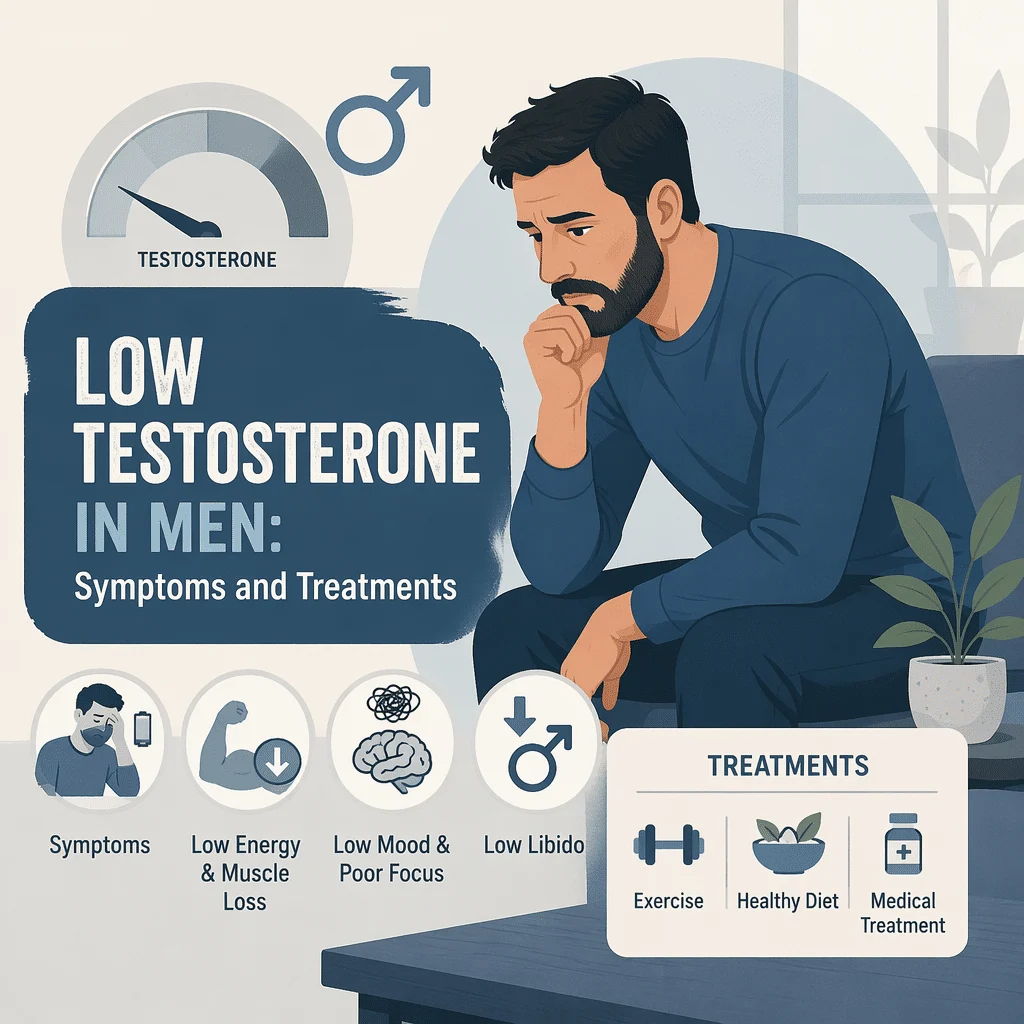
De mer specifika symtomen är minskade eller uteblivna morgonerektion, tydligt minskad sexlust, förlust av kropps- och ansiktsbehåring, små eller krympande testiklar, utveckling av bröstvävnad (gynekomasti), värmevallningar och infertilitet. När problemet uppstår före puberteten tillkommer även ofullständig sexuell utveckling på listan. Dessa fynd ökar verkligen sannolikheten för hypogonadism och är de som en läkare kommer att fråga mest ingående om.
De ospecifika symtomen är de som män faktiskt märker av: trötthet, nedstämdhet, koncentrationssvårigheter, minskad styrka, viktuppgång och sömnproblem. Alla dessa överlappar kraftigt med obstruktiv sömnapné, depression, sköldkörtelsjukdom, anemi, dåligt kontrollerad diabetes, läkemedelsbiverkningar och helt enkelt för lite sömn. På grund av denna överlappning avråder Endocrine Society från att mäta testosteron hos män som enbart har ospecifika symtom, eftersom de flesta låga värden som hittas på det sättet visar sig spegla något annat.
Erektil dysfunktion befinner sig i ett oklart mellanläge mellan de två grupperna. Lågt testosteron kan minska sexlusten och bidra till erektionsproblem, men kärlsjukdom, diabetes, läkemedel och psykologiska faktorer orsakar betydligt fler fall, så ett testosteronvärde förklarar sällan problemet på egen hand.
Primär eller sekundär hypogonadism, och de tester som skiljer dem åt
När två låga morgonvärden har bekräftats är nästa fråga var felet sitter. LH och FSH ger svaret, vilket är anledningen till att de mäts samtidigt som testosteron och inte efteråt.
Vid primär hypogonadism är testiklarna problemet. Testosteron är lågt medan LH och FSH är höga, eftersom hypofysen skickar starka signaler till en körtel som inte kan svara. Orsaker inkluderar Klinefelters syndrom, orkitis efter påssjuka, testikeskada eller testikeltorsion, kryptorkism, kemoterapi och strålbehandling.
Vid sekundär hypogonadism, ibland kallad central hypogonadism, är signalen problemet. Testosteron är lågt men LH och FSH är låga eller olämpligt normala – det vill säga normalliknande värden som borde ha stigit som svar på det låga testosteronet. Orsaker inkluderar hypofystumörer, förhöjt prolaktin, opioider, glukokortikoider, järnöverskott, svår fetma, användning av anabola steroider och allvarlig sjukdom.
När mönstret tyder på central orsak följer vanligtvis ytterligare prover: prolaktin, järnstudier inklusive transferrinmättnad för att undersöka hemokromatos, övriga hypofyshormoner samt MRT av hypofysen om prolaktin är högt, testosteron är mycket lågt eller om det förekommer huvudvärk eller synförändringar. En spermaanalys läggs till när fertilitet är det som oroar.
| Resultatmönster | Vad det pekar mot | Vanligt nästa steg |
|---|---|---|
| Ett enstaka lågt värde taget på eftermiddagen | Säger mycket lite på egen hand; dygnsrytmen ensam kan förklara det | Upprepa som ett fastande morgonprov före kl. 10 |
| Två låga morgonvärden med högt LH och FSH | En testikelbetingad orsak, känd som primär hypogonadism | Klinisk undersökning samt genetisk testning eller spermaanalys vid behov |
| Två låga morgonvärden med lågt eller otillräckligt normalt LH och FSH | En hypofys- eller hypotalamisk orsak, känd som sekundär hypogonadism | Prolaktin, järnstatus, andra hypofyshormoner och hypofys-MRI vid behov |
| Lågt totalt testosteron men normalt fritt testosteron | Ofta ett tillstånd med lågt SHBG, som fetma eller insulinresistens, snarare än en verklig brist | Gå igenom SHBG, vikt, blodsockerkontroll och aktuella läkemedel med en läkare |
Reversibla orsaker som är värda att hitta innan behandling påbörjas
En betydande andel av låga värden har en orsak som kan åtgärdas, och att hitta den förändrar vad som händer härnäst. Övervikt är den enskilt största bidragande faktorn på de flesta kliniker: fettvävnad omvandlar testosteron till östrogen och sänker SHBG, och viktminskning höjer ofta testosteronet utan någon hormonbehandling alls. Obehandlad obstruktiv sömnapné, hög alkoholkonsumtion och akuta sjukdomar under de föregående veckorna dämpar också axeln.
Läkemedel är nästa grupp. Långvarig användning av opioider och glukokortikoider är välkända orsaker till central suppression. Det gäller även användning av anabola steroider, oavsett om det sker nu eller skedde för flera år sedan – och det är värt att berätta detta öppet eftersom det förändrar tolkningen helt. Förhöjt prolaktin, till följd av ett hypofysadenom eller vissa läkemedel, är en annan orsak som kan behandlas i sig, och järnöverskott kan skada både hypofysen och testiklarna.
Inget av detta är ett skäl att på egen hand sluta ta eller ändra ett förskrivet läkemedel. Opioider, glukokortikoider och andra behandlingar är förskrivna av viktiga skäl, och det är bara förskrivaren som kan väga för- och nackdelarna. Det användbara steget är att berätta för din läkare om allt du tar, inklusive sådant som köpts utan recept, så att resultatet kan tolkas i rätt sammanhang.
Vad behandlingen innebär, och frågan om fertilitet
Testosteronersättningsterapi är en receptbelagd behandling för män med en bekräftad diagnos av hypogonadism. Den beslutas av en läkare efter att diagnosen har fastställts på upprepade morgonprover och reversibla orsaker har övervägts. Det är inte en behandling för energi, anti-åldrande eller prestation. Den amerikanska läkemedelsmyndigheten FDA anger att testosteronprodukter är godkända enbart för män med låga testosteronnivåer i kombination med ett associerat medicinskt tillstånd, såsom en störning i testiklarna, hypotalamus eller hypofysen.
Det viktigaste att förstå innan man börjar är fertilitet. Testosteron som tillförs utifrån hämmar LH och FSH, vilket sänker testosteronkoncentrationen inne i testiklarna och försämrar spermieproduktionen. En del män slutar producera spermier helt. Produktionen återupptas vanligtvis när behandlingen avslutas, men takten varierar kraftigt mellan individer och återhämtningen är inte garanterad. Varje man som kan tänka sig att vilja ha barn, nu eller senare, bör ta upp detta innan det första receptet skrivs – inte efteråt – så att fertilitetsskyddande alternativ kan diskuteras.
Behandlingen innebär också löpande uppföljning snarare än ett enstaka recept. Eftersom testosteron stimulerar produktionen av röda blodkroppar, hematokrit kontrolleras för polycytemi, ett tillstånd med för hög koncentration av röda blodkroppar. Prostatabedömning, inklusive PSA vid behov, symtom, blodtryck och sömnapné följs också upp. Frågan om hjärt-kärlsäkerhet har studerats direkt och behandlas i avsnittet nedan.
Eftersom både provtagning och behandling kräver att diagnosen ställs korrekt och följs upp över tid, bör detta hanteras av en läkare som kan beställa rätt upprepade prover, tolka LH, FSH och SHBG tillsammans med resultatet, och övervaka behandlingen om den påbörjas.
När du bör söka läkare för lågt testosteron
Boka ett besök om du har specifika symtom som tydligt minskad sexlust, uteblivna morgonerektion, krympande testiklar, ömhet eller förstoring av brösten, förlust av kroppsbehåring eller svårigheter att bli förälder. Ta med dig tidigare provsvar, inklusive tidpunkten på dagen de togs, samt en lista över dina läkemedel.
Sök läkarvård utan dröjsmål – vänta inte på ett rutinbesök – om du har: plötslig eller svår smärta eller svullnad i testiklarna, en knöl i bröstet, nya huvudvärksbesvär tillsammans med dimsyn eller inskränkt synfält, förlust av kroppsbehåring med uttalad svaghet eller yrsel, eller mjölkaktig vätska från bröstvårtan. Dessa symtom kan tyda på tillstånd som behöver utredas snabbt, bland annat en hypofystumör eller ett testikelproblem.
Senaste vetenskapliga framsteg inom testosteronprovtagning och -behandling
TRAVERSE-studien, publicerad i New England Journal of Medicine 2023, randomiserade mer än femtusen medelålders och äldre män med symtom på hypogonadism, två låga fastande testosteronvärden och antingen befintlig hjärtsjukdom eller hög risk för det. Testosterongel var inte sämre än placebo för det kombinerade utfallet av kardiovaskulär död, icke-dödlig hjärtinfarkt och icke-dödlig stroke. Testosterongruppen hade dock fler fall av förmaksflimmer, akut njurskada och lungemboli. Vad detta betyder för dig: den viktigaste kardiovaskulära frågan har besvarats på ett relativt betryggande sätt, men inte fullständigt, och studien undersökte män med en korrekt bekräftad diagnos snarare än män som tog testosteron mot trötthet.
En genomgång från 2026 i Kardiologia Polska sammanställde randomiserade och verkliga data om dessa icke-kardiella signaler, tillsammans med myndigheternas reaktion. Den rapporterar att varningsrutan om allvarliga kardiovaskulära händelser togs bort från testosteronpreparat, medan en klassövergripande varning om blodtrycksökningar lades till baserat på studier med ambulatorisk blodtrycksövervakning. Vad detta betyder för dig: säkerhetsfokus har förskjutits från hjärtinfarkter och stroke till effekter på hjärtrytm, njurar, koagulation och blodtryck – alla möjliga att följa upp. Tillförlitlighetsnotering: detta är en narrativ genomgång snarare än en poolad analys, och flera av signalerna kommer från observationsdata, där andra skillnader mellan patienter kan snedvrida bilden.
En genomgång från 2025 i Nature Reviews Urology undersökte testosteronbehandling och spermieproduktion hos män i fertil ålder. Androgener som tillförs utifrån hämmar gonadotropinerna LH och FSH, minskar kraftigt testosteronnivån inne i testikeln och försämrar spermatogenesen – den process som bildar spermier. Återhämtning efter avslutad behandling är vanlig men följer mycket varierande tidsförlopp som kan komplicera familjeplanering, och författarna beskriver exogent testosteron som kontraindicerat för män som försöker bli föräldrar. Vad detta betyder för dig: detta är den enskilt mest underkommunicerade risken med testosteronbehandling, och den bör diskuteras innan det första receptet skrivs ut.
En genomgång från 2024 i Current Opinion in Endocrinology, Diabetes and Obesity undersökte beräknat fritt testosteron – det värde som de flesta laboratorier räknar fram snarare än mäter direkt. Den bekräftar att åldrande och fetma påverkar både totalt testosteron och SHBG, att lågt fritt testosteron kan förekomma trots normalt totalt testosteron, och att fritt testosteron fungerar bäst som en andrahandskontroll som hjälper till att undvika både feldiagnos och överbehandling. Vad detta innebär för dig: om dina värden för totalt och fritt testosteron verkar peka åt olika håll är det ett känt mönster – inte ett laboratoriefel. Notering om tillförlitlighet: författarna betonar att kalkylatorer för fritt testosteron inte är standardiserade, så värdena är uppskattningar.
En debattartikel från 2025 i Journal of Clinical Endocrinology and Metabolism visade hur verkligt omdiskuterad den här frågan är. En specialist hävdade att en noggrann bedömning av fritt testosteron är användbar och stöds av evidens; den andre hävdade att den bakomliggande hypotesen är bristfällig och att fritt testosteron inte kan mätas tillförlitligt i vanlig klinisk praxis. Vad detta innebär för dig: betrakta ett gränsvärde för fritt testosteron som en pusselbit att diskutera – inte som ett slutgiltigt svar – och förvänta dig att en erfaren läkare väger det mot dina symtom, ditt SHBG och dina upprepade morgonprover.
Vanliga frågor
Kan lågt testosteron orsaka trötthet?
Det kan det, men trötthet i sig är ett svagt bevis. Utmattning är ett av de minst specifika symtomen inom medicinen och överlappar med sömnapné, depression, sköldkörtelsjukdom, anemi, dåligt reglerat blodsocker, läkemedelsbiverkningar och för lite sömn. De flesta män som testas enbart på grund av trötthet och visar sig ha ett lågt värde har en annan förklaring till hur de mår. Det är därför Endocrine Society avråder från att mäta testosteron hos män vars enda besvär är ospecifika. Om trötthet är ditt huvudproblem är en bredare utredning vanligtvis mer givande än ett hormonpanel.
Kommer testosteronbehandling att påverka min fertilitet?
Ja, och det här är det viktigaste att ta upp innan behandlingen påbörjas. Testosteron som tillförs utifrån stänger av hypofysens signaler LH och FSH, vilket sänker testosteronkoncentrationen inne i testiklarna och försämrar spermieproduktionen. En del män slutar producera mätbara spermier. Spermieproduktionen återkommer vanligtvis efter att behandlingen avslutats, men tidsförloppet varierar mycket mellan individer och fullständig återhämtning är inte garanterad, särskilt efter långvarig användning. Forskning beskriver exogent testosteron som kontraindicerat för män som försöker bli föräldrar. Om du någon gång kan tänka dig att skaffa barn, säg det innan det första receptet skrivs ut så att alternativ kan diskuteras.
Fungerar testosteronhöjande kosttillskott?
Receptfria testosteronhöjare är kosttillskott, inte läkemedel, och de uppfyller inte de krav som ställs på receptbelagda läkemedel. Bevisen för att de på ett meningsfullt sätt höjer testosteronet hos män med bekräftad brist är svaga, ingredienser och doser varierar mellan produkter, och en del har visat sig innehålla odeklarerade hormoner. De åtgärdar heller inte de bakomliggande orsakerna som faktiskt spelar roll, som övervikt, sömnapné, alkohol eller ett hypofysproblem. Om ditt testosteron verkligen är lågt är det rätta steget en ordentlig diagnostisk utredning hos en läkare, inte ett kosttillskott.
Kan lågt testosteron orsaka depression?
Nedstämdhet är vanligt hos män med bekräftad hypogonadism, men sambandet går åt båda håll och är lätt att misstolka. Depression i sig kan hämma hormonaxeln, och båda tillstånden delar riskfaktorer som dålig sömn, kronisk sjukdom, alkohol och fetma. Ett lågt testosteronvärde hos en man med depressiva symtom bevisar inte att hormonet är orsaken. Depression bör bedömas och behandlas på egna grunder, och testosteronvärden tolkas parallellt med den – inte i stället för den. Berätta för din läkare om båda så att inget missas.
Är symtomen annorlunda hos yngre män?
De specifika symtomen är desamma, men sammanhanget skiljer sig åt. Hos en man i tjugo- eller trettioårsåldern är ett genuint lågt testosteronvärde mindre sannolikt att vara åldersrelaterat och mer sannolikt att ha en påvisbar orsak, vilket motiverar en fullständig utredning snarare än enbart lugnande besked. Användning av anabola steroider, tidigare eller pågående, är en vanlig förklaring, liksom fetma, opioider, förhöjt prolaktin och hypofysproblem. Fertilitet är också oftare en omedelbar angelägenhet, vilket påverkar vilka behandlingsalternativ som är lämpliga. Samma regel gäller: två låga morgonprover innan någon diagnos ställs.
Orsakar lågt testosteron erektil dysfunktion?
Lågt testosteron påverkar framför allt sexlusten snarare än själva erektionsmekanismen. Det kan bidra till erektionsproblem, och färre morgonerektion är ett av de mer specifika tecknen, men kärlsjukdom, diabetes, högt blodtryck, läkemedel, rökning och psykologiska faktorer står för en betydligt större andel av fallen. Erektil dysfunktion kan också vara ett tidigt tecken på hjärt-kärlsjukdom, och förtjänar därför en ordentlig utredning snarare än enbart ett hormonprov. Att korrigera en bekräftad testosteronbrist löser inte erektil dysfunktion på ett tillförlitligt sätt på egen hand.
Ordlista med nyckeltermer
| Kalla | Definition |
|---|---|
| Testosteron | Det viktigaste manliga könshormonet, som till största delen produceras i testiklarna och stödjer muskler, skelett, röda blodkroppar, sexlust och manlig utveckling. |
| Hypogonadism | En klinisk diagnos som kombinerar symtom med ihållande lågt testosteron, bekräftat på upprepade morgonprover. |
| Totalt testosteron | Allt testosteron som cirkulerar i blodet, både proteinbundet och obundet. Det vanliga förstahandsmåttet. |
| Fritt testosteron | Den lilla obundna fraktionen, som används som andrahandskontroll när totalt testosteron ligger i gränszonen eller när SHBG sannolikt är förskjutet. |
| SHBG | Könshormonbindande globulin – det protein som transporterar merparten av testosteronet i blodet och påverkar totalvärdet uppåt eller nedåt. |
| LH och FSH | Hypofyshormoner som styr testiklarna. Deras mönster avgör om orsaken sitter i testiklarna eller i hypofysen. |
| Primär hypogonadism | Lågt testosteron som uppstår i testiklarna själva, med förhöjda LH- och FSH-värden som svar. |
| Sekundär hypogonadism | Lågt testosteron som uppstår i hypofysen eller hypotalamus, med låga eller otillräckligt normala LH- och FSH-värden. |
| Dygnsrytm | Hormonernas dagliga cykel. Testosteronet når sin topp tidigt på morgonen och sjunker sedan under dagen. |
| Polycytemi | Ett alltför koncentrerat blodvärde, mätt via hematokrit, som testosteronbehandling kan orsaka. |
Källor
- US Food and Drug Administration — Information om testosteron
- MedlinePlus Medical Encyclopedia (US National Library of Medicine) — Hypogonadism
- Schwartz J. Male Hypogonadism. StatPearls, NCBI Bookshelf, US National Library of Medicine
- Lincoff AM, Bhasin S, Flevaris P, et al. Cardiovascular Safety of Testosterone-Replacement Therapy. New England Journal of Medicine, 2023 (TRAVERSE)
- Szarpak L, Maslyk M, Kaminska H, et al. Testosterone replacement therapy and non-major adverse cardiovascular event safety signals. Kardiologia Polska, 2026
- Naelitz BD, Momtazi-Mar L, Vallabhaneni S, et al. Testosterone replacement therapy and spermatogenesis in reproductive age men. Nature Reviews Urology, 2025
- Nyamaah JA, Narinx N, Antonio L, Vanderschueren D. Use of calculated free testosterone in men: advantages and limitations. Current Opinion in Endocrinology, Diabetes and Obesity, 2024
- Anawalt BD, Handelsman DJ. Debate About the Free Testosterone Hypothesis: Useful Tool or Misguided Mirage? Journal of Clinical Endocrinology and Metabolism, 2025
Vidare läsning
- Fullständigt blodstatus: förstå dina provsvar
- Fasteblodsocker: en komplett guide till hur du tolkar dina värden
- Östradiol: ett viktigt hormonellt markörvärde
- Högt testosteron hos män: symtom, orsaker och behandling
- Lågt testosteron hos kvinnor: orsaker, symtom och behandlingar
Förstå dina labresultat med AI DiagMe
Ett testosteronvärde står sällan för sig självt. Det behöver läsas tillsammans med LH, FSH och SHBG, och med hänsyn till vilken tid på dagen provet togs. AI DiagMe omvandlar dessa siffror till ett tydligt språk så att du kan se vad som mättes och vad som eventuellt behöver följas upp. Tjänsten hjälper dig att förstå dina provsvar – den ställer inga diagnoser och ersätter inte din läkare.
Få dina resultat tolkade på några minuter