











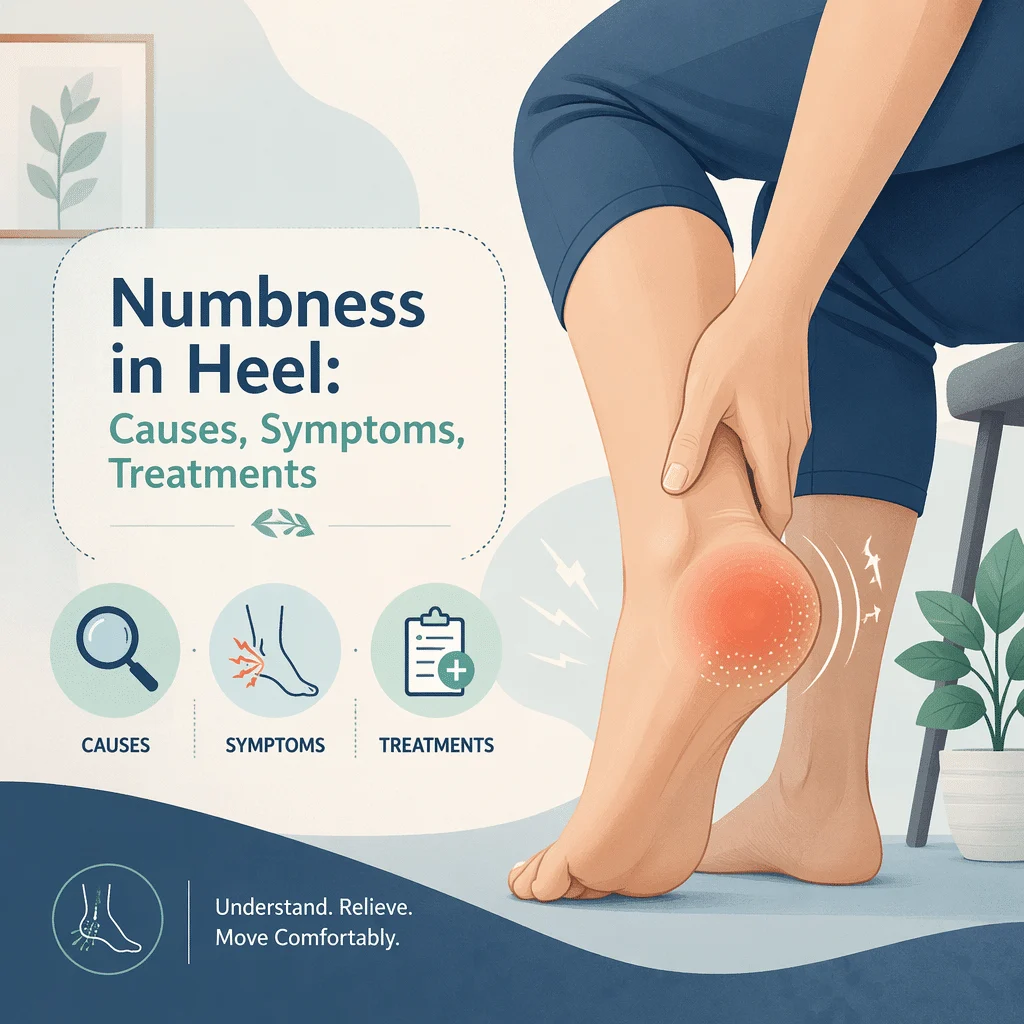
Онемение пятки — это совсем другой сигнал, нежели боль в пятке, и это различие важнее, чем большинство людей думает. Боль в пятке обычно означает воспалённую или перегруженную ткань. Онемение означает, что нерв где-то на своём пути сдавлен, раздражён или повреждён — а этот путь может начинаться в стопе, за лодыжкой или даже в пояснице.
Это различие меняет сами вопросы, которые стоит задавать. Подошвенный фасциит — безусловно, самая распространённая жалоба на пятку — вызывает боль, но не вызывает потери чувствительности. Поэтому когда пятка немеет, причина кроется в чём-то другом.
Из этой статьи вы узнаете, какие нервы вызывают онемение пятки, как характер симптомов помогает определить причину, какие анализы крови считаются стандартными при онемении обеих стоп и какие тревожные признаки требуют немедленной медицинской помощи.
Онемение пятки — это не то же самое, что боль в пятке
Когда подошвенная фасция — плотная полоска ткани, проходящая вдоль подошвы, — раздражена, нервные окончания в ней и вокруг неё посылают сигналы. Результат — боль, классически острая под пяткой при первых шагах после пробуждения. При этом чувствительность сохраняется: лёгкое прикосновение к коже вы по-прежнему ощущаете.
Онемение работает иначе. Оно означает, что сигналы не проходят. Что-то давит на нерв, или сами нервные волокна работают неправильно. Кожа ощущается приглушённо, как будто между полом и стопой есть слой мягкой прокладки.
Оба состояния могут сочетаться. У человека может быть одновременно подошвенный фасциит и отдельная проблема с нервом, а нерв под длительным давлением нередко вызывает жжение или покалывание наряду с онемением. Но само по себе онемение никогда не объясняется подошвенным фасциитом. Это важно сказать прямо, потому что многие люди месяцами лечат проблему с фасцией, пока нервная проблема остаётся без внимания. Наша команда также рассматривает причины онемения большого пальца ноги, которые подчиняются той же логике, но в другой части стопы.
Причины онемения пятки
Если рассматривать возможные причины снизу вверх — от стопы к позвоночнику — их легче систематизировать. Каждый нерв отвечает за определённый участок кожи, поэтому место онемения — это настоящая подсказка.
Синдром тарзального канала
Задний большеберцовый нерв проходит через узкий фиброзный канал позади костного выступа на внутренней стороне лодыжки. Отёк, киста, рубцовая ткань, уплощение свода стопы или простое сдавление в этом пространстве могут его сжимать. В результате возникает онемение, покалывание или жжение в подошве и внутренней части пятки — нередко усиливающееся ночью или после длительного стояния. Постукивание по нерву позади внутренней лодыжки может вызвать ощущение электрического покалывания в стопе — врачи называют это положительным симптомом Тинеля.
Нейропатия Бакстера
Первая ветвь латерального подошвенного нерва, которую часто называют нервом Бакстера, проходит между двумя мышцами в глубине внутренней части пятки. Его защемление — одна из наиболее часто пропускаемых причин хронических болей в пятке, отчасти потому, что его нередко ошибочно принимают за упорный подошвенный фасциит. Как правило, оно проявляется глубоким, стойким дискомфортом или онемевшим участком на внутренней стороне пятки, который не проходит при стандартном лечении фасции.
Радикулопатия S1: когда настоящая причина — в спине
Корешок нерва S1 выходит из позвоночника в поясничном отделе и иннервирует наружную часть стопы и пятку. Выпячивание или грыжа межпозвонкового диска в поясничном отделе может на него давить, и тогда онемение появляется в стопе, хотя сама стопа при этом здорова. Характерный признак — боль или онемение, распространяющееся от поясницы или ягодицы вниз по задней поверхности ноги. Подробнее об этом рассказывает материал о симптомах и тревожных признаках ишиаса.
Периферическая нейропатия
Периферическая нейропатия поражает в первую очередь самые длинные нервы, поэтому она начинается с пальцев ног и постепенно распространяется вверх на протяжении месяцев или лет — как правило, одновременно на обеих стопах. Ведущая причина и наиболее серьёзная из них — сахарный диабет. Среди других признанных причин — дефицит витамина B12, гипотиреоз, хроническая болезнь почек, злоупотребление алкоголем и некоторые химиотерапевтические препараты. По данным Национального института диабета, болезней органов пищеварения и почек, периферическая нейропатия встречается почти у половины людей с диабетом; на странице для пациентов этого института описаны симптомы диабетической периферической нейропатии со стороны стоп.
Раздражение икроножного нерва
Икроножный нерв проходит по задней поверхности голени к наружной лодыжке и наружному краю стопы. Он расположен близко к поверхности, поэтому уязвим при растяжениях голеностопа, давлении обуви, гипсовых повязок и хирургических рубцов. Онемение, связанное с этим нервом, ощущается на наружной поверхности пятки, а не по всей подошве.
Нарушение кровообращения
Нервам необходимо постоянное кровоснабжение. Когда артерии ноги сужаются — как это происходит при заболевании периферических артерий — стопа может неметь, холодеть и бледнеть. Характерный признак — судороги в икре при ходьбе, которые проходят в покое. Курение, сахарный диабет, повышенный холестерин и высокое артериальное давление увеличивают риск развития этого состояния.
Положение тела и давление
Сидение со скрещенными ногами, стояние на коленях, тесная обувь, горнолыжные ботинки и гипсовые повязки — всё это может механически сдавливать нерв. Такое онемение возникает быстро, нередко сопровождается покалыванием при восстановлении чувствительности и проходит в течение нескольких минут после смены положения. Это единственная категория, которая, как правило, не требует обследования — если только симптомы не повторяются.
Сопоставьте характер симптомов с возможной причиной
Никакая таблица не заменит осмотра врача, однако характер онемения действительно несёт важную информацию: если вы придёте на приём и сможете чётко его описать, это ускорит постановку диагноза. Обратите внимание на то, какая часть пятки затронута, одна или обе стопы, а также что усиливает симптомы.
| Замеченная вами закономерность | Вероятный механизм | Что обычно проверяет врач |
|---|---|---|
| Внутренняя поверхность пятки и подошвы, усиливается ночью или после длительного стояния | Сдавление заднего большеберцового нерва позади внутренней лодыжки (синдром тарзального канала) | Симптом Тинеля в области внутренней лодыжки, исследование скорости проведения по нерву, УЗИ или МРТ при подозрении на кисту |
| Глубокое онемение на внутренней поверхности пятки, сохраняющееся несмотря на лечение фасциита | Защемление первой ветви латерального подошвенного нерва (нейропатия Бакстера) | Прицельный осмотр внутренней поверхности пятки, электродиагностическое исследование, визуализация для исключения других причин |
| Наружная поверхность пятки и наружный край стопы | Раздражение икроножного нерва | Осмотр области наружной лодыжки, сведения о растяжении, давлении гипса или ортеза |
| Онемение пятки с болью, распространяющейся от поясницы или ягодицы вниз по ноге | Сдавление корешка S1 в поясничном отделе позвоночника (радикулопатия) | Тест поднятия прямой ноги, проверка рефлексов и мышечной силы, МРТ поясничного отдела при сохранении симптомов или появлении слабости |
| Обе стопы, симметрично, началось с пальцев и распространилось вверх | Периферическая нейропатия, поражающая в первую очередь наиболее длинные нервы | Глюкоза натощак, гликированный гемоглобин (HbA1c), витамин B12, ТТГ, функция почек, общий анализ крови, иногда электрофорез белков |
| Онемение с жжением, усиливающееся ночью, в обеих стопах | Поражение тонких нервных волокон при периферической нейропатии | Тот же набор анализов крови плюс целенаправленный неврологический осмотр |
| Онемевшая стопа, которая также холодная или бледная, с судорогами в икре при ходьбе | Снижение артериального кровотока (заболевание периферических артерий) | Проверка пульса на стопе, лодыжечно-плечевой индекс, сосудистая визуализация |
| Возникает при сидении со скрещенными ногами, на коленях или в тесной обуви и проходит за несколько минут | Позиционное или механическое сдавление | Как правило, обследование не требуется; при повторяющихся эпизодах — оценка симптомов |
Анализы крови при онемении пятки
Один характерный признак указывает на необходимость сдать анализы крови: онемение, которое затрагивает обе стопы симметрично, началось с пальцев и постепенно распространяется вверх. Это классическая картина длинно-зависимой периферической нейропатии, обусловленной системными причинами, а не локальным сдавлением. Нерв, защемлённый за одной лодыжкой, не вызывает одинаковых симптомов в обеих стопах.
При наличии такой картины стандартное обследование обычно включает следующие анализы.
- Глюкоза натощак и гликированный гемоглобин (HbA1c) — для выявления сахарного диабета или уровня сахара в крови, уже вышедшего за пределы нормы. В нашей библиотеке подробно описаны причины отклонений уровня глюкозы, а также мы опубликовали таблицу перевода HbA1c.
- Витамин B12, при необходимости в сочетании с метилмалоновой кислотой — когда результат B12 оказывается в пограничной зоне. Наши специалисты описывают симптомы и причины дефицита витамина B12.
- ТТГ — поскольку сниженная функция щитовидной железы является поддающейся лечению причиной неврологических симптомов. В этой статье подробно разобрано нормальные показатели гормонов щитовидной железы.
- Функция почек — продукты обмена, накапливающиеся при хронической болезни почек, токсичны для нервов. Мы объясняем как расшифровать панель функции почек.
- Общий анализ крови — позволяет выявить анемию и увеличенные эритроциты, которые нередко сопровождают дефицит B12. Наше руководство охватывает как читать общий анализ крови.
- Электрофорез белков сыворотки крови — в отдельных случаях, для выявления аномального антительного белка, способного поражать нервы. Мы также объясняем как расшифровать результаты электрофореза белков.
Это важно по конкретной причине. Диабетическая нейропатия может быть первым признаком сахарного диабета, который ещё не был диагностирован. Человек обращается с жалобами на онемение стоп — и именно анализ крови выявляет причину. В такой ситуации результат лабораторного исследования действительно меняет исход: раннее лечение повышенного сахара защищает нервные волокна, которые ещё функционируют. Уже возникшее повреждение нервов зачастую лишь частично обратимо — именно поэтому своевременность анализа имеет принципиальное значение.
Тревожные признаки, требующие неотложной медицинской помощи.
В большинстве случаев онемение пятки не является неотложным состоянием. Однако некоторые проявления требуют немедленного внимания — их важно знать.
- Онемение, внезапно возникшее вместе со слабостью, или стопа, которая волочится или шлёпает по полу при ходьбе. Новая слабость в сочетании с новым онемением требует срочной оценки.
- Онемение обеих стоп или внутренней поверхности бёдер в сочетании с нарушением контроля над мочевым пузырём или кишечником, либо потеря чувствительности в области, которая соприкасается с седлом. Такое сочетание симптомов может указывать на синдром конского хвоста — сдавление пучка нервов у основания позвоночника, которое требует экстренного хирургического вмешательства.
- Стопа, которая онемела и при этом холодная, бледная или синюшная. Такое сочетание указывает на нарушение кровотока, а не на сдавление нерва, и требует обследования в тот же день.
- Любая рана, мозоль или язва на онемевшей стопе у человека с диабетом. Сниженная чувствительность означает, что травма может остаться незамеченной и инфицироваться ещё до того, как будет ощущена, — именно поэтому ежедневный осмотр стоп является стандартной рекомендацией.
- Онемение, которое быстро распространяется в течение нескольких часов или дней, либо возникло после серьёзного падения или травмы.
Как лечат онемение пятки
Лечение определяется причиной, поэтому точная диагностика — это уже половина дела. В целом все варианты делятся на четыре категории.
Обувь и ортопедические стельки
Снятие давления с раздражённого нерва нередко является первым шагом. Это может означать более просторную обувь, ослабление шнуровки в болезненном месте, подкладку под пятку или индивидуальный ортопедический вкладыш, который поддерживает свод стопы и меняет характер нагрузки. Если источником сдавления является ботинок или гипсовая повязка, иногда достаточно просто скорректировать фиксирующее устройство.
Физиотерапия и упражнения для скольжения нерва
При синдромах сдавления нерва широко применяются целенаправленное растяжение, укрепление мышц, поддерживающих свод стопы, и упражнения на скольжение нерва — плавные движения, которые помогают нерву свободно перемещаться в окружающих тканях. Физиотерапевт подбирает комплекс с учётом конкретного нерва, что ещё раз подчёркивает важность точного диагноза.
Лечение основного заболевания
Когда онемение обусловлено общим заболеванием организма, лечение направлено именно на него: нормализация уровня сахара в крови, восполнение дефицита витамина B12, коррекция уровня гормонов щитовидной железы, лечение заболевания почек или снижение потребления алкоголя. Улучшение в этой категории происходит медленно, однако именно такой подход защищает нервы, которые ещё не пострадали.
Инъекции и хирургическое лечение
Инъекция кортикостероидов в область сдавленного нерва может уменьшить отёк и помочь точнее определить источник проблемы. Хирургическая декомпрессия — освобождение ткани, сдавливающей нерв, — применяется в случаях, когда консервативное лечение не даёт результата, а также при наличии кисты или новообразования, вызывающего сдавление. Как правило, результаты лечения лучше, если проблема устраняется до того, как нерв находился под давлением на протяжении многих лет.
Последние научные достижения
Исследования, опубликованные за последние три года, позволили глубже понять природу онемения стопы и пятки. Вот что важно знать — простыми словами.
Защемление нервов стопы и голеностопного сустава по-прежнему остаётся незамеченным
В обзоре 2025 года, посвящённом синдромам защемления нервов стопы и голеностопного сустава, был сделан вывод о том, что эти состояния по-прежнему недооцениваются и нередко диагностируются неверно, а точная диагностика зависит прежде всего от тщательного сбора анамнеза и осмотра, а не от какого-либо одного теста. Обзор 2024 года, посвящённый синдрому тарзального канала, пришёл к аналогичному выводу: отсутствие однозначного диагностического теста нередко затягивает постановку диагноза, а длительное сдавление может привести к необратимому повреждению нерва.
Что это значит для вас: если проблема с пяткой на протяжении нескольких месяцев лечится как подошвенный фасциит, но улучшения нет, а онемение присутствует, — прямо спросить о возможном поражении нерва вполне разумно, а не чрезмерно.
Симптомы синдрома тарзального канала пересекаются с проявлениями диабета и заболеваний позвоночника
В клиническом обзоре 2025 года отмечается, что симптомы синдрома тарзального канала очень похожи на проявления диабетической нейропатии и заболеваний поясничного отдела позвоночника, как правило усиливаются при ходьбе, а МРТ может выявлять признаки сдавления нерва у людей без каких-либо симптомов — то есть давать ложноположительный результат.
Что это значит для вас: данные визуализации сами по себе не устанавливают диагноз. Ваше описание симптомов имеет реальный диагностический вес, поэтому стоит излагать их как можно точнее.
Пограничные результаты анализа на витамин B12 требуют повторного исследования
В клиническом обзоре 2025 года, посвящённом дефициту витамина B12, подтверждается, что периферическая нейропатия является одним из его признанных проявлений, и описывается подход к диагностике: явно низкий уровень B12 сам по себе является диагностическим критерием, тогда как при пограничном результате для уточнения диагноза рекомендуется измерить уровень метилмалоновой кислоты — вещества, накапливающегося при функциональном дефиците B12. В отдельном небольшом исследовании 2025 года наблюдались онкологические пациенты в ходе химиотерапии: было установлено, что уровень витамина B12 снижался в процессе лечения одновременно с появлением неврологических симптомов; однако эти данные носят предварительный характер и не доказывают причинно-следственную связь.
Что это значит для вас: результат анализа на B12, описанный как «нижняя граница нормы», не обязательно означает конец обследования при наличии неврологических симптомов — для именно таких ситуаций существует дополнительный тест. А онемение на фоне химиотерапии стоит сообщить своей онкологической команде, а не молча принимать как должное.
Уровень сахара в крови ниже диагностического порога сахарного диабета
В систематическом обзоре 2025 года изучался вопрос о том, начинаются ли осложнения со стороны мелких сосудов при сахарном диабете ещё до того, как уровень сахара в крови достигает диагностического порога. Были получены достаточно убедительные данные о ранних изменениях в сетчатке глаза при предиабете, однако авторы пришли к выводу, что опубликованных данных о повреждении нервов на этой стадии пока недостаточно для обоснованных заключений.
Что это значит для вас: в данном случае честная неопределённость — правильный ответ. Уровень сахара в крови, соответствующий преддиабету, важно знать и принимать меры, однако не следует автоматически считать его причиной онемения.
Глоссарий ключевых терминов
| Срок | Определение |
|---|---|
| Тарзальный канал | Узкий канал позади костного выступа на внутренней стороне голеностопного сустава, через который проходят нерв, артерия и несколько сухожилий. |
| Задний большеберцовый нерв | Основной нерв, обеспечивающий чувствительность подошвы стопы. Он проходит через тарзальный канал и разветвляется под стопой. |
| Нейропатия Бакстера | Защемление первой ветви латерального подошвенного нерва во внутренней части пятки. Нередко упускаемая из виду причина длительных болей в пятке. |
| Радикулопатия | Раздражение или сдавление корешка нерва в месте его выхода из позвоночника. Симптомы появляются в зоне, которую иннервирует этот корешок, и могут быть далеко от спины. |
| Периферическая нейропатия | Поражение нервов за пределами головного и спинного мозга. Как правило, сначала страдают самые длинные нервы, поэтому симптомы обычно начинаются со стоп. |
| Симптом Тинеля | Ощущение электрического покалывания по ходу нерва при постукивании по нему. Свидетельствует о раздражении нерва в этом месте. |
| Электронейромиография (ЭНМГ) | Исследование, которое измеряет скорость и силу прохождения электрических сигналов по нерву; используется для определения места и степени поражения нерва. |
| Метилмалоновая кислота | Вещество, накапливающееся в крови при нехватке усвояемого витамина B12. Его уровень определяют, когда результат анализа на B12 находится на пограничном значении. |
| Лодыжечно-плечевой индекс | Простое сравнение артериального давления на лодыжке и на плече, применяемое для выявления сужения артерий ног. |
Часто задаваемые вопросы
Стоит ли беспокоиться, если онемела пятка?
Кратковременное онемение, возникающее после длительного сидения или стояния на коленях и проходящее в течение нескольких минут, не является поводом для беспокойства. Онемение, которое сохраняется несколько дней, постоянно возвращается, охватывает обе стопы или сопровождается слабостью, болью в спине либо раной, требует медицинской оценки. Дело не в том, что онемение само по себе опасно, — оно является сигналом. Важна именно его причина, а многие из возможных причин значительно легче поддаются лечению на ранней стадии, чем на поздней.
Почему пятка немеет, когда я просыпаюсь или лежу?
Чаще всего этому есть два объяснения. Первое — обычное положение тела: давление матраса или определённая поза во сне сдавливает нерв, и чувствительность восстанавливается, как только вы меняете позу. Второе — сдавление нерва, которое действительно усиливается в покое; это характерно для синдрома тарзального канала и некоторых периферических нейропатий. Если онемение регулярно будит вас или не проходит долго после подъёма, это стоит обследовать, а не просто менять подушку.
Может ли пятка неметь без боли?
Да, и это важный признак. Безболезненное онемение говорит о том, что поражены чувствительные волокна без выраженного раздражения болевых, что характерно для периферической нейропатии и некоторых форм сдавления нерва. Кроме того, это позволяет исключить подошвенный фасциит, поскольку при нём возникает боль, а не потеря чувствительности. Безболезненное онемение легко не замечать именно потому, что оно не болит, — вот почему о нём нередко не говорят врачу месяцами.
Какой нерв вызывает онемение пятки?
Чаще всего это задний большеберцовый нерв или одна из его ветвей, в том числе первая ветвь латерального подошвенного нерва. Наружную поверхность пятки иннервирует икроножный нерв. Корешок S1, берущий начало в поясничном отделе позвоночника, также отвечает за чувствительность пятки, поэтому проблемы с позвоночником могут вызывать онемение стопы. Какой именно нерв поражён, обычно определяют по расположению онемения и сопутствующим симптомам.
Почему немеет только одна пятка?
Одностороннее онемение, как правило, указывает на местную причину: сдавление нерва в области голеностопного сустава или стопы, раздражение нервного корешка с одной стороны поясничного отдела позвоночника или последствие старой травмы. Системные причины — сахарный диабет, заболевания щитовидной железы, дефицит витамина B12 — обычно затрагивают обе стопы примерно симметрично. Поэтому онемение одной пятки прежде всего направляет поиск в сторону анатомических причин, хотя анализы крови при этом тоже могут быть назначены.
Помогают ли упражнения при онемении пятки?
Да, если причиной является сдавление нерва. Растяжка икроножных мышц и подошвенной фасции, укрепление свода стопы и упражнения на скольжение нерва — стандартные элементы консервативного лечения синдромов сдавления, и физиотерапевт подбирает их в зависимости от того, какой нерв поражён. Упражнения не устраняют повреждение нерва, вызванное диабетом или дефицитом витаминов, хотя физическая активность поддерживает кровообращение и общее здоровье нервной системы. Упражнения наиболее эффективны после постановки диагноза, а не вместо него.
Источники
- Национальный институт диабета, болезней органов пищеварения и почек — Периферическая нейропатия — NIDDK, Национальные институты здравоохранения — niddk.nih.gov
- MedlinePlus — Периферическая нейропатия — Национальная медицинская библиотека США — medlineplus.gov
- Johns Hopkins Medicine — Tarsal Tunnel Syndrome: What You Need to Know — hopkinsmedicine.org
- Bojovic M, Dimitrijevic S, Olory BCR, et al. — Overview of nerve entrapment syndromes in the foot and ankle — International Orthopaedics, 2025 — doi.org/10.1007/s00264-025-06469-5
- Sha I — Синдром тарзального канала: подробный обзор — The Iowa Orthopaedic Journal, 2024 — pubmed.ncbi.nlm.nih.gov/39811161
- Yoshida H, Kim K, Tajiri T, et al. — Синдром тарзального канала: клинический обзор — Journal of Nippon Medical School, 2025 — doi.org/10.1272/jnms.JNMS.2025_92-206
- Patel H, McGuirk R — Дефицит витамина B12: часто задаваемые вопросы и ответы — American Family Physician, 2025 — pubmed.ncbi.nlm.nih.gov/40961307
- Thiab S, Akhal T, Akeblersane M, et al. — Микрососудистые осложнения при предиабете: систематический обзор и метаанализ — Diabetes Research and Clinical Practice, 2025 — doi.org/10.1016/j.diabres.2025.112261
- El-Najjar SE, Naser IA, Al-Wahidi KM — Is Functional Vitamin B12 Deficiency a Risk Factor for the Development of Chemotherapy-Induced Peripheral Neuropathy in Cancer Patients? — Asian Pacific Journal of Cancer Prevention, 2025 — doi.org/10.31557/APJCP.2025.26.2.375
Дополнительная информация
- Ощущение покалывания в спине: симптомы и причины
- Защемление нерва в колене: симптомы, причины, лечение
- Зуд в ногах по ночам: причины и лечение
- Витамин B12: польза, источники и уровень в крови
- CBC против CMP: понимание тестов
Анализируйте результаты лабораторных исследований с помощью AI DiagMe.
Когда онемение затрагивает обе стопы, ответ нередко кроется в анализе крови, а не в самой стопе. Уровень сахара в крови, долгосрочный показатель среднего сахара, уровень витамина B12, показатель щитовидной железы и оценка функции почек вместе охватывают большинство поддающихся лечению причин. AI DiagMe объясняет вам эти результаты простым языком, чтобы вы могли увидеть, какие показатели выходят за пределы референсных значений и на что они указывают. Сервис помогает разобраться в ваших результатах, но не ставит диагноз и не заменяет врача.
Получите результаты анализа за считанные минуты.